The Matrix of Social Criteria in Ecolabels and Sustainable Certification Schemes provides a comparative overview of the social criteria currently addressed by a range of ecolabels and sustainability certification schemes across multiple product categories. The matrix maps existing approaches, identifies commonly covered social topics, highlights areas where criteria remain limited, and showcases opportunities for further strengthening and harmonization.
Developed as a practical reference and benchmarking tool, the matrix aims to support ecolabels, sustainability certification schemes, policymakers, and other stakeholders in reviewing and enhancing social requirements, promoting greater consistency across standards, and contributing to more robust and credible sustainability certification programs. By fostering greater alignment and encouraging the integration of comprehensive social criteria, the matrix seeks to support the transition towards more sustainable, inclusive, and resilient markets.
This matrix was developed under the Consumer Information Programme of the One Planet Network and the EcoAdvance project, jointly implemented by the German Agency for International Cooperation (GIZ), the United Nations Environment Programme (UNEP), and the Öko-Institute. It is funded by the German Federal Ministry for the Environment, Climate Action, Nature Conservation and Nuclear Safety (BMUKN) through the International Climate Initiative (IKI). The project promotes synergies between ecolabelling and public procurement, fostering more sustainable production and consumption practices and contributing to environmental conservation, biodiversity protection, and climate change mitigation.
A circular economy is about using resources responsibly -extending product lifetimes and keeping materials in use for as long as possible. But how does this translate to the practical reality of buying and using IT products? Based on insights from circularity experts, procurement professionals and IT brands, this article brings together tips that help you take the next step in circular IT.
Leverage your purchasing power
1. Be clear that you expect circular solutions from your suppliers. State in the procurement process that circular products and services are required, and connect these expectations to your organization’s climate and circularity goals where relevant. Clear customer demand is a strong driver for more sustainable product development.
2. Look for suppliers that offer long-lasting products, as well as repair, upgrade, reuse, and resale services that help extend product lifetimes. Common priorities can help support your circular and sustainable IT management goals. Make use of pre-competitive dialogs and RFIs to gather information.
3. Include circularity criteria in your procurement policies and specifications. For example, set requirements for durability and repairability to extend product lifetimes, and for the reduction or elimination of hazardous substances to improve material recyclability.
4. Reduce environmental impact by choosing pre-owned products and sourcing from reputable refurbishment and remanufacturing providers.
5. Don’t overestimate the environmental and financial benefits of upgrading to a more energy-efficient device. In many cases, potential savings are outweighed by negative impacts from manufacturing.
6. Product-as-a-service solutions are becoming more common. Keep in mind that leasing services are not automatically circular. You must include circular criteria, just as you do when buying products.
7. Ask your supplier for an extensive warranty that covers service, repairs and battery replacements during the expected product lifetime. This provides greater cost predictability and gives IT brands an incentive to design more durable, high-quality devices.
Use your IT products longer
8. Use your IT products longer-it’s one of the most effective ways to reduce climate impact, save natural resources and minimize e-waste. Repair and upgrade them when needed instead of replacing them.
9. Think long-term when you purchase an IT product -buy a high-performance product that has enough capacity to meet your needs for several years.
10. Make sure that the products you buy are designed for a long life. They must be durable, upgradeable, and easy to repair.
11. Pay attention to battery life. Many portable IT products are discarded because the battery has lost its capacity to hold a charge. Make sure the battery is high-quality and easy to replace.
12. Extend battery life by keeping the product 20-80 percent charged as often as possible and avoid leaving it in hot spaces.
13. Implement take-back programs where used IT products are returned to the supplier for refurbishment, reuse, resale, or responsible recycling.
14. Keep an eye out for old habits and policies that stand in the way of circular practices. For example, short device replacement cycles, policies that require employees to always receive brand-new equipment, or procurement routines that prioritize the lowest upfront cost over durability, repairability, and reuse.
Involve the rest of your organization
15. Assess the current situation to identify where and how circular practices can be introduced. A good start can be to interview people involved in IT purchasing and management.
16. Be aware of how circular IT practices may affect employees, and involve them early in the process. Create an internal policy for circular IT management that balances environmental responsibility with the practical needs of different roles and work tasks.
17. Define clear incentives by identifying the benefits of circularity, such as reduced climate impact, less e-waste, improved operational performance, and lower costs for IT management.
18. Set up KPIs to track the impact of your circular IT practices. For example, monitor annual e-waste, carbon footprint per employee, and the share of recycled materials. For products certified to TCO Certified, you can find verified data in Report Generator.
19. Cooperation between functions is vital and will help you make faster progress. Engage decision-makers and specialists from IT, procurement, sustainability, finance, facilities and communications in regular discussions on circularity.
20. Knowledge of sustainability issues can motivate both management and employees to drive change. Ensure you are well informed about the climate impact of IT products, hazardous substances in products and production, resource use, e-waste, and supply chain risks.
21. Ensure that hazardous e-waste is handled responsibly and not illegally exported. Work with qualified waste management providers that manage products safely and in compliance with regulations.
22. Segment users within your organization based on their IT needs. This will help you optimize the use of devices and identify opportunities for product reuse.
23. Recognize that change is a long-term process. Maintain a long-term perspective and allow time and space for behavioral change.
Give your IT products a second life
24. Set up routines for collecting used IT products so they can be reused or recycled instead of ending up forgotten in a drawer. For example, make sure old devices are handed in before new ones are given out.
25. Don’t miss the opportunity to recover value from IT products once they no longer meet your organization’s needs. Explore resale through reputable refurbishment or remanufacturing partners, and consider charitable donations or resale to employees.
26. Protect your data-use software for safe data removal, or ensure that the company that you sell products to will manage this securely.
27. Ask your reseller for proof that the product has been refurbished or remanufactured and sold to a new user, so it isn’t discarded prematurely.
28. If you want to resell your products, do it as soon as you stop using them. They lose value each month they are kept in storage.
29. Include chargers and cables when you sell your IT products-otherwise new ones may need to be made, reducing both the environmental benefits and the value you get.
Join forces with others
30. If the main aim is to establish a circular economy, there is no way to close loops on your own. You need to partner with stakeholders throughout the life cycle to get things done.
31. Don’t be afraid to reach out for help. Join networks, learn from others, and share what you know.
32. Keep in mind that even the smallest contributions are valuable. It doesn’t matter so much what the first step is as long as you take it.
33. Team up with other buyers to increase your purchasing power and influence. Using a credible sustainability certification, such as TCO Certified, means you stand behind the same set of criteria as thousands of other purchasers worldwide. It makes your work with circular IT more efficient and saves your resources.
Public procurement represents one of the world's most powerful tools for driving sustainable development. Every day, governments purchase food for schools, hospitals, public institutions and social protection programmes-creating an opportunity to improve nutrition, strengthen local economies, support smallholder producers, and reduce environmental impacts.
The One Planet Network is excited to announce the launch of the Global Framework for Action: Using Public Food Procurement as a Strategic Driver of Sustainable Food Systems.
Developed by UNEP and FAO under the One Planet Network Sustainable Public Procurement and Sustainable Food Systems Programmes, the Framework provides governments with a practical and flexible roadmap to design and implement sustainable public food procurement policies tailored to their national priorities. It is built around three guiding principles and a menu of 14 actions that help translate policy ambitions into practical implementation.
The Framework is the result of a two-year collaborative process involving governments, procurement practitioners, producers, civil society and development partners from around the world, demonstrating the power of partnership in advancing sustainable public procurement.
The Framework is now open for endorsement from technical and policy organizations, as well as national and local government. For more details on endorsement, please contact paulina.boechat@un.org. We look forward to supporting countries as they use public purchasing to build more resilient, inclusive and sustainable food systems.
At the 2026 High-Level Political Forum, Ms Annika Lindblom, Chair of the 10YFP Board, presented the 10YFP Annual Progress Report, highlighting practical delivery across the One Planet Network in 2025. The report recorded 86 new or updated sustainable consumption and production policy instruments, a 14 per cent increase from the previous reporting cycle, alongside progress in sustainable public procurement, consumer information, skills development, tourism and food systems. Her statement called for greater investment in SDG12 and stronger integration of sustainable consumption and production and circularity into national climate, biodiversity and economic strategies.
To help bridge the technical gap in climate-mitigation finance, Green Initiative presents this guide for financial institutions and SMEs as one component of a broader architecture for CMF tracking and deployment. Focused on GHG emissions measurement, reporting, verification and the planning and selection of mitigation projects, the guide is designed to accelerate the flow of mitigation resources in line with globally recognized decarbonization strategies. It provides a structured set of concepts, principles, and methodologies to help FIs and SMEs.
This Practical Guide for Financial Institutions and Small and Medium-sized Enterprises was developed by Green Initiative and in support of the Glasgow Declaration Initiative on Climate Action in Tourism.
Ecolabels and sustainable certification schemes are powerful instruments for advancing global sustainability commitments. By setting robust sustainability performance criteria across value chains, they incentivize best practices, improve transparency, and can expand market access for more sustainable products and services. For consumers, ecolabels and sustainable certification schemes are key enablers to support more sustainable consumption.
Yet, despite their potential, these tools face challenges in developing robust criteria for rapidly evolving sustainability priorities, such as biodiversity protection, climate mitigation, and pollution reduction. These areas are inherently complex, context-specific, and still evolving in terms of metrics and data availability. As a result, translating these “trend” topics into measurable and verifiable criteria remains difficult.
This document aims to support ecolabels and sustainability certification schemes in identifying and considering relevant aspects related to climate, biodiversity, and pollution in the development of criteria for products and services across four high-impact sectors: building and construction, food, textiles, and electronics/ICT. The guidance promotes a lifecycle and holistic approach, highlighting priority areas—referred to as “hotspots”—within each value chain.
The intended audience of these guidelines includes ecolabels and other sustainable certification schemes, as well as stakeholders seeking to integrate environmental criteria for specific products, such as sustainable public procurement programs and initiatives aimed at enhancing transparency and facilitating access to consumer sustainability information in product supply chains, including Digital Product Information Systems.
This guidance was compiled under the Consumer Information Programme of the One Planet Network and the EcoAdvance project, jointly implemented by the German Agency for International Cooperation (GIZ), the United Nations Environment Programme (UNEP), and the Öko-Institute. It is funded by the German Federal Ministry for the Environment, Climate Action, Nature Conservation and Nuclear Safety (BMUKN) through the International Climate Initiative (IKI). The project promotes synergies between ecolabelling and public procurement, fostering more sustainable production and consumption practices and contributing to environmental conservation, biodiversity protection, and climate change mitigation.
The rapid rise of the "olfactory economy" has brought fragrance products into a wide array of public and private spaces. Yet the volatile organic compounds (VOCs) and other pollutants they continuously release are posing a growing, often overlooked threat to consumers' respiratory health.
In January 2026, a pivotal group standard-Limit of Harmful Substances in Daily-use Fragrances, issued by the Shanghai Indoor Environmental Purification Industry Association-took effect. For the first time, it extends safety requirements beyond the product itself to cover the entire lifecycle, establishing strict limits on major health hazards, including total volatile organic compounds (TVOC), formaldehyde, benzene compounds, PM2.5, and five heavy metals.
Now, the China Environmental United Certification Center (CEC) has joined forces with the association to carry out professional evaluations of fragrance products in line with this new standard. Through authoritative third-party certification, the collaboration aims to give consumers clear, trustworthy safety labels, while steering the industry away from marketing-led growth toward technology-driven innovation. The ultimate goal: to help companies earn market trust through demonstrably safer products, and to genuinely protect every breath we take.
Recently, CEC (China Environmental United Certification Center) granted the first “Zero-Waste Factory” evaluation certificate in the electrical and electronics sector of China to Motorola (Wuhan) Mobile Technology Communications Co., Ltd., a manufacturing base under Lenovo Group. This landmark recognition underscores how leading electronics manufacturers are advancing circularity, product life cycle responsibility, and sustainable operations aligned with consumer values.
The certification marks a significant step in promoting “Zero-Waste City Cells”, such as zero-waste factories and supply chains, which directly contribute to reducing environmental footprints and enhancing resource efficiency-key concerns for eco-conscious consumers. By obtaining this credential, Lenovo’s Motorola facility demonstrates tangible commitment to sustainable production practices, strengthening its brand image as an environmentally responsible enterprise.
CEC, in collaboration with the China Household Electrical Appliances Research Institute, has been developing standards and evaluation frameworks for zero-waste facilities since 2024, ensuring rigorous, industry-relevant benchmarks. The partnership combines technical expertise with certification authority, offering credible validation of corporate sustainability efforts that consumers can trust.
For consumers, this achievement signals greater transparency and accountability in electronics manufacturing, linking product purchases to broader environmental benefits like reduced waste generation and enhanced material recycling. It highlights how corporate sustainability initiatives can drive tangible progress toward national green goals, including Beautiful China construction.
Moving forward, CEC plans to scale up zero-waste and low-carbon certification services across more sectors, refine professional evaluation frameworks and further support sustainable consumption and production.
The Global Framework for Action - Using Public Food Procurement as a Strategic Driver of Sustainable Food Systems supports governments in using public food procurement as a strategic tool to promote more sustainable food production and consumption patterns. Developed through a multi-stakeholder process led by UNEP and FAO, the Framework provides a flexible roadmap for integrating social, economic, and environmental sustainability objectives into food procurement systems.
Organized around three core principles, enabling governance and regulatory framework, strengthening public demand-side capacity, and supporting inclusive and resilient supply chains, the Framework offers a practical “menu” of actions that countries can adapt to their national and local contexts. By shaping public demand for food, SPFP can contribute to healthier diets, stronger local economies, biodiversity conservation, reduced pollution, and lower greenhouse gas emissions across food systems.
Lately, the report of Practices Collection-Innovative Application on Carbon Label and Carbon Reduction Integrated Supply Chain Management was jointly released within the collaboration between International Green Purchasing Network (IGPN) and the One Planet Network Sustainable Public Procurement (SPP) Programme, which was produced by IGPN Secretariat-China Environmental United Certification Center (CEC).
The Practices Collection brings together innovative supply chain practices from seven organizations across four countries: China, the United States, Thailand, and the Netherland. By summarizing practical experience and demonstrating phased achievements, the Practices Collection effectively enhances supplier capacity, promotes the adoption of carbon labelling, and stimulates market and supply-side demand for sustainable products and services.
Practice #7|Green manufacturing and supply chain transformation: A practice of Farizon (Zhejiang) new energy commercial vehicles
Theme: Remanufacturing and cleaner production and carbon label
Core Content
This document focuses monetization on full supply chain carbon reduction, an integrated supply chain management system with four key components of "green supply chain, low-carbon logistics, zero-carbon manufacturing and resource recycling" built by Farizon New Energy Commercial Vehicle Group (Farizon), through measures including supply chain carbon management, low carbon logistic system, zero-carbon manufacturing, resource recycling system, and digital platform.
It is essential to be highlighted that the practice Integrated scenario-based service platform with circular ecosystem, enable carbon reduction investment cost of individual corporate, and enhances the overall sustainable competitiveness of the industrial chain through collaboration. Meanwhile, the digital platform it builds to monitor carbon emission reduction and convert emission reduction into liquid carbon assets on the basis of decarbonization, providing a replicable and measurable reference for supply chain carbon reduction.
Innovation in Supply chain Management
This practice demonstrates how can facilitate innovation from aspects of full coverage, digital & standard empowerment, ecosystem collaboration, and mechanism innovation in supply chain management: Full coverage: full-chain carbon reduction framework was established covering the stage of "upstream, manufacturing, logistics and transportation, product operation, recycling"; Digital & standard empowerment: Integrate digitalization with standard building to ensure all emission reduction measures are traceable, assessable and replicable; Ecosystem collaboration: Integrated scenario-based service platform with circular ecosystem, enable carbon reduction cost of the industrial chain through collaboration; Mechanism innovation: Establish a virtuous cycle that links "qualified targets, technology commercialization, revenue reinvestment" to transforming carbon reduction from "cost centre" into "value driver".
This practice creates an integrated low-carbon system covering four key areas: green supply chains, low-carbon logistics, zero-carbon manufacturing and resource recycling. It uses a digital platform to visualize and control carbon emissions across the whole industrial chain. By upgrading production, logistics and recycling models and designing new ways to convert carbon assets, the practice sets an easy-to-follow example for commercial vehicle manufacturers to adopt green production and cut carbon across supply chains.
Lately, the report of Practices Collection-Innovative Application on Carbon Label and Carbon Reduction Integrated Supply Chain Management was jointly released within the collaboration between International Green Purchasing Network (IGPN) and the One Planet Network Sustainable Public Procurement (SPP) Programme, which was produced by IGPN Secretariat-China Environmental United Certification Center (CEC).
The Practices Collection brings together innovative supply chain practices from seven organizations across four countries: China, the United States, Thailand, and the Netherland. By summarizing practical experience and demonstrating phased achievements, the Practices Collection effectively enhances supplier capacity, promotes the adoption of carbon labelling, and stimulates market and supply-side demand for sustainable products and services.
Practice #6|Integrate corporation carbon governance for sustainable development: Establishment, innovation and practice of Midea RAC carbon footprint management system
Theme: Corporate supplier management; Digitization and carbon label/carbon reduction
Core Content
This practice focuses on the carbon footprint management system establishment of‘Midea RAC’ through measures including standard development, digital platform, information disclosure, and green design. These efforts promote the design of green air-conditioning products and the application of carbon labelling, which accelerates the green and low-carbon transformation of the Heating, Ventilation and Air Conditioning (HVAC) industry.
It is essential to highlight that the practice drives collaborative carbon reduction along the supply chain through a carbon footprint management system. Meanwhile, the corporate carbon footprint management platform enhances international mutual recognition and provides replicable experience for carbon management in the industry.
Innovation in Supply chain Management
This practice demonstrates how can facilitate innovation from aspects of dual-wheel drive mode, end-to-end system platform, green supply chain management in supply chain management: Dual-wheel drive mode: Systematically elevate carbon management, based on the combination of fundamental capability of standard development and digital platform with the demonstration application of information disclosure and green design; End-to-end system platform: Build the product carbon platform into a credible platform, achieve the closed-loop management which include platform development, system construction, evaluation and recognition, calculation and application, and carbon footprint certification; Green supply chain management: Empower and collaborate with small and medium-sized suppliers, build an industry-specific database for raw materials and components, promote green supply chain management measures, and drive carbon reduction throughout the entire value chain.
Tailored to industry features, this practice builds a standardized, digital full-chain carbon footprint management system. By leading the formulation of industry standards and self-developed carbon management platform, It solves typical flaws of conventional carbon accounting: inaccurate calculations and disconnected data. Through supply chain collaboration, green tech innovation and carbon information disclosure, forms a complete carbon management loop featured with a three-component carbon management consisting of standards, digital platforms and real-world applications, delivers coordinated carbon reduction across the whole supply chain, serving as an excellent model for home appliance and manufacturing sectors to manage carbon footprints and build green supply chains.
Lately, the report of Practices Collection-Innovative Application on Carbon Label and Carbon Reduction Integrated Supply Chain Management was jointly released within the collaboration between International Green Purchasing Network (IGPN) and the One Planet Network Sustainable Public Procurement (SPP) Programme, which was produced by IGPN Secretariat-China Environmental United Certification Center (CEC).
The Practices Collection brings together innovative supply chain practices from seven organizations across four countries: China, the United States, Thailand, and the Netherland. By summarizing practical experience and demonstrating phased achievements, the Practices Collection effectively enhances supplier capacity, promotes the adoption of carbon labelling, and stimulates market and supply-side demand for sustainable products and services.
Practice #5|Requiring life cycle CO2 emissions calculation, reduction, and compensation for carbon efficient and climate neutral IT products
Theme: Public institute supplier management Core Content
This practice focuses on requiring life cycle CO2 emissions calculation, reduction, and compensation for carbon efficient and climate neutral IT products of procurement strategy “Procurement with impact” launched by the Government of the Netherlands. Through the procurement rules, requirements and reporting mechanisms for calculating, reducing and compensating CO2 emissions, contractors are committed to take actions to reduce CO2 emissions in the supply chain, hence to fulfill the government's climate target.
It is essential to be highlighted that the practice has combining economic measures such as carbon emission reduction and carbon footprint compensation, and also introducing incentives for purchasing carbon credits in accordance with stricter standards, has enhanced the willingness of participants to reduce emissions.
Innovation in Supply chain Management
This practice demonstrates how can facilitate innovation from aspects of full-process low-carbon target embedding, standard-linked tender incentives, regular-report dynamic supervision in supply chain management: Full-process low-carbon target embedding:The government’s sustainability commitments (with references to the Paris agreement, the Dutch climate agreement, its procurement strategy, etc.) and the main sustainability objectives are described in the document of the general context, framework, and conditions of the contracts, sustainability are included in procurement procedures; Standard-linked tender incentives: In the technical specifications, contractors were required to provide the carbon footprint of the products purchased under the contract, to provide support and define actions to contribute to the overall IT carbon footprint, to compensate the estimated carbon footprint emissions of the products purchased through the appropriate compensation programmes, meanwhile, if suppliers committed to buy credits from projects complying with stricter sustainability standards, points were awarded; Regular-report dynamic supervision: Regular monthly and yearly reports to monitor contract deployment and the contribution to the organization’s corporate responsibility goals were compulsory required to the contractors. In the monthly sales reports, contractors had to provide, for each purchased product, their carbon footprint and compensation, among other information. In the yearly reports on corporate responsibility, information of CO2 emission and compensation were required.
The Netherland“Procurement with impact”procurement practice model integrates carbon footprint control, carbon credit offsets, tender rewards and ongoing oversight. It offers an easy-to-follow template for public agencies to buy low-carbon IT goods and better manage suppliers’ carbon emissions.
Lately, the report of Practices Collection-Innovative Application on Carbon Label and Carbon Reduction Integrated Supply Chain Management was jointly released within the collaboration between International Green Purchasing Network (IGPN) and the One Planet Network Sustainable Public Procurement (SPP) Programme, which was produced by IGPN Secretariat-China Environmental United Certification Center (CEC).
The Practices Collection brings together innovative supply chain practices from seven organizations across four countries: China, the United States, Thailand, and the Netherland. By summarizing practical experience and demonstrating phased achievements, the Practices Collection effectively enhances supplier capacity, promotes the adoption of carbon labelling, and stimulates market and supply-side demand for sustainable products and services.
Practice #4|CO2 Performance Ladder: A proven and effective GPP best practice
Theme: Public institute/corporation supplier management; Low carbon logistics; Carbon inclusion
Core Content
This practice focuses on the “CO2 Performance Ladder” (Ladder) which integrates carbon management, green procurement incentives and third-party verification, in order to achieve global climate targets through helping organizations to eliminate carbon emissions by 2050 or before. These include, on one hand, defining three Steps of ambition for organizations to realize energy savings and reduce CO2 emissions in their own organization, projects and in the supply chain; and on other hand, providing advice to contracting authorities on how they can incorporate the "Ladder" into their tenders, procurement policies, rules and requirements. The third-party verification, shifts the burden of proof for procurers, making it easier to be applied.
It is essential to highlight that the Ladder, contributes to the monitoring of GPP, and encourages participants to develop new tools, products and methods to reduce emissions.
Innovation in Supply chain Management
This practice demonstrates how can facilitate innovation from aspects of low-carbon procurement management mechanism and establish a standardized carbon management system in supply chain management: Low-carbon procurement management mechanism: incorporating the Ladder award criterion into the procurement documents; incorporating the advantage available per ‘CO2 Ambition level’ in the tender document; awarding contract based on the price-quality ratio and the CO2 ambition level offered by the contractors. target which recorded in the contract. After signing the contract, the winning contractor(s) shall execute the contract and demonstrate its compliance with the offered CO2 ambition level within a set period, and annually thereafter. Standardized carbon management system: organizations can choose themselves at which of the three steps established by the Ladder they wish to be certified. Then, they can take different measures by following the specific requirements of the ladder, grouped into four ‘angles’ - "insight, reduction, communication and collaboration" and by implementing a continuous improvement (PDCA) cycle, in order to structurally manage and reduce energy use and carbon emissions.
This practice introduces a carbon management system for government purchasing, built on three core measures: tiered rating standards, tender rewards and independent third-party checks. Using government purchasing power to encourage suppliers to actively cut carbon emissions, this model offers practical new ideas for public organizations to decarbonize their supply chains and roll out carbon benefit programs.
Lately, the report of Practices Collection-Innovative Application on Carbon Label and Carbon Reduction Integrated Supply Chain Management was jointly released within the collaboration between International Green Purchasing Network (IGPN) and the One Planet Network Sustainable Public Procurement (SPP) Programme, which was produced by IGPN Secretariat-China Environmental United Certification Center (CEC).
The Practices Collection brings together innovative supply chain practices from seven organizations across four countries: China, the United States, Thailand, and the Netherland. By summarizing practical experience and demonstrating phased achievements, the Practices Collection effectively enhances supplier capacity, promotes the adoption of carbon labelling, and stimulates market and supply-side demand for sustainable products and services.
Practice #3|Analysis on greenhouse gas emissions hotspots and reduction levers for retailer products
Theme: Innovation in retail supply chain management
Core Content
This practice focuses on the greenhouse gas emission “hotspots” associated with the retail industry. It outlines the climate impacts of the raw materials used to make products, the manufacturing process, retail operations, getting the products to consumers’ homes and consumer impacts from using and disposing of products, emphasized on the main hotspots and the consumer and retailers’ connection to these and how they can contribute to GHG emission reduction through their measures and decisions.
It is essential to be highlighted that key levers are product selection, how the product is transported “the last mile” and the way the consumer uses the products. These entailed for consumers awareness on key levers and retailers focus on measures providing environment and climate friendly products or creating resell market, which tend to influence consumers making choice and using based on reducing its own climate impacts.
Innovation in Supply chain Management
This practice demonstrates how can facilitate carbon reduction and circular innovation throughout entire chain in supply chain management: Packaging Reduction: Promote reusable and refillable containers to cut waste of packaging materials at source. Second-hand circulation system: Build a resale platform for second-hand goods to boost the circular flow of lightly used products and extend product lifecycles. Optimize sustainable product supply: Expand the range of sustainable and low-carbon products, empowering consumers to embrace green lifestyles and advance sustainable development goals. Low-carbon operational transformation: Reduce operational energy consumption, switch to clean energy, improve resource recycling rates and cut waste emissions, so as to comprehensively mitigate the climate impact of business activities.
This practice establishes a retail supply chain carbon management model featuring stakeholder coordination across the full product lifecycle, breaking away from the narrow production-side carbon reduction mindset. It achieves supply chain carbon reduction and the advancement of green consumption, by means of optimizing product supply, consumers awareness raising, and circular system building, offering replicable practical approaches for the low-carbon transformation of the retail industry.
Lately, the report of Practices Collection-Innovative Application on Carbon Label and Carbon Reduction Integrated Supply Chain Management was jointly released within the collaboration between International Green Purchasing Network (IGPN) and the One Planet Network Sustainable Public Procurement (SPP) Programme, which was produced by IGPN Secretariat-China Environmental United Certification Center (CEC).
The Practices Collection brings together innovative supply chain practices from seven organizations across four countries: China, the United States, Thailand, and the Netherland. By summarizing practical experience and demonstrating phased achievements, the Practices Collection effectively enhances supplier capacity, promotes the adoption of carbon labelling, and stimulates market and supply-side demand for sustainable products and services.
Practice #2|Thai Wacoal Low Carbon Solution to Sustainability
Theme: Public institute/corporation supplier management and carbon label
Core Content
This practice focuses on enterprises supplier chain management and carbon label throughout its “Eco Product System” in textile industry. Through the “Eco Product System”, relevant activities including design, procurement, produce, disposal and communicate with consumers were compliance with the requirement towards carbon neutrality and circularity. Carbon Footprint of product assessment, Circular Economy Management System (CEMS) certification, together with Green Label certification were adopted and incorporated to guarantee the quantified Co2 emission. In additional, the relevant project such as zero waste has been carried out continuously to reduce community waste, the use of natural resources or fossil energy, the impact of climate change or global warming.
It is essential to be highlighted that the enterprise motivated themselves to pursue their sustainability demand from market, meanwhile, besides the low carbon and carbon neutrality, circular economy approach is another aspect to be adopted.
Innovation in Supply chain Management
This practice demonstrates how can facilitate innovation from system setup, policy coordination, user orientation, corporate culture in supply chain management: System setup: Systematical approach from design to disposal which ensure the safety, cleanliness and environmental friendliness of the entire production and operation process; Policy coordination: Benefit fully from the government initiatives and industry collaboration, such as the Thai government's Green Industry Project, to accelerate the low-carbon transformation Customer orientation: Researches and develops its products and materials by considering the customers’ needs and the health effects, low carbon and circularity are as part of aspects; Corporate culture: Corporate culture with an established sustainability framework, aligned with international practices and supports the United Nations Sustainable Development Goals (SDGs).
Wacoal Thailand integrates carbon footprint accounting, eco-label certification and circular economy management system accreditation to deliver low-carbon control across its entire industrial chain. This empowers the enterprise to tap into international green markets, foster domestic demand for low-carbon products, aligned with policy coordination and a sustainability-oriented corporate culture, serving as a replicable reference for carbon management and circular economy implementation among textile manufacturers to drive green transformation.
Lately, the report of Practices Collection-Innovative Application on Carbon Label and Carbon Reduction Integrated Supply Chain Management was jointly released within the collaboration between International Green Purchasing Network (IGPN) and the One Planet Network Sustainable Public Procurement (SPP) Programme, which was produced by IGPN Secretariat-China Environmental United Certification Center (CEC).
The Practices Collection brings together innovative supply chain practices from seven organizations across four countries: China, the United States, Thailand, and the Netherland. By summarizing practical experience and demonstrating phased achievements, the Practices Collection effectively enhances supplier capacity, promotes the adoption of carbon labelling, and stimulates market and supply-side demand for sustainable products and services.
Practice #1|Upgrading Thailand’s Green Procurement Database for Carbon-Label Integration
Theme: Public institute/corporation supplier management and carbon label; Digitization and carbon label
Core Content: Digital empowerment for green public procurement
This practice focus on applying a digital public procurement data system, which is automatically connected to the eco-label and carbon label databases maintained by relevant certification agencies. This enables the tracking of the carbon emission reduction benefits brought about by public procurement, thereby facilitating public institutions to make informed and climate-friendly procurement decisions and to monitor the progress in real time.
It is essential to be highlighted that the practice has strengthened the management of procurement data related to the environment and carbon performance, establishing a connection between eco-labels, carbon labels and the procurement database, thereby improving procurement efficiency.。
Innovation in Supply chain Management
This practice demonstrates how technological integration and data-driven decision-making can facilitate innovation in supply chain management:
-Technological integration: Establish an API integration between the procurement center, the eco-labeling and the carbon label certification agency databases to achieve synchronization, real-time updates, and interconnection of low-carbon data;
-Data-driven decision-making: Pilot testing in public procurement agency, procurement performance reports has been established, automating carbon impact tracking and enabling data-driven decisions on a scale, enables the automatic tracking of carbon emission reduction information, laying the foundation for the wide application of data-based decision-making methods and the promotion of the green and low-carbon procurement system.
The upgrade practice of Thailand's green procurement database, starting from the public procurement scenario, has achieved initial success through data integration, system integration, and model innovation, in realizing the upgrade of procurement management, carbon emission reduction control, and supply chain governance. This provides a reference for various public institutions and enterprises to build a low-carbon procurement system, improve the application of carbon labels, and optimize carbon emission reduction management in the supply chain.
The paper examines how circular construction can be scaled through coherent, enabling, and integrated policy frameworks to advance the realization of the right to adequate housing for all. It combines a global analytical perspective with in-depth insights from three country case studies — Bangladesh, Senegal, and Ukraine — and is intended as a practical foundation for the development of concrete follow-up initiatives at the national and global level.
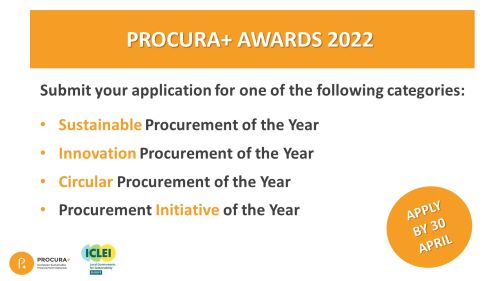
Who will follow in the footsteps of 2025's Procura+ Award winners Berliner Verkehsbetriebe, Orleans Metropole and UNDP Uzbekistan? Applications for the 2027 Procura+ Awards are now open, inviting public authorities to submit applications in three possible categories: Sustainable Procurement of the Year, Innovation Procurement of the Year and Global Procurement of the Year. Apply by filling in the form below. Deadline: 20 September 2026 (23:59 CET).
The three categories aim to highlight sustainable, circular and innovation procurements and tender procedures and give visibility to the most dynamic, forward-looking and innovative public authorities and their initiatives. The succesful solutions will have a strong potential for replication and scaling up and will be an excellent showcase in using sustainable, circular and innovation procurement instruments to purchase cutting edge solutions.
Sustainable Procurement of the Year
This category will reward procurements which integrate aspects of sustainability, including environmental, economic, circular and social elements. It aims to showcase procurements which include a strategic and therefore holistic approach to implementing public procurement.
Innovation Procurement of the Year
This category will reward those procurements which use innovative approaches in their purchasing practices, as well as those that foster innovation by purchasing cutting-edge products, services and works and see the public authority as a launch customer, driving sustainable development.
Global Procurement of the Year
This category will focus on global outstanding public procurements and initiatives. This category goes beyond Europe and seeks to showcase good practice from all over the world.
The 2027 Procura+ Awards will be assessed by a jury of procurement experts and policy makers. The jury will be revealed soon. The winners and finalists will be announced during a special ceremony at the Procura+ Conference, taking place in the City of Barcelona from 16-19 February 2027. More information about the Conference can be found here. Registration and programme info will be announced soon.
Previous years' winners can be found here. For more information about the terms and conditions, click here.
The Practices Collection brings together innovative supply chain practices from seven organizations across four countries: China, the United States, Thailand, and the Netherlands. It showcases practical applications of carbon labelling and emission reduction in key areas including supplier management for public and private sectors, low-carbon logistics, carbon inclusion, supply chain finance, remanufacturing, clean production, and digitalization. As a valuable reference, the Practices Collection offers actionable insights and sets a positive example for industry practitioners.
CEC has hosted the Secretariat of IGPN since 2018, driving the global implementation of sustainable procurement. The innovative cases featured in the Practices Collection document policies, measures, tools, and outcomes of applying carbon labelling to innovate supply chain management, facilitating knowledge sharing among IGPN members and stakeholders worldwide. By summarizing practical experience and demonstrating phased achievements, the Practices Collection effectively enhances supplier capacity, promotes the adoption of carbon labelling, and stimulates market and supply-side demand for sustainable products and services.
Using a real project scenario, participants explored how procurement can shift from lowest upfront cost to whole-life value, carbon performance, and circularity. The discussion was driven around the importance of policies and leadership, the implementation mechanisms along the procurement life-cycle and the market response.
What are the challenges?
During the discussion, participants identified a set of systemic barriers that are holding back progress, including:
Fragmentation across ministries, policies, standards and processes.
Continued focus on lowest cost over lifecycle value and carbon performance
Limited use of performance-based approaches and lifecycle tools
Gaps in data availability and reliability
Weak coordination with the market.
What needs to change?
Some priority actions converged with the Global Framework for Action around the need to: 1. Strengthen policy alignment and leadership (P1.1)
Enable inter-ministerial collaboration to develop integrated building policies addressing operational and embodied carbon, circularity, and lifecycle assessment; supported by aligned standards, budgets, and incentives. 2. Redesign procurement practices (P3.2)
Adopt performance-based procurement that rewards innovation and outcomes, supported by the alignment of standards, strong data systems, and green financing are essential to scale sustainable construction. 3. Activate market collaboration (P2.6; P3.3).
Use early market engagement and collaborative procurement methods (e.g. competitive dialogues) to create clear demand signals and enable innovation across the value chain.
What enables implementation?
Scaling these actions requires aligned standards and metrics (e.g. embodied carbon, circularity), robust data systems for tracking performance, green financing and incentives to reduce risk, and capacity-building across procuring entities.
Key takeaway from this session
The workshop roundtables highlighted that policy ambition is advancing faster than implementation capability. However, by aligning leadership, operational tools, and market collaboration, public procurement can become a powerful demand-side driver for a near-zero, circular built environment. The Global Framework for Action provides a common direction, but impact depends on applying these actions in day-to-day procurement decisions.
Launched at this session: Online course to support implementation
To support the transition from ambition to practice, a new free online course on sustainable and circular public procurement for the built environment developed by UNEP was launched at the Summit.
How can circular economy help to solve the global adequate housing crisis? To bridge the housing gap without crossing the planetary boundaries requires an urgent shift from destructive extraction to regerative systems. The GlobalABC/One Planet Network Circular Built Environment (CBE) group's event at the WUF13 in Baku Azerbaijan "Policy Pathways for advancing adequate housing through circular construction" (Tuesday 19 May 2026) discussed the three sides of circular built environment 1) prioritize retrofitting, 2) material circularity and 3) design for circularity. During the event the governments of Senegal, Bangladesh and Ukraine shared their experiences and priorities related to circularity in the built environment.
A policy paper "Scaling Circular Construction to Realize the Right to Adequate Housing for All: Policy Pathways", a key topic product of the GlobalABC/OPN CBE group, was launched during the event. This policy paper developed by UN-Habitat with the suport of the CBE group members discusses how circularity can help to close the global housing deficit in a way that we can stay within the planetary boundaries, and introduces policy analysis and experiences from the case study countries.
International Public Procurement Conference 2026: Procurement for Prosperity-Driving Jobs, Innovation, and Impact in East Asia and Pacific co-hosted by Thailand’s Comptroller General’s Department, World Bank and ADB, the IPPC 2026 explores how procurement can become a strategic driver of prosperity.
Public procurement sits at the crossroads of digital transformation, market development, and socio-economic progress. The rise of digital tools, data, and AI is turning procurement into a more transparent, evidence-based system—helping governments move beyond lowest-price decisions toward best value, quality, and long-term impact. By strengthening analytics, interoperability, and supplier engagement, procurement can better align with national priorities, support competitive local industries, create jobs, and deliver sustainable public value.
In the East Asia and Pacific (EAP) region, reforms have focused on digitalization, sustainability, and inclusive growth. Building on the momentum of the Seoul 2024 and Manila 2025 IPPC conferences, IPPC 2026 will advance lessons learned and regional best practices to further modernize procurement systems.
Co-hosted by Thailand’s Comptroller General’s Department, the World Bank, and the Asian Development Bank, and in partnership with the Asian Infrastructure Investment Bank (AIIB), IPPC 2026 will explore how procurement can become a strategic driver of national prosperity by 2030. Over three days, participants will share tools, innovations, and partnerships to help governments design value-driven procurement systems that generate quality outcomes, sustainable jobs, and resilient markets.
Why This Course Matters?
The built environment is at the heart of the climate crisis, accounting for 37% of global greenhouse gas emissions and 40% of global resource use. With half of the buildings expected to exist in 2050 not yet built, there is an urgent need to rethink how we design and manage our infrastructure.
Governments spend roughly 13% of global GDP on procurement, providing a massive lever to shift markets toward near-zero-emission, circular, and resilient solutions. This course empowers you to turn high-level sustainability goals into concrete procurement decisions.
What You Will Learn?
By the end of this course, you will be able to:
-Navigate the Global Context: Understand the environmental and socio-economic impacts of the built environment.
-Master the Global Framework for Action: Harnessing sustainable and circular public procurement to drive demand for a near-zero and resilient built environment: Apply the high-level principles and priority actions for implementing circularity across the buildings and construction value chain.
-Apply Practical Tools: Learn to use Whole Life Costing (WLC), ecolabels, and performance-based specifications.
-Identify Enabling Conditions: Explore the policies, financing, and capacity-building needed for procurement success.
-Monitor Impact: Implement frameworks to track progress against SDG 12.7.1 and other national commitments.
Course Features
Duration: Approximately 10 hours of self-paced learning.
-Interactive Content: Includes videos, case studies, and open-ended reflection tasks.
-Expert Backed: Developed by UNEP with IISD as technical partner, peer-reviewed by global experts from UNOPS, ICLEI, OECD, CEC China (IGPN Secretariat), C40, Dutch Ministry of Infrastructure and Water Management, ITC ILO, Impacti, SKAO and Western Cape Government. And pilot-tested by users in Argentina, Colombia, Ghana, Kenya, Philippines, Somalia, South Africa, and USA.
-Certification: Earn a Certificate of Completion by passing module quizzes with a score of 70% or higher.
Who Should Join?
While designed for public procurement officers and policymakers, this course is also highly relevant for:
-Technical officials and oversight bodies.
-Private sector suppliers and industry associations.
-Civil society actors and training providers.
-Prerequisites: Introductory level knowledge of procurement is recommended
A new technical brief developed jointly by the Secretariat for the 10-Year Framework of Programmes on Sustainable Consumption and Production (10YFP) and the Secretariat of the Basel, Rotterdam and Stockholm (BRS) Conventions is out now!
Discover:
- Why transition to a circular economy in the context of chemical and waste pollution
- Circular economy and life-cycle approaches as recognized in international decisions
- Co-benefits of circular economy approaches and issues to be managed
- How implementing the objectives of the Basel, Rotterdam and Stockholm Conventions contributes to achieving a circular economy
- Policy interventions that can advance both the objectives of the Conventions and circularity
- Relevant work of the 10YFP Secretariat and the One Planet Network in advancing these objectives.
This fiscal year, 2026, marks 30th anniversary of GPN Japan. Since our founding, our membership has grown from 73 organizations to approximately 1,300 today (including companies, local governments, and private organizations). In addition to publishing and disseminating environmental information on approximately 13,000 products through “Eco-products Database”, we have now held “Green Purchasing Award” 26 times, which recognizes innovative initiatives.
We would like to express our heartfelt gratitude for the warm messages of congratulations we have received from IGPN Secretariat and IGPN members around the world.
On February 10, 2026, we held a symposium to commemorate our 30th anniversary. Attention of a society is focusing on the role of “procurement” as one approach to solving the challenges on sustainability, as the sustainability expected of companies and organizations continues to deepen. We held this event as an opportunity to cultivate collaboration and co-creation among industry, government, academia, and the public and to aim for the next level of sustainability looking ahead the next decade. We welcomed over 200 participants across Japan.
In the keynote address, the speaker provided an outlook for the future based on sustainability trends over the past decade. In the subsequent panel discussion, experts in the circular economy, regional finance, supplier engagement, sustainability management, and the Green Transformation (GX) shared specific case studies, insights, and key concepts aimed at achieving carbon neutrality. In addition, participants also contributed to the discussion by responding to an online survey during the panel discussion, we were able to discuss together in the venue.
Following the symposium, we held a networking reception to facilitate interaction among participants. GPN Japan will continue to provide the latest information on sustainability, while also planning and implementing initiatives that enable our members to participate in our activities and build their new networks.
More details please access the program of the event from the JPN Japan website here (Japanese).
The textile industry is one of the sectors with the greatest environmental and social impacts globally, with China accounting for a significant share in both the production and consumption stages of the value chain.
This case study report is an outcome of the project “Sustainability in the textile value chain, promoting Ecolabel and Sustainable Public procurement”, implemented by China Environmental United Certification Center (CEC), which is affiliated with the Environmental Development Center (EDC) under the Ministry of Ecology and Environment of China. The project adopted a value chain analysis approach and a life cycle assessment (LCA) concept to develop the Ecological Textile Technical Specifications, systematically integrating criteria on climate change, biodiversity, pollution control, and social impacts. The project organized multiple promotion activities for standard interpretation and the adoption of sustainable procurement, and conducted pilot assessments in three well-known Chinese textile enterprises. These efforts have effectively advanced the green and low-carbon transformation of China’s textile enterprises.
The activities were supported by the EcoAdvance project, a collaborative effort between the United Nations Environment Programme (UNEP), GIZ, and Öko-Institut, receiving financial support from the German Federal Ministry for the Environment, Climate Action, Nature Conservation and Nuclear Safety (BMUKN) through the International Climate Initiative (IKI).
A new collaboration opportunity under the European Innovation Council’s (EIC) Business Acceleration Services aims to strengthen global innovation procurement. Public buyers outside the European Union seeking cutting-edge solutions can now connect directly with over 6,000 innovative start-ups, covering key sectors such as the green transition, health and advanced digital technologies.
The European Innovation Council (EIC) is backing Europe’s most innovative and disruptive deep tech startups and SMEs, through the SPIN4EIC project. Supported by ICLEI Europe, the initiative is dedicated to enhancing innovators’ability to access procurement markets both in Europe and worldwide through training, matchmaking, and free hands-on assistance. As part of its work in SPIN4EIC, ICLEI is supporting EIC-backed innovators to access global procurement opportunities. Collaboration with the global network allows the identification of possible tender opportunities to procure innovative solutions worldwide.
The initiative has already demonstrated impact through collaborations with global partners, including:
EIC-backed AquaB Nanobubble Innovations Ltd, a deep-tech company that delivers electrostriction-based nanobubble solutions for oil and water treatment, recently signed a landmark commercial agreement with Saudi Aramco, one of the world’s largest energy companies. Read the full Success Story!
Public buyers interested in sharing tender notices and/or information on relevant platforms where tender opportunities are published, and in connecting directly with innovative start-ups to address their needs, are invited to contact the ICLEI Europe procurement team (procurement@iclei.org) for an introductory meeting.
With the publication of its first Recommendation, the Circular and Fair ICT Pact takes a further step in strengthening and harmonising sustainable ICT procurement. Building on years of collaboration and shared practical experience, this Recommendation translates collective insight into focused, implementation-oriented guidance. The first Recommendation, Leveraging Environmental Product Declarations to Improve Scope 3 Emissions Reporting in ICT Procurement, addresses a structural challenge in public sector climate action: the quality of Scope 3 emissions data linked to purchased ICT hardware.
For most public organisations, Scope 3 emissions represent the largest share of their carbon footprint. In ICT, upstream emissions associated with production can be significantly higher than emissions from the use phase. Yet many organisations continue to rely on spend-based calculation methods. While these provide an initial overview, they do not reflect the actual carbon performance of specific products and therefore limit the precision of reporting and reduction strategies.
The Recommendation calls on procuring organisations to require suppliers to provide third party verified Environmental Product Declarations (EPDs) for ICT hardware. EPDs are standardised documents based on life cycle assessments and independently verified under recognised international standards. They provide transparent data on environmental impacts, including greenhouse gas emissions expressed as CO₂ equivalents, across the full product lifecycle.
Embedding EPD requirements at tender stage, and verifying them during contract management, strengthens the quality of Scope 3 data used for monitoring and reporting. It also increases transparency in the ICT supply chain and encourages manufacturers to measure and disclose product level environmental impacts.
CFIT Recommendations are developed by and for CFIT participants. They consolidate shared experience into harmonised guidance across the procurement cycle, supporting public organizations in using procurement as a lever for circularity, fairness, and climate action.
The "Alibaba 'Scope 3+' Avoided Emissions Implementation Guidelines" was officially released lately, with the technical support provided by the China Environmental United Certification Center (CEC) throughout the entire process.
The guidelines systematically elaborate on the concept, boundaries, classification framework, and implementation principles of "Scope 3+" emissions, provide practical pathways for scientific accounting, digital management, professional verification, ecosystem collaboration, and disclosure.
Over the past five years, CEC worked closely with Alibaba, jointly advancing the practice and development of "Scope 3+" avoided emissions, actively participated in international standard-setting processes, particularly in the "Guidelines for Avoided Emissions 2.0" released by World Business Council for Sustainable Development (WBCSD) and the exploration of impact accounting for “GHG Protocol”. In the meantime, both committed to continuously promoting pilot experiences from China, helping to establish avoided emissions as a credible and universally applicable narrative language for climate performance, and integrating it into global climate governance.
To boost the printing consumables industry’s commitment to sustainability, China Environmental United Certification Center (CEC), launched the project of “Green Supply Chain Improvement Study for the Printing Consumables Industry” in June 2025, with support from the “Green Printing Compaign for Zero-Waste Cities” initiated by Taotian Group’s 3C Digital Sector, Alibaba Philanthropy, and the Beijing Entrepreneurs’ Foundation for Environmental Protection. The project aims to steer the industry toward eco-friendly procurement, pushing upstream suppliers to adopt greener practices and strengthening the supply chain against global trade and national environmental issues.
<Green and low-carbon procurement guide for the printing consumables industry>, a key project outcome, was formally released by the project team, in collaboration with Zhuhai Printing Consumables Industry Association, at a training workshop focused on boosting green supply chain capabilities lately. Tailored to the specific needs and capabilities of printing consumables manufacturers and their supply chain partners including producers of toner cartridges, ink cartridges, ribbons, raw materials, and components, the Guide built on the core principles of “proactive accountability and continuous improvement”, emphasizes on practical, company-specific solutions, steers businesses toward building sustainable partnerships with suppliers and positioning green procurement as a vital pillar of regulatory compliance and competitive advantage. The Guide provides clear benchmarks for key areas like eco-friendly materials, product design, and supplier environmental management, offering a roadmap to embed sustainability into procurement. It advises companies to set green standards, assess suppliers’ environmental performance, prioritize renewable materials and recyclable designs, and reduce packaging—ensuring low-carbon goals are woven into every stage of procurement.
Procura+ participant Las Rozas de Madrid is seeking to transform its innovation policy, transitioning from a Smart City approach to an Intelligent Community model. In doing so, they will change their relationship with suppliers, moving away from a business-as-usual approach.
The city’s new approach will have a stronger focus on sustainability and innovation, requiring suppliers to achieve a 5% annual reduction in CO2 emissions through innovative solutions. In addition, suppliers will be obligated to comply with a dedicated and compulsory chapter on innovation clauses.
With this policy, the municipality would like to create an open innovation programme, where big contractors, through the innovation clauses, can include smaller actors and SMEs into the contract. Potentially this approach could also make it easier to engage with international innovative start-ups who are currently unable to access the complicated Spanish procurement bureaucracy.
Las Rozas de Madrid has developed a shared guidance to support other municipalities in replicating their innovative procurement model. The document can be found here. More information about the municipality’s work can be found here.
Every year across the European Union (EU), public buyers spend two trillion Euro (15 percent of the EU’s GDP), purchasing works, goods and services. Translating to 15 percent of the EU’s GDP, public procurement has massive potential to be used as a key tool for the advancement of social, sustainable, circular and innovation policies.
In the current geopolitical context the EU also sees public procurement as a tool that can bolster its resilience, competitiveness and (economic) security. European Commission (EC) president Ursula von der Leyen has called for an ambitious revision of the EU’s public procurement directives to introduce “made in Europe” criteria, with the goal of strengthening and scaling up EU production capabilities in crucial sectors.
From compliance tool to policy instrument
In 2014 the EC developed Public Procurement Directives to simplify procedures, provide more flexibility for contracting authorities, and to promote fair access to all economic operators, including Small and Medium-sized Enterprises (SMEs). Their objective was to enable public authorities to use their buying power to secure the best value for money while improving environmental sustainability, social inclusion and innovation.
Nonetheless, a recent evaluation highlights the limits of the current framework where between 2011 and 2021 the share of awards based solely on lowest price increased, with 55 percent of procurement procedures in the EU using the lowest price as the only award criterion in their contracts.
Strengthening EU competitiveness
Equating ‘value for money’ with the lowest price is a short-sighted practice that hampers innovation, weakens strategic investment, and limits long-term value creation.
As Dominique Sandy, Head of ICLEI Europe’s Sustainable and Innovation Procurement Team, argues: “at a moment when EU budgets are constrained and global competition is intensifying, we cannot let public procurement underperform as a policy instrument. A revised procurement framework that makes sustainable procurement the norm would help translate the Union’s industrial, climate and resilience ambitions into concrete outcomes on the ground.”
Cities as key actors in the EU procurement ecosystem
To work towards these goals effectively cities need to develop capacity, specialised skills, and know-how. Consequently the new framework should support and promote the creation of city-level spend analytics and foresight capabilities that can map where municipal money flows and identify opportunities for more sustainable, innovative and/or resilient options. Public procurement needs to become a core pillar of EU missions and city-focused initiatives such as the Climate Neutral and Smart Cities Mission and the New European Bauhaus.
Within the Big Buyers Working Together project, aiming to support collaboration between public buyers with strong purchasing power and to promote the wider use of public procurement for innovative and sustainable solutions, ICLEI Europe is leading a Community of Practice seeking to integrate the NEB principles within sustainable public procurement. These initiatives help translate political commitments into concrete locally-replicable actions on the ground and support dialogue between cities and industry to ensure that value-based criteria are realistic, innovation-friendly and scalable.
As hubs of economic activity and innovation, cities play a central role in implementing strategic public procurement for the transition to succeed. Their investment potential in sectors such as energy, transport, circular economy and buildings is key to create sustainable, lead markets.
Better leveraging EU funding through procurement
ICLEI Europe proposes that the revised Directives strengthen public procurement as a core delivery mechanism for EU priorities through a number of legislative reforms. These should support cities to fulfil their potential as promoters and implementers of strategic public procurement. They include the introduction of mandatory green criteria in high-impact categories, strengthening of Socially Responsible Public Procurement (SRPP) through reserved contracts for social enterprises, due diligence and mandatory social criteria, and the operationalisation of Life Cycle Costing through standardised EU methodologies.
Reframing “value for money” to include lifecycle performance, resilience, social and environmental value, and ensuring that quality-based criteria are the default in tenders in strategic sectors, would enable procurement to translate EU funding into measurable impact, aligned with the Union’s objectives.
Turning dialogue into delivery
The forthcoming revision of the Public Procurement Directive - expected in June 2026 - represents a key opportunity to strengthen the framework and better align it with the EU’s policy ambitions. In its contribution to the European Commission’s public consultation on the new directives, ICLEI Europe underlines the important role of cities and regions as launch customers, recognising their combined expertise in climate, social policy and innovation, and emphasises how public procurement should be used a tool to translate EU ambitions into locally workable practice.
Through initiatives such as its City-Industry Dialogue series and its Procura+ Network, ICLEI Europe continues to demonstrate how policy reform, market engagement and local delivery can reinforce each other. These activities show that supporting cities in their implementation of strategic procurement practices can help Europe remain competitive while staying transparent, fair and legally secure.
Read ICLEI Europe’s contribution to the EU procurement directive consultation at the ICLEI Europe website here.
A new article has been published on environmental sustainability and school food procurement in low- and middle-income countries (LMICs):
Promoting environmental sustainability through school food procurement in low- and middle-income countries: critical reflections
Luana F. J. Swensson & Florence Tartanac Frontiers in Nutrition
The paper reflects on the growing interest in“planet-friendly”and“sustainable” school meal programmes and explores the often underexamined procurement-related bottlenecks that countries face when attempting to operationalize environmental sustainability objectives through school feeding. In particular, it discusses challenges related to:
-defining environmental sustainability for food,
-translating sustainability objectives into procurement criteria and verification mechanisms, and
-managing trade-offs and synergies with existing social, economic, nutrition and health objectives—especially in LMIC contexts.
While the focus is on school food procurement, many of the reflections are relevant to broader public food procurement debates.
A new collaboration opportunity under the European Innovation Council’s (EIC) Business Acceleration Services aims to strengthen global innovation procurement. Public buyers outside the European Union seeking cutting-edge solutions can now connect directly with over 6,000 innovative start-ups, covering key sectors such as the green transition, health and advanced digital technologies.
The European Innovation Council (EIC) is backing Europe’s most innovative and disruptive deep tech startups and SMEs, through the SPIN4EIC project. Supported by ICLEI Europe, the initiative is dedicated to enhancing innovators’ ability to access procurement markets both in Europe and worldwide through training, matchmaking, and free hands-on assistance. As part of its work in SPIN4EIC, ICLEI is supporting EIC-backed innovators to access global procurement opportunities. Collaboration with the global network allows the identification of possible tender opportunities to procure innovative solutions worldwide.
The initiative has already demonstrated impact through collaborations with global partners, including:
EIC-backed AquaB Nanobubble Innovations Ltd, a deep-tech company that delivers electrostriction-based nanobubble solutions for oil and water treatment, recently signed a landmark commercial agreement with Saudi Aramco, one of the world’s largest energy companies. Read the full Success Story!
Public buyers interested in sharing tender notices and/or information on relevant platforms where tender opportunities are published, and in connecting directly with innovative start-ups to address their needs, are invited to contact the ICLEI Europe procurement team (procurement@iclei.org) for an introductory meeting.
To learn more about SPIN4EIC check out the following channels: EIC Innovation Procurement Programme LinkedIn group, Buyers group on Public Buyers Community, SPIN4EIC website, and Newsletter.
This good practice highlights that developing and incorporating gender-related criteria into ecolabels and certification schemes can strengthen efforts to promote equal pay, non-discrimination, fair treatment, and equitable opportunities for career advancement across supply chains. In the context of public procurement, integrating such criteria — including through the use of ecolabels and certifications — provides a practical pathway for governments to support suppliers that adopt gender-inclusive practices and to align purchasing decisions with national and international commitments to gender equality. Relevant examples include FSC, OEKO-TEX STeP, Fairtrade, ChileCompra, Colombia Compra Eficiente, Brazil’s Public Procurement and Contracting Law, and Mexico’s Public Sector Procurement Law.
This series of good practices reflects experiences on ecolabelling, sustainable public procurement, or the joint use of ecolabelling and sustainable public procurement that have demonstrated positive impacts on fostering sustainable consumption and production — for this reason, they are called "good practices.” These good practices aim to promote global exchange by providing information and examples of various approaches that entities from different countries and contexts can apply to strengthen the use of ecolabels and sustainable public procurement. They were developed as an outcome of the Working Group on Ecolabelling from the Consumer Information Programme, under the One Planet network, and the EcoAdvance project, jointly implemented by the German Cooperation for Development (GIZ), the United Nations for Environmental Protection (UNEP), and the Oeko Institute, funded by the German Federal Ministry for the Environment, Climate Action, Nature Conservation and Nuclear Safety (BMUKN), and the International Climate Initiative (IKI).
The Irish Office of Government Procurement (OGP) sought to develop a framework contract for remanufactured notebook computers to advance sustainability through shared services, efficient resource use and standardisation. The contract aimed to build on the previous framework by ensuring access to high quality remanufactured Windows Notebook Computers at the most economically advantageous cost for all Framework Clients, promoting and encouraging SME participation, and supporting the environmental ambitions of the Irish Government.
To achieve this, the OGP developed a series of award criteria requiring suppliers to reduce waste, minimise the demand for raw materials, use less energy than manufacturing new products, support circular economy principles and ensure cost savings between 25% and 40%, as remanufactured computers should be much cheaper than equivalent new ones. After three attempts the framework contract was eventually awarded to a single supplier, an Irish SME in consortium with a UK based remanufacturer.
The first attempt included as a standalone lot on a Framework that also provided for new devices. Three bids were received on the lot, however only one was compliant so a multi-supplier framework could not be established. The second attempt failed due to an insufficient number of compliant bids being received to enable the establishment of a multi-supplier framework. The OGP believes the unsuccesful attempts can be contributed to lack of experience among suppliers of ICT products in bidding for public contracts, and too difficult specifications around services, warranty, device quality, scale, availability, and standards.
For more details on the development of the tender and the main lessons learnt, take a look at the in-depth case study featured in the GPP Helpdesk.
WACKER is one of the few producers outside China manufacturing high-purity polysilicon – a key material for solar cell production. The company can demonstrate that all its materials are responsibly sourced. At the same time, solar modules using cells made from WACKER’s polysilicon are only marginally more expensive than modules based on supply chains fully located in China.
The Big Buyers Working Together (BBWT) Community of Practice (CoP) on Sustainable Solar visited WACKER’s Burghausen site to gain insights into how risks such as forced labor in the global solar supply chain can be minimized and what cost implications this entails.
While it is technically impossible to link every batch of silicon metal to a specific batch of polysilicon, WACKER has full control and transparency of every material which enters its processes. This is ensured through strict supplier controls, Ecovadis-based requirements, and full disclosure of quartz sources. Furthermore, each pallet of polysilicon is traceable to the customer who received it, enabling module manufacturers and ultimately buyers to confirm that the polysilicon used in their modules comes from WACKER.
Suppliers of silicon metal must provide a formal self-declaration confirming the origin of quartz used in their production. This decla ration includes disclosure of the quartz source, confirmation of its origin, and responses to WACKER’s sustainability and compliance questionnaires. Only suppliers meeting these requirements, together with Ecovadis documentation, are approved. Since silicon metal is typically produced near quartz mines, sourcing outside China is essential for a sustainable and responsible supply chain.
WACKER’s sustainable approach results in only a minimal cost increase: approximately €0.022 per watt-peak, translating to less than €0.001 per kWh. The price difference between a regular module and one using WACKER’s polysilicon is therefore negligible, making it easier for public buyers to justify choosing ethical and sustainable solutions.
For Europe’s solar industry to grow, clear signals of demand for sustainable solar panels are needed – through public procurement requirements or subsidies. The CoP emphasizes that carbon footprint criteria alone are insufficient, as some manufacturers can report low-carbon values or offset emissions through certificates. Berlin’s experience with traceability criteria and supplier declarations could serve as best-practice examples for other public buyers.
In 2025, Sustainable Public Procurement strengthened its role as a key lever for climate action and circularity, with governments increasingly using public purchasing power to drive market change. The 10YFP Secretariat (hosted at UNEP) advanced a shared global reference point for action on Sustainable Public Procurement, particularly in the built environment. This document highlights the main achievements and priorities that shaped progress over the last year.
Sustainable public procurement integrates environmental, social, and life-cycle criteria into how governments buy, from materials to digital and energy systems. Because public authorities are among the world’s largest buyers, procurement decisions shape markets. When governments require whole life-cycle assessments, circular materials, or climate-aligned standards, suppliers respond at scale.
Brazil, Colombia, Finland, France, Ghana, Japan, Kenya, and Somalia endorsed the Framework in 2025. A further five countries: Armenia, Germany, Italy, Luxembourg, and the United Kingdom, formally acknowledged its importance at the inaugural Ministerial Meeting of the Intergovernmental Council for Buildings and Climate (ICBC) at COP30. Together, these signals mark a shift from fragmented pilots toward a shared global reference point for action.
2025: From ambition to implementation
Progress this year was anchored across four mutually reinforcing fronts:
UNEP also developed key resources and achieved important milestones under the EcoAdvance project, jointly implemented by GIZ and Öko Institut, and funded by the Federal Ministry for the Environment, Climate Action, Nature Conservation and Nuclear Safety (BMUKN). A series of good practices on the joint use of ecolabels and SPP was launched, with eight of them replicated by ecolabelling schemes and governments. Uzbekistan adopted a resolution introducing measures to strengthen the use of ecolabels in support of SPP, granting certified products an additional five per cent in their overall evaluation score when certified by a recognized ecolabel. Costa Rica's NDC 2025–2035 was launched, including commitments on SPP and ecolabelling in the building sector. Meanwhile, Thailand, Sri Lanka, the Philippines, and Uzbekistan developed ambitious climate- and biodiversity-related ecolabel criteria for cement and steel, and promoted policy dialogues to support the application of these criteria in SPP.
3. Global monitoring
As custodian of SDG Indicator 12.7.1, UNEP led the 2025 global reporting cycle on sustainable public procurement policies. Sixty-five countries reported, including 13 first-time participants such as Brazil, Australia, South Africa, and the Russian Federation. Fifty-four countries achieved compliant scores.
The data confirms a consistent trend: while policy frameworks are increasingly in place, implementation support for procurement officers, impact measurement, and market engagement remain uneven. The global average maturity score remained medium-low, confirming that legislative frameworks exist, but that practical implementation tools and impact measurement lag behind. These evidence-based insights will now directly inform the design of 2026 regional capacity-building programmes and our global advocacy efforts.
4. Strategic partnerships
Collaboration deepened with the Global Alliance for Buildings and Construction (GlobalABC), the Buildings Breakthrough community, and regional partners, as well as with UN agencies: UNOPS and UNIDO for the built environment, and FAO for food systems. In Latin America, UNEP is advancing a joint regional SPP strategy with eight countries: Chile, Colombia, Costa Rica, México, Panamá, Paraguay, Perú, and the República Dominicana. In Africa, a complementary regional approach is under development, with six countries: Senegal, Ghana, Kenya, Tunisia, Mauritius, and South Africa, co-designing a tailored capacity-building programme for implementation in 2026.
What’s next: 2026 priorities
The focus now shifts decisively to delivery:
1. Launch five online training modules on circular and sustainable procurement for buildings and construction, developed with IISD
2. Pilot regional SPP programmes in Africa and Latin America, enabling structured south–south cooperation, and scale buyer–supplier dialogues to translate policy signals into market response and accelerate supplier innovation
3. Expand endorsement and uptake of the Global Framework for Action on SPP in the built environment, and finalize and launch the Global Framework for Action on SPP to advance sustainable food systems
4. Deliver implementation milestones through COP30 PAS on SPP deployment and strategic engagement towards COP31
5. Enhance SDG 12.7.1 monitoring, transforming reporting data into actionable insights for decision-makers
Acknowledgements
This progress reflects the collective efforts of partners across the global sustainable procurement community, including UNOPS, UNIDO, and FAO; the co-leads and multistakeholder advisory committee members of the One Planet Network SPP Programme; the Ministry of the Environment of Finland; the Ministry of Infrastructure and Water Management of the Netherlands; Brazil’s Ministry of Management and Innovation; the European Commission's Directorate-General for Environment; Jataí Institute; the Global Alliance for Buildings and Construction and its Circular Built Environment Working Group; the Global Framework for Action Leadership Panel; the Buildings Breakthrough community; the 10YFP Board; and the growing network of governments, colleagues and procurement officers advancing this work on the ground.
GPN Japan, released new service for retailers with “Eco-products Database”. This database lists approximately 13,000 products and services, providing detailed environmental information such as compliance with Act on Promoting Green Procurement, acquisition of environmental labels, and use of energy-saving and recycled materials, in addition to information that complies with the “Green Purchasing Guidelines”. (URL of the guidelines: https://www.gpn.jp/english/guideline/)
Products listed in “Eco-products Database” are indicated as “Products listed in Eco-products Database” on the websites and catalogs of eight office supply mail order companies, and are widely used as reference information for companies, local governments, consumers, and others when making green purchases. On the other hand, since “Eco-products Database” lists representative model numbers for series products that come in different colors and sizes, it was a burden for office supply mail order companies to confirm which model numbers were listed in “Eco-products Database” when indicating that a product was a “Eco-products Database” listing in their catalogs.
Therefore, company has decided to provide the JAN codes (Japanese 13-digit code identifying the product) for products listed by “Eco-products Database” listing providers to office supply mail-order businesses and other retailers. “Eco-products Database” updates its listing information four times a year (March, June, September, December), and we will begin providing JAN code information starting in March 2026.
Attention is increasingly focused on environmental information for products and services, such as carbon neutrality, the circular economy, and nature positivity. Changes in consumption behavior are being sought not only from organizational purchasers but also from individual consumers.
By providing the JAN codes for products listed on “Eco-products Database,” we aim to facilitate verification by retailers, increase consumer exposure to products listed on “Eco-products Database,” and promote green purchasing. We will continue to collect environmental information on products and strive to expand the green market by disseminating useful information to organizational purchasers and individual consumers.
The Global Circularity Protocol for Business (GCP) Version 1.0 is a voluntary, science-based framework designed to help companies measure, manage, and communicate their circularity performance. Developed jointly by WBCSD and the One Planet Network (hosted by UNEP) with input from more than 150 experts and over 80 organizations, it provides standardized metrics and practical guidance for reducing waste, cutting emissions, and improving resource efficiency across value chains. Piloted by leading companies, the GCP enables credible, comparable reporting and supports businesses in identifying circularity hotspots, enhancing accountability, and strengthening resilience. Announced at COP30, it marks a significant step toward harmonized global practices for circularity.
More details at One Planet Network knowledge center.
Products of modern life—from clothing and cosmetics to electronics, furniture, packaging, toys, and even the materials used in our homes—contain a wide range of chemicals. With an estimated 40,000–60,000 industrial chemicals present on the global market, improving how information on these substances is communicated has become more important than ever.
This publication offers practical guidance for better sharing information on chemicals and material ingredients as part of broader product sustainability communication. Building on the 10 high-level principles of the Guidelines for Providing Product Sustainability Information, the document explains how these principles can be applied specifically to chemicals in products. It also includes best-practice examples to support businesses and organizations in delivering clear, reliable, and accessible information.
As a complementary resource to the original Guidelines, this translated edition aims to support Chinese-speaking stakeholders in enhancing transparency, strengthening consumer trust, and improving the communication of chemical-related sustainability information across all product categories.
COP30 closed with a clear message: sustainable public procurement is now central to global climate and circular-economy action. Across the negotiations, governments highlighted procurement as a practical lever to transform markets, spur innovation and deliver resilient infrastructure.
Under Axis 4 on cities, infrastructure and water, delegates advanced Objective 12 on sustainable and resilient buildings. The Buildings Breakthrough—coordinated by UNEP and the GlobalABC—reported progress on a package of global deliverables, from shared definitions and procurement guidance to finance solutions and capacity-building tools. Together, these aim to support countries in scaling near-zero emission and resilient buildings.
A major milestone within this package was the Global Framework for Action on Sustainable Public Procurement. Advanced through an endorsement campaign led by UNEP’s 10YFP, the framework gained eight new country endorsements and five formal acknowledgments, receiving strong recognition during the first Ministerial Meeting of the Intergovernmental Council for Buildings and Climate.
Momentum continued under Axis 6 on enablers and accelerators, where COP30 spotlighted the Plan to Accelerate Solutions (PAS) on Public Procurement. Led jointly by UNEP 10YFP and partners in Brazil, UNIDO IDDI and OxGAP, the PAS positions procurement as a key instrument for integrating climate considerations across government decision-making.
Axis 6 also saw the launch of the Belém Declaration on Sustainable Public Procurement, which outlines concrete steps to align major supply chains with the 2030 Agenda. With procurement accounting for 15–30% of national GDP, the declaration—already signed by Brazil and the Netherlands—is expected to draw additional supporters in the months ahead.
Discover more of the Outcomes of COP30 in the event outcomes document.
2025 annual meeting of the International Green Purchasing Network-IGPN was held on the theme of environment friendly products/services low carbon of integrated management and green purchasing practice virtually on December 11. Participants from national Green Purchasing Networks (GPN), and IGPN Advisory Board, invited experts from UNEP, GEN, ICLEI-Local Governments for Sustainability attended this meeting. The meeting was hosted by the IGPN Secretariat, China Environmental United Certification Center–CEC.
Mr. Chen Yanping, Chair of IGPN, presented his speech in the opening remarks, “Public procurement has been increasingly positioned as one of the most powerful levers for tackle climate change. 2025, the IGPN in collaboration with UNEP One Planet Network, launched the supply chain management innovative practice collection activity which achieved periodical progress. I hope participants exchange fully for the achievements and expectations, plan for next year development by considering the global trends”. Mr. ZHU Shu, regional director of ICLEI East Asia vice chair of IGPN, delivered his welcome remarks, strategically align IGPN’s work with major global agendas, hope actively build synergies between sustainable procurement with the critical discussions on planet biodiversity and the sustainable development.
Meanwhile, Ms. Paulina Boéchat, Representative of UNEP One Planet Network Secretariat, introduced the latest Progress on Sustainable Public Procurement Implementation: Preliminary insights of SDG12.7.1 third data collection exercise; Ms. Isabella Huang-Loh, Vice Chair, Global Ecolabelling Network, introduced the New Green Purchasing Strategy of GEN and proposal with IGPN collaboration. Additionally, IGPN secretariat, together with representatives from GPN China, Japan, Indian, Thailand, and the Philippines recapped the progress in 2025 with thinking about the 2025 expectations.
Since CEC holds the IGPN Secretariat in 2018, it consistently works on the IGPN operational and members’ collaboration activities. Stated by Mr. LIU Zunwen, CEC general manager, in the summary speech, “Next, IGPN Secretariat will mobilize member’s needs, enrich its activities, optimize the platform of information and knowledge; meanwhile, incorporate global trend of sustainable public procurement, carry our in-depth collaborations with the GEN, and One Planet Network, ac to achieve IGPN mission which is prevail of green purchasing and environmentally friendly products or services”
This technical paper has been developed as part of the Digitalization 4 Circular Economy (D4CE) Impact Initiative. D4CE is hosted by the One Planet Network and Coalition for Digital Environmental Sustainability (CODES). It is a collaborative endeavor involving a diverse community of experts and organizations with a primary objective to accelerate the transition to a circular economy by leveraging digital technologies as powerful scalers. To drive implementation, D4CE has established two Intervention Labs — one focused on Global Digital Standards and Interoperability and another on Digitally Enabled Business Models — to turn knowledge into action. Through these efforts, D4CE is working toward a more harmonized, transparent, and inclusive digital ecosystem for circularity.
This "Blueprint for a Global Digital Product Information System (DPIS) Framework" is the result of a dedicated and insightful collaboration between the 10YFP One Planet Network and the Wuppertal Institute, with inputs from the Life Cycle Initiative, enriching the integration of life cycle perspectives.
DPIS is the digital infrastructure that enables the exchange of Digital Product Information (DPI) — standardized sustainability-related data about products. DPI includes for example material composition, environmental impact, and social responsibility data. DPIS includes the digital infrastructure designed for the exchange of the data and even when covering only part of the life cycle, or certain sectors, the system is designed to be modular and scalable, making it possible to expand to the full lifecycle over time.
A common framework is needed to harmonize and scale DPIS initiatives, ensuring these resources provide the necessary information to support more sustainable consumption and production, as well as accelerating the transition to a Circular Economy (CE). The global Framework for Digital Product Information System (DPIS) aims to address this issue. The Framework will place CE and the sustainability agenda at the heart of DPIS, while providing guidance on the development of an interoperable global system. It will support political decision makers and DPIS developers in different regions, providing political and technical support. Ultimately, it will help to create interconnected solutions that promote global traceability, transparency, and sustainable business practices.
This document provides a Blueprint for the development of a global Framework. It was created during a pre-study phase aimed at analysing the market landscape, identifying existing initiatives, and assessing stakeholder needs. The insights gathered here will inform the design of an effective, inclusive, and practical Framework.
The United Nations Environment Programme (UNEP) participated in the 2025 Global Ecolabelling Network (GEN) Annual General Meeting (AGM), held in Tashkent, Uzbekistan from 14-17 October. The event brought together representatives from governments, ecolabelling organizations, and international partners to strengthen cooperation and promote credible ecolabelling as a key instrument for advancing sustainable consumption and production (SCP).
The meeting was officially opened by H.E. Abdukhakimov Aziz Abdukaxarovich, Minister of Ecology, Environmental Protection and Climate Change of the Republic of Uzbekistan. In his opening remarks, the Minister emphasized Uzbekistan’s commitment to being at the forefront of the green economy and invited Uzbek businesses to actively engage in environmental certification efforts. Notably, one local company was formally awarded its ecolabel certification during the event. Uzbekistan has shown strong leadership in Central Asia by explicitly integrating ecolabelling and green public procurement into national legislation. In 2025, Uzbekistan launched the voluntary ecolabel “Yashil Belgi” (Green Mark), developed in accordance with the ISO 14024 standard. Building on this momentum, the Government adopted a resolution in June that encourages certified enterprises by awarding additional points in procurement evaluations, thereby integrating ecolabelling into national procurement systems.
The event brought together ecolabel organizations and government representatives from across Asia and the Pacific, Europe, North America and Latin America and the Caribbean. The meeting reaffirmed the commitment of GEN members to advancing sustainable consumption and production through strong partnerships and the exchange of good practices. With a focus on emerging markets, participants discussed how ecolabelling can catalyze change by reaching new consumer communities and supporting regional efforts to scale up credible, harmonized, and impactful sustainability initiatives.
UNEP’s 10-Year Framework of Programmes (10YFP) Secretariat, has a strong partnership with GEN supporting ecolabelling initiatives. During the event, UNEP emphasized the unique contribution of ecolabels in addressing the triple planetary crisis—biodiversity loss, climate change, and pollution. Ecolabels guide consumers and businesses toward products and services with lower environmental impacts across their life cycles while supporting national and global policy frameworks, including the Kunming–Montreal Global Biodiversity Framework, the Global Framework for Chemicals, and national efforts to advance circular economy and sustainable public procurement (SPP). UNEP also highlighted the importance of engaging consumers and businesses through effective communication strategies that reflect values such as health, quality, and social responsibility. A strong call was made for greater efforts toward regional and global harmonization of ecolabelling schemes to enhance credibility, efficiency, and policy alignment.
Progress under the EcoAdvance project was showcased, a collaborative effort between UNEP, GIZ, and Öko-Institut, receiving financial support from the German Federal Ministry for the Environment, Climate Action, Nature Conservation and Nuclear Safety (BMUKN) through the International Climate Initiative (IKI). Key achievements include the Environmental Alliance of the Americas, the first regional initiative to establish a joint programme for ecolabelling and environmental declarations in Latin America and the Caribbean, as well as efforts to develop strong ecolabel criteria for products in the building and construction sector in Asia and to leverage them for SPP. A key highlight for the EcoAdvance project was the in-person signing of six Memorandums of Understanding (MOUs) between the national ecolabel of Uzbekistan and Japan, Kazakhstan, Singapore, Russia, Thailand and Ukraine, as well as the signing of a tri-party Mutual Recognition Agreement (MRA) between the national ecolabels of Thailand, Sri Lanka and Singapore on common criteria for cement. Regional harmonization of ecolabels helps streamline procedures for businesses seeking to market products across borders, reduce costs and complexity, and catalyze international trade in environmentally friendly products.
Through continued collaboration with GEN and its members, UNEP remains committed to promoting credible ecolabelling systems that empower consumers, enhance transparency, and accelerate the transition toward sustainable consumption and production globally.
Copenhagen, 2025 – The Circular & Fair ICT (CFIT) Pact convened participants and partners in Copenhagen for its 2025 meeting, hosted by UNOPS. The gathering underscored how public procurement can shape ICT markets by setting shared expectations and standards.
The CFIT Pact, an action under UNEP's One Planet network’s Sustainable Public Procurement (SPP) Programme, shows that government spending decisions carry influence beyond individual contracts. By aligning procurement approaches across countries, CFIT creates consistent signals that help direct investment, innovation, and competition in ICT.
A moment of commitment
A key moment was the formal handover of Ireland’s signed CFIT Pact by the Office of Government Procurement (OGP). This reinforced Ireland’s commitment to putting sustainable ICT procurement into practice. Anne-Claire Howard, Director of Procurement at UNOPS, opened the meeting with a clear call to action: “Let’s focus on tangible, workable solutions that we can all stand behind and implement. This meeting is our moment to harness the power of this partnership, to forge a common path, and to drive a new standard for the entire sector.”
Advancing and broadening action
Participants advanced work on CFIT’s framework, which covers circularity and critical raw materials, due diligence and transparency, carbon and climate, and chemicals of concern. CFIT resources, including mini-guides and manuals, provide practical tools that help public procurers apply consistent approaches. The meeting also broadened CFIT’s scope. Beyond workplace ICT, the Pact will now address the environmental footprint of data centers and cloud storage.
Responding to new requirements
The meeting addressed changes in the global landscape, including new sustainability and due diligence regulations that affect procurement. CFIT supports members by offering harmonized approaches and shared expertise to meet these requirements more effectively. Participants also heard from Daniel Reid, Head of the Secretariat of the Circular Electronics Partnership (CEP), who shared perspectives on circularity, sourcing, and design challenges across the electronics sector.
Why participation matters
CFIT shows how coordinated procurement can strengthen sustainability in the ICT sector. By joining, participants gain access to shared resources and a network that supports implementation and creates wider market impact.
At COP30, UNEP and the 10YFP are elevating sustainable public procurement to the forefront of climate action through two complementary sets of engagements: a cross-cutting programme highlighting public procurement’s role in driving resilient, inclusive transitions, and a dedicated built-environment area showcasing cooperation and solutions for low-carbon and circular construction in the road to a near-zero emission and climate-resilient built environment.
Discover the main events and engagements across COP30 at the One Planet Network website.
Paris, 3 October 2025 - The 10-Year Framework of Programmes on Sustainable Consumption and Production (10YFP) joined the International Resource Panel’s (IRP) capacity-building meeting for new Panel members. The session brought together scientists, policy practitioners and the 10YFP Secretariat to strengthen the links between research and international action on sustainable consumption and production.
Representing the 10YFP, Jorge Laguna Celis, Head of the 10YFP, presented the programme’s work and priorities, highlighting how the partnership with the IRP has been essential in ensuring that science informs policy and implementation. He underlined how IRP assessments such as the Global Resources Outlook have helped ground 10YFP work and outputs - and how joint initiatives—such as the value-chain approach developed with the IRP—translate scientific methods into practical tools for governments and stakeholders.
“By combining the IRP’s evidence base with the 10YFP’s intergovernmental reach, we can accelerate progress towards SDG 12 and support countries in building more sustainable patterns of consumption and production”, said Laguna Celis.
The event provided an important opportunity to connect with prospective IRP panel members and reaffirm the close cooperation between the two organizations. Moving forward, there remains a consensus between the organizations for advancing the global science–policy interface, ensuring that the authoritative and science-based knowledge of the IRP and international convening power of the 10YFP, work hand in hand to deliver tangible impact on SDG12.
This report discusses the use of Type I Ecolabels for green public procurement (GPP) programs, and the use of EPDs in construction projects. It makes a recommendation to include EPDs in Type I Ecolabels for priority construction materials and products such as cement, concrete and steel, to support streamlined and interoperable reporting.
Many governments adopt Type I Ecolabels as a basis for their enterprise-wide green or sustainable procurement policies. Type I Ecolabels are third-party verified labels that indicate a product meets a threshold for specific environmental, and sometimes social, criteria. They streamline GPP and minimize administrative burden and are most often used for enterprise-wide green procurement or Scope 3 reporting.
Type III Environmental Product Declarations (EPDs) include an actual measurement of greenhouse gas emissions for the product but they do not include a threshold. Many governments specify the use of EPDs for construction materials to support green project design and infrastructure planning. EPDs are most often used to support whole (construction) project life cycle assessment, and more recently for GPP commitments and product regulations for low-emission materials.
Type I Ecolabels and Type III EPDs are distinct yet compatible environmental reporting instruments. Combining them can reduce reporting burden by supporting both enterprise-wide GPP and green building programs.
The document was developed with support from UNIDO and the Industrial Deep Decarbonization Initiative (IDDI), with contributions from the United Nations Environment Programme (UNEP) One Planet Network and EcoAdvance project, funded by the German Federal Ministry for the Environment, Nature Conservation and Nuclear Safety and Consumer Protection (BMUV), and Three Pillars Consulting (TPC), and in consultation with IDDI member governments.
Learn more details at the One Planet Network news center.
Paris, 2025 – The Multi-Stakeholder Advisory Committee (MAC) of the One Planet Network Sustainable Public Procurement (SPP) Programme convened in Paris on 3 July 2025 to strengthen collaboration, align strategic priorities, and define next steps to scale implementation. Hosted by the 10YFP Secretariat alongside the programme co-leads: China Environmental United Certification Center under the Ministry of Ecology and Environment and Directorate: Sustainability (Integration & Reporting) of the Western Cape Provincial Department of Environmental Affairs & Development Planning.
The meeting brought together key partners to discuss strategies for positioning sustainable public procurement more prominently in global policy agendas. The discussions focused on reinforcing shared priorities across the SPP Programme, identifying synergies among partner initiatives, and outlining actions to better integrate SPP into global frameworks such as the Climate COP30, UNEA-7 and broader sustainable development and financing agendas. Participants reaffirmed their recognition of public procurement not only as a technical function but also as a strategic instrument with immense potential for delivering sustainability outcomes.
Participants underscored the importance of life-cycle approaches and cross-sectoral planning, especially in complex supply chains such as infrastructure and electronics. The discussions identified opportunities to ensure greater alignment and cooperation, particularly in addressing institutional fragmentation, enhancing reporting on SPP under SDG 12.7, and strengthening coordination between procurement authorities and sectoral ministries. The meeting highlighted practical entry points for action. Sustainable Public Food Procurement, particularly through school meal programmes, was recognized as a growing area of interest.
A set of proposed activity areas to guide future collaboration merged from the meeting discussions. These include enhanced technical support to Member States, stronger alignment across SPP Programme partners and UNEP, and efforts to raise the Programme’s visibility and influence in global sustainability processes. The meeting reaffirmed SPP’s role as a strategic driver of public sector transformation and sustainability action worldwide.
The SPP Programme extends its sincere thanks to all MAC members and partners for their continued support, and to those who joined the meeting in person in Paris or online, including the Public Procurement Regulatory Authority of Kenya, the Procurement Policy Office of Mauritius, the National Development Unit of the Ministry of National Infrastructure of Mauritius, the Ministry of Infrastructure and Water Management of the Netherlands (DG Rijkswaterstaat), the Ministry of Environment and Sustainable Development of Senegal, the City of Malmö, the European Investment Bank (EIB), the International Institute for Sustainable Development (IISD), the Food and Agriculture Organization of the United Nations (FAO), and the United Nations Office for Project Services (UNOPS).
Sustainability challenges are prompting us to rethink how we design, use, and dispose of our IT devices. This comprehensive guide explores the concept of circular IT, providing actionable insights to help you extend the lifespan of products, reduce e-waste, and lower your climate impact.
Climate change, resource depletion and the e-waste crisis — the world’s fastest-growing waste stream — are interconnected issues that are worsened by our tendency to treat electronic devices as short-lived consumables. The need for a circular approach to IT has never been more pressing, and many developments are happening in this area.
The guide “What and how: Circularity and IT products” is packed with expert knowledge and practical strategies for implementing circular, more responsible practices.
-From today to 2033: the shift from linear to circular
-Roadmap for Sustainable IT
-Reducing e-waste — the world’s fastest-growing waste stream
-Key factors for repairability in practice
-Circular criteria in TCO Certified
-Circular procurement in five steps
Whether you’re an IT buyer, manufacturer, or sustainability advocate, this guide is an essential tool for driving change. Download it now and get to the next level of circular IT.
In Geneva at the World Resources Forum, Jorge Laguna Celis, Head of the One Planet Network (OPN), delivered a keynote address underscoring the urgency of accelerating circular and sustainable solutions.
In his opening remarks, Mr. Laguna Celis stressed that the world has a unique window of opportunity: to deliver solutions at scale that use fewer resources while providing greater benefits for people and planet. He noted that advancing circularity across industries is not optional—it is essential to achieving global sustainability targets and building resilience for future generations.
During his address, he set out four key priorities that should guide the transition:
-Design for enough, not more
-Harness AI & Digitalization to scale up circular economy solutions
-Compare, value and measure circular economy at business level
-Mobilize capital at scale and create markets that reward circularity
These actions, he emphasized, will help unlock innovation and create new opportunities for economies to grow within planetary boundaries. They will also help ensure that people everywhere can enjoy improved wellbeing, while industries reduce waste and dependence on scarce resources.
Mr. Laguna Celis thanked the World Resources Forum for convening such an important dialogue, bringing together leaders and stakeholders committed to addressing the challenges of resource efficiency, circularity, and sustainability. He highlighted the importance of platforms like the Forum to foster collaboration and accelerate the shift toward greater patterns of sustainable consumption and production worldwide.
The European Union has launched a public consultation for its upcoming Circular Economy Act (CEA), a key step in its push towards a more circular economic model. The initiative invites businesses, civil society, and citizens globally to provide input on a new framework for sustainable production.
A New Market for Circularity
The European Commission plans to propose a Circular Economy Act to enhance the EU’s economic security and competitiveness, while promoting more sustainable production, circular economy business models, and decarbonization. The Act will facilitate the free movement of ‘circular’ products, secondary raw materials, and waste. It will also increase the supply of high-quality recycled materials and stimulate demand for these materials in the EU.
The CEA will build on existing frameworks with the objective of creating a robust single market for secondary raw materials. It aims to increase the supply of high-quality recycled materials and stimulate market demand, making them a more viable alternative to virgin resources.
Key areas under discussion include:
Design for Circularity: The Act will explore comprehensive obligations for product design, making goods easier to repair, reuse, and recycle.
"Right to Repair": The CEA is expected to strengthen "Right to Repair" initiatives, ensuring consumer access to affordable spare parts and repair services.
Sustainable Public Procurement: The consultation is gathering input on how governments can use public procurement to actively create a market for circular products and services.
Stakeholder Engagement
The consultation has already seen a proactive response from industry. Businesses and industry associations are engaging directly to help draft workable legislation.
"This is a crucial moment for businesses to get ahead of the curve," a representative from a leading European business association stated. "By providing feedback now, companies can ensure the final legislation is both ambitious and practical, setting a level playing field that rewards innovation in circular business models."
The CEA’s focus on harmonization also aims to simplify compliance for companies operating across multiple Member States, reducing administrative burdens and creating a clear pathway for circular innovations to scale.
How to Respond
The public consultation for the Circular Economy Act is open to a broad range of stakeholders, both within and outside the EU.
Who Can Respond?
Businesses and Industry Associations: All companies are welcome to provide input on how new rules will affect their operations.
NGOs and Environmental Groups: These organizations ensure the Act is ambitious and delivers on its environmental goals.
Government Authorities: National, regional, and local governments are invited to share their experiences.
Academics and Researchers: Researchers and universities are encouraged to provide evidence-based feedback.
Individual Citizens: Anyone with an interest in product durability, the right to repair, or waste reduction can share their opinion.
How to Take Part
Respondents can participate through the European Commission's official "Have Your Say" portal. This is the centralized platform where all feedback is collected. The portal provides a structured questionnaire and allows for the submission of supporting documents.
The public consultation is open until November 6, 2025.
To take part in the consultation, please visit the official "Have Your Say" portal here.
The 2025 Procura+ Awards jury has selected its finalists. The Award has three different categories: Sustainable Procurement of the Year, Innovation Procurement of the Year and Global Initiative of the Year. The winners will be announced on 8 October at the Procura+ Seminar in Middelburg (the Netherlands).
The Procura+ Awards-an ICLEI Europe initiative within the context of its Procura+ Network-seek to highlight sustainable, circular and innovation procurements and tender procedures and give visibility to the most dynamic, forward-looking and innovative public authorities and their initiatives.
ICLEI member Oslo (Norway) is among the nominees in the category Innovation Procurement of the Year, being recognised for launching the ‘Oslo Furniture Reuse Platform-Loopfront’, a pioneering digital solution that integrates circular economy practices into public procurement. Its fellow finalists are Orleans Metropole (France), which has pioneered a sustainable energy project that captures heat from urban wastewater to supply clean energy to residential and university buildings and ANCI Toscana (Italy), nominated for its support of climate resilience through its innovation partnership.
In the Sustainable Procurement of the Year category, the Berliner Verkehrsbetriebe (BVG) (Germany) has been recognised for integrating Human Rights and Environmental Due Diligence (HREDD) into their public procurement of electric bus charging points. The Oeiras City Council (Portugal) developed a forward-thinking public procurement model for the maintenance of its green spaces, Bretagne Porte de Loire Communauté (France) decided to furnish its new ‘Maison de services Jeunesse & Numérique’ entirely with second-life furniture.
The Global Initiative of the Year is a pioneering category, opening up the Procura+ Awards to public authorities from outside Europe for the first time. Its finalists come from three different continents. The Brazilian Ministry of Management & Innovation in Public Services launched Procure+Brasil, a digital public marketplace aiming to make public procurement more inclusive and sustainable. In New Zealand, the Auckland City Council launched the NGA Puna Pukuenga Programme, which connects individuals facing barriers to work to permanent, living-wage jobs in the water and infrastructure sectors. Finally, UNDP Uzbekistan’s initiative, “The Path to Water Through Life, No One Left Behind,” sought to provide sustainable access to clean water in remote communities of Karakalpakstan, Uzbekistan.
FAO’s new flagship publication, Transforming Food and Agriculture through a Systems Approach, offers practical guidance to help policymakers and practitioners take joined-up action across agrifood systems. It presents a concrete framework built around six key elements of a systems approach—systems thinking, knowledge, governance, doing, investment and learning—showing how each contributes to sustained transformation at scale. Moving beyond fragmented efforts, the report emphasizes smarter connections between sectors, goals and stakeholders to deliver lasting impact on food security, nutrition, equity and sustainability. Drawing from 19 real-world examples, it highlights how countries and cities are already applying this approach—from sustainable food procurement in New York to systems-oriented policy-making in Rwanda—demonstrating that transformation aligned with the 2030 Agenda is both possible and within reach.
Data centres in developing countries are set to grow rapidly due to economic expansion, rising data demand and increasing data sovereignty needs. However, these facilities are highly energy-intensive. Despite efficiency improvements, regulations remain insufficient, with the EU still drafting its first Data Centre Regulation. Against this background, United For Efficiency has developed the Sustainable Procurement Guidelines for Data Centres and Computer Servers.
These guidelines are designed to help organisations set robust criteria and processes that improve the energy efficiency of their current or upcoming facilities. They offer recommendations on several key performance criteria and operating conditions that are most relevant and impactful for selecting energy-efficient data centres and computer servers. The criteria cover indicators such as power usage effectiveness, water usage effectiveness, IT equipment energy efficiency, and cooling effectiveness ratio.
Learn more at UNEP resources webpage.
The European Commission has published two new practical guides highlighting how EU Ecolabels can be used for the public procurement of respectively graphic paper and tissue paper and paper products. For both product groups, the guides identify the most relevant EU Ecolabel criteria that can be used when drafting technical specifications and award criteria.
The EU Ecolabel is the official EU voluntary label for environmental excellence and features over 102.000 certified products in 25 different categories. The EU ecolabel criteria are scientifically based, legally established and third-party verified. The criteria, developed through extensive research and stakeholder consultation are regularly updated to adjust to evolving environmental priorities and technological advancements. All EU Ecolabel certified products can be found in the ECAT catalogue.
Public buyers seeking to buy green can require goods and/or services to EU Ecolabel certified, or they can reference identified EU ecolabel criteria in the technical specifications and/or award criteria. Both options reduce administrative verification efforts, and lead to the purchase of products that meet strict environmental standards, without compromising on performance. EU Ecolabels also offer public procurers economic benefits, as they offering access to competitively priced goods and services, while helping contracting authorities to meet sustainability objectives without compromising on quality and on value for money.
Some public administrations, such as the Government of Flanders and the Slovenian Ministry of Public Administration have already used the EU ecolabels successfully in their tenders. More information about them can be found in an article written for the GPP Helpdesk. In addition, interested stakeholders can join the 10 October webinar, highlighting key insights on the use of EU ecolabels as well as some best practices. Register here for the webinar!
The first CFIT mini guide is now available for download, offering practical, step-by-step strategies for carbon-conscious ICT procurement across the full procurement cycle—pre-tender, tender, and post-tender—alongside many real-world examples. As the ICT sector accounts for an estimated 1.4% to 4% of global greenhouse gas emissions, potentially rising to 14% by 2040 according to the World Bank, action is urgent. This guide supports efforts to shape a low-carbon, circular, and fair ICT future while helping organisations meet climate targets, improve resource efficiency, and reduce costs. Developed with John Watt, CFIT Pact participants, and supporting organisations such as the Global Electronics Council and TCO Development, the guide is a collaborative effort.
About CFIT
The Circular & Fair ICT Pact is an action under the Sustainable Public Procurement Programme of the UN One Planet Network. It started as an initiative by the Dutch government in collaboration with other frontrunner countries and regions and in consultation with the ICT market.
The CFIT Pact is open to join for every organization procuring ICT. It supports both frontrunners in the field who want to make more impact together and other procurers who simply want to know how to make their own procurement more circular and fair. Governments with circular and fair ambitions around ICT (or other public organizations) can also join the pact as a coordinating organization supporting a buyer group. Both procurers and coordinators are crucial in building up our collective procurement power.
Other organizations such as ICT producers, ICT value chain partners, NGOs, network and knowledge organizations cannot be participants in the Pact to avoid any conflict of interest. They are more than welcome to sign the Pact as a supporter however. This means they help promote the Pact and its results, and to provide constructive input when invited to join a working group dialogue.
Public tenders should create space for community-led initiatives for renewable energy, allowing local actors to develop their own projects and to access the grid on equal footing with professional/market actors. This is one of the key points from the “Fast and Fair Renewables and Grids” agreement, which brings developers, local governments, civil society and industry. Collectively, these sectoral stakeholders have put forward a set of baseline principles to deploy new renewable energy infrastructure in a manner that creates fairer outcomes for all, thereby generating greater community support and easing local energy transitions.
The endorsing stakeholders flag that the risk to biodiversity and ecosystems will decrease by 75%, while climate change-related land loss and degradation will be 50% reduced, if renewables dominate the energy system. Building and operating new Renewable Energy Systems (RES) is less expensive than deploying coal and fossil gas plants in terms of environmental and economic cost in the long term. However, the advancement of RES remains too slow to achieve EU renewables targets to mitigate climate change, due to lengthy permitting times and lack of political support. At the local level, municipalities wanting to implement RES frequently encounter challenges such as local opposition, a lack of perceived local value and competing interests and motivations. The Fast and Fair Renewables and Grids initiative aims to speed up the rollout of renewables at the local level and has established five baseline principles for how the development of new RES should be approached, focusing on local influence, local value, transparency, nature-positive impacts, and community empowerment.
Public procurement can be an important instrument in particular for community empowerment, as it can help establish a level playing field for all actors in the renewable energy market by creating “space in tenders, auctions and public procurement to allocate room for and/or remunerate projects developed by renewable energy communities.” In addition, tenderers could reduce administrative requirements, include community-focused bidding criteria, reserve space in tender procedures for opening new grid capacity and create tailored bidding windows, and exemptions for renewable energy communities.
The full set of principles can be found here.
More details at ICLEI sustainable procurement platform webpage.
The 10YFP through its programs and initiatives, offers solutions to help governments and stakeholders move towards more sustainable consumption and production patterns. Four global solutions for sustainable, competitive, resilient, and circular economy:
I. PUBLIC PROCUREMENT can lead to more efficient use of public resources while improving social well-being and minimizing environmental impacts
Sustainable public procurement is a powerful lever for change, enabling governments to spend smarter by choosing goods and services that deliver value for money while also benefiting people and the planet. By embedding circularity and sustainability into procurement practices, countries can improve resource efficiency, reduce environmental impacts, and support inclusive development through better jobs, healthier communities, and resilient supply chains.
In 2024, progress focused on aligning procurement frameworks with circular economy goals, particularly in construction and infrastructure. Countries advanced tools, shared principles, and capacity-building efforts to support implementation at scale and improve public sector impact. II. BUSINESS EMBRACE CIRCULARITY and drive more responsible production and consumption
Businesses across regions are increasingly embedding circular economy principles into their core strategies—moving beyond compliance to innovation. Through models focused on reuse, traceability, service design, and sustainable sourcing, companies are reducing waste, building resilience, and meeting the rising demand for responsible products. The One Planet Network supports this shift by providing tools, standards, and platforms that help scale impact and accountability.
In 2024, business engagement expanded through global platforms and technical guidance that strengthened sustainability claims, improved data systems, and supported circular practices across value chains. Companies increasingly recognised circularity as key to competitiveness, risk reduction and long-term value. III. YOUTH EMPLOYABILITY IS ADVANCED through public-private partnership
Young people are central to driving the green transition, bringing fresh ideas, creativity and ambition. The One Planet Network is helping equip youth with the skills, leadership and opportunities they need to thrive in a circular economy—through training, global forums, and direct funding of youth-led initiatives. Public-private partnerships are opening pathways to green jobs while ensuring a just and inclusive transformation.
In 2024, thousands of young people were reached through training, dialogues and leadership opportunities. Youth contributed to international policy processes and gained tools to design and implement their own circular economy solutions, reinforcing intergenerational equity in action. IV.COUNTRIES INTERGRATE AND IMPLEMENT circular economy approach
Governments around the world are integrating circular economy approaches into national policies, aligning with climate goals and sustainable development. Through peer learning, technical support and UN collaboration, countries are moving from planning to implementation—transforming sectors such as construction, procurement and food systems. Regional leadership and global cooperation are helping to accelerate this shift and embed circularity in real-world systems.
In 2024, more countries reported progress under SDG 12.1, expanded their use of circular economy tools, and deepened regional collaboration. National institutions strengthened their capacity to implement circularity through sectoral action, cross-ministerial coordination, and global policy alignment.
Learn more at UNEP One Planet Network news webpage.
A new report commissioned by the United Nations Environment Programme (UNEP), as host of the Global Alliance for Buildings and Construction (GlobalABC), is calling for urgent action to reduce embodied carbon in construction materials as a critical step toward achieving global climate targets.Funded by the German Federal Ministry for Economic Cooperation and Development (BMZ), the report forms part of UNEP’s broader initiative, “Transforming the Built Environment through Sustainable Materials,” and highlights the hidden but massive climate impact of materials like cement, aluminium, steel, bricks, and glass.
Embodied Carbon: The Hidden Emissions
Embodied carbon refers to the total greenhouse gas emissions associated with the lifecycle of building materials—from raw material extraction and manufacturing to transport, construction, maintenance, and end-of-life disposal. The report notes that 75% of these emissions stem from the manufacturing stage alone, with the remainder spread across transportation (13%), maintenance (11%), and construction (1%).In 2021, the buildings and construction sector was responsible for over 34% of global energy demand and approximately 37% of energy and process-related CO₂ emissions. Materials used in the sector contribute 11% of total global GHG emissions—underscoring the scale and urgency of the challenge.
Investment and Innovation Required
The financial stakes are high. According to a McKinsey analysis of the Network for Greening the Financial System (NGFS) Net Zero 2050 scenario, a staggering $9.2 trillion per year must be spent globally on capital assets to reach net-zero. Of this, $2 trillion must be directed toward retrofits and improvements in existing assets in the construction sector, with $7.2 trillion needed for new, low-carbon construction.The report emphasizes the critical role of low-carbon alternatives, which can cut emissions by 19%–46% in certain building types. Yet, despite the availability of promising technologies, key data on cost and carbon savings remain sparse—hindering informed decision-making across the construction value chain.
Gaps in Carbon Market Methodologies
As part of the study, 28 carbon market methodologies addressing both embodied and operational emissions were examined, identifying 10 focused specifically on embodied carbon. Fifteen projects across countries such as China, India, Argentina, Bangladesh, and South Africa were analyzed—showing emission reductions ranging from 0.069 to 0.49 tonnes of CO₂e per unit. However, the report flags a significant gap: major carbon standards like VERRA and Gold Standard currently lack methodologies that directly address embodied carbon in buildings. Most embodied carbon projects identified were registered under CDM methodologies such as ACM005 and AMS.III.Z.
“If the construction sector is to align with global net-zero pathways, embodied carbon must move to the forefront of climate action”.
The report calls for comprehensive reform in carbon standards, mobilization of finance—including through carbon markets—and industry-wide adoption of low-carbon materials. Bridging these gaps is crucial for cutting the sector’s carbon footprint in half and ensuring a sustainable, resilient built environment by 2050.
Keynote address by Jorge Moreira da Silva, UN Under-Secretary-General and UNOPS Executive Director, at FfD4 side-event: 'From spend to impact: Leveraging public procurement for a sustainable future,' 4th International Conference on Financing for Development, 1 July 2025.
Distinguished delegates and esteemed colleagues,
Thank you for joining us at this important side event to highlight the critical role that public procurement can play in the achievement of the Sustainable Development Goals.
This is a subject that is not only central to our mandate at UNOPS, but also key to conversations we are having at the financing for development conference.
The challenges hindering the urgently needed investment push for the SDGs are many and affect how countries access finance at various levels—whether through Official Development Assistance (ODA), loans, debt relief, climate finance, or other mechanisms.
Yet, all these mechanisms have one thing in common: public procurement will be the key to realizing their impact.
The outcome document of the conference acknowledges this role - by highlighting the role that procurement plays in promoting transparency and accountability, as well as the role of national procurement in strengthening development cooperation.
***
Public procurement is key to the global effort to build a more sustainable, equitable, and resilient future.
Yet often it does not deserve the recognition it deserves. We tend to think of procurement as a technical, bureaucratic process.
But the sheer scale of procurement highlights the transformative role that it can play:
Overall, public procurement accounts for 15-20 per cent of global GDP.
By one account, public procurement activities are directly or indirectly responsible for 15 per cent of global greenhouse gas (GHG) emissions.
For comparison, this is seven times the amount emitted by the entire aviation industry.
How governments spend their money matters immensely.
Public purchasing has immense potential to reduce emissions, promote sustainability and build resilience.
It can create local jobs and support local economies
It can promote equality and social inclusion - by encouraging women-led businesses, local suppliers, and SMEs to bid.
It can cut waste, fight corruption and promote transparency
It can drive innovation - including from the private sector
And it can make supply chains more resilient.
In short, improved public procurement processes can make money work harder and achieve more for communities, which is the ultimate goal.
Importantly - in an era of diminishing public trust in institutions, I would argue that effective and efficient public procurement rebuilds trust, and inspires hope.
Let me share some examples.
In Brazil, a government project to provide healthy food to students in public schools is aiming for food security, better learning, and good eating habits. As a decentralised programme, it has created a public market for local family farmers and taken positive steps to fight rural poverty.
In the Netherlands, where the government has set the target of achieving a fully circular economy by 2050, the ambition is to work with all public authorities to save 1 megaton of CO2 through circular procurement. In one example, they are building a viaduct from reusable components.
Of course - I have many examples to share from our own work at UNOPS too.
As you know, procurement is a cornerstone of our mandate, enabling us to support partners in the delivery of critical infrastructure, essential services and humanitarian aid.
Last year, we procured $1.7 billion worth of goods on behalf of our partners.
In addition to carrying direct procurement, we also provide technical assistance for complex procurement processes, where we support partners to reduce bottlenecks, improve efficiency of their procurement process, and help identify, reduce, and mitigate supply chain-related risks.
Around half of our procurement is from local suppliers, which can help lessen environmental impacts by reducing emissions and directly support local economies.
In Ukraine, for example, last year, over 90 per cent of our contracts were with Ukrainian suppliers, helping us make our supply chains more resilient, while empowering the local private sector in the face of conflict.
Whether we are procuring on behalf of our partners, or working with them to strengthen national capacity for procurement, our focus is on ensuring that procurement processes benefit local communities, build more resilience and accelerate the shift to low-carbon economies.
Similarly - we place great emphasis on involving Small and Medium Enterprises and women-led SMEs in our procurement practices - because we know they play a critical role in economic growth and development.
One example of our procurement support is in Ecuador, where we are working with the government to promote sustainable public transport.
In partnership with the Municipal Public Passenger Transport Company of Quito, we are procuring 60 new electric trolleybuses. These will help to reduce air pollution and greenhouse gas emissions from the public transportation network and improve urban mobility in the capital – all while supporting Ecuador’s commitments to advancing climate action and sustainable development.
How we have procured is as important as what we have procured.
Disability - and gender- inclusive considerations have been integrated into the vehicles. So that wheelchairs, baby strollers and bikes are welcome on board. The trolleybuses have regenerative braking, which reduces energy consumption by up to 30 per cent.
And importantly, through efficient and transparent procurement as part of this partnership, we saved money, which allowed the Municipality to have additional funds to continue to improve the citizens' lives.
All that to say - at UNOPS we are committed to help our partners realise the potential of public procurement to drive sustainable development.
We embed sustainability in every stage of our procurement process.
We have high standards to ensure inclusion, transparency and accountability.
And we are committed to building the capacity of governments and institutions to lead this transformation
***
As we look to the future, it is crucial that we rethink how we define value in sustainable public procurement.
It is about considering the full life cycle of a good or service: its environmental footprint, its social impact, and its long-term economic value.
Transitioning to more sustainable products and services, for example, may carry a short term premium for governments, we know that the increased cost will decline over time. Similarly, as new technologies are scaled up, production processes for net-zero products will become more cost-efficient.
Sustainable public procurement is also about caring deeply about building lasting capacity in procurement reform. Particularly in developing countries, we need to work more closely together to enhance capacity and support the efforts of governments to strengthen institutions.
And finally, emerging technologies, such as e-procurement, AI-driven contract management can play a key role in enhancing transparency and efficiency, and ensuring funds are better utilized.
***
At its heart, public procurement is not about contracts or spreadsheets. It is about people.
It is about using the power of public spending to shape the kind of world we want to live in - and the kind of world we want to leave behind.
A world that is more just, inclusive, and sustainable.
UNOPS is committed to this vision.
Thank you.
At the 2025 session of the High-level Political Forum on Sustainable Development (HLPF), held under the theme "Reinforcing the 2030 Agenda and eradicating poverty in times of multiple crises," the Co-Chair of the Board of the 10-Year Framework of Programmes on Sustainable Consumption and Production Patterns (10YFP), Ms. Annika Lindblom, formally presented the Annual Progress Report of the 10YFP to Member States and delegates.
In her address, Ms. Lindblom emphasized that sustainable consumption and production (SCP) remains fundamental to achieving the Sustainable Development Goals (SDGs), particularly in the face of ongoing environmental, economic, and social crises. “Sustainable consumption and production is not a luxury — it is a necessity,” she stated. The report highlights how shifting consumption and production patterns is essential to unlocking low-carbon and resource-efficient economies, creating green and decent jobs, addressing social inequalities, and embedding circularity in policies, business models, and economies at large.
The presentation reaffirmed the urgency of moving from commitment to implementation. While notable engagement has been achieved across countries and sectors, the report calls for increased ambition and coherence in national SCP strategies, enhanced investment in systemic change, and more robust integration of circular economy principles. It also outlines priority areas under the updated 10YFP Results Framework for 2025–2026, designed to deliver tangible outcomes aligned with national and global priorities.
In closing, Ms. Lindblom underscored the collective responsibility of governments, international organizations, the private sector, and civil society. “Shifting our consumption and production patterns is not a choice we can delay — it is a prerequisite for a just and resilient future.”
The One Planet Network and the 10YFP Secretariat invite all partners to take stock of the progress made, accelerate implementation, and scale up collaboration in the decisive years ahead.
Green public procurement should be then default In the European construction sector. That is the main message of the Buy Better to Build Better (BBBB) coalition, bringing together 35 stakeholders from across the construction value chain, civil societies and public authorities committing to a common vision for green public procurement in 2030.
In their own words, the BBBB coalition seeks to “mainstream public procurement as a core lever for driving large-scale demand for large-scale demand for green construction solutions, while maintaining European industry at the forefront of technological progress.” The coalition believes that if the EU uses its public procurement power (public procurement represents 15% of the bloc’s GDP) it can accelerate the industrial transition while advancing European competitiveness.
BBBB’s manifesto highlights four key points for how its aims should be achieved. Firstly there should be harmonised, sector-specific Green Public Procurement criteria to create demand for low-carbon and circular construction solutions. Secondly, the internal market should be strengthened with overarching public procurement criteria that go beyond lowest price. Thirdly, GPP tracking in the EU should be simplified and standardised, and, finally, there should be continued support, through trainings, resources and strategic guidance, for public authorities to implement GPP.
BBBB believes that if such ideas are implemented well, the EU’s renewed focus on creating lead markets via public procurement could have a particularly high impact on the construction sector, where public procurement accounts for 31% of total investment. The coalition further notes that the EU should replicate the examples set by isolated good practices, enabling green and innovative solutions to scale rapidly and consistently across Europe.
Dominique Sandy, Head of Sustainable and Innovation Procurement at BBBB member ICLEI Europe, explains: “Public procurement has huge impacts and opportunities for public procurers of all sizes. This opportunity is especially present in the construction sector, which accounts for substantial emissions for our members. We are proud to be part of this coalition, to sign the manifesto, and continue to work to make the strategic use of public procurement the norm across Europe and beyond.”
At the OECD Global Public Procurement Forum 2025 last week, Jorge Laguna-Celis and Laetitia Montero from the 10YFP Secretariat joined a high-level panel exploring how governments can use procurement as a lever for the green transition.
Held in Paris, the Forum brought together ministers, senior policymakers, and international experts to address the evolving role of public procurement in tackling today’s most pressing challenges—from climate change and biodiversity loss to social inclusion and economic resilience.
Against this backdrop, participants heard that countries are raising the bar. Regarding the inclusion of climate/environment criteria in public tenders and tools, France is aiming for 100%, Lithuania targets 95%, and Norway now mandates a 30% weighting for such criteria.
However, the panel noted that setting targets isn’t enough. Legal mandates must be matched with strong support systems—training, guidance, and active engagement with suppliers.
The discussion highlighted that green public procurement reforms work best when paired with transparent impact measurement and continuous market dialogue. Tools like ecolabels and modelling methodologies such as SAVi are proving essential for scaling green practices across borders.
The session concluded with a clear message: public procurement is a powerful policy instrument that goes beyond compliance. When strategically implemented, it can accelerate the shift to sustainable consumption and production, foster innovation, and generate long-term value for society and the environment.
The China Environmental United Certification Center (CEC) has unveiled updated requirements for the textile product category. Developed in collaboration with Qingdao Product Quality Testing Research Institute (QTC), Nanjing Customs Textile and Industrial Products Testing Center (JTC), and the Wuxi Textile and Apparel Council, the new criteria mark a significant step toward a greener textile industry in China.
This milestone is a key deliverable of the Consumer Information Programme and EcoAdvance a joint project by the United Nations Environment Programme (UNEP), GIZ, and Öko-Institut, with funding from the German Federal Ministry for the Environment, Climate Action, Nature Conservation and Nuclear Safety (BMUKN) through the International Climate Initiative (IKI).
The revised standard takes a lifecycle approach, covering the entire textile value chain—from cotton cultivation to finished garments. It introduces comprehensive criteria on raw material traceability, low-carbon production methods, and corporate social responsibility, creating a robust framework for end-to-end sustainability governance.
In addition to setting a new benchmark for environmental performance, the standard aims to support the uptake of sustainable public procurement (SPP) in China. By encouraging suppliers to adopt greener practices and guiding buyers toward low-carbon, eco-friendly products, the initiative helps align market behavior with sustainability goals.
A pilot certification program will roll out in key textile-producing regions, with results and case studies presented at international forums to promote global recognition and uptake of the standard.
Learn more at UNEP One Planet Network news webpage.
2025 knowledge sharing webinar of the International Green Purchasing Network-IGPN was held visually on June 19th. Participants from national Green Purchasing Networks (GPN), IGPN Council and IGPN Advisory Board, invited guests from UNEP, FAO, ICLEI-Local Governments for Sustainability, Western Cape Government GIZ Thailand office, Mengniu Group attended this meeting. The meeting was hosted by the IGPN Secretariat, China Environmental United Certification Center–CEC.
Mr. Chen Yanping, Chair of IGPN, presented his speech in the opening remarks, “IGPN promotes sustainable procurement practices and the prevail of environmentally friendly products through its featured "Green Purchasing Network" model, and implements the process of achieving the Sustainable Development 2030 Goals. Hope focus on high priorities, accelerate the transformation toward sustainable consumption and production patterns through IGPN solution on "Sustainable procurement and environmentally friendly products”.
During the meeting, IGPN collaborated with UNEP One Planet Network Sustainable Public Procurement Programme launched the Initiative on carbon label-based supply chain management innovative practice cases collection, with the endorsement from Dr. Francini van Staden, UNEP One Planet Network Sustainable Public Procurement Program Co-lead (Directorate Sustainability, Western Cape Government), Ms. Fayeza Farzana, UNEP One Planet Network Secretariat Sustainable Public Procurement Program coordinator, aims to identify the policies, measures, means and results of supply chain management innovation practices using carbon label under its carbon market mechanisms in different countries or regions, promote knowledge sharing among members, summarize experience and increase its application.
Meanwhile, Mr. Gakuji FUKATSU, secretariat general of Japan GPN, recapped the green purchasing award and winning cases toward decarbonization, Ms. QIAN Yali, senior manager of sustainable development department, Mengniu Group shared the practices for green supply chain decarbonization. In addition, Ms. Luana Swensson, Policy specialist for sustainable public procurement of Food and Agriculture Organization introduced sustainable public procurement in food sector; Ms. Fayeza Farzana, SPP program coordinator of UNEP One Planet Network Secretariat, presented the flagship initiative on mainstreaming circularity in the construction sector through sustainable public procurement.
Follow up, Mr. ZHU Shu, regional director of ICLEI East Asia vice chair of IGPN, celebrate the news that GIZ joined IGPN advisory board member, Ms. Kanchanatetee Vasuvat, Community Manager of GIZ Office Bangkok expressed the expectation and outlined future engagement and recommendations on IGPN development.
Since CEC holds the IGPN Secretariat in 2018, it consistently works on the IGPN operational and members’ collaboration activities. Stated by Mr. LIU Zunwen, CEC general manager, in the summary speech, “Next, IGPN Secretariat will collect, summarize and select outstanding practical cases as scheduled in the initiative, at the meantime, we will also continuously deepens collaboration with members, practice the "Green Purchasing Network" model, link the global innovative thought and advanced methods, stimulates and promote demands for environmentally friendly products, which accelerate sustainable consumption and production transition.”
June 19, 2025, The International Green Purchasing Network (IGPN) collaborated with UNEP One Planet Network Sustainable Public Procurement Programme launched the Initiative on carbon label-based supply chain management innovative practice cases collection, please submit your cases by October 31st,2025!
Climate change presents the global significant challenge people faced at present. In order to fully implemented the Paris Agreement, the establishment of a global carbon market mechanism was further promoted, the realization of Nationally Determined Contributions (NDC) to address climate change was strengthened at the 29th United Nations Climate Change Conference (COP29). The carbon label-based supply chain management innovative practice is not only an inevitable choice to cope with the challenges of climate change and international trade, but also an important means to promote the green transformation of enterprises, enhance competitiveness, and apply market mechanisms to achieve climate change goals.
The Initiative aims to identify the policies, measures, means and results of supply chain management innovation practices using carbon label under its carbon market mechanisms in different countries or regions; summarize, analyze and summarize the steps and approaches, as well as general principles, supply chain innovation management practices by applying carbon label under its carbon market mechanisms; select number of typical cases according to general principles, promote knowledge sharing among members, summarize experience and increase its application.
The scope of the cases collection is Including:
o Members of the International Green Purchase Network (IGPN);
o Members of the One Planet Network Sustainable Public Procurement (SPP) programme;
o Members of related organizations such as Green Ecolabelling Network (GEN);
o International Institute including World Bank or others;
o Relevant enterprises. The expected output will be :
o Cases report (including number of cases, general principles and implementation steps);
o Report will indicate all contributing organizers;
o Report will be posted on the IGPN website, the One Planet Network website, or others relevant;
o Participants from outside the IGPN will also have access of the report.
The Deadline to reply is October 31st, 2025, please download the document learn more in detail, and share your real practices of the Case. Download file
For further information, please contact igpn.secretariat@igpn.org.
International Green Purchasing Network (IGPN)
IGPN promotes green purchasing around the globe by coordinating those who take the initiative in implementing green purchasing towards sustainable consumption and production. IGPN was launched in 2005 with its mission: promote globally the development of environmentally friendly products and services and green purchasing activities; share information and know-how on green purchasing and environmentally friendly products and services internationally; harmonize the efforts of green purchasing and the development of environmentally friendly products and services from a global viewpoint. The International Green Purchasing Network (IGPN) Secretariat is hosted by CEC-China Environmental United Certification Center since 2018.
The “10 Whole Life Cycle Recommendations for the Buildings Breakthrough” are consensus driven recommendations developed through extensive stakeholder engagement led by the Materials Hub (supported by the GlobalABC, One Planet Network and Life Cycle Initiative) and its two parallel working groups Whole Life Cycle Policy Coalition (WLCP.Co, led by the Department of Energy Security and Net-Zero from the UK and the WBCSD) and Circular Built Environment (CBE, led by the Ministry of the Environment of Finland and RMIT University).
The recommendations are launched with the ambition to promote circular economy strategies and Whole Life Cycle (WLC) policy thinking on a global stage, and to raise awareness on the significance of addressing Whole Life Cycle emissions in implementing the Buildings Breakthrough objectives. This should help to progress towards the Paris Agreement through near-zero emissions and resilient buildings.
The “10 Whole Life Cycle Recommendations for the Buildings Breakthrough” aim to show how Whole Life Cycle considerations underpin the Buildings Breakthrough Key Priority Actions, and to provide guidance to policy makers to implement the Buildings Breakthrough commitments nationally and locally.
How can the cooperation between enterprises, businesses and public buyers be improved? That’s a key question for public authorities seeking to incorporate social responsibility in their tenders. The Big Buyers Working Together Social Procurement Community of Practice (CoP) visited social enterprise Silta -Valmennusyhdistys and HOAS, the Foundation for Student Housing for the Helsinki region, concluding that people-centered models lead to simpler and more humane processes that make collaboration easier.
Silta is one of 11 organisations that have joined forces in the Centre of Expertise for Social Enterprises (SYO), seeking to implement and develop a Finnish strategy for the social economy. Currently, Finnish social enterprises are struggling with decreased funding, due to increased competition from big companies.
As noted by Eeva Salmi, Director of Silta, the social enterprise that runs SYO; during a dialogue session with the CoP on Social procurement: "It is really important that there is a continuous dialogue between buyers and service providers at different levels. Silta-Valmennusyhdistys and its sister organisation Valo-Valmennusyhdistys provide a wide range of social and employment services in Finland. That’s also done through our work with the Finnish Centre of Expertise for Social Enterprises- one of its objectives is to promote socially responsible procurement in Finland. Using public procurement to prominent employment opportunities is a key activity in this regardt.”
Through its connection to SYO, Silta also seeks to tackle social sustainability and further develop Socially Responsible Public Procurement, as most of the funding for Finnish social enterprises comes from public tenders and European and national projects. By November 2025 SYO is aiming to develop an updated strategy for social enterprises, which will include recommended measures for SRPP. These measures will be discussed with various Finish ministries.
One of the key points of the new strategy will be that there need to be more different ways of funding social enterprises. Recent research has shown for example that the use of reserved contracts is an almost non-existent practice in public tenders in Finland. Reserved contracts can make it easier for social economy actors to participate in tenders without fearing competition from big market players.
Building on these insights from the Finnish social economy, the BBWT Social CoP also visited HOAS. In addition to building apartments, HOAS is raising awareness of the well-being of workers at construction sites, seeking to ensure the quality and safety of their work. Within this context, they have developed the Aware worksite concept to ensure that all HOAS worksites share the same practical social responsibility objectives, and comply with labour rights. Compliance is monitored through regular (voluntary) surveys measuring the performance and well-being of the workplace. The results of the surveys are fully transparent and based on the responses makes adjustments at the workplace in collaboration with the contractors on site. After three months another survey is done to check if the situation has improved.
As such the concept is a great case study for the Social CoP which aims to build a shared understanding of labour considerations, aligning local, national and international labour standards to ensure fair working conditions and ethical sourcing practices across all contracted suppliers and subcontractors across the entire value chain.
Marika Nyyssönen, Sustainability Manager at HOAS explains "As a non-profit construction client, we believe it's our responsibility to care about the people working on our sites and to actively shape the industry's direction on social responsibility. Our Aware Worksite concept sets shared, concrete goals for well-being, interaction, and fairness — from procurement to everyday site practices. It’s not just a checklist; it’s a mindset for collaboration. We've implemented it in ten projects so far, and others in Finland are joining in. We share the model freely because real impact only happens when good practices spread. Meeting others who are working toward the same goals was truly eye-opening and valuable — exchanging experiences and practical solutions reminded us that together, we can achieve much more."
As part of the World Circular Economy Forum 2025, a dynamic Accelerator Session brought together global stakeholders to explore how measurement, policy, and practice can collectively drive the transition to a circular built environment. The session focused on aligning efforts to implement circularity strategies to achieve the goals of a near-zero emission and resilient built environment, anchored by this powerful opening statement:" We are not just building for today—we're harvesting the future. Our built environment should serve as a bank of materials and resources for future generations."
Part I: National level policy development supporting circularity in the built environment.
The session began with two key announcements: Actions Menu of the Global Framework for Action, developed in alignment with the Buildings Breakthrough Priority Action 2 on Demand Creation, the One Planet Network at UNEP introduced an Actions Menu for integrating sustainable and circular public procurement into construction value chains. This tool provides actionable guidance for governments and industry to create demand for circular, low-emission building solutions.
National Circularity Assessment Framework for Buildings, developed by UNEP, UNOPS, and UN-Habitat with support from the Government of Finland, this is the first comprehensive national-level framework to measure circularity in the built environment. Pilot applications in Senegal and Bangladesh offer key insights into data availability, reuse potential, and material flow baselines.
Part II: Solutions for implementing circularity in the built environment–From policy to practice
The second half spotlighted practical applications and tools:10 Whole Life Cycle Recommendations for the Buildings Breakthrough, a set of practical recommendations supported by a global case study platform that helps policymakers identify scalable, replicable solutions. Featured case studies during the session. Circularity Transition Indicators for Buildings, developed by the World Business Council for Sustainable Development, is a tool that supports circularity measurement at the building level, offering project developers a structured approach to assess performance across life cycle stages.UN-Habitat’s CiCoSa Toolkit and Implementation guide, targeting Sub-Saharan Africa, the toolkit enables circular construction waste management with localized, scalable solutions, highlighting the role of inclusive, regionally grounded interventions.
Diverse Global Voices at both panel discussions emphasized: Retrofitting is a cost-effective, high-impact strategy to extend building life, reduce operational emissions, and minimize construction waste; Local circular practices already exist (such as inclusive brickmaking from recycled materials) but need clear regulation, quality assurance, and data access to scale;Circularity begins at the design stage, from national urban planning to building components. Key design principles include flexibility, redundancy, reuse, and disassembly, supported by recycled and renewable materials; The need for localized R&D on cost-effective and efficient use of upcycled materials; The importance of context-specific metrics, youth inclusion, and extended producer responsibility were also emphasized.
This Accelerator Session highlighted the urgent need and growing momentum, for embedding circularity in the built environment. With new measurement tools, policy frameworks and practical solutions now available, governments and stakeholders have clearer pathways to align and scale up implementation. Circularity is not a distant goal; it is already unfolding in cities and communities around the world. What is needed now is coordination, investment and political will to implement it at scale.
Organizers and Collaborators
This session was co-organized by the GlobalABC Materials Hub Circular Built Environment Working Group (Ministry of the Environment of Finland, RMIT University, and Habitat for Humanity International), the One Planet Network and the Life Cycle Initiative in collaboration with:UNOPS, UN-Habitat, Kenya Green Building Society, French Ministry of Ecological Transition, Ashok B. Lall Architcts, Metro Arquitetos, Habitat for Humanity International, Lalitpur Metropolitan City of Nepal, WBCSD, Government of Chile, Ministry of Environment of Colombia, Asian Development Bank, Municipality of Walvis Bay of Namibia.
Allowing IT brands to self-assess and self-declare a repairability index is not credible, says sustainable procurement expert Barton Finn. TCO Certified includes a verified index that helps you find the most repairable IT products on the market.
Using products as long as possible is becoming a key priority for many of us. It is clearly the right thing to do from both environmental and social sustainability perspectives and helps reduce the carbon footprint of the IT products we buy and use. Consider this: if our IT products could last twice as long, we could avoid half of the negative impacts associated with manufacturing new products. It’s that simple.
One important aspect of product longevity is our ability to repair faulty devices. This can sometimes be easier said than done. While everyone understands the concept of repairability on a theoretical level, the technical side can be quite different. Unlike the visible components found in furniture design, the internal parts of IT products are often hidden, making it difficult to assess their repairability. Repair work requires a certain level of technical expertise, and in most cases, one can’t get hold of a product sample and investigate its repairability features before making a purchase. On top of this, spare parts may not even be available.
This is why we need a repairability index, where experts establish criteria to define important repairability factors and present comparable scores that make it easy to identify the most repairable product models. Repairability indexes have already been implemented in France, Belgium and partly at the EU level. A huge issue, however, is the lack of independent verification. The scores are supposed to be verified by market surveillance authorities. However, they are completely overwhelmed and understaffed, and that’s true for all European Union countries, leaving IT brands to do the calculations.
TCO Certified provides what’s missing elsewhere. The repairability index included in our certification is checked by an accredited, independent verifier, proving that the information about repairability features is correct. Our certification empowers you to avoid greenwashing, compare product models credibly and identify the most repairable product models on the market.
Then of course, each of us has to do our share and ensure that products actually are repaired instead of disposed of when a fault occurs. I regularly come in contact with organizations that do the opposite — they look for the most repairable models, but when these products need repairs, they opt to replace them with new ones instead. This approach means going halfway even though all the benefits come at the end. The true advantages are realized when a product is repaired and gets a longer life — not when it is purchased.
The City of Espoo (Finland) has decided to transform Kera, a formerly industrial/logistic area into a sustainable city district, in line with circular economy principles. Public procurement plays a key role here, which is why the Big Buyers Working Together (BBWT) Community of Practice (CoP) on New European Bauhaus (NEB) visited it during the BBWT annual event in Helsinki.
Espoo’s work in the Kera district is founded on four key principles established in the Kera development commitment. It points out that everything should be done in close cooperation with residents and other stakeholders and that Espoo must make use of low-emission and carbon binding solutions to help its goal of becoming carbon neutral by 2030. Furthermore, the circular economy principles should be implemented whenever possible, and the district is obliged to draw up a development plan highlighting how the solutions are implemented so that Kera can become an (inter)national reference point.
The goals of the commitment were defined in extensive cooperation with local operators and stakeholders and the city takes a similar approach in the implementation of its solutions. Although in Kera this approach is formalised, the city had positive experiences with collaborative market and citizen engagement from the past. A great example was a project focusing on the development of procurement criteria for construction plastics. To define these criteria, the city interviewed plastic suppliers as well as public authorities; based on these interviews it developed a draft it presented in an interactive workshop, representing the entire value chain, highlighting what is feasible or not and which demands can be met.
In the end, the developed criteria, which ended up being applied to Kera as well, required suppliers to collect their waste on all construction sites, track the percentage of recycled material, and get more data on it. Furthermore, the tender criteria sought to align to some extent with the national ecological criteria on plastic recycling, requiring suppliers to apply certain ecological agreements in practice.
For the NEB CoP these insights proved highly valuable. Even though the project was not planned with the NEB principles in mind it was still aligned with its values. Participants were very keen to learn about Espoo’s collaborative approaches, concluding that municipalities should engage more with the private sector as it has valuable procedural knowledge.
More details at ICLEI Sustainable Procurement Platform.
Shouldn’t all children have access to a healthy meal each school day and adequate food education? With one in three children in Europe overweight or obese, and more than half of adults projected to be overweight by 2050, poor nutrition is fueling a public health crisis. But school meal programmes offer a powerful solution, ensuring students receive and are educated about proper nutrition to support their well-being and academic success.
Across Europe, over 90 million students attend schools and universities. Therefore, the provision of healthy, nutritious meals in these institutions, coupled with comprehensive food education, presents a significant opportunity to address food insecurity and reduce health disparities.
As leader of ICLEI’s Global CityFood Programme, ICLEI Europe is a strong advocate for food system transformation at local, national, and global levels, believing in the transformative power of public procurement with the market for social food services estimated at 82 billion euros. The meals served in schools and other public institutions therefore have a significant impact on our climate and public health and by leveraging our purchasing power cities and local governments can be key drivers of this change.
Cities leading the way on sustainable school meals
ICLEI and its Members drive change and counteract the obesity trend through initiatives like SchoolFood4Change (SF4C) and Buy Better Food, which promote public health with a holistic approach. By prioritising nutritious food, sourced through sustainable public procurement and paired with education, these initiatives demonstrate how local policies can accelerate the transition to a healthier food system.
As part of SF4C, several ICLEI Members are spearheading school meal transformations, including Umeå and Malmö (Sweden), Vienna (Austria), Tallinn (Estonia), Ghent (Belgium), and Copenhagen (Denmark). The impact of their actions is evident: more than 650,000 pupils are already being reached through SF4C activities, and, thanks to improved procurement processes, over 3,200 schools across 22 countries are serving healthier, more sustainable meals.
For example, Ghent has overhauled its school meal programme, increasing plant-based meals and incorporating locally sourced and organic ingredients. Meanwhile, more than 90% of the meals served in SF4C schools in Copenhagen are from organically certified products. Following the project's holistic concept to school food, the city focuses not only on putting out ambitious food tenders, but similarly on community-building and education activities. These are the kinds of activities that enable cities and regions to advance important social and political issues.
Aligning local action with European policy
These efforts align closely with the European Child Guarantee, an initiative launched by European Commission President Ursula von der Leyen to protect vulnerable children from social exclusion. The initiative strives to ensure access to essential services, including at least one healthy school meal a day. A recent report highlights the wide-ranging benefits of school meal programmes, reinforcing the need for continued investment in this area.
Already around half of EU Member States have integrated school meals into their National Action Plans for the EU Child Guarantee, yet there is no unified EU vision that aligns existing programmes on school nutrition across the European Commission’s Directorates-General. ICLEI Europe recently leveraged intergenerational dialogue, incorporating the voices of young people who are directly affected by school food programmes, to make this case to the European Parliament.
On International School Meals Day (13 March), European decision-makers heard directly from students about the need to have healthy school meals and food education for all children. ICLEI Europe and IFOAM Organics Europe, along with young students and city representatives, took this message to the heart of European policy making, meeting with several EU Commissioners and Members of the European Parliament in Strasbourg (France).
During this event, a delegation of schoolchildren from Germany’s Markgräfler Gymnasium in Müllheim presented two EU Commissioners, Christophe Hansen (Agriculture and Food) and Olivér Várhelyi (Health and Food Safety), with a petition of over 111,000 signatures, calling for healthy school meals paired with food education for all children. At the event, Commissioner Várhelyi highlighted the importance of early food education: “Eating habits are formed from a very young age and schools can be the place where children learn about nutrition. This requires a strong commitment from everyone involved, as school catering is the starting point for a healthy life.”
Following the discussion in Strasbourg, a second delegation of ICLEI Europe advocates accompanied a group of young people to meet in Brussels (Belgium) with Glenn Micallef, European Commissioner for Intergenerational Fairness, Youth, Culture and Sport. When asked by one pupil, “If ‘food’ is so important, why do we learn so little about it at school?,” the Commissioner emphasised the importance of food literacy as a life skill and the need to integrate it into the education system.
Taken as a whole, through these meetings with high-level politicians, ICLEI has shown that several policy arenas of the European Commission unite under the topic of ‘school meals and food education’, making cooperation across different departments even more important.
Taking action: Support the movement for better school meals
The momentum for healthier, more sustainable school meals is growing, but continued action is needed to turn advocacy into lasting change. To support this effort, EU residents can sign the petition for healthy school meals for every child in every school, which already has more than 111,000 signatures. The petition’s signatures support ICLEI Europe’s call for setting an EU-wide standard for healthy school meals and food education for all children and a shared EU vision, in line with the European Child Guarantee.
Local governments, NGOs and for-profit organisations can take action by endorsing the Buy Better Food Manifesto, developed in cooperation with the EU Food Policy Coalition. The Manifesto sets clear criteria to guide cities in adopting more sustainable food procurement models, demonstrating how prioritising ingredients from small-scale and organic farmers can foster a win-win-win for public health, nature and farmers alike.
By leveraging the power of the public plate, cities and local governments can drive meaningful transformation in our food systems—ensuring a healthier and more sustainable future for Europe.
More details at ICLEI Europe website.
[Expert View] As the urgency for environmental and social responsibility grows, organizations are changing their approach to sustainable purchasing from simply meeting compliance requirements to actively implementing sustainable practices. Barton Finn, our expert on sustainable procurement, emphasizes the rising expectations for transparency, local sourcing, and innovation in procurement strategies.
This article is an edited version of content initially published on Decision-achats.fr. 1. From “why” to “how”
“Ten years ago, convincing organizations to adopt responsible purchasing practices was challenging,” explains Barton Finn. Since then, the debate has moved from “why” to “how.” Awareness has already been raised; the emphasis is now on concrete implementation supported by tools, methodologies and shared resources. 2. From incentive to obligation, and the art of turning it into opportunities
Legislation is evolving rapidly. In Europe, new approaches such as mandatory sustainable public procurement considerations and environmental reporting obligations are transforming a voluntary approach into a legal imperative. “These requirements, directly or indirectly, force companies to measure and reduce the carbon footprint of their purchases,” emphasizes Barton Finn. 3. Increasing demand for reliable data
The accuracy of information regarding products and services is becoming increasingly important. “Companies are now required to provide tangible evidence of their sustainability claims,” emphasizes Barton Finn. This shift, prompted by new regulations and heightened consumer awareness, fosters a more transparent environment. In other words, purchasing departments seek to go beyond mere statements and strengthen their relationships with suppliers by relying on accurate and reliable data. 4. The rise of local purchasing
Due to geopolitical tensions and concerns about supply chains, local purchasing is becoming increasingly important. “The European Union, once a strong advocate for free competition, is starting to favor local suppliers, especially in public procurement,” notes Barton Finn. 5. New dedicated functions
Companies and public administrations are now incorporating specialized roles focused on responsible purchasing. Barton Finn notes, “The increase in skills in this area is remarkable. We are witnessing the emergence of positions such as “Sustainable Purchasing Manager” and “Sustainability Officer,” which demonstrate a serious commitment to sustainability. From a strategic perspective, organizations progressively integrate social responsibility considerations into their purchasing processes to align with sustainable development objectives. Some purchasing functions also contribute to corporate social responsibility (CSR), particularly when a significant part of the carbon footprint falls under scope 3 emissions. Additionally, companies are investing in training their teams to incorporate sustainability principles into their purchasing practices.” 6. Increased requirements on supply chains
Companies seek to ensure that their suppliers meet standards equivalent to those applied in Europe, particularly regarding working conditions. Barton Finn explains: “This reflects a growing awareness of the global impact of purchasing on human rights and the environment.” This trend is becoming more acute as consumers and regulators alike demand greater visibility on the origin of products. 7. The rise of technological platforms and tools
Organizations are adopting digital tools to monitor supplier performance and analyze sustainability risks. Barton Finn explains that when you buy products marked with TCO Certified, you can access independently verified data and claims to help you measure sustainability impacts. Data is available in Product Finder, and in the tool Report Generator, you can create customized IT product sustainability reports based on the certified IT products you buy and use. 8. The boom in reconditioned and circular
The market for reconditioned goods, particularly in the IT sector, is experiencing structural development. “This reflects a major change in mentalities, where the circular economy is becoming the norm rather than the exception,” explains Finn. Companies are turning to models that promote product reuse, repair and recycling to reduce their ecological footprint.
In ICLEI Member Helsinki (Finland), the Soittaja kindergarten, the tram line to Pasila and the Olympic stadium have little in common at first sight. However, the city has used sustainable public procurement methods in the construction and/or transformation in all these sites, making them more environmentally friendly, circular and adaptable. During the Big Buyers Working Together (BBWT) annual event, organised by ICLEI Europe, public buyers gathering in Helsinki will have the opportunity to visit and learn more about them!
The Soittaja day-care centre is the first Nordic Swan ecolabelled building built by the City of Helsinki. The kindergarten was completed in 2024 and has space for 244 children. Buildings with a Nordic Swan ecolabel pay attention to the well-being of both the environment and the users of the premises. For example, in addition to energy efficiency, the origin of building materials and recycling solutions, the impact of materials on indoor air quality is also taken into account. During the study visit, participants will learn about the construction phase of the project and the application process for the eco-label.
The design and construction of the tramline from Kalatama to Patina was specifically focused on climate change mitigation and adaptation, the promotion of biodiversity and circular economy solution. The visit will also include a stop at the Closing Loops warehouse, built using only recycled materials. The building is one of the few concrete examples of circular economy construction in a permanent setting in the world.
In 1952 Helsinki hosted the Summer Olympic Games. Its Olympic stadium has been recently renovated with a special focus on the environment and circular economy. The visit will focus in particular on procurement of both new turf materials and ways to process old turfs when they reach their end of life. As part of the PlastLIFE project, funded by the EU Life programme, and coordinated by the Finnish Environment Institute, the City of Helsinki has been conducting a pilot to procure circular solutions for end-of-life turfs.
Learn more at ICLEI Europe website.
This Results Framework outlines the activities that the 10YFP Secretariat through its One Planet Network proposes to undertake during the biennium 2025 and 2026, subject to available resources, to implement the Global Strategy for Sustainable Consumption and Production (2023-2030).
The rationale for creating this new Framework is based on incorporating insights from the 2023-2024 Results Framework, while strengthening impact-driven interventions and flagship initiatives to attract stronger financial and political support. This new Results Framework responds to the 10YFP Board’s request for an updated framework, ensuring relevance and effectiveness in advancing the Global Strategy for SCP. The activities for the biennium are structured around the same four outcomes as the 2023-2024 Results Framework, ensuring alignment with the Global Strategy for SCP. For each outcome, a succinct description of the overall objectives, rationale and approach is presented. The outcomes are underpinned by four ‘areas of excellence’ comprised of Public Procurement, Skills and Lifestyles, Consumer Information and Governance & Mainstreaming. These core functions and activities of the Secretariat play a crucial role in supporting the implementation of the Global Strategy for SCP.
IISD recently launched reports on GPP in India, Indonesia, and South Africa, highlighting key insights and high-level recommendations. It also explored practical tools and strategies to address implementation barriers and unlock GPP’s potential. Watch the recording to learn how these economies are using GPP to advance sustainable development and tackle climate challenges.
This report examines how South Africa can leverage its significant public procurement spending to advance environmental sustainability. It analyzes the current green public procurement (GPP) landscape, regulatory frameworks, and implementation tools, and identifies key barriers and solutions. The report also provides practical recommendations for mainstreaming GPP across all levels of government.
IISD recently launched reports on GPP in India, Indonesia, and South Africa, highlighting key insights and high-level recommendations. It also explored practical tools and strategies to address implementation barriers and unlock GPP’s potential. Watch the recording to learn how these economies are using GPP to advance sustainable development and tackle climate challenges.
This report analyzes the state of green public procurement (GPP) in India, examining progress in the field, persisting challenges, and opportunities for more sustainable government procurement. It analyzes India's legal framework for GPP, highlights case studies and practical tools, and recommends four tangible steps for advancing GPP in the country.
IISD recently launched reports on GPP in India, Indonesia, and South Africa, highlighting key insights and high-level recommendations. It also explored practical tools and strategies to address implementation barriers and unlock GPP’s potential. Watch the recording to learn how these economies are using GPP to advance sustainable development and tackle climate challenges.
This report explores the state of green public procurement (GPP) in Indonesia, examining relevant policies, practices, and challenges. It analyzes Indonesia's legal framework for GPP, highlights case studies, and evaluates the tools used for implementation. The report also offers recommendations for advancing GPP in Indonesia, including enhancing capacity building and improving monitoring mechanisms to promote GPP practices.
This specific good practice "Ecolabels criteria for electronics and their use in sustainable public procurement" highlights the potential of using ecolabels to enhance sustainable public procurement (SPP) in the electronic sector. TCO Certified and EPEAT are some of the examples that have robust criteria addressing critical environmental and social aspects related to ICT products, including CO2 emissions, hazardous substances, and e-waste. Successful examples demonstrate how governments are using these ecolabels to simplify SPP processes and accelerate sustainability in the electronics market.
Available in English and Spanish.
This series of 20 good practices reflects experiences on ecolabelling, sustainable public procurement, or the joint use of ecolabelling and sustainable public procurement that have demonstrated positive impacts on fostering sustainable consumption and production — for this reason, they are called "good practices.” These good practices aim to promote global exchange by providing information and examples of various approaches that entities from different countries and contexts can apply to strengthen the use of ecolabels and sustainable public procurement. They were developed as an outcome of the Working Group on Ecolabelling from the Consumer Information Programme, under the One Planet network, and the EcoAdvance project, jointly implemented by the German Cooperation for Development (GIZ), the United Nations for Environmental Protection (UNEP), and the Oeko Institute, funded by the Federal Ministry for Environment, Nature Conservation, nuclear safety and consumer protection (BMUV), and the International Climate Initiative (IKI).
More details at One Planet Network website.
In 1952, ICLEI Member Helsinki (Finland) hosted the 15th Summer Olympics. Now, more than 70 years later, its Olympic Stadium is still in use, and has been renovated with a stronger focus on the environment and the circular economy. Public procurement is playing a key role in the maintenance of this new sustainable stadium, for example through a pilot to procure circular solutions for end-of-life artificial turfs. In recent years, Helsinki, which is also a participant in ICLEI’s Procura+ network, has also created strategies to add a social component to its purchases and used pre-commercial procurement - a form of procurement that stimulates innovation - to find solutions for reducing CO2 emissions in mobility and energy.
Big Buyers Working Together: Driving innovation and sustainability
Helsinki’s holistic approach to sustainable public procurement makes it a fitting host of the Big Buyers Working Together (BBWT) annual event, taking place on 25 March. Co-organised with ICLEI Europe, the event seeks to show participants how public procurement can be a driving force for a more social, sustainable and innovative Europe.
With a spotlight on Communities of Practice, in areas like zero-emission construction, heavy-duty electric vehicles, circular construction, and healthcare sustainability, and input from ICLEI, Eurocities, and BME for the European Commission, the event will bring to the fore the evolving role of public procurement, which constitutes 14% of the EU's GDP.
The evolving role of public procurement in the EU
Current EU public procurement directives lack clarity on integrating social and environmental factors, leading to 60% of procurement decisions to focus solely on the lowest price, with major differences across Member states. The European Commission is currently evaluating these directives and will likely propose a revision, to enhance strategic and sustainable public procurement addressing issues like decreasing competition in public procurement, the low contracts awarded to Small and Medium Enterprises, limited cross-border procurement and insufficient monitoring.
For nearly three decades, ICLEI Europe has been instrumental in advancing sustainable public procurement through its projects, initiatives and networks such as Procura+, and welcomes potential revisions of the Directives that could further enhance these efforts.
Dominique Sandy, Head of ICLEI’s Sustainable and Innovation Procurement team, emphasises that “reforms to EU procurement legislation should address challenges that local and regional governments have been facing in terms of public procurement in the last 10 years, and align with EU priorities through embedding sustainability and innovation into procurement practices. To ensure the effective implementation, public procurement rules should be simplified and any new sustainable public procurement measure should follow principles of clear drafting and remove unnecessary jargon or obscure references in order to ensure a widespread uptake of green practices, while at the same time further technical support and capacity building is needed for local government procurement teams.”
ICLEI Members like Oslo (Norway) are leaders in sustainable public procurement, using it as a key tool for social and sustainable change by integrating human rights into tenders and contracts.
“The Oslo model uses selection criteria and contract clauses to ensure suppliers conduct due diligence for responsible business conduct, with the ultimate goal to prevent negative impacts on the environment and protect human rights and labour rights. For this to be easier for suppliers, it is an advantage that procurement regulations are harmonised, so suppliers can spend more time on actually working to improve conditions rather than on doing reporting”, notes Kjersti Koffeld, Sustainability Advisor at the City of Oslo.
Strengthening public procurement for a sustainable future
ICLEI continues to gain recognition for advancing strategic public procurement. On behalf of the European Commission, together with PricewaterhouseCoopers (PwC), ICLEI organised workshops in the 27 Member States. More than 700 stakeholders participated in 23 in-person workshops fostering dialogue on the use of strategic (green, social and innovation) public procurement identifying challenges, and solutions and supporting the development of national roadmaps. While Member States face similar challenges, measures to support strategic procurement need to consider differences in national procurement systems.
ICLEI Members and other public authorities seeking further support on sustainable public procurement are invited to join Procura+, ICLEI’s network of European public authorities that connect, exchange and act on sustainable public procurement. The network has recently launched its 2025 Procura+ Awards, recognising the most forward-looking and innovative procurements and tender procedures.
This year, the Awards invite public authorities from all over the world to apply for the Global Initiative of the Year with. European public authorities are also eligible for the Innovation Procurement of the Year and Sustainable Procurement of the Year categories. Applications are due by 31 March 2025, and the Awards ceremony will take place on 8 October 2025 at Middelburg, (the Netherlands), during the 2025 Procura+ Seminar.
A CFIT working group has outlined what Circular and Fair Procurement of ICT means to its participants. Besides defining ambitions around four core themes, the working group also discussed key strategies for procuring organizations to work towards these ambitions. The strategies are:
Buy less, Buy better, Use better, Use longer.
For each strategy, commitments have been formulated, which CFIT participants will consider as part of their procurement strategies. Usually there are more ways to implement these commitments. To provide inspiration, we will add examples of how procuring organizations shaped implementation.
Examples that illustrate how organizations can implement the CFIT Framework now available at CFIT website.
Procura+ Awards rewards successful, already running, sustainable, circular and innovation public procurements. The Procura+ Awards is an ICLEI Europe initiative giving visibility to the most dynamic, forward-looking and innovative public authorities.
This year public authorities can apply in three categories, including the Global Initiative of the Year: welcoming submissions, for the first time, from all over the world.
Find more information and read about the three award categories – Sustainable Procurement of the Year, Innovation Procurement of the Year and Global Initiative of the Year – here.
This specific good practice "Ecolabels criteria for entire building, operation and facilities services, and refurbishments" highlights the potential of evaluating all stages of a building’s life—from construction to operation and end-of-life—, and services related to buildings to contribute to a more sustainable construction sector. Nordic Swan, ABNT, and GreenPro are some of the ecolabels examples that provide clear criteria, foster innovation, and serve as a tool for sustainable public procurement.
Available in English and in Spanish.
This series of 20 good practices reflects experiences on ecolabelling, sustainable public procurement, or the joint use of ecolabelling and sustainable public procurement that have demonstrated positive impacts on fostering sustainable consumption and production — for this reason, they are called "good practices.” These good practices aim to promote global exchange by providing information and examples of various approaches that entities from different countries and contexts can apply to strengthen the use of ecolabels and sustainable public procurement. They were developed as an outcome of the Working Group on Ecolabelling from the Consumer Information Programme, under the One Planet network, and the EcoAdvance project, jointly implemented by the German Cooperation for Development (GIZ), the United Nations for Environmental Protection (UNEP), and the Oeko Institute, funded by the Federal Ministry for Environment, Nature Conservation, nuclear safety and consumer protection (BMUV), and the International Climate Initiative (IKI).
The Big Buyers Working Together (BBWT) Community of Practice (CoP) working on sustainable solar panels, coordinated by ICLEI Europe, has made the guide ‘How to Prepare and Start a PV Project’ available in 24 EU languages. In addition it has created a concept template of the Procurement Requirements and Award Criteria for PV projects.
The guide provides public authorities with an overview of all the steps they need to take to realise a PV project. From defining the project size, arranging financing and subsidies, obtaining permissions and insurances, and many more key steps.
The procurement template includes requirements related to quality, safety and sustainability aspects. It covers PV modules, inverters, cabling, mounting constructions and more.
Both the guide and template have been applied in practice in the Netherlands to create PV projects with better financial conditions, a longer working life and better sustainability. Public organisations from all EU countries are invited to download these documents and to propose amendments, reflecting their national context. Although many technical requirements and process steps will be similar, there will also be regulatory and other differences between your country and the Netherlands. Nonetheless, the documents and criteria can already be used for procurement processes, however please be aware that some edits are required for those working in other countries.
Public buyers working on solar PV projects, and other national experts who have experience with these projects, are strongly invited to contribute and join us. Please send any queries to bigbuyers@eurocities.eu.
The recently unveiled Roadmap for Sustainable IT includes clear steps to drive sustainability in four key areas: climate, substances, circularity and supply chain.
IT products are often produced linearly, harming fragile ecosystems and depleting natural resources. Each year, over 60 million tonnes of e-waste are generated globally, a figure that continues to grow.
To reduce the environmental impact and secure the supply of essential materials, we must work together, extend the lifespan of products, and build truly circular flows of recovered and reused products and materials.
The organization behind the sustainability certification, TCO Certified, recently unveiled Roadmap for Sustainable IT, which outlines detailed plans for the years ahead toward more sustainable and circular IT solutions. The roadmap includes clear steps to drive sustainability in four key areas: climate, substances, circularity and supply chain. It provides structure and transparency, allowing IT brands, purchaser organizations and other stakeholders to align with ambitious goals and collaborate to achieve them.
For the first time in the history of the UNFCCC COPs, COP29 featured a Tourism Day, with a First Ministerial Meeting dedicated to positioning tourism policy to support national climate goals. In Baku, public and private sector leaders recognized the significant impact of climate change on the tourism sector and its contribution to greenhouse gas (GHG) emissions. At the same time, they emphasized tourism's potential to actively foster climate adaptation and regeneration strategies. Over 700 stakeholders participated in the Tourism Day events.
Governments united around climate action in tourism
The First Ministerial was chaired by Mr Fuad Naghiyev, Chairman of the State Tourism Agency of the Republic of Azerbaijan, and included the COP29 President H.E. Mr Mukhtar Babayev, Minister of Ecology and Natural Resources of the Republic of Azerbaijan, UN Tourism, Executive Director of UNEP Ms. and UNFCCC.
Both UN Tourism Secretary–General, Mr Zurab Pololikashvili, and UNEP Executive Director, Ms Inger Andersen, underlined the need for a science-based approach, referring to advanced new research to be further adapted from the University of Queensland (an Affiliate Member of UN Tourism) indicating that tourism represents 8.8% of global emissions (including direct and indirect emissions).
Addressing delegates, Secretary-General Zurab Pololikashvili said: "For the first time, the Action Agenda of the UN Climate Change Conference of the Parties has included tourism. The First Ministerial Meeting on Enhanced Climate Action in Tourism marks a turning point, when ambition meets action, and vision transforms into commitment. At COP29, the global tourism sector made clear its commitment to positive transformation for a better future for our planet."
The Ministerial welcomed ten Ministers of Tourism: Azerbaijan, United Arab Emirates, Brazil, Belarus, Czech Republic, Iran, Montenegro, North Macedonia; and Environment: Costa Rica and Maldives, five Deputy Ministers (Kazakhstan, Saudi Arabia, Tanzania, Türkiye, Uzbekistan) and the Special Envoy for the Climate Heritage Network and UNESCO Goodwill Ambassador for Cultural Heritage, Hashemite Kingdom of Jordan. Secretaries of State from Moldova, Portugal, Zambia and Zimbabwe and delegates from Indonesia, Malaysia, Oman, Kenya, Kyrgyzstan, Qatar, Sri Lanka, Tajikistan and United States of America were also present. The Caribbean Tourism Organization and the Pacific Tourism Organization delivered statements on behalf of their members (Antigua and Barbuda, Bahamas, Barbados, Saint Lucia, Saint Vincent and the Grenadines and Fiji, Nauru, Republic of the Marshall Islands, Papua New Guinea, Samoa, Solomon Islands, Tonga, Vanuatu). The World Travel and Tourism Council and the World Sustainable Hospitality Alliance also took the floor and the International Transport Forum (OECD) shared a statement.
On the back of the high-level discussions, 52 governments signed the COP29 Declaration for Enhanced Climate Action in Tourism.
One Planet’s Glasgow Declaration Initiative in support of the UNFCCC COP29 Tourism Day
This landmark achievement is the result of a collaboration between the State Tourism Agency of the Republic of Azerbaijan and UN Tourism, with UNEP’s support, within the framework of the Glasgow Declaration on Climate Action in Tourism (GD). The Glasgow Declaration on Climate Action in Tourism is an initiative of the One Planet network's Sustainable Tourism Programme, jointly led by UN Tourism and UNEP. Its objective is to support the tourism sector in implementing the Paris Agreement.
The Glasgow Declaration continues to advance with more than 370 action plans already developed by its 900 signatories. Key Takeaways from the Glasgow Declaration Implementation Report 2024 were released at UNFCC COP29 including:
74% of signatories with climate plans are measuring
92% of plans include decarbonization actions
73% of plans include actions related to biodiversity protection
41% of plans include climate adaptation actions
29% of plans refer to climate justice
82% of signatories with plans report working in partnership with others
44% of plans refer finance actions with this pathway remaining a challenge
During COP29, the State Tourism Agency of Azerbaijan and Minor International signed the Glasgow Declaration and a further 58 new signatories were announced, including Destination Canada, the Department for Tourism in Samarkand Region (Uzbekistan), HOTREC (The European Association of Hotels, Restaurants and Cafés), among others.
For original article please visit the UN Tourism website.
The workshop began with an optimistic perspective from the Undersecretary for Ecological Transition and the Demographic Challenge, Miguel González Suela, highlighting the interest in the theme and format of the workshop. He stressed the need to change the way we relate to nature, proposing a structural change and a change in the productive (and cultural) model; a change that necessarily involves the way in which public administrations acquire their goods and services.
Vanesa Aventin Fontana, Deputy Director General of Governance and Coordination of Public Procurement of the Ministry of Finance and erónica Gonzalo Gómez, Head of the PRTR Division of MITECO also gave presentations, highlighting respectively the Triennial Report (2021-2023) on Public Procurement in Spain and the the catalogue of green technical specifications developed by MITECO. The catalogue is expected to be approved in the framework of the Interministerial Commission on Green Public Procurement.
More information about the workshop can be found here.
EPA is implementing a multi-pronged program to support construction product manufacturers in lowering operating costs, achieving efficiencies and accessing new markets while helping federal purchasers and other buyers find cleaner, more climate-friendly construction materials. The production of these materials accounts for 15% of annual global greenhouse gas emissions.
Embodied carbon refers to the greenhouse gas emissions associated with the production (the extraction, transport, and manufacturing) stages of a product’s life. (Many initiatives to track, disclose, and reduce embodied carbon emissions also consider emissions associated with the use of a product and its disposal.)
Embodied Carbon of Construction Materials
In addition to the environmental benefits, U.S. manufacturers who address embodied carbon can lower operating costs, achieve efficiencies and access new markets.
Municipalities, states and the federal government have implemented “buy clean” policies to encourage the purchase of lower-carbon versions of these products.
In the United States, billions of tons of concrete, asphalt, steel, glass and other construction materials and products are used annually to construct, maintain, and operate roads, highways, bridges, offices, and houses, schools, and parks, among other infrastructure. While construction materials and products have numerous social and economic benefits, they currently have significant environmental costs: • The U.S. industrial sector, which includes manufacturing, is linked to more than 30% of annual U.S. greenhouse gas emissions.
• Worldwide, the manufacture of construction materials and products accounts for 15% of annual global greenhouse gas emissions.
Manufacturer Benefits of Lowering Embodied Carbon
• Respond to customer demand and meet public and private sector requirements for EPDs.
• Gain market advantage by differentiating your product.
• Understand the environmental impacts of your products and identify opportunities to reduce those impacts to improve sustainability and competitiveness – often while saving money.
Four Key Materials
Under this program, EPA is focusing on a subset of construction materials because of the high greenhouse gas emissions associated with their production and the large quantities purchased by the federal government:
• Concrete
• Glass
• Asphalt
• Steel
Additionally, EPA is examining strategies to further reduce embodied greenhouse gas emissions through the use of other materials, including salvaged and reused materials, aluminum and wood.
How Can Public Procurement Incentivize Purchases of Lower Carbon Construction Materials?
The U.S. federal government is the world’s largest purchaser, spending approximately $730 billion every year on goods and services. In fact, approximately half of the concrete produced in the United States is used for publicly funded projects. The power of federal purchasing can be used to move markets towards more environmentally preferable options.
Collaborative Buy Clean efforts leverage their procurement power to support manufacturers while making historic investments to upgrade U.S. transportation, buildings and energy infrastructure. Generally, participation in these programs requires manufacturers to disclose the environmental - and especially the embodied carbon - impacts of their products. These impacts are typically disclosed via environmental product declarations (EPDs).
EPA and partner agencies are developing strategies to support enhanced standardization, measurement, reporting and verification of EPDs to drive the market for lower embodied carbon construction materials.
Learn about the Inflation Reduction Act of 2022, which addresses embodied carbon in construction materials.
Learn more at EPA website.
The booklet provides a snapshot of the regional assessment for the Asian region using SCP_HAT toolbox. The analysis was conducted to highlight the unsustainable consumption and production patterns and to identify the high impact sectors in Asia; while focusing on the triple planetary crisis and resource use. The triple planetary crisis refers to the interlinked challenges of climate change, biodiversity loss, and pollution, all of which stem from unsustainable production and consumption behaviour. The inefficiencies in resource extraction, production, and consumption are at the heart of these crises. Addressing them requires improving resource efficiency—using materials, water, and energy more effectively—while transitioning towards a more sustainable future. The analysis spans three decades, therefore, the insights derived from it remain highly relevant for understanding the ongoing crisis in the region.
The global ‘Framework for Action’ provides a set of high-level clear principles that are common to all stakeholders, and a number of actionable strategies and tools that can be adopted and utilized for the implementation of the common principles according to different contexts. Such a framework would enable governments to make strong commitments to lead by example, positioning sustainable public procurement as a catalyst, considering the whole life cycle of buildings, including embodied and operational carbon, while shifting away from a linear to a circular economy to achieve substantial emission reductions and establish near-zero emission and resilience by 2030. The Framework for Action will be launched at COP29.
Details on the 5 Common Principles of the Framework for Action and Menu of Actions can be accessed by clicking <<here>> at One Planet Network website.
December 18, 2024, the International Green Purchasing Network(IGPN) officially released the (hereafter Methodology) and (hereafter Pilot Testing Report), aimed to formulate a measurable, reportable, and replicated IGPN-Green Purchasing Network measurement methodology, through which scientifically monitors and evaluates the impact and potential for each Green Purchasing Network toward achieving Sustainable Development Goal, therefore accelerate the sustainable consumption and production transition by leveraging its characteristic GPN model.
The Methodology provides terms and definition, basic principle, monitoring methodology and technical content of performance evaluation for Green Purchasing Network, of which intend to measure the implement performance level and monitor its sustainable performance in various scale and types. The Pilot Testing Report collects facts of the Methodology applied in Green Purchasing Network Japan, Thailand, Malaysia, China and Hong Kong Special Administrative Region, verifies the applicability and feasibility of the Methodology, summarizes steps for scale up the Green Purchasing Network model, lays an importance reference for environmentally friendly products and green purchasing to advocate sustainable and consumption transition. Findings of the Pilot Report showed the Green Purchasing Network model can be effectively extended or replicated to new region or area or location to expand its influence, serving to maintain the sustainability, relevance and value of the IGPN with its members and stakeholders, result in positive economic, environmental and social benefits accordingly.
and was drafted and developed by China Environmental United Certification Center (CEC), which hosted International Green Purchasing Network (IGPN) Secretariat since 2018. The International Green Purchasing Network (IGPN) is a global multi-stakeholder partnership, launched by Japan Green Purchasing Network in 2005 with the mission: 1) promote globally the development of environmentally friendly products and services and green purchasing activities; 2) share information and know-how on green purchasing and environmentally friendly products and services internationally; and 3) harmonize the efforts of green purchasing and the development of environmentally friendly products and services from a global viewpoint.
The Methodology and Pilot Testing Report are available now, any further enquiry on this report, please contact with igpn.secretariat@igpn.org.
2024 annual meeting of the International Green Purchasing Network-IGPN was held visually on December 18th. Participants from national Green Purchasing Networks (GPN), IGPN Council and IGPN Advisory Board, invited guests from UNEP, ICLEI-Local Governments for Sustainability, EU SWITCH-Asia SCP Facility office attended this meeting. The meeting was hosted by the IGPN Secretariat, China Environmental United Certification Center–CEC.
Mr. Chen Yanping, Chair of IGPN, presented his speech in the opening remarks, “Strengthening public demand for sustainable consumption and production, including circular economy approaches, is crucial, and this can be integrated with national and local procurement networks to increase the scale of green procurement practices. In 2024, the IGPN focused on the pilot testing and finalizing the GPN measurement methodology, activated the cooperation among members,hope that members actively support the methodology application, integrate the IGPN featured green purchasing network model into global sustainable public procurement projects and activities”,Mr. ZHU Shu, regional director of ICLEI East Asia, vice chair of IGPN, pointed out,ICLEL will work closely with IGPN to promote green development and transformation of countries and cities along the Belt and Road through collaborative research and selection of best practice cases。
During the meeting, Measurement methodology for Green Purchasing Networks and Pilot Testing Report was formally released to scale up IGPN featured Green Purchasing Network model by adopting this measurable, reportable and replicated comprehensive monitoring framework.
In the meantime, Ms. Gina Torregroza, Project Coordinator, UNEP One Planet Network Secretariat, presented the Driving SCP through Sustainable Public Procurement; Ms. Laetitia Montero, Programme Management Officer, Consumption and Production Unit Industry and Economy Division from UNEP shared Good Practices in the use of Ecolabelling and Sustainable Public Procurement. Additionally, IGPN secretariat, together with representatives from GPN Japan, Malaysia, Thailand, Singapore, India, China and China Hong Kong recapped the progress and experiences in 2024 with thinking about the 2025 priorities as well.
Since CEC holds the IGPN Secretariat in 2018, it consistently works on the IGPN operational and members’ collaboration activities. Stated by Mr. LIU Zunwen, CEC general manager, in the summary speech, “Next, IGPN Secretariat will highlight the current theme on "low carbon, waste free and recycling", focus on the “Methodology" implementation through joint projects, expand the application scale of environmentally friendly products/services. On this basis, form into a fixed mechanism of “Green Purchasing Network Monitoring report, to achieve the mission of IGPN which is promoting green purchasing and environmentally friendly products and services".
The One Planet Network Forum has been highlighted as a key activity of the G20 Initiative on Bioeconomy (GIB), a set of agreed High-Level Principles on Bioeconomy, an integral part of the Rio Declaration adopted by G20 leaders at the end of the Brazilian Presidency.
G20 Initiative on Bioeconomy (GIB) The Brazilian presidency of the G20 launched the G20 Initiative on Bioeconomy (GIB). This Initiative is the first international diplomatic forum dedicated exclusively to the subject. The GIB was structured around three thematic axes, each of which was the main focus of one of the three in-person expert meetings: “Research, development and innovation and traditional knowledge for the bioeconomy” (Brasilia, May 7-9); “Sustainable use of biodiversity for the bioeconomy” (Manaus, June 17-19); and “Bioeconomy as an enabler for Sustainable Development” (Rio de Janeiro, September 9-11). The main outcome of the GIB is a set of agreed High-Level Principles on Bioeconomy, which is an integral part of the Rio Declaration adopted by G20 leaders at the end of the Brazilian Presidency. In addition, the Brazilian G20 Presidency has commissioned a study to examine how G20 countries are advancing on bioeconomy, which was showcased in the side event “A Contribution to the G20 Initiative on Bioeconomy (GIB)” on May 6th in Brasília. Another study, which focused on financing bioeconomy, was discussed by the G20 in September. The GIB also held the following side events at the Rio de Janeiro meeting: “Fifth Global Climate and SDG Synergy Conference: Building a Just World and a Sustainable Planet” (September 5-6th), “Special Session of the Forum of Ministers of Environment Latin America and the Caribbean” (September 11-12th), “Biofuels in the context of the bioeconomy” (September 12th), “Financing a Positive Bioeconomy for Climate, Nature and People” (September 12th) and “One Planet Network Forum 2024 – Sustainable Consumption and Production (SDG 12)” (September 12-13th). As a result of the discussions during the One Planet Network Forum 2024, the Intergovernmental Board of the 10 Year Framework of Programmes on Sustainable Consumption and Production Patterns adopted the Outcome Document “Reducing Inequalities and Achieving Just Transitions for All Through Sustainable Consumption and Production, Including Circular Economy”. The document features key messages emerging from the Forum, including the call to use the G20 High-Level Principles on Bioeconomy as a way to advance sustainable consumption and production pattern.
Global leaders and ministers convened at the 2024 One Planet Network Forum in Rio de Janeiro, achieving major breakthroughs in sustainable development. With a focus on inequalities, just transitions, and circular economy approaches, the event saw key commitments endorsed by over 500 delegates. Highlights included new milestones in sustainable tourism, advancements in public procurement, and funding for youth-led climate action projects. Dive into the key outcomes and learn more about the future of global sustainability efforts.
Ministers, high-level representatives of Member States and leaders from organizations convened to advance critical action areas to promote global progress on sustainability
Rio de Janeiro, Brazil (09/15/2024) - The 2024 One Planet Network Forum, hosted in Rio de Janeiro, Brazil, has concluded with a series of significant announcements, commitments and an agreed document of ‘Key Action Areas’ outlining action areas for addressing inequalities and achieving just transitions through sustainable consumption and production and circular economy approaches.
After two days of plenary discussions, thematic sessions and a dedicated Ministerial Dialogue, which brought together over 500 in-person delegates from over 40 Member States, UN agencies, as well as leaders from private sector and stakeholder organizations, the 10YFP Board endorsed an outcome document of ‘Key Action Areas’ that will be presented to the G-20 process, the Summit of the Future and the 7th Session of the United Nations Environment Assembly.
In another significant announcement, the Forum celebrated important milestones in the field of sustainable tourism, as four new signatories—Ecoe, Katalisar, Ocean Eyes Production, and Turismo360—joined the One Planet Sustainable Tourism Programme's Global Tourism Plastics Initiative (GTPI), bringing the total to 236 organizations. The Programme’s Glasgow Declaration for Climate Action in Tourism also welcomed 7 new signatories, bringing its total to 841, namely Visit Rio Convention Bureau, Instituto de Desenvolvimento e Gestão, Roteiros de Charme Hotel Association, Amazon Ecopark Jungle Lodge, Grupo Cataratas, Turismo360, and Ecoe.
A major step forward in sustainable public procurement was also announced during the The One Planet Network Forum 2024, with UNOPS, a leading UN entity with an annual Information and Communication Technology (ICT) procurement volume of USD 145 million , joining the Circular and Fair ICT Pact as a procuring participant under the One Planet Network Sustainable Public Procurement Programme. This move is expected to drive substantial progress in circularity and fairness in ICT procurement by the United Nations – thus further walking the talk.
And finally, during a dedicated awards ceremony during the Forum, 10 youth-led projects from Youth4Climate, a global initiative co-led by the Government of Italy and the United Nations Development Programme (UNDP), received funding of up to USD 30,000 each. These initiatives aim to advance the shift towards sustainable consumption practices and to support and scale youth-led climate breakthroughs.
Implementing circular IT practices can help reduce environmental risk and save money. Knowing where to start can be a key challenge. TCO Development's new guide offers practical advice on procuring IT products that support a circular economy, helping organizations thrive in a sustainable future.
Step 1: Partner with sustainability-driven suppliers
Engage in open dialogs, meetings, and requests for information (RFI) to gather information. Clearly communicate your organization's sustainability and circularity ambitions and needs. Specify the sustainability data you require access to ensure transparency and accountability.
Step 2: Include circular criteria in procurement policies and processes
To enable circular IT management, products must be designed for longevity. Materials and components should be easily accessible and available.
Step 3: Prioritize durable, high-capacity products
Adopt a long-term perspective when purchasing IT products. Choose high-performance products with enough capacity to meet the organization's needs for several years. Consider replacing traditional software with cloud-based solutions to reduce performance demands and extend product lifespan.
Step 4: Embrace the Second-Hand Market
Maximizing product life is critical for a circular economy. When a product no longer meets the initial user’s needs, it should be redistributed or sold to a second user. Second-hand purchases offer both cost savings and a reduced sustainability impact.
Step 5: Establish Clear KPIs
Identifying the right KPIs helps your organization meet legal requirements on sustainability reporting and take steps toward meeting internal or external circularity goals. For IT, the negative sustainability impacts are embedded in the products you use. Indirect climate impact (scope 3 emissions) stems from the manufacturing phase. Extending product lifespan directly reduces annual Scope 3 emissions.
The Circular Economy Guide was created to support the development sustainable business. The Guide addresses fundamental concepts of the Circular Economy, including minimizing waste and maximizing the value of resources, as well as the tools and techniques, such as Life Cycle Assessment, needed to implement these concepts and monitor their benefits.
The Guide is intended for anyone interested in understanding how the Circular Economy can be applied in different sectors and how Life Cycle Assessment can be used to measure the environmental performance of products and services.
The “Circular Economy as an Enabler for Responsible Banking” series of resources helps banks operationalise the interlinkages between the circular economy and climate, nature, pollution and healthy and inclusive economies. It provides actions for banks to move from setting sustainability targets to implementation, emphasising the integration of circular economy principles in their lending and investment decisions for high impact sectors.
The buildings and construction sector contributes significantly to global climate change, accounting for approximately 21 per cent of global GHG emissions and 37 per cent of global CO2 emissions, making the sector is key in addressing emissions reduction.[1] Circular solutions offer a viable pathway to reduce emissions across the whole life cycle of buildings.
A sectoral supplement to the climate-focused “Circular Solutions to Achieve Climate Targets”, this paper is designed to assist signatories to the Principles for Responsible Banking and net-zero committed financial institutions in integrating circular solutions in the buildings and construction sector as part of their climate transition plans to achieve net-zero emissions or climate mitigation targets, though a reduction of their financed emissions and through transition finance strategies. Further, it explores specific areas of action in internal policies and processes, client engagement, portfolio composition and financial flows, and advocacy and partnerships.
The climate-focused report and sectoral supplements follow the initial report “Leveraging the Nexus between Circularity and Sustainability”. This paper is aimed at setting the scene and providing a general overview on operationalising the interlinkages between circular economy and climate, nature, pollution, and healthy and inclusive economies.
Access the other sectoral supplement on the textile sector here.
These new resources set out practical guidance for signatories to the Principles for Responsible Banking to move from target-setting for sustainability objectives to delivering on their commitments. The Principles for Responsible Banking are a unique framework for ensuring that signatory banks’ strategy and practice align with the vision society has set out for its future in the Sustainable Development Goals and the Paris Climate Agreement.
This series of 20 good practices reflects experiences on ecolabelling, sustainable public procurement, or the joint use of ecolabelling and sustainable public procurement that have demonstrated positive impacts on fostering sustainable consumption and production — for this reason, they are called "good practices.” These good practices aim to promote global exchange by providing information and examples of various approaches that entities from different countries and contexts can apply to strengthen the use of ecolabels and sustainable public procurement. They were developed as an outcome of the Working Group on Ecolabelling from the Consumer Information Programme, under the One Planet network, and the EcoAdvance project, jointly implemented by the German Cooperation for Development (GIZ), the United Nations for Environmental Protection (UNEP), and the Oeko Institute, funded by the Federal Ministry for Environment, Nature Conservation, nuclear safety and consumer protection (BMUV), and the International Climate Initiative (IKI).
All the cases studies are available in English and Spanish.
This good practice explores the benefits of grouping ecolabels (ISO 14024) and sustainable certifications under a recognition scheme or pre-approved list to streamline sustainable public procurement. This approach helps public procurers easily identify and trust products and services with credible sustainability performance, mitigating the challenge of assessing diverse and often unreliable environmental claims. The MyHIJAU Mark in Malaysia and the EPA’s Framework in the USA serve as examples of successful implementation.
This good practice explores the benefits of using e-marketplaces to help public procurers easily identify and trust products and services with ecolabels (defined by ISO 14024) and sustainable certification schemes, mitigating the challenge of assessing diverse and often unreliable environmental claims. The MyHIJAU Mark in Malaysia and the Thai Green Cart in Thailand are examples of successful implementation.
This good practice explores the benefits of creating centralized platforms for sustainable procurement. An e-catalogue includes pre-approved products and services vetted by a central purchasing body, allowing public procurers to purchase products directly without a tender. It typically features both conventional and sustainable items, and filters are available to help procurers search exclusively for sustainable products and services, like the ones with ecolabels and sustainable certifications.
This good practice explores the methods used to promote the use of ecolabels and sustainable certification schemes by providing awareness, information, and education. It helps to develop a more sustainable market where consumers prioritize sustainable and certified products, and companies innovate to offer certified products and services with reduced environmental impact. EU Ecolabel, Vitality Leaf in Russia, Blue Angel in Germany, and the international Rainforest Alliance certification are examples of successful implementation.
This good practice explores the benefits of educating to empower public procurers, decision-makers, auditors, citizen oversight groups, and the private sector with the necessary knowledge to make environmentally conscious decisions. These programs include workshops, guidance materials, training sessions, and online courses designed to foster a culture of sustainability and responsible procurement practices across all levels of public procurement. Successful implementations include Colombia Compra Eficiente's Virtual Training School, the European Commission's green public procurement toolkit, Costa Rica’s Ministry of Finance webinars, Indonesia's Massive Open Online Course for SMEs, Ecuador’s certification program for public procurers, and France's online platform, award program, and regional networks to exchange experiences on sustainable public procurement.
This good practice explores the benefits of incorporating biodiversity-focused criteria in ecolabels to help public procurers and consumers identify and trust products and services with credible sustainability performance, addressing the challenge of environmental degradation and biodiversity loss. The Nordic Swan, Good Environmental Choice (Sweden), Singapore Green Label, and Life Certification serve as examples of successful implementation.
This good practice explores the benefits of incorporating ecolabels, certifications, and sustainable public procurement into National Biodiversity Strategies and Action Plans (NBSAPs) as instruments to promote biodiversity-friendly production and consumption. It also helps align national procurement practices with international biodiversity targets, which further promotes individual country’s conservation efforts. France and Japan's NBSAPs serve as examples of successful implementation.
This good practice explores the benefits of aligning public procurement criteria with existing ecolabels or environmental certifications. These tools can also define test methods and verification processes to ensure compliance with these criteria. Some countries have strong institutional policies that actively encourage or require the use of ecolabel-aligned criteria while others take an ad-hoc approach, depending on the willingness of the procurers. China, the United States, Korea, Japan, Thailand, the European Union, Brazil, Ecuador, and Argentina have policies that are examples of different kinds of implementation.
This good practice explores the benefits of incorporating ecolabels, certifications, and sustainable public procurement into the building and construction sector as instruments to promote environmentally responsible production and consumption. It also helps align national procurement practices with global climate and biodiversity targets, supporting individual countries' efforts to reduce environmental impacts. GreenPro, Korea Ecolabel, FSC, and PEFC certifications serve as examples of successful implementation.
This good practice explores the importance of assessing the environmental benefits of ecolabelled products using science-based methodologies to enhance their credibility and effectiveness. The EPEAT ecolabel for electronics, the Korean Ecolabel, the GreenPro Ecolabel in India, and the China Environmental Labelling Programme serve as examples of successful implementation, demonstrating how these ecolabels measure reductions in greenhouse gas emissions, energy savings, resource conservation, and other environmental impacts compared to conventional products.
We would be delighted to present these good practices during one of your events. Additionally, if you would like to replicate some of them, share a good practice that we could systematize, or learn more about the EcoAdvance project, please contact us at ciscp@un.org.
How to facilitate nature-friendly food systems? The new policy brief “Implementing GBF Target 16: Addressing biodiversity impacts of food consumption” presents key recommendations for decision-makers.
Target 16 of the Kunming-Montreal Global Biodiversity Framework (GBF) calls on national governments to reduce the global footprint of consumption. Since the food sector is driving biodiversity loss globally, sustainable food systems need to be a policy priority. Policy action is needed to effectively promote nature-friendly food production practices, improve the availability of sustainable food options and encourage a voluntary shift towards low-meat and plant-based diets. Additional measures need to reduce food waste and overconsumption as well as improve access to information. While systemic changes are required, they must be implemented in an equitable manner to leave no one behind.
The policy brief summarizes insights from the working group “Biodiversity & Consumption” of the UNEP One Planet network’s Consumer Information Programme, with contributions from the network’s Sustainable Food Systems Programme. Its development was supported by the German Federal Agency for Nature Conservation (BfN).
This specific good practice, Integrating ecolabels, certifications and sustainable public procurement in National Biodiversity Strategies and Action Plans - Cases from France and Japan, explores the benefits of incorporating ecolabels, certifications, and sustainable public procurement into National Biodiversity Strategies and Action Plans (NBSAPs) as instruments to promote biodiversity-friendly production and consumption. It also helps align national procurement practices with international biodiversity targets, which further promotes individual country’s conservation efforts. France and Japan's NBSAPs serve as examples of successful implementation.
This specific good practice, Integrating ecolabels, certifications and sustainable public procurement in National Biodiversity Strategies and Action Plans - Cases from France and Japan, explores the benefits of incorporating ecolabels, certifications, and sustainable public procurement into National Biodiversity Strategies and Action Plans (NBSAPs) as instruments to promote biodiversity-friendly production and consumption. It also helps align national procurement practices with international biodiversity targets, which further promotes individual country’s conservation efforts. France and Japan's NBSAPs serve as examples of successful implementation.
EPA is implementing a new label program to help federal purchasers and other buyers find and buy cleaner, more climate-friendly construction materials and products. The label program is made possible by a $100 million investment from the Biden-Harris Administration’s Inflation Reduction Act and aims to cut climate pollution linked to the production of construction products and materials, which accounts for more than 15% of annual global greenhouse gas emissions. The Inflation Reduction Act invests billions of dollars to reduce industrial emissions while supporting good union jobs, greater equity, and a strong manufacturing base, including $350 million to support EPA’s efforts to reduce greenhouse gas emissions from construction materials.
Label Program Approach
On Aug. 7, 2024, EPA issued its Label Program Approach for Identifying Low Embodied Carbon Construction Materials. The label program will define what constitutes“clean”construction materials in support of the Biden-Harris Administration’s landmark Buy Clean Initiative, which leverages the Federal Government’s power as the world’s largest purchaser to catalyze demand for clean construction materials used in federal buildings, highways, and infrastructure projects. Materials and products that earn the label will be listed in a central, publicly accessible registry, making it easier to identify - and therefore purchase - these materials.
The label program will prioritize steel, glass, asphalt, and concrete, as there are significant opportunities to reduce carbon emissions from these materials and they represent the vast majority of construction materials and products purchased with federal funds.
EPA will implement the program using a phased approach that all material categories will be able to follow at a cadence that aligns with the material’s market maturity and data availability. These phases are: Phase I: Data Quality Improvement. Standardizing and improving the quality of data underlying and provided by EPDs. Phase II: Threshold Setting. Using robust EPDs, data, and other credible and representative industry benchmarks to determine thresholds for specific material categories and types. Phase III: Labeling Materials and Products. Labeling materials and products that meet EPA’s criteria.
The label program will offer a tiered rating system for construction materials and products. Thresholds will be informed by a public input process before being finalized and will be periodically reviewed and updated to encourage continuous improvement and help users meet sustainability objectives. The top threshold tier will be designed to help recognize and reward innovative efforts to achieve deep reductions in embodied carbon associated with these construction materials and products.
To earn the label, manufacturers will submit an EPD for their materials to demonstrate that they meet the eligibility criteria. The label program will determine which recognition level a construction material is eligible for based on information provided in EPDs. EPA’s label program will use a conformity assessment and verification approach for EPDs aligned with the existing EPD verification system, and consistent with standards and best practices within the International Organization for Standardization (ISO) and the International Electrotechnical Commission (IEC) 17000 series, and those required by EPA’s Framework for Assessing Environmental Performance for Specifications, Standards, and Ecolabels for Federal Purchasing.
EPA published the Draft Label Program Approach in the Federal Register and accepted stakeholder input on this proposed approach through a 30-day public comment period. This draft program approach was also informed by public input received in response to a 2023 Request for Information, and input from other federal agencies, including the Federal Highway Administration in the Department of Transportation and General Services Administration.
It provides a structured approach for organisations to measure and assess their circularity performance. It aims to standardise the process by which organisations collect and calculate data, using mandatory and optional circularity indicators.
This standard will:
help organisations align with global sustainability goals
enhance transparency and accountability in environmental reporting
support strategic decision-making for sustainable resource management.
Program will support the Administration’s initiative to “Buy Clean” construction materials from U.S. manufacturers as part of the Investing in America Agenda
Aug. 7, the U.S. Environmental Protection Agency announced its plan for implementing a new label program to boost clean American manufacturing by helping federal purchasers and other buyers find and buy cleaner, more climate-friendly construction materials and products. The label program is made possible by a $100 million investment in the Biden-Harris Administration’s Inflation Reduction Act and aims to cut climate pollution linked to the production of construction products and materials, which accounts for more than 15% of annual global greenhouse gas emissions. The Inflation Reduction Act invests billions of dollars to reduce industrial emissions while supporting good union jobs, greater equity, and a strong manufacturing base, including $350 million to support EPA’s efforts to reduce greenhouse gas emissions from construction materials.
“Thanks to President Biden’s Inflation Reduction Act, America has an opportunity to lead the world in developing cleaner construction materials to cut climate pollution and reap unprecedented economic opportunities,” said Assistant Administrator for the Office of Chemical Safety and Pollution Prevention Michal Freedhoff. “By clearly labeling what ‘buy clean’ means for products like concrete, glass and steel, EPA will help accelerate demand for these materials and continue to build the clean energy economy.”
“The Inflation Reduction Act is the most significant carbon-cutting piece of legislation in history,” said Elliot Doomes, Commissioner of the Public Buildings Service at the U.S. General Services Administration. “GSA is proud to work with the EPA, other government agencies, and private industry to use our buying power to drive the development of more sustainable building materials, create good-paying jobs, and lower operating costs for the American taxpayer. This program will accelerate our efforts to achieve a net zero federal footprint and catalyze American innovation.”
“The use of lower carbon materials, that have the durability of conventional materials while lowering greenhouse gas emissions, is one pathway that FHWA is pursuing to help us achieve President Biden’s goal of net zero emissions by 2050,” said Federal Highway Administration (FHWA) Associate Administrator for Infrastructure Hari Kalla. “EPA’s announcement today supports transportation agencies throughout the country with tools to ensure we are appropriately implementing low carbon materials.”
The announcement builds on EPA’s selection of 38 organizations in July to collectively receive nearly $160 million to help businesses develop Environmental Product Declarations (EPDs), which report climate pollution linked to the production of construction materials and products. These efforts will bolster the competitiveness of U.S. manufacturers, which are among the cleanest in the world in key sectors.
The label program will define what constitutes “clean” construction materials in support of the Biden-Harris Administration’s Federal Buy Clean Initiative, which aims to grow the market and reward innovation for American-made, lower-carbon construction materials. EPA anticipates that labeling requirements for each product type will be periodically reviewed and updated every two to four years to respond to and drive market shifts and help users meet sustainability objectives. The Inflation Reduction Act also provides more than $2 billion to the General Services Administration to use clean materials in the construction and renovation of federal buildings and $2 billion to the Federal Highway Administration to incentivize or reimburse the use of clean construction materials in transportation projects. Federal purchasing plays a significant role in industries like concrete, as federally funded government purchases account for more than 50% of all concrete poured in the U.S. every year. Materials and products that earn the new label will be listed in a central, publicly accessible registry, making it easier to identify - and purchase - these materials.
EPA’s label program will prioritize steel, glass, asphalt and concrete, as there are significant opportunities to reduce climate pollution from these materials and they represent the vast majority of construction materials and products that government agencies purchase with federal funds.
EPA also issued several supporting documents to help implement the label program, including Product Category Rule (PCR) Criteria – guidelines for developing EPDs, the disclosures that communicate climate and other environmental impacts of products. Other documents published today outline key remaining data gaps, provide a methodology for assessing life cycle data quality, and describe other federal data quality improvement activities.
EPA developed the Label Program Approach and PCR Criteria with input from stakeholders, including the Department of Transportation’s Federal Highway Administration, the General Services Administration, the Department of Defense, the Federal Emergency Management Agency, and other federal agencies. The agency also considered public comments solicited through Notices of Availability published in the Federal Register earlier this year and a 2023 Request for Information.
EPA will continue to seek stakeholder input on the ongoing development and implementation of this program. Next, EPA will request input on the draft conformity assessment system, which is a rigorous process for verifying a product or material has earned the label. EPA will also request input on the first draft product type threshold(s), which will set standards to determine which construction materials and products will be eligible to carry the label based on information from EPDs and other data sources. Manufacturers that are planning to apply for EPA’s label and want guidance in measuring the greenhouse gas emissions associated with their materials and products can contact EPA at embodiedcarbon@epa.gov or visit the website.
This standard provides guidance for organisations wishing to take their value creation models and networks from linear to circular. It focuses on business-oriented strategies to implement circular economy practices at both organisational and inter-organisational levels. It complements ISO 59004 by offering more detailed guidance on assessing current value creation models, mapping value chains and value networks, and developing strategies for circularity. ISO 59010 is designed to help organisations make this transition effectively.
ISO 59004 belongs to the ISO 59000 family of standards which is designed to foster a shift towards a circular economy.
Focusing on Circular economy — Vocabulary, principles and guidance for implementation, this standard advocates for a circular economy model which emphasises the sustainable management and renewal of natural resources.
It aims to help organisations contribute to the United Nations Agenda 2030 for Sustainable Development by facilitating the transition to circular use of resources. It sets out key terms and concepts, a vision for a circular economy, core principles and practical guidance for delivering on sustainability goals.
Geneva, 31 July 2024-A collaboration of leading global organizations and companies has published an analysis of the key gaps and opportunities to improving business performance for circularity.
Developed by the Global Circularity Protocol for Business (GCP), the “Landscape Analysis of Circularity-related Corporate Performance & Accountability and Policy & Regulation” identifies opportunities for improvement within existing circularity methods, standards, frameworks, and policies. The analysis evaluates the regulatory landscape in the Global North and South, highlights bottlenecks, and proposes solutions to help improve corporate measurement, performance and reporting on circularity.
The GCP has four strategic workstreams; (1) Circular Impact Analysis, (2) Corporate Performance and Accountability System (CPAS) for Circularity, (3) Policy Framework for Circularity, and (4) Science-informed targets for Circularity; and aims to deliver the first Protocol version by 2026. The workstreams receive strategic and technical guidance from Policy, Business, and Independent Scientific Advisory Committees, and Technical Working Groups. Deloitte Consulting AG and Circle Economy Consulting are providing ongoing technical support for Workstream 1.
Building from the Landscape Analysis, Workstream 1 will conduct an Impact Analysis which will explore the potential impact of the Global Circularity Protocol in accelerating climate, nature, economic and social agendas as well as in improving business performance, and insights for where the protocol can maximize its impact, using focused qualitative analysis and quantitative modeling. The Impact Analysis will be presented at key global events in September 2024, including the OPN Forum in Brazil and the WBCSD Council Meeting 2024 during Climate Week in New York City.
Norway's capital Oslo is pushing forward to become an emission-free city, with the goal to use only zero emission technologies by 2030. Public procurement is one of the tools the city is using to achieve that goal, as explained by Geir Rossebø (Team Leder Climate & Environment) during the first annual event of the Big Buyers Working Together project, held in Brussels on 24 April.
Big Buyers Working Together, coordinated by Eurocities, ICLEI Europe and BME, on behalf of the European Commission, aims to bring public buyers together to pool their resources and help them gain more power to influence the market to become more socially and environmentally friendly. Sometimes that is difficult due to a lack of political commitment to continue successful sustainability initiatives after their success. Oslo has managed to overcome this by integrating the notion that public procurement can be used to create a zero emission city both in its procurement strategy and its climate strategy. It also agreed upon a framework on how to achieve this.
In addition, Oslo also has a strong focus on human rights in its supply chains and has since 2013 had social contract clauses in its procurements of goods. In 2023 the so-called Oslomodel was revised, and due diligence requirements are now included in all tenders, both goods and services, where there is a high risk of violations of human rights and labour rights, and/or where there is a risk for corruption and/or negative impact on the environment. These contract clauses refer to and build upon the OECD guidelines for multinational enterprises, which is important to align with international frameworks and guidelines for responsible business conduct.
The CoP on HDEV is one of the four CoP’s coordinated by ICLEI Europe. Eurocities also coordinates four, while BME coordinates two. The other communities of practice focus on Zero-Emission Construction Sites; Circular Construction; Sustainable Solar Panels; Mobility; Digital; Social; New European Bauhaus; Healthcare Efficiency; Healthcare Sustainability.
More details at ICLEl sustainable procurement webpage.
The EU-funded nZEB Ready project has produced a step-by-step guide highlighting how public procurement can stimulate demand for nearly zero energy building (nZEB) construction skills. The guide, highlighted in the latest GPP newsletter, shows which requirements can be implemented throughout the procurement process, and provides examples from pilot projects and additional resources. The guide is further complemented by a collection of 15 case studies that illustrate how public authorities from across Europe have procured the renovation and construction of nZEB buildings and the impact these projects had on the uptake of skills and know-how.
A more energy-efficient building stock would help curb GHG emissions and energy consumption and support climate targets. Since 2021, all new buildings in the EU should reach the target nearly-zero energy building (or nZEB) standard, as defined by national governments. To reach these goals construction workforce needs to have the skills and know-how to design, construct, renovate and maintain energy-efficient building.
As owners of large buildings and employers, public authorities can support the upskilling of the construction workforce. By embedding criteria in tenders for nZEB building standards, certifications, qualifications, as well as on-site training clauses public buyers can encourage the market to develop (n)ZEB skills. The guide, developed by ICLEI Europe in the context of the nZEB Ready project, aims to support public buyers in achieving this.
The recently released UN Sustainable Development Goals Report 2024 underscores the imperative for substantial investment and escalated action if the SDGs - a blueprint for a more resilient and prosperous world and the roadmap out of current global crises - are to be achieved. Detailing how global pressures such as poverty, insecurity, and adverse climate change have impeded progress towards the Goals, the latest progress report reveals that only 17% of the overall SDGs are on track to be realised. Nearly half show minimal or moderate progress, with over one-third stalled or regressing.
The report also highlights success stories pointing the way forward. For instance, renewable energy capacity has expanded at an unprecedented rate of 8.1% annually over the past five years. Extreme poverty continues to decline in upper-middle and high-income countries, while Central and Southern Asia reduced working poverty by 6.9 percentage points. There has been increased educational attainment, with primary school completion rising to 88%, and gender parity achieved in most regions. Global water use efficiency has increased by 19%, and marine protected area coverage has increased more than tenfold from 2000 to 2024. Additionally, the proportion of fish stocks within biologically sustainable levels increased in more than a quarter of major fishing areas between 2004 and 2021.
The Report’s focus on SDG 12 reflects both the challenges across the goals and transformative examples of circular economy uptake and mainstreaming crucial elements for achieving global sustainable consumption and production.
Unlocking Renewable Energy Potential
A notable success is the acceleration of renewable energy deployment, with global capacity to generate electricity from renewable sources growing by 8.1% annually over the past five years. This shift reduces reliance on fossil fuels and offers a blueprint for sectors aiming to implement sustainable practices.
Transformative Solutions in Food Waste Management
In 2021, 13.2% of globally produced food was lost post-harvest and during transport, storage, and processing, with 19% wasted at the retail or consumption stage in 2022. Addressing this issue requires comprehensive strategies spanning the entire food supply chain. Encouragingly, some countries have integrated food waste reduction into national strategies, although only nine out of 193 countries included food waste measures in their nationally determined contributions (NDCs). These initiatives set important precedents through legislative measures, public awareness campaigns, and private sector partnerships, demonstrating achievable reductions in food waste.
Tackling E-Waste through Circular Economy Models
The rapid increase in e-waste generation, with only 22% being sustainably managed, highlights the need for robust recycling and reuse infrastructures. Solutions are emerging through circular economy models emphasizing product life extension and resource recovery. Countries with successful e-waste management systems showcase effective models, such as formal recycling centres and strict e-waste disposal regulations, which improve collection rates and environmental management practices.
Policy Innovations for Sustainable Consumption and Production
A positive trend highlighted in the report is the increasing number of countries adopting Sustainable Consumption and Production (SCP) policies. By 2023, 63 member states, including the EU, reported a total of 516 policy instruments fostering sustainable and circular approaches. These range from national roadmaps to legal and voluntary instruments, indicating growing political will to address unsustainable consumption and production patterns. Noteworthy examples include the Philippines’ efforts to promote responsible mining and the United States’ plans to transform its food system for broader benefits, demonstrating how targeted policies can drive sustainable improvements across sectors.
Increased Business Sustainability Reporting
The rise in sustainability reporting by companies, now at 73% globally, reflects a trend towards transparency and accountability. This growth acknowledges that sustainability is integral to business resilience and competitiveness. Despite challenges in standardising national reporting requirements, the increasing number of companies publishing sustainability reports signifies progress. The trend is bolstered by a growing number of stock exchanges with written ESG reporting guidance, rising from fewer than 10 a decade ago to 69 in 2022. Enhanced reporting practices enable better tracking of sustainability efforts and foster greater corporate responsibility.
United Nations Secretary-General Antonio Guterres described this as a pivotal moment, stating, “This report highlights the urgent need for stronger and more effective international cooperation to maximise progress starting now. With over six years left, we must not falter on our 2030 promise to end poverty, protect the planet, and leave no one behind.”
The report calls for renewed commitment to sustainable consumption and production principles and emphasises the need for greater collaboration among governments, businesses, civil society, and individuals. Such collaboration is essential for scaling successful initiatives and actions to realise the promise of the SDGs.
Read more on the UN SDG Report Website: https://unstats.un.org/sdgs/report/2024/
See the SDG 12 report section: https://unstats.un.org/sdgs/report/2024/Goal-12/
Track progress and take action at the SDG 12 Hub: https://sdg12hub.org/
GPN Japan operates “Eco-Products Database,” which is one of the largest environmental information databases in Japan, providing information on the environmental aspects of products and services as well as environmental and social initiatives of businesses in accordance with the GPN Green Purchasing Guidelines and the Basic Principle on Promoting Green Purchasing.
Listings are updated four times a year, and as of March 31, 2024, the total number of listings was approximately 13,200. According to the survey conducted by the Ministry of the Environment in FY2023, 88.1% of prefectures and ordinance-designated cities, and more than 400 local governments nationwide refer to “Eco-Products Database” and other information for their procurement.
In June 2024, we updated product information along with the revision of the lighting purchasing guidelines and add items related to non-containment of chemical substances. Japan has set a goal of reducing GHG emissions to zero by 2050, and it is necessary to minimize the amount of electricity used for lighting. The Green Purchase Guidelines now cover only LED lighting fixtures and LED lamps, and fluorescent lighting fixtures and fluorescent lamps, which were previously covered by the Guidelines, are no longer included. Therefore, only LED lighting fixtures and LED lamps are listed in lighting category of “Eco- Products Database.”
In addition, the Guideline item had previously covered the six substances covered by the RoHS Directive as being contained as little as possible, but it was revised in 2019 and the scope was expanded to 10 substances. We revised the Guideline to expand the number of substances covered to 10 substances. To link this update, we added the RoHS Directive compliance status to the items listed for some products in “Eco- Products Database” to provide more detailed information to users.
Discover Mauritius' journey towards Sustainable Public Procurement (SPP) in the construction sector through this concise summary. Learn how sustainability factors are now prioritized in procurement decisions, focusing on environmental and social considerations. Explore the background of the SPP framework, the rigorous process of selecting consultants, and the objectives and deliverables of the project. Gain valuable insights into expected outcomes, including the development of sustainable procurement strategies and capacity-building workshops. Follow the timeline of this crucial project aimed at improving sustainability practices in Mauritius' construction industry. This summary offers a brief yet comprehensive overview of ongoing efforts to advance sustainable procurement practices in the country.
The clothing and textiles sector matters for global and local economies, representing millions in jobs and US$1.5 trillion in revenue. It, however, struggles to address its contribution to climate change, nature loss and pollution.
At the sixth session of the United Nations Environment Assembly (UNEA-6), governments called for the United Nations Environment Programme (UNEP) to facilitate a Global Textiles Policy Dialogue, aiming to create a space to empower governments to foster circularity across the value chain.
The importance of global policy coordination on textiles was highlighted in UNEP’s 2023 report, Sustainability and Circularity in the Textile Value Chain - A Global Roadmap.
Recognizing the urgency of scaling up policy efforts that minimize negative impacts of the textile value chain on nature, people and economies, the Netherlands Ministry of Infrastructure and Water Management and Türkiye Ministry of Trade, with support from UNEP, convened a high-level UNEA-6 side event, “Connecting the Threads: A coordinated policy response to transform the textile value chain and offer solutions which preserve nature".
At the event, Mustafa Tuzcu, Türkiye’s Deputy Minister of Trade, called for UNEP to “bring and convene a wide array of governments in an inclusive policy dialogue to facilitate the transition towards a climate neutral, resource efficient and circular textile sector”.
Panellists acknowledged that tackling the negative environmental impacts of the textile value chain requires a systemic change with lifecycle-based and upstream policies, such as products designed with resource efficiency and circularity principles. To succeed, solutions need to be economically viable for industry and attractive enough for consumers. “To bring about policy coherence, we must find sustainable ways to balance consumption and production within a frame of human rights, environmental and sustainability laws,” said Ligia Noronha, United Nations Assistant Secretary-General and Head of the UNEP New York Office.
“If a just transition is to be achieved, international cooperation is of absolute importance,” said Afke van Rijn, Vice Minister for the Environment and International Affairs at the Ministry of Infrastructure and Water Management in the Netherlands. “We are happy to share our experiences and work together on strengthening the dialogue and create new standards in the textiles industries. A global policy dialogue allows for more international coordination for policy implementation and to share experience and knowledge on different policy initiatives”.
Recognizing the need for global cooperation
“The growing popularity of ultra-fast fashion, low-quality products and very low prices, is contributing to an explosion in textile waste,” said H.E. Arnaud Suquet, France’s Ambassador to Kenya and UNEP Permanent Representative. “We need to start thinking collectively about the issue of textile waste […] and France is ready to get involved.” In 2008, France introduced an Extended Producer Responsibility (EPR) scheme which has helped to increase textile waste collection. A draft law on ultra-fast fashion aims to develop a legal definition, discuss financial penalties for such products within the EPR scheme, increase awareness of its negative impacts, and ban its advertizing.
“Not only are we interested to learn from the success stories of other countries, we also want to learn from their failures,” said Lydia Essuah, Director of Policy, Planning, Monitoring and Evaluation at the Ministry of Environment, Science, Technology and Innovation of Ghana. Essuah also highlighted the importance of engaging with local governments, manufacturers, retailers, waste management companies and non-governmental organizations to effectively address the challenge posed by textiles waste and second-hand clothes.
Tunisia’s Minister of Environment Leila Chikhaoui Mahdaoui, highlighted the importance of the textile industry to her country’s economy. The industry represents more than 5 per cent of national gross domestic product and 29.3 per cent of the total workforce in 2021. To transform the textile value chain, Mahdaoui advocated for research partnerships and knowledge transfer in emerging technology in textile materials, production and recycling, alongside enhancing access to finance and the establishment of internationally agreed durability labels.
Sagar Shah, Manager of Kenya’s Alpha Knits Ltd, welcomed “policies encouraging skills development and training programmes […] as well as the development of certifications.” Bahar Guclu, Deputy Director General of Türkiye’s Ministry of Trade underlined the need to consider the socio-economic impacts of textiles regulatory frameworks, and shift from price-driven to value and sustainability-driven competition.
Harnessing climate, biodiversity and pollution frameworks
Participants emphasized the need for the Global Textiles Policy Dialogue to leverage existing policy work on climate change (Paris Agreement), biodiversity (Kunming-Montreal Global Biodiversity Framework) and pollution (Global Framework on Chemicals).
“It is very important that we continue to work through the existing international policy tools […] such as the Stockholm Convention on chemical regulation,” said Sweden’s Minister for Climate and the Environment Romina Pourmokhtari. She referred to the proposal Sweden and France made within the European Union, to include textiles in the Basel Convention to improve traceability of waste or second-hand textile imports and exports.
Speakers agreed that the Global Textiles Policy Dialogue should be government-led and inclusive. “UNEP would be happy to support such a policy dialogue,” said Noronha.
The Circular Cities Declaration (CCD) Report 2024 has been released, launching during the WCEF. Entitled "Insights on implementation, measurement, and nature," this edition features contributions from 54 European cities representing 16 million inhabitants and more than 200 concrete, replicable, and innovative examples of circular actions across all economic sectors and value chains. Building upon the 2023 call for reports from signatories of the CCD, the report provides a detailed overview of strategies and actions implemented by each city, complemented by analyses from ICLEI Europe, the Ellen MacArthur Foundation, and Circle Economy. Additionally, it includes in-depth chapters on measuring progress and utilizing the circular economy for nature regeneration.
Key Insights
The CCD Report 2024 features introductory chapters curated by experts from ICLEI Europe, the Ellen MacArthur Foundation, and Circle Economy. The team analysed the reports submitted by the signatories to assess their progress against the CCD commitments and identify the main challenges faced by cities in their path towards a circular future. Here is what they discovered:
--Cities are clearly implementing and embedding circular economy principles and roadmaps successfully through a wide range of activities.
--Cities are prioritising progress on circular economy measurement and reporting to support their strategic decision making and transition plans.
--Cities are beginning to realise the untapped potential of the circular economy for regenerating nature.
--Cities are harnessing the potential of the circular economy to achieve climate goals, as well as build resilience and enable a just transition.
How can cities act to respond to the climate crisis and resource depletion challenges associated with the construction sector? The Global Lead City Network (GLCN) on Sustainable Procurement offers practical insights. This group of cities, coordinated ICLEI - co-lead of our Sustainable Public Procurement Programme - are committed to sustainable transition. All participating cities of the network act as ambassadors of sustainable procurement to lead to a resource efficient, low carbon and socially responsible society; GLCN cities are fully determined to use their purchasing power to deliver cleaner and healthier buildings. Their Factsheet ‘Construction & Climate: Global Public Procurement’ illustrates how the innovative procurement practices of GLCN cities have helped to address the challenges associated with the transition towards greener buildings and infrastructure, whilst promoting fair working practices in the construction sector, highlighting activities from Budapest, Denver Helsinki and Oslo.
2024 knowledge sharing webinar of the International Green Purchasing Network-IGPN was held visually on June 13th. Participants from national Green Purchasing Networks (GPN), IGPN Council and IGPN Advisory Board, invited guests from UNEP, ICLEI-Local Governments for Sustainability, World Bank, TCO Development, GIZ Thailand office attended this meeting. The meeting was hosted by the IGPN Secretariat, China Environmental United Certification Center–CEC.
Mr. Chen Yanping, Chair of IGPN, presented his speech in the opening remarks, “IGPN has been continuously supported global sustainable procurement development in terms of capacity building, awareness raising, tools and approach development, Since the development of GPN measurement methodology initiated and pilot test conducted, pilot questionnaires were received from GPN Japan, Malaysia, Thailand and Hong Kong SAR to develop a scientific measurement methodology to evaluate the effectiveness which will help to achieve the long-term goal of promoting sustainable purchasing practice for all organizations”. Mr. ZHU Shu, regional director of ICLEI East Asia, newly appointed vice chair of IGPN, pointed the recommendations on IGPN development including advocating and mainstreaming GPP awareness, seeking synergies with core international conventions, building sustainable funding scheme steadily, incorporating middle Asian countries and cities for green development and transition under the BRI of China, and exploring possibilities of developing best practices on cities, industrial zones, and specific industries like building and textile.
During the meeting, Ms. Fabienne Pierre, Programmes & Flagship Initiatives Lead of UNEP One Planet Network Secretariat, presented the flagship initiative on mainstreaming circularity in the construction sector through sustainable public procurement; Mr. Howard Bariira Centenary, Lead Procurement Specialist of East Asia and Pacific Region Governance Global Practice from World Bank shared the landscape of Sustainable Public Procurement in East Asia Pacific; Mr, SHAN Mingwei, representatives from CEC introduced ·Feasibility study on promoting carbon reduction in the steel and cement industry through public procurement,
Meanwhile, Mr. Gakuji FUKATSU, secretariat general of Japan GPN, recapped the history and latest activities of GPN Japan and provide valuable insight for the on-going pilot test of GPN Measurement Methodology conducted by the IGPN Secretariat. Mr. Pranav Bhardwaj, assistant vice president of GPN India, provided the GPP practice in the Indian Road Sector; Dr. Chaiyod Bunyagidj together with Mr. Augustine Koh, Director of GPN BERHAD brought the latest progress on exploring the certification and verification of GPNB standards in tracking system within a blockchain and its key features and benefits.
Since CEC holds the IGPN Secretariat in 2018, it consistently works on the IGPN operational and members’ collaboration activities. Stated by Mr. LIU Zunwen, CEC general manager, in the summary speech, “Next, IGPN Secretariat will revise the methodology, release the methodology and report as scheduled; Furthermore, the Secretariat will work closely with ICLEI, enrich projects and activities, bridge the IGPN and One Planet Network for a platform for SPP practical practices in the Asia Pacific region,”
This specific case study explores the benefits of grouping sustainable certifications under a recognition scheme or pre-approved list to streamline sustainable public procurement. This approach helps public procurers easily identify and trust products and services with credible sustainability performance, mitigating the challenge of assessing diverse and often unreliable environmental claims. The MyHIJAU Mark in Malaysia and the EPA’s Framework in the USA serve as examples of successful implementation. MyHIJAU Mark has recognized over 15,000 products and services, promoting green procurement through robust certification and communication strategies. Similarly, the EPA’s Framework recommends over 40 standards across various categories, aiding federal purchasers in making environmentally sound choices. This system not only boosts the availability of certified green products but also simplifies the procurement process, supporting broader environmental and economic goals. This case study highlight that effective national policies and communication strategies are crucial for successful adoption and market expansion of sustainable products.
This series of 20 good practices reflects experiences on ecolabelling, sustainable public procurement, or the joint use of ecolabelling and sustainable public procurement that have demonstrated positive impacts on fostering sustainable consumption and production — for this reason, they are called "good practices.” These good practices aim to promote global exchange by providing information and examples of various approaches that entities from different countries and contexts can apply to strengthen the use of ecolabels and sustainable public procurement. They were developed as an outcome of the Working Group on Ecolabelling from the Consumer Information Programme, under the One Planet network, and the EcoAdvance project, jointly implemented by the German Cooperation for Development (GIZ), the United Nations for Environmental Protection (UNEP), and the Oeko Institute, funded by the Federal Ministry for Environment, Nature Conservation, nuclear safety and consumer protection (BMUV), and the International Climate Initiative (IKI).
Within the Big Buyers Working Together (BBWT) project, a Community of Practice (CoP) focused on the New European Bauhaus (NEB) is the first European initiative to explore meaningful links between the NEB and sustainable public procurement. This CoP, led by ICLEI Europe, kicked off recently with a webinar that explored cases of how sustainable public procurement can help advance the NEB principles.
Eytan Levi of Roofscapes explained how a tender of the City of Paris (France) enabled his organisation to transform pitched and slanted roofs in the city into green and accessible spaces. In the context of climate change, green roofs are especially important as they can help cool the city. At the same time they provide green spaces for the inhabitants of the building and have a positive impact on biodiversity.
In the second case study, the Mayor of Beclean (Romania) Nicolae Moldovan highlighted the prize-winning Legacy Recreation Center in his city. The project is aimed at the inclusion of people with social needs, allowing them to find a diversity of recreational, social and leisure activities in one place. The centre includes a library, a yoga centre, fitness, bowling, a sports hall, two swimming pools.
The BBWT project supports collaboration between public buyers with strong purchasing power and promotes the wider use of strategic public procurement for innovative and sustainable solutions. It is comprised of 10 CoPs coordinated by ICLEI Europe alongside Eurocities and BME on behalf of the European Commission. Each CoP is devoted to the purchase of a specific product, work or service where European collaboration is needed with the aim of developing more strategic and innovative procurement approaches.
In addition to the NEB, ICLEI leads three additional CoP’s in BBWT, namely Social Procurement, Heavy Duty Electric Vehicles and Sustainable Solar. More information about these communities can be found on the Public Buyers Community Platform. In addition, The European Commission recently produced a deep dive on the work of the Sustainable Solar CoP including a news article on the key challenges of the group in the context of the current EU-wide shift towards renewable energy, a factsheet that provides more info on the mission, key strategies and objectives of the group, and an introductory video.
The Circular Built Environment working group advocates for the uptake of circularity standards and practices through the buildings and construction sector at a national level, alongside key partners such as the World Business Council for Sustainable Development (WBCSD) at a buildings level, who had recently announced the development of the Circular Transition Indicators (CTI) for Buildings Framework. While the working group is leading the development of a Circularity Assessment Framework tailored for the national level. These efforts are key to continue developing a strong narrative on circularity in the construction sector as well as advancing on tools to measure and monitor circularity in public construction projects.
In 2024, Habitat for Humanity International will spearhead the Circular Built Environment working group's exploration of the social aspects of circularity. This initiative aims to gather and disseminate insights concerning circular practices within the affordable housing sector, including gender inequalities and jobs. Moreover, the working group invites other organizations to contribute to and shape this endeavor, with opportunities to explore additional sub-themes.
To become a part of the working group, please contact the GlobalABC. If you are interested in participating in the piloting phase of the Circularity Assessment Framework and the Circular Transition Indicators (CTI) for Buildings Framework please click here.
Circularity Assessment Framework The Circularity Assessment Framework - funded by Finland, led by UNEP and developed by UNOPS - assesses the state of circularity of the built environment and enabling environments at the national level and was launched at the Buildings and Climate Global Forum. Launched with a call to action for countries to join in the piloting of the assessment framework, the Circularity Assessment Framework is under development with the support of 50 international advisors and the piloting country teams. Circular Transition Indicators (CTI) for buildings launched WBCSD announced the development of the Circular Transition Indicators (CTI) for buildings framework in the Buildings and Climate Global Forum in March and launched the tool in the WCEF 2024 in April. The Circular Transition Indicators (CTI) for buildings framework assesses circularity at the building level. WBCSD is currently looking for stakeholders to engage in workshops and the pilot phase to answer as much as possible to the needs of the built environment value chain when it comes to measurement for material, energy & water flow, and design.
With a substantial demand for food from the public sector, sustainable public food procurement (PFP) initiatives possess the potential to significantly influence both food consumption and production patterns, delivering numerous social, economic, and environmental benefits to positively transform food systems and contribute to sustainable and healthy diets. Depending on policy and regulatory frameworks, PFP initiatives play a crucial role in determining the type of food purchased (food security and nutrition), the source of procurement (livelihoods, decent jobs, income), and the production methods employed (environmental sustainability). Notably, school feeding programs, serving as one of the largest and most widespread social safety nets globally with 418 million children benefiting.
This is why a new project led by FAO and UNEP has been launched to bolster the efforts of the One Planet Sustainable Public Procurement and Sustainable Food Systems Programmes. The project will involve crafting a regional pathway on Sustainable Public Procurement for Sustainable Food Systems, paving the way for in-country technical support for the implementation of recommended actions. The project aims to identify prioritized principles for adopting sustainable public procurement practices that integrate social and environmental considerations holistically into public food procurement objectives, processes, and assessments.
To achieve this objective, a comprehensive stocktaking assessment will be conducted, examining sustainable public food procurement policies and practices at a regional level. This assessment will specifically address the integration of environmental considerations, including climate, pollution, and biodiversity goals, alongside with socio-economic considerations, into public food procurement objectives, processes, and assessments . Subsequently, a consultation will be implemented with regional experts and key actors (whole-of-government and whole-of-society approach) to validate and socialize the findings. These results will serve as a foundation for identifying prioritized recommendations for action, leveraging global-level expertise and networks. Results will mark an initial phase in the progression towards advancing commitments for action from all involved parties and providing technical support for the implementation of these recommendations at the national level.
During the Buildings and Climate Global Forum, held on the 7th and 8th of March 2024 in Paris , the One Planet Network organized the session “Decarbonizing buildings, leveraging the power of sustainable public procurement” in a joint collaboration with the Global Alliance for Buildings and Construction, UNEP and the Ministry of Ecological Transition and Territorial Cohesion & Ministry of Energy Transition of France; and in partnership with UNOPS, UNIDO, OECD, C40, Stora Enso, Skanska, EPA Ghana, French state Property Directorate (DIE), German Federal Ministry for Housing, Urban Development and Building, Climate Group, Ministry of the Environment of Finland, and the Ministry of Infrastructure and Water Management of the Netherlands.
The session convened diverse actors in a panel discussion including the public sector as well as the private sector and international organizations, with the aim to highlight the key role both the public and the private sectors play in creating the conditions for demand to successfully drive the decarbonization of the built environment through public procurement policies and practices, including a discussion of specific challenges, conditions to inspire innovation and create market readiness, and the social impact as well as the capacity-building needs.
Furthermore, the session focused on showcasing existing multi-stakeholder platforms and partnerships, such as the OPN flagship initiative “Mainstreaming circularity in the construction sector leveraging the power of sustainable public procurement”, UNIDO/IDDI Green Public Procurement pledge and the C40 Accelerators, that provide effective commitments to support and implement sustainable, low-carbon public procurement at scale through concrete objectives, tools and pathways, knowledge sharing and cooperation, and identify recommendations for amplifying their capacity to mobilize, foster new collaborations and raise the level of ambition.
EU policymakers recently decided to introduce a direct ban on the destruction of textiles and footwear, with some exemptions for small, micro and medium-sized companies.
In this briefing, the EEA takes stock of what is currently known about the volumes and destruction of returned and unsold textiles in Europe. The growth of online shopping, flexible return practices, changed consumer preferences and fast-fashion business strategies in Europe have resulted in increased shares of returned and unsold textiles.
Over the past years, fast fashion and luxury brands have been reported as destroying returned or unsold clothing, shoes and other textiles. Textile product destruction is a very good example of a ‘take-make-waste’ approach.
It analyses how European countries include circular economy and waste actions in their reporting on climate change mitigation policies and measures and how the introduction of additional measures can help accelerate future reductions of GHG emissions.
The briefing finds that waste management and the circular economy have considerable potential for mitigating climate change. Therefore, countries would benefit from including policies and measures in these areas in their climate policy mix.
The Buildings and Climate Global Forum, co-organised by France and the United Nations Environment Programme, with the support of the Global Alliance for Buildings and Construction, took place on 7-8 March 2024 in Paris and gathered for the first time ministers and high-level representatives of key organisations, to initiate a new impetus in international collaboration for building decarbonisation and resilience after the Conference of the Parties (COP) 28.
During this event, the Circular Built Environment group - led by the Ministry of the Environment Finland and RMIT University and operating under the Materials hub managed by GlobalABC, One Planet Network and Life Cycle Initiative - organised with the World Business Council for Sustainable Development a thematic session on the 'Circular economy in the built environment - A solution to the triple planetary crisis' on the 7th of March, with support from UNEP, Holcim, WorldGBC, UNOPS, UNIDO, and RMIT University.
The session raised awareness of the importance of circularity in the built environment and addressed challenges related to policy and market development encouraging the audience to focus on moving away from the linear model and instead committing to a circular economy model of the buildings and construction sector.
Three circular economy related recommendations of the Ten Whole Life Cycle recommendations for the Buildings breakthrough were launched in the session. The 10 consensus driven recommendations were developed by the Materials Hub and its two parallel working groups Circular Built Environment and Whole Life Policy Coalition that is led by the UKs Department of Energy Security through extensive stakeholder engagement including over 100 academic, policy and industry professionals from over 42 countries. To find our more please visit: https://globalabc.org/news/10-whole-life-cycle-recommendations-buildings-breakthrough
The Circularity assessment framework assessing the state of circularity of the built environment at the national level was also launched in the session. The Circularity assessment framework is funded by Finland, led by UNEP and developed by UNOPS. The piloting of the framework will start in Bangladesh this month by UN-Habitat. WBCSD also announced the launch of the Buildings CTI tool that assesses circularity at the buildings level in the session. To find out more about these two assessment frameworks please visit: https://globalabc.org/resources/calls-for-proposals/call-pilots-circularity-frameworks
The Global Status Report for Buildings and Construction (Buildings-GSR), a report published by the UN Environment Programme (UNEP) and the Global Alliance for Buildings and Construction (GlobalABC), provides an annual snapshot of the progress of the buildings and construction sector on a global scale. The Buildings-GSR reviews the status of policies, finance, technologies and solutions to monitor whether the sector is aligned with the Paris Agreement goals. It also provides stakeholders with evidence to persuade policymakers and the overall buildings and construction community to take action.
As outlined in this edition, the buildings and construction sector contributes significantly to global climate change, accounting for about 21 per cent of global greenhouse gas emissions. In 2022, buildings were responsible for 34 per cent of global energy demand and 37 per cent of energy and process-related carbon dioxide (CO2) emissions.
The 2022 update of the Global Buildings Climate Tracker (GBCT) paints a concerning picture: the gap between the current state and the desired decarbonization path is significant. To align with the 2030 milestone, an annual increase of ten decarbonization points is now required, a substantial jump from the six points anticipated per year starting in 2015.
This year, the deep dive chapters are the following: adaptation and resilient construction methods; innovations in business cases, as well as nature-based solutions and biophilic design.
Generation of unsustainable waste continues to increase at great cost and risk to society, yet a circular economy approach that transforms waste into a valuable resource could resolve this crisis and unlock economic potential, according to a new report from the United Nations Environment Programme.
The ‘Global Waste Management Outlook 2024’, released on 28 February 2024 at the 6th UN Environment Assembly, projects a two-thirds increase in municipal solid waste by 2050. This alarming growth – representing an increase of over 60% on current numbers - poses significant challenges for economies and the environment, requiring urgent action to prevent further damage.
From 2020 to 2050, municipal solid waste generation is projected to rise from 2.1 billion tonnes to 3.8 billion tonnes, marking a 56% increase. In 2020, 38% of municipal solid waste (810 million tonnes) was improperly disposed of, either dumped in the environment or openly burned. Without changes, by 2050, the amount of improperly disposed waste could almost double to 1.6 billion tonnes annually, contributing to adverse climate change, marine plastic pollution, and health effects.
Failure to address this issue will come at a steep price, with the report estimating that the annual cost of waste management could reach a staggering USD 640.3 billion by 2050, primarily due to the indirect costs associated with pollution, health impacts, and climate change. In 2020, direct waste management costs are estimated to USD 252.3 billion. Uncontrolled waste and poor disposal practices incur an annual full net cost of USD 361 billion due to pollution, health issues, and climate change. Maintaining these practices would escalate the annual full net cost to USD 640.3 billion.
Addressing waste as a resource opportunity and a vital circular economy feature is essential to reversing waste cost and damage; the report highlights that such action can reverse astronomical waste management costs to a potential net gain of USD 108.5 billion per year by minimizing waste ensuring and resources are reused and recycled.
Presenting a compelling alternative to the current unsustainable trajectory, reports call for urgent action on several fronts.
Rapid reduction of waste generation and mitigate environmental and economic damage.
Strong leadership and partnership across society, including by governments and businesses, to set clear directions and invest in solutions.
A collective shift towards a circular economy to decouple waste generation from economic growth and create a more sustainable future.
The "Sustainability in the Textile Value Chain Promoting Ecolabel and Sustainable Public Procurement in China" project is a small-scale initiative spanning one and a half years, from 2024 to 2026. It's supported by UNEP and is contributing to the broader objectives of the project "Greening Supply and Demand: Advancing Eco-Labels and Sustainable Public Procurement for Climate and Biodiversity Protection (EcoAdvance)" jointly implemented by GIZ, United Nations Environment Programme, Öko-Institut funded by the German Federal Ministry for the Environment, Nature Conservation and Nuclear Safety and Consumer Protection (BMUV) through the International Climate Initiative (IKI). The primary goal is to foster more sustainable consumption and production patterns by leveraging ecolabelling and sustainable public procurement policies.
In this initiative, the expected outputs to be achieved:
Ÿ Facilitating the sustainable transition for textile industry with specific focus on climate change and biodiversity impact, through the development of textile product technical specifications. The technical specifications will be developed under the CEC LOGO certification and will be based on China Environmental Labeling standards . The criteria will be based on a life cycle approach (from cradle-to-grave), look at human health, climate change, biodiversity, pollution impacts and will include social aspects along the value chain.
Ÿ Promote sustainable procurement (business to business) along the value chain for textile products in China by using the developed sustainability criteria;
Ÿ Promote sustainable public procurement for textile products in China by using the developed sustainability criteria.
The initiative will entail various activities, including literature review and standard research, developing technical specifications for the textile product category, promoting the application of these specifications, and facilitating knowledge sharing. China Environmental United Certification Center (CEC) will collaborate with key stakeholders such as associations, companies, laboratories, testing institutions, and research institutes within the textile industry.
Background:
“Greening Supply and demand: Advancing Eco-Labels and Sustainable Public Procurement for climate and biodiversity protection (EcoAdvance)” aims to advance more sustainable patterns of consumption and production through employing the policy tools of ecolabelling and sustainable public procurement. The project is implemented in 5 Latin American countries (Brazil, Colombia, Costa Rica, Ecuador, Mexico) and has also a global outreach component to foster worldwide knowledge exchange.
China Environmental United Certification Center (CEC) is an organization affiliated to Environmental Development Center (EDC) of Ministry of Ecology and Environment of the People’s Republic of China (MEE). It is a state-owned, legal entity of independent third-party certification body leading in environmental protection, energy saving and low carbon areas. Internationally, CEC was awarded the Clean Development Mechanism Designated Operational Entity by the United Nations Framework Convention on Climate Change, holds the secretariat of the International Green Purchasing Network (IGPN) since 2018, a board member of the Global Ecolabelling Network (GEN) and is closely cooperating with ecolabel programs in 13 countries and regions, is the Co-lead of the One Planet Network Sustainable Public Procurement Programme since 2019 on behalf of EDC.
This guidance is primarily aimed at public procurers involved in a range of contracting agreements related to building materials and products. This includes the purchase of building materials for construction works, but may also extend to material extraction, manufacturing, building, retrofit, refurbishment, design, interior fit out, and end-of-life demolition or deconstruction processes.
There are a variety of roles within the procurement cycle that the guidance can support, from commissioning, category management, tender preparation and evaluation, to contract management.
Report on the 10YFP Board and SCP Partners Meeting held on 24th February 2024 at UNEP HQ, Nairobi-As the world gathered at UNEP HQ in Nairobi for the 6th UN Environment Assembly taking place from 26 February to 1 March 2024), One Planet network took the opportunity to bring together partners with our Board to advance the Sustainable Consumption and Production (SCP) agenda with dialogue, exchange, and inspiring engagement.
The day began with the 10YFP Board meeting, which discussed global efforts towards advancing sustainability goals and efforts to fostering strategic partnerships for equitable development.
Afterwards, One Planet network convened a day of engaging topical thematic sessions which welcomed experts and leaders in SCP to share powerful insights and ideas. Engaging our in-person attendees taking part in UNEA6 as well as an active online global audience, our sessions offered inspiring and pointed conclusions which encourage furthering the SCP agenda during UNEA6 and beyond.
The Procura+ Conference 2024 convened over 220 government officials, industry leaders and procurement practitioners in Lisbon (Portugal) for its 11th edition. The conference theme “Step Changes for Big Impact'' demonstrated how public buyers across Europe are taking steps to leverage public procurement as a driver of sustainable and circular transformations. The Norwegian Central Procurement Body, the city of Malmö, and the city of Lisbon were also revealed as the winners of the Procura+ Awards during the conference.
Carlos Moedas, Mayor of Lisbon (Portugal), and Katrin Stjernfeldt Jammeh, Mayor of Malmö (Sweden), underscored the importance of sustainable, innovative and circular public procurement for their cities.
"In Lisbon, we are turning the idea of sustainability into reality. And we are doing so by leading by example. We're doing it by making an impact on people's lives. We are making sustainable procurement within our municipality a reality. And I am honored to be able to say that we are very close to achieving 100% sustainable procurement in the Lisbon City Council. This is a great achievement ", says the Mayor of Lisbon. "The Procura+ Awards is also the recognition of the commitment of all workers and managers who, on a daily basis, strive to do more and better, towards a new paradigm of public procurement", adds Carlos Moedas.
Mayor of Malmö and first Vice President of ICLEI Katrin Stjernfeldt Jammeh highlighted how important conferences such as Procura+ are for the further development of sustainable public procurement. “ICLEI has been organising these Conferences for 25 years, showcasing great steps, successes and experiences. Now it is time to take another big step forward. Climate neutrality is not enough. Our sustainable solutions cannot deepen social inequities. We need a fair and inclusive transformation, that requires us to work with all perspectives. This is why in the city of Malmö all purchases must take social, environmental and economic responsibility into account. Public procurement can be a driving force to reshape the market and our societies”.
Janez Potocnik, Co-chair of the United Nations Environmental Programme (UNEP) International Resource Panel and former EU Commissioner for Environment (2009 - 2014), emphasised the need to harness the strategic power of public procurement in terms of the global availability of key resources, both from the perspective of policymakers and public authorities. “The current economy championed by industrialised nations is wasteful and unjust. We must shift away from the prevailing resource wasteful economic approach based on maximising the output of sectors, simplistically defined by GDP, towards an economy that is efficiently meeting human needs and optimise human wellbeing. The current logic is both ethically and ecologically unsustainable, which is why the Global Resources Outlook aimed to set the record straight. The economy was invented to serve humans and not the opposite, which is why the economy must serve citizen’s wellbeing.”
Key highlights from the conference, hosted by the City of Lisbon in collaboration with ICLEI - Local Governments for Sustainability, included sessions, with the Organisation for Economic Co-operation and Development, Circular Flanders, Rijkswaterstaat, TCO Development and the Institute of Brilliant Failures, on professionalising public procurement and learning through experience. The conference also offered case studies such as the City of Lisbon’s Sustainable Procurement Management System and the CO2 Performance Ladder and among others. Meanwhile, interactive workshops focused on urban development, innovation, circular economy, just transitions and the transformation of the food system. As, Paul Iske, Chief Failures Officer at the Institute for Brilliant Failures noted “Sustainable procurement is the way to create a sustainable society. Change doesn’t happen in a straightforward way. There are many holes, mountains and interesting experiences. Enjoy the ride, even when you don’t succeed at first.”
The Conference highlighted some key procurement successes with reveal of the 2024 Procura+ Award winners. The Awards were given in three categories: The winner for Sustainable Procurement of the Year was the Norwegian Central Procurement Body for developing a framework agreement on the reuse and recycling of used ICT equipment, that also included social requirements for work-life inclusion. In the category Innovation Procurement of the Year the Award went to the City of Malmö for developing procurement criteria for several tenders based on universal design principles to make physical infrastructure, goods and services accessible to people of all ages, sizes and abilities. Finally, the City of Lisbon won the category Procurement Initiative of the Year, for Developing a Sustainable Procurement Management System, to establish a systematic framework ensuring that all public procurement processes within the Municipality are developed within responsible, transparent, fair, and ecological principles.
Mark Hidson, Global Director of ICLEI’s Sustainable Procurement Centre closed the Conference: “Lisbon were fantastic hosts for an extraordinary gathering of procurers from across the world. The Procura+ 2024 Conference was about renewing inspiration, strengthening networks, and a shared commitment to catalysing step changes for big impact in procurement practices. The momentum generated during the conference sets the stage for continued collaboration in the transition to a more sustainable, just and resilient way forward.”
The Consumer Information Programme of the One Planet network (OPN) and the EcoAdvance project, in partnership with the Sustainable Public Procurement Programme of the One Planet network are launching a call for proposals. Its main objective is to increase the use of ecolabels (ISO 14024) and promote sustainable public procurement (SPP) as tools to improve climate mitigation, biodiversity, and resource protection in the building and construction sector.
Through this call for proposals, the Consumer Information Programme and the EcoAdvance project, in partnership with the Sustainable public procurement programme, will support initiatives from developing countries or emerging economies (except the five target countries in Latin America) working in the building and construction sector to:
-apply good practices related to the use of Ecolabels in SPP,
-develop ambitious ecolabels criteria (linked to climate change, biodiversity protection, and resource conservation),
-improve policy and legal frameworks,
-enhance knowledge management and increase engagement of stakeholders.
This initiative is receiving financial support from the German Federal Ministry for the Environment, Nature Conservation and Nuclear Safety and Consumer Protection (BMUV) through the International Climate Initiative (IKI) and has been launched at the Buildings and Climate Global Forum thanks to the support of the French Government.
Deadline for submission of proposals: 12 April 2024
Throughout 2022 and 2023, food systems transformation was finally recognized as a key lever to achieve the Paris Agreement on Climate, the Kunming-Montreal Global Biodiversity Framework (KMGBF), and the Sustainable Development Goals. Policymakers seem to have started to react to the alarm bells. Food systems reached several multilateral and global agendas, with three Rio Conventions - UNCCD, UNCBD, and the UNFCC - including their first ever “Food Day” into their official programs. More importantly, food systems started to feature in their outcome agreements. The KMGBF included a series of targets that commit countries to transforming certain elements of our food systems. At COP28, the first ever Global Stocktake of the UNFCCC Paris Climate Agreement included references to food systems, while the Adaptation section even featured a range of food systems actions. In addition, over 150 countries committed to implementing the Emirates Declaration on Resilient Food Systems, Sustainable Agriculture, and Climate Action that was put forward by the COP28 Presidency.
Meanwhile, it is not clear whether these breakthroughs will be reflected at the 6th session of the UN Environment Assembly, the highest decision-making body on the environment, which focuses on addressing the interconnected planetary crises and promoting effective, inclusive, and sustainable multilateral actions against climate change, biodiversity loss, and pollution. While the topics of several of the draft resolutions that will be negotiated at UNEA-6 are highly related to food and agriculture – including water policies, land degradation, nature-based solutions, pesticides, and circular economy – the current draft decision texts lack any prominent mention of food systems. This means that countries and could miss a critical opportunity to embrace the urgent need to transform our food systems as a key integrated approach for overcoming the triple planetary crisis. The draft UNEA-6 outcome documents and country-led resolutions currently lack any prominent mention of food systems transformation.
To bring food systems back to the table at UNEA-6, the SFS Programme has developed guidance for UN Member States with concrete text proposals for four key draft resolutions that can help place food systems transformation where it needs to be if we are to succeed with Agenda 2030.
Joint report of the International Monetary Fund (IMF), the Organisation for Economic Co-operation and Development (OECD), the United Nations Conference on Trade and Development (UNCTAD), The World Bank, and the World Trade Organization (WTO).
This report explores the opportunities and challenges for developing economies arising from digital trade and discusses the role of international cooperation in tackling these opportunities and challenges.
The report considers policy actions in the areas of digital infrastructure, skills, international support for capacity development, and the regulatory and policy environment.
Specific policy issues include the WTO e-commerce moratorium, regulation of cross-border data flows, competition policies and consumer protection.
GO4SDGs developed a finance-ecosystems project for SMEs to assess and facilitate the uptake of resource-efficient and cleaner production (RECP) in small and medium-sized enterprises (SMEs) in two value chains (dairy and tea) in Kenya.
The project brought together diverse partners to create an ecosystem to evaluate and implement commercially viable RECP interventions that could be replicated in similar ecosystems across Africa. This includes two prominent value chains in the agri-food sector, Meru Diary Cooperative Union (MDCU) and Kenya Tea Development Agency Holdings Limited (KTDA), the Kenya National Cleaner Production Centre (KNCPC), a finance expert (Fintech Frontiers Kenya Ltd), along with two financial institutions, Absa Bank Kenya Plc, and the African Guarantee Fund.
RECP Opportunity Assessment:
During the pilot, extensive assessments were conducted by KNCPC, focusing on two milk cooling plants and the milk processing plant within MDCU, looking at three areas: water use and wastewater management, raw materials use and solid waste management, energy use and greenhouse gas emissions. KNCPC also analysed the potential for industrial symbiosis and assessed environmental compliance levels, offering recommendations for improvement within MDCU and its associated SMEs. MDCU committed to self-financing the low-capital RECP upgrade interventions, which included measures to reduce water consumption, enhance energy efficiency, optimize milk processing, and reduce waste. With tailor-made credit models developed by the finance expert, MDCU commenced negotiations with Absa Bank Kenya Plc for a commercial facility to support the larger capital RECP upgrade recommendations.
Unlocking Value for Money:
Through a USD 67,500 investment in RECP assessments and customized financing expertise into the pilot project by GO4SDGs, MDCU was able to secure USD 6.7 million in commercial financing for RECP upgrades that will foster efficient water management, waste reduction, energy efficiency, and environmental compliance.
Beyond financial gains, the investment also generated positive environmental and social impacts. It is important to note that the assessment only covered a fraction of MDCU's operations, emphasizing the vast potential for RECP financing opportunities within the entire value chain, including the 33 remaining milk cooling plants and the 160 SMEs supplying goods and services to the processor.
This pilot project showcases the potential for transformative change through strategic partnerships and innovative financing models, seizing opportunities to realize the full potential of value for money.
Central Asian governments are making significant strides in integrating sustainable consumption and production (SCP) practices into their policies. This commitment is evident through various initiatives and policy dialogues on sustainable public procurement and eco-labelling, sustainable finance, sustainable tourism certification, and sustainable lifestyles. Countries like Kazakhstan and Kyrgyzstan are leading the way in these efforts.
Kazakhstan paving the way for an eco-labelling roadmap:
Kazakhstan plans to introduce environmental requirements into the procurement of government agencies and quasi-state companies. These requirements include the purchasing of goods that use recycled raw materials, saving natural resources in the production of goods, a high degree of waste recycling measures, and environmental labeling of products. The initiative brings together the Ministries of Finance, Ecology, and Natural Resources of the Republic of Kazakhstan with the support of the Kazakhstani Association of Regional Environmental Initiatives (ECOJER).and technical support by UNEP-GO4SDGs and One Planet Network (10YFP)
The roadmap for eco-labelling in sustainable public procurement includes three key aspects:
i) improving national legislation and determining the competencies of authorized bodies,
ii) enhancing the institutional framework for environmental labelling, and
iii) promoting eco-labels
Kyrgyzstan Champions Green Finance:
Kyrgyzstan is making progress in implementing the National Roadmap on Sustainable Finance, which includes a specific chapter on facilitating access to green finance for small and medium-sized enterprises (SMEs). This initiative serves as a best practice for boosting the capacity of SMEs and promoting environmental responsibility.
Sustainable Tourism in Central Asia
Central Asia is also making progress in advancing sustainable tourism and environmental certification. GO4SDGs, in partnership with the Ministries of Environment and Tourism of Central Asia and the Caucasus, One Planet Network (10YFP), the United Nations World Tourism Organization (UNWTO), the Global Sustainable Tourism Council, and private sector companies such as Booking.com, Airbnb, we are building capacity for development of sustainable tourism standards in the region through trainings, workshop and awareness creating webinars.
Additionally, the work in Central Asia is targeted to reframe tourism to address plastic pollution and food waste. The activities we are undertaking specifically focus on strengthening the role of women in decision-making, advancing anti-single-use plastic legislation, promoting accession to the UNEP-led Global Tourism Plastics Initiative (GTPI), fostering south-south cooperation and partnerships, and advancing opportunities for green jobs in sustainable tourism.
The Procura+ Conference in Lisbon (13-14 March 2024) will showcase how Socially Responsible Public Procurement (SRPP) can help enable the just transition. By using tenders to promote sustainable, fair and transparent supply chains, decent working conditions, employment opportiunties for people with a distance to the labor market, social inclusion, accessibility, and compliance with social and labor rights, public buyers can contribute to achieving social policy goals.
During the Procura+ Conference, The parallel session “Buy Social – Discovering the enabler for a just transition” (13 March 14.15:30 CET) will explore the enabling factors for SRPP, identify the impacts SRPP has already made, and discuss future aims and objectives. The session will be led by Philipp Tepper, Procura+ Network Manager at ICLEI Europe and feature a keynote speech of Andrea Sundstrand, Associate Professor, Faculty of Law at the Stockholm University.
Further contributions will be made by ICLEI’s Sustainable Energy Team, Rijkswaterstaat, Greater London Authority, AEIDL, and the City of Oslo, highlighting that social criteria can be applied throughout the public procurement process and in a wide variety of sectors. This is also visible in the case study collection Making Socially Responsible Public Procurement Work: 71 Good Practice Cases, written by AEIDL and ICLEI Europe, on behalf of the European Commission.
The Procura+ Conference aims to provide a diversity of perspectives on how green, social, innovation and circular public procurement is implemented throughout Europe. The inspiring sessions and speakers will showcase how public procurement is contributing to a more sustainable, circular and resilient society. To secure your place, register here.
Public procurers seek to work together with the market to find high quality, sustainable solutions to current challenges. But if the right solution is not yet on the market? Traditional approaches to procurement do not always have sufficient answers to address the complex societal challenges facing our societies. The Procura+ Conference in Lisbon (13-14 March 2024) will highlight how innovation procurement can help public authorities embrace innovative practices and solutions.
The parallel session “Mastering the Art of Innovation Procurement” (13 March, 14-15:30 CET) will delve into the benefits, challenges and opportunities of innovation procurement and explore how the pressing issues facing local governments can be addressed while handling - or better yet, optimising - the rapidly evolving technological landscape.
The session will demonstrate how innovation procurement can address societal challenges, showcase real-world examples of successful innovation procurements and exchange insights on challenges, emerging trends and support for implementation, giving participants an opportunity to explore how SME support and govtech can be effectively harnessed through innovation procurement, learn how to introduce innovation procurement in their organisations and gain more insights into implementing innovation-friendly procurement procedures.
The Procura+ Conference aims to provide a diversity of perspectives on how green, social, innovation and circular public procurement is implemented throughout Europe. The inspiring sessions and speakers will showcase how public procurement is contributing to a more sustainable, circular and resilient society. To secure your place, register here
To fulfil sustainable development requirements by 2040, around €86 trillion in infrastructure investment is required. Adopting a "business-as-usual" approach for this investment locks in patterns of development that do not take into account sustainability, the significant source of carbon emissions and the need to adapt to a changing climate. The Procura+ Conference in Lisbon (13-14 March 2024) will explore how public procurement can reduce the carbon emissions in infrastructure and urban development.
The parallel session “Transforming infrastructure and urban development districts through procurement” (13 March, 14-15:30 CET) will present examples of successful sustainable infrastructure and urban development and discuss cutting-edge procurement practices that integrate design, innovation, sustainable materials, and circular economy principles into infrastructure projects. It will feature speakers from the City of Lisbon, IISD, the Dutch Ministry of Infrastructure and Water Management, the city of Høje-Taastrup and SKAO.
The session will explore different procurement strategies (e.g. planning and decision making, market engagement, and criteria and clauses in tenders) cities and organisations have used, provide insights into the transformative impact that procurement decisions can have on infrastructure and buildings that are resilient, circular and sustainable, and highlight the CO2 Performance Ladder.
The Procura+ Conference aims to provide a diversity of perspectives on how green, social, innovation and circular public procurement is implemented throughout Europe. The inspiring sessions and speakers will showcase how public procurement is contributing to a more sustainable, circular and resilient society. To secure your place, register here
Public procurement is a key tool to turn waste into value. By adopting circular procurement practices, cities can not only minimise waste and environmental impact, but also stimulate innovation, create economic opportunities, and contribute to the development of sustainable, resilient communities. The Procura+ Conference in Lisbon (13-14 March 2024) will highlight how public procurement is crucial in advancing the circular transition.
The session “How to mainstream circular procurement within your organisation” (13 March, 14-15:30 CET) will start the beginning; to procure more circular goods and services, an organisation first needs to know how to do circular procurement. Key to that is nuilding capacity and circular knowledge, as well as aligning circular procurement objectives with the organisational, political and strategic ambitions that can help mainstream the approach.
Participants at the session will learn how they can build circular procurement knowledge within your organisation, how to embed circular procurement in your organisation’s strategy and ambitions, hear from other practitioners in the field that have championed circular procurement within their organisations, and find out how the CityLoops project implemented circular procurement to close the loops in Construction and Demolition Waste (CDW) and bio-waste.
The Procura+ Conference aims to provide a diversity of perspectives on how green, social, innovation and circular public procurement is implemented throughout Europe. The inspiring sessions and speakers will showcase how public procurement is contributing to a more sustainable, circular and resilient society. To secure your place, register here.
UNEP is excited to announce the launch of the One Plastics Initiative Newsletter*! It will inform you of timely updates on the latest science and data, publications, compelling stories, engaging videos, upcoming events, collaborative partnership opportunities, and more regarding the One Plastics Initiative’s global, regional, and national efforts.
*The One Plastics Initiative consolidates all UNEP’s plastic-related projects, activities, actions, and results into a unified programme, aiming to lead and implement a system-wide transformation towards a circular economy of plastics.
The One Planet Network are pleased to be partnering with ICLEI – Local Governments for Sustainability and the Procura Network, a European public authority network that connects and supports public authorities in implementing sustainable and innovative procurement practices, on their 2024 Procura Conference.
With registration now open, this insightful event in the sustainable procurement landscape will serve as an opportunity for cities and public authorities to better understand how public procurement can be used to implement step changes that can make a big impact.
Scheduled for the 13th and 14th of March in the vibrant capital of Portugal, Lisbon. This conference will enable cities and public authorities to delve into the transformative power of public procurement, the One Planet Network Secretariat will be in attendance and members from across the network are encouraged to take part.
SDG 12 - Sustainable Consumption & Production Highlights:
The conference program features several compelling highlights related to SDG 12 on Sustainable Consumption and Production. Following keynote speeches from the Mayors of Lisbon and Malmö on the pivotal role of procurement in addressing pressing environmental, social, and economic challenges, the opening plenary titled "Step Changes for Big Impact - Maximising the Impact of Procurement," sets the tone for the conference. The diverse panel of speakers, including Carlos Moedas, Mayor of Lisbon, and Janez Potocnik of the International Resource Panel, promises insightful perspectives on transformative procurement.
The ‘Market Lounges’ showcase breakthrough approaches and case studies and will foster up-close discussions on implementing step changes for big impact. One of the parallel sessions, "Transforming infrastructure and urban development districts through procurement," sheds light on how procurement decisions can drive sustainable outcomes.
The session on "Mastering the Art of Innovation Procurement" delves into innovative practices and solutions, addressing the evolving technological landscape. If you are interested in how innovative procurement can contribute to solving complex societal challenges then join us for the session on "How to mainstream circular procurement within your organization" and learn from the practical insights on incorporating circular procurement principles in support of sustainable goals including consumption and production.
Lastly, the closing plenary, "Next Steps for Big Impact," reflects on the challenges faced by procurement teams and discusses strategies for moving forward and will serve to inspire further action towards sustainable goals. The comprehensive conference program offers a rich array of discussions and case studies many of which will bear particular relevance to the work of our network and SDG 12.
Learning and Networking Opportunities:
During the two days, participants will gain valuable insights into how public procurement can contribute to the transformation of our societies. The conference focuses on step changes for significant impact, covering topics such as the just transition, the circular economy, and the transformation of energy systems.
Networking is highly encouraged during Agora sessions and site visits. The Procura Awards ceremony and dinner will take place on the evening of March 13th. The awards ceremony - of which the One Planet Network’s Director Jorge Laguna-Celis will be a judge - will celebrate successful sustainable, circular and innovative public procurements that serve to inspire procurements to lead to significant improvements of public goods, services, processes and infrastructure.
Since COP26, there has been much talk of a ‘shift to implementation’, however with little progress so far. The transformation towards more sustainable food systems requires Parties to agree on a strategy for immediate full-scale and coordinated implementation of the actions, policies and measures to meet current targets, and enable the more ambitious targets needed to close the ambition gap, including the integration of actions across the entire food system into climate targets, and build the climate resilience of people and nature.
In this context, the SFS Programme has issued a set of key messages on what should be the outcomes of expected at COP28 from a food systems perspective.
The IPCC is clear that without addressing emissions from food systems - in addition to rapid decarbonization of all other sectors - it will not be possible to keep 1.5°C within reach. Therefore, governments need to take a food systems approach when tackling climate change, and elevate food on the COP28 agenda through two key outcomes:
-Broadening the scope of the Sharm el-Sheikh Joint Work on Implementation of Climate Action on Agriculture and Food Security (SSJW)
-Agreement that actions to transform food systems holistically should be included into National Adaptation Plans (NAPs), National Determined Contributions (NDCs), and Long-term Strategies (LTS) before COP30, operationalizing the interventions put forth by the Emirates Declaration on Resilient Food Systems, Sustainable Agriculture, and Climate Action.
The advanced text for the upcoming Global Framework on Chemicals - For a Planet Free of Harm from Chemicals and Waste has been released: the primary aim of the Framework is to foster the development of chemical and waste management capacities globally while catalyzing a transformative transition to sustainable chemistry across various sectors, including textiles. It includes targets relevant for the textile sector, such as by 2030, companies aim to minimize chemical adverse effects (Target A.3), provide transparent information on chemicals in products across the value chain (Target B.2), and invest in innovations for sustainable chemistry and resource efficiency (Target D1).
The Fashion Industry Charter for Climate Action is an international initiative within the fashion sector initiated by UN Climate Change, requiring committed companies to outline greenhouse gas emissions reduction plans for a 2030 goal and provide updates every three years. The 2023 Aggregate Report of the Transition Plans indicates progress among Fashion Charter signatories: the report signals the collective greenhouse gas emissions of 21 submitting signatories are projected to decrease by approximately 47% from 2023 to 2030. Yet data suggests a need to accelerate efforts, with lack of direct ownership of assets, capacity from suppliers and technological feasibility identifiedas main barriers to transition.
Sustainable public procurement continues to gain recognition as a catalyst for driving market transformation and the transition towards a circular economy. The public sector can indeed play a pivotal role in promoting sustainability and circularity, lead by example and stimulate market innovation utilizing its purchasing power which, according to the Sustainable Public Procurement 2022 Global Review report, can account for up to 30% of GDP.
The 10YFP Global Strategy for Sustainable Consumption and Production (2023-2030) acknowledged by the UN General Assembly (A/RES/77/162) recognizes the importance of sustainable public procurement including its recognition specified in SDG target 12.7. The Global Strategy will help countries to achieve the target through a strengthened Sustainable Public Procurement Programme by helping governments, public authorities and other relevant stakeholders, at all levels, to collaborate and use their planning and purchasing power through strategic, reliable and practical resources to adopt, implement and monitor the impacts of sustainable public procurement in relevant sectors based on national policies and priorities. The inclusion of target 12.7 under SDG 12 highlights the importance of sustainable public procurement in global efforts to achieve sustainable consumption and production patterns.
Acknowledging the transformative power of public procurement, China, represented by the Environmental Development Centre of the Ministry of Ecology and Environment, and ICLEI (Local Governments for Sustainability) have recently renewed their leadership commitment to the One Planet Sustainable Public Procurement Programme. The Ministry of Infrastructure and Water Management of the Netherlands (Rijkswaterstaat) continues to be a crucial strategic and funding partner.
Together, the renewed leadership will continue driving the Programme’s strategy and implementation in close cooperation with its core partners, including Member States, UN agencies, scientific and technical institutions and others, providing the resources needed to mobilize and coordinate key networks and stakeholders as well as to build synergies and cooperation at all levels, further positioning sustainable public procurement as a key enabler to achieve the global sustainable development agenda through advocacy and enhanced visibility.
On December 13, the pilot testing of measurement methodology for Green Purchasing Networks was launched at the 2023 Annual Meeting to verify the applicability and feasibility when measuring the implementation level by using the GPN measurement methodology, which is milestone for the IGPN initiative of Green Purchasing Network measurement methodology development.
The IGPN initiative of Green Purchasing Network (GPN) measurement methodology development was launched at IGPN 2023 Knowledge Sharing webinar, intends to formulate a kind of measurement methodology by summarize the GPN model, and fulfill the IGPN mission implementation by promoting GPN practice through this measurable, reportable, and replicated methodology. This initiative is initially funded and implemented by China Environmental United Certification Center (CEC)-IGPN Secretariat. The duration of this initiative is 2 years from 2023 to 2024.
So far, after 3 batches comments collection, the has been formulated by the Secretariat, together with the suggestions and comments provided by IGPN members including GPN Japan, GPN Malysia (GPN BERHAD), GPN Thailand (Thailand Environment Institute), GPN Singapore (Singapore Environment Council), GPN China (China Environmental United Certification Center), Green Council and experts from the United States EPA.
The pilot testing scope will be:
-Any interest participant organization which belongs to the concept of Green Purchasing Network
-Green Purchasing Network members of the International Green Purchasing Network.
The Pilot testing timeline:
-From December 13, 2023 to June 30, 2024.
Want to learn more or interest on the pilot on GPN Measurement Methodology?
Please contact the IGPN Secretariat via igpn.secretariat@igpn.org for the <Measurement methodology for Green Purchasing Networks (Version 3.0)> and <GPN Measurement Methodology Pilot Testing Questionnaire> on the pilot testing.
International Green Purchasing Network (IGPN)
IGPN promotes green purchasing around the globe by coordinating those who take the initiative in implementing green purchasing towards sustainable consumption and production. IGPN was launched in 2005 with its mission: promote globally the development of environmentally friendly products and services and green purchasing activities; share information and know-how on green purchasing and environmentally friendly products and services internationally; harmonize the efforts of green purchasing and the development of environmentally friendly products and services from a global viewpoint. IGPN works with its members, Green Purchasing Networks from Japan, Korea, Thailand, Malaysia, Singapore, the Philippines, India, Vietnam, China etc., and regions such as China Hong Kong SAR and Chinese Taipei, partners with the Global Lead City Network led by ICLEI on sustainable procurement and the Green Ecolabelling Network, collaborates with the UNEP One Planet Network Sustainable Public Procurement Programme support the implementation of SDG12.
The Conference, taking place on 13 & 14 March in Lisbon (Portugal), is a great opportunity for cities and public authorities to gain a better understanding of how public procurement can be used to implement step changes that can make a big impact. The conference will be opened with keynote speeches by Carlos Moedas, Mayor of Lisbon and Katrin Stjernfeldt Jammeh, Mayor of Malmö, Vice-President ICLEI, Chair of the Procura+ Network. They will highlight the key role of procurement in addressing the major environmental, social and economic challenges faced by cities today.
“I am proud and honored to welcome all participants of the PROCURA + Conference in Lisbon. Our city is one of the most dynamic and innovative capitals of Europe, and offers a unique environment for discussing, experimenting, and reinventing our approach to sustainability and procurement practices. I am sure Lisbon will provide inspiration and the right conditions for a successful event", says Mayor Moedas.
With the opening, organisers ICLEI Europe and the City of Lisbon aim to set the stage for a conference that will emphasise how public procurement can contribute to the transformation of our societies in light of the major challenges of today, as well as to broader policy objectives, such as the just transition, the circular economy, and the transformation of our energy systems.
During the two days, participants will also gain a better understanding of how training and upskilling can contribute to the further implementation of Sustainable Public Procurement (SPP), and how public buyers can learn from their mistakes. Furthermore, on both days there will be market lounges showcasing breakthrough approaches and case studies on how step changes for big impact have been made with strategies, policies and, most importantly, implementing procurement on the ground.
Katrin Stjernfeldt Jammeh, Mayor, City of Malmö, Sweden, First Vice President and Chair of the Procura+ Network is expecting two inspiring days, noting that “The Procura+ Network and Conferences have been at the forefront of advancing the sustainable, circular and innovation procurement agenda for over 25 years. The 11th Procura+ conference will showcase how cities and public authorities are making step changes in procurement to achieve a transformation to a sustainable, circular and resilient society. I look forward to seeing all participants, contributors and visionaries in Lisbon".
Of course the conference will also offer plenty of opportunities to learn from each other. Networking is highly encouraged during the Agora sessions, the site visits, and the Procura+ Awards ceremony with official dinner in the evening of 13 March.
November 17, 2023 - On the sidelines of the Global Conference of the One Planet Network's Consumer Information Programme, held in Bogotá from November 14-15, representatives of the Environmental Alliance of America convened to advance the establishment of a legal and institutional framework for a common and reliable environmental labeling platform.
The aim is to overcome challenges such as lack of access to reliable information, low levels of interregional trade in sustainable products, and tackling the proliferation of self-declared labels without credible validation.
"It has never been more urgent to connect with consumers through reliable information," emphasized Juan Bello, Regional Director and Representative of the UNEP Office for Latin America and the Caribbean. “Our collective action against the triple planetary crisis - climate change, biodiversity loss, and pollution - also hinges significantly on shifting consumer behaviors.”
Echoing these challenges, the XXIII Meeting of the Forum of Ministers of the Environment of Latin America and the Caribbean, held in October of this year, endorsed the efforts of the Environmental Alliance of America through Decision 2. Luis Rodríguez from the Ministry of Environment and Energy of Costa Rica and President of the Alliance emphasized, "The Alliance is uniquely positioned to offer a common and reliable environmental labeling platform. It will provide clear and truthful information to producers and consumers, based on internationally recognized management and certification systems."
Highlighting a practical application, Carolina Rivera Garzón from the Ministry of Environment and Sustainable Development of Colombia, pointed out the importance of integrating the regional eco-label in Sustainable Public Procurement. “Accounting for 20 to 40% of GDP in public spending, these procurements can drive sustainable practices at all levels of government and industry. Moreover, this regional approach to ecolabelling has the potential to significantly influence citizens, thereby boosting the supply and demand for sustainable products.”
Jorge Laguna, Head of the One Planet Network, UNEP, praised the eco-label as a strategic move towards circular economy practices. "It empowers consumers to make informed and responsible choices, paving the way for a sustainably prosperous future in the region," he concluded.
To effectively address the global issue of food loss and waste, we must first understand its causes and extent throughout the supply chain. The 2021 UNEP Food Waste Index Report revealed the alarming extent of food loss and waste, calling for urgent action. The report highlighted the staggering statistics, indicating that approximately 17% of all food available to consumers goes to waste. This translates to nearly one billion metric tons of food annually. The report also pinpointed key areas within the supply chain where significant losses occur, such as post-harvest handling, transportation, and consumer behaviour. Reducing food losses and waste not only has the potential to contribute to food security but also plays a substantial role in climate change mitigation and protection of our biodiversity. In response, the Global Opportunities for Sustainable Development Goals (GO4SDGs) initiative, in partnership with 10YFP and WRAP, established Regional Food Waste Working Groups in Africa, Asia and the Pacific, Latin America and West Asia. The working groups are strengthening capacities of member states for measuring food waste and developing strategies to reduce it, responding to SDG12.3. These working groups are also generating peer-to-peer learning, by sharing best practices, promoting knowledge and tools to scale up action and access to finance. By bringing together stakeholders from different sectors, including government agencies, food industry representatives, research institutions, and civil society organizations, these working groups create a platform for collaboration and coordination at the regional level in tackling food waste. “We are happy to celebrate the International Day of Awareness on Food Loss and Waste Reduction and to share ACTION!! GO4SDGs, in cooperation with 10YFP and WRAP, are increasing capacities at the national and reginal levels to measure and reduce food waste, through national strategies and various inspiring stories and partnerships with government, private sector and/or civil society, as is the case of Recipe for Change. This is contributing to achieving Sustainable Development Goal 12.3, which calls for halving food waste at the retail and consumer levels and reducing food losses along production and supply chains by 2030” says Adriana Zacarias, Head of GO4SDGS initiative and Deputy Head of 10YFP. The efforts of regional working groups have proven to be effective in addressing region-specific challenges and finding localized solutions. So far, the regional working groups have brought together 250 participants from 25 countries from Africa, Asia Pacific, Latin America and Caribbean, and West Asia.
In West Asia, the group gave rise to the Recipe of Change campaign to reduce food waste, bringing together nine Top Chefs from the region, engaging consumers and the hotel industry. The Hilton Hotels and Winnow (an artificial intelligence company) have joined forces in tracking and reducing food waste in the Green Ramadan Campaign. The campaign was a success, achieving Photo by Jeremy Bishop on Unsplash a 61% reduction in food waste in three hotels. This translated into over 8,600 saved meals, almost 4.8 tonnes of waste prevented, and over 14 tonnes of CO2e emissions averted.
In Latin America and the Caribbean, 16 member states have successfully developed National Food Waste Measurement Plans, laying the groundwork of comprehensive National Food Waste Reduction Strategies. In partnership with FAO, IDB and WWF, over 100 representatives from 9 LAC countries are converging in a series of workshops, going from capacity-building to the development of National Food Waste Reduction Strategies; and fundraising. This community of practice brings knowledge and inspiration from 31 national and regional institutions, to make significant strides towards the ambitious goal of halving food waste.
The Asia Pacific working group has over 50 members from nine countries and have shared innovative approaches and best practices on public-private partnerships and consumer behaviour change initiatives. This group has amplified some inspiring practices such as the Bangkok Metropolitan Administration Food Waste Management Program which has been running experiments with household waste by weight and food waste separation in 4 pilot districts with 1100 households. This is showing the efficacy of ‘nudges’ and incentives for food waste reduction.
In Africa, the working group gathers experts from seven countries, and has also shared inspiring initiatives in the region. One such initiative is the peer education program at Moshi Cooperative University in Tanzania, which aims at educating students about food waste through practical demonstrations and a culture of sharing in learning institutions. This initiative aims at engaging 5,000 students from 15 education institutions to embrace food sharing and sustainability practices. This could lead to a 10% reduction in plate food waste and a 15% increase in food access for people in need. GO4SDGs is supporting the scale up and replications of this initiative in other East African countries.
The Regional Food Waste Working Groups are increasing capacity and taking concrete steps to advance the SD 12.3. Together, we are building a more sustainable and nourished world.
UNIDO – At the 14th Clean Energy Ministerial (CEM14), Canada, Germany, the United States and the United Kingdom gave status updates on public and stakeholder consultations relating to the Industrial Deep Decarbonization Initiative’s (IDDI) Green Public Procurement Pledge (GPP Pledge).
At its most ambitious level, the GPP Pledge commits governments to start requiring that steel, cement and concrete used in all public construction projects are low-emission – and that ‘signature projects’ use near-zero emission materials.
The GPP Pledge has four levels of commitment:
Level One: Starting no later than 2025, require disclosure of the embodied carbon in cement/concrete and steel procured for public construction projects.
Level Two (in addition to Level 1): Starting no later than 2030, conduct whole project life cycle assessments for all public construction projects, and, by 2050, achieve net zero emissions in all public construction projects.
Level Three (in addition to Levels 1 and 2): Starting no later than 2030, require procurement of low emission cement/concrete and steel in public construction projects, applying the highest ambition possible under national circumstances.
Level Four (in addition to Levels 1, 2 and 3): Starting in 2030, require procurement of a share of cement and/or crude steel from near zero emission material production for signature projects. Signatories, which can be national or subnational governments, are being asked to commit to the highest level of ambition possible for their national circumstances, following public and stakeholder consultations.
Canada, Germany, the United States and the United Kingdom provided the following updates.
The Government of Canada has held GPP Pledge discussions with internal government stakeholders, including environmental policymakers, procurement policymakers, technical experts and procurement practitioners. It has also consulted industry and supplier stakeholder groups, such as steel, cement and concrete producers, product manufacturers and technical experts. GPP Levels 1 to 3 are now enshrined as policy commitments. Level 4 is being considered.
The Government of Germany identified green public procurement as a goal in its coalition agreement. Germany strongly supports IDDI and is currently conducting a consultation process on the GPP Pledge. Simultaneously, the Federal Ministry for Economic Affairs and Climate Action is carrying out a stakeholder process on the definitions, measurements methods and demand signals for green steel and cement. The process is actively engaging industry, science and civil society to develop a set of reliable rules that will help us implement the needed measures to incentivize demand for the new materials.
At the CEM14 event on strengthening global demand for green steel, cement and concrete, hosted by IDDI with the First Movers Coalition and Climate Group, Parliamentary State Secretary Stefan Wenzel highlighted the importance of demand creation. He said: “Strengthening the demand for green materials such as steel and cement is one of the major levers for decarbonizing our industries. To succeed in this ambitious undertaking, we need a set of clear and reliable principles to align our efforts. IDDI is doing great work towards achieving this goal. We are very much looking forward to exchanging ideas and visions as well as best practices and current experiences with colleagues, businesses and experts from the most relevant initiatives in this area.”
The Government of the United States of America supports the overall goals of the CEM IDDI and will continue to demonstrate leadership to accelerate the adoption of green procurement practices with the IDDI Secretariat and other member countries.
The US government continues to adopt green procurement practices within country. It launched a Federal Buy Clean Initiative in 2022 to prioritize lower-carbon construction materials in Federal procurement and federally funded infrastructure projects. Buy Clean promotes purchasing lower-embodied carbon steel, concrete, asphalt and flat glass, accounting for whole life-cycle emissions as reported through Environmental Product Declarations.
The Bipartisan Infrastructure Law (2021) and Inflation Reduction Act (2022) catalysed Buy Clean, allocating over USD$4.5 billion to the U.S. Environmental Protection Agency, General Services Administration and U.S. Department of Transportation to identify and procure substantially lower embodied carbon construction materials and support the development and standardization of Environmental Product Declarations. These laws also provide over USD$6 billion to the U.S. Department of Energy to accelerate decarbonization of the highest emitting industrial manufacturing sectors.
A White House-led Buy Clean Task Force strengthens collaboration across agencies, accounting for 90 per cent of all federally financed and purchased construction materials. A Federal-State Buy Clean Partnership enhances Buy Clean policy harmonization with 13 states. The First Movers Coalition, supported by the U.S. Department of State, accelerates demand signals for breakthrough decarbonization investments through public-private partnerships.
The Government of the United Kingdom included all four levels of the GPP Pledge in a wider public consultation on decarbonization. The consultation closed on 22 June 2023. It included industry and business representatives (including trade associations, product importers and exporters, small and medium-sized enterprises, supply chain businesses, software houses and customs agents, international partners and multinational groups). Financial reporting and enterprise resource planning system providers, academia, think tanks, cross-sector groups, non-governmental organisations and private citizens were also consulted.
Governments aim to make official GPP Pledge commitments at COP28 in Dubai in December.
By 2025, IDDI hopes to have enabled a minimum of ten governments to have committed to the GPP Pledge.
Ciyong Zou, Deputy to the Director General and Managing Director, Directorate of Technical Cooperation and Sustainable Industrial Development, UNIDO, said:“UNIDO welcomes the leadership demonstrated by IDDI member governments Canada, Germany, the United Kingdom, and the United States, as well as by private sector buyers that have made ambitious commitments to purchase lower emissions steel, cement and concrete by 2030. By demonstrating their commitment to industrial decarbonization, they are inspiring other nations and organizations to follow suit, creating a global ripple effect that will be driving positive change across borders.”
The United Nations Industrial Development Organization (UNIDO) and the Clean Energy Ministerial established IDDI in 2021. It is a global coalition of governments and private sector organizations led by India and the United Kingdom. Canada, Germany, Japan, Saudi Arabia, Sweden, the United Arab Emirates, the United States and Brazil are members.
The 2024 Procura+ Conference, taking place on 13 & 14 March in Lisbon, is a great opportunity for cities and public authorities to gain a better understanding of how public procurement can be used to implement step changes that can make a big impact. The conference will be opened with keynote speeches by Carlos Moedas, Mayor of Lisbon and Katrin Stjernfeldt Jammeh, Mayor of Malmo, Vice-President ICLEI, Chair of the Procura+ Network. They will highlight the key role of procurement in addressing the major environmental, social and economic challenges faced by cities today.
The opening, also featuring Janez Potocnik, Co-Chair of theUNEP International Resource Panel, will set the stage for a conference that will emphasise how public procurement can contribute to the transformation of our societies in light of these challenges, as well as to broader policy objectives, such as the just transition, the circular economy, and the transformation of our energy systems.
During the two days, participants will also gain a better understanding of how training and upskilling can contribute to the further implementation of Sustainable Public Procurement (SPP), and how public buyers can learn from their mistakes. Furthermore, on both days there will be market lounges showcasing breakthrough approaches and case studies on how step changes for big impact have been made with strategies, policies and most important implementing procurement on the ground.
Of course the conference will also offer plenty of opportunities to learn from each other. Networking is highly encouraged during the Agora sessions, the site visits, and the Procura+ Awards ceremony with official dinner in the evening of 13 October.
The programme can be found on the official Procura+ Conference website. The programme is subject to change, and more speakers will be confirmed in the coming days. Soon the registration form will also be made available.
US EPA-The Greening Government Initiative (GGI) is an international community of practice for officials engaged in increasing the environmental sustainability of national government operations. Through GGI, countries share information and best practices, showcase innovation and success, and develop collaborative relationships to advance their greening work.
Why Is the Greening Government Initiative Important?
As efforts to address climate change and other environmental sustainability issues intensify, government officials are developing and implementing new approaches to greening government. In many countries, the government is the largest real estate holder, fleet owner, electricity consumer, and purchaser of goods and services. Government efforts therefore not only have direct emissions impacts, but also send demand signals that can spur economy-wide actions, drive zero-carbon technologies and markets, lower decarbonization costs, and demonstrate leadership by example in a wide range of sectors.
What Does the Greening Government Initiative Do?
GGI hosts quarterly two-hour virtual meetings on relevant themes for all member countries. Through these meetings, countries share ongoing efforts, present projects, discuss potential ways to work together, and help each other recognize and address challenges involved in greening national government operations. Members may also benefit from exchange programs, thematic sub working groups within GGI, and other initiatives to support their greening efforts.
In collaboration with UN Environment Programme, One Planet network - 10YFP, UNDP, and UN Climate Change, a Digital Toolbox for Building Circularity into Nationally Determined Contributions (NDCs) has just been launched at the Middle East & North Africa Climate Week. The first of its kind, this practical toolbox has been designed with the aim of assisting countries to assess, integrate and implement #circulareconomy in their NDCs. Featuring a step-by-step methodology, the digital toolbox enables easy access to resources, tools and case studies to help identify, prioritize, implement and track circular economy interventions to raise NDC ambition.
The toolkit highlights consumer information tools and climate change guidelines that can support GHG emissions reductions in tourism, buildings, and food. Tools include certifications, voluntary standards, product declarations, ratings, marketing claims, foot printing, life cycle assessments, and product campaigns with recommendations for business and policy makers.
The report, Building Materials and the Climate: Constructing a New Future, published by the United Nations Environment Programme (UNEP) and the Yale Center for Ecosystems + Architecture (Yale CEA), under the GlobalABC, offers solutions to decarbonize the buildings and construction sector and reduce the waste it generates.
This report highlights the urgent need to develop new models for cooperation on the decarbonisation of building materials, if the world is to reach its goals for net zero emissions from the built environment sector by the mid-century. It focuses on three urgent pathways that must be facilitated by supporting stakeholders across the lifecycle of the built environment sector in order to decarbonise: i) AVOID extraction and production of raw materials by galvanising a circular economy; ii) SHIFT to regenerative material practices wherever possible by using ethically produced low carbon earth- and bio-based building materials whenever possible; and iii) IMPROVE methods to radically decarbonise conventional materials.
Bangkok, 29 August 2023 – The "SCP Outreach in Asia - The Next Five" project brought together over 12 stakeholders in Thailand for the 2023 Regional Knowledge Exchange event held from 29 to 30 August 2023 at Bangkok Marriott Hotel Sukhumvit. Supported by the German Federal Ministry for the Environment, Nature Conservation, Nuclear Safety and Consumer Protection (BMUV), the annual event aims to foster cross-learning between Cambodia, Laos, Vietnam, Bhutan, and Sri Lanka through the sharing of experiences and best practices in implementing Green/Sustainable Public Procurement and Type-I ecolabels. The event also charted the cooperation among experts, government agencies, civil society, and private sector stakeholders in enhancing policy frameworks for sustainable consumption and production.
Ahead of the third session of the intergovernmental negotiating committee (INC-3) to develop an international legally binding instrument on plastic pollution, including in the marine environment, the INC Chair, as requested at INC-2, has prepared with the support of the INC Secretariat, and published a ‘Zero draft text of the international legally binding instrument on plastic pollution, including in the marine environment’ (UNEP/PP/INC.3/4). The text is guided by the views expressed at the committee’s first and second sessions and reflects the objective and mandate of United Nations Environment Assembly resolution 5/14.
Member States will be invited to start negotiations on the basis of the Zero Draft text at INC-3, which will take place from 13 to 19 November at UNEP’s Headquarters in Nairobi, Kenya.
The zero draft is initially available in an advanced version in English, with five additional languages to be published by 2 October 2023.
The secretariat will also prepare a synthesis report of the submissions received on elements not discussed at the second session, such as principles and scope of the instrument, to be released in October.
The Call for Contributions deadline for the 11th Procura+ Conference has been extended to 6 October 2023! The conference, which takes place 13-14 March 2024 in Lisbon, Portugal, is an ideal opportunity to showcase work on sustainable, innovation and circular procurement to over 250 attendees from across Europe and the world.
The world, cities and public authorities are facing major environmental, economic and social challenges that require a substantial transformation across all aspects of society. Procurement has to play a key role in this transformation. Now more than ever we need to hear from organisations that are making step changes to achieve big impact in sustainable, innovation and circular procurement! It is also a great opportunity to showcase the interdisciplinary nature of procurement e.g. making food and energy systems more sustainable and advancing the just and circular transition.
The call is open to local, regional and national governments; public authorities; businesses, suppliers: policy makers; legal experts; scientific and research organisations; international and European institutions and agencies. Contributions on sustainable, circular and innovation procurement could include:
• Good practice examples of implementation, strategies and lessons learnt
• How procurement addresses societal challenges
• The latest projects, initiatives, research, guidance and tools
• Public and private sector working together
• Sustainable and innovative product or service solutions
Organisations can submit a contribution by completing this form by 6 October.
For any questions send an email to: conference@procuraplus.org.
For more information on the conference, visit the ICLEI conference website: https://conference.procuraplus.org/
Concrete New Zealand (ConcreteNZ) published A Net-Zero Carbon Concrete Industry for Aotearoa New Zealand: Roadmap to 2050 .
The roadmap outlines the New Zealand cement and concrete industry’s commitment to achieve net-zero concrete production by 2050. The roadmap sets targets for a 44% reduction in direct and electricity-related greenhouse gas emissions by 2030, aligning with global standards.
The roadmap also showcases the industry’s efforts and innovations to reduce emissions and enhance the sustainability of concrete, and it aims to support the New Zealand government’s climate change goals and contribute to the global net zero movement.
To address plastic pollution, the Global Tourism Plastics Initiative provides a common vision for a circular economy of plastics in tourism. On 19 June, the Sustainable Tourism Programme brought its rich repository of resources on Circular Economy & Tourism to the G20 Tourism Working Group under India’s presidency.
UNWTO and UNEP hosted the side event "Towards a circular economy of plastics in tourism – the Global Tourism Plastics Initiative", in association with the Ministry of Tourism of India to provide delegates and participants with practical guidance to address plastic pollution in tourism operations. Participants included country representatives (India, Indonesia), accommodation (ITC Hotels, Leela Palaces Hotels & Resorts, The Indian Hotels Company Limited) and aviation (International Air Transport Association, IATA).
The Central Nodal Agency for Sustainable Tourism of India, a technical agency of the Ministry of Tourism, became a signatory of the Global Tourism Plastics Initiative, together with the Government of Punjab and the Responsible Tourism Society of India.
The discussions were in alignment with the Goa Roadmap for Tourism as a Vehicle for Achieving the Sustainable Development Goals. As tourism bounces back close to pre-pandemic levels, it is essential to ensure that recovery is sustainable, inclusive, and resilient.
Under the G20 Ministerial Declaration “Greening the tourism sector for a sustainable, responsible and resilient sector”, Global Tourism Plastics Initiative as well as the Glasgow Declaration on Climate Action in Tourism were recognized as voluntary global initiatives to accelerate the sustainable transformation of the tourism sector.
The Global Tourism Plastics Initiative requires tourism organizations to make a set of concrete and actionable commitments by 2025:
-Eliminate problematic or unnecessary plastic packaging and items;
-Take action to move from single-use to reuse models or reusable alternatives;
-(Engage the value chain to) move towards 100% of plastic packaging to be reusable, recyclable or compostable;
-Take action to increase the amount of recycled content across all plastic packaging and items used;
-Collaborate and invest to increase the recycling and composting rates for plastics;
-Report publicly and annually on progress made towards these targets.
On August 31, GEN’s Chair and Secretariat were involved at the B2O Summit, participating as speakers in the Sustainable Summit. During this event, GEN proudly launched its new Sustainable Procurement Information Brochure.
Inside, you’ll find a wealth of insights and resources for businesses and governments:
-Sustainable Procurement Solutions
-What is Sustainable Public Procurement?
-Why We Need Sustainable Public Procurement?
-How to Make Better Purchases
-What Is an Ecolabel?
-Inspiring Case Studies
-Fighting the Good Fight Against Greenwashing
-Who is Global Ecolabelling Network and How Do They Support Better Public Procurement
-Examples of Best Practices
-Next Steps
This brochure is your comprehensive guide to sustainable procurement and ecolabelling. Join us in the fight for a greener, more responsible world!
This is the progress report on the 10-Year Framework of Programmes on Sustainable Consumption and Production Patterns (10YFP). This report has been prepared by the United Nations Environment Programme, acting as the Secretariat of the 10YFP. It builds upon an annual reporting mechanism for Member States and stakeholders. The report fulfills the purpose of updating Member States and stakeholders on the progress made in 2022 regarding the implementation of the 10YFP. The progress is based on the official reporting of Member States on SDG 12.1. Furthermore, the report introduces the Global Strategy on Sustainable Consumption and Production (SCP) for the years 2023 to 2030. It also highlights updates in the initial implementation of the Strategy during 2023.
KEY MESSAGES
1. Sustainable Consumption and Production can act as a vehicle to address the triple planetary crisis and support a sustainable recovery;
2. The Global Strategy for Sustainable Consumption & Production provides a coordinated, cross-cutting and targeted response to the challenge of shifting patterns of sustainable consumption & production globally and must be embraced;
3. Circular economy principles are increasingly being adopted by countries as a central vehicle to achieve sustainable consumption and production, but levels are too low and further implementation must rapidly accelerate;
4. We must intensify multilateral and multi-stakeholder collaboration to accelerate coordinated action for sustainable consumption and production in the context of the implementation of the SDGs;
5. An inclusive approach focusing on gender equality and uplifting vulnerable communities is key to achieving sustainable consumption and production systems;
6. To accelerate the shift towards SCP we must focus our attention on high impact, industry sectors and ensure they are significantly reducing their negative climate, biodiversity, and pollution footprints;
7. Realizing collective climate, biodiversity and pollution goals requires sustainable consumption and production & circular economy to be embedded within multi-lateral environmental agreements (MEA’s);
8. Harnessing the potential of emerging and tools is key for accelerating the transition to a digital technologies circular economy;
9. It is essential that we ensure that people everywhere have relevant information on sustainable lifestyles that exist in harmony with nature;
10. Policies that can effectively drive behavioural change towards sustainable outcomes need to be prioritized as a matter of urgency.
How can food service businesses implement a reusable system to reduce single-use plastics in office buildings or small community settings? This final webinar from Sustainability Victoria (SV)'s Reuse Pilots Fund will showcase the reuse systems implemented by Huskee, Cercle and Investa Asset Management. Come away with some tips on fast-tracking sustainability in your organisation.
Why Reuse Pilots?
To help stop plastic pollution, the Victorian Government has banned single-use plastic straws, cutlery, plates, drink stirrers, expanded polystyrene food and drink containers, and cotton bud sticks from February 2023. Sustainability Victoria (SV) is running a business engagement program to support businesses in transitioning away from single-use items. The Reuse Pilots Fund supported 16 pilots across the state by providing over $600,000 of funding to collect data that will inform other businesses on the feasibility of reuse systems in different hospitality settings.
Worldwide consumption and production—a driving force of the global economy—have been based on a linear economic model of “extraction, use and waste”; which continues to increase the demand for finite natural resources and create environmental impacts, leading us to the triple planetary crisis of “climate, nature and pollution”. Economic and social progress over the last century has been accompanied by environmental degradation that is endangering the very systems on which our future development—indeed, our very survival—depends.
Therefore, a new type of “economic transformation” is critical for sustainable development— eradicating poverty, changing unsustainable patterns of production and consumption, and protecting and managing the natural resource base of economic and social development.
Asia and the Pacific is becoming the largest market in the world with strong economic growth, driven by infrastructure development, increasing domestic private consumption and intraregional trade. The GDP of the Asia- Pacific region is currently $31 trillion by 2025, making it the largest economic region in the world(World Bank). However, this growth remains largely based on unsustainable patterns of consumption and production, exacerbating inequality and environmental degradation, and intensifying existing risks and vulnerabilities in a changing climate. The region plays a central role in global value chains, therefore improving resource efficiency rates, and mainstreaming opportunities for circular economy practices are critical.
Asia-Pacific countries have increasingly adopted policy measures designed to fulfil their climate pledges under the Paris Agreement. These policies range from air-quality regulations to renewable-energy subsidies, from vehicle emission standards to carbon-pricing mechanisms. Hence, analysing value chains for environmental impact hotspots is decisive to achieving pledges. Countries can identify hotspot sectors and value chains to tackle those generating more environmental damage while promoting competitive advantages in the integration of solutions for decarbonisation through multi-stakeholder collaboration and financing mechanisms.
However, based on an analysis from UNEP’s Policy and Programme Division, the uptake of SCP and their means of implementation is still not sufficient, as reflected in Common Country Analysis and UN Development Cooperation Frameworks. Therefore, it is important that UN Country Teams and Resident Coordinator Offices in Asia-Pacific and across regions have the capacity to promote SCP and circular economy policies through scientific evidence.
Hence, this regional workshop aims to enhance knowledge of SCP approaches and their contributions to the economic and social transformation to achieve the Sustainable Development Goals in the Asia Pacific. The workshop will facilitate knowledge exchange (South-South Cooperation) on SCP and circularity and green economy. This effort is jointly led by the One Planet Network and GO4SDGs, in collaboration with PAGE and the International Resource Panel.
From 2018 - 2021, a dynamic cooperation project took place in Senegal, supported by the UN Development Account and coordinated between the One Planet Network and representatives from the Government of Senegal. The objective was to strengthen institutional and technical capacities for SCP in Senegal through a number of activities.
“Facing a triple global crisis – climate change, biodiversity loss and pollution, – (...) [our] world needs unprecedented joint efforts to accelerate, at all levels, shifts towards sustainable consumption and production patterns.” This eye-opening statement is drawn up by the Board of the 10-Year Framework of Programmes on Sustainable Consumption and Production (SCP) in the recently published Global Strategy for Sustainable Consumption and Production 2023-2030. Organised around four central pillars, this Global Strategy emphasises the importance of inter-institutional dialogue and cooperation of a wide range of actors SCP. Various projects illustrate the purpose of this Strategy, such as the series of projects Strengthening institutional and technical capacities for SCP, carried out simultaneously from 2018 to 2021 in Argentina, Bhutan and Senegal. Organised around a common structure, these projects aim to bring together various public and private, institutional and non-institutional actors to work hand in hand on the design, adoption and enforcement of national SCP implementation strategies. Three areas of expertise of the One Planet network (OPN) have been harnessed and highlighted in these projects, but for the purpose of this article we will only focus on Senegal and its choice to work on Sustainable Public Procurement.
Thus, the project in Senegal consisted of three activities. Under the first activity, key ministries — Ministry of Environment and Sustainable Development, Ministry of Education, Ministry of Transport, etc. — were trained in SCP through various meetings held by the One Planet network. These sessions were instrumental in demonstrating to such a diverse group of actors, how SCP is relevant to their own agendas. This first activity allowed these actors, who were not necessarily working together at first, to come together around a set of common principles in order to reinvigorate the institutional backing for SCP in the country. Students of the Higher School of Applied Economics (ESEA) of the Cheikh Anta Diop University in Dakar also had the chance to be trained on SCP, providing an important link to the next generation of policy makers.
The second activity was dedicated to the design, adoption and implementation of a national strategy for SCP, based on the results of the first activity and taking into account an analysis of data on the environmental and socio-economic performance of Senegal set out in the SCP-HAT report. The aim was to analyse Senegal’s strengths and constraints in terms of SCP in order to identify key points to focus on when designing the national SCP strategy. This activity consisted of multiple inter-ministerial consultations with the participation of OPN experts, demonstrating once again the willingness of these institutional actors to collaborate in order to design and adopt a national strategy for SCP that is both consistent with national priorities – sustainable energy, circular economy, SPP, etc., – but also consensus based.
Hence, the third activity revolved around one of these national priorities, which is a particular area of the SCP and an OPN area of expertise, Sustainable Public Procurement. Senegal’s choice to focus on SPP is far from trivial. Indeed, it is motivated by the Senegalese authorities’ desire to promote SPP in procurement processes, to integrate socio-economic and environmental sustainability considerations and to focus on vulnerable groups in public procurement. A working group composed of public and private actors was created for this purpose. Thus, SPP experts, members of the One Planet network,FAO, AFB, CEC, Ecoeff lab, as well as Senegalese Ministries and members of the Public Procurement Regulatory Authority met several times to work on the implementation of a Senegalese SPP action plan. Various workshops and meetings were also conducted during this activity, underlining the important role of the OPN and its SPP experts on the theoretical level. On a practical level, it is also important to highlight the role of the OPN in supporting institutional actors in the design and implementation of this SPP action plan. This last activity also resulted in the conception of a development programme on SPP to enable the dissemination of knowledge gained during this project to other African countries such as Tunisia or Ghana through SPP training modules and workshops for key state actors.
As outlined in the Global Strategy, there is a need to work closely with governments, public authorities, and other actors to promote SCP and SPP. As illustrated by the example of the Senegal project Strengthening institutional and technical capacities for SCP, this collaboration between key state actors is crucial to help developing countries integrate and implement sustainable consumption and production patterns based on their national policies and priorities. As is the case here, SCP can serve as a bridge between different actors with different agendas, enabling them to collaborate around a common goal. It is therefore essential to enable all states, as was the case for Senegal, to receive tailor-made support from the OPN for national implementation of SCP. Therefore, this project is a great example of successful collaboration between state actors and the OPN, paving the way for future projects to be implemented under the Global Strategy on SCP.
With the support of UNEP, a Kyrgyz village has inaugurated its first waste collection facility, a crucial step towards achieving sustainable development and tourism. The new facility was established through the pilot project "Sustainable Tourism and Management of Plastic and Food Waste" within the GO4SDGs 2022-23 programme.
Following up on this progress, GO4SDGs hosted a two-day regional webinar to discuss the challenges and solutions to plastic pollution and food waste in tourism areas, as well as to introduce integrated environmental certification as a tool for sustainable tourism.
Are you interested in gaining the skills to detect greenwashing and assess which green claims are more likely to empower sustainable consumption decisions? Enter the Green Marketing Challenge! It is based on the ten principles of the “Guidelines for Providing Product Sustainability Information” , and developed by UNEP and UNSSC in partnership with the Consumer Information Programme.
This compendium of solutions to curb plastic pollution was developed in collaboration with the stakeholders of the One Planet network (Consumer Information, Lifestyles and Education, Public Procurement and Tourism programmes). The examples provide some concrete illustrations in line with the recommendations from the UNEP spotlight report "Turning off the Tap: How the world can end plastic pollution and create a circular economy", and in particular around:
- Reliable sustainability information within existing standards, labels, and claims
- Triggers for behaviour change, including nudging strategies and awareness campaigns
- Creation of markets for sustainable solutions and concrete pathways for governments to lead by example using sustainable procurement practices
- Implementation of circular economy of plastics in the tourism sector, including through direct engagement of businesses towards reduction of plastics pollution.
Additionally, the present compendium builds on findings from previous reports by the United Nations Environment Programme (UNEP) under the Global Environment Facility (GEF) Marine Plastics Project and brings forward solutions to address plastic pollution as assessed in the 2021 report From Pollution to Solution - A global assessment of marine litter and plastic pollution and demonstrates of how a multi-stakeholder network can mobilize action to agilely deliver concrete outputs and a practical way to implement requests by Member States.
The challenges around plastic pollution result from unsustainable consumption and production patterns and inadequate waste management, compounded by increased demand for single use plastics induced, among others, by the coronavirus global pandemic (COVID-19).1 The 2022 New Plastics Economy Global Commitment Progress Report demonstrates that in 2021 the use of plastic packaging increased by 2,5%, bringing us back to the levels of 2018.
In this context, it becomes clear that only a systemic change in the ways we produce and consume can reverse the current trends. Circular economy approaches can support driving this systemic change. The Plastic Waste Amendments to the Basel Convention on the Control of Transboundary Movements of Hazardous Wastes recommends actions that governments, business and individuals can take to facilitate upstream and systemic solutions to address plastic pollution.
A coordinated multistakeholder action is needed, particularly by addressing use and consumption of plastic packaging - a major source of marine litter.
From July this year, customers ordering food or drinks to-go will be required to pay extra for plastic packaging.
In a bid to tackle the mounting plastic waste problem, the Netherlands is set to introduce new regulations governing plastic go packaging from July. These measures aim to reduce the use of single-use plastics and encourage sustainable alternatives.
The upcoming rules will affect businesses and consumers nationwide, with penalties for non-compliance.
Here’s what you need to know:
Scope of the new regulations
The new rules cover a wide range of plastic go packaging, including containers, cups used for food and drinks, disposable cutlery and plates. From July onwards, businesses will be required to use environmentally-friendly alternatives, such as biodegradable or compostable materials, for their packaging.
The regulations apply to all establishments offering takeaway food and drinks, including restaurants, cafes and food stalls.
Penalties for non-compliance
To ensure adherence to the new rules, authorities will enforce penalties for businesses found in violation. Fines can range from moderate sums to significant amounts, depending on the severity and frequency of non-compliance.
This measure aims to incentivise businesses to make the necessary changes and shift towards more sustainable packaging solutions. The authorities will conduct regular inspections to monitor compliance and take appropriate action against those not meeting the requirements.
Embracing sustainable alternatives
The introduction of these regulations highlights the Dutch government’s commitment to combatting plastic pollution and promoting a circular economy. By mandating the use of eco-friendly packaging, the Netherlands aims to reduce plastic waste, promote recycling and minimise the environmental impact of single-use plastics.
The regulations align with the European Union’s broader strategy to tackle plastic pollution and achieve a more sustainable future.
With the new rules set to take effect in July, businesses and consumers in the Netherlands must prepare for the changes ahead. It is crucial for businesses to explore and adopt sustainable alternatives to plastic go packaging, ensuring compliance with the regulations.
By taking collective action, the Netherlands moves closer to a greener, more environmentally-conscious society.
The report proposes a systems change to address the causes of plastic pollution, combining reducing problematic and unnecessary plastic use with a market transformation towards circularity in plastics. This can be achieved by accelerating three key shifts-reuse, recycle, and reorient and diversify – and actions to deal with the legacy of plastic pollution.
Reuse refers to the transformation of the ‘throwaway economy’ to a ‘reuse society’ where reusing plastic products makes more economic sense than throwing them away. The report highlights the importance of accelerating the recycling market for plastic recycling by ensuring that recycling becomes a more profitable venture.
Reorient and diversify refers to shifting the market towards sustainable plastic alternatives, which will require a shift in consumer demand, regulatory frameworks and costs.
The report highlights that these solutions are available now and that a systems change, underpinned by the necessary regulatory instruments, will result in a range of economic benefits and reduce damage to human health, the environment and the climate.
The GPN measurement methodology development initiative was launched to advocate green purchasing practice promote the sustainable consumption and production transition by using the IGPN's unique GPN model ubiquitously through a measurable, reportable, and replicated measurement methodology.
On June 15, the initiative of Green Purchasing Network (GPN) measurement methodology development was launched by the International Green Purchasing Network (IGPN).
This initiative is initially funded by China Environmental United Certification Center (CEC)-IGPN Secretariat, it helps to identify the impact for International Green Purchasing Network (IGPN) with its characteristic of linking the environmentally friendly products and services with the green purchasing toward the sustainable consumption and production, motivate and inspire more network on the topic of green purchasing, provide efforts to support the sustainable procurement implementation and practice; provide opportunity to learn from peers with shared insights and recommendation by informing the correct directions for continuously improvements.
The duration of this initiative is 2 years from 2023 to 2024 and it is initially implemented in IGPN members. the planned output will include:
-A measurement methodology with feasible access of GPN definition, qualitive and quantity monitoring indicators;
-An excel calculator guide the pilot testing of the methodology;
-A pilot testing report of the methodology which brough performance overview of each Green Purchasing Network with recommendations.
So far, IGPN members-Green Purchasing Network Malysia (GPN BERHAD), Thailand Green Purchasing Network (Thailand Environment Institute) joined the work group led by IGPN Secretariat (CEC), to develop the methodology, identify the framework and indicator, conduct survey and pilot testing. Meanwhile, a Draft GPN Measurement Methodology with the Compilation Illustration has been formulated to solicit comments and suggestions by July 31st 2023.
Want to learn more on the initiative on GPN Measurement Methodology?
You or your organization are promoting environmentally friendly products or services and green purchasing, and you are interested in GPN measurement methodology? Why not join the International Green Purchasing Network?
Please contact the IGPN Secretariat via igpn.secretariat@igpn.org for more information!
World Environment Day on 5 June is a reminder that people’s actions on plastic pollution matters.
It's time to accelerate this action.
It's time to #BeatPlasticPollution.
The project Eco Advance, funded by the German International Climate Initiative (IKI), aims to increase the use of sustainable public procurement (SPP) and Type-1 Ecolabels as tools to improve climate mitigation, biodiversity, and resource protection, through ambitious ecolabels, improved policy and legal frameworks, increased engagement of the private sector, as well as regional and global exchange. The duration of this project is 4 years from 2022 to 2026 and the project is implemented in 5 Latin American countries (Brazil, Colombia, Costa Rica, Ecuador, Mexico). This project will have a global exchange component including support to the Consumer Information Programme of the One Planet network. By supporting Type-1 ecolabels, the project helps to create incentives for cleaner production focusing on high impact sectors (building and construction, electronics, textiles) by addressing a major barrier to changing consumption and production patterns: the complexity of conveying the environmental impacts of products and services to consumers and public authorities.
Learn more at one planet network knowledge center.
UNEP joined forces with Deutsche Gesellschaft für Internationale Zusammenarbeit (GIZ) and Öko Institut.
-GIZ will be the consortium lead for this project and responsible for programme management, and activities related to sustainable public procurement, strengthening of policy framework and engagement with companies.
-UNEP will have a leading role in activities supporting ecolabelling schemes at the regional level. UNEP will also lead on activities to increase the outreach of the knowledge products created through the project by facilitating exchange with other regions, where work on SPP and ecolabeling is taking place.
-Öko Institut will provide strategic, technical, and methodological advice to GIZ, UNEP and national partners.
Unsustainable consumption and production patterns are at the heart of the triple planetary crisis: climate change, biodiversity loss and pollution. In recent years, rising incomes and urbanisation in the Latin American and Caribbean (LAC) region, as well as in other regions of the world, have led to an increased demand for goods and services, which is linked to consumption-driven increases in greenhouse gas (GHG) emissions, resource depletion and biodiversity loss.
With an average purchasing power equivalent to 15-20% of national budgets (OECD 2020), public procurement can incentivise a shift away from unsustainable production and consumption patterns, when coupled with robust eco-labelling schemes for products and services that comply with stringent sustainability criteria.
This project will offer partners a well-established platform for sharing results and achievements while also ensuring local partners access to a strong global network of support for the future. It will also contribute to raise the visibility of ecolabels in national and regional development agendas.
While building their fledgling fashion brand, environmentally minded Edzard van der Wyck and Michael Wessely confronted a deluge of sustainability claims about different textiles.
"We looked at all types of fibres from cashmere to pineapple skin," says Wessely. But they often found barriers in the way materials were produced. Bamboo, for example, while biodegradable, often goes through intensive chemical manufacturing processes. Pineapple production typically uses large amounts of agrochemicals and is usually grown in monoculture.
They were looking for a fabric with sustainability credentials that stood up to scrutiny, not just in carbon emissions but also in its impact on biodiversity, pollution, recyclability and the communities producing it. They initially suspected the ideal fabric might be found on the more innovative end of the spectrum, exploring materials that were relatively new to fashion.
But in 2018, Van der Wyck and Wessely turned their attention to a much, much older material. They met regenerative sheep farmers who "wanted to bring about radical change" to their industry, Wessely says. Impressed with farmers' convictions and the technical and environmental benefits they claimed their produce offered, they landed on their raw material of choice: regenerative wool. "The real answer came in the form of an ancient material, albeit sourced and treated in a pioneering way," says Wessely.
The regenerative approach seeks to replicate what happens in the wild, where animals roam as they graze to find new sources of food and avoid predators, allowing grasslands to heal
A year later, they established Sheep Inc, which claims to be the world's first "carbon negative" fashion brand. The London-based brand factors farming (including methane, sheep farming's main source of emissions), manufacturing, packaging and transport into its analysis, according to a report from independent certifiers, Carbon Footprint. However, this figure doesn't include home energy emissions from the team's remote working nor other digital emissions, although these would likely be low compared to emissions from farming wool.
Sheep Inc's methods to keep its environmental impact low include using solar-powered knitting machines, sorting clothes in a solar-powered warehouse and a plastic-free supply chain. Customers can also return items to Sheep Inc for mending and repair.
Experts in sustainable fashion have praised the company's efforts. "This is a brand after my own heart: championing regenerative natural fibres, renewable energy, responsible production with a fully traceable supply chain," says independent sustainable fashion consultant Lucianne Tonti. "They are proof of the concept that it is possible to make beautiful clothes with a positive environmental impact."
The fashion industry is responsible for between 8 and 10% of global greenhouse gas emissions, more than aviation and shipping combined.
Some 70% of fashion's emissions come from its supply chains, concentrated in raw material production, processing and preparation. This was why carefully selecting raw material suppliers was so crucial to Sheep Inc's process, says Wessely.
Wool is viewed as somewhat of a wonder-fabric in the fashion industry because it is hardier than most fibres, requires less washing, and is recyclable, Tonti says. "It's strong, elastic and has a waxy coating so it doesn't stain easily, and it's odour resistant." It is also flame-retardant, has anti-bacterial properties, and can absorb up to 30% of its weight in water, she says. When wool returns to soil or water, it biodegrades, unlike petroleum-based fabrics such as polyester. (Read more about fashion's colossal waste problem).
This makes it a strong contender for sustainable clothing that lasts consumers decades. But conventional wool production remains far from climate-friendly; sheep emit methane, which is 28-36 times more potent than CO2 over a 100-year period. Conventional wool farming often uses set stock grazing, where animals sit in the same paddocks for long periods which can lead to desertification, biodiversity loss and soil erosion.
In places like South America, New Zealand and Australia, it is more common for sheep to roam but chemical fertilisers are commonplace and without adaptive management practices, conventional sheep farming can lead to the same overgrazing issues as set stock grazing including water pollution, soil erosion and desertification.
Many organisations and others who interact with householders have a role to play in helping people reduce the amount of food they waste – by helping to raise awareness and then helping address the barriers to reducing food waste, whether they are related to the product offering or a result of behaviours, skills and knowledge.
Champions 12.3 has collated this guide to help key actors in the food system to focus on how they can help consumers reduce food waste through behaviour change. In June 2021, the World Resources Institute (WRI) hosted a behaviour change webinar, followed by a workshop that convened leading experts behind some of the most prominent efforts to reduce consumer food waste to share their knowledge and best practices. The output from the workshop has informed the content of this guide (as indicated by “What the experts say” sections throughout), which also incorporates illustrative examples of consumer food waste interventions from around the world.
This document aims to guide actors towards actions they can take to help consumers change behaviours that may lead to food waste arising in households. In doing so, the guide takes into account the fact that multiple actors can influence how consumers deal with food waste. It also deliberately allows the reader to refer to the section that is most relevant to them and the actions they can take to help people reduce food waste. It is designed to allow the reader to dip into relevant sections as well as provide a comprehensive overview of the approaches and interventions that have been shown to reduce food waste.
The ASEAN Committee on Consumer Protection (ACCP) has launched the ASEAN Toolkit on Sustainable Consumption which comprises of tools and teaching materials aiming to enhance the understanding of government officials, consumer associations, and businesses, on the concept and policy implications of sustainable consumption.
Promoting Sustainable Consumption is in line with the ASEAN Economic Blueprint (AEC) 2025, which recognizes the need to build higher consumer confidence including through the promotion of sustainable consumption. This strategic measure has been further elaborated under Goal 3 of the ASEAN Strategic Action Plan for Consumer Protection (ASAPCP) 2025 which aims at ensuring higher consumer confidence in the ASEAN Economic Community and cross-border commercial transactions.
The materials are divided into four modules with the following topics:
Concepts and Principles and Principles of Sustainable Consumption;
Best regional and international practices and approaches to policies that promote sustainable consumption;
Tools and instruments used in influencing consumer behavior; and
Use of appropriate instruments and tools in selected sectors
The materials are also supplemented with advocacy materials such as PowerPoint slides, infographics, and an Audio-Visual Presentation.
Prior to the development of the Toolkit, the ACCP conducted Capacity Building Workshops and Observational Site Visits to Tokyo and Kyoto, Japan on March 2019. The Workshop discussed the gaps and challenges in promoting sustainable consumption and provided the opportunity for AMS to discuss the development of their respective national initiatives to promote sustainable consumption.
In addition, a Regional Forum took place on August 2019 in Manila, the Philippines to discuss ways forward to formulate and implement sustainable consumption policy in ASEAN. In addition to ACCP members, the participants include international experts from countries with advanced sustainable consumption initiatives such as Japan and South Africa. It also includes NGOs, and academicians who are prominent advocates of the sustainable consumption movement. The recommendations and deliberations at the Forum provided the foundation for the development of the Sustainable Consumption Toolkit.
The development of the Toolkit was led by the Department of Trade and Industry of the Philippines and funded by the Japan-ASEAN Integration Fund (JAIF) through the project ‘Promotion of Sustainable Consumption in ASEAN’.
The present report was developed in collaboration with the stakeholders of the One Planet network (Consumer Information, Lifestyles and Education, Public Procurement and Tourism programmes), a global community of practitioners, policymakers, and experts, including governments, businesses, civil society, academia, and international organisations, joining forces around implementation of Sustainable Development Goal12 (SDG12).
The report provides an overview of solutions and recommendations developed by the One Planet network around:
Reliable sustainability information within existing standards, labels, and claims
Triggers for behaviour change, including nudging strategies and awareness campaigns
Creation of markets for sustainable solutions and concrete pathways for governments to lead by example using sustainable procurement practices
Implementation of circular economy of plastics in the tourism sector, including through direct engagement of businesses towards reduction of plastics pollution.
Additionally, the present report builds on findings from previous reports by the United Nations Environment Programme (UNEP) under the Global Environment Facility (GEF) Marine Plastics Project and brings forward solutions to address plastic pollution as assessed in the 2021 report From Pollution to Solution - A global assessment of marine litter and plastic pollution and demonstrates of how a multi-stakeholder network can mobilize action to agilely deliver concrete outputs and a practical way to implement requests by Member States.
What do you do if you’re a designer who is trying to be more sustainable but you want to show at fashion week? For Emilie Helmstedt, a Danish designer who took part in last week’s Copenhagen fashion week, the solution for the footwear styled with her dresses came from her team who brought in their old Nike and Adidas trainers. Covering them with ribbons, beads and paint, Helmstedt decided it was better than using new versions, as she has done in the past. It also chimed with the rest of the collection – her finale look which was made from scraps of material accumulated in her studio.
Copenhagen fashion week started in 2006 with relatively low-level fanfare. Then, three years ago, Danish organisers set out a series of sustainability requirements for designers to meet in order to be allowed to show in 2023 which would set them apart from the main fashion weeks – New York, Milan, Paris and London – on the global calendar
Based on the United Nations sustainable development goals, the organisers decided on 18 requirements that would apply to the event itself, as well as to all designers who wanted to participate.
“I had a clear idea of what I wanted to do differently. It was about time to set specific requirements rather than just give guidelines,” says Cecilie Thorsmark, the chief executive officer of Copenhagen fashion week (CPHFW) who outlined these requirements, which include a rule that 50% of a collection must be made using textiles from new generation materials such as alternatives to animal-derived raw materials like leather. Deadstock, recycled or upcycled materials are also encouraged.
Most brands have dropped fur from collections but, here, fur is banned outright and any unsold stock from previous collections cannot be destroyed – the most prevalent technique, burning and slashing items, was employed by brands including Burberry in the past. Instead, brands are to sell to discount outlets such as TK Maxx or enter them into the circular economy. Brands must also ensure, by exercising due diligence and working with suppliers, that chains are free from child labour and factories provide safe and fair working conditions.
Thorsmark, who previously worked for the Global Fashion Agenda, an industry group focused on sustainability, says she took the job in 2018 to challenge both the role and purpose of fashion week.
Implementing the requirements was a risk. CPHFW didn’t want to lose the bigger commercial names such as Ganni that attract international press and buyers. Thirty brands were approached with 28 qualifying three years later. Applications were first reviewed by a show committee made up of industry experts, then reviewed and verified by Ramboll, an external consultancy company.
One brand dropped out of the process halfway through while another was rejected after failing to meet all 18 obligations (Thorsmark wouldn’t reveal which brand it was).
On paper, it’s encouraging news from what is often considered the fifth fashion week. But despite the changes many remain sceptical.
Ciara Barry, policy and campaigns manager at the non-profit Fashion Revolution, is currently mandating for living wage legislation across the fashion sector. She says it is concerning that the requirements don’t even mention fair pay. “There is an inherent hypocrisy with a glamorous fashion show displaying collections which are made in poverty. All players in the fashion industry should call for systemic change – and fashion weeks have a role to play in. this.”
Barry says the omission also highlights the challenges that independent brands face from larger fast-fashion brands. “The nature of fashion’s supply chains make it incredibly difficult for individual brands to ensure living wages on their own,” says Barry. “They all share factories and suppliers.”
Then there are the double standards around offsetting carbon emissions. In order to meet the zero waste requirement, brands sent digital QR codes in place of embossed paper invitations. Single-use plastic was banned, show sets were minimal and all props had to be reused. Meanwhile, members of the press and fashion buyers flew in from around the world to look at even more new clothing that was being produced.
On the ground, the designers themselves were mainly optimistic about the changes. Henrik Vibskov, who has been showing for more than two decades, felt the requirements finally acknowledged the steps he has been trying to implement since 2016. “Everything has a life after its first use,” he said as he described his basement filled with archive pieces. His latest set featuring paper tomato trees is next going to be exhibited in Berlin.
For (di)vision’s co-founders, the siblings Simon and Nanna Wick “creating from what already is” has been their ethos since they founded their streetwear inspired brand in 2018. To them, working with almost exclusively deadstock and upcycling materials is “a no brainer.”
They also source their fabrics from suppliers in Italy, often using “waste material” from giant retailers or design houses. Wick says he managed to trace the fabric used for a faux-fur vest back to a collection from Stella McCartney, while a shirt featuring red wine stains was made from an old table cloth.
It seemed a trickier area to navigate for the more commercially successful Scandi brands such as Stine Goya, Ganni and Rotate. Known for their signature sparkly dresses and accessories, sequins which have devastating environmental consequences continued to appear multiple times. Rotate claims its versions are sustainable as they are recycled. Ganni say it uses 100% recycled polyester sequins on a 100% recycled polyester backing. A spokesperson for Stine Goya said that it uses some recycled polyester versions and its team are looking for more sustainable options.
Charlotte Eskildsen, co-founder of the Danish label The Garment, thinks it’s about phrasing – and that the word sustainable itself is problematic. She prefers the word “responsible”. “Fashion is never going to be sustainable and we know that we are contributing to an industry that is polluting way more than it should,” adds (di)vision’s Wick.
While Oslo and Helsinki fashion weeks have already implemented Copenhagen’s framework, with New York’s fashion week kicking off many were hopeful that the noise generated by CPHFW could spark wider change, or at least conversation. Caroline Rush, CEO of the British Fashion Council, says London fashion week won’t be following suit. “The event hosts a mixture of established and emerging brands and as result of this setting a one-size-fits-all sustainability standard is not feasible without alienating the smaller businesses.” Instead the BFC says it encourages brands to commit to voluntary initiatives such as joining the UN’s Climate Challenge.
Fiona Gooch, a senior policy adviser at the fair trade organisation Transform Trade, says both an EU regulator and a fashion watchdog as proposed in UK parliament is a better option. “The actions of large brands cause poverty wages and unsafe conditions and undermine smaller fashion brands who regularly use the same suppliers.”
Barry adds: “The Copenhagen fashion week requirements are absolutely better than nothing, but all fashion shows should move forward by introducing sustainability standards that advance further – they could really drive meaningful change in doing so.”
Launched as part of I-X, Imperial College London’s new interdisciplinary AI initiative in London, Carbon Mark aims to develop and incorporate into the world’s portfolio of mitigation resources, a new and significant means of reducing emissions in a world which – in spite of global climate legislation and progress on green energy – has produced more emissions in the last twenty years than in the twenty years before.
Recent advances in AI and Machine Learning has enabled Imperial College London – the project’s lead academic partner – to unprecedentedly, begin to create a mechanism capable of calculating carbon footprints on a product-by-product basis with unprecedented accuracy, and making those calculations freely available to be used globally, so that the world’s combined ‘purchasing power’ can be leveraged to make substantial carbon emission cuts.
By making the calculations freely available for anyone to incorporate in the products, services and applications which they provide, the market economy itself can be utilised to accelerate emission reductions at scale. Incorporated into e-commerce marketplaces and search engines, it could be used by the 1.8 billion people who currently shop online to buy ‘greener’ goods. Public procurement, which spends over $9.5 trillion on goods and services annually, could make highly accurate purchasing decisions regarding emissions, not price alone. The financial sector could accurately see the climate risks associated with their portfolios. As the system evolves in complexity, it could even help governments innovatively implement robustly informed carbon taxation policies. The uses are manifold.
Furthermore, once the mechanism is proven to successfully calculate carbon emissions, the same model could be extended to calculate how ecological products are in terms of, for example, water usage, toxins, packaging and plastic pollution.
The goal now is to build on Imperial College’s breakthrough by bringing together a consortium of internationally prestigious organisations and governing bodies which – by contributing their outstanding expertise and pooling resources – will help bring a global footprinting mechanism to fruition.
“Collectively we can harness this new technology to deliver a unique and potent way to combat climate change which is, of course, the overwhelming long-term threat to our natural world, its rich biodiversity and the global economy.” (Martin Smith, Carbon Mark Founder)
The mechanism can spark a new wave of sustainabilIty-based innovation and technology with substantial opportunities for those companies and organisations who recognise its potential. As the full life-cycle emissions of goods and services are made visible consumers will be able to judge, with unprecedented accuracy, the sustainability of the things they buy, while businesses will have a new means of competing for their market share – not just predominantly by price, but by improving the carbon emissions of the products and services they provide.
Recently, an information document has been submitted for the meetings of the conferences of the Parties to the Basel, Rotterdam and Stockholm conventions due to take place in May this year. These MEAs share the common objective of protecting human health and the environment from hazardous chemicals and wastes. The purpose of the information document, submitted by the 10YFP Secretariat is to inform Parties to the Conventions of the approved Global Strategy for Sustainable Consumption and Production with a view to enhancing cooperation with these conventions. It serves as input to the agenda items on International coordination and cooperation of the COP-16 to the Basel Convention, COP-11 of the Rotterdam Convention and COP-11 of the Stockholm Convention.
The recently published Circular Cities Declaration (CCD) Report 2022 highlights the great steps cities across Europe are taking to support the transition to a circular economy. Among the identified trends is the increased use of public procurement as a lever to reduce their environmental footprint and enable the take-off of circular solutions and services.
In Europe, public buyers spend 14% of the EU’s GDP, which means that there is a great potential for public authorities to have positive circular, social and environmental impact with their purchases of goods, works and services. The CCD report shows that cities increasingly recognise this potential. With 18 documented actions in the report public procurement is, behind circular infrastructure, the second most represented policy lever, used across many different sectors.
A good example are Haarlem’s (The Netherlands) ambitious circular procurement objectives. The city aims for 50% of its purchases to be circular by 2025, and has a target of 100% by 2030. These targets don’t stand on their own; in its circular economy action plan Haarlem Circulair 2040, the city has identified circular procurement as a key tool for implementing the circular economy and has made its circular objectives but are a central feature of its strategic procurement policy. The policy was derived partly from the Roadmap for Circular Procurement and Commissioning, acknowledging that commissioning plays a major role in achieving circular procurement goals.
Other examples in the report show how cities have been adopting and developing circular economy strategies, setting goals for local purchasing, circularity and socially responsible public procurement for tenders. These strategies are often aligned with international or national frameworks, such as the UN’s Sustainable Development Goals, and allow interventions in many different sectors. Torres Vedras (Portugal) has for example implemented circular practices in its purchasing of school meals, while Helsinki (Finland) used circular principles for finding the best technical solution to renovate one of its main streets. Copenhagen (Denmark) is working on textile public procurement to stimulate demand for the output from the city’s own textile recycling efforts.
All these examples show that circular public procurement is about more than just reducing the social and environmental impacts of purchases. It also allows local governments to further stimulate the design, provision and management of more circular goods and services. To further pursue these possibilities, the adoption of supporting regulation at national and European levels, along with the provision of guidance, to local governments is necessary.
To read more about the circular (public procurement) activities of Europe’s cities, download the CCD report here .Throughout 2022, CCD signatories have been submitting individual reports sharing their key activities and interventions in the field of circular economy, and the challenges they have experienced. In total 40 reports were submitted, covering activities from 2021 and 2022. ICLEI - Local Governments for Sustainability , with support from Ellen MacArthur Foundation, led a comprehensive analysis of these submissions, with the CCD report as a result. The two organisations note that this is the widest ever assessment of circular economy practices across European cities.
Learn more at ICLEI sustainable procurement platform.
“Construction contributes massively to cities’ carbon emissions, and is a field where local governments spend a lot of public money,” explains Mark Hidson, Deputy Regional Director, Sustainable Economy and Procurement, ICLEI Europe. “Leveraging cities’ purchasing power thus has enormous potential both to push the industry to be greener, and to make large gains in emissions reductions to help Europe reach its climate goals.”
The Joint Statement of Demand contains a number of ambitions to move to fossil fuel free construction machinery by 2025 and to gradually increase the use of emission free machinery to at least 50% by 2030. This statement, which has been signed by ICLEI Members Copenhagen (Denmark), Oslo (Norway), Helsinki (Finland) and Vantaa (Finland), is a clear signal to the market that there is a demand for emission free construction machinery, should it be made available by manufacturers. Signatories of the JSoD commit to:
Require fossil-free construction machinery in own public projects from 2025, with at least 20% emission-free machinery, where available.
Require fossil-free construction machinery in own public projects from 2030, with at least 50% emission-free machinery, where available.
For its part, the Joint Declaration of Intent demonstrates an unmet need in the field of road construction, in particular asphalt pavements. It aims to provide Public Buyers and the market with a recommended direction for investments in road construction, with a view to tendering approaches and to addressing ongoing challenges that require further analysis, such as identifying risks and potential for broader use of circular asphalt. ICLEI Members Haarlem (the Netherlands), Rotterdam (the Netherlands), Lisbon (Portugal), Vienna (Austria), Zürich (Switzerland), and Nantes Métropole (France) are among the public authorities who have signed this Declaration.
The aim of the Joint Statement and Joint Declaration is to make future demand predictable and help other public buyers across Europe use procurement to effectively support innovation, while ensuring sustainability and high quality.
These documents were composed and agreed upon by the members of Working Groups on Zero Emission Construction Sites and on Circular Construction, respectively. Both Working Groups are convened by the Big Buyers for Climate and Environment Initiative, coordinated by ICLEI Europe and Eurocities on behalf of the European Commission. The Big Buyers Initiative establishes such Working Groups of public purchasers to focus on unmet public procurement needs, in order to drive market demand for innovative and sustainable products and services in Europe.
To sign and learn more about the Joint Statement of Demand of the Working Group on Zero Emission Construction Sites, click here.
To sign and learn more about the Joint Statement of Demand of the Working Group on Circular Construction, click here.
With a population of 1.4 billion, India is well positioned to drive meaningful climate action.
The Indian government's 'LiFE Mission' aims to harness the power of sustainable lifestyle changes.
Consumers can play a more significant role in driving sustainable production methods.
The Oxford Languages Word of the Year for 2022 has already been selected, but if a straw poll were held now among development and policy experts, a term unfamiliar to most of us at the beginning of the year – polycrisis – would likely surge ahead. It's a descriptive shorthand for the unhappy list of “cascading and interlinked crises” the United Nations Secretary-General warns are putting the 2030 Agenda for Sustainable Development in need of urgent rescue.
Among the mutually reinforcing crises we face, the triple planetary crisis of climate change, biodiversity loss and pollution threatens the greatest core potential for destruction, both now and in the foreseeable future. The past two decades have witnessed an incredible stream of record-breaking temperatures, with nine of the warmest years on record coming in the past decade alone. Catastrophic floods, record heat waves, and crop-destroying droughts have forced us to face the stark reality that the devastating impacts of climate change are no longer a distant prediction.
India's 'LiFE' climate action programme
Yet, it is said, every crisis brings opportunity. If there is a silver lining, it is in the growing recognition that these crises are existentially urgent and can’t be solved independently of each other, accelerating systems thinking and investment in innovation. A part of this sea-change, the global LiFE, or Lifestyle for Environment Mission, launched by Indian Prime Minister Narendra Modi, together with United Nations Secretary-General António Guterres in October 2022, brings a fresh and much-needed perspective, that aligns the development and climate agendas.
The LiFE Mission, first proposed by Prime Minister Modi at COP26 in Glasgow, gives special focus to the impact individual behaviour and consumption habits can have on the planet, and encourages the adoption of environmentally sustainable lifestyles. As Prime Minister Modi explained, “the need of the hour is human-centric, collective efforts and robust actions that further sustainable development.”
“The LiFE Mission … gives special focus to the impact individual behaviour and consumption habits can have on the planet, and encourages the adoption of environmentally sustainable lifestyles.” — Shombi Sharp, Resident Coordinator, India, United Nations.
While LiFE seeks to mitigate both supply and demand-side factors, it sets off from the premise that the latter half of the equation has lagged in recent years with most attention paid to public policies and corporate regulation. Thus, transformational change requires renewed demand-side focus for a maximized global response. The goal, in short, is to scale climate change mitigation solutions based on behavioural and lifestyle changes that shift demand for goods and services towards those with significantly reduced greenhouse gas (GHG) emissions and polluting footprints.
In practical terms, this means encouraging actions such as: saving energy at home; cycling, using electric vehicles, or even better, taking public transport instead of driving; avoiding unnecessary flights; eating more plant-based foods and wasting less; and leveraging our position as customers and employees to demand climate-friendly choices. The list of potential actions is as limitless as the complexity of our modern lives.
Individual actions can have a positive effect
Many of the goals of LIFE can be achieved by deploying the “nudge” concept from behavioural economics: gentle persuasion signals which encourage positive behaviour. The UN Environment Programme (UNEP) endorses proven nudge techniques such as discouraging food waste by offering smaller plates in cafeterias, encouraging recycling by making bin lids eye-catching, and promoting cycling and walking through urban design.
The potential of demand-side mitigation is enormous, and largely unrealized. The IPCC’s Sixth Assessment Reportindicates that demand-side strategies could potentially reduce GHG emissions by 40-70% by 2050.
On the supply-side, demand, animated by the behaviour shifts of LiFE, can help create a virtuous cycle. Demand from individuals practising sustainability will send signals to the supply-side of the economy, the part that involves manufacturing technologies and energy generation, towards more climate and environmentally friendly designs, products and processes. At the same time, policy interventions can help incentivize a shift towards a circular economy, one where supply chains reuse materials and limit the extraction of new resources.
LiFE also recognises that an evaluation of climate action and our relationship with the planet through traditional, economic cost-benefit calculations such as GDP fail to capture how mitigation measures such as sustainable lifestyles interact with human well-being. For example, urban design solutions that encourage walking and cycling can have marginal benefits to health, well-being and social cohesion that are difficult or impossible to capture in terms of simple market costs. Instead, LiFE calls for the development of people-centric metrics, that recognize the social benefits of a nation’s stock of natural, human, and physical capital, and how these interact with the cost of human action or inaction.
And while LIFE is a global vision, India is an excellent place to start. With over 1.4 billion people, the largest youth generation in history, and the fastest growing major economy, the momentum generated by India alone can be enormous. India is also seeking to employ an array of bilateral and multilateral partnerships to build awareness and momentum towards a global ecosystem for sustainable lifestyles. As part of its G20 Presidency launched in December 2022 under the mantra of “One Earth, One Family, One Future”, India has made integrating the LiFE Mission into the powerful group’s agenda a priority.
The LIFE Mission also recognises that accountability is relative to contribution. Emissions across the poorest half of the world’s population combined still fall short of even 1% of the wealthiest. Those who consume the least, often the most vulnerable and marginalised members of society, will not be asked to consume less, but rather supported to participate in the green economy.
The same applies across countries. LiFE resonates with the just green transition the G77 and India have rightfully called for – highlighting enhanced obligations those in developed countries bear, to support climate adaptation and mitigation for those most affected, yet least responsible.
The energy crisis, and the coping responses of some high-income countries which have quickly turned back to coal and other fossil fuels, has been a reality check on the green transition. It is important to remember that for the Global South, while strengthening the link between sustainability and development is a priority, it remains far from given.
Socio-economic development and meeting basic human needs, driven by affordable and secure energy remains the ultimate priority, and for many developing countries, the mix available still includes significant amounts of coal and other fossil fuels. Development itself is non-negotiable. The energy crisis, which has forced many high-income countries to face the same trade-off between climate concerns and keeping the lights on, could be a catalyst for enhanced international solidarity and meaningful climate action.
And while we are all in this together and responsibilities are shared, it is only fair and common sense to call on developed countries, having gained their immense wealth via the vast majority of historical carbon emissions, to continue to make the most significant steps in helping ensure that the green energy transition is just and green, not “just” green.
As a founding UN Member State which bridges the worlds of the G20 and G77, and much in between and beyond, the good news is there has never been a better time for India’s growing leadership on climate action, at home and on the international stage. From the enhanced Nationally Determined Contribution targets announced under COP27 and massive bets on investment in renewables by Indian businesses, to core support for the International Solar Alliance, the Coalition for Disaster Resilient Infrastructure and multiple South-South cooperation platforms, India brings a unique blend of scale, expertise, networks and legitimacy to the table.
As Mahatma Gandhi famously noted, “the world has enough for everyone’s need, but not enough for everyone’s greed.” LiFE Mission now seeks to help each one of us live up to that truth in our daily lives.
With the aim of helping clothes designers and manufacturers in creating longer lasting clothing, the Sustainable Clothing Action Plan (SCAP) has developed The Extending Clothing Life Protocol which corresponds to a set of guides and principles that serve as a template of good practice in increasing clothing life.
In 2021, the Global Survey on Climate Action in Tourism took on board the inputs of more than 1000 stakeholders including businesses, destinations, and other organisations. The objective? To better understand the ongoing climate action efforts of the tourism sector, including efforts at mitigation and adaptation, and the challenges and tradeoffs of each. This report synthesizes the inputs to pull out some clear lessons and recommendations moving forward.
Find out at One Planet Network knowledge center.
On the occasion of the UN Climate Change Conference (UNFCCC COP26), the Hon’ble Prime Minister of India Narendra Modi introduced the mission of “LiFE (Lifestyle for the Environment)” to engage individuals in mitigating the adverse effects of climate change.
This initiative encourages a lifestyle that focuses on mindful and deliberate utilization of resources and aims to change the prent ‘use and dispose of’ consumption habits. The idea behind is to encourage individuals to adopt simple changes in their daily life that can contribute to climate change.
The One Planet Network is proud to plug into this ambitious initiative, having a strategic focus on the linkages between our consumption patterns and huge global challenges such as climate change. The OPN stands ready to support these efforts through the amplification of hundreds of ready to go tools and solutions which the network has spent years bringing together.
These infographics summarizes insights of the implementation of Product Lifetime Extension (PLE) extracted from real-life initiatives. These infographics developed by Working Group 3 (WG3) of the One Planet network. The overall aim of the WG3 is to push progress towards product lifetime extension policies and practices worldwide, and to raise awareness and engage consumers on product lifetime extension.
Strengthening the implementation of Product lifetime extension as a formal business practice is an urgent action to move forward to a more sustainable consumer and production patterns. Specially, extending the lifetime of electronics and textiles products contributes to decreasing the use of natural resources and waste generation which is a fundamental factor to accelerate the transition of businesses towards circular economy.
UNEP and Akatu Institute have worked together on the development of 4 infographics that contribute to clarify concepts and definitions by providing concrete examples on PLE policies and practices. The infographics address PLE general concepts, highlight its relevance and provide insights on the role of at a consumer, business and government level.
The infographics are also focused on the application of PLE practices within the textiles and electronics which are two strategic sectors that can highly contribute to boost and strength a green-circular economy model. The infographics address real-life initiatives that have implement PLE strategies which seek to contribute to the shift of consumption patterns towards sustainability.
The Global Tourism Plastics Initiative is honored to disclose the list of 21 new signatories, bringing the total of signatories to 142.
7 new signatories from India's tourism industry joined the Global Tourism Plastics Initiative thanks to the support of the Ministry of Tourism, Government of India and UNEP's country office mobilizing the tourism businesses in India to commit to actions for integrating sustainability in the tourism sector. The national level CEO round table on sustainable tourism was held on 25th November 2022, and within this framework, three large hotel chains (Leela Palaces, CGH Earth Experience Hotels and ITC hotels), two tour operators (SITA, Travel Corporation India and Far Horizon Tours), Travel Agents Association of India and DTORR, a consultancy company working with tourism businesses signed the ambitious commitments for managing plastic pollution in the tourism sector.
In addition, 3 accommodation providers (Pariwana Hostels, Madama Hostel & Bistrot and La Posada del Viajero SAC) joined the Global Tourism Plastics Initiative thanks to the efforts of the Hostelworld Group, a booking platform for hostels that joined GTPI back in 2020 and has been promoting GTPI and its solutions among its partners since then.
Several supporting organizations have also joined the movement. Among them, a UK-based not-for-profit organization Common Seas, that just launched an online tool PlasTICK to measure the weight of plastics in operations of accommodation properties. The platforms’ approach is aligned with the GTPI measurement methodology and aims at supporting GTPI’s reporting process.
The breakdown per geographic region is quite diverse: 8 signatories have their headquarters in Europe, 3 are based in Latin America and Caribbean, 1 in Africa, 1 in Oceania and 8 in Asia-Pacific, among which 16 are businesses and 5 supporting organizations.
Beyond its harmful impact on marine ecosystems, the damage caused by plastic pollution extends to the travel and tourism sectors, causing estimated damage of 13 billion dollars each year. Plastics are cheap, lightweight, durable and adaptable: a perfect storm for the environment as they are present ubiquitously across objects in our daily life and in packaging we indirectly consume. The pervasive presence of plastic makes it especially difficult to track, reduce and eliminate.
To align and enhance the travel and tourism sector’s efforts in fighting plastic pollution and transition to a circular economy for plastics, the Global Tourism Plastics Initiative (GTPI) gathers ambitious commitments from tourism industry stakeholders around the elimination of unnecessary and problematic plastic packaging and items, and the introduction of reusable alternatives and increase of recalled content and recycling rates.
In addition, GTPI signatories commit to “report annually and publicly on progress towards meeting these commitments, as well as on estimates of annual weights of plastics use”.
With a view to supporting the GTPI signatories to achieve this commitment, as well as other accommodation providers who are not signatories, a plastic measurement methodology was developed within the framework of a partnership agreement between UNEP and Sustainable Hospitality Alliance, with the financial support of the French Government, and in collaboration with UNWTO and the Ellen MacArthur Foundation.
The new methodology sets out a common framework for:
·Defining the different types of plastics to be included in the measurement;
·The metrics to be used;
·How to define organisational boundaries and scope;
·Extrapolating to fill data gaps.
The guidance is intended to be used by hotel operators or owners at the company level, but can also be applied at the single property level. Moreover, the creation of a common benchmark is the strength of the new methodology, which will allow for consistent year-on-year comparisons, both internally and externally.
Technical assistance was provided by Greenview within the framework of its collaboration with the Sustainable Hospitality Alliance and with contributions from GTPI signatories and Advisory Group members, as well as members of the Sustainable Hospitality Alliance.
With the aim at helping clothes designers and manufacturers in creating longer lasting clothing, the Sustainable Clothing Action Plan (SCAP) has developed The Extending Clothing Life Protocol which corresponds to a set of guides and principles that serve as a template of good practice in increasing clothing life.
The Protocol seeks to support companies interested in develop and supply clothes designed and manufactured for a longer lifetime. To facilitate the access and understanding of the Protocol, WRAP(Waste & Resources Action Programme) developed a guide that explains in a simple and interactive manner how to implement the Protocol.
Through the Protocol, companies can learn about techniques and best practices to increase clothing life while ensuring best levels of performance for your products and practical regimes for quality testing.
The Protocol Guidelines and Interactive Guide to the Protocol can be accesed through the links provided.
The One Planet Network Sustainable Food Systems Programme has been shortlisted as one of the 50 nominees to the Curt Bergfors Food Planet Prize, the largest monetary award in the global food arena. It rewards innovative solutions that can help us shift to sustainable food systems within a ten-year timeframe. The Prize is the Curt Bergfors Foundation’s primary tool to encourage agents of change and promote game-changing initiatives. In 2020, five change-making initiatives shared four US 1$ million prizes. For 2021 and onwards, the Curt Bergfors Foundation decided to double the award sum and give US $2 million to 2 winners. This means that the world's biggest environmental award is all about food. The SFS Programme is honored by this nomination and grateful for the generous collaboration and support from its members throughout these past years.
Research predicts that over 60% of global GDP will pass through digital channels and 2 billion people will be consuming online by the end of 2023. While there are incredible opportunities to unleash major structural economic, environmental, and social transformations, there is a troubling downside: unprecedented environmental and social risks. With this in mind, the One Planet Network has launched a new initiative to harness digital technologies for a circular economy.
Capitalizing on existing knowledge and expertise, the initiative will partner with digital technology, circular economy and consumption experts with thematic and sectoral expertise across the One Planet Network, and beyond.
This report provides important insight into the current state of sustainable procurement (SP) across national governments, private enterprise and intergovernmental organizations worldwide. It is published in the framework of the 10YFP Sustainable Public Procurement Programme, which is committed to conducting a regular review of the state of SPP implementation as part of its work plan. Building on the findings of the previous editions published in 2013 and 2017, this report aims to track global progress in sustainable procurement over the last five years, deepening our collective understanding of the current barriers, needs, opportunities and innovations in this important area. Findings are based on a cross-cutting analysis of data collected in 2021 on the SP activities of 314 organizations and 45 national governments, as well as insights from interviews with SP experts and a review of existing literature on the topic.
The research is complemented by the supplement titled “Factsheets on Sustainable Public Procurement in National Governments”, which includes 45 country factsheets detailing the SPP policy frameworks, priorities and implementation activities in place in each country. The supplement will be released shortly and be made available in the Knowledge Hub.
Both the 2022 SPP Global Review and Factsheets were made possible thanks to a grant allocated by the Korea Environmental Industry and Technology Institute.
The International Green Purchasing Network released Survey Report-How Environmentally Friendly Product and Green Purchasing to Tackle Climate Change, engaged primarily to track the stock in view of years progresses on what green purchasing had contributed to achieve climate target, help to identify the barriers and challenges in implementation, encourage to formulate feasible problem-solving approaches, synergize the development of sustainable consumption and production response to climate change accordingly.
The report laid out a new outlook of environment-friendly products and green purchasing in response to climate change; presented facts to show how environment-friendly products and green purchasing has and is contributing over time and its relationship to the climate change priority; found out a casual model to explain in public sector how successful the green procurement helps to achievement national zero carbon emission target. The Report collects the policies and practices of countries such as China, Japan, Korea, Thailand, Singapore, the Philippines etc., and regions from China Hong Kong Special Administrative Region on green procurement to address climate change. It also introduced the experience and practices of Britain and the United States in this field. These experience and practices have played an active role in applying environment-friendly products and green procurement to meet carbon reduction target of each country, which could be learned by other countries.
The findings of this survey report showed that environment-friendly products and green procurement are effective approach to promote the synergy of SCP and mitigation of climate change. However,this requires the integration of green procurement policy and climate change policy in all countries in the world in order to achieve synergy. Moreover, efforts are needed to unite relevant countries and regions developing a cooperation platform to form reproducible and workable experience; and expedite sharing and dissemination of such experience to ensure more countries and organizations taking part in global movement of green procurement.
The intended audience for this report will be procurement officers, purchasers, sustainability coordinators, and others concerned organizations with green purchasing initiative.
The report was funded and organized by China Environmental United Certification Center (CEC), which hosted International Green Purchasing Network (IGPN) Secretariat since 2018. The International Green Purchasing Network (IGPN) is a global multi-stakeholder partnership, launched by Japan Green Purchasing Network in 2005 with the mission: 1) promote globally the development of environmentally friendly products and services and green purchasing activities; 2) share information and know-how on green purchasing and environmentally friendly products and services internationally; and 3) harmonize the efforts of green purchasing and the development of environmentally friendly products and services from a global viewpoint.
the IGPN met annually to recap progresses and share members’ insights in green purchasing practices
2022 annual meeting of the International Green Purchasing Network-IGPN was held visually on December 16th. Participants and invited guests from national Green Purchasing Networks, IGPN Council and IGPN Advisory Board which are from Japan, Thailand, Malaysia, the Philippines, China, China Hong Kong, and UNEP, ICLEI-Local Governments for Sustainability, Netherland Ministry of Infrastructure and Water Management, TCO Development attended this meeting. The meeting was hosted by the IGPN Secretariat, China Environmental United Certification Center–CEC.
Mr. Chen Yanping, Chair of IGPN, presented his speech in the opening remarks, “Sustainable production and consumption are increasingly becoming a key component of balancing human development and healthy planet. In 2022, the IGPN carried out the specific survey activity of how environmentally friendly products and green purchasing to tackle climate change, which laid an active role in the global action on climate change. We expect to continuously improve members activity, expand the membership scale, focus on project research, gradually forming regional best practices and promote the regional green purchasing development”. Mr. Mark Hidson, vice chair of IGPN, gave his welcome remarks, “Global sustainable procurement is moving from awareness raising toward implementation, along with the improvement of sustainable public procurement systems, standards and norms, pre-procurement training will play a greater role in guiding consumer behavior change and promoting sustainable procurement practices, and it is hoped that IGPN and its members pioneer to play a leading role in this field”.
During the meeting, Ms. Gina Torregroza, project coordinator of UNEP One Planet Network Secretariat, introduced the latest Global Strategy of Sustainable Consumption and Production (2023-2030). Mr. Farid Yaker, programme officer of the Economy Division of UNEP and IGPN advisory board member, presented Key results and updates in the application of performance evaluation tools in global sustainable public procurement. Ms. Marieke Weerdesteijn, program manager of Netherland Ministry of Infrastructure and Water Management, explained the role of Circular and Fair ICT Pact in accelerating the shift to sustainability through the power of procurement. Meanwhile representatives of Green Procurement Networks from different countries and regions recapped their progress, achievements and experience of their green purchasing networks. Participants reviewed the 2022annual work of IGPN secretariat, discussed the priorities and highlights of future development of IGPN.
Since CEC holds the IGPN Secretariat in 2018, it consistently works on the IGPN operational codes and members’ collaboration activities. Stated by Mr. LIU Zunwen, CEC general manager, in the summary speech, “Next year the Secretariat will commit to its mission of IGPN, pay more attention to deepening cooperation, technical models, and optimization activities to promote the expansion of membership scale, strive to promote the practice of sustainable procurement at the national and regional levels.”
WWF is kicking off a new project on SCP in the agri-food sector as part of Future Food Together, a WWF-led multi-country initiative dedicated to furthering the global Sustainable Consumption and Production (SCP) agenda. With a focus on the Global South, Future Food Together has established five projects across two continents – Asia and South America. The new project will focus on Cambodia and Thailand, addressing a range of food system challenges specific to the national context by promoting SCP practices.
This strategy was officially launched during the 10YFP Board Meeting which took place in Paris, France on October 18-19, 2022. The strategy lays out an ambitious vision for multilateral cooperation around Sustainable Consumption and Production moving forward, in order to make progress towards SDG 12 and foster a global movement for transformative change in line with the 2030 Sustainable Development Agenda.
PILLAR I
Further position sustainable consumption and production as an essential requirement and delivery mechanism to achieve global commitments for sustainable development, climate, biodiversity and pollution.
PILLAR II
Enable transformative changes through multistakeholder partnerships, tools and solutions across high-impact systems and sectors
PILLAR III
Empower countries, in particular developing countries, and stakeholders for mainstreaming and implementing sustainable consumption and production, leveraging on the UN Development System
PILLAR IV
Fostering a global movement and commitments for action
Background
In December 2021, the UN General Assembly extended the mandate of the 10YFP to 2030, and encouraged its implementation. Stakeholders began discussing what the next phase of transformative cooperation on SCP could look like, and how it could be put into action...
The UNGA decision recognized that unsustainable patterns of consumption and production are key drivers of natural resource depletion, climate change, biodiversity loss, pollution and malnutrition, and recommitted to making fundamental changes in the way that societies produce and consume goods and services. In addition, the 5th United Nations Environment Assembly took note of the decision of the Board of the 10-Year Framework to continue developing a new global strategy on sustainable consumption and production.As such, the drafting of this strategy is underway, prepared by the United Nations Environment Programme serving as the 10YFP/One Planet Network Secretariat at the request of its Board. The strategy is being developed in the context of the Boards' efforts to develop an ambitious vision for multilateral and multistakeholder cooperation on sustainable consumption and production (SCP) beyond 2022.The strategy will connect the dots and bring communities together, as well as address the challenge of unsustainable consumption and production in all its dimensions, mobilizing all actors – governments, the business sector, civil society, and citizens.
The Project Feeding Urbanization aims at identifying the key urban food systems challenges in selected small and intermediary cities. This video shows a great introduction, and collaborators went even deeper with a podcast interview with the project coordinator, which you can listen to below.
Check out the podcast at One Planet Network News.
This publication aims to contribute to the improved understanding, dissemination, and use of public food procurement as a development tool, particularly the case of school meals programmes. It also provides case studies with local, regional, and national experiences from Africa, Asia, Europe, North and South America.
The Inclusive Public Procurement Playbook was launched at UNDP Business Call to Action’s (BCtA) 12th Annual Forum as a guide to seven strategies that can promote supplier diversity while guaranteeing important public procurement principles.
September 21st, 2022, Istanbul – In the context of the current interlocked crises, the BCtA 12th Annual Forum convened partners on the sidelines of the 77th United Nations General Assembly on ‘The Power of Collaboration’ to present an integrated solution that effectively engages governments and businesses for systemic change.
Partners agreed that public procurement is an essential component of democratic governance, poverty reduction and sustainable development, which can be used to propel changes in public service delivery, create fiscal space and jobs, and stimulate private sector growth. “Through sustainable public procurement (SPP) principles and practices, the annual multi-trillion-dollar public procurement budgets can be leveraged to support sustainable development”, said Moderator Carsten Hansen, Chief of Procurement Services Unit at UNDP. A well-performing public procurement system increases citizens’ confidence in government and private sector competitiveness, especially by levelling the playing field for small- and medium-sized businesses.
Inclusive Public Procurement (IPP) is a new way of looking at public procurement under which the government meets its needs for goods and services through the private sector by engaging Small Medium Enterprises (SME) and Inclusive Businesses (IBs) in the public procurement process. As an approach to Sustainable Public Procurement (SPP), IPP is designed to maximize equitable economic, social, and environmental benefits with the primary aim of promoting supplier diversity through economic inclusion in the supply chain of SMEs, IBs and other socially disadvantaged groups. Understanding the important role that Inclusive Businesses play in supporting governments to better reach underserved populations with essential services and goods, this discussion will focus on the uptake of SMEs operating inclusive business models in public procurement processes.
During the session Inclusive Public Procurement: Enhancing SME-based innovation uptake in public procurement processes, Luciana Aguiar, Programme Manager at UNDP Business Call to Action, presented the Inclusive Public Procurement Playbook as a guide to seven strategies that can promote supplier diversity while guaranteeing important public procurement principles. “The Inclusive Public Procurement Playbook seeks to define the standards, procedures, strategies, and best practices for both private and public sector actors. For the public sector, the playbook guides public procurement actors on enhancing SME-based inclusive business solutions. For the private sector, the Playbook guides SMEs, social enterprises, and inclusive businesses on how to successfully navigate public procurement processes”, said Luciana Aguiar.
At a glance, this Playbook presents the case for change towards inclusive public procurement and defines the standards, procedures, strategies and best practices for public procurement stakeholders to enhance supplier diversity while guaranteeing important public procurement principles. Moreover, the Playbook aims to guide SMEs, social enterprises and inclusive businesses on how to navigate public procurement processes; as well as to support public procurement stakeholders on how to enhance SME-based inclusive business solutions to serve vulnerable communities.
Do you need help getting started with your sustainable procurement strategy? Join this webinar to learn more about the IT sustainability challenges and the corresponding solutions throughout the life cycle of IT products, and how you can drive positive changes through strategic and sustainable procurement.
This webinar is a cooperation between TCO Development and Sustainable Electronics Recycling International (SERI), with huge support from sustainable and circular IT expert Michael Buchanan from Australia.
On the agenda:
-Introduction of the existing sustainability risks and solutions connected to IT products within their life cycle.
-Why design and manufacturing phases are critically important to make IT products more sustainable.
-Why managing your used IT products responsibly is extremely crucial for IT sustainability and slowing down the growth of e-waste.
-How procurement practice can help your organization reduce risk in IT procurement till the end of life.
Date: November 17.
Time: 09.30-10.30 Bangkok, 10.30-11.30 Singapore, 11.30-12.30 Tokyo, 13.30-14.30 Sydney
Tokyo has some seriously ambitious extension plans.
Japan’s capital is set to become bigger, better and incorporate a mini city, the Tokyo Metropolitan government (TMG) says in a new report.
Tokyo eSG, as its name suggests, will be built around the principles of environmental and social governance and incorporate the latest green technologies.
“The world’s first ESG city” is due for completion by 2050 and billed to become a municipal model for the global community.
Back to the future
Today’s urban planners need to adopt a forward-thinking approach in the face of urgent global challenges such as climate change and the threat of future pandemics, the project report says.
But the TMG’s vision of creating a sustainable and future-proof city that leads by example is nothing new in Tokyo’s history, it adds.
In the 18th century, Japan’s capital, then known as “Edo”, was the world’s biggest city, with a thriving circular economy. And in 1923 it had to be completely rebuilt after being devastated by the Great Kanto earthquake.
“Tokyo expanded through creating reclaimed land into the sea and that is a strong advantage for us… No one lives on the land we plan to use, so we can start from zero,” the city’s deputy governor Manabu Misaka told Bloomberg.
The Tokyo eSG project will see an unused stretch of land in Tokyo Bay extended to around 1,000 hectares (2,470 acres).
This unpopulated area was used during the 2020 Olympics to host canoeing and rowing events and, recently, for waste disposal.
A sustainable vision
Cities currently support half the world’s population and they account for more than 70% of global greenhouse gas emissions, according to the UN.
So, what’s being done to make Tokyo a clean and sustainable city of the future?
To establish what it calls a “sharing economy”, the TMG says it is rethinking ideas around ownership and consumption, as well the use of materials and waste-management.
It is hoped the project will attract ESG-focused venture capital and start-ups from around the world looking to test new technologies that can help build a circular economy. To this end, the TMG has set up a green finance scheme that provides subsidies to foreign asset managers and fintech companies with a sustainability focus.
All of the city’s energy needs will eventually be met by renewable energy, including hydrogen, wind power and floating solar farms, managed by smart grids, according to the report.
The Tokyo eSG plans also envisage zero-emission buildings and public transport systems.
“The challenge is to build a city that will be strong against the crises we face, whether it’s infectious diseases, climate change or energy supply,” Miyasaka told Bloomberg.
Providing an economic boost
While the project aims to tackle the most pressing challenges facing the world’s major cities, it is also about increasing the country’s global competitiveness.
Japan ranked 28th among the Organization for Economic Cooperation and Development countries for digital competitiveness in the 2021 IMD World Digital Competitiveness Ranking.
The report acknowledges that the country has much work to do: “Japan lags far behind in the digital shift occurring in the rest of the world. It has also fallen behind in the area of economic growth. Based on these circumstances, there is a pressing need to fundamentally reform existing systems and approaches”, it says.
The TMG is focusing on building up its 5G network in the city, in line with government plans to triple coverage across the country in the next two years. This will be essential to the swift development of a future-proof municipal infrastructure, as well as garner the interest of businesses and talent.
Building the cities of tomorrow
As well as “creating ripple effects throughout Japan”, the city’s governor believes Tokyo eSG could achieve significant international impact: “Technology is moving away from being used in the purely digital world, to physical spaces. Cities will battle to become places to develop such new technologies, and the project could become a template for other urban centres,” he told Bloomberg.
The future of cities is a major focus of the World Economic Forum’s network of Global Future Councils. The 1,000-strong membership of thought leaders - from academia, government, international organizations, business and civil society - seeks to identify how urban areas can be re-designed to work better for residents and the planet.
Everywhere we look, we see companies making commitments to climate and sustainability goals. But while the bold net-zero pledges that CEOs, investors, and boards are making have received a positive response, it’s clear that companies still have a long way to go to inspire the consumer action needed to help reach our global climate ambitions.
What will it take to make consumers choose environmental sustainability, whether through their behaviors or their purchases? What are C-suite executives (CXOs) missing?
We believe the answers lie with consumers themselves. Our research has confirmed that consumers do care about climate and sustainability and want to do their part. (See the sidebar “About Our Research.”)
But some consumers are confused about what they, as individuals, can do to make a difference; only 20% think that they can personally have an impact. More significantly, approximately 70% are disillusioned—wary of corporate claims about progress toward sustainability and suspicious that those corporate commitments are a ruse masking the true intent: merely to burnish reputations and attract customers. High-profile allegations of corporate greenwashing only bolster the disillusionment.
While up to 80% of consumers say they think about sustainability in their day-to-day purchases, only 1% to 7% report that they are paying a premium for sustainable products and services. Leaders often interpret this extremely broad “say-do” gap as a signal that consumers are not yet ready to follow through on their own convictions about sustainability. We believe, however, that measuring only those two extremes conveys an incomplete picture of the true range of actual consumer behaviors.
We examined every stage of consumer behavior in our research and identified two other important groups of consumers who are on the threshold of embracing sustainable products and services. The key question for CXOs is, How do we encourage more of those consumers to cross that threshold and make sustainable choices?
Breaking Down the “Say-Do” Gap
Between the consumers who are paying a premium for sustainable products and services and those who merely express concern about sustainability there are many other consumers: those who are taking action by buying sustainable products and services (albeit not at a premium) and those who are adopting sustainable behaviors (such as minimizing their water and electricity use, washing their clothes in cold water, restricting solo travel in automobiles, or using refillable packaging).
More good news: there are ways to reach and motivate these “in between” consumers by aligning sustainable offerings with their core needs. CEOs, chief marketing officers, and chief sustainability officers also need to understand the factors that currently deter consumers from more fully embracing sustainable choices and the factors that will motivate them toward sustainability. Then, CXOs need to learn to speak the language that will best resonate with consumers.
There’s marked variation across the product and service categories we examined. Some categories are more advanced on the consumer maturity curve, offering significant opportunity for companies to step up.
For instance, in home care products, nearly 60% of consumers say they are already following sustainable behaviors such as recycling products, bottles, and packaging (36%); using reusable cloths for cleaning (35%); and buying refillable cleaning and home care products (29%).
In the cars category, 39% of consumers report they are adopting sustainable behaviors such as avoiding driving or driving only when necessary (38%) or carpooling with others (14%).
The imperatives differ across categories, so the agendas for reaching consumers will differ as well.
Our survey also revealed trends by country, with some surprises. We’ve seen that the greatest concern about sustainability comes from consumers in China (92%) for categories such as home care, cars, grocery retail, apparel, and skin care products and those in Brazil (89%) for select categories including home care, cars, and PCs and tablets. Concern is relatively high among consumers in India (84%) for cars. Among higher-income markets, Italy shows the highest level of concern (87%), particularly in electricity providers, home care, luxury, and PCs and tablets.
Possibly, the trends in emerging markets reflect localized and firsthand exposure to the harmful effects of nonsustainable behaviors. In certain markets, consumers may feel these effects more acutely, resulting in a heightened awareness of the need to act. In China, for instance, consumers witness firsthand the smog and pollution that result from nonsustainable practices. (Another possible reason for China’s progress on this front: government leaders may be emphasizing sustainable development.) Consumers in Brazil may have a greater understanding of and commitment to sustainability because they have a front-row seat to the unfortunate destruction of the rainforests. In some other nations, the true impact on environmental degradation may simply not be so obvious. Yet.
And the heightened concern doesn’t translate into action across markets. Consumers in China and Italy are generally embracing sustainability. But while consumers in Brazil and India are concerned, they tend to fall behind on adopting sustainable behaviors or buying sustainable products and services across most categories.
Driving Green into the Mainstream
Companies and CXOs will not fully maximize the potential of sustainable products and services if they focus only on increasing the percentage of consumers who are willing to pay more for sustainability—a segment that currently comprises just 1% to 7% of consumers. That segment is merely the tip of the iceberg.
Companies can move more consumers toward sustainable products and services by thinking about the different imperatives of the other three consumer segments. Those consumers—the ones who are concerned about sustainability, adopting sustainable behaviors, and acting by purchasing sustainable products and services—are high-potential silent stakeholders in sustainability. For example, we see that sustainable products and services have higher net promoter scores (NPS) relative to nonsustainable alternatives. Having the right value proposition can not only encourage people to act and buy sustainably but also develop strong relationships and loyalty between consumers and brands.
By understanding the core needs of consumers, companies can significantly increase sustainable outcomes. Sometimes this will mean innovating to remove real barriers, and sometimes it will mean using communication to address perceived barriers.
The three imperatives for expanding the uptake of sustainable lifestyles are:
-Make claims locally relevant.
-Broaden the dialogue.
-Break the tradeoffs.
Make claims locally relevant. Among consumers who are paying more for sustainability or acting by making sustainable purchases, participation can be expanded if companies emphasize the legitimate, fact-based sustainability claims that resonate best given consumer perceptions—and thus spur consumers to greater action. (Remember, consumers are wary of claims that might be perceived as greenwashing.) CXOs need to speak the language of consumers rather than the language of their internal business team, regulators, or investors.
This language can differ in each country, so CXOs should use nuanced claims and language across markets. For instance, product claims that relate to protecting forests and biodiversity will resonate greatly for consumers in Brazil. Packaging is an issue of particular concern to Japanese consumers; they are likely to favor products that are recyclable, reusable, and made of compostable packaging or packaging that is free of plastics.
Broaden the dialogue. We found that, at most, 16% of consumers value sustainability for its own sake as a top driver of choice; this relatively small share of consumers said that sustainability was one of the top-three needs in their last purchase.
However, a significantly larger share of consumers (20% to 43% in the categories we tested) could be persuaded to make sustainable choices if the products or services also deliver other related and highly relevant needs.
In the beverages category, for instance, only 7% of consumers cite sustainability as one of the top three attributes they consider when making a purchase. But a larger share of consumers—as much as 43%—have top-three needs that don’t include sustainability specifically but are related to sustainability. These consumers seek beverages that are healthy, high quality, guilt free, and socially responsible—and all these associations are positively correlated with sustainable products. By broadening the dialogue to emphasize these related attributes in product design and marketing initiatives, companies can attract consumers to sustainable products even when consumers are not deliberately seeking them.
Break the tradeoffs. Consumers who express concern about climate and sustainability and those who are adopting sustainable behaviors can be reached through strategies designed to break the tradeoffs—the reasons why consumers hesitate to more fully embrace sustainability.
Sometimes these tradeoffs reflect real shortcomings. Companies’ sustainable offerings might not include appealing or acceptable products and services. Companies may offer less variety in the category of sustainable snacks, for instance, or a paper straw may be of poor quality relative to a plastic straw and therefore less convenient to use.
Alternatively, the tradeoffs may be misperceptions on the part of consumers. Many consumers think sustainable alternatives to products and services simply don’t exist, even when they are plentiful on the market. And consumers who are aware that sustainable products and services exist may assume that they are a lot more expensive than they actually are.
These may not be the only misperceptions posing barriers. Consumers may not understand the various ways to be sustainable—they might not know, for instance, that washing dishes by hand uses more water than a dishwasher.
Revisiting our example of beverages, we see that consumers believe sustainable beverages aren’t appropriate for celebrations, aren’t extraordinary, and aren’t a good value for the money. Companies will need to first understand the specific tradeoff that consumers are making and then plan solutions accordingly. For instance, advertising sustainable beverages as “fun” and “extraordinary” could enhance the image of the products as appropriate for celebrations. However, improving the actual innovation pipeline may be what it takes to make “good value” sustainable-beverage options available to consumers.
For many consumers who are concerned about climate and sustainability but are reluctant to act, cost is a primary issue. In fact, this is a key tradeoff. It’s also a great example of a negative perception that may not be justified. Our research proves that consumers who do not actually buy sustainable products tend to perceive a much higher “green premium” than the actual premium paid by consumers who do buy green products.
Therefore, consumers who are on the fence about making sustainable purchases for reasons of price need to see clearer price communication.
The finalists for the 2022 Procura+ Awards have been unveiled. The Awards, supported by ICLEI - Local Governments for Sustainability, reward successful, sustainable, circular and innovative public procurement projects. These year awards will be given out in four categories: Circular Procurement of the Year, Innovation Procurement of the Year, Procurement initative of the Year, and Sustainable Procurement of the Year.
Two nordic cities are finalists in the Circular Procurement category. Malmö (Sweden) has replicated its approach from the Circular PP project, aimed at non-furniture for its city hall, for the procurement of road and navigation signs. The municipality aims to reuse the signs as much as possible with recycling being the last resort option. Tampere (Finland) is renovating one of its main streets using new public circular economy criteria it developed as part of a multidisciplinary cooperation with stakeholders from different sectors. Tampere and Malmö are joined by Quimper (France) which aimed to reuse on-site as materials as possible during the renovation of its railway station.
Lisbon (Portugal) is a finalist in the category Innovation Procurement of the Year, for its development of a Procurement Planning Platform. The Platform will serve as the backbone for a strategic sourcing approach aimed at sustainability and innovation. Lisbon is competing here with the Dutch Ministry of Economic Affairs and Climate Policy. Its IWR2021 project applied an innovative approach to the procurement of ICT hardware, set a new standard in the field, and challenged the market to become more sustainable.
Ghent (Belgium) and Copenhagen (Denmark) are recognised in the category Procurement Initiative of the Year. The Belgian city, together with the Flemish Energy Company (VEB), set up a virtual power purchase agreement (PPA) for the delivery of locally produced solar power. The PPA protects the city against volatility in electricity prizes. The Danish capital, aiming to become the first carbon-neutral capital by 2022, implements criteria in all its civil works tenders to promote fossil- and emission-free non-road mobile machinery.
Utrecht (The Netherlands) applied far-reaching social and sustainable criteria in its food procurement to ensure sustainable, circular, high quality food products for its citizens, reduce packaging and residual flows, and minimise food waste. For this, it was chosen as a finalist in the Sustainable Procurement of the Year category. It is joined here by the Irish Prison Service, which conducted a tender for the removal and recycling or repurposing of discarded mattresses across all 12 of its prisons. The tender requirements also included that the contractor should employ former offenders.
The winners will be announced at 12 October during a live awards ceremony at the Procura+ Seminar in Brussels (Belgium). The jury selecting the winners and finalists consists of
-Erika Bozzay, Senior Policy Adviser at the Infrastructure and Public Procurement Division, OECD
-Katharina Knapton-Vierlich, Head of Unit, Directorate-General for Internal Market, Industry, Entrepreneurship and SMEs, European Commission
-Mark Hidson, Global Director ICLEI's Sustainable Procurement Centre
-Sarah O'Carroll, Cities Lead, Institutions, Governments & Cities, Ellen MacArthur Foundation
More information on the finalists and their work can be found on the Procura+ website.
The 193-member body called upon States, international organizations, business enterprises and other relevant stakeholders to adopt policies, enhance international cooperation, strengthen capacity-building and continue to share good practices in order to scale up efforts to ensure a clean, healthy and sustainable environment for all.
This survey has been developed as part of the project Cities and Regions for a Blue Economy of the OECD Water Governance Programme within the OECD Centre for Entrepreneurship, SMEs, Regions and Cities (CFE). The project advocates for a localised approach to the blue economy in which local and national governments and stakeholders share the task of implementing a Resilient, Inclusive, Sustainable and Circular (RISC-proof) blue economy, through good governance at the right scale. It involves both coastal and inland cities and regions in which a significant share of economic activity depends on oceans, seas, deltas, rivers and lakes.
“Many consumers are frustrated when products break down much earlier than expected and especially when they find out that it is not possible to repair them or it would be too expensive” explains Isabel Lopez-Neira.
She adds, “Consumers may have to buy a new product when they had no intention to, which can be a financial burden”.
As a policy officer in the European Consumer Organisation’s sustainability team, she advocates for EU policies that would ensure long-lasting and easy-to-repair products. The team’s vision is a green and just society where the sustainable choice is the easy, obvious option for consumers.
According to a special Eurobarometer survey, 77% of European citizens would rather fix a product than substitute it and 64% would like to keep using their digital devices for at least 5 years.
Therefore, it is not that surprising that almost 8 out of 10 Europeans think manufacturers should be required to make it easier to repair digital devices or replace their individual parts.
For many citizens, repair is important not only for saving money. Isabel says that she is happy to see that “consumers are more and more interested in buying sustainable products to minimise their impact on the environment”.
This is great news because “overproduction strains natural resources and generates a lot of waste” she reminds. “Manufacturing products comes with high emissions and resource consumption.”
“We can decrease our environmental footprint by using products longer. In this regard, reparability is key to extending the lifetime of products”, Isabel concludes.
Short lifetimes, limited reparability, lack of information
If we want to extend the lifetime of products, we need to overcome several challenges.
Speaking about where we would need to get to, Isabel lists that “first, products should be designed to last longer without failure”. Second, “When products break down, repair should be easier and more affordable”. And third, “Consumers should have trustworthy and comparable information to identify the most durable and repairable products on the market.”
We still have a long way to go. “The problem starts in the first place with a lack of more sustainable products in the EU”, Isabel says. “What makes it even more complicated is that sustainable products are barely identifiable. Confusing information and a great variety of industry claims make it difficult for consumers to find the more sustainable products”.
Reparability scores to help consumers
Reparability scores could help consumers to compare the reparability of different products and make informed choices between them. Putting reparability scores on products is a huge project. The European Commission’s Joint Research Centre provides a key contribution to the joint efforts of governments, industry and civil society. It develops the methodology on which scores are based.
JRC reaches out to stakeholders in the context of various policy-related studies. Isabel highlights that they “work regularly with the JRC in the Ecodesign Consultation Forum on ecodesign measures. Recently, the JRC has been leading the development of the methodology for a repair score for smartphones and tablets.”
She considers it “very important to have the JRC's technical expertise in the development of reparability scores or ecodesign measures”.
To establish the methodology for smartphones and tablets, scientists of the Commission defined:
· Priority parts (e.g. battery, microphone or speakers);
· Selected key design and service-related parameters, like the availability of spare parts, repair information and disassembly depth that determine reparability; and
· Defined criteria to assign a score to each parameter and a weighting system to combine these scores and come to an overall final score.
External partners tested the new methodology, applying it to smartphones and tablets to check how well it captures differences in reparability between different models on the market.
Isabel stresses that in the application of the methodology, “the score should always be clearly displayed for consumers offline and online. Market surveillance authorities must also have enough resources to verify that the repair score is accurate.”
“If reparability scores were applied widely, they would create the conditions for companies to compete on more repairable products by design,” adds Isabel.
Ensuring that consumers can repair their products
“Beyond information tools such as a repair score, we need ambitious minimum design requirements for reparability”, Isabel underlines. “Given that price is the main barrier for consumers when deciding whether to repair or replace, it is crucial to tackle this factor. One way is through more repairable products by design, which should be more affordable and faster to repair.”
The European Commission, following up on its circular economy action plan, is putting forward proposals to empower consumers, establish minimum requirements for reparability, encourage longer use, incentivise and enable repair.
In March, the Commission proposed the Ecodesign for Sustainable Products Regulation and the Empowering Consumers for the Green Transition Directive, while a proposal for a Directive on Sustainable consumption of goods – promoting repair and reuse is under preparation.
Continue to work for a green future
The JRC is involved in many areas to support key European legislations for a green, circular and climate-neutral Europe, including the development of reparability scoring methods.
“We expect to collaborate further with the JRC on ecodesign and product policy”, Isabel says. With the newly proposed Ecodesign for Sustainable Products Regulation, we expect reliability and reparability requirements to be introduced more systematically for all products. The JRC would be an important player in the development of such requirements for more products.”
FAO’s main technical advisory committee on agriculture has acknowledged the need for improved inter-sectoral collaboration and governance to address plastic use in agrifood systems. The Committee recommended that FAO address existing knowledge gaps in close consultation with Members and stakeholders to develop a Voluntary Code of Conduct on the sustainable use of plastics in agriculture.
The 2022 Global Review provides an important window into the current state of SP worldwide. Building on the two earlier Global Reviews from 2013 and 2017, this edition will explore progress in SP adoption, implementation and monitoring and evaluation over the last four years, highlighting important developments and emerging trends.
More expansive than prior Global Review publications, this edition considers SP developments in national governments, the private sector and intergovernmental organisations and offers best practice recommendations effective across geographic and organisational settings.
It also looks at global efforts in SP promotion and mainstreaming, reporting on activities and initiatives from intergovernmental organisations, multi-lateral development banks, non-profits and networks, as well as higher education institutions.
The 2022 Global Review is due to be published soon, accompanied by Factsheets on the progress of sustainable public procurement across 45 countries containing detailed information about what policies, activities, programmes and monitoring systems national governments have in place to promote and implement sustainable public procurement.
A high-level expert group was established by the European Commission in Feb 2021 to explore the needs, gaps and options to strengthen the international science- policy interface for food systems transformation.The recommendations of the expert group are meant to both inspire and inform stakeholders on how to strengthen international science-policy interfaces for improved food systems governance.
This article from Carbon Brief details the recent negotiations in Nairobi convened by the Convention on Biological Diversity (CBD). Despite delivering a few clear wins, the author argues that much is left to be decided on several hotly contested issues, and NGOs are warning that the ambition and political will must be stepped up.
As custodian of SDG 12.7.1 indicator, UNEP collects contributions and data from national governments on the results of their SPP policy implementation.
This biennial exercise measures progress toward the achievement of SDG Target 12.7 (“Promote public procurement practices that are sustainable, in accordance with national policies and priorities”), while also providing national governments with an opportunity to monitor their SPP efforts.
The second data collection exercise for this indicator will commence in July and run through the end of October. 95 countries have already nominated focal points and alternates to coordinate data collection activities within their respective governments. The list of focal points is available here. If your country would like to participate in this data collection exercise and does not appear on the list, please contact Farid Yaker at farid.yaker@un.org.
UNEP FI, UNEP, the Inter-American Development Bank (IDB), IDB invest, the eco.business Development Facility and its Sustainability Academy, GO4SDGs, Circular Economy Coalition are organizing a series of webinars exploring how financial institutions can accelerate the transition to a circular economy. The events will be held in Spanish, with simultaneous translation into English and Portuguese from June to October 2022.
· 9 June: Financing the Circular Economy | Watch the recording;
· 3 August: The Circular Economy as the key element in the race to Net Zero | Registration Form;
· 24 August: Financing the Circular Economy applied to Small and Medium Enterprises (SMEs)
· 21 September: Setting targets linked to the Circular Economy
· 17 October: Determining taxonomies and metrics applicable to the Circular Economy
The OECD has launched this course which is free and is composed of two modules: the OECD Sectorial Guidance module will introduce the sector and present the key characteristics and background to RBC and development of the OECD Garment and Footwear Guidance. The second module on the OECD Due Diligence Framework, will present the due diligence process step by step and help participants consider key issues such as purchasing practices and stakeholder engagement.
Despite being home to fewer than 20,000 residents, the Republic of Palau is making an outsized impact to preserve the planet. Not only did the country – made up of 300-plus islands in the West Pacific – adopt the world's first anti-nuclear constitution in 1979, but it also implemented the Palau Pledge in December 2017, which requires international visitors to sign a pledge stamp in their passports that promises the children of Palau that they will "tread lightly" and "preserve and protect" the islands.
Now, as the archipelago opens up to tourism again after two long years of lockdown, a new programme called Ol'au Palau is offering a world-first initiative of "gamifying" responsible tourism, whereby travellers will be offered exclusive experiences based on how they treat the environment and culture, not by how much they spend.
The programme, managed via a custom app that's launching in the coming months, offers points to those who treat the island nation gently and respectfully by making sustainable decisions like using reef-safe sunscreen, visiting culturally important sites (such as the Belau National Museum and Bai, the oldest in Micronesia) and eating sustainably sourced local food.
Guests can then redeem their points to unlock cultural and nature-based experiences that are normally reserved for Palauans and their close friends, such as taking an unmarked hike, swimming at a secret cave, sharing a meal with locals and elders or casting a reel in a secluded fishing spot. It also promises new experiences that may have once been rare for tourists to partake in, including a first birth ceremony, which is an important cultural event.
The idea for the Palau Pledge came about in 2015, by which time tourism had reached 150,000 visitors annually – more than seven times the country's population – many of whom didn't understand the fragile ecosystem or how important sustainability was to residents. While Palauan culture values hospitality and treating visitors with respect, locals could see how under-educated visitors were eroding their environment.
To combat this, Palau needed a way to educate travellers and have them earn the privilege of being a trusted friend, said resident Laura Clarke, who co-founded the Palau Legacy Project in 2020 with Palauan Jennifer Koskelin-Gibbons to spearhead these preservation initiatives. With Clarke's background in marketing and advertising, and Koskelin-Gibbons' work in national preservation efforts, O'lau Palau was born.
In the local language, Palauan, ‘Ol’au Palau’ is a way of calling out to friend to invite them into your space. "So if you're on a beach, for example, and someone calls out 'Ol'au', it means, 'Hey, come over here, come be with us, share our food, come to this thing.' Visitors have a chance to earn that privilege of being a friend by doing certain behaviours," said Clarke.
Why should I go now?
As an economy that relies heavily on tourism, Palau was severely impacted by Covid lockdowns. The country opened back up in April 2022 to fully vaccinated travellers, and residents are eager to re-introduce the world to its remote white-sand beaches and wildlife-rich dive spots, which have earned it the nickname "the underwater Serengeti". A battleground in World War 2, Palau also has both Japanese ship and plane wrecks that draw history-buff divers. In addition, the country recently established the world's first National Marine Sanctuary, banning any type of extraction (including commercial fishing) in 500,000 sq km of ocean, making it an ideal spot to catch a glimpse of one of 135 species of sharks and rays that now thrive here.
"This year has been good. The corals are flourishing and the reefs are beautiful," said Scott Arni, who captains the Palau Aggressor II ship and has led dive expeditions in Palau for 10 years. "The diving has been amazing with loads of sharks and great manta ray encounters at German Channel [a human-made channel within Palau's south-west barrier reef]."
O'lau Palau rewards can be tailored to what the visitor is interested in, whether that's diving, hiking or engaging with the local community. Clarke recommends a 10-day to two-week trip to really get the most out of the programme, especially since travel time to the remote archipelago – located 890km east of the Philippines and 1,330km south-west of Guam – can eat into your stay. "You want the first five days to start collecting your points, and you want a good amount of time, like five or six days, to redeem them," she advised.
Travel with no trace
Unsurprisingly, sustainability is core to many businesses here, and Palau's commitment to responsible travel makes it easy to find companies that adhere to green practices at any budget. Plus, staying and dining at these places earns points in the Ola'u Palau programme.
For those looking for luxury, Koskelin-Gibbons recommends the oceanside Palau Royal Resort on Malakal Island. Her pick for travellers on a budget is the family-run VIP Hotel, located in the heart of the country's commercial centre, Koror. Both are part of the Palau Business Pledge (a sub-programme of the Palau Pledge), which means they actively work to minimise their environmental impact while educating guests to do the same through signage and education on the importance of the environment.
Eating local fish and produce is one of the easiest ways to sustainably support the economy. Recently named the country's "national soup", demok, made from taro leaf, coconut broth and land crab, delights both locals and visitors alike. "Not only is it healthy, it's amazingly hearty and lovely after a long day out on the water," said Koskelin-Gibbons. "The family-run Penthouse Hotel Restaurant can make it in a minute and sources the ingredients from their own family members."
Similarly, seafood restaurant Drop Off on Malakal Island displays daily photos of the fisherman who caught your meal (look for shots of the owner, he's a sport-fisherman who brings in the Sunday catch).
To explore the island above and below, Clarke recommends the 100% Palauan-owned Sam's Tours. Not only do they hire local guides for their kayak, hiking and dive excursions, but they also incorporate sustainable practices within their tours (like eschewing single-use plastics and serving locally made lunches), enforce environmental rules and operate with a zero-trace policy.
Know before you go
In addition to vaccination, Palau currently requires visitors to submit a negative PCR or antigen test a few days prior to departure, and to be tested again following their arrival. Palau was one of the last countries to be affected by Covid, with its first case only emerging in August 2021. It is especially vital that visitors remember that there's not a "new normal" here yet, and that the small community is still rightfully wary of exposure.
Nearly 5,000 residents (25% of the population) have contracted the disease, and six residents have died. In such a small community, the impacts are widely felt.
"We are still mourning the loss of those who have died whom we know and care about. Especially in a small community, where everyone knows everyone," said Koskelin-Gibbons. "So please wear your mask and sanitise. It will show you respect the community and are doing your part."
Indians want to leave an impact on the planet by prioritizing spending on sustainable products and contributing to local businesses, as per the American Express Trendex report. 87% of Indian respondents always or often purchasing sustainable products and 97% interested in spending money on items that will have a positive impact on local businesses and communities, which is highest amongst all the other surveyed countries.
High spends on low carbon
The survey further reveals 98% of Indian respondents want to spend money on items that will help build low-carbon communities around the world. 97% think all products should be required to be environmentally friendly while 96% think about the impact on the planet when making purchase decisions.
Encouragingly, 92% of Indian adults surveyed are willing to pay a premium for sustainable products with growing awareness on the benefits of sustainable products. For 43% of Indian adults surveyed, increased product availability and a better understanding of the product benefits are key motivators to purchase sustainable products in the future while for 37%, it is a better price point.
What we want
Giving back to the environment - 98% Indians surveyed wish companies would make it easier for them to reduce their carbon footprint whereas 97% of surveyed Indians will be more loyal to a company/brand that works to address environmental issues.
Preferring sustainable products -92% of Indian adults surveyed are willing to pay a premium for sustainable and 94% of those Indian adults that would pay a premium say they would pay at least 10% more for sustainable products while 29% are ready to pay 50% more for sustainable products and 23% of them even higher than 50%.
In terms of categories, 96% of Indians surveyed, one of their goals in 2022 is to make more sustainable choices when purchasing clothes, tech products, eating food and while traveling and 86% of them have already started shopping at second hand or consignment retailers rather than purchasing new items to reduce environmental impact. When making decisions about where to dine out, more than half (55%) of Indians surveyed consider the number of plant-based options available at a restaurant.
Endorsing for sustainable products- About 97% of surveyed Indians would like to shop more with a company that takes action to reduce the impacts of climate change and are more likely to trust brands that work to address to environmental issues.
Awareness about sustainable issues - Indian adults surveyed have become more focused on a variety of sustainability topics this past year with air-pollution (96%) and recycling, renewable energy and climate action (95%) gaining the most interest.
GenZ/millennials more sustainability conscious - 57% surveyed GenZ/millennials respondents are more likely to plan on purchasing sustainable products this year to help reduce their environmental impact. 72% GenZ/millennials Indians surveyed are more likely to talk to their children about environmental issues.
The American Express Trendex is a trend index that tracks how consumers, small businesses, and and merchants are feeling about spending, saving, travelling and more. Data is sourced monthly in the United States and biannually globally, including in the UK, Australia, Japan, Mexico, India, and Canada. This study has an overall sample of 7,996 Global Adults.
Every day, hundreds of millions of single-use containers, cans, trays, and cutlery are thrown away around the world. While packaging is an essential component of the food sector and the only solution we have to facilitate food transportation, food packaging waste is also one of the most harmful aspects of this industry. We outline the advantages and disadvantages of the most popular materials used to wrap groceries and takeaway foods and explore innovative sustainable food packaging that could revolutionise the market and protect the environment.
Why Do We Use So Much Food Packaging?
In ancient history, humans used to consume food from where it was found. There were no grocery shops, takeaway and delivery services, and almost no imports and exports of food on a global scale. But things changed rapidly in the 20th century. Suddenly, countries began shipping produce from one end of the world to the other; supermarkets in the US started selling Southeast Asian tropical fruits; China depended on Brazil for its soybean supplies; and European countries were importing coffee from Africa. The emergence and subsequent surge in international shipping of food staples led to a revolution in the packaging sector.
Since food needed to travel long distances to keep up with global demand, it became crucial to find ways to ensure food remained fresh and undamaged at the time of consumption. Packaging turned out to be the best way to extend food shelf-life as it retarded product deterioration, retained the beneficial effects, and maintained the nutritional values, characteristics, and appearance of foods for longer times.
Materials that have been traditionally used in food packaging include glass, metals (aluminium, foils and laminates, tinplate, and tin-free steel), paper, and paperboards. Plastic, by far the most common material used in food packaging today, is also the newest option. Since the plastic boom in the early 1980s, new varieties of this material have been introduced in both rigid and flexible forms, slowly replacing traditional materials due to their versatility, easy manufacturing process, and cheap price. Of all plastics produced worldwide today, nearly 40% are used for food and drink packaging.
But food retailers are not the only industry that contributed to the rapid acceleration in plastic and packaging production. Consumer habits changed drastically within the restaurant industry too. The first takeaway options were already available in the 1920s, but it was not until after World War II that consumers started appreciating the convenience of drive-throughs and other take-home options. In America, fast food chains such as In-N-Out Burger and McDonald’s were responsible for the industry’s boom and with the expansion of the transportation industry, delivery options also began expanding around the world. This inevitably led to a massive influx of food packaging solutions that allowed consumers to pick up pre-cooked dishes and consume them elsewhere.
Most of the containers that we have today are single-use, non-compostable, and difficult to degrade because of food contamination. Both the restaurant and retail industries are major contributors of food packaging waste. Finding a balance between food protection and environmental consciousness undoubtedly requires huge efforts. Given the increasing consumer (and manufacturer) awareness of the environmental and health impacts of non-degradable packaging, in recent years the packaging industry has been seriously looking at alternative, more environmentally friendly materials as well as ways to reduce packaging where it is not absolutely necessary. Restaurants, in particular, have seen sustainable packaging options widely expanded to include compostable and recyclable packaging. According to Globe News Wire, the biodegradable packaging market will reach a value of USD$126.85 billion by 2026.
Where Does All the Food Packaging Waste Come From?
Single-use packaging is taking a huge toll on our environment. Almost all food containers we see in grocery stores – typically made of glass, metal, plastic, or paperboard – cannot be reused for their original function, such in the case of aluminium cans and most plastic bags. However, food contamination is a big consideration. Though some types of packaging might be suitable to be reused, some experts have raised hygiene concerns in replacing single-use food service ware with reusable items, both within the food retail and the restaurant industries.
Another big hurdle that companies studying sustainable food packaging alternatives are trying to solve is over-packaging. Nowadays, food retailers tend to encase products in multiple layers. More often than not, food items such as fruit and vegetables are placed on a tray, wrapped in paper or plastic, and then placed into a paperboard box. On top of that, consumers might opt for a plastic bag to carry groceries home, adding to the already huge pile of waste generated from a single trip to the supermarket. Additionally, conventional materials are still extremely widespread worldwide despite a multitude of new sustainable alternatives entering the market every year. A 2021 survey found that over 80% of food packaging examined is not suitable for recycling.
Detail-oriented societies such as Japan – where quality, presentation, and customer satisfaction are particularly valued – are among the biggest culprits in terms of unnecessary packaging and waste generation. The United States alone produces an estimated 42 million metric tons of plastic waste each year – more than any other country in the world. Most of it occurs in grocery shops. A Greenpeace UK report found that every year, seven of the country’s top supermarkets are responsible for generating almost 60 billion pieces of plastic packaging – a staggering 2,000 pieces for each household. And in the European Union, the estimated packaging waste per capita in 2019 was 178.1 kilogrammes (392 pounds), with paper and cardboard making up the bulk of it, followed by plastic and glass.
While grocery stores are a major contributor to food packaging waste, the bulk of it is actually made up of waste from meals to go and restaurant delivery services. The takeaway industry is notorious for generating huge amounts of unnecessary waste. Eateries often wrap their food in aluminium or plastic foil or opt for Styrofoam containers, while beverages often come in their own carrier bags. In addition, most takeaway food comes with plastic cutlery, napkins, and straws. All these single-use plastics and packaging make up nearly half of the ocean plastic, a 2021 study found.
Several experts also point out that packaging waste from disposable takeaway containers and cutlery skyrocketed during the Covid-19 pandemic, as restaurants stepped up delivery services during the long months of lockdowns imposed around the world. In Hong Kong – a city with a population of nearly 7.5 million people – the pandemic outbreak in 2020 fuelled the use of more than 100 million disposal plastic items per week as food orders surged 55% compared to 2019 figures. In the US, plastic waste increased by 30% during the pandemic. This extensive increase in plastic consumption has resulted in an estimated 8.4 million tonnes of plastic waste generated from 193 countries since the start of the pandemic, 25,900 tonnes of which – equivalent to more than 2,000 double-decker buses – have leaked into the ocean, according to recent research.
What’s more, the issue with food packaging does not stop with waste generation. To produce plastic food packaging and drink bottles, gases need to be fracked from the ground, transported, and processed industrially, contributing millions of tons of greenhouse gas emissions. A large portion of which is methane, a greenhouse gas that is 25 times as potent as carbon dioxide.
Comparing Conventional Food Packaging Materials
As we have mentioned before, plastic is by far the most popular food packaging material and yet aluminium, glass, and paper are still widely used. But why is there such a big variety and how do these types of packaging compare to each other?
Plastics
Plastic is not only the most inexpensive and lightweight packaging material on the market, but because of its chemical composition, it can also easily be shaped into different forms and thus accommodate a huge range of food items. While some types of plastic packaging can be reused, styrofoam-like containers – mostly used in restaurants for takeaways and deliveries – are often impossible to recycle because of food contamination. Furthermore, most plastic items are designed for single-use, which makes this material even more problematic.
Furthermore, its production contributes high quantities of pollutants to the environment. For every kilogramme of fossil-based plastic produced, there are between 1.7 and 3.5 kilogrammes of carbon dioxide released into the atmosphere. Plastic production utilises 4% of the world’s total fossil fuel supply, further emitting planet-warming greenhouse gases.
Glass
Glass guarantees protection and insulation for food items from moisture and gases, keeping the product’s strength, aroma, and flavour unchanged. It is also relatively cheap and easily reusable. However, the fact that it is easily breakable, heavy and bulky, and thus costlier to transport, makes it a less favourable alternative to plastics.
Glass containers used in food packaging are often surface-coated to provide lubrication in the production line and eliminate scratching or surface abrasion and line jams. While the coating increases and preserves the strength of the bottle, fossil fuels that drive this process as well as evaporation from the glass itself release polluting particles and CO2 gases into the atmosphere.
Aluminium
Aluminium is a great impermeable and lightweight packaging material, yet it is more expensive, requires hundreds of years to break down in landfills, and is more challenging to recycle than other alternatives because of the chemical processes it undergoes to be laminated, which make material separation an intricate operation.
Aluminium is commonly used to make cans and bags of crisps as well as takeaway items such as trays, plates, and foil paper, but various nonrenewable resources are required to create the material. Its production is the result of mined bauxite that is smelted into alumina through an extremely energy-intensive process that also requires huge amounts of water. Emissions deriving from aluminium production include greenhouse gases, sulfur dioxide, dust, polycyclic aromatic hydrocarbons, and wastewater.
Paper and Paperboard
Despite no longer being the most popular food packaging materials, paper and paperboard are still widespread mainly because of their low cost. However, while there are some great reusable and often biodegradable packaging options, paper containers are nearly impossible to recycle when used to wrap food items. Not only because they lose strength from food condensation, it is also less safe to do so due to food contamination.
Surprisingly, paper requires even more energy to produce than plastic, sometimes up to three times higher. It takes approximately 500 kilowatt-hours of electricity to produce 200kg of paper, the average amount of paper that each of us consumes each year. That is approximately the equivalent of powering one computer continuously for five months. Furthermore, various toxic chemicals like printing inks, bleaching agents, and hydrocarbons are incorporated into the paper during the packaging’s development process. These toxic substances leach into the food chain during paper production, food consumption, and recycling through water discharges.
Innovative Sustainable Food Packaging Alternatives
As we have seen, despite the advantages that make it extremely convenient for food suppliers to use them, some of the most popular food packaging materials are undoubtedly detrimental to the environment. And yet, it is not all bad news.
According to the latest Eco-Friendly Food Packaging Global Market Report, the global sustainable food packaging market is expected to grow from USD$196 billion in 2021 to over USD$210 billion in 2022 and up to USD$280 billion in 2026. Indeed, an increasing number of companies and startups – mostly located in North America – are investing time and resources in the development of alternative packaging materials which are easy to recycle, reuse, compost, or biodegrade and thus have a very minimal environmental footprint.
As is the case in many other sectors, the food industry is undergoing a revolution in terms of finding sustainable solutions to reduce its impact on the environment and meet sustainable consumer demands. Startups and packaging companies have developed incredibly innovative and sustainable solutions to the classic food packaging materials and while they are still used in very small quantities around the world in comparison to glass, plastic, and paper, they have the potential to radically transform the sector.
Some examples include sustainable food packaging made with cornstarch, popcorn, and mushrooms, as well as innovative and biodegradable cutlery, plates, and containers realised with agro-industrial waste such as avocado pits.
World Environment Day on 5 June is the biggest international day for the environment. Led by the United Nations Environment Programme (UNEP) and held annually since 1974, the event has grown to be the largest global platform for environmental outreach, with millions of people from across the world engaging to protect the planet. This year, World Environment Day 2022 is hosted by Sweden. “Only One Earth” is the campaign slogan, with the focus on “Living Sustainably in Harmony with Nature”. With over 150 countries participating, this UN international day engages governments, businesses, civil society, schools, celebrities, cities and communities, raising awareness and celebrating environmental action
2022 A historic milestone
2022 is a historic milestone for the global environmental community. It marks 50 years since the 1972 United Nations Conference on the Human Environment, widely seen as the first international meeting on the environment. The 1972 Stockholm Conference spurred the formation of environment ministries and agencies around the world and kickstarted a host of new global agreements to collectively protect the environment. It was also where the goals of poverty alleviation and environmental protection became linked, paving the way for the Sustainable Development Goals. At the Stockholm Conference the idea of World Environment Day was formalized, with the first one being celebrated in 1974. In early June 2022 the high-level Stockholm 50 international meeting will be held in Sweden, a few days before World Environment Day. The communications around these events are connected and will be mutually reinforcing. There is a circularity in this year’s World Environment Day; 50 years ago the theme of the Stockholm Conference was also “Only One Earth”. The message is as important today as it was then.
2022: Emergency mode
The world is facing three major environmental crises: climate change, biodiversity and nature loss, and pollution and waste, driven by human activity and unsustainable patterns of consumption and production. The world’s most vulnerable communities are often the most impacted by the environmental crisis. Of the 7 million people who die annually as a result of air pollution, a disproportionate number are children and the elderly, and most are in the developing world. In 2020, climate shocks forced 30 million people to flee their homes – around three times more than those displaced by war and violence. By 2050 the number of people displaced by the environmental crisis could be as high as 200 million per year. Tackling these crises is critical to saving lives and improving the future of billions of people. Addressing the UN General Assembly in January 2022, António Guterres, the UN Secretary General, said: “We must go into emergency mode against the climate crisis. The battle to keep the 1.5-degree goal alive will be won or lost in this decade. And we are far off-track.” He added, “We need an avalanche of action.” This is a messaged backed up by Inger Andersen, UNEP’s Executive Director. She said: “2022 is all about shifting into emergency gear for people and planet.” She underscores that we need to recognize “both our impact and dependency on nature gives us the best chance of not just surviving but thriving on this delicate and beautiful planet.”
Act for our common home!
There is #OnlyOneEarth and protecting it is a global challenge and responsibility. We have the solutions, knowledge and technology to limit climate change and avoid ecological collapse but we need to act collectively. We need to rethink the way we live and the way we consume. Climate change does not respect borders and pollution is a global challenge that requires a global response. Ecosystem restoration, a key part of the climate solution, is critical to addressing poverty and enhancing human and ecological resilience. While our individual consumption choices do make a difference, it is collective action that will disrupt the status quo. We need to collectively make immediate and transformative change and advance to a more sustainable and just Earth, where everyone can flourish.
#OnlyOneEarth Campaign
“Only One Earth” was the slogan for the 1972 Stockholm Conference; 50 years on, this truth still holds – this planet is our only home. With nature in emergency mode, the #OnlyOneEarth campaign, which is part of World Environment Day 2022, wants you to celebrate the planet through collective environmental action. #OnlyOneEarth advocates for transformative environmental change on a global scale. The campaign shines a spotlight on climate change, biodiversity loss and pollution while encouraging everyone, everywhere to live in harmony with nature. The campaign will provide case studies and promote best practices, helping governments, businesses, institutions and individuals to scale up environmental action, supporting the significant, urgent change we need. Along with individual lifestyle actions, the campaign will focus on pushing the levers of power and finance to support real solutions for people and our planet. Humanity must urgently work together to share equitably Earth’s resources and protect and restore the natural world on which our societies and economies depend.
Earth Action Numbers Tactic
From April to June, individuals, businesses and community groups will be encouraged to share on social media and our website how they’re helping to safeguard the planet. Using the hashtag #OnlyOneEarth, they’ll be encouraged quantify exactly what they’ve done, helping to set a tangible example for others. Earth Action Number examples: • 60 bags of collected trash, 3 primary school classes, #OnlyOneEarth • 10,000 commuters moved through the city, 5 electric buses, #OnlyOneEarth • US $3 million worth of pension funds divested from fossil fuels #OnlyOneEarth • 2 electric firefighting trucks #OnlyOneEarth To align with the Stockholm 50 (S 50) communication plan, World Environment Day 2022 will follow a thematic rollout of communications: - APRIL 2022: FINANCE, TECHNOLOGY and BUSINESS ACTION - MAY 2022: CITIES, COMMUNITIES and YOUTH ACTION - JUNE 2022: MULTILATERAL ACTION
Sweden as host
World Environment Day 2022 will be an opportunity to showcase some of Sweden’s pioneering work on the environment over the past 50 years. UNEP will work with Sweden to showcase these innovations through a series of written stories and short videos that will be shared online.
Key Audiences World Environment Day is for everyone. However, 2022 will emphasise youth and civil society as drivers of environmental action, with governments, cities, financial institutions and industries as the duty bearers who can advance and implement progress and sustainability at scale. Individuals can be drivers of change through their support for businesses and governments. The actions of these larger entities can have a transformational impact, potentially locking in sustainable consumption and production behaviours for the decades to come.
Partnerships, collaborators, and coalitions
Collaboration will scale action for World Environment Day 2022. By reaching out to strategic organizations around the world, maximizing collaboration and creating mutual value, World Environment Day 2022 can create powerful and diverse coalitions that cut through regional, demographic and generational barriers. This can help galvanize the push for transformative action by businesses and governments.
For more information on World Environment Day 2022: https://www.worldenvironmentday.global/
For more information on this news: https://www.oneplanetnetwork.org/news-and-events/news/june-5th-world-environment-day-2022
Recorded in the months after COP26, the episode asks what the real legacy of Glasgow will be including whether – after all of the high-profile talks, meetings and commitments that were made – we’re now actually better placed to tackle the climate crisis.
The Glasgow Declaration on Climate Action in Tourism(https://www.oneplanetnetwork.org/programmes/sustainable-tourism/glasgow-declaration) has been subscribed by more 500 signatories since its launch at COP26, conveying a clear and consistent sector-wide message and approach to climate action in tourism. The second edition of the Glasgow Declaration Newsletter is now available, including information on how to contribute to the development of tools and resources such as guidance on measurement tools and climate action plans.
You can find the Newsletter here and subscribe to receive the future editions.
Carbon emissions are rising. Countries are off track in delivering their climate pledges. Current commitments aren't enough to keep temperatures below critical thresholds. These are some of the findings from the latest report of the United Nations Intergovernmental Panel on Climate Change (IPCC).
It sounds grim. That's not the only news, though: With this report, we now have a global scientific consensus on the enormous impact nature could have in confronting the climate crisis.
IPCC Report 2022
Here are five takeaways from the IPCC about the critical role nature plays in stabilizing the climate:
1) Nature is the unseen solution
The most significant takeaway from today's IPCC report is how nature can act as a climate solution. The report details 43 cost-effective approaches to limiting global warming to less than 1.5°C (the safetybenchmark for a safe climate set by the Paris Agreement).
First and third on this list are solar and wind energy, respectively. The other top five most effective strategies for mitigating carbon emissions are all natural climate solutions: ecosystem protection, restoration, and the improved management of farmlands.
Our prior research shows that natural climate solutions could provide about a third of the climate mitigation necessary to meet the goals of the Paris Agreement. This translates to over 10 billion metric tons of reduced carbon dioxide and other greenhouse gases per year. Today's IPCC report finds that natural climate solutions could, in fact, deliver between 11 to 14 billion metric tons of greenhouse gases per year.
2) Highly cost-effective yet underfunded
The IPCC finds that nature's contributions to solving climate change are also cost-effective. Delivering natural climate solutions to limit warming to less than 2°C would cost up to $400 billion a year by 2050. That's less than current subsidies for carbon-heavy industries like agriculture and forestry.
The IPCC report 2022 finds that investments in natural climate solutions are up to 29-times less than what's needed to stabilise the climate. That is the largest funding gap of any sector, including electric cars and alternative energy sources. In developing countries, especially along the equator, funding gaps are the largest. Here, opportunities for natural climate solutions are also most significant, given forests' rapid growth rates and high risks of deforestation.
3) IPCC report wants the world to make proactive decisions
The IPCC report finds that the right kind of climate action can create a much better future than we imagine. Though climate change is driven by the world's wealthiest nations, its consequences are felt disproportionately by developing countries, who are far less responsible for it. Through proactive decision-taking, millions of people, especially vulnerable communities, can be protected against climate threats.
Nature-based solutions not only protect at-risk communities from the brunt of climate change, they're powerfully aligned with sustainable development goals. These include eliminating hunger and providing access to clean water. When we take action to mitigate climate change by protecting nature, we're also supporting nature-reliant communities. By doing this, we're making the world a healthier and more just place.
Similarly, actions that tackle climate change by conserving ecosystems can also tackle climate change. For example, Conservation International has found that many of Earth's largest and most critical carbon sinks, such as the Amazon rainforest and Congo Basin, overlap with high-biodiversity hotspots. Protecting lands essential for climate stability also conserves habitats for thousands of mammals, birds and reptiles.
4) It's "both/and" not "either/or"
As per the 2022 IPCC report, confronting the climate crisis requires a complete transformation of our energy sources, economic models and land stewardship. Decades ago, we may have been able to reduce fossil fuel emissions or implement natural climate solutions to stabilise our climate. Now, we only have one rational choice: We must rapidly decarbonise our economies and unlock natural climate solutions. The good news is that this great challenge also presents an opportunity to develop a better world.
5) We can do this
We know from earlier IPCC reports that we're falling behind in our climate commitments. Today's report has a bigger message: Nature provides major tools to put us back on track. The future we fear is not inevitable. Oceans, forests and other ecosystems already absorb and store about half of global carbon emissions. The despair we feel from climate projections must turn into action. Solving climate change is an opportunity to tackle problems we have struggled with for generations.
Along with decarbonizing our economies and pursuing carbon-capture technologies, governments must prioritise nature in their policy decisions. The private sector should urgently implement net-zero commitments with strong nature-based considerations.
The 2020s are critical. Change won't be easy, but we have no other choice. Either we allow our planet to be destroyed, or we fight – clear-eyed – for a better world. We can create a climate-resilient world with sustainable food production, clean air and abundant water resources. This IPCC report makes it very clear: Nature is on our side, we can't do this without her.
You can apply in four categories: Sustainable Procurement of the Year, Innovation Procurement of the Year, Circular Procurement of the Year and Procurement Initiative of the Year.
This years winners and nominees for 2022 will be decided by the following group of experienced procurement experts and policy makers:
· Erika Bozzay, Senior Policy Adviser at the Infrastructure and Public Procurement Division, OECD
· Katharina Knapton-Vierlich, Head of Unit, Directorate-General for Internal Market, Industry, Entrepreneurship and SMEs, European Commission
· Mark Hidson, Global Director ICLEI's Sustainable Procurement Centre
· Sarah O'Carroll, Cities Lead: Institutions, Governments & Cities, Ellen MacArthur Foundation
Winners of the awards will receive a unique trophy and will have ample opportunities to promote their winning work. Winners will be widely endorsed through a variety of ICLEI publications and communication channels. Furthermore, a case studies will be published and showcased on the Sustainable Procurement Platform and the Innovation Procurement Platform.
The International Green Purchasing Network launch survey to share knowledge, intends to provide implementation suggestions by using climate action and sustainable consumption and production in an integrated and coherent approach.
The International Green Purchasing Network launches the Survey on Environmentally friendly products/services and Green Purchasing to Tackle Climate Change, please submit your response until Apr.30th,2022.
The survey aims to share knowledge among IGPN members and partners, provide implementation suggestions by using climate action and sustainable consumption and production in an integrated and coherent approach. The intention is to achieve this through the collection, comparison, analysis, and evaluation of existing practices of environmentally friendly products/services and green purchasing initiatives in addressing the climate change issue.
Climate change presents the most significant global challenge people face at present. As it directly influences the natural resources and ecological system, pursuing climate action and sustainable development in an integrated and coherent approach have steadily emerged into the implementation, in order to enable countries to achieve their objectives efficiently and quickly. So far, regulations and policies tackling climate change, GHG emission control, low carbon green development and carbon tax etc. are issued in about 20 countries and areas. Along with the development of technology, new materials, production methods, automation and energy generation methods, and other products/services are constantly devised and generated, implicating that the approach to tackle climate change has gradually expanded from energy conversion to all aspects for production and consumption and life styles of human beings.
In order to better understand what role green purchasing will play in tackling climate change, applied scenarios are collected and analyzed taking into account the variations in the private, business, market and public sectors.
The scope of the survey includes, but is not limited to, members of the International Green Purchasing Network-IGPN; however, any actual practical practice is welcome:
Sector: including producing and manufacturing; energy and transportation; planting and breeding; cooling and heating;
Environmentally friendly products/services: including adoption of new energy sources, new materials, new production methods and automation methods;
Green Purchasing: including policies, measures, methods and existing practices favoring green procurement tools to address climate change.
The expected output will be a research report summarizing all best practices.
The Deadline to reply is extended to Apr.30th, 2022 COB for your participation.
Please download the document for more details and to share your practical approach for addressing climate change.
Countries are increasingly taking more strategic approaches to scaling sustainable finance, often in the form of sustainable finance “roadmaps” that help prioritize actions and coordinate activities among stakeholders to transition towards a low-carbon, resilient and inclusive economy.
Since January 2022, the Green Finance Platform, through the Global Environment Facility-funded Aligning the financial system and infrastructure investments with sustainable development - a transformational approach project, is working with six countries – China, India, Kazakhstan, Mexico, Mongolia and Nigeria – to progress their sustainable finance roadmaps. The Green Finance Platform is collaborating with country-level stakeholders and the broader sustainable finance community to translate the roadmaps into engagement and implementation. This includes helping to realign financial systems with the UN Sustainable Development Goals (SDGs) and develop national regulatory actions.
“This year will be marked by climate finance leadership shaped by the Global South, with key meetings taking place in Africa and Indonesia chairing the G20 group” says Camille Andre, Manager of the Green Finance Platform. "The six roadmaps are very timely in calling for ambitious interventions and international coordination to support an orderly and just transition towards a transformational approach to economic and financial policy action”.
Each roadmap has a unique sustainable finance focus, tailored to the country’s financial system priorities and needs.
The U.S. Environmental Protection Agency (EPA) is releasing a new and improved Framework for the Assessment of Environmental Performance Standards and Ecolabels for Federal Purchasing under its Environmentally Preferable Purchasing (EPP) program, and a webpage highlighting ecolabel criteria that address perfluoroalkyl or polyfluoroalkyl substances (PFAS). These actions are a key step in implementing President Biden’s Executive Order on Catalyzing Clean Energy Industries and Jobs through Federal Sustainability and the accompanying Federal Sustainability Plan.
The EPP program helps U.S. federal government purchasers utilize private sector standards and ecolabels to identify and procure environmentally preferable products and services via the Recommendations of Specifications, Standards and Ecolabels for Federal Purchasing (Recommendations). The updated Framework released today provides a streamlined, transparent, and consistent approach to assessing marketplace standards and ecolabels for environmental sustainability and for inclusion into the Recommendations.
These updates to the Framework reflect lessons learned during the last five years of implementation and a desire to address a broader range of purchase categories with a more streamlined set of criteria. In addition, eligibility criteria for standards and ecolabels have been updated to further support their implementation across the federal government.
The Biden-Harris Federal Sustainability Plan outlines an ambitious path to achieve net-zero emissions from federal procurement by 2050, increase the sustainability of federal supply chains, and avoid the procurement of products containing PFAS, among other key strategies. Additionally, the Plan requires major federal contractors to disclose their greenhouse gas (GHG) emissions and adopt science-based emissions reduction targets, and mandates that federal purchasers maximize procurement of sustainable products and services, such as those that meet EPA’s Recommendations. EPA will use the Framework to update and expand the Recommendations to support the Administration’s priorities and Federal Sustainability Plan. The Recommendations currently include more than 40 private sector environmental performance standards and ecolabels in 25 purchase categories.
Additionally, the webpage released today highlighting how EPA’s Recommendations of Specifications, Standards, and Ecolabels address PFAS is an important step toward providing federal purchasers with tools to avoid procurement of products containing PFAS. The release of the webpage is concurrent with work to identify products and purchase categories which are known to be associated with key PFAS uses as well as outreach to ecolabel and standard organizations regarding addressing PFAS. This action complements EPA’s ongoing efforts under the PFAS Strategic Roadmap, EPA’s whole-of-agency approach to safeguard communities from PFAS contamination.
Learn more about EPA’s Environmentally Preferable Purchasing Program at Here.
Learn more about webpage highlighting ecolabel criteria that address perfluoroalkyl or polyfluoroalkyl substances at Here.
This public procurement guidance aims to help procurers adopt sustainable practices and criteria for avoiding and reducing plastics within the procurement of goods and services. It forms part of the joint One Planet Network response to the 4th United Nations Environment Assembly Resolution 6 on ‘Marine plastic litter and microplastics’ and the request to UNEP’s 10-Year Framework of SCP Programmes to develop guidelines for the use and production of plastics and to support governments in promoting the use of information tools and incentives to foster sustainable consumption and production. It is part of the approach to achieve the ambitious 2025 targets to work to eliminate the plastic items we don’t need; innovate so all plastics we do need are designed to be safely reused, recycled, or composted; and circulate everything we use to keep it in the economy and out of the environment.
In 2020 the UN One Planet Network Sustainable Public Procurement (SPP) programme committed to underpin this high-level guidance with more detailed and practical guidance for procurers on how to address the plastics issue through public procurement
The guide is aimed at procurement practitioners responsible for embedding and implementing policies to reduce the impact of problematic and unnecessary plastic through their procurement activities. This covers the development and implementation of approaches for identifying where single use plastics occur within procurement spend areas and actions around tendering to help reduce the level of plastics and their impacts within public sector procurement.
The guidance may also be of use for policymakers in understanding the role sustainable public procurement can play in mitigating single use plastic and contributing towards the delivery of a more circular economy and sustainable consumption and production through the closure of plastic materials loops.
United for Efficiency has released new publications on Sustainable Procurement of air conditioners, refrigeration equipment, and lighting appliances
The first publication includes a step by step approach on how to apply sustainability and current best technical criteria for air conditioners in accordance with best international regulatory, social and environmental practices, and introduce the rationale to be adopted by procurement practitioners when selecting among a set of products.
The second publication provides a voluntary guidance for developing and emerging economy governments that are considering a regulatory or legislative framework requiring new refrigeration equipment to be energy efficient and use refrigerants that have lower global warming potential compared with typical legacy refrigerants.
Finally, the third publication provides a comprehensive, structured framework for implementing a sustainable public procurement programme, with insights on regulatory, financial and technical considerations.
Sustainable procurement is an emerging leverage point to meet those goals by integrating sustainability into city projects and purchasing as cities across Canada are launching new commitments to fight climate change and build thriving, inclusive communities. The purpose of this guide is to enable government officials and community champions to not only better understand what sustainable procurement is, but also to drive sustainable procurement pilot projects and programs in their city. It outlines key sustainable procurement terms, case studies, and a best practice framework to get started. It can be used as a starting point to get the conversation underway in your city. The report was prepared by the Canadian Collaboration for Sustainable Public Procurement.
FAO's new publication on Public Food Procurement for Sustainable Food Systems and Healthy Diets.
This publication aims to contribute to the improved understanding, dissemination, and use of PFP as a development tool in particular in the case of school meals programmes.
In Volume 1, researchers, policymakers, and development partners can find evidence on how PFP can be used as a development tool and deliver multiple benefits for multiple beneficiaries. It argues that PFP can provide a market for local and smallholder farmers, promote the conservation and sustainable use of agrobiodiversity, and improve the nutrition and health of children and communities.
Volume 2 of this publication presents further analysis of the instruments, enablers and barriers for PFP implementation. It also provides case studies with local, regional and national experiences from Africa, Asia, Europe and North and South America.
Efficient procurement procedures save time and money, opening up much needed fiscal space, yet modern public procurement can also serve as a tool for achieving broader socioeconomic policy change. Government purchasing decisions, including more strategic use of technology, can be used to maximize value for money as defined by a concept of “value” that goes beyond fiscal savings to include broader policy goals such as environmental sustainability, support for small enterprises, or protection of vulnerable groups in society. This report outlines the key challenges and opportunities in moving toward modern procurement systems around the world and makes the case for a global procurement partnership to strengthen development effectiveness through better understanding and implementation of procurement reforms.
Improving the sustainability of information and communication technology (ICT) is critical, not only to face the climate emergency, but also due to the positive knock-on effects of doing so. For example, by considering sustainability across ICT, public buyers can build more sustainable procurement overall.
In a recent interview, Jo Versteven of the Belgian Federal Institute for Sustainable Development (FISD), explains how Sustainable ICT has become an important topic for Belgium’s (procurement) policy agenda, referring to how this has been supported by ICLEI.
The interview makes note of an achievement from June 2021, in which the Belgian Minister for Sustainable Development, Zakia Khattabi, signed the Circular and Fair ICT Pact, an international partnership to accelerate circularity, fairness and sustainability in the ICT sector with a focus on public procurement
Versteven notes that to translate these ambitions into concrete actions, Minister Khattabi asked the FISD to set up two working groups. He recalls that Minister Khattabi called for: “Firstly, a Belgian Buyers Group with about 80 local, regional and federal government buyers/procurers to exchange best practises and tender information on circular and fair ICT procurement. And secondly, a European working group on socially responsible ICT procurement with about 27 European buyers of ICT equipment, together with ICLEI – Local Governments for Sustainability. The second group was considered to be important because of potential negative side effects of (green) buying in the ICT mining, production and assembly facilities – for example, using child and/or forced labour. Both groups will deliver their reports and recommendations by the end of the year.”
In the interview, Versteven further discusses how the FISD is helping to integrate sustainability in the procurement portfolio of federal public buyers, how Belgium is building on the EU Clean Vehicles Directive to green its car fleets, and the importance of monitoring to better understand the success of sustainable interventions.
For more information, read the full interview in the Green Public Procurement (GPP) newsletter, accessible here.
Learn more at ICLEI Europe News Center.
SINGAPORE: While three in five households reported that they recycled regularly and that most knew what items could be placed in recycling bins, households were less aware of items that should not be deposited for recycling, the National Environment Agency (NEA) said on Friday (Jan 14).
In its latest survey on household recycling conducted last year, NEA said that it saw other positive findings, which come as the country aims for a 70 per cent overall recycling rate by 2030 under the Zero Waste Masterplan and the Singapore Green Plan 2030.
Eight out of 10 households were aware that recyclables collected from blue recycling bins and recycling chutes were sorted at central sorting facilities - this was an improvement from 57 per cent in 2018.
About 6 per cent of households had the misconception that recyclables were mixed with general waste and incinerated, down from 12 per cent in 2018.
Most households were aware that common recyclables generated at home, such as shampoo or detergent bottles, beverage cartons, glass bottles and plastic egg cartons could be placed into the blue recycling bins.
However, households were less aware of items that should not be deposited for recycling. For instance, about half of those surveyed thought that soft toys and Styrofoam items could be recycled.
The survey also found that 72 per cent were not aware that households did not need to sort their recyclables before depositing them into the blue recycling bins or recycling chutes.
"To make recycling more convenient for households, Singapore has a single-stream recyclables collection system where households can place four types of recyclables – paper, plastic, glass and metal – into recycling bins and recycling chutes," said NEA.
"This not only saves on the effort for households to segregate recyclables at home, but also reduces the carbon footprint of collecting recyclables, when compared to the multiple truck trips needed for the separate collection of different recyclable streams."
The agency noted that if Singapore does not reduce waste generation, Semakau Landfill is expected to be full by 2035 given the country's current rate of waste disposal.
"Through recycling, we can not only divert waste from Semakau Landfill, but can also turn trash into treasure and close the resource loop as part of a circular economy."
Currently, all HDB blocks have one recycling bin per block or a recycling chute, while landed houses each have a dedicated recycling bin.
At condominiums and private apartments, one recycling bin is also provided for each residential block. These bins, as well as the dedicated recyclables collection trucks, are all coloured blue to differentiate them from the general waste bins and the refuse collection trucks.
NEW RECYCLING MASCOT
This year's recycling campaign will introduce a new recycling mascot named Bloobin - a disgruntled blue recycling bin "frustrated by the years of contamination, and on a mission to educate the public on how to recycle right".
"20 years ago, Bloobin started out as a dreamer full of hope. He believed that when everyone banded together to recycle, we could create a greener Singapore with less waste sent to Semakau Landfill," reads Bloobin's origin story.
"Over the years, however, Bloobin felt that Singapore’s recycling rate showed insufficient improvement. And he became increasingly frustrated, due to constant bin contamination … and it was breaking his heart. People had been treating the blue recycling bins as trash bins and he has finally had enough of the years of abuse and misuse!
"So Bloobin is now on a mission to get everyone to recycle right, which will help increase recycling rates and extend the lifespan of Semakau Landfill."
Bloobin stickers at general waste and recycling chutes at public housing developments will serve as a "last-mile reminder" to nudge households to check their items before appropriately disposing of them as general waste or recyclables, said NEA.
To nurture proper recycling habits, interactive educational resources such as an e-activity book for pre-schoolers and e-games for older students will be made available.
An Inter-Institutes of Higher Learning challenge - Ready, Set, Recycle - will be launched to mobilise youth to take action for recycling and develop deeper and more meaningful engagement programmes.
NEA COLLABORATIONS
On Friday, NEA said it is collaborating with the community, non-Governmental organisations, corporate and industry partners to encourage the public to recycle more and recycle right, and to explore and implement new methods of making recycling convenient in neighbourhoods and homes.
It will also work with local Public Waste Collectors to distribute a recycling receptacle to each household in 2022 in a bid to nudge households to step up their recycling efforts.
More details will be announced at a later stage, said the agency.
NEA highlighted an ongoing trial of using transparent recycling bins at Hong Kah North Single Member Constituency and East Coast Group Representative Constituency to facilitate an intuitive and informed recycling process amongst the public.
"The establishment of a Producer Responsibility Scheme for regulated e-waste on Jul 1, 2021, resulted as well in the setting up of dedicated e-waste bins around the island and the scheduling of e-waste collection drives at housing estates, making the recycling of such waste more convenient," it said.
Learn more at Channel News Asia, 14 January 2022 By: Ian Cheng.
Food waste is filling up landfills globally, but action can be taken.
In my family, there are two traditions when it comes to holiday meals: there must be way more food on the table than everyone can eat, and everyone must take home a plate of food at the end of the meal to make sure all the hard work that went into its preparation wasn’t wasted.
While small holiday gatherings have become the norm in my house in recent years, my mom still prepares big portions. When I asked her why, it boiled down to wanting to make sure there was enough for everyone, not just to enjoy the meal but to enjoy leftovers for as long as they wanted. That seemed perfectly reasonable to me — until I learned what a problem those leftovers are for the planet if they go to waste.
The holidays are a busy time for trash collectors. Americans throw away 25 percent more trash between Thanksgiving and New Year’s Day, including things like plastic from old tech and gift wrap. Food waste, which accounts for 30 to 40 percent of waste entering landfills year-round, also rises sharply during the holidays. During Thanksgiving week alone, Americans throw out roughly 200 million pounds of turkey meat, along with 30 million pounds of gravy and 14 million pounds of dinner rolls.
All told, that wasted food takes a serious toll on the planet. When thrown-away food makes its way to landfills and rots, it produces methane, a potent greenhouse gas. That’s on top of the pollution released during the production of lost and wasted food — equivalent to 32.6 million cars’ worth of greenhouse gas emissions in the US alone.
Globally, the situation is even worse. The United Nations Environment Programme (UNEP) stated in its 2021 Food Waste Index that if food loss and waste were a country, it would be the third biggest source of greenhouse gas emissions on the planet, accounting for a staggering 10 percent of the total. Despite its obvious impact, food waste at the retail and consumer level and loss along the supply chain typically aren’t a focus in global climate change conversations, including the recent UN climate summit in Glasgow. “People don’t see the link at all,” Liz Goodwin, director of food loss and waste at the World Resources Institute, tells The Verge. “It was disappointing that we had COP26, and food was hardly on the agenda.”
That said, change is starting to happen on a smaller scale. States and local governments across the US have taken note of how food waste and climate change intertwine and are enacting pilot programs or new rules to crack down on waste. Composting programs, both municipal and independently run, are making inroads in US cities and states looking to reduce the amount of waste entering landfills and cut greenhouse gas emissions.
Chris Wood, co-president of Moonshot Compost, a Houston-based composting company, said there’s a real opportunity in attracting people to composting services. Composting companies work with households, offices, and businesses by collecting their food waste via curbside collection programs or at drop-off locations around the city. For Wood and co-president Joe Villa, an uptick in demand for their composting service came during the pandemic when residents began paying closer attention to how much food they were buying due to them spending more time at home.
Composting services give community members an opportunity to reduce their food waste, but participation in these programs is voluntary. In California, a new law requiring residents to separate all organic material like food and yard waste from their other garbage is set to go into effect on January 1st. City and county trash services will collect the food waste and turn it into compost or renewable biogas. Grocery stores, meanwhile, will be required to donate any edible food they collect to organizations like food banks, AP reported.
California’s law follows a similar one in Vermont, which banned throwing out food with the trash last year, AP said. Eventually, the Golden State could fine $10,000 to cities and counties that don’t comply with the rule.
Streamlining food date labels could also reduce food waste. With no national standards around these labels and manufacturers using numerous phrases to indicate shelf life like best by, expires on, use by, sell by and more, consumers are often left guessing how good a piece of food is to eat by smelling it or eyeballing it. Or, not wanting to take a chance, they may choose to throw away perfectly good food if the label date has passed.
“The absence of having standard, clear labels means that the consumer is forced to trust the date blindly,” Marie Spiker, a researcher and assistant professor at the University of Washington School of Public Health, tells The Verge. “Consumers end up throwing away a lot of food they don’t have to, and the burden is on the consumer to do a lot of research.”
Reducing food waste through sound policy will ultimately help us tackle climate change. If done correctly, such policies could also alleviate food insecurity. Grocery stores giving food that would otherwise be thrown out to food banks could help some of the 54 million Americans who are food insecure get their next meal.
But individual action can also play a huge role in tackling food waste, particularly in the US, where households waste roughly 32 percent of the food they buy on average. Put another way, a family of four throws out about $1,500 worth of food each year.
“One of the most powerful tools we have is just to directly decrease our own waste in our homes,” Spiker said. “It’s also really challenging to do because most of our waste is happening in this very diffuse way.”
When I started thinking about how my family and I prepare meals during the holidays, it became clear that we could be doing more to reduce food waste and that planning goes a long way. While we’re cooking our plates of sides and mac and cheese, one of the things I’ll be thinking about is how to repurpose the leftovers. I’m also asking myself if the portions we’re cooking are realistic and where we can cut back.
In the midst of a holiday season where climate change is an urgent reality, I have an opportunity to be mindful of the waste I create and, by doing so, help those who don’t have the time or resources to think about sustainability. It’s a small step, but if enough other people take similar action, it’ll give the planet a breather at a time when that’s badly needed.
Scrapping in-person meetings and conventions could drastically cut our workplace carbon footprint, new research reveals.
The University of Cornell in the US has discovered that moving a professional conference online would cut emissions by 94 per cent and energy use by 90 per cent. A hybrid model, with no more than half of attendees online, would reduce them by 67 per cent.
“We all go to conferences. We fly, we drive, we check into a hotel, give a talk, meet people – and we’re done,” says senior author of the paper, Fengqi You.
“But we looked at this problem comprehensively and behind the scenes, conventions generate a lot of carbon, consume a lot of energy, print a lot of paper, offer a lot of food – not to mention create municipal solid waste.”
While online conferences still require energy and equipment, an in-person meeting is a lot more complicated. For each individual participant of a conference, 2,994kgs of CO2 equivalents are released. And in 2017 more than 1.5 billion people travelled from 180 countries to attend them.
“There is a lot of interest and attention on climate change, so moving from in-person conferences to hybrid or remote events would be beneficial,” says You.
Before the pandemic, Paul Miller, CEO of the Digital Workplace Group says the whole way of conferencing was “very traditional, very antiquated”.
“The idea of flying in, on an environmental and a human resource basis, if you're going to go to a two-day conference somewhere, that's going to cost you. It could take four days of your time, all the travel, all the taxis, the hotels - it's arduous and straining.
“I think there's going to be a lot more people that are going to be a lot more selective.”
Saving in-person meetings for something special
Not all meetings are better online, Miller explains, but quality over quantity is a philosophy that can be applied throughout your work life. By saving in-person gatherings for something special and doing everything else online, carbon emissions can easily be cut.
“If you're going to do that, you're going to factor in the financial, economic and environmental cost. Make sure it's something that matters,” Miller adds.
Last year, the Digital Workplace Group launched a scheme called the Work Miles Movement. It involves setting a “budget” for the distance people travel to and from work each day to keep emissions from transport down.
Like with financial budgets, you can’t spend money you don’t have - you only make the effort for what actually matters.
And workplace culture has changed a lot since the pandemic began. Instead of flying halfway across the world to attend a 30-minute meeting, we’re now more likely to look at a digital option.
“Think of it almost like reserving them, like you would a really nice outfit. They are something you use for special occasions,” Miller concludes.
the IGPN met annually to recap progresses and share members’ insights in green purchasing practices
2021 annual meeting of the International Green Purchasing Network-IGPN was held visually on December 15th. Participants and invited guests from national Green Purchasing Networks, IGPN Council and IGPN Advisory Board which are from Japan, Thailand, Malaysia, Singapore, the Philippines, China, China Hong Kong, and UNEP, ICLEI-Local Governments for Sustainability, Netherland Ministry of Infrastructure and Water Management, TCO Development attended this meeting. The meeting was hosted by the IGPN Secretariat, China Environmental United Certification Center–CEC.
Mr. Chen Yanping, Chair of IGPN, presented his speech in the opening remarks, “Sustainable consumption and green procurement are important means to promote sustainable development, as well as to promote global carbon reduction, carbon neutrality, bio-diversity and pollution abatement. Progress made by the IGPN in 2021 are more standardize, proactive and active, we expect to discuss in depth and exchanges views on the fulfillment of next year development”. Mr. Mark Hidson, vice chair of IGPN, gave his welcome remarks, “Global sustainable procurement is moving from awareness raising toward implementation, toward the carbon neutrally target sustainable procurement are highlighted as catalytic tool in more and more countries. Whereas the capacity building needed to facilitate the target, this is right opportunity for the IGPN with its members to carry forward”.
During the meeting, Mr. Farid Yaker, programme officer of the Economy Division of UNEP and IGPN advisory board member, presented the Sustainable Development Goal Indicator 12.7.1 2021 data collection process and outcome. Dr. Mervyn Jones, circular economy senior advisor of Netherland Ministry of Infrastructure and Water Management, explained the findings of the UNEP One Planet Network sustainable public procurement plastics report. Meanwhile representatives of Green Procurement Networks from different countries and regions recapped their progress, achievements and experience of their green purchasing networks. Participants reviewed the 2021 annual work of IGPN secretariat, discussed the priorities and highlights of future development of IGPN.
Since CEC holds the IGPN Secretariat in 2018, it consistently works on the IGPN operational codes and members’ collaboration activities. In 2021, was released, “Survey on Environmentally friendly product service and Green Purchasing to Tackle Climate Change” was launched also, greatly supported the awareness of sustainable consumption and production through exchanges and communication on practices, tools and methods. Stated by Ms. ZHANG Xiaodan, CEC general manager and IGPN advisory board member, in the summary speech, “Next year the IGPN will focus on the priorities, continue to strengthen the network development, promote collaborations among members, fulfill the development of IGPN and support the sustainable procurement implementation nationally and regionally”.
This podcast explores the stories of champions of food procurement. Brought to you by the UN One Planet Network and ICLEI - Local Governments for Sustainability, each episode unpacks how public authorities from around the world leverage procurement to positively impact the food value chain, to ultimately contribute to sustainable food systems.
Citizens are alarmed by the climate crisis, but most believe they are already doing more to preserve the planet than anyone else, including their government, and few are willing to make significant lifestyle changes, an international survey has found.
“The widespread awareness of the importance of the climate crisis illustrated in this study has yet to be coupled with a proportionate willingness to act,” the survey of 10 countries including the US, UK, France and Germany, observed.
Emmanuel Rivière, director of international polling at Kantar Public, said the survey, carried out in late September and published to coincide with the Cop26 climate conference in Glasgow, contained “a double lesson for governments”.
They have, first, “to measure up to people’s expectations,” Rivière said. “But they also have to persuade people not of the reality of the climate crisis – that’s done – but of what the solutions are, and of how we can fairly share responsibility for them.”
The survey found that 62% of people surveyed saw the climate crisis as the main environmental challenge the world was now facing, ahead of air pollution (39%), the impact of waste (38%) and new diseases (36%).
A young person reaches for an inflated globe during a ‘Fridays for Future’ protest in Muenster, north-west Germany.
But when asked to rate their individual action against others’ such as governments, business and the media, people generally saw themselves as much more committed to the environment than others in their local community, or any institution.
About 36% rated themselves “highly committed” to preserving the planet, while only 21% felt the same was true of the media and 19% of local government. A mere 18% felt their local community was equally committed, with national governments (17%) and big corporations (13%) seen as even less engaged.
Respondents were also lukewarm about doing more themselves, citing a wide range of reasons. Most (76%) of those surveyed across the 10 countries said they would accept stricter environmental rules and regulations, but almost half (46%) felt that there was no real need for them to change their personal habits.
Only 51% said they would definitely act to protect the planet, with 14% saying they would definitely not and 35% torn. People in Poland and Singapore (56%) were the most willing to act, and in Germany (44%) and the Netherlands (37%) the least.
The most common reasons given for not being willing to do more for the planet were “I feel proud of what I am currently doing” (74%), “There isn’t agreement among experts on the best solutions” (72%), and “I need more resources and equipment from public authorities” (69%).
Other reasons for not wanting to do more included “I can’t afford to make those efforts” (60%), “I lack information and guidance on what to do” (55%), “I don’t think individual efforts can really have an impact” (39%), “I believe environmental threats are overestimated” (35%) and “I don’t have the headspace to think about it” (33%).
Asked which actions to preserve the planet should be prioritised, moreover, people attributed more importance to measures that were already established habits, required less individual effort, or for which they bore little direct responsibility.
About 57%, for example, said that reducing waste and increasing recycling was “very important”. Other measures seen as priorities were reversing deforestation (54%), protecting endangered animal species (52%), building energy-efficient buildings (47%), and replacing fossil fuels with renewable energy (45%).
Respondents viewed measures likely to affect their own lifestyles, however, as significantly less important: reducing people’s energy consumption was seen as a priority by only 32%, while favouring public transport over cars (25%) and radically changing our agricultural model (24%) were similarly unpopular.
Only 23% felt that reducing plane travel and charging more for products that did not respect environmental norms were important to preserve the planet, while banning fossil fuel vehicles (22%) and reducing meat consumption (18%) and international trade (17%) were seen as even lower priorities.
“Citizens are undeniably concerned by the state of the planet, but these findings raise doubts regarding their level of commitment to preserving it,” the study said. “Rather than translating into a greater willingness to change their habits, citizens’ concerns are particularly focused on their negative assessment of governments’ efforts.”
Representative samples of more than 1,000 people were questioned in the US, UK, Spain, France, the Netherlands, Germany, Sweden, Poland, Singapore and New Zealand.
People gave themselves the highest score for commitment everywhere except Sweden, while only in Singapore and New Zealand were national governments seen as highly engaged. The gulf between citizens’ view of their own efforts (44%) and that of their government (16%) was highest in the UK.
Learn more at the Guardian, 07 November 2021.
It was an astute and well-timed comment from Stefanie Brickwede in an interview from our recent rail feature that prompted the question which headlines this very article. Brickwede, Head of Additive Manufacturing at Deutsche Bahn, suggested we need to give AM companies a wakeup call “to focus more on ecological sustainability and not just greenwashing.”
Brickwede isn’t the first to use the term “greenwashing”, the idea that a product can be marketed as sustainable without having the credentials to back it up, in reference to the AM sector. The topic has increasingly found its way into conversations amongst those in the industry who want to ensure AM’s green credentials are more than just buzzwords and backed up by real data.
Analysing the data
It’s easy to think of AM as sustainable. You’re adding material where needed, theoretically using less than that of a subtractive method. With the advent of distributed manufacturing, you’re hopefully producing much closer to the point of need, reducing emissions along the way, and through digital warehousing, only producing those parts when you need them. With increased freedom of design, you can reduce weight, potentially saving costs and energy over a part’s lifecycle. But it’s not so clear cut.
“It's like a double- edged sword,” Runze Huang, PhD, CEO & Co-founder at ExLattice, Inc. and author of a number of papers focusing on the energy and emissions saving potential of AM, says. “The unique advantages of AM, such as customisation, distributed production, flexibility, and multi-material applications, are creating complexity and unique challenges in the end-of-life of AM products. It needs to be considered more and addressed better now as we still have time before AM entering the mainstream of manufacturing and causing the sustainability issues 20 years later.”
Speaking on a recent episode of the Additive Insight podcast, AM consultant Phil Reeves echoed Huang’s thoughts and expressed the need to consider the full lifecycle of an AM part.
“You have to look at full lifecycle, end- to-end sustainability and I think we do have some issues,” Reeves explains, “certainly on the polymer side, our polymer chemistry which is maybe not as green as they could be; the actual additive manufacturing processes themselves are not as energy efficient as they could be – they haven’t been designed around energy efficiency. If you look at some of them, you pre-heat a significant amount of material to just below its melting temperature, you hit it with a laser – that’s an incredibly inefficient laser – you lose lots of energy in the room, you end up with a cake of material that you then cool down for 24 hours. That’s not an efficient manufacturing process.”
Reeves suggests the next industry trend will need to be around “efficiency” of machines, supply chains and materials but also cautions that if we want to encourage the use of AM for production, not just prototyping, then the industry will need to keep up with environmental legislation.
Reeves continues: “The worry is that we won’t and at some point, somebody will turn around in the corporate social responsibility group of a large car company and say, ‘that material you’re using in prototyping, we can’t use that anymore, we’re going to be legislated against it,’ so I do think we have to think, as an industry, seriously about sustainability.”
Pierre Forêt, Head of AM at industrial gases and engineering company Linde, agrees that we need to be talking more about efficiency. Linde has developed technologies to retain the quality of metal powder prior to printing and ensure optimum atmospheric conditions within the print chamber. Forêt says the biggest potential drawback to AM is energy usage – both in the type and volume of energy it consumes.
“While no one solution can claim to make additive manufacturing more sustainable than traditional production methods, through a combination of technologies – particularly associated to the use of atmospheric gases – the process can be assured to have more reliable, repeatable quality outcomes,” Forêt says. “Once this is achieved, the advantages of additive manufacturing are, at the very least given the potential to contribute to more sustainable production methods.”
Managing materials
Materials are just one part of the value chain where the sustainability question lingers.
“Material reuse within the process is still problematic,” Alex Kingsbury, AM Industry Fellow & Engagement Lead at RMIT University, offers. “There’s no doubt that the printing process, whether it’s metal or polymer, leads to a degradation of the material and limits its reusability. There are also support structures, a necessary evil in many cases, that are waste products. In this respect, metal is much better than polymer, as the metal recycling supply chain is more flexible than the polymers recycling supply chain. For example, a polymer 3D printed product does not bear the universal recyclability symbol. Even if it does, the polymer recycling supply chain is still highly problematic. Metal at the very least, can be channelled through the scrap metal trade. We are also still yet to really properly reach upstream of 3D printed products and properly assess the raw material sources, for example, the metal powder that you use in your 3D printing process. Where does it come from? What is the carbon footprint of that process? Was it made using a fossil fuel energy source like coal or gas? Or was the electricity source hydropower?”
Last year Materialise introduced a solution to tackle material reusability. Bluesint PA12 makes it possible to print with 100% reused powder, versus an estimated 50% currently capable with polymer laser sintering. Following the launch of its Bluesint PA12 printing service back in June, Materialise proposes that if half of all SLS PA 12 parts were printed using Bluesint, this would reduce CO2 emissions from 3D printing by more than 2,800 tons per year.
“The AM industry can and needs to do more,” Andreas Vandyck, Sustainability Coordinator at Materialise, tells TCT. “A first step is for companies to organise themselves in a sustainable way, by considering the impact of their decisions on their workers, customers, suppliers, community, and the environment. But in order to make truly significant contributions, companies need to invest in innovative technologies that help to advance their respective industries."
The company recently conducted a lifecycle analysis with BASF for the production of one million pairs of midsoles. The results showed that for large-series production of identical products, AM had a bigger impact on the depletion of fossil fuels compared to conventional manufacturing. But if you consider smaller series production, the results start to tip in AM’s favour.
The challenges, realities & potential of sustainable 3D printing
Vandyck adds: “Across the board, “climate change”, clearly stands out as the largest contributing factor for the negative impact of AM technologies. If we look at the carbon footprint, the biggest contributors are the energy consumption of the printing process and emissions related to the production of materials. In comparison, the traditional photo-polymerisation process demands the least amount of energy.”
On the metals side, Sebastian Richter, Head of Powder Metals at thyssenkrupp Materials Trading is optimistic and while he agrees greenwashing is an issue, he believes metals are in a better position.
“Manufacturers are now using metal powders to build structures, which means much lower material consumption,” Richter tells TCT. “Additive also allows manufacturers to have design freedom that can lead not only to product and process improvement but also low waste. You can’t achieve this with conventional processes.”
Thyssenkrupp Materials UK is the UK distributor for metal powders from raw materials specialist thyssenkrupp, including sustainably sourced stainless steel, aluminium, titanium and nickel-based alloys. As a provider of services to the AM industry too, Richter suggests we must also take a closer look at AM hardware.
“As metal powders are low waste and recyclable materials, potential challenges in terms of sustainability for the additive manufacturing industry may lie with the 3D printing equipment,” Richter says. “Given this is still a fairly new industry, we will probably observe further optimisations of the 3D printers in order to make them more efficient and more sustainable, for example, by improving the filter technology, which is currently complicated to recycle.”
ExOne, for example, is confident that its metal binder jet technology can be considered green, stating that more than 95% of powder can be reused directly in the process via a simple reconditioning step. The company also says that part consolidation and design benefits afforded via binder jet can on average result in 30-50% weight savings, which, in the case of the automotive industry can deliver significant reductions in energy use.
“We have no doubt that our technology is more sustainable than traditional manufacturing methods, such as machining, which generates tons of toxic waste as coolants are applied to cutting tools shaving away sometimes as much as 95% of the stock material to create a part,” Sarah Webster, Chief Marketing Officer at ExOne, says. “While there are new innovations in green coolants, most of those in use today during machining remain petroleum based and nothing in the binder jetting process comes close to the volume or type of waste generated during traditional subtractive machining processes.”
Webster stresses that green benefits can also be found outside of end-use parts, namely in tooling (the company recently launched its X1 Tooling portfolio off the back of its acquisition of Freshmade 3D) where the ability to print tools directly can also reduce waste.
For those metals that aren’t so easy to recycle, 6K Additive has developed a technology which specifically addresses the metal AM market. It’s UniMelt Plasma technology is said to turn virtually any scrap metal into 3D printable material, that includes new materials too. With up to 3 million pounds of titanium capable of being upcycled per year at its dedicated ISO9001 facility, Frank Roberts, President 6K Additive says you can really see the momentum building.
“It really means something to the industry,” Frank Roberts, President 6K Additive, says. “Every facet of who we're dealing with is really starting to ask these key questions and so it's critical that we keep the momentum, that we develop best practices to make sure that we're upcycling all the material that we can, and if it can't be upcycled and go back into the industry, that there's a good home that it's upcycled and going into another industry as an alloy addition, for example. But this is the time where we need to make sure we keep the momentum and keep the messaging strong and really make sure we focus on proper solutions for where these by- products are going.”
Getting serious
Proof that serious attention is being paid can be seen in the hiring of new personnel dedicated to sustainability. EOS’ Head of Sustainability Björn Hannappel, for example, joined in January 2020 and sees the company’s main purpose as “leading the world into responsible manufacturing with industrial 3D printing.”
“Compared to established manufacturing processes like casting or injection moulding, AM is still a rather young and niche technology and cannot currently benefit from the scale effects of local production of raw materials, such as powder, for example,” Hannappel says. “This is certainly a topic, but an area that is improving and will have a positive effect on the decentralised production of AM parts. Additionally, at present there is not a lot of data available to calculate the positive impact additive manufacturing is having. At EOS, we also believe there is a need for more research in areas such as the closed materials cycle, for example, the recyclability of AM parts.”
DyeMansion has also announced its intent to hire a sustainability lead next year. The AM post-processing specialist is one of the first companies on board Europe's mission to become the first climate-neutral continent and on a recent episode of TCT’s Additive Insight podcast, Co-founder and CEO Felix Ewald shared how it is embedding sustainability into every discussion. While Ewald admits sustainability is a complex issue, he remains optimistic about the “huge potential” the AM industry could have, particularly around rethinking global supply chains and decentralised manufacturing.
“I'm afraid that sometimes in our industry, it's easy to say that 3D printing has a great potential impact in terms of sustainability,” Ewald cautions. “But then we should also take it seriously. And I think that's the big task that we have as an industry, not only talking about it but really [taking] action.”
The next generation
While AM is by no means new, it is still a fairly young industry. Amongst those asked, there is a common belief that the industry can use this to its advantage.
“As an emerging industry, we still have chances to establish the right way at the beginning,” Huang offers. “Of course, we have our own limitations in addressing the sustainability challenges and AM is not a panacea. But I feel the AM industry has potential to be set up as a good example in addressing sustainability challenges as a whole to push traditional manufacturing industries to do more. This will benefit our whole industry for more opportunities and faster growth.”
New people coming into the sector are also keen to encourage the topic of sustainability, as Ewald shares:
“We are still a young company and many people really want to work in start-ups, and in job interviews there is always the question coming up, ‘What we are doing in terms of sustainability?’ It's really a topic that is pushed by our team and our employees and we take it really seriously.”
They’re not the only ones. The Additive Manufacturer Green Trade Association (AMGTA) just announced its first LCA research project with the Rochester Institute of Technology’s Golisano Institute for Sustainability, which will compare the lifecycles and environmental impact of an additively manufactured and traditionally manufactured jet engine low pressure turbine (LPT) bracket. The study will include up to 18 different environmental indicators to quantify the environmental impacts of the part and is expected to be published next spring.
While the task at hand becomes increasingly urgent, with AM uniquely equipped to deliver if we can get it right, Vandyck believes that urgency might actually be just what’s needed.
“The climate crisis is an existential threat. It comes with a sense of urgency that forces us to skip incremental steps forward. Instead, it requires us to drastically rethink the way we develop and create products. And when we dare to think from this bigger perspective, we start to truly innovate and create room for new technologies. Such a climate of radical innovation presents opportunities for AM."
Imagine living in a city with plenty of green spaces, solar-powered buildings, and rooftop gardens, and more cyclists than parking spaces. Does it sound like a futuristic dream to you? Well, Beijing has been actively involved in green living practices and building green technology in recent years, which makes us wonder: Is the city becoming more eco-friendly? In short, yes. Read on to find out why.
More people are getting around by bike than by car
More people in Beijing are cycling now than ever before. In fact, the city has made an effort to make cost-efficient transportation more accessible to the public.
Since the beginning of this year, Beijing's total number of bike rides reached 638 million. On average, there are about 2.42 million trips by bicycle happening in the city each day, over 40 percent more compared to 2020. The city has even been promoting this growing trend by building cycling highways stocked with sufficient amenities along the route.
More vehicle charging stations are popping up citywide
While a typical vehicle produces an average of 4.6 metric tons of carbon dioxide each year, an electric vehicle generates zero. It seems like Beijing has been privvy to this, with a growing number of EV charging stations popping up around the city -- roughly 230,000 as of this year, to be exact.
Not too long ago, Universal Studios Resort event saw 901 EV charging stations added to its parking lot, meaning even big name brands are jumping on the trend.
A Coal Ban went into effect here last year
Beijing has relied heavily on coal for electricity and heating in the past, but this is slowly changing.
The city’s battle against pollution started back in 2014 when the government announced plans to ban coal use within its six main districts by the end of 2020. In fact, the city’s coal consumption has decreased dramatically from about 12.8 million tons in 2015 to 1.8 million tons in 2020.
As a result, Beijing has seen a big drop in heavily polluted days, with last year having over 80 percent less polluted days than in 2013.
More and more green architecture
When we are talking about sustainable cities, green architecture is often a key factor in determining how eco-friendly a city is. Beijing has been pushing for a greener lifestyle for the future.
Initiatives range from building the city’s first carbon-neutral themed park to becoming the first country in history to host a Winter Olympics that uses 100 percent clean energy, all that signaling the city’s efforts to reduce resource use and to lower greenhouse emissions.
Cape Town — Every day, the food we consume connects us to a vast global network of food manufacturers, farmers, retailers, traders, and many others involved in bringing food from the farm to the table. Yet this global food system is a core part of some of the world's biggest challenges.
The agriculture industry plays a crucial role in an economy - from the food we eat to the fabric we wear. It's also an important source of livelihood for many people.
Since the outbreak of Covid-19, there has been a significant decline in the number of farmers in South Africa, according to a report by the Competition Commission. It says that small-scale and emerging farmers were particularly hard hit by poor yields and low productivity, and struggled to grow their operations. Barriers include access to finance, infrastructure, and routes to market. At the same time, the report said that since the onset of the Covid-19 pandemic, there has been a global trend towards the localisation of farming and shorter supply chains where customers are increasingly buying local because of climate and environmental concerns, food safety, quality, and logistical considerations. Beyond the benefits for consumers, a trend towards local farming inevitably favours small-scale farming.
And for those who remained - particularly small-scale farmers - there are continuing challenges.
For example, during the country's hard lockdown at the start of 2020, small-scale farmers were not regarded as an essential service, thus preventing them from accessing their farms until the government introduced permits. Some farmers were forced to leave part of their harvest to rot in the fields. This contributed to food insecurity, worsened poverty, and unemployment contributing to hunger and crime.
However, some farmers made changes to adjust to the new situation. Many began selling to street vendors, small business owners, and even direct selling in their communities. This confirmed the importance of these informal markets. Even though the number of informal traders increased exponentially due job losses small farmers were still able to sell their goods.
So why buy local?
In recent years, more people in Cape Town, South Africa, have started eating locally sourced food. While it is widely believed that eating locally sourced food is better for your health, there are many other benefits to consuming what's grown or raised in our backyards.
Many believe food grown locally tastes better and lasts longer - and they have the peace of mind of knowing where their food comes from and how it was grown.
Some produce, especially fruits and vegetables, lose nutrients during transportation and storage, making local options usually more nutritious. Because smaller farmers don't have the pressure to bulk supply, they can leave their food on the vine to ripen longer, giving you better quality for your money.
For instance, a farm in Philippi, about 30 minutes from Cape Town, delivers fresh produce to the city's grocery stores and food markets every day. The Philippi Horticultural Area is a key food production hub for the city and here small-scale farmers typically sell their produce within 24 hours of picking it, whereas fruits and vegetables purchased through conglomerates will sit for weeks until there is enough to mass distribute.
Locally grown foods don't have to travel long distances to reach you, so you're actually improving air quality and reducing pollution. You'll also notice that local food producers don't have to vacuum pack and double-seal their goods so they remain fresh for as long as possible, hence less packaging helps reduce the amount of plastic we discard. Supporting local farmers who use sustainable practices also benefits the environment and helps reduce your carbon footprint.
Finally, for others, supporting community economies and fostering relationships is important. Small businesses benefit more from spending money locally rather than patronising large businesses that tend to prioritize profits over employees and customers. By doing this you create and maintain farming jobs in the local community, which allows the economy to thrive by creating a positive spending loop within the community.
Sophumla Ntoyabo, a small-scale organic farmer in Khayelitsha, Cape Town, says interpersonal connection is what makes business special. Having relationships with the local businesses and individuals helps them sell and their produce, resulting in them cutting losses. However, they still struggle to access or penetrate the local markets to their best potential. So to cut losses if markets don't buy, they have adopted a model of not harvesting to sell - rather they now sell harvest that's still on the ground. When a buyer wants it, they harvest it on that particular day.
But Inseason Mobile Market says some farmers lack consistency and variety. And some don't produce vegetables that are not in season, which means infiltrating the big markets is hard. Even though demand is growing, the sector has been hard to break into for some investors. Inseason is dedicated to supporting wellness and making healthy eating accessible to everyone by offering fresh organic vegetables and delicious fruits - hand-picked, and sustainably produced by local farmers.
Why should we care about small farms?
Agriculture is the backbone of Africa's economy and accounts for the majority of livelihoods across the continent. But climate change also puts farmers at risk.
A number of key risks to agriculture include reduced crop productivity associated with heat and drought stress, pest damage, disease damage, and flood impacts on food system infrastructure, leading to serious adverse effects on global food security and livelihoods. However, across Africa, a growing number of smallholder farmers are tapping into digital technologies to access information, services, and products to improve efficiency, boost crop yields and increase incomes.
More than 80% of the world's 600 million farming households are smallholders who own less than two hectares of land, says the United Nations' Food and Agriculture Organization (FAO).
Small-scale farmers have been identified as a sector that will drive economic growth, but the farmers lack financial support to run a profitable farm and the pandemic has worsened many of the existing challenges and inequalities of the global food system.
The Sustainable Public Procurement Implementation Guidelines (SPP Guidelines) is newly released by United Nations Environment Programme. In this edition of the SPP Guidelines, it recognizes the positive support from the national, regional and international SPP networks. The International Green Purchasing Network-IGPN is endorsed as an example of regional level to facilitate SPP implementation by promotion of environmentally friendly products and green purchasing.
The SPP Guidelines aim to provide a common vision, language and framework to guide stakeholders on how to effectively pave the way towards SPP implementation. It uses a specific and adaptable approach, referred to as the ‘SPP Approach’, refined on the basis of the experiences and feedback received from countries using this methodology. It incorporates a large number of best practices and case studies mostly gathered in the countries since 2012, highlights of UNEP’s monitoring activities extracted from the 2013 and 2017 Global SPP Reviews or from the first data collection exercise of SDG 12.7.1. The Guidelines can be used as a step-by- step guide on how to set up and strengthen a country’s long-term work on SPP, and is also intended to be a point of reference and inspiration on sustainable procurement in general.
The jury of the 2021 Procura + Awards has revealed the nine finalists for this year. The initiative, supported by ICLEI Europe along with the EU-funded Procure2Innovate project, recognises excellence in sustainable procurement.
In the category ‘Procurement Initiative of the Year’ the jury has picked the Province of Zeeland (the Netherlands) and the City of Helsinki (Finland). The former is praised for using the SDG’s as the compass of all its purchases, while the Finnish capital is using carbon footprint criteria to promote sustainable public procurement, taking into account the various climate impacts.
The Supreme Audit Office of the City of Prague (Czech Republic) is a finalist in the category ‘Innovation Procurement of the Year’ for including Building Information Modeling (BIM) to build its first permanent seat with the lowest appropriate life-cycle costs. The City is joined by the Santiago de Compostela City Council in Spain, which demonstrated its ability to develop innovative solutions for its citizens, while respecting the complex and specific needs of being a World Heritage City.
In the category ‘Outstanding Innovation Procurement in ICT’ two Spanish authorities are competing for the win. Servicio Murciano de Salud of Murcia (Spain) used a co-creation model to improve communication between doctors and epilepsy patients, bringing together procurers from three different regions. The Barcelona Provincial Council used innovation procurement to improve its telecare services.
Finally, in the category ‘Sustainable Procurement of the Year’, the City of Copenhagen (Denmark) introduced social and environmental considerations into its food procurement, guided by the UN Sustainable Development Goals. The Agglomeration of Dinan (France) created a tender for cleaning services, aiming to reduce harm to the environment, support access to employment and to enable companies of different sizes to apply. They are joined by the South Moravian Region (Czech Republic), which identified the need to build a new sanitarium for children with respiratory diseases and challenged the market with the ambition of making it as most aesthetic, user-friendly, and energy-efficient as possible.
The 2021 Procura + Awards will be awarded soon at a special ceremony for the winners.
On Thursday 23 September, civil society, farmers, youth, Indigenous Peoples, Member States and many others joined the first-ever UN Food Systems Summit. In the months leading up to the Summit, over 100,000 people discussed challenges and solutions to move towards more sustainable food systems. Many of these proposed solutions have been transformed into concrete commitments, which are housed in a dedicated registry around the five Action Areas of the Summit.
In his summary statement, UN Secretary-General António Guterres spoke of going beyond the Summit, and outlined some of the coordination mechanisms for doing so. At the global level, working across the UN system and with partners, the Rome-based Agencies — FAO, IFAD, WFP — will jointly lead a coordination hub that collaborates with, and draws upon, wider UN system capacities to support follow-up to the Food Systems Summit. These partners will include non-governmental actors, such as civil society and business.
While such ambitious commitments demonstrate the willpower moving forward, some major stakeholders warn that lack of attention to nature and climate could undermine progress towards SDGs. There is a certain urgency to promoting and facilitating nature-positive production practices to reverse the devastating impacts on biodiversity of current food production.
The One Planet network is eager to find opportunities to collaborate on the follow-up actions to this important Summit.
Harvard Business Review, 08 September 2021
By: Gwarlann de Kerviler, Elodie Gentina, Nico Heuvinck
With a growing demand for companies to produce products that meet high ESG standards, luxury goods companies need to find a way to present their products as something other than markers of wealth and social status, all while preserving these cachets. This article argues that they can best square this circle by focusing on authenticity through their commitment to the craftsmanship and art of their employees in their customer engagement. The authors present French luxury goods company Hermès as a case in point.
A 2018 global survey by Accenture Strategy of 30,000 consumers in 35 countries indicated that nearly two-thirds of them (62%) find brands with high ethical values attractive. That’s potentially a problem for companies in the luxury sector, because people often see luxury goods as a wasteful self-indulgence and potentially damaging to the environment, especially if they are highly engineered or decorative.
Traditional approaches to improving a company’s ethical positioning — for instance, by adopting fair labor practices and using recycled or organic materials — may not work well for luxury brands. To begin with, marketers need to be careful to send the right signals on being eco-friendly to avoid customers interpreting sustainability messages as greenwashing. Also, past research suggests that consumers may negatively evaluate luxury brands that engage in corporate social responsibility (CSR). Other studies argue that consumers may even perceive that eco-friendly luxury products carry less status-increasing social capital than non-sustainable luxury products do. What’s more, focusing on the environment does not give luxury brands much room to differentiate themselves from non-luxury brands, which have long been active in sustainability.
We suggest a more intriguing strategy: focus on authenticity. We build our recommendation from our recent research, conducted among more than 1,900 customers for different high-end product categories (watches, perfumes and design furniture), that gives insights on how and why luxury brands can use authenticity to communicate their ethics.
Let’s begin by looking at how brands can signal authenticity before digging deeper into the results of our studies.
The Two Types of Authenticity
Consumers perceive brand and product authenticity in two ways: it is authentic if it can claim to be the “original real thing” or if it corresponds to a “genuine ideal.” This gives two sets of cues that marketers can use to signal authenticity: indexical and iconic.
Indexical cues of authenticity. Here, marketers signal a product’s authenticity by establishing direct connections with its origins and makers. The fact that a piece of luxury furniture was designed by an Italian artist, produced by local artisans in an Italian village, and made of Italian wood and silk indicate that a it is truly an authentic Italian product. Here, the perception of authenticity is based on objective information (such as certificates of origin or the nationality of the designer).Iconic cues of authenticity. In this form, the product is a reproduction or a re-edited version of a past product — a new product whose design is based on the maker’s subjective perception of the original’s defining characteristics. In other words, if your Italian furniture maker opens a branch in France, with designers and producers inspired by the creative vision of the Italian team, the products of this branch could be perceived as authentic if key elements of the marketing mix evoked the original product — for example, if the shape, color, or materials of the products in France resembled those of the original Italian products.
In our first two studies, with almost 500 consumers in the US, we showed how the two types of cues affected perceptions of whether the product was considered as ethical. Respondents were confronted with a designer chair or high-end perfume that was either described as being the first original edition and came with an official certificate of origin (indexical cue) or described as a second edition by the same brand that paid tribute, was inspired by the first original version, and came with an official brand booklet (iconic cue).
The feedback showed that when a brand communicates a message on its authenticity with indexical cues, consumers perceive the brand as being more ethical than when it relied on iconic cues. This difference cannot be ascribed to the “intensity” of perceived authenticity because we also found that the two messages did not differ in the level of authenticity they evoked: iconic products were seen as just as authentic as indexically cued ones. So, why are products using indexical cues seen as more ethical?
It’s All About Passion
To answer that question, we conducted additional studies for our research, with more than 700 consumers, in the context of high-end perfume once again. We found that respondents perceived products with indexical cues of authenticity (original versions) as made with more effort and care than the products using iconic cues (authentic reproduction). This was because original versions, by definition, are new and different, which means that more creative investment must have gone into them. It was this perception, of putting more efforts and love, we suspected, that contributed to the sense that these products were more ethical than iconically authentic products.
To confirm this hypothesis, we ran another study, again with more than 700 consumers, in which we included strong signals that our iconic product had required as much care through creativity, design, and craftsmanship as its indexical counterpart — by, for example, highlighting the number of years taken developing the iconic product and the number of design ideas submitted and reviewed even for the second series. When these signals were included, ethical perceptions of iconically authentic products turned out to be about the same as for indexically authentic products. Thus, there was a clear link between how much effort and love the manufacturer was seen to put into the product and how likely consumers were to perceive it as ethical.
So What Should Marketers Do?
Giorgio Armani once observed that luxury brands should get back to the value of authenticity. Our findings seem to confirm his insight. A case in point is the luxury brand Hermès, one of a handful that have enhanced people’s ethical perceptions of the brand. They did this by shifting from classic marketing approaches to adopt a strategy focused on authenticity. The key is to have real people making the link between the past and the present, with an artistic eye.
The human touch. Many luxury brands already link to their origins, as their manufacturing is often based close to where they came from. They also retain artisanal manufacturing processes, with products handcrafted by dedicated, expert artist-craftsmen, motivated by an intrinsic desire to create the best product. But Hermès goes further than most. Every year, for example, it organizes a public event, “Hermès Beyond the Walls,” to celebrate the passion of the artisans behind their products, showcasing both their original creations and those inspired by their classics. During the event, Hermès artisans handcraft unique pieces in real time in front of visitors, explaining how they work and answering questions. This makes it very clear that making each product requires many different steps and hours of precision manual. Hermès creative director, Pierre-Alexis Dumas, observes that customers who attend the event come away with a deep relationship with the product: “[they feel] the presence of the person who crafted the object.”
Forward-looking continuity. Most luxury goods manufacturers will emphasize tradition — Swiss watchmaker Patek Philippe, for example, presents its products as tomorrow’s heirlooms. This communication works better, however, when it focuses on how today’s craftsman are part of a long tradition of craftsmanship. Emphasizing a brand’s closeness to its historic roots — for instance, the fact that it may employ several generations of craftsman from the same families — demonstrate the commitment of both today’s workers and their employers to the traditions of their craft.
But it’s also important not to get caught in the past. The best luxury goods companies understand that they cannot live off or simply re-make their classic products forever; they risk losing connection with the creation and love that went into those products and will come to be seen as exploitative — and in the end maybe less ethical. At Hermès, traditions are kept relevant and linked to passion through frequent collaborations with contemporary creators and designers and even customers. For example, Laurent Goblet, a saddler at Hermès for forty years, worked closely with German dressage champion Jessica von Bredow-Werndl in designing the famous Arpège saddle. Hermès also drew on the skills of its traditional glassmakers to produce watches with diamond indexes embedded in sapphire crystal, which appear to hover above the inner workings. This was a pioneering move in watchmaking and involved the application of traditional skills to achieve a modern design.
Dedication to the artistic community. Above and beyond the design and manufacture of its own products, luxury goods firms can show passion and care to raise their ethical profile by supporting the development of a broader community of artists. A good example is provided by the Hermès Corporate Foundation, which offers residencies to artists. This gives them the opportunity to work with Hermès craftworkers and designers to explore social themes from multiple perspectives and create art works using the materials used for Hermès products (such as wood, silk, paper, crystal and leather). For example, Bianca Argimon, a Belgian artist in residence at the Hermès textile holding company in the Lyon region, was interested in printing on silk muslin, a material that is particularly delicate. With support from the Hermès Foundation, she produced a silk print describing the excesses of consumer society, inspired by a famous painting of Hieronymus Bosch.
Hermès received a high ranking on the CSRHUB Consensus ESG Ratings of 89%, which could be linked to the brand capacity to take advantage of important authenticity cues. In addition, we carried an additional ad hoc study in the U.S., in which Mturk respondents were asked to compare Hermès and its main high fashion competitors (including Chanel, Dior, Prada, Burberry, and Louis Vuitton) on measures of ethical commitment. Findings show that most respondents perceived Hermès as a distinctly more ethical brand than its rivals.
The bottom line is this: if luxury retailers are to win a reputation for ethics, they need to do more than just green their products and operations. They need to communicate the passion and commitment of their people to their art. A company’s customers must be made aware of how much care and feeling has been embedded into the lengthy and complex manufacturing process that goes into each and every luxury product or service that the company supplies.
The Intergovernmental Panel on Climate Change (IPCC) released a new report, Climate Change 2021: the Physical Science Basis, which brings together the most recent advances in climate science to outline the current state of climate change. The results are grave, as was explored in a recent ICLEI Talk Of the Cities piece, written by Dana Vigran of ICLEI’s World Secretariat and summarised below.
The opening line of the report’s Summary for Policymakers reads: “It is unequivocal that human influence has warmed the atmosphere, ocean and land.”
The report, which was approved by 195 national governments, shows the rapid human-induced change that is occurring in our climate. The concentration of CO2 in the atmosphere is the highest it has been in 2 million years, sea level rise is at its fastest in 3000 years and arctic sea ice is at its lowest levels in at least 1000 years.
“The IPCC report shows how much human behaviour has impacted our climate, not only putting our future at risk, but also our presence. The current alarming state should bring our ambitions and actions to a higher level, leading true leaders around the world to stand up and change this course. Let us now use all our human capacity to change for the better,” said Martin Horn, Lord Mayor of Freiburg, President of ICLEI Europe and Member of the European Covenant of Mayors Board.
The report also outlines the control that human populations have to limit these effects. Only immediate, rapid and large-scale reductions in greenhouse gas emissions will limit warming to 1.5°C and prevent the most devastating impacts of climate change.
Cities already see climate impacts
We are already seeing the effects of human-induced climate change around the globe. Extreme weather events, from wildfires across Southern Europe to extreme flooding in Western Europe, show the real life consequences of a climate that has already warmed by 1.1°C since the mid-1800s.
The science shows continued warming will affect the climate in multiple ways. It will bring more intense rainfall and flooding in some regions, and increased drought, heat and wild-fires in others. Increased warming will amplify the melting of glaciers and ice sheets while sea level rise also increases.
In cities, these impacts may be amplified. According to the Summary for Policymakers, urbanisation increases heavy precipitation over cities, and coastal cities will continue to see exacerbated flooding both from sea level rise and “extreme rainfall/riverflow events”. Cities and urban centres are also warmer than surrounding areas – often due to lack of natural cooling influences such as water and vegetation, according to the IPCC fact sheet on urban areas.
The role of local and regional governments in holding the line on 1.5°C
“Local and regional governments need to be a part of immediate and sustained reductions in greenhouse gas emissions if we are to have any chance of holding the line at 1.5°C and avoiding the most devastating impacts of climate change,” says ICLEI Secretary General Van Begin.
The European Green Deal seeks to ensure that Europe meets this goal, and becomes the first climate neutral continent by 2050. Local governments have a key role to play to ensure that we can meet this goal, as well as the critical calls that have come out of the IPCC report. Cities and regions across Europe are working to implement their own Local Green Deals, making use of the Mannheim Message and Basque Declaration to guide their work.
For more information on Local Green Deals, click here
To read the full article on which this news piece was based, click here
A global day to celebrate ecolabel products and services that protect you and the planet.
More than 50 countries around the world celebrate World Ecolabel Day on the second Thursday in October each year. This year, that's 14 October. It’s a day to focus on ecolabel products and services that are proven to be environmentally preferable and performance tested, so you are ensured the best products for your health and the health of the planet.
Consumers, companies, and communities worldwide will celebrate this event by discovering the ecolabels available in their own countries, buying and using third-party certified products and services, and sharing the good news with family, friends, neighbors, and coworkers.
This year as part of the the Global Ecolabelling Network's celebration, we will be launching our new international “Look Closer” ecolabelling campaign. This campaign is designed to educate procurement officials about avoiding greenwashing and to help them insist on products and services with life cycle-based ecolabels. Make sure to bookmark this page and follow us on social media to see interesting information and fun activities leading up the launch of the “Look Closer” video and landing page on 14 October.
Use these hashtags to talk about World Ecolabel Day. Spread the word and be sure to follow your local ecolabel so that you can tweet and post content often!
What happens when you combine a former NASA scientist and British engineering, you ask? In Oxwash’s case, a solid £5.2 million ($7 million) investment—and growing. The company was founded in 2018, when co-founder and ex-NASA scientist Dr Kyle Grant was completing his Synthetic Biology PhD at the University of Oxford. Perpetually frustrated with broken washing machines on campus, he joined forces with by Oxford engineer Tom de Wilton and—armed with a Deliveroo backpack spray-painted blue—the duo began collecting and washing clothes for fellow students. Things quickly snowballed and, as interest grew, it became the UK’s fastest-growing on-demand laundry business. With a difference. The model is fairly simple, you see; customers place an order online, choose a collection and drop off time and location, and Oxwash collects, washes and delivers, all in house. It’s the actual washing process that made it investable.
“We knew being just another laundry app wouldn’t cut it,” says CEO Dr Kyle Grant. “Developing a model that was hyper local, carbon neutral and tech enabled—that reversed the sector’s adverse impact on the planet rather than adding to it—was fundamental.”
Global laundry usage releases a seismic 14,000 tons of microfibers into the oceans each year—meaning a third of all plastic found in the ocean are microfibers from clothes—while water wastage and toxic solvents only add to the problem.
So Oxwash got to work, utilizing technology typically found in space and hospital sterilization, to tackle each problem individually.
“A typical wash cycle uses around 10 litres of water per kg washed,” says Grant. “We can reduce this by saving up to 32litres on a standard 8kg wash through our water filtration and reclamation techniques.”
Oxwash’s proprietary microfiber filtration technology also removes more than 95 percent of fibres shed during washing, preventing plastic pollution from reaching waterways and drinking water.
“By installing filtration technology in our machines, we prevent over 1 million plastic microfibres from entering our water systems per each KG we wash.”
Additionally, Oxwash’s process kills bacteria through a three stage cycle (ozone disinfection, chemical sterilisation and thermal decontamination) so advanced it reduces 99.99999% of infections—100 times better than the NHS standard.
But they don’t stop there.
“Most laundries will use whichever detergent is cheapest and usually has high levels of toxicity, such as PERC,” he says. “We use biodegradable detergents and emulsifiers that are automatically dosed depending on the weight of the wash.”
This prevents up to 25% excess chemistry being used in each wash, much to the appreciation of early and new eco-conscious investors.
By May 2020 Oxwash had raised £2 million ($2.7 million) from a cohort of coveted investors including: FMCG giant Reckitt, TrueSight Ventures, Founders Factory and Twitter co-founder Biz Stone.
All of whom will undoubtedly be delighted with the company’s rapid growth (15% month-on-month) since the start of the pandemic.
Oxwash now boasts more than 8000 independent customers, alongside corporate clients such as the Marriott Hotel Group, Hurr Collective and the NHS.
And with the global “green cleaning” market set to reach $11.6 billion by 2029, Grant has left no sustainable rock unturned.
“By washing clothes at ambient temperatures and using ozone disinfection to remove microorganisms by oxidation rather than using heat, we can reduce carbon emissions by 45%,” he continues, noting that the company only uses zero emission e-cargo bikes that are able to manoeuvre around traffic, rather than contribute to it.
Compared to traditional laundry collection/delivery services, each bike saves 6,700 KG of CO2 per year.
With the goal to achieve net zero carbon emissions across all of their laundry and dry cleaning services, Oxwash received another $3 million from purpose-led investors this June. The round was backed by former Pinterest and Beyond Meat backers, Future Positive Capital (NYC/SF); Holly Branson, Chief Purpose & Vision Officer Virgin Group; Sam Branson, Filmmaker, Musician & Philanthropist; Pentland Group (Berghaus and Speedo); Leon Lewis (River Island); the founder of Indeed.com, Paul Forster, and more.
The new capital will be used to expand the team and invest in proprietary technology that will power the business’ logistics and cutting-edge washing facilities (known as lagoons) to further improve services, both for consumers and the environment.
“During the pandemic Oxwash has doubled down on its technology to bring simple, sustainable laundry to everyone,” adds Biz Stone. “I’ve been incredibly impressed by their speed of operational execution and I’m confident they are going to scale rapidly post-pandemic!”
The Green Purchasing Network (GPN) has promoted the shift to renewable energy on the consumer side through the “RE Action - Declaring 100% Renewable Energy”. This initiative targets and supports local governments, educational and medical institutions, and small and medium-sized enterprises to declare conversion to 100% renewable energy. Since its establishment in October 2019, the initiative has attracted many businesses and local governments, and the number of participant organizations has increased from 28 to 176 during the last two years.
All participant organizations are required to set a target to achieve 100% renewable energy by 2050, and some of them have already achieved their goal. Their target year with an interim goal, if any, are disclosed on the RE Action website (https://saiene.jp/). The website also showcases good practices of implementation of renewable energy by the participant organizations.
Futagawa Manufacturing Co., Ltd., for example, has developed a floating mega solar plant in its hometown because there are 88 reservoirs in the area, and it is hard to find suitable land for mega solar plant. The floating solar panels block the sunlight from radiating into the water and suppress algae growth, which can help preserve the ecosystem of the reservoirs. Using the reservoirs as a power plant can also be of benefit to the local residents through the water usage fees. This unique project can be a model of new business that contribute to both the local environment and communities.
Researchers from Vienna University of Economics and Business and Cornell University published a new paper in the Journal of Marketing that examines how marketers can cater to consumers’ need to feel grounded by offering products that connect to place, people, and past.
The study, forthcoming in the Journal of Marketing, is titled “Connecting to Place, People, and Past: How Products Make Us Feel Grounded” and is authored by Isabel Eichinger, Martin Schreier, and Stijn M.J. van Osselaer. Consumers are increasingly seeking products that are local, made by individually identified people, traditional, or remind them of their childhood and family growing up. This is evidenced by the ever-increasing popularity of farmers markets, hand-cut soap, artisanal bread, the locavore movement, and the return to familiar grocery brands during the COVID-19 pandemic. Locally rooted microbreweries, for example, were at the forefront of this renaissance of artisan, indie, and craft production. In 2019, craft beer accounted for 13.6% of total U.S. volume sales, a 4% increase even while overall beer sales dropped by 2%. Similar trends can be found beyond the food and beverage sector. They are surprising given modern society’s aspirations to globalize, automate, and digitize.
Why is this happening now and what drives these shifts in demand? As Eichinger explains, “It is consumers’ need to feel grounded—which we define as a feeling of emotional rootedness. We argue that the dual forces of digitization and globalization have made social and work lives increasingly virtual, fast-paced, and mobile, leaving many consumers feeling like trees with weak roots at risk of being torn from the earth. Marketers can cater to the need to feel grounded by offering products that help consumers connect to place, people, and past.”
A series of studies involving thousands of participants across the U.S. and Europe shows that groundedness increases product attractiveness and consumers’ willingness to pay. Schreier says that “Our research points out how marketers can strategically leverage groundedness for their products, for example by emphasizing local origin or by choosing traditional product designs. Marketers can also improve their targeting by identifying consumers with a higher need for groundedness.” The researchers conducted a survey with a representative U.S. consumer panel. Their idea is that consumers whose everyday work and lives are more affected by major trends like digitization, urbanization and global change will also experience a higher need to feel grounded. Indeed, they found higher levels in need for groundedness with consumers who perform a lot of desktop work at their computer; who have a higher socio-economic status; who more strongly perceive COVID-19 to have put their life in a state of flux; and who indicated living in a big city. These consumers were also more interested in purchasing products that connect them to their place, people, and past.
Feelings of groundedness are not only relevant for business; they are also important for consumer welfare. In particular, the studies show positive psychological downstream effects of groundedness on consumers’ happiness and feelings of strength and stability.
“Participants who felt more grounded from the use of local rather than nonlocal apples in a homemade pie also reported feeling stronger, safer, more stable, and better able to withstand adversity. Consistent with the notion of being securely anchored and having a strong foundation, feeling grounded improves self-perceptions related to resilience,” says van Osselaer.
Feelings of groundedness are worthy of both managers’ and policy makers’ attention. Products are more attractive when they provide consumers with the feeling of groundedness; for example, because they are locally made (connected to place), by producers consumers can relate to (connected to people), and according to traditional methods (connected to the past). Marketers can leverage groundedness by adapting their marketing mix accordingly and strategically target customer segments with a higher need for groundedness. Policy makers should consider groundedness as a driver of consumer well-being, a topic that becomes ever more acute in a time that is fast-paced, digital, and marked by changes that can make consumers feel adrift in the world.
Learn more at Here.
At the G20 Environment Ministers meeting, the final communiqué referenced the importance of sustainable consumption and production in addressing climate change, biodiversity loss, land degradation and pollution. They reaffirmed the vision of the G20 to drive forward actions on SCP in order to contribute to the achievement of SDG 12 and other relevant SDGs.
The document also makes reference to the 10-Year Framework of Programmes on Sustainable Consumption and Production (10YFP) as an integral partner to these efforts.
This 7 July session examined the progress of SDGs 12 and 13 and interlinkages with other SDGs, notably SDG 17. Concrete policies and actions for meaningful progress in sustainable consumption and production and in combating climate change were discussed and the vital and interrelated role of governments, business, communities, civil society and the multilateral system were explored. The Chair of the Board of the 10YFP stressed the importance of the 10YFP and international cooperation as a tool to drive change and scale-up action.
The Ministerial Declaration adopted by Member States on July 15th includes language on mainstreaming environment in the implementation of the 2030 Agenda, including commitments to progressively improve global resource efficiency and consumption and production, and decouple economic growth from environmental degradation.
It furthermore calls for intensified efforts to scale up the 10YFP by 2022 and beyond, indicating Member State commitment to the framework originally adopted at the Rio+20 Conference on Sustainable Development in 2012, and which the One Planet network is implementing.
Chemicals used in air conditioning, freezers and refrigeration have long hurt the environment by destroying the ozone layer and polluting water sources, but technology is starting to change the way we keep cool.
Phononic, a startup based in Durham North Carolina, is using a material called bismuth telluride to make so-called cooling chips.
On Wednesday this week, it said it has secured $50 million (€42,470,000) from Goldman Sachs Asset Management in funding.
So how do cooling chips work?
When electricity runs through the chip the current takes heat with it leaving one side of the chip to cool and the other to heat up, says Tony Atti, Phononic co-founder and CEO.
The chips can be as small as a fraction of a fingernail or as big as a fist depending on how many coolants are needed. So far they have been used to create compact freezers for vaccine transportation or for ice-cream at convenience stores.
It's about "cooling and heating our modern world responsibly, without toxic refrigerants," states the company.
A more recent and fast growing use is to prevent overheating in 'lidars', laser-based sensors in autonomous cars, and optical transceivers for 5G data transmission.
"The historical refrigerants that had been used for vapor compression systems, they are both toxic and global warming contributors," adds Atti.
While the global warming impact has been reduced in recent years, refrigerants still had issues with toxicity and flammability.
Can they be recycled?
While the bismuth telluride powder itself is toxic, when it is processed into a semiconductor wafer and made into a chip, it is "benign" and can be recycled or disposed as its meets all chip safety and disposal standards.
The cooling chips are manufactured in Phononic's own factory in Durham and for mass production the company is working with Thailand-based Fabrinet. The freezers for vaccines and ice-cream are built in China by contract manufacturers and carry the brands of Phononic's customers or in some cases are co-branded, he said.
The funding will be used to build out high-volume manufacturing and to expand Phononic's markets and product line.
Atti declined to share the latest valuation of Phononic but said it was "north of half a billion dollars". Previous investors include Temasek Holdings and private equity and venture capital firm Oak Investment Partners.
In future, the company suggests that it will have the ability to invent things "previously unimaginable", from cooling mattresses and motorbike helmets to cooling outdoor installations.
[The Japan Times, 09 July 2021]-With their heads in the clouds and their hands in the soil, a group of office workers are busy harvesting the fruits of their labor on the roof of a Hong Kong skyscraper.
Invisible to those below, a sprawling garden of radishes, carrots and rhubarb is flourishing at the top of the 150-meter tall Bank of America tower, a stark and colorful contrast to the monotone shades of concrete, steel and glass of the city's financial district.
The farm is among more than 60 that have sprouted across the space-starved city since 2015 — on decommissioned helipads, shopping mall rooftops and public terraces — thanks to initiatives like Rooftop Republic, a local social enterprise that promotes urban farming.
Co-founder Andrew Tsui sees the rooftop farms as a way for people to reconnect with how sustainable food can be produced in what he calls the current "instant-noodle city lifestyle" that sees so much waste.
"What we are looking at is really how to identify underutilized spaces among the city and mobilize the citizens, the people, to learn about food," the 43-year-old said during a blustery site inspection of the skyscraper's garden.
Tsui believes Hong Kongers need to re-establish a relationship with what they eat that has been broken "since we started outsourcing our food and relying so much on industrialized production."
Piles of food waste
According to government statistics, Hong Kong throws out some 3,500 metric tons of food waste a day — the equivalent weight of 250 double-decker buses. Less than a quarter is recycled.
And around 90% of the food eaten by the city's 7.5 million inhabitants is imported, mostly from mainland China.
But while Hong Kong is one of the most densely packed places on earth, there is still considerable space to grow food locally.
Tsui said some 7 million square meters of farmable area is currently cultivated. But more than 6 million square meters on the city's rooftops remain unused.
"So we could have the potential of doubling the supply of land for growing food," he said.
"The challenge for us is to design urban farming as a lifestyle to integrate into our daily life," he added. "And the first step for that, of course, is to be accessible."
To incorporate urban farms into the blueprints for office buildings, Rooftop Republic closely collaborates with architects, developers and property managers.
Major companies are signing up.
As well as the Bank of America garden, financed by property consultancy giant JLL, Singaporean banking giant DBS has partnered with Rooftop Republic to set up an academy that runs workshops for beginners as well as professional courses.
"In Hong Kong, most of the people focus on the commercial value of the properties. But we want to promote the concept of sustainability," said Eric Lau, the group's senior director of property management.
New skills
Urban farmers say the projects also help build community spirit among those who cultivate the crops.
After retiring from the public service, Lai Yee-man said she turned to farming to connect with nature and her neighbors.
The 60-year-old initially learned techniques and tricks from professionals to develop her farming plot in the New Territories region of Hong Kong — a rural area close to the border with mainland China.
But now she is passing on her knowledge to fellow residents working the Sky Garden, a 1,200-square-meter facility on top of a mall.
There residents cultivate edible flowers and fruit trees and can attend lifestyle classes like mindful gardening.
"People attach greater importance to their health now, they will buy organic food," said Lai.
"Here, we teach them not to waste … and to cherish their food," she explained, adding that the majority of what the mall farm grows goes to local food banks.
Tsui recognizes that few young Hong Kongers currently have an interest in learning how to grow food.
But younger people are often concerned about the environment and climate change, so the opportunity to generate enthusiasm is there for the taking.
"If coding is the skill set to learn for the 21st century, growing your own food is a necessary new skill that we all need to learn to ensure a regenerative and green planet," he said.
1. Building resilience to heatwaves
Studies show that by 2050, 1.6 billion people living in more than 970 cities will be regularly exposed to extreme high temperatures. Coupled with the ‘urban heat island effect’ which makes cities warmer than the surrounding rural area, this puts urban dwellers at high risk.
But nature provides powerful solutions. Communities can create urban forests and green spaces to reduce heatwaves in cities as trees and other plants cool the surrounding environment by offering shade and releasing water through their leaves.
Structural designs can also help reduce heat inside buildings. In Vietnam, traditional housing designs such as the optimum orientation of buildings, high-rise rooms, and large openings improve ventilation. Trombe walls - heavyweight structures of concrete, stone, or other heavy material that capture solar heat are used in China, Chile, and Egypt. Green roofs and reflective surfaces can also reduce temperatures in and around buildings.
2. Building resilience to drought
Climate change is affecting rainfall patterns across the world. Rainwater harvesting and recharge systems that capture water on the roofs of buildings are commonly used to store water during drought and reduce flood risk during heavy rains. The collected water can be stored in tanks and used inside the building during periods of drought.
Another cost-effective, nature-based way to address droughts and flooding is to plant trees or other vegetation around buildings. The roots of the plants act like sponges to recharge groundwater, and during heavy rainfall, the roots allow water to penetrate the soil and reduce the risk of flooding. In China, the Sponge Cities Project is piloting eco-engineering solutions to absorb and reuse rainwater in over 30 metropolises to reduce flooding risks.
3. Building resilience to coastal flooding and sea-level rise
By 2025, 410 million people in coastal communities could be at risk of coastal flooding and sea-level rise. In Kerala, India, flood-resistant houses are constructed on pillars to allow floodwater to flow underneath. On Malaysia’s coasts, buildings elevated 2 meters above the ground allow waterflow and wetland vegetation to grow underneath, with houses and public areas connected through elevated passages.
One approach proposed in Bangladesh is to build a buoyant multi-purpose building that would rest on pillars with buoyant tanks that raise it during floods. The building would function as a community center and also provide emergency shelter during flooding.
4. Building resilience to cyclones and strong winds
Cyclones and storms are expected to become more frequent and stronger with climate change. They can affect buildings in many ways, such as blowing off roofs and damaging the structures and foundations of the building. To mitigate this damage, communities can build round-shaped houses and consider optimum aerodynamic orientation to reduce the strength of the winds.
Roof design also plays an important role. Strong connections between foundations and the roof are critical to building wind-resilient houses. Roofs with multiple slopes can stand well in strong winds, and installing central shafts reduces wind force and pressure to the roof by sucking in air from outside. Roofs that cover balconies or patios can also be designed to break during strong winds to prevent additional structural damage to the essential parts of the house. This is called frangible architecture or ‘planning for damage’ approach.
5. Building resilience to cold
Adapting to cold and temperate climates requires capturing heat and minimizing heat loss. Insulations in roofs, walls, ceilings, and double-glazed windows help to minimize heat loss and lead to more energy-efficient buildings.
In colder regions, Trombe walls can absorb heat by day and radiate it out by night when it is colder. Water has a high capacity to store heat and can be used in “water walls” – that instead of concrete, contain drums of water to store heat. Buildings should be also be oriented to maximize sun exposure, and external surfaces of walls should be painted dark.
Green roofs that support plant growth on rooftops are used in many cities around the world and have been shown to provide insulation and reduce the energy demand for cooling during summer and heating during winter.
Switching to a sustainable pension could be 21 times more powerful in the fight against climate change than giving up flying, becoming vegetarian and choosing a renewable energy supplier combined.
According to research from the Make My Money Matter campaign, greening your pension might be the single most effective action an individual can take to reduce their carbon footprint.
For those with an average size pension pot (£30,000 in the UK) transitioning to a sustainable option could save as much as 19 tonnes of carbon a year, the study found. If you have more saved, at least £100,000, a greener pension might cut as much as 64 tonnes of emissions every year - that’s nine years worth of the average UK citizen’s carbon footprint.
"Our pensions are the most powerful weapon we have to help protect the planet" (Richard Curtis Film writer, director and co-founder of the Make My Money Matter campaign).
The Make My Money Matter campaign, co-founded by film writer and director Richard Curtis, believes it is important that where our money is invested complements our other environmental actions, rather than undermining them.
“We have taken real collective steps in our society to become greener in our day-to-day lives. However, I helped create Make My Money Matter after being alerted to the fact that our pensions could be undoing all of our hard work without us even knowing,” says Curtis.
“These findings confirm just how important our money is in the fight against climate change. In fact, our pensions are the most powerful weapon we have to help protect the planet.”
How can greening pensions help cut our carbon footprint?
Although we might like to think that our pension contributions are simply locked away for us to use once we retire, the reality is that this money is being invested. Despite many companies now choosing to divest and individuals being more aware of sustainable options, it’s likely that some of that money is financing the use of fossil fuels.
More than half of adults in the UK now want their pensions to help tackle climate change, according to a recent study by Royal London, but only 15 per cent currently invest it responsibly.
“We need the entire UK pensions industry to go green – making their default funds more sustainable so all savers can have a pension to be proud of,” adds Curtis.
“As individuals, we have a critical role to play in driving this change by showing providers that we want our money invested in a way that does good, not harm and, so that we can retire into a world that isn’t on fire.”
How could a green pension be more effective than other environmental actions?
To work out how much carbon switching to a green option could cut, Make My Money Matter worked out the reported emissions from companies each pension invested in. It looked at both the sectors and countries for the businesses included.
The amount of carbon linked to each £1,000 (€1,160) invested for both a standard pension and a sustainable one was worked out using this data. The emissions saved from switching to a green pension were then compared to those from other environmentally friendly actions such as going vegetarian, giving up flying or using a renewable energy provider.
Alongside the Make My Money Matter Campaign, the study also involved UK insurance company, Aviva and Route2, a data analytics company. Nick Robins, professor in practice for sustainable finance at the London School of Economics says that it is a “very powerful piece of analysis”.
“Shifting investment is an important way of sending signals to companies to accelerate action to support the net-zero transition,” he explains.
“The study points to the need for individuals to build up their capacity to make informed climate choices over all aspects of their lifestyle, not least finance.”
The International Green Purchasing Network launches the Survey on Environmentally friendly product/service and Green Purchasing to Tackle Climate Change, please submit your response until March 30th,2022!
The survey aims to share knowledge among IGPN members and partners, provide suggestion for the implementation by using climate action and sustainable consumption and production in an integrated and coherent approach, through the collection, comparation and analyzation, evaluation and summarization of the real practical practices of environmentally friendly products/services (and/or) green purchasing in addressing the climate change issue.
Climate change presents the global significant challenge people faced at present. As it directly influences the natural resources and ecological system, pursuing climate action and sustainable development in an integrated and coherent approach have steadily emerged into the implementation, in order to enable countries to achieve their objectives efficiently and quickly. So far, regulations and policies include tackle climate change, GHG emission control, low carbon green development and carbon tax etc. are issued in about 20 countries and areas. Along with the development of technology, new materials, new production methods, automation methods, new energy and other products/services are constantly aroused and generated, it could be foreseen that the approach to tackle the climate change has gradually expanded from energy conversion to all aspects for production and consumption and life style of human beings.
In order to better understand how and what green purchasing will play its role to tackle the climate change, by promoting sustainable consumption and production based on its applied scenario varies in private, business, market and public sectors.
The scope of the survey is Including, but not limited to, members of the International Green Purchasing Network-IGPN; technically any actual practical practice will be included: Sector: including producing and manufacturing; energy and transportation; planting and breeding; cooling and heating Environmentally friendly products/services: including adopt new energy sources, new materials, new production methods and automation methods; Green Purchasing: including policies, measures, methods and real practical practices relevant to use green procurement tools to address climate change.
The expected output will be a research report, conducted to summarize the inner characteristics and logic though all kind actual practices collection, comparison, evaluation.
The Deadline to reply is March 30th, 2022, please download the document learn more in detail, share your any actual practical approach addressing the climate change. One or more items preferably could be highly encouraged to provided based on the actual background by each organization.
The new Global Tourism Plastics Initiative newsletter was unveiled at the beginning of June for World Oceans Day.
Signatories will now regularly receive relevant information on the Initiative and will have the opportunity to showcase their contribution in reducing their plastic footprint.
The newsletter is organized around five sections. The first section, called “featured” will be dedicated to interviews conducted with signatories in partnership with Sustainable First. The June Newsletter notably featured interviews with CHAO Hotel, Tiger Mountain Pokhara Lodge and Jade Mountain Resort. These interviews are the occasion for signatories to gain in visibility but also to share best practices and advice so that they learn from one another. These interviews aim to celebrate the diversity of the signatories by featuring in each edition different regions and different types of organization.
The following section of the newsletter will allow to share the “latest news”. The GTPI coordination team is proud to announce that new signatories will officially join the 61 current signatories of the Initiative on the 8th of July. This will be the fourth public announcement of new signatories since the launch of the GTPI in January 2020. If you are interested to be part of the Initiative and become signatory, please consult this page.
If you wish to participate to the fourth public announcement, please follow this link to register to the event.
The newsletter also provides access to “useful materials” such as webinars, toolkits, reports to help the signatories in the implementation of their commitments. Additionally, the “focus on” section complements the repository of tools and resources that has been curated by the GTPI team by highlighting the key messages of one of the reports.
Finally, “building back better” section provides information and recommendations to continue reducing the use of plastics during the pandemic and help implementing the objectives.
Lego makes about 3,500 different bricks and shapes, but faces the challenge of coming up with a sustainable product that can last years - decades, even.
The goal is to find a product good enough that people don't notice the difference, said Lego's Tim Brooks.
He did not specify how many of its bricks will contain recycled material, adding: "It's too soon to say."
But he added that Lego wants to start using the bottle-made ones "as soon as possible".
Mr Brooks, Lego's vice president of sustainability, said the two types of blocks should fit together and be interchangeable like any Lego product.
The next stage will be to add colours to the prototype bricks, and test them with children and adult fans,.
Lego said it would initially get soft drinks bottles from the US to make its new plastic toy parts. It said plastic recovered from the oceans would not be suitable as it is typically too degraded.
Plastics crisis
Libby Peake, head of resource policy at the thinktank, Green Alliance said the recycled plastic plan is "certainly preferable to using virgin plastic" but she "hopes the supply of single use plastic bottles falls in future as people embrace reuse".
A number of firms are making products from recycled plastic as sustainability becomes more important to customers.
Lego said that many customers, both children and adult, were asking for more sustainability when buying products in general, and had contacted the firm to say so.
But Friends of the Earth plastics campaigner Camilla Zerr said that "it's really important that recycling isn't hailed as the default solution to the plastics crisis."
"Manufacturers must ensure toys are made to endure many years of use, so they can be handed down and reused from generation to generation," she adds.
In 2018, Lego set a goal to make all of its core products from sustainable materials by 2030.
As part of these efforts, Mr Brooks said the company had developed prototype bricks made from polyethylene terephthalate (PET) bottles, with some other chemicals added.
At present, the company makes many of its bricks using acrylonitrile butadiene styrene (ABS), a virgin plastic made from crude oil.
Using PET will also allow the firm to make different shaped Lego pieces.
'Clutch' test
Typically, Lego is durable enough to last for two to three generations of humans playing with it, and that is what the firm is aiming for with its PET blocks, Mr Brooks said.
In trying to make its products more sustainable, Lego decided to carry on making them durable, rather than biodegradable, and is banking on people saving the blocks and not throwing them away, he said.
The biggest challenge with the new blocks is getting the "clutch" right, he said.
That is, children being able to stick them together and pull them apart with their fingers, regardless of the ambient temperature.
Some materials they tested couldn't even be prised apart with pliers, he said.The firm has a temperature test, a butter test, and a test to mimic children putting them in their mouths.
"Cleaning it up and getting it to turn into Hogwarts Castle is a challenge," he said, referring to Harry Potter merchandise. "A super-fun challenge."
Lego makes between 110 and 120 billion plastic pieces per year, and about 80% are currently made from ABS.
About 5% are made from a polymer that comes from sugar cane from which Lego makes its plastic plants.
The firm emits about 1.2 million tonnes of carbon per year, and about a third of that is from making its materials.
Using recycled plastic will help to cut those emissions, and the firm also wants to use more renewable energy in its processes, Mr Brooks said.
The SDG 12 Hub is built to support Member States in the achievement of SDG 12, and is the central location for accessing official government reporting against SDG 12 indicators and thus includes all information needed for the official monitoring and reporting on these. The Hub consolidates and visualizes the results of national reporting on SDG 12 indicators, making these publicly available, allowing Member States to browse progress on SDG 12 by country or by individual targets at global and regional level.
Additionally, the Hub provides governments, businesses, civil society and the public with linkages to existing knowledge platforms, databases, networks and communities of practice through which stakeholders can engage, become inspired and share their own progress, knowledge and solutions for sustainable consumption and production.
As part of a broader inter-agency collaboration to streamline methodologies and processes, the UN custodian agencies of SDG 12 have developed The SDG 12 Hub. Through this collaboration the custodian agencies aim to make SDG 12 and SCP accessible and transparent to governments and others, in terms of measuring progress on the SDGs, nationally tracking SCP progress and accessing solutions to deliver on the 2030 Agenda.
The official virtual launch event for the SDG 12 Hub is scheduled for July 7th at 1:45-3:00 PM (New York time). The event will focus presenting the SDG 12 Hub as a key effort in making progress on SDG 12 transparent and accessible, promoting its implementation through existing communities of practice, and informing voluntary national reviews, international programming, and national policy processes.
What can you find on the SDG 12 Hub?
For government officials, the SDG 12 Hub is your central location for reporting on SDG 12. It allows you to:
· view progress in your country and others;
· report directly on your indicators through the official reporting systems;
· find methodologies, guidance, and resources to support your reporting and implementation efforts; and
· learn from others through exploring resources on policies, solutions, technical tools and best practices.
For businesses, civil society, the public and others, the SDG 12 Hub offers a window to the national progress on SCP and linkages to platforms and initiatives to inform and support your contributions toward SDG 12. From here, you can:
· explore official Member State reporting on SDG 12 indicators by target,
· explore official Member State reporting on SDG 12 by country,
· access national SCP policies reported under SDG 12.1.1
The International Green Purchasing Network (IGPN) released the report of “GREEN PURCHASING NETWORK-A Landscape of Practice to Achieve SCP”, helps those who take the initiative in implementing green purchasing towards sustainable consumption and production.
This report lays out update of cases of IGPN members’ contribution on green purchasing practices, provides an overview of what the Green Purchasing Network is and how the Green Purchasing Networks function to the Sustainable Consumption and Production transition along with its four applications varying in the market, private, business and public level.
This report identifies where the Green Purchasing Networks are through the progress they made, the challenge they face, the lesson they learnt; analysis the applied approach of green purchasing practice, comes to conclusion with six common characters which lay importance practice from “the front-line practice, diversity embodied, ecolabel served as market mechanism tool, criteria support public implementation, multi-approach in private sector, and circularity and innovation in business sector”. Four recommendations are provided with “synthesis on ecolabel scheme and green purchasing; advocate the accessibility of green products in private sector; proactive the innovation practice in business sector; and deepen the pilot effect of public green procurement”.
This report aims to bring together the IGPN members existing experiences and examples on the synergized between environment friendly products/services and green purchasing, accelerate the knowledge sharing and change to actions on green purchasing accordingly.
“The formulation of this report will be an effective element of IGPN activities, It is hoped that this report could bring about fresh and conducive references to all IGPN members, contribute to the implementation of green procurement in each country and region. With its diversified approaches, efforts will be explored continuously to strengthen the communications and collaborations in the coming future hopefully.” Mr. CHEN Yanping, chair of IGPN Indicated.
The intended audience for this report will be procurement officers, purchasers, sustainability coordinators, and others concerned organizations with green purchasing initiative.
The report is available here, should have any further enquiry on this report, please contact with igpn.secretariat@igpn.org.
[The Economist, 22 May 2021] Investors are all too familiar with the rise of Tesla. Shares in the electric-vehicle maker are now worth nearly nine times what they were at the start of 2019. But it is not an exception. As political leaders across the world start to send clearer signals about their willingness to tackle climate change, the private sector is getting enthused, too, and a green boom is under way.
Over 40 green firms have seen their share prices triple since the start of 2019. Six have outperformed Tesla. The beneficiaries include all manner of emission-sparing companies, from solar-panel firms to makers of hydrogen fuel cells.
Meanwhile many big companies in other industries have taken to boasting about their green credentials. Renewable-energy shares have paused in recent weeks, in part because investors worry about the prospect of higher interest rates, but other assets have taken off. In Europe the price of carbon has soared to a record high. The prices of metals, such as copper and lithium, that are used in electric cars, are spiking as well.
The boom reflects soaring demand from investors. Everyone from oil majors to day-traders on WallStreetBets is splurging on climate-friendly projects and securities. Meanwhile the asset-management industry is marketing a style of investing that purports to take into account environmental, social and governance (esg) factors. So far this year, inflows into esg funds accounted for about a quarter of the total, up from a tenth in 2018. On average, two new esg funds are launched every day.
Unfortunately the boom has been accompanied by rampant “greenwashing”. This week The Economist crunches the numbers on the world’s 20 biggest esg funds. On average, each of them holds investments in 17 fossil-fuel producers. Six have invested in ExxonMobil, America’s biggest oil firm. Two own stakes in Saudi Aramco, the world’s biggest oil producer. One fund holds a Chinese coal-mining company. esg investing is hardly a champion of social virtue either. The funds we looked at invest in gambling, booze and tobacco.
Governments are starting to pay attention. Under Donald Trump, American regulators tried to hobble esg investing, which the White House saw as a left-wing conspiracy. By contrast, President Joe Biden’s administration sees it as a potentially useful weapon to fight climate change. The Securities and Exchange Commission, Wall Street’s regulator, worries that esg funds are misleading investors.
What should governments do? One possibility is to follow the European Union’s approach. Its latest Green Deal includes lots of new rules about sustainable finance. Underpinning them is an elaborate state-directed taxonomy which covers some 70 different activities and aims to tell investors what is green and what is not. Inevitably, the effort has run into trouble. Countries have been furiously lobbying the European Commission to ensure that their favoured source of energy is labelled as green. Poland and Romania, among others, want natural gas to be added to the green list, because they are planning to use it to replace coal.
Rather than the eu playing God, investors can decide for themselves what is green. But they need a big improvement in corporate disclosure. The current system of largely voluntary reporting is riddled with problems. Firms disclose reams of irrelevant puffery, while often failing to reveal the few things that matter. Ideally, an asset manager would be able to work out the carbon footprint of their portfolio and how it might change over time. But many firms fail to disclose their emissions rigorously and often the measures made public by individual firms overlap, leading to double-counting when you add them all up.
A better system would force companies to reveal their full carbon footprint, including emissions from the products they sell and the goods and services they buy. It would help if big polluters also revealed how they expect their footprint to change and the amount of capital expenditure that goes toward low-carbon investments. That way an investor could work out how much pollution their portfolio is responsible for today and how it might look tomorrow.
The results of such disclosure may come as a surprise. We estimate that listed firms that are not state-controlled account for only 14-32% of the world’s emissions—so green investing can be only part of the answer. About 5% of these firms account for over 80% of the total emissions. They are mostly oil producers, utilities, cement firms and mining companies. Better disclosure would also show that only a tiny number of firms are investing heavily in renewable energy or breakthrough technologies.
The combined effect would be to expose as bunk the idea that swathes of the corporate world and asset-management industry are planet-saving heroes. And it would help investors put their money into truly green firms, ensuring a better allocation of capital and a faster energy transition.
Previous research indicated that seafood has a smaller carbon footprint than other animal proteins, because fishing doesn't require farmland or the care of livestock.
But a new study claims that catching fish using heavy nets that drag across the seabed - known as bottom trawling - emits about the same amount of carbon dioxide (CO2) globally as the aviation industry.
Seabed sediments that act as huge carbon sinks are churned up during this kind of trawling - and this results in CO2 being released.
"The ocean is full of little creatures that we call the plankton, microscopic algae and microscopic shrimp and so forth," says Dr Sala, explorer-in-residence at National Geographic and leader of the study published in Nature.
Speaking to the BBC World Service's, The Climate Question, he says "most of these creatures, when they die, will sink to the bottom of the ocean. And over thousands and millions of years, those little organisms will accumulate first forming mud".
His paper calculates that on average, about 1Gt (gigaton) of carbon dioxide is created because of bottom-trawling activities. "That's about 2% of the global CO2 emissions," he says.
By comparison, it is estimated that aviation emits about 1.04Gt or 2.5% of global emissions each year.
Bottom trawling is one of the most common methods of fishing in the world and the government says it accounts for half of the UK's annual fish catch.
However, The Climate Question spoke to fishing experts who dispute the results of the paper and are concerned that Dr Sala has overestimated the CO2 emissions resulting from bottom trawling.
The South African Deep-Sea Trawling Industry Association says that it is not yet known how much carbon in the ocean gets into the atmosphere.
Dr Sala believes, however, that this information is not as crucial as it might seem. His argument is that if too much CO2 is absorbed into the water from the seabed, then the oceans will be able to absorb less carbon from the air.
"The ocean absorbs a quarter or more a third of our CO2 emissions every year. So if we increase the CO2 in the water, that will diminish the ability of that part of the ocean to absorb more CO2 from the atmosphere, " he says.
Safeguarding the ocean
Protecting parts of the ocean could be one way to stop these emissions, he argues, and many countries have created marine protected areas, or MPAs.
Nearly a quarter of the UK's waters are covered by MPAs, however, the campaign group Oceana, says that most of those areas still allow bottom-trawling.
Minna Epps, the global director of the marine and polar programme at the International Union for Conservation of Nature (IUCN), says this is because some MPAs allow those kinds of activities to take place.
"There are six different categories which the IUCN sets, basically ranging from the absolute strict, no interference to the lowest category where you are allowed to have bottom-trawling activities within that."
The UK government says it recognises "the important role of marine habitats" and how carbon stored in the seabed supports in the fight against the climate crisis. It says it is committed to reducing the impact of the fishing industry on marine life.
"While trawling can cause carbon to be released from sediments, the processes are complex and the overall impact remains unclear," a spokesperson from the Department for Environment, Food & Rural Affairs (Defra) said.
Defra says the UK wants to increase the number of MPAs, and is leading calls "for a new global target to protect at least 30% of the ocean by 2030".
But some in the fishing industry warn against setting up too many marine protected areas - as bottom trawling might just be displaced elsewhere.
"What are the impacts of where the vessels have been moved to? Not only that, it's likely that somebody else will be fishing there, what are the knock on consequences there?" says Barrie Deas, chief executive of the National Federation of Fishermen's Organizations.
"Like the rest of the citizens of the world, we as an industry take climate change very seriously. And obviously we have to play our part in in addressing it," he says.
"We as a planet need to be able to fish for food and bottom trawling has an important role to play."
[May 25th,2021] The IGPN webinar of Green Purchasing Network-A landscape of practice to achieve sustainable consumption and production was held in May.
More than 20 participants of IGPN members from Japan, Korea, Thailand, Malaysia, Singapore, Philippine, China, China Hong Kong, and UNEP, ICLEI- Local Government for Sustainability, TCO Development attended the webinar.
The webinar was hosted by the International Green Purchasing Network-IGPN Secretariat, China Environmental United Certification Center-CEC.
Mr. Chen Yanping, Chair of IGPN,presented his speech in opening remarks, “Sustainable consumption and green procurement are important means to promote sustainable development, as well as to promote global carbon reduction and carbon neutral expect to discuss in-depth and reach consensus on the outcomes of the case series output, which bring fresh and meaningful help to members, contribute to the implementation of green procurement in various countries”. Mr. Mark Hidson, vice chair of IGPN, gave his welcome remarks, “this will be the new phase of the IGPN with more collaboration and efforts to promote the green purchasing in the day-to-day work of organizations”.
Key messages and findings of was discussed during the webinar. IGPN Members and representatives who contributed the report shared their precious cases in advocating green purchasing implementation. Meanwhile, the consensus was made that the content of report is comprehensive reflect the application of green purchasing in government, business and private sector, indicates the effective impact of green purchasing to solve the environmental problems locally, nationally, and regionally. During the discussion, Mr. Farid Yaker, programme officer, economy division of UNEP,IGPN advisory board member, made his comments, “it is interesting and valuable, especially implementation of green purchasing expands from public to business and private sector, suggest to consider the monitoring performance of green purchasing in the private sector in the future”.
“Since CEC holds the IGPN Secretariat in 2018, consistently work on institutional development and members collaboration activities”, in the summary speech of Ms. ZHANG Xiaodan, CEC general manager, IGPN advisory board member, “This case collection report is one component of the IGPN Secretariat overall work plan, which will be released with refinement afterward, next will consider the new environmental issues we face, efforts with members to promote the development of IGPN”.
Procurement plays a key role in Pittsburgh’s commitment to be carbon neutral by 2050
Mayor William Peduto, City of Pittsburgh, USA, issued a new Executive Order that builds upon Pittsburgh’s leadership in fighting climate change by committing the city to become fully carbon-neutral by 2050. Leveraging the city’s procurement is one of the cornerstones for reaching carbon neutrality.
The Order reviews concrete steps the Peduto Administration has taken the past seven years on climate change efforts and lays out the next moves City of Pittsburgh departments and authorities must make to further protect the environment.
The centre piece of the Order is Pittsburgh joining the ICLEI Local Governments for Sustainability Network, in which communities agree to reduce their greenhouse gas (GHG) emissions and GHG avoidance to a net-zero emission level at the latest by 2050.
“Climate change is a global issue but has severe local impacts on Pittsburgh residents, especially upon those in low-income communities who bear the brunt of negative impacts from rising temperatures, tainted air and water, and severe weather,” Mayor Peduto said. “The good news is we are taking serious steps to confront these issues and emerge from this crisis with a stronger economy and a better future for generations of Pittsburgh residents to come.”
One of these steps is leveraging the city’s purchasing power to reduce GHG emissions. The GLCN member has made first achievements towards building a fossil fuel-free fleet, purchasing 100% renewable electricity for major facilities in the City government or adopting a Net Zero Ready Building Ordinance to commit to constructing highly energy-efficient municipal buildings.
Going forward, the Order further requires for example that:
• All City Departments to implement climate impact scoring when crafting budgets and conduct a climate risk assessment for infrastructure investments and municipal operations
• The Department of Public Works to issue a Request for Proposals to develop a comprehensive strategy to improve energy efficiency in all City facilities
• The Department of Mobility to issue a Request for Proposals to transition the City’s streetlights to LED and take into account Equity Indicators throughout the conversion project
• The Departments of Public Works and Mobility and Infrastructure and the Office of Management and Budget or their designees to take necessary steps in collaboration with the Public Parking Authority of Pittsburgh to leverage public assets to provide additional electric vehicle charging stations and infrastructure that can be utilized by residents and visitors
• Taking necessary actions to, whenever possible, replace retiring municipal vehicles with electric or other alternative fuel equivalents and procure renewable sources of fuel, in collaboration with the Equipment Leasing Authority and the Interdepartmental Electric Vehicle Task Force
• Establishing an Energy Planning Delivery Unit to create and publicize guidelines for developers and builders to advance equity-focused greenhouse gas reduction and climate preparedness strategies in their projects.
Mayor Peduto has been one of Pittsburgh’s leading environmental voices across three decades in local government. He is the North American representative to the Global Covenant of Mayors for Climate and Energy, and in February joined international leaders including Special Presidential Envoy on Climate John Kerry, White House National Climate Advisor Gina McCarthy and UN Special Envoy for Climate Ambition and Solutions Mike Bloomberg to celebrate the United States rejoining the Paris Climate Agreement, among other accomplishments.
The term ‘nature-based solutions’ is both widely used and controversial. It remains ill-defined, despite some high-profile efforts to clarify it, and some of its most enthusiastic supporters include industries and governments responsible for much of the historical and ongoing damage to the planet and communities worldwide.
This briefing looks at key areas in which nature-based solutions need more clarity and rigour if they are to play an effective and transformational role in driving financial and technical support where it is needed most to tackle the global environmental crisis, to uphold human rights and to enable a transition to sustainable economies and societies. The briefing also makes a series of recommendations for the development of the post-2020 Global Biodiversity Framework.
Communities or individuals producing, using and selling their own renewable energy could provide up to 89 percent of the electricity demanded in the residential sector by 2050. Research has found that, in the coming years, governments have a unique chance to support ‘prosumerism’ and, in doing so, shepherd in an effective and socially just energy transition.
[Reuters, 21 April 2021] By: Kate Abnett
The European Commission on Wednesday published its long-awaited system to classify "green" investments in sectors from industry to transport, but delayed vexed decisions on whether to label nuclear energy and power plants fuelled by natural gas as green.
By making green investments more visible to investors, Brussels hopes to help steer huge sums of private capital into activities that support EU climate goals. The rules also aim to stamp out "greenwashing", where organisations overstate their environmental credentials.
"Too much money is going into the wrong areas, areas which are damaging the climate. We can harness that money," EU financial services chief Mairead McGuinness told Reuters.
"We talk a lot about sustainability and how to achieve targets. In a very granular way we now have, by sector, how that is to be done," she said.
The EU's new rules, known as the "sustainable finance taxonomy", are a list of economic activities and the rules they must meet to be deemed green. Starting next year, they will decide which activities can be labelled as a sustainable investment in the EU. “
The Commission published climate-related criteria for green investments ranging from building renovations to the manufacture of cement, steel and batteries, reflecting draft plans previously reported by Reuters.
The Commission said it will address natural gas in a second set of criteria due later this year. Nuclear power is also being reviewed separately.
The rules on those issues have faced months of fierce lobbying from governments and industry. The EU's expert advisers and typically wealthier western and Nordic EU states say it is not credible to label gas, a fossil fuel, as green. Central and eastern states say it should be promoted to help them quit higher polluting coal.
Some EU advisers and green groups said the sections on forestry, bioenergy and shipping were unacceptably lax. Representatives from five NGOs and consumer groups advising the Commission said they would stop doing so in protest.
"Environmentalists will not come back to the process until the Commission comes back to science," said Luca Bonaccorsi, director of sustainable finance at NGO Transport & Environment.
The rules will apply unless blocked by a majority of EU countries or by the European Parliament - considered unlikely.
To earn a sustainable label, an activity must make substantial contribution to one of six environmental aims and not impede the other five. The rules published on Wednesday cover two of those six aims - fighting climate change and adapting to its impacts.
The Partnership for Action on Green Economy (PAGE) has released the fourth episode of their monthly podcast, the Green Renaissance. This episode explores the role of sustainable finance in creating a nature-positive economy as part of a green recovery.
COVID-19 is the product of a biodiversity crisis, and has shown the devastating and immediate impacts that nature can have on society. How do we redirect finance flows to create a more a nature-positive economy tomorrow?
The next episode, centred around circular economy, will be released at the end of the month.
Learn more at the PAGE news center.
The Global Lead City Network on Sustainable Procurement has published a set of factsheets exploring the links between procurement and the climate crisis. These factsheets provide an overview of the challenges and opportunities facing the transport and mobility sectors as well as the construction sector in the context of the global climate emergency.
The factsheets explore some innovative actions cities have taken to address the climate crisis locally through public procurement and to drive sustainable change in these sectors.
In September 2020, Chinese President Xi Jinping claimed that China would reach peak carbon emissions by 2030 and carbon neutrality by 2060, which has inspired more Chinese enterprises to contribute to higher emission reduction targets.
On March 12nd, 2021, as Alibaba’s financial affiliate, Ant Group announced that it will aim to achieve carbon neutrality by 2030 and that it plans to leverage tech innovations to reduce emissions for example by using blockchain to track progress in carbon reduction, joining the urgent global efforts to tackle climate change and its devastating effects.
Ant Group pioneers its action towards carbon neutrality and detailed a path to achieve the aim, including neutralize carbon emissions associated with direct and indirect energy consumption since 2021 (Scope 1 and Scope 2), regularly disclose progress on its carbon neutrality aim, fully cancel out carbon emissions generated by sources it does not own or control by 2030, covering areas such as supply chain and business travel (Scope 3). In its comprehensive roadmap, Ant Group emphasizes to take concrete actions to reduce GHG emissions rather than purchasing credit to offset. Relevant direct activities include energy-efficiency and emission-reduction renovation of existing office parks; design, construction and operation of new office parks in line with green building standards; incentivizing low carbon office behavior; and promoting green investment. In addition, Ant Group will take innovative measures to improve the energy efficiency of its data centers and develop green procurement mechanism to promote emissions reduction of its supply chain.
To ensure the pledge and path credible and transparent, Ant Group commissioned China Environmental United Certification Center (CEC), an independent certification body with CDM/CCER DOE qualification, to provide the scientific demonstration for its target. Meanwhile, Ant Group will cooperate with CEC to launch a carbon neutrality implementation guide for the fintech industry, leading low carbon actions for digital finance companies.
Consensus has been built around the idea that the world must adopt a ‘food systems approach’ to food policies to re-think food systems governance. Food systems issues and solutions, however, are context-specific, and the complexity of these interconnected issues can deter action.
A new research initiative by the Sustainable Food Systems Programme members is exploring how food systems multi-stakeholder mechanisms, at both the national and sub-national level, can contribute to transitioning to sustainable food systems and act as a catalyser for the achievement of the Sustainable Development Goals.
The One Planet network and International Resource Panel Task Group presented findings from its report on the Value-Chain Approach as a catalyser for science-based policy action on Sustainable Consumption and Production at a UNEA-5 digital side-event.
This report, the product of an 18-month collaboration, explains the ‘Value-Chain Approach’ methodology, highlights strategic intervention points on how to improve natural resource management and shares findings from its application to three critical sectors: food, construction and textiles.
IISD, 15 February 2021-A virtual panel session on ‘Greening Trade,’ which convened as part of the World Economic Forum’s (WEF) Davos Agenda, explored the role of trade in delivering a greener, fairer global economy. The WEF and partners launched ‘Climate Trade Zero’ – an initiative to improve trade rules for climate-friendly production and consumption.
Haslinda Amin, Chief International Correspondent, South-East Asia, Bloomberg News, moderated the session. She said the 2030 Agenda for Sustainable Development calls on all countries to use trade to create a more sustainable, resilient, and inclusive world, and while international trade accounts for about 25% of global greenhouse gas (GHG) emissions, the links between trade and climate change have been “underexplored.”
Franck Riester, Minister Delegate for Foreign Trade and Economic Attractiveness of France, Ministry for Europe and Foreign Affairs of France, highlighted the role of trade in bringing many people out of poverty and delivering jobs and indispensable goods around the globe. Stressing the need for more ambitious standards to ensure consistency between trade and sustainable development, he outlined the EU’s efforts to address carbon leakage through the proposed Carbon Border Adjustment Mechanism(CBAM). Riester said trade agreements can push trading partners to do better on sustainable development, biodiversity, deforestation, and climate change.
Jeroen Ouwehand, Global Senior Partner, Clifford Chance, described trade as “a driver of environmental and sustainable productivity and efficiency,” and said the move to net zero must be supported by trade policies. He identified four areas where governments can “bring together” the World Trade Organization (WTO) and the Paris Agreement on climate change:
• Elimination of tariffs on environmentally beneficial goods and services;
• Removal of non-tariff barriers to trade in environmentally friendly goods;
• Removal of fossil fuel subsidies; and
• Carbon border adjustments.
Noting that trade is fundamental to “thinking of carbon footprint in a holistic way,” Anna Krutikov, Head, Sustainable Development, Glencore International AG, said any transition strategy must take into account the full spectrum of operational portfolio and commodity impacts. She identified regulations anchored in thinking of scrap as a hazard as a barrier to safe recycling at scale, limiting the ability of the formal sector to grow and enabling proliferation of informal practices that can further marginalize the vulnerable. Krutikov cautioned against “widening the gap of inequality” through irresponsible mining practices, and highlighted the example of the Fair Cobalt Alliance, which recognizes that artisanal mining can play a legitimate role in the supply chain, seeks to improve mining conditions, and advances efforts to eradicate child labor.
On the role of trade in better supporting sustainability, Riester said trade agreements are “good tools” to ensure consistency between climate ambition and trade. He said going forward, the Paris Agreement will be an essential component of bilateral trade agreements between the EU and third countries, and called for including sustainable development provisions in multilateral trade agreements.
On fossil fuel subsidies, Ouwehand pointed to a “significant” potential of redirecting such subsidies to other initiatives in light of limited fiscal space countries operate in as they respond to COVID-19.
On carbon border adjustments, Riester highlighted the need to convince trading partners of the CBAM’s pertinence. Ouwehand acknowledged that while adjustments can lead to protectionism, they can also level the playing field and bring together the WTO and the Paris Agreement.
The ‘Climate Trade Zero’ project will analyze the obstacles businesses face in achieving their net zero commitments and climate goals, and seek to identify policy changes governments can make to lower trade costs for climate-friendly products and services. The objective is to share the views of business to help shape international commitments to be made at the 26th session of the Conference of the Parties (COP 26) to the UNFCCC to “move the needle on climate change.”
Learn more at:http://sdg.iisd.org/news/wef-partners-launch-initiative-to-improve-trade-rules-for-scp/
Nairobi, 23 February 2021 –Ministers of environment and other leaders from more than 150 nations today concluded a two-day online meeting of the Fifth United Nations Environment Assembly (UNEA-5) in which the Assembly warned that the world risks new pandemics if we don’t change how we safeguard nature.
The UN Environment Assembly meets biennially to set priorities for global environmental policies and develop international environmental law; decisions and resolutions then taken by Member States at the Assembly also define the work of the UN Environment Programme (UNEP). Due to the pandemic, Member States agreed on a two-step approach to UNEA-5: an online session (22-23 February 2021) and an in-person meeting planned for February 2022.
Attended by thousands of online participants, including more than 1,500 delegates from 153 UN Member States and over 60 Ministers of the Environment, the Assembly – which was broadcast live – also agreed on key aspects of UNEP’s work, kicked off the commemoration of UNEP’s 50th anniversary and held leadership dialogues where Member States addressed how to build a resilient and inclusive post-pandemic world.
"It is increasingly evident that environmental crises are part of the journey ahead. Wildfires, hurricanes, high temperature records, unprecedented winter chills, plagues of locusts, floods and droughts, have become so common place that they do not always make the headlines," Kenyan President Uhuru Kenyatta said in remarks to the Assembly. "These increasing adverse weather and climatic occurrences sound a warning bell that calls on us to attend to the three planetary crises that threaten our collective future: the climate crisis, the biodiversity and nature crisis, and the pollution and waste crisis."
In a political statement entitled “Looking ahead to the resumed UN Environment Assembly in 2022 – Message from online UNEA-5, Nairobi 22 – 23 February 2021” endorsed at the close of the Assembly, Member States reaffirmed UNEP’s mandate as the leading global environmental authority and called for greater and more inclusive multilateralism to tackle the environmental challenges.
The statement said the Assembly of UNEA-5 wished “to strengthen our support for the United Nations and for multilateral cooperation and remain convinced that collective action is essential to successfully address global challenges.” It went on to warn that “more than ever that human health and wellbeing are dependent upon nature and the solutions it provides, and we are aware that we shall face recurring risks of future pandemics if we maintain our current unsustainable patterns in our interactions with nature.”
Sveinung Rotevatn, President of UNEA-5 and Norway's Minister for Climate and Environment, echoed the warning.
"Everyone gathered at the Environment Assembly today are deeply concerned about how the pandemic causes new and serious health, socio-economic and environmental challenges, and exacerbates existing ones, all over the world," he told a press conference on the closing day of UNEA-5.
"We shall work together to identify actions which can help us address climate change, protect biodiversity, and reduce pollution, at the same time,” he added.
The Assembly agreed to a new Medium-Term Strategy, Programme of Work and budget for UNEP. The new Strategy – which will take UNEP from 2022-2025 – sets out a vision for UNEP’s role in delivering the promises of the 2030 Agenda.
“The strategy is about transforming how UNEP operates and engages with Member States, UN agencies, the private sector, civil society and youth groups, so we can go harder, faster, stronger,” said Ms. Inger Andersen, UNEP ‘s Executive Director. “This strategy is about providing science and know-how to governments. The strategy is also about collective, whole-of-society action – moving us outside ministries of environment to drive action.”
At an event commemorating UNEP’s upcoming 50th anniversary in 2022, Ms. Andersen acknowledged the importance of the moment to reflect on the past and envision the future.
“Indeed, the strides taken so far towards safeguarding the environment are testament to UNEP’s work,” President Kenyatta noted. “UNEP has had a lasting impact on how we care for the environment, nature and our livelihoods.”
In the run-up to the Assembly, UNEP launched a major report, together with UN Secretary-General António Guterres – Making Peace with Nature – which provides a comprehensive blueprint for solving the triple planetary emergencies of climate change, biodiversity and pollution. A number of events were also held in support of UNEA-5, including a Global Youth Assembly, a Science Policy Business Forum and the launch of a Global Alliance on Circular Economy and Resource Efficiency.
“The last few days have been encouraging. We saw a new global effort on resource-efficient, circular economies. A push on financing emission reductions from forests. Governments, scientists and businesses coming together to look at big data as a tool for change. Youth raising their voices and telling us ‘nothing about us, without us’ and calling for targeted funds to enable their deeper engagement,” Ms. Andersen added.
In an innovative response to the COVID-19 pandemic, which brought global tourism to a halt in March 2020, Vanuatu’s national tourism destination marketing organization, the Vanuatu Tourism Office, launched campaigns to encourage tourists to return to the country once travel restrictions are lifted. The campaign’s slogans were ‘We’ll Keep it Beautiful for You’ and ‘We’re Saving You a Spot’.
The campaigns were informed by the 2019-2030 Vanuatu Sustainable Tourism Policy by the Vanuatu Department of Tourism, and in November 2019 the same department organized a Sustainable Islands Tourism Conference to kick start implementation of the policy.
The overarching vision of Vanuatu’s Sustainable Tourism Policy is “to protect and celebrate Vanuatu’s unique environment, culture, kastom and people through sustainable and responsible tourism.” The Policy includes five goals: 1) to develop and manage a sustainable and responsible tourism industry; 2) visitors connect with Vanuatu’s environment, culture, and its people; 3) sustainable and responsible tourism products and services developed, supported, and marketed to attract responsible, high-value tourists; 4) tourism that enhances, conserves, and protects the environmental and cultural resources of Vanuatu; and 5) sustainable and responsible tourism brings improved income and well-being for Vanuatu and its people.
Vanuatu is the first country in the South Pacific to base its Sustainable Tourism Policy on the Global Sustainable Tourism Council (GSTC) criteria for sustainable destinations and the first country to receive Sustainable Tourism Training by the GSTC to promote the implementation of the Policy, including training for third party auditors to be used by the Vanuatu Department of Tourism. According to Bob Loughman, Minister for Tourism, Trade, Commerce and Ni Vanuatu Business, the Policy showcases Vanuatu’s commitment to “value, develop, promote and interpret our cultural and environmental assets in a way that protects and conserves them leaving these precious assets for future generations.”
The Sustainable Islands Tourism Conference covered a variety of topics related to the Sustainable Tourism Policy as well as issues relevant to the Department of Tourism and its Conference partners: the Government of New Zealand, GSTC, the World Indigenous Tourism Alliance (WINTA), Pacific Agribusiness Research in Development Initiative phase 2 (PARDI2), the Australian Centre for International Agriculture Research (ACIAR), and the Seychelles Sustainable Tourism Foundation (SSTF). Specifically, the conference focused on sustainable destination management, the protection of sustainable tourism assets, and how to promote a fairer distribution of tourism revenue. It also touched upon the idea of “regenerative tourism,” which has become a key guiding foundation of the Vanuatu five-year Sustainable Tourism Strategy to be launched in January 2021.
Highlighting the steady growth of Vanuatu’s economy and its tourism sector in recent years, an AdNews article notes that the Vanuatu Government “hopes that the new campaign will help sustain this momentum once the current situation passes, by keeping Vanuatu’s warm spirit alive and ensuring the destination is front-of-mind when consumers are able to travel again.”
The campaign features locals showing how they are keeping the country beautiful using the hashtag #VanuatuMoments shared by the Vanuatu Tourism Office through its Facebook and Instagram channels.
Learn more at:https://sdg.iisd.org/commentary/policy-briefs/vanuatu-launches-campaign-to-support-post-pandemic-sustainable-tourism/
Euronews, 19 January 2021
More than half the world lives in urban areas, but in Japan 92% does. This creates challenges in terms of sustainability, but Japan has found a solution: It's using the innovations of the Fourth Industrial Revolution to create new kinds of cities, smart cities.
You don’t need to be a megacity to be a smart city. In Japan, smaller communities are also using ground-breaking technology, like the Internet of Things and big ideas like the sharing economy to become more sustainable.
Two Japanese eco-towns
Fujisawa Sustainable Smart Town was built on the site of an old Panasonic factory. This new community is home to about 2000 people. Every house is equipped with solar panels and smart monitoring systems. They enable residents to track their energy consumption both at home and on a community-wide level.
According to residents of the Fujisawa Sustainable Smart Town, seeing the figures for yourself has a big impact, it encourages you to be more careful about your everyday eco-friendly actions.
To reduce C02 levels, residents can also win rewards for good green deeds. They are also encouraged to cycle and share electric vehicles.
Unlike other tech-centric smart city projects, in Fujisawa residents were the first consideration.
Planners laid out a 100-year vision and took into consideration every aspect of life: energy, security, mobility, wellness, community, even emergencies.
Arakawa Takeshi is the General Manager of the CRE Business Development Group for the Panasonic Corporation. He says the city has environmental and energy objectives "linked to CO2 reduction, water savings, renewable energy use and, most importantly, a recovery plan in case of a natural disaster." They have made sure the city is autonomous in electricity and food for three days.
18 organisations worked together to deliver the project.
As the need for a healthy and prosperous life-styles increase in the world, and notably in China, the Fujisawa Sustainable Smart Town is gaining recognition as a pioneering case study in Japan.
The Yixing smart city project, in Eastern China, drew on the Fujisawa Sustainable Smart Town's concept of lifestyle-based urban development. It was especially inspired by the town's development and management. The Yixing smart city project was well-received. All the houses up for sale in the first phase were sold out immediately.
Another Japanese eco-city is Kashiwanoha. The town’s powerhouse is revolutionary. Its smart grid facility includes one of Japan’s biggest lithium-ion storage cell systems, as well as solar and emergency gas-powered generators.
The grid is overseen by the town’s Smart Centre and can respond immediately to a power shortage, becoming autonomous for three days.
Its unique energy management system was designed after the town experienced a blackout following Japan’s March 2011 earthquake.
It has also helped reduce peak power consumption by over a quarter.
Dr. Eng. Deguchi Atsushi, Professor and Vice-Dean of the Graduate School of Frontier Sciences at The University of Tokyo, told me that Japan is building smart cities based on a Government concept called "Society 5.0". He describes the core idea behind the smart cities concept as being "people-centric" or "human-centric". According to him, Kashiwanoha isn't just "introducing the latest technology", it's ensuring "locals can master it to build a place where everyone can feel happy".
Working together
The Urban Design Center is the place local residents can find out about their smart city and bond as a community. Citizens can participate in workshops related to cities of the future. One resident described the workshop he joined in Kashiwanoha as a "collaboration between the residents and the region."
The centre also serves as a hub for the partnerships between the project’s different stakeholders from the public, private and academic worlds.
For Japan, the key ingredient to the success of the smart communities of tomorrow is collaboration.
Learn more at:https://www.euronews.com/2021/01/11/sustainable-cities-for-a-sustainable-japan
As major consumers of smartphones, the cities of Malmö, Oslo, Copenhagen and Helsinki are challenging the market with a joint statement of demand outlining their vision towards fair and circular smartphones by 2025.
The statement comes as 9 points of actionable ambitions such as
• By 2025, we are tendering with harmonised criteria and clauses that push for fair and safe working conditions and environmental sustainability across the entire supply chain including raw materials extraction, manufacturing and delivery stages as well as at repairing, reuse, recycling and disposal stages of smartphones and its components
• By 2025, we work with resellers and suppliers on the actionable increase of transparency of the supply chain and end-of-life, including locations and conditions of production. This will be possible also in hardware-as-service agreements.
• By 2025, we aim to establish processes, internally and in collaboration with suppliers and resellers, to collect 100% of smartphones at the end of life with a view to find a second-life, reuse or remanufacture all smartphones where possible. The remaining smartphones should be recycled, critical raw materials should be safeguarded and as many materials as possible should be reused and recycled for new devices.
• By 2025, we can apply certification and worker-driven monitoring to contribute to circularity, environmental and social responsibility supported by regular dialogue for continuous improvement.
The joint statement has been developed under the European project Make ICT Fair over a period of six months including several internal and external feedback loops. The Nordic Forum for Market Dialogue on 25th November 2020 was one of the opportunities for discussion and reflection on the statement in collaboration with representatives from suppliers and resellers, as well as relevant third-party organisations. The market engagement event, opened by Katrin Stjernfeldt Jammeh, Mayor of the City of Malmö, has proven to be a highly valuable tool to strengthen cooperation between the relevant stakeholders. The dialogue emphasised that the ambitions of the statement can be achieved only through collaboration.
"As public buyers we have both a responsibility and an opportunity to take social, environmental and economic aspects into consideration in our procurements. As chair of Procura+ Europe, the city of Malmö is pleased to collaborate with other public buyers such as with the City of Oslo, City of Helsinki and Municipality of Copenhagen. Together we share a vision towards fair, circular smartphones by 2025. We hope that with this statement of demand we can find workable solutions to the sustainability challenges we face together with suppliers and resellers." Katrin Stjernfeldt Jammeh, Mayor of the City of Malmö
From now on, the Joint Statement is open to other public authorities who support the ambitions. Pooling demand and sharing ambition between public buyers will create a collective power that will help ensure fair and safe conditions for workers as well as to create a market for circular solutions. The statement is supported by ICLEI - Local Governments for Sustainability, Electronics Watch and the Procura+ European Sustainable Procurement Network. If you are interested in learning more and to support the statement, please contact Josefine Hintz (josefine.hintz@iclei.org).
Following the recent launch of its report on Sustainability and Circularity in the Textile Value Chain, UNEP has released this short video showcasing the main findings.
More than 300 million employees work along the textile value chain and according to one source the sector accounts for approximately 8% of world’s greenhouse gas (GHG) emissions. The report aims to map the textile value chain to identify key environmental and socio-economic impacts (‘hotspots’) along the value chain stages and takes stock of existing initiatives working to address them. It then identifies priority actions needed to move towards a more sustainable and circular textile value chain.
Read more at One Planetnetwork News center
On December 9, 2020 the United Nations Environment Program (UNEP) within the framework of the UN Development Account project "Enhancing sustainable public procurement for the regional transition to inclusive green economy in Eastern Europe, Caucasus and Central Asia" (UNDA SPP project) and the Partnership for Action on Green Economy (PAGE) held an introductory online workshop on Sustainable Public Procurement (SPP). The seminar was held with the organizational and expert support of the Kazakhstan Association of Regional Environmental Initiatives "ECOJER".
Within the framework of the seminar the following issues were presented and discussed: UNEP’s approach to SPP; the current state of public procurement in Kazakhstan and the existing framework for the implementation of SPP principles; UNDA SPP project and PAGE SPP-related activities; examples and lessons learned from other UNDA project countries (Kyrgyzstan, Georgia); and the preparation of an assessment of the status of SPP and the legal review in Kazakhstan in the framework of PAGE.
The seminar was opened by the Vice-Minister of Finance and the Vice-Minister of Ecology, Geology and Natural Resources of the Republic of Kazakhstan, who expressed their support for the project and readiness for dialogue on the development of sustainability principles in the public procurement system of Kazakhstan. The concept of SPP and its benefits for the economic, social and environmental spheres were explained by UNEP. But this workshop was also the opportunity to discuss the current state of public procurement in Kazakhstan, the existing framework for the implementation of SPP principles and achievements in the development of SPP.
The One Planet Network Sustainable Public Procurement Programme calls upon the global public procurement community to leverage purchasing power to respond and recover responsibly from the COVID-19 pandemic. In particular, we propose nine concrete actions for the public procurement community: explore the “Call to Action” here.
Humanity is faced with a challenge unprecedented in recent history. Approaching one year since the outbreak, the COVID-19 pandemic has impacted countless lives worldwide and it leaves a lasting impact on individuals, world economies and society as a whole. What are key tools for responsible response and recovery mechanisms? Public procurement is one of them. Making responsible and strategic decisions on how public money is spent is key to creating economic, societal and environmental value.
In addition, different sectors face distinct challenges, but also unique opportunities to contribute to a responsible recovery, which is why the Sustainable Public Procurement Programme also has collated suggestions for a selection of high-impact sectors,including health care, construction, textiles, plastic and more.
This is a joint effort by the SPP Programmes Co-Leads ICLEI - Local Governments for Sustainability, the Governments of China (Environmental Development Centre of the Ministry of Ecology and Environment of China) and the Netherlands (Ministry of Infrastructure and Water Management) and the UN Environment Programme as well as 16 Multistakeholder Advisory Committee (MAC) members from across the world.
Share the Call to Action with your networks! Explore more and connect with the programme here.
[16 November 2020, UNEP] Trade is responsible for much larger amounts of material extraction than direct trade flows indicate when accounting for the additional materials, energy, water and land used in the extraction and production of traded goods but left behind as wastes and emissions in the exporting country.
In 2017, the material required for trade was three times the direct trade as more than 35 billion tons of material resources were extracted globally to produce 11 billion tons of directly traded goods. This means that one-third of the total 92 billion tons of material resources extracted in the global economy that year was destined to produce goods for trade.
Such analysis by the International Resource Panel of the materials embodied in trade reveals that resource-intensive processes have shifted from high-income importing countries to low-income exporting countries, with a corresponding shift in associated environmental burdens.
The extraction and processing of resources for export depletes natural assets, while increasing waste, emissions, loss of biodiversity, land degradation and water pollution. Appropriate policies are therefore needed to address the adverse environmental impacts of trade and ensure that trade helps drive the transition towards a fairer, more sustainable and circular economy.
Policy analysis by the United Nations Environment Programme Environment and Trade Hub shows how both multilateral trade rules and regional trade agreements can be used proactively to advance the circular economy and minimize the environmental impacts associated with resource extraction.
Learn more at UNEP News Center
[2020-11-15] The Regional Comprehensive Economic Partnership (RCEP) agreement was signed among its 15 participating countries Sunday, launching the world's biggest free trade bloc.
Participating countries include the 10 member countries of the Association of Southeast Asian Nations and China, Japan, South Korea, Australia and New Zealand.
The RCEP agreement will accelerate the building of the ASEAN economic community and thereby allow ASEAN to become dynamic and strong partners in promoting cooperation for shared prosperity, Vietnamese Prime Minister Nguyen Xuan Phuc said at the signing ceremony held via video conference.
The 15 participating countries of the RCEP account for around 30 percent of the global population, global gross domestic product and global trade.
The signing came after more than 30 rounds of negotiation, which was launched in November 2012, as well as a number of specific leaders and ministerial meetings between the participating countries.
The ongoing 37th ASEAN Summit and related summits take place from Thursday to Sunday via video conferences.
Founded in 1967, ASEAN groups Brunei, Cambodia, Indonesia, Laos, Malaysia, Myanmar, the Philippines, Singapore, Thailand and Vietnam. Vietnam is the ASEAN chair for 2020.
Go green! Save Mother Earth! These are some of the phrases we have heard over the years as Malaysians become more environmentally conscious and, as a result, buy more eco-friendly products.
The transition to a green circular economy is taken seriously by both the people and the government. Malaysia needs an economy that is able to grow and benefit its people without increasing the negative impact on the environment and putting pressure on natural resources. The Sustainable Consumption and Production (SCP) blueprint is emphasised in the 11th Malaysia Plan (11MP) as one of the focus areas that will help the country achieve green growth and transition towards a more inclusive development trajectory.
The SCP blueprint is implemented through the Government Green Procurement (GGP) project. The 2½-year project focuses on the role of the government as a key catalyst in creating a green market for products and services.
GGP refers to the acquisition of products, services and work in the public sector that takes into account environmental criteria and standards for protecting the environment and natural resources and minimising or mitigating the negative effects of human activities. The 11MP has stated the target for 20% of selected groups of products and services in government procurement to be green procurement by 2020.
The government's long-term action plan is to have 100% procurement of selected product groups by 2030. With the federal, state and local governments involved in GGP, there will be an increase in demand for green products and services and this will spur industries to meet green requirements.
Notably, the SCP blueprint is also in line with the United Nations' Sustainable Development Goal 12 (UN SDG 12): Ensure sustainable consumption and production patterns.
Launched in 2013, the GGP initiative in Malaysia started with five ministries involved in a pilot programme. From only six product categories initially, 40 product and service categories have now been identified and selected in the implementation of GGP.
Manufacturers and providers of other green products and services that are not on the list are encouraged to participate as long as they meet the green criteria.
A product or service that meets local and international environmental standards will be given the MyHIJAU mark. MyHIJAU is Malaysia's official green recognition scheme endorsed by the Ministry of Environment and Water.
Another commitment from the government is the Green Technology Master Plan, which aims to facilitate the National Transformation (Transformasi Nasional 2050 or TN50), an initiative to position Malaysia among the top countries in the world in economic development, citizen well-being and innovation by 2050.
December 3rd,2020– the webinar of “Ecolabelling in B2B – the Greening of Public Procurement”. An in-depth look at international green procurement and how ecolabels are integrated into the implementation of sustainable purchasing programs. Experts will illustrate how ecolabels promote GPP, attendees will learn how purchaser collaboratives and forums are strengthening the demand for ecolabelled products and services.
The webinar will be hosted by Global Ecolabelling Network (GEN), supported by International Green Purchasing Network (IGPN) and China Environmental United Certification Center (CEC), which is one of important webinars along with GEN 2020 AGM activities.
[The Guardian, 13 October 2020] Former Bank of England governor Mark Carney has said banks should link executive pay to climate risk management, as part of efforts to align the finance industry with Paris climate goals.
Speaking at the UN Environment Programme Finance Initiative roundtable on Tuesday, the former central bank boss said lenders should – at the very least – be transparent over whether or not pay is being tied to climate targets.
He said banks must “have some interim objectives and targets that are disclosed. Ideally a governance process that’s clear in terms of … specific board-level governance and responsibility around managing climate risks and opportunities. Ideally, [there should be] some compensation link to that as well, or at least disclosure about whether it is there or not.”
While a number of major banks have announced net-zero climate pledges in recent months, few have made explicit commitments about how executive remuneration might play a part in keeping lenders accountable.
HSBC and Wall Street giant JP Morgan both revealed climate pledges last week. HSBC committed to achieving net-zero emissions by 2050, linked to the loans and services it provides to clients. It came days after JP Morgan made similar pledges, saying it would push clients towards aligning with the Paris agreement, which is meant to limit temperature rises to 1.5C and avoid the worst impacts of the climate crisis.
Barclays announced plans to shrink its carbon footprint to net zero by 2050 earlier this year and Lloyds committed to halving the amount of carbon emissions it finances through personal and business loans by 2030.
Neither HSBC nor Lloyds were immediately able to confirm whether executive pay was linked to their climate targets when contacted by the Guardian on Tuesday.
JP Morgan said the bank would be announcing its methodology in the spring, and that it has not ruled out linking pay to climate pledges.
NatWest Group confirmed that decisions on pay for its top executives – including chief executive Alison Rose – do take climate targets into consideration. The bank has pledged to fully phase out coal financing by 2030 and is aiming to “at least halve” the climate impact of its lending activity by the end of the decade.
Barclays’ annual report shows that reducing global carbon emission is one of 16 criteria that helps determine around 20% of executive bonus pay.
However, Johan Frijns, director of BankTrack – an organisation that monitors the financial sector – said executive pay was just one way that bankers should be encouraged to avoid a climate catastrophe. “It would be a severe mistake to try to steer bank decision-making on reducing their climate impact solely through getting the right financial incentives or disincentives in place for individual bankers.
“If internal motivation to stop financing climate destruction were that shallow we wouldn’t stand a chance. That said, tying executive pay to, say, delivering a credible phase-out plan from the fossil fuel industry, or achieving a steep decline in financed emissions, may well knock a few heads together,” Frijns said.
Carney is himself a former Goldman Sachs banker, having worked at the Wall Street firm for 13 years before moving into central banking, first as deputy and then governor of the Bank of Canada, before taking the top job at the Bank of England in 2013. He left in March just before the Covid-19 crisis hit the UK.
Carney was one of the world’s best-paid central bankers with remuneration of £882,885 including pension benefits and a housing allowance from the Bank of England during the last financial year.
He recently joined Canada’s Brookfield Asset Management as vice-chair and global head of environmental, social and corporate governance and impact investing.
[The Independent, 14 October 2020]Some of the world’s biggest plastic producers, including Coca-Cola and PepsiCo, are joining a drive for a new international treaty to tackle plastic pollution in the sea.
The push comes as a report highlights how discarded plastic equivalent to the weight of about 60,000 blue whales are dumped into oceans each year – more than 11 million tonnes.
The drinks businesses, which last month were slated in research on plastic pollution, backed the call by environmental charities for a UN treaty urging governments to negotiate a global agreement on plastic pollution.
Nearly 30 businesses, also including Danone, H&M, Mars, Nestlé, Tesco, and Unilever have backed the call, which is the first such collective corporate action, and organisers are urging more private companies to join.
A resolution to start negotiations on such a treaty is expected to be tabled at the next session of the UN environmental assembly in February.
According to the UN itself, plastic waste kills up to a million seabirds and 100,000 sea mammals, marine turtles and countless fish each year.
Plastic remains in the ecosystem for years, harming thousands of sea creatures every day.
Lost and discarded fishing gear accounts for 10 per cent of all marine litter and continues to kill turtles, seabirds and marine mammals as well as fish.
One study found plastic in every marine turtle examined, 59 per cent of whales, 36 per cent of seals and 40 per cent of seabird species.
The organisations behind the plea to the UN – WWF, the Ellen MacArthur Foundation and Boston Consulting Group – issued a report saying a global agreement setting out goals, action plans and binding targets are needed to truly tackle the problem on a global scale.
The document says the global volume of plastic entering the ocean is forecast to triple over the next 20 years.
WWF’s Living Planet report last month revealed that the destruction of nature has led to a 68 per cent average drop in global wildlife populations since 1970, and that nowhere in the ocean is entirely unaffected by humans.
Paula Chin, a sustainable materials specialist at WWF, said: “Nature is in freefall, and plastic pollution continues to be one of the most visible signs of the environmental crisis. This is a global problem that demands a global solution.”
Dame Ellen MacArthur, founder of the Ellen MacArthur Foundation, said: “We have seen important steps taken by businesses and governments in addressing plastic pollution over recent years. More than 500 organisations have signed the New Plastics Economy Global Commitment, setting clear targets to achieve a circular economy for plastic in which it never becomes waste or pollution. But voluntary initiatives alone are not enough.”
The Changing Markets Foundation last month accused Coca-Cola, PepsiCo and Nestlé of “hypocrisy” as its report claimed they had made public pledges to cut plastic use while undermining sustainability reforms through lobbying groups and trade associations. It said many companies had “aggressively opposed” or attempted to delay legislation designed to tackle the plastics crisis.
The 2021 Food Systems Summit aims to employ a food systems approach to advancing the SDGs and is considered a foundational element of the Decade of Action to deliver the SDGs by 2030. Five action tracks are being composed to prepare solutions and strategies ahead of the Summit.
On September 16th, the UN announced the leaders of these five tracks who will coordinate the multi stakeholder efforts ahead of the Summit. The action track on Sustainable Consumption and Production is being chaired by Gunhild Stordalen of the EAT Foundation.
Political leaders participating in the United Nations Summit on Biodiversity in September 2020, so far representing 64 countries from all regions and the European Union, have committed to reversing biodiversity loss by 2030.
The pledge highlights the importance of Sustainable Consumption and Productoin in addressing biodiversity loss, and the major role that current unsustainable patterns of consumption and production are playing in driving the environmental crises the world is facing.
The world leaders commit to transitioning to sustainable patterns of production and consumption and sustainable food systems that meet people’s needs while remaining within planetary boundaries, with the pledge listing six specific urgent actions that signatory countries will take over the next ten years as part of the UN Decade of Action to achieve Sustainable Development and to put nature and biodiversity on a path to recovery by 2030.
The European Commission has just published a report collecting 71 good practice cases on how public buyers have implemented socially responsible public procurement (SRPP), in order to promote employment opportunities, decent work, social inclusion, accessibility, ethical trade, design for all and seeking to achieve wider compliance with social standards. Written by ICLEI and AEIDL, with the support of Public Procurement Analysis, Dialog Makarna and Social Economy Europe, the report ‘Making Socially Responsible Public Procurement Work: 71 good practice cases’ aims to inspire public buyers around Europe to buy social.
SRPP asks procurers to look beyond the price of the products or services they want to acquire, and also consider how a product/service is produced and sourced. The report compiles cases from 27 countries 22 EU Member States plus 5 non-EU. “We hope all these great examples trigger the interest of many public buyers to become frontrunners and mainstream the use of social considerations in their public procurements. This is a strong signal to show citizens that purchases are supporting social progress,” highlighted Philipp Tepper, ICLEI, coordinator of the report.
The cases address a diverse selection of products and services, encompass all phases of the public procurement process, and include a broad range of public buyers, ranging from local and national governments, to public hospitals. All cases provide named contacts if you would be curious to learn more, directly from the practitioners.
Check the report here. Follow the campaign in Twitter #WeBuySocialEU
FAO now calls for papers of a Special Issue of Sustainability, an international Open Access journal which provides an advanced forum for research findings in areas related to sustainability and sustainable development.
This Special Issue on "Public Food Procurement: A Transformative Instrument for Sustainable Food Systems" will collect articles from academics, researchers, and practitioners exploring innovative approaches and methods in the field of sustainable public food procurement practice and policy, with a particular focus on the use of PFP policies as an instrument to promote environmental sustainability and possible means by which to measure its impacts, areas in which research is currently lacking. The topic of sustainable public food procurement is also one that is particularly relevant to the current COVID-19 pandemic and any post-pandemic recovery. This is one of the key issues which will be addressed in this Special Issue.
We are particularly interested in potential topics including, but not limited to, the following:
* Innovative approaches, methods, and tools that measure the environmental (as well as social and economic) impacts of public sector food procurement.
* Sustainable public food procurement practice and policies (related to schools, universities, healthcare, prisons, and/or public work settings)
* Role of regulatory frameworks and complementary policies in the implementation of sustainable food procurement initiatives (e.g., public procurement legislation, organic policies and legislations, etc.)
* Extent to which sustainable public food procurement practices and policies take into account the SDGs, 2030 Agenda, and bioeconomy- related policy strategies.
Full information on the call can be find in the following link and in the document attached: https://www.mdpi.com/journal/sustainability/special_issues/food_procurement
Manuscripts should be submitted online at www.mdpi.com.
Manuscripts can be submitted until the 30/09/2021.
All papers will be peer-reviewed and accepted papers will be published continuously in the journal (as soon as accepted) and will be listed together on the special issue website. Research articles, review articles as well as short communications are invited. For planned papers, a title and short abstract (about 100 words) can be sent to the Editorial Office for announcement on the website.
The International Green Purchasing Network invites you to share your experience and examples to help identify lessons learned and good practices on the synergized between environment friendly products/services and green purchasing including those implemented through labels or purchasing network in your country or area.
The practices will be collected and analyzed, aiming to identify the gaps, needs and realities, the characters of difference green purchasing stage, comparison on each stage and summarize progress, challenge and way forward. The results of this exercise will be compiled and edited by the IGPN Secretariat and opened on line by the IGPN website or the UNEP One Planet network SPP program website.
To make your contributions as relevant as possible, we would like to invite you to provide any practices which promote the development of environmentally friendly products/service and green purchasing including but not limit to the new criteria, guideline, method, stakeholder meeting, or initiatives in late 1-2 years which focus on:
--Environmentally friendly products/services: ecolabels, green labels or sustainable labels etc.;
--Innovation practice in: business mode; networking operation; green finance etc.;
--Green purchasing in: policy, action plan or implementation etc.
The timeline will be as follows:
--Submissions: 30th November, 2020.
--Compiled for discussion: 31st January, 2021.
--Report and Publish on IGPN website: 31st March,2021
Please use the submission template to share your examples and experiences.
You can upload the completed form below or send it via email to igpn.secretariat@igpn.org.
China Environmental United Certification Center (CEC) held briefing environmental labelling government procurement webinar on July 17th.
A series of newly issued rules and regulations by the Ministry of Finance (MOF) were given in-depth interpretation during the webinar, including , , and etc. Meanwhile, the practice by adopting china environmental labelling products in the procurement bidding stage of local government procurement also introduced.
More than 100 representatives from manufacturing enterprises attended the webinar.
[Green Council] The Association of Certified Fraud Examiners published the “2020 Report to the Nations” which estimated organizations lose 5% of revenue to fraud and average loss per case was US$1.5M. To enhance the knowledge and skills of the members of the Green Council’s Sustainable Procurement Charter in reducing the risks of procurement fraud, we organised a webinar in June. Three procurement professionals from different industries were invited to share their experience and best practices in prevention of procurement fraud and corruption. About 100 participants attended this event.
Earth Overshoot Day, calculated by the Global Footprint Network, marks the date when humanity’s demand for ecological resources and services each year exceeds what the Earth can regenerate in that year. In 2020 this date was August 22nd.
In the words of UNEP Executive Director Inger Anderson, “this date serves as a reminder that our relentless consumption of natural resources has exceeded what our planet can regenerate this year. But together, we can #BuildBackBetter - smarter, more inclusive & sustainable than before.”
The UN selected SDG 12 as its goal of the month in August 2020, publishing a deep dive article on this transversal SDG which is at the heart of the One Planet network.
This included discussion of the COVID-19 health crisis on progress towards SDG 12, in particular around challenges regarding the uptick of waste - plastic waste in particular - that is being generated.
The article also looks at SCP from the perspective of technology – including mobile apps and e-waste – as well as food security.
IGPN launched in 2005 to promote Green Purchasing around the globe with all stakeholders, such as international organizations, businesses, governmental organizations, local authorities and NGOs, who take the initiative in implementing Green Purchasing.
The objectives for IGPN is established are:(a) Promote globally the development of environmentally friendly products and services and Green Purchasing activities;(b) Share information and knowhow on Green Purchasing and environmentally friendly products and services internationally;(c) Harmonize the efforts of Green Purchasing and the development of environmentally friendly products and services from a global viewpoint.
Become a Partner of the International Green Purchasing Network(IGPN)to share, scale-up and replicate your work and showcase your contribution to International Green Purchasing development.
Please note the IGPN now is open to all organizations agreeing with the objectives that are interested in joining an active implementing and a collaborative platform supporting the implementation of objectives.
We ask new applicants to download the document below, fill it in, preferably by computer, and send it to: igpn.secretariat@igpn.org.
Public procurement has been recognized as key to the global effort for sustainability, important enough to have a specific target within the Sustainable Development Goals (SDGs) of the 2030 Agenda for Sustainable Development, SDG target 12.7: “Promote public procurement practices that are sustainable, in accordance with national policies and priorities”
How is looks like in Asia pacific? Four news update related Sustainable/Green public procurement in Asia pacific are as follows:
1. Thailand steps up with new policy to promote environmentally-friendly products and services
[August 6, 2020]-Switch Asia-The recent National Economic and Social Development Plan (NESDP) 2017-2021, which is built on the 9th-11th NESDP and His Majesty's "Sufficiency Economy" philosophy, provides a policy framework for identifying strategic directions concerning Thailand's sustainable social and economic development within a healthy environment. Key strategies in the 12th NESDP stress the following areas:
-Creating a justice society and reducing social inequality;
-Human capacity promotion and development;
-Strengthening Thailand's economic potential sustainability and enhancing Thailand's competitive edge;
-Promoting sustainable consumption and production (SCP);
-Maintaining domestic security and promoting good governance.
The number of green certification schemes for product and services in Thailand established by various organisations has been growing. Some of them are recognised by the government's green procurement programme such as Thai Green Label, Carbon Footprint, Energy saving label, CoolMode, Green Leaf, and Green Hotel. The private sector also has its certification schemes for environmentally-friendly products/material such as SCG Eco-Value, Green for Life, and Green Heart.
2. New initiative launched in Indonesia to accelerate shift to Green/ Sustainable Public Procurement
[August 13, 2020]-Switch Asia-Over the past decade, Indonesia has played an active role in mainstreaming Sustainable Consumption and Production (SCP) both in policies and implementation, accelerating and strengthening its Green/Sustainable Public Procurement (G/SPP) system.
To attain the SCP and G/SPP objectives outlined in the Indonesian National Medium-term Plan and the G/SPP Roadmap, the SWITCH-Asia SCP Facility and GIZ Advance SCP are supporting the Ministry of Environment and Forestry through the project “Enhancing SCP through the implementation of G/SPP and the preparation of a long-term action plan for G/SPP in Indonesia.” A market readiness analysis will be prepared and G/SPP Plans for two pilot sectors, namely, wooden furniture and paper industries, are expected to be developed.
This Project was launched on 24 July 2020 and 25 participants from the Ministry of Environment and Forestry, the National Procurement Agency (LKPP), the Paper Industry Association, the Furniture Industry Association, SWITCH-Asia Experts, GIZ Advance SCP, and the EU Delegation to Indonesia attended the meeting.
3. Boosting Sustainable and Green Public Procurement
[June26,2020]-Switch Asia- Public agencies around the world have realized that public procurement is not a mere administrative procedure but a powerful instrument that can be leveraged to achieve the sustainability goals of the organization.
This strategic use of public procurement has been recognized as key to the global effort for sustainability, important enough to have a specific target within the Sustainable Development Goals (SDGs) of the 2030 Agenda for Sustainable Development, SDG target 12.7: “Promote public procurement practices that are sustainable, in accordance with national policies and priorities”.
To address that demand, SWITCH-Asia RPAC has developed the report “Monitoring Implementation and Estimating the Benefits of Sustainable/Green Public Procurement in Northeast and Southeast Asia”. The document has been jointly developed with Ecoinstitut SCCL and presents the approaches of several central governments in the region (i.e. China, Japan, Malaysia, Republic of Korea and Thailand) in order to show that setting up monitoring and evaluating systems for GPP and/or SPP is possible and beneficial.
Hopefully this publication will encourage countries in Asia to improve and/or set up such systems to support their national GPP or SPP policies and the global reporting of SGD indicator 12.7.1. "Number of countries implementing sustainable public procurement policies and action plans".
4. China boosting Sustainable Consumption in times of pandemic
[June17,2020]-Switch Asia-As people become more interested in healthy and environmentally sound products, reliable consumer information tools, such as eco-labelling, will accelerate sustainable consumption and production patterns. Drastic lifestyle changes due to the outbreak, such as increased online food delivery and online shopping with more packaging waste, have forced China to explore how to maintain the ongoing efforts for boosting sustainable consumption using these tools.
The China Environmental United Certification Center (CEC), as a third-party certification organization, developed and conducted remote inspection, in addition to the instruments they usually employ, to ensure that products meet the criteria for eco-labels appropriately and in a timely manner during the pandemic. Once a product is eco-labelled, it is given priority by Chinese government agencies using green public procurement and therefore contributes to foster this kind of public procurement in China.
This is a great example about how we can use the current COVID-19 scenario to “build back better”. But China's extensive efforts to achieve an ecological transition in the production and consumption sectors are not new and have been increasing over the past decade. In fact, green and low-carbon consumption has been incorporated into the philosophy of China's Ecological Civilization as one of the key pathways to green development.
With just 10 years to go to deliver on the 2030 Agenda, shifting the global economy to sustainable consumption and production during the decade of action is critical to achieving the SDGs.
Yet, sustainable resource management is on a long-term trend in the wrong direction.
Globally SDG targets 12.2 and 8.4 indicate that ever-increasing amounts of natural resources are used to support our economic activity, while the efficiency with which resources are used remains unchanged. It is thus clear, that the world has not yet seen the effective decoupling of economic growth from environmental degradation.
Reversing the negative trend requires transforming how we use and manage natural resources in our socio-economic systems.
A shift to addressing SDG 12 in national economic plans, financial policy instruments and national budgets – rather than in environment portfolios – is crucial, together with measures to ensure a socially equitable transition. This would enable the integration of natural resources and the full costs of their related impacts and negative externalities into economic policies and instruments.
In order to improve and strengthen the IGPN operation, promote international green purchasing development, upon the approval by the Council Member, IGPN By-Laws is available to be in trail practice for one year from July,2020.
During the process, recommendations could be collected based on actual application results and revised at appropriate time in the future.
IGPN By-Laws (trail version) is available at Download file.
In the face of deep economic and social crises resulting from the COVID-19 pandemic, some countries and business groups have been calling for a temporary easing of environmental rules.
At a time when governments need to conduct expansionary fiscal policies to limit or avoid economic recessions, Sustainable Public Procurement must take its place in the range of fiscal instruments considered in the green recovery packages. Representatives from the UN Environment Programme have recently written a blog on the Green Growth Knowledge Platform, outlining key goals and barriers for implementation as well as priority sectors.
The 2020 One Planet Executive Meeting took place virtually from May 18th - 20th, bringing together more than 100 participants in order to review progress on the implementation of the ‘One Planet for One Planet’ strategy and advance on requests made to the One Planet network by the 4th UN Environment Assembly.
Each day focused on a key strategic priority for the network: 1) Progress and implications of the UN Decade of Action, and particularly in the context of COVID-19; 2) Strengthening the science-policy-action interface on SCP; and 3) addressing plastic pollution across the network.
Responding to UNEA: Focus on plastics
This month dives deeper into the progress being made on the One Planet network wide Plastics Initiative, as discussed at this years Executive Meeting.
Participants engaged with one another around the use stage of the plastic value chain, which has been identified as a hotspot, both in terms of procurement practices and behaviour change.
The network has decided to target both procurement practices and behaviour change through the development of several products: 1) Mapping plastic labels and claims; 2) Providing guidance on bidding criteria and contract conditions on plastic packaging, and; 3) Mapping communication campaigns on plastic. These products are being applied across the food and tourism sectors.
May 15th,THE BEIJING ORGANISING COMMITTEE FOR THE 2022 OLYMPIC AND PARALYMPIC WINTER GAMES (BEIJING 2022) RELEASED THE OFFICIAL BEIJING 2022 OLYMPIC AND PARALYMPIC WINTER GAMES SUSTAINABILITY PLAN.
The Plan was developed jointly by the People’s Government of Beijing Municipality, the People’s Government of Hebei Province and Beijing 2022. It serves as a programmatic document guiding the sustainability work of the Olympic Games Beijing 2022, and is being implemented throughout the entire process of staging and delivering the Games.
The Beijing 2022 Sustainability Plan reflects the Beijing 2022 mission of being “green, open, inclusive and clean”, and the reforms introduced through Olympic Agenda 2020 – the strategic roadmap for the future of the Olympic Movement. It is also aligned with the United Nations’ 2030 Agenda for Sustainable Development.
“The IOC welcomes the publication of the Beijing 2022 Sustainability Plan, as it provides a comprehensive framework for the overall sustainability vision of the Olympic Games Beijing 2022,” said Juan Antonio Samaranch, Chair of the Beijing 2022 IOC Coordination Commission. “The Plan also highlights the fact that the Organising Committee Beijing 2022 is working hand-in-hand with the national and regional authorities to achieve their ambitious sustainability objectives.”
The plan promotes the Beijing 2022 Games’ sustainability vision of “Sustainability for the Future”, and identifies three key themes of “positive environmental impact”, “new development for the region” and “better life for the people”. These three themes are supported by 12 actions, 37 key tasks and 119 specific measures, including the environment of the competition zones, regional development, and improvement of well-being for the host communities in Beijing and Zhangjiakou.
A number of measures in the sustainability plan have already been implemented through Beijing 2022’s Sustainability Management System (SMS), which received ISO 20121 certification in November 2019. Good progress has been achieved in environmental, regional and social development.
In terms of environmental conservation, the relevant work following Beijing 2022’s production of the Evaluation Standard for Green Snow Sports Venues has been conducted, including monitoring transplanted trees in the competition zones to conserve native flora, and using renewable and recyclable materials in venue construction. Carbon dioxide refrigerants have been introduced to reduce greenhouse gas emissions; and a cross-regional electricity trading mechanism has been established to achieve 100 per cent renewable energy in the venues.
As regards regional development, Games preparations have accelerated the completion of the Beijing-Zhangjiakou High-speed Railway and Beijing-Chongli Expressway; the development of the ice and snow industry has accelerated the development of the Beijing-Zhangjiakou Sports Culture Tourism Belt; and Shougang Park has been transformed, becoming a new landmark of urban regeneration.
Social development has been seen throughout communities, with many residents around the competition zones engaging in new employment structures that have improved their standard of living. Participation in national fitness and community winter sports activities continues on an upward trend, in line with Beijing’s vision of engaging 300 million people in winter sports in China.
For more information, visit the Beijing 2022 website.
[UNEP News, Apr.5] Greenhouse gas emissions are down and air quality has gone up, as governments react to the COVID-19 pandemic. However, the head of the UN Environment Programme (UNEP), Inger Andersen, has cautioned against viewing this as a boon for the environment. In this First Person editorial, Ms. Andersen calls instead for a profound, systemic shift to a more sustainable economy that works for both people and the planet.
“The global coronavirus pandemic, which has already caused unimaginable devastation and hardship, has brought our way of life to an almost complete halt. The outbreak will have profound and lasting economic and social consequences in every corner of the globe. In the face of such turmoil, as the Secretary-General has indicated, COVID-19 will require a response like none before – a “war-time” plan in times of human crisis.
And as we inch from a “war-time” response to “building back better”, we need to take on board the environmental signals and what they mean for our future and wellbeing, because COVID-19 is by no means a “silver lining” for the environment.
The pandemic will also result in an increase in the amounts of medical and hazardous waste generated. This is no one’s model of environmental response, least of all an environmentalist’s. And indeed, the Scripps Institute of Oceanography has highlighted that fossil fuel use would have to decline by about 10 percent around the world, and would need to be sustained for a year to show up clearly in carbon dioxide levels.
A healthy planet means fewer diseases
Any positive environmental impact in the wake of this abhorrent pandemic, must therefore be in our changing our production and consumption habits towards cleaner and greener. Because only long-term systemic shifts will change the trajectory of CO2 levels in the atmosphere. So, in the aftermath of the crisis, when economic stimulus packages composed of infrastructure are designed, there is a real opportunity to meet that demand with green packages of renewable energy investments, smart buildings, green and public transport, etc.
With respect to the disease itself, part of the challenge ahead is understanding where such diseases come from, because the health of our planet plays an important role in the spread of zoonotic diseases, i.e. disease originating from pathogens that transfer from animals to humans. As we continue to encroach on fragile ecological ecosystems, we bring humans into ever-greater contact with wildlife. Further, illegal wildlife trade and illegal wet markets are not infrequent causes of such diseases. Around 75 per cent of new and infectious diseases are zoonotic and, in fact, about 1 billion cases of illness and millions of deaths occur every year from these diseases.
The wild must be kept wild
Humanity’s expansion on the terrestrial earth surface means that, today, human activity has altered almost 75 per cent of the earth’s surface, squeezing wildlife and nature into an ever-smaller corner of the planet. And yet, nature is critical to our own survival: nature provides us with our oxygen, regulates our weather patterns, pollinates our crops, produces our food, feed and fibre, but it is under increasing stress.
As we continue our relentless move into natural habitats, contact between humans and reservoir hosts increases, whether as a result of urbanization, habitat loss and fragmentation, or live animal markets – all of which increases the likelihood of interaction between these vectors and humans. According to IPBES, we have seen 100 million hectares of agricultural expansion in the tropics between 1980 and 2000, roughly equal to the size of France and Germany combined.
The “wild” must be kept “wild.” It is time to restore our forests, stop deforestation, invest in the management of protected areas, and propel markets for deforestation-free products. Where the legal wildlife trade chain exists, we need to do a far better job of improving hygiene conditions. And of course, there is the urgent need to tackle the illegal wildlife trade, the fourth most common crime committed worldwide.
Building a ‘different economy’
The better we manage nature, the better we manage human health. This is why the post-2020 biodiversity framework that countries around the world are expected to agree on this year matters greatly. An important pillar in our post-COVID recovery plan must be to arrive at an ambitious, measurable and inclusive framework, because keeping nature rich, diverse and flourishing is part and parcel of our life’s support system. Even more important when you consider that between 25-50 per cent of pharmaceutical products are derived from genetic resources.
And as the engines of growth begin to rev up again, we need to see how prudent management of nature can be part of this “different economy” that must emerge, one where finance and actions fuel green jobs, green growth and a different way of life, because the health of people and the health of planet are one and the same, and both can thrive in equal measure."
[Business News Wales, 20 February 2020] Neath Port Talbot Council has agreed to implement a policy to demonstrate its commitment to the UK steel industry.
The UK Steel Charter Policy outlines the practical actions the Council can consider when procuring steel for construction projects.
The UK Steel Industry launched the Charter back in May 2019 in order to maximize the amount of UK produced steel used in construction and infrastructure projects. It encourages organizations to sign up and commit to a range of procurement steps.
As part of its commitment, the Council has agreed to:
• Pre-procurement planning to identify major projects where steel will be a critical component;
• Advertise major projects to make the market aware of future opportunities;
• Contractual provision in documentation to ensure supply chain information is provided for by the main contractors, including the advertising of supply chain opportunities;
• Ensure specifications include provision as to how steel is specified and procured;
• Address issues in respect of steel dumping and non-compliance with health and safety and social environmental legislation as part of its procurement exercises.
Councilor Rob Jones, Leader of Neath Port Talbot Council, said:
"I am extremely pleased that we are able to implement the policy to strengthen our commitment to the UK steel industry.
“The steelworks in Port Talbot are pivotal to the local economy, being a major employer and key to local businesses which form part of their supply chain.
“We are committed to achieving sustainable procurement which not only achieves value for money, but also promotes positive outcomes for the economy, environment and society.”
The implementation of the policy follows the recent Swansea Bay City Deal announcement of a £58.7m Supporting Innovation and Low Carbon Growth programme. With a targeted focus on the Port Talbot Harbourside area, one of the key elements of the programme is a National Steel Innovation Centre that will support the steel and metals industry in Port Talbot and Wales, while reducing its carbon footprint.
The policy also supports the Council’s sustainability and carbon footprint reduction drive with the encouragement of shortened and localized supply chains.
[CIPS Supply Management, 17 January 2020]Microsoft plans to include carbon reduction in its procurement processes in 2021 as part of an “aggressive” sustainability programme.
The firm aims to be carbon negative by 2030 and next year it “will also make carbon reduction an explicit aspect of the procurement processes for the supply chain”.
Microsoft said: “By July of 2021, we will begin to implement new procurement processes and tools to enable and incentivise our suppliers to reduce their scope 1, 2, and 3 emissions.”
The tech giant will “work with suppliers to implement consistent and accurate reporting and pursue effective steps to make progress against scientifically based targets”.
This is part of a programme to cut its carbon footprint with changes aimed at reducing emissions by over 50% and the removal of more carbon than it produces by 2030.
The firm said by 2050 it will remove from the environment the carbon it has emitted, either directly or by electrical consumption, since it was founded in 1975.
The plan includes a new $1bn climate innovation fund to help achieve the goals by developing negative emission technologies, including afforestation and reforestation, soil carbon sequestration, bioenergy with carbon capture and storage, and direct air capture, said Microsoft.
The plan starts with switching to 100% renewable energy through power purchase agreements for all its data centres, buildings, and campuses by 2025, using electric vehicles for the global fleet by 2030, and getting sustainability certificates for the Silicon Valley Campus and Puget Sound Campus Modernization projects.
Microsoft said to achieve its goal it will need to learn and adapt, collaborate with others around the world, and invent technologies to solve current problems.
Meanwhile, Danish turbine manufacturer Vestas has pledged to go carbon neutral by 2030 through transitioning to a green powered fleet, reducing CO2 emissions from its supply chain by 45% per megawatt-hour, and creating sustainability partnerships with suppliers.
Lisa Malmquist Ekstrand, head of sustainability at Vestas, said: “Becoming carbon-neutral in our own operations and reducing CO2 emissions in our supply chain is the next phase of our journey to ensure a more sustainable planet for future generations – which is our purpose as a company and as individuals.”
Spend Matters, 08 January-Continuing our series of procurement and supply chain related predictions for 2020, we have gathered a variety of predictions from leading vendors in the procurement and supply chain market, and will add our own sprinkling of endorsement from analyst Magnus Bergfors in a follow up post.
Today let’s hear what Europe-based procurement and supply business management consultants, INVERTO (a BCG Company) have to say:
Sourcing at speed
Procurement has three major levers to deliver the ‘sourcing at speed’ opportunity whilst keeping cost under control. Firstly, we need to continue purposefully seeking innovative solutions and doing things differently. Procurement, as all functions, needs to keep its fingers on the pulse of the market and categories to scope out opportunities, approaches, and relationships to improve speed. Secondly, in terms of our core activities, procurement needs to ensure maximum efficiency and coverage in sourcing activities. Procurement will have to endeavor to become more agile, empowered, and collaborative. Finally, procurement needs to aspire towards new delivery models through partnerships, self- service, automation, and knowledge / insight augmentation
Creating a Zero-based culture
The number of large companies that employ ZBB has been increasing 57% year-on-year since 2014. Some have evolved to apply the principles across their organisation, they may even have zero-based headcount and tools, not just external spend. Zero-based consumption and culture with ZBB at its core will only become more prevalent. Procurement is a natural catalyst to test budget assumptions and, depending on the spend category, to establish them. ZBB is not only about cost assumptions but rather about fundamentally and culturally questioning what is required and whether this suits the company strategy. We expect and recommend that, in the next few years, and as data clarity and skills improve, ZBB will continue the path to become a predominant budgeting approach, applied cyclically across categories and business units, to ensure dynamism and responsible costing are maintained.
Commercial champions
Working capital has, following direct EBITDA levers, often be dubbed as the next value driver. Working capital management and addressability via procurement is no longer a technical business school staple but is rather becoming a more accessible way to realise tangible impact. The past few years have seen the advent of several payment intermediaries in both the consumer and the b2b space. In a similar fashion and as end-to-end platforms, with integrated analytics capabilities including for finance, become ubiquitous working capital improvement and the application of supply chain finance will become more sophisticated and impactful. This enables both suppliers and buyers a better cash flow outcome via payment intermediaries as credit checks, histories and approvals are carried out in real time. This will extend procurement's role as company commercial champions.
Sustained and sustainable Triple Bottom Line impact
Inclusion of sustainable supply base management is the most significant step change that procurement can make to impact the triple bottom line of people, planet, and profit. Changing customer and employee preferences, in addition to the business and political engagement in global issues such as climate change, mean sustainable procurement is accelerating. In 2020 and the 2020s companies will become yet more serious about their societal and ethical responsibility and procurement will become more directly involved, beyond certifications and figures. Companies that truly engrain and apply this purpose will perform better in both Total Shareholder Value and Total Societal Impact to build sustainable companies and brands versus those that let sustainability pass.
Hyper Supplier Collaboration & Innovation
Procurement is on the spot not to hamper, through death of process, but rather aid and accelerate innovation. We are seeing a continued rise in supplier-led strategies such as category captaining, supplier-managed inventories, and collaborative knowledge exchange and solutions. We view this as the natural progression to long-term supplier partnering. Innovation is not just a new solution as part of RFPs and improvement is not just a rarely monitored commercial continuous improvement clause. In the sharing economy pan-industry partnerships will become more prevalent to keep suppliers close and terms even.
Paris (France), November 2019 –
The UN-led initiative “One Planet Network” has a new leadership for its Sustainable Procurement Programme. The initiative is mandated by the UN member states and supports the implementation of Sustainable Development Goal (SDG) 12 - ensuring Sustainable Consumption and Production.https://bit.ly/35c1r4g
On Oct.23th, IGPN 2019 annual meeting held in Suzhou, China, hosted by IGPN Secretariat China Environmental United Certification Center, Participants from Green purchasing networks, IGPN Council and IGPN Advisory Board which from Japan, Thailand, Malaysia, Singapore, China, China Hong Kong, and Chinese Taipei attended this meeting.
The meeting adopted the resolution on IGPN chairman renewal and nomination of IGPN new chairman. Recommended by the former IGPN Chairman Prof. Hideki Nakahara and agreed unanimously by the council members, Mr. Chen yanping was elected as the new IGPN Chairman. Mr. CHEN expressed he will be pleased to inherit IGPN mission and goal, contribute his professional experiences and knowledge, awareness raise of green purchasing and promote global green purchasing development. IGPN will focus exchanges and communication on practices, tools and methods between developed and developing countries in global green procurement, promote the dissemination of green procurement, accelerate the solution of global environmental issues, and promote the realization of sustainable consumption and production goals.
During the meeting, participants reviewed the 2019 annual work of IGPN secretariat, discussed on future development, the Bylaw and working mechanism of IGPN. Meanwhile, representatives of Green Procurement Networks from different countries and regions shared their progress and achievements in the field of green procurement, as well as with UNEP Sustainable Public Procurement program of their experience in member development and management. At the same time, the IGPN Bernhard and SIRIM signed MOU on cooperation in the field of green purchasing to promote the development of the green purchasing network.
Mr. CHENG ChunMing, Deputy Director of Environmental Development Center of Ministry of Ecology and Environment (EDC), led a delegation to attend the first Co-lead meeting of One Planet Network Sustainable Public Procurement Programme held in UNEP Paris office during September 9-10, 2019.
At the meeting, the Chinese delegation had an in-depth discussion with UNEP, the co-leads of the SPP program ICLEI and the Netherlands Ministry of Infrastructure and Environment (RWS) on the strategic development, work plan, communication and project cooperation of the programme. Mr. Cheng suggested that SPP programme should integrate different approaches, focus on meeting the specific targets by 2022, and aim at improving the practice of various countries and regions. Ms. ZHANG Xiaodan, General Manager of China Environmental United Center (CEC) introduced the SPP progress of EDC at both national and regional levels, and discussed with the Co-leads about the philosophy of SPP plan based on UNEP indicator system.
This meeting is of great significance to accelerate SPP program implementation and deepen the friendship among co-leads and One Planet Network. It has laid a sound foundation for further expanding the cooperation in sustainable consumption and increased the international influence of China in this field.
During the meeting, Charles Arden-Clarke, head of the Secretariat of UNEP One Planet Network presented the certificate to SPP programme Co-leads.
It is under pressure from humans and climate change, but it is part of the solution
Geneva, 8 August 2019 – Land is already under growing human pressure and climate change is adding to these pressures. At the same time, keeping global warming to well below 2ºC can be achieved only by reducing greenhouse gas emissions from all sectors including land and food, the Intergovernmental Panel on Climate Change (IPCC ) said in its latest report on Thursday.
The IPCC, the world body for assessing the state of scientific knowledge related to climate change, its impacts and potential future risks, and possible response options, IPCC saw the Summary for Policymakers of the Special Report on Climate Change and Land (SRCCL) approved by the world’s governments on Wednesday in Geneva, Switzerland.
It will be a key scientific input into forthcoming climate and environment negotiations, such as the Conference of the Parties of the UN Convention to Combat Desertification (COP14) in New Delhi, India in September and the UN Framework Convention on Climate Change Conference (COP25) in Santiago, Chile , in December.
Beijing, China | 25 April 2019 –The National High Level Policy Dialogue on Sustainable Consumption for Policy Makers and Stakeholders held in Beijing, co-organized by SWITCH-Asia II Regional Policy Advocacy Component (PPAC) and China Environmental United Certification Center (CEC) with the support of Delegation of the European Union to China, Environmental Development Center of Ministry of Ecology and Environment of China (MEE). Mr. Ren Yong, Director of Environmental Development Center, MEE and Ms. Dechen Tsering, Director of Asia Pacific Regional Office, UNEP, attended and delivered keynote speech.
Mr. Ren Yong stated in his opening remarks that establishing the policy system leading to the transition to green production, consumption and life style is an important task for ecological civilization in China, and the current stage is the key period for developing China's sustainable consumption model, Which fully acknowledged the importance of this dialogue for China's sustainable consumption policy research and recommendations to the Government. Ms. Dechen Tsering, highly appreciates the concept of ecological civilization and low-carbon development advocated by China government, believes this conference will further stimulate sustainable policy making and good practice.
Ms. Zhang Xiaodan, General Manager of CEC/Chief Advisor of Environmental Development Center of MEE, presented the sustainable consumption policy status and trends, and proposed four policy recommendations including "attaching great importance to and firmly grasping the historical opportunity period on transition to green consumption in China". Dr. Mushtaq Memon, Project Manager of SWITCH-Asia II RPAC, briefed the regional activities promotion SCP towards SDG 12. During the panel discussions, representatives made proposal with discussion focusing on the needs, challenges, key areas, roadmap and trends, systems, good practices and related industry practices to promote sustainable consumption model transformation.
Around 60 representatives from national governmental departments, research institutions, civil society, UN and International Organizations, and private sectors participated.
10 April 2019-The European Commission – The Directorate General of Internal Market, Industry, Entrepreneurship and SMEs held the high-level conference “Seizing opportunities in the public procurement of tomorrow”, in cooperation with Romanian Presidency on 4th April 2019 in Bucharest at the Parliament House.
Key messages throughout the event were that public procurement can be a:
• Catalyzer for growth, jobs and innovation, it can provide access to markets for SMEs,
• It can be used to gain the trust of citizens in public authorities and democracy, sustainability, and social cohesion.
• It is a key mechanism to address greenhouse gas emissions, local air and water quality, the use of hazardous substances and raw material usage.
The Chair of the Procura+ Network Katrin Stjernfeldt Jammeh, Mayor of the City of Malmö, who spoke at the event, put it simply: ’procurement can make a significant contribution to achieving goals and targets and address the public sector’s big challenges: health, ageing population, energy security, mobility, resource scarcity, food security and inclusive societies amongst others.’
However, why is it that still today procurement decisions are made based on the lowest price? To address this potential-action gap, Jammeh, emphasized the importance of change at the system level. Also, it is vital to bring tools for change to a level where procurers, policy makers, budget holders understand that what they do has an impact, that they are involved and play a role in addressing achieving environmental and societal goals.
Nairobi, 15 March 2019 –The fourth UNEA has concluded its five-day session. The session laid the groundwork for a radical shift to a more sustainable future. Ministers from more than 170 United Nations Member States delivered a bold blueprint for change, saying the world needed to speed up moves towards a new model of development where innovation will be harnessed to tackle environmental challenges, the use of throwaway plastics will be significantly reduced, and development will no longer cost the earth.
Delegates commit to improving national resource management strategies through integrated full life cycle approaches and analyses to achieve a resource-conserving low carbon economy; Promoting sustainable food systems through resilient agricultural systems; Addressing poverty through sustainable management of natural resources; Facilitate the use and sharing of environmental data. Ministers also agreed to significantly reduce the use of single-use plastic products by 2030.
To address critical knowledge gaps, ministers promised to work towards producing comparable international environmental data while improving national monitoring systems and technologies. They also expressed support for UN Environment’s efforts to develop a global environmental data strategy by 2025.
At the close of the Assembly, delegates adopted a series of non-binding resolutions, covering the logistics of shifting to a business-unusual model of development.
These included a recognition that a more circular global economy, in which goods can be reused or repurposed and kept in circulation for as long as possible, can significantly contribute to sustainable consumption and production.
Other resolutions said Member States could transform their economies through sustainable public procurement and urged countries to support measures to address food waste and develop and share best practices on energy-efficient and safe cold chain solutions.
Resolutions also addressed using incentives, including financial measures, to promote sustainable consumption while encouraging Member States to end incentives for unsustainable consumption and production where appropriate.
A key focus of the meeting was the need to protect oceans and fragile ecosystems. Ministers adopted a number of resolutions on marine plastic litter and microplastics, including a commitment to establish a multi-stakeholder platform within UN Environment to take immediate action towards the long-term elimination of litter and microplastics.
Nina Lakhani in Mexico City
Thursday 30 March 2017 12.49 BST
El Salvador has made history after becoming the first country in the world to ban metal mining.
Lawmakers in the water-parched country passed the ban in a unanimous vote on Wednesday, declaring El Salvador a mining-free territory.
The decision followed a long and bitter struggle to protect the Central American country’s diminishing water sources from polluting mining projects.
Campaigners holding banners with the now famous “No to mining, yes to life” slogan celebrated inside and outside the legislative assembly in the capital, San Salvador.
“The vote is a victory for communities who, for more than a decade, have relentlessly organised to keep mining companies out of their territories. The prohibition ensures the long-term ecological viability of a country already considered one of the most environmentally vulnerable in the world,” said Pedro Cabezas, from International Allies Against Mining in El Salvador.
Wednesday’s vote, which was expected by both sides to be much closer, builds on a rising tide of popular opposition to environmentally destructive projects across Latin America, where partial bans have been implemented in Costa Rica, Argentina and Colombia.
El Salvador is the most densely populated country in Latin America and, while rainfall is plentiful, holding on to the water is a major issue because of unsustainable farming practices and inadequate industrial controls that have led to widespread soil erosion and the almost total destruction of its forests.
Sweden, Germany and France are the only European countries pursuing environmental policies in line with promises made at the Paris climate conference, according to a new ranking study.
The UK is in fifth position in the table which assesses policy actions taken by EU states to meet Europe’s pledge of a 40% cut in carbon emissions by 2030.
Poland, the Czech Republic, Spain and Italy are judged to be propping up the league, due to their support for forestry and carbon accounting dodges that weaken the greenhouse gas reduction effort.
“EU politicians portraying themselves as climate leaders should put their money where their mouth is by closing loopholes in the EU’s key climate law and pushing for more ambition,” said Femke de Jong, the EU policy director for Carbon Market Watch, a campaign group that co-drafted the EU Climate Leadership Board survey.
The ranking was compiled using ministerial statements and official documents submitted to the European commission, and was then cross-checked with country representatives.
It focuses on behind-the-scenes lobby forays mounted by EU countries in negotiations over an “effort sharing regulation” to cover the 60% of European emissions that come from transport, buildings, agriculture and waste management.
These fall outside the bloc’s flagship Emissions Trading System (ETS) which allocates tradable pollution permits to heavy industry.
Several countries have tried to gain wiggle room in the talks by pushing for measures such as a later (and higher) baseline for measuring their CO2 cuts, or greater use of forestry credits to meet the EU’s climate goal.
$19 trillion — According to the International Renewable Energy Agency (IRENA), that’s amount the global economy stands to gain if countries rise to the challenge of meeting the goals outlined in the Paris Agreement on climate change.
In a new report released by IRENA for the German government, the energy body highlighted how investment in renewable energy and energy efficiency — crucial measures for keeping global warming below the agreed 2 degrees Celsius limit — has the potential to add approximately .8 percent to global GDP by 2050.
However, current rates of investment are not enough to achieve the desired outcome. The CO2 emission intensity of the global economy would need to be reduced by 85 percent in 35 years. This means reducing energy CO2 emissions by 2.6 percent per year on average, or .6 gigatons per year in absolute terms.
Investment would essentially need to double in order to speed up the transition to a low-carbon economy, a sum of around $3.5 million annually. IRENA and the International Energy Agency (IEA) — which co-authored the report — also pointed out that the percentage of renewables as a primary energy source would also need to change substantially, increasing to 65 percent by 2050 from 2015’s 15 percent.
While companies such as DONG Energy and Royal Dutch Shell recognize the benefit and necessity of embracing a low-carbon future, the move is still a hard sell for many. The IRENA report suggests that the transformation of the energy sector to a low-carbon model would mean abandoning $10 trillion of coal, gas and oil assets. With investment in renewables, however, these losses could easily be offset, with an added advantage of creating around six million jobs.
Food waste is increasingly garnering attention from governments, businesses and private individuals as its impact on both environmental health, food security as well as bottom lines — companies that invest in reducing food waste can expect a 14:1 ROI — are increasingly researched and understood. Now, a new pilot project initiated by the World Wildlife Fund (WWF) with support from the American Hotel & Lodging Association (AHLA) and The Rockefeller Foundation hopes to make food waste in the hotel industry a thing of the past.
Food production has the largest environmental footprint of any human activity, yet one-third of the world’s available food either spoils or gets thrown away. Forty-percent of food is wasted through the supply chain in the United States and the majority of that loss comes from homes and food service industries, including the hotel industry. Improved food management strategies across food service operations present industry-transforming potential, which ultimately has led WWF and the AHLA’s Food & Beverage and Sustainability Committees to join forces to develop actionable projects to prevent food waste through better food management.
Hotel brands participating in the projects include Hilton, Hyatt, IHG (InterContinental Hotels Group) and Marriott International, as well as Hershey Entertainement & Resorts, Sage Hospitality and Terranea Resort. The pilots were also developed with the support of The Rockefeller Foundation’s YieldWise Initiative, which aims to reduce post-harvest food loss and halve the world’s food waste by 2030.
“With its substantial food service volume and broad reach with consumers, the hospitality industry is an ideal catalyst for accelerating change,” said Pete Pearson, Director of Food Waste at WWF. “Imagine every hotel breakfast buffet or conference luncheon eliminating food waste. While businesses should make food donation and landfill diversion a priority, these pilot projects will focus on food waste prevention, which is ultimately better for business and the environment.”
Recent research conducted by WWF shows a strong need for industry-wide training and education on food waste reduction among hotel properties, and a general lack of measurement and track of food waste. Each pilot project within the program has been developed to tackle a critical step along the food waste supply chain. This includes measuring food waste outputs on a regular basis, improving employee training programs, creating menus designed to limit food waste and raising awareness with customers.
Recycled waste material could play a major role in the construction of roads in Europe, bringing both environmental and economic benefits. A new study proposes a scenario where 50% of the asphalt for Europe’s roads consists of recycled materials, leading to significant reductions in costs, energy use and greenhouse gas emissions.
According to the European Waste Framework Directive, there is a need to promote reuse and recycling, which are the preferred options to disposal or incineration of waste. However, there need to be clear pathways for that recycled waste to take. One such pathway is reuse in the construction and renovation of Europe’s road network. Europe’s road network is the key component in its transport infrastructure, and as such it requires constant maintenance; every year 4.7 million kilometres of new road are built.
Waste is already used in road construction. This study suggests that the input of recycled materials in road construction can be increased, with the potential for both economic and environmental benefits. The researchers assessed certain waste materials as substitutes for virgin raw materials that normally form the basis for new roads.
These waste materials, which include glass, asphalt, concrete, wood and plastics, were considered appropriate substitutes because they demonstrate comparable performance to traditional materials and are available in large quantities, with effective systems in place for their collection. In addition, there are no alternative applications with higher value for these waste materials, and they are too expensive to dispose of by traditional methods such as incineration. Part of the analysis also looks at potential sources for the materials, such as construction and demolition waste and end-of-life vehicles.
Read more at "Sciencefor Environment Policy": European Commission DG Environment News Alert Service, edited by SCU, The University of the West of England, Bristol.
Separate collection of recyclable materials is the key to a successful circular economy but some member states struggle to put the necessary infrastructure in place, policymakers told a EURACTIV event held on Tuesday (21 March).
Europe is on the fast track to having a circular economy, a vision of the future where no resources are wasted and all materials are recycled.
Materials need to be collected separately in order to minimise waste but not all EU member states are willing, or capable, of making separate collection a priority.
“We want to achieve something ambitious, but we need to keep in mind that member states are at different levels,” said Edward Vernon, Environment Unit Coordinator for Malta, which currently holds the six-month rotating presidency of the Council of the EU.
Separate collection will be one of the issues up for discussion at forthcoming Council meetings, he said, expressing hope that a political agreement on the circular economy package can be reached by the end of 2017.
“We listen to the member states, and we need the majority of them on board,” he told the EURACTIV event, supported by FEFCO, the European Corrugated Packaging Association.
Plastic under the spotlight
But the recycling of plastics have been and will continue to be an obstacle, according to Kestutis Sadauskas, who is director for the Circular Economy and Green Growth at the European Commission.
Davor Škrlec, a Green MEP from Croatia, admitted his country was a “champion in landfilling”, particularly with plastics.
The current goal is for 85% of paper to be recycled by 2030, and Sadauskas says plastics need to catch up and “follow the example of paper”.
A new backpack started life as 7.5 plastic bottles trashed on streets in Haiti.
The backpack–part of a new line of boots, bags, and t-shirts made by Timberland–looks like it’s made from canvas. But the material is 50% recycled plastic, sourced from a place that both has excess trash and a desperate need for jobs.
“It just so happens that we have this enormous resource that exists, and it just seems to be locked up in some of the toughest parts of the world,” Ian Rosenberger, CEO of Thread, the certified B Corporation that creates the fabric used in the collection, tells Co.Exist.
In Haiti, for the fabric made for Timberland, more than 1,300 people collected plastic bottles, and sold them to 50 Haitian-owned and operated collection centers that Thread partners with.
The process to turn a bottle into fabric is fairly simple: the plastic is mechanically broken down into flakes, put through something that looks like a Play-Doh extruder, and then rolled and manipulated into bales that can be spun into fabric. Plastic bottles are made from oil; so is polyester. When a bottle is recycled into fabric, the end result looks the same as if it had come from fossil fuels (it can also be recycled into other products, such as printer cartridges).
“It is the same as virgin polyester,” says Rosenberger. “But because it comes from these areas, it’s actually helping people as opposed to destroying the environment. It puts us in the position where we can talk about some of the amazing things it’s providing for folks, namely jobs.”
The polyester can also be blended with cotton, as in the case of the Timberland products.
Researchers from the University of Granada (UGR), and from the Center for Electrochemical Research and Technological Development (Centro de Investigación y Desarrollo Tecnológico en Electroquímica, CIDETEQ) and the Center of Engineering and Industrial Development (Centro de Ingeniería y Desarrollo Industrial, CIDESI), both in Mexico, have developed a process that allows to clean waters containing heavy metals and organic compounds considered pollutants, using a new adsorbent material made from the peels of fruits such as oranges and grapefruits.
Said peels are residues which pose a problem for the food industry, given that they take up a great volume and aren't very useful nowadays. 38.2 million tons of said fruit peels are estimated to be produced worldwide each year in the food industry.
The research, in which the UGR participates, has served for designing a new process by which, thanks to an Instant Controlled Pressure Drop treatment, it is possible to modify the structure of said residues, giving them adsorbent properties such as a greater porosity and surface area.
Researcher Luis Alberto Romero Cano, from the Carbon Materials Research Team (Grupo de Investigación en Materiales de Carbón) at the Faculty of Science, UGR, explains that, by a subsequent chemical treatment, they "have managed to add functional groups to the material, thus making it selective in order to remove metals and organic pollutants present in water".
Carbon fibre is increasingly celebrated as a wonder material for the clean economy. Its unique combination of high strength and low weight has helped drive the wind power revolution and make planes more fuel efficient.
Carbon fibre turbine blades can be longer and more rigid than traditional fibreglass models, making them more resilient at sea and more efficient in less breezy conditions.
Auto makers are also waking up to the material’s potential to make lighter and more efficient vehicles. McLaren recently announced plans to open a factory in Sheffield to manufacture carbon fibre sports cars, and BMW’s i3 is fitted with a carbon fibre passenger unit – the first such mass-produced car.
But carbon fibre has a dirty secret: the hi-tech material is wasteful to produce and difficult to recycle.
Excess waste for landfill
To become the strong, light composite material industries love, carbon fibre is combined with a plastic polymer resin. But the manufacturing process, in which sheets of composite material are often laid up by hand, is wasteful.
By the time they’ve been trimmed to size, almost a third of these carbon fibre sheets end up on factory floors, according to recycling company ELG Carbon Fibre. Where the material does make it into products, most of it will ultimately end up in landfill, the firm says.
A report (pdf) in February from the environmental charity Green Alliance listed carbon fibre as one of several novel materials that could create waste problems in the future unless swift action is taken to make it ready for recycling and reuse.
16/03/2017 - Korea has improved access to environmental services and become a world leader in climate change mitigation technology. However, it will need to accelerate its green growth reforms to temper the effects of a decade of vigorous economic expansion that has pushed up energy use, resource consumption, greenhouse gas emissions and air pollution, according to a new OECD report.
The OECD’s third Environmental Performance Review of Korea recommends that the country review its energy and climate policies to ensure they are in line with its international climate commitments and do more to develop large-scale carbon capture and storage to compensate for new coal plants coming online in the years ahead. Energy prices and taxes need to be adjusted to better reflect the environmental costs of energy production and use.
With an energy mix dominated by fossil fuels, Korea’s greenhouse gas emissions rose by 39% from 2000 to 2013, the second-highest growth rate of OECD countries over the period. Korea now ranks as the OECD area’s fifth-largest GHG emitter, up from ninth place in 2000, and if current trends continue GHG emissions will have tripled by 2030 from 1990 levels.
“Korea has been a champion in framing ambitious green growth policies. It now needs to turn its vision into action by making progress towards its climate goals”, said OECD Environment Director Simon Upton, presenting the Review in Seoul.
“As a technology leader, Korea is well placed to profit from the transition to a low-carbon economy. But that will only happen if it implements low-carbon reforms that reward clean-tech innovation and penalise polluters”, Mr Upton said.
The predominance of heavy industry makes Korea a resource-intensive economy, yet material productivity has improved as material consumption has been decoupled from economic growth. With the 2016 Framework Act on Resource Circulation, Korea is moving towards a “circular economy” which promotes greater recycling and re-use and contributes to raw material and energy supply security.
17 March 2017 – The United Nations has found that smarter and more efficient use of the world’s natural resources today can yield an “environmental win-win’ by injecting $2 trillion into the global economy by 2050 while also offsetting the costs of ambitious climate change action.
Citing new research from the International Resource Panel in anews release today, Erik Solheim, Head the UN Environment Programme (UNEP), called it “an environmental win-win.”
The global population, which is set to grow by 28 per cent, is predicted to use 71 per cent more resources per capita by 2050. Without urgent steps to increase efficiency, the global use of metals, biomass, minerals – such as sand – and other materials will increase from 85 to 186 billion tonnes per year by 2050.
The report, “Resource Efficiency: Potential and Economic Implications,” which was commissioned in 2015 and released in Berlin at the G20 meeting, found that while investment in ambitious climate action would cause a 3.7 per cent fall in per capita gross world product by 2050, more sustainable use of materials and energy would not only cover the cost of keeping global warming below 2 degrees Celsius, but also add an extra $2 trillion to the global economy by 2050.
“By making better use of our planet's natural gifts, we will inject more money into the economy to create jobs and improve livelihoods,” Mr. Solheim stressed. “At the same time we will create the necessary funds to finance ambitious climate action,” he added.
The report analyzed four paths that countries could take over the next three decades, ranging from ‘business as usual’ to a scenario where they adopt both ambitious climate policies and improve resource efficiency.
15 March 2017 – The Government of Kenya announced today a ban on the use, manufacture and import of all plastic bags, to take effect in six months. This announcement comes just three weeks after the UN declared a “war on plastic” through its new Clean Seas initiative, which has already secured commitments to address major plastic pollution from 10 governments.
Some 100 million plastic bags are handed out every year in Kenya by supermarkets alone. Long identified as a major cause of environmental damage and health problems, they kill birds, fish and other animals that mistake them for food, damage agricultural land, pollute tourist sites and provide breeding grounds for the mosquitoes that carry malaria and dengue fever.
“Kenya is taking decisive action to remove an ugly stain on its outstanding natural beauty,” said Erik Solheim, Head of UN Environment. “Plastic waste also causes immeasurable damage to fragile ecosystems - both on land and at sea - and this decision is a major breakthrough in our global effort to turn the tide on plastic.
“Kenya should be commended for its environmental leadership. It's a great example that I hope will inspire others, and help drive further commitments to the Clean Seas campaign.”
Plastic bags are the number one challenge for urban waste disposal in Kenya, particularly in the poorest communities where access to disposal systems and healthcare is limited.
They also contribute to the 8 million tonnes of plastic that leak into the ocean every year. At current rates by 2050 there will be more plastic in the oceans than fish, wreaking havoc on marine fisheries, wildlife and tourism.
Kenya today is the 11th country to take action in support of the UN Environment campaign. In Africa, Rwanda and Morocco have already banned plastic bags and other countries are set to announce measures in the coming weeks.
Further afield, Indonesia has committed to slash marine litter by 70%, Canada has added microbeads (tiny particles of plastic) to its list of toxic substances, and New Zealand, the UK and the US have annouced bans on microbeads in cosmetics.
Sustainability isn’t just a buzzword these days — it’s insurance against reputational risk, the key to new market opportunities, a safeguard against climate change and a critical element for staying competitive. And companies that are resistant to adopting a defined sustainability standards will feel the effects.
Mind the Gap: How Marketers Feel About Sustainability, a new report by marketing website The Drum and marketing agency gyro, finds that while the majority of marketers feel a moral imperative to incorporate sustainability practices into business, only 38 percent of the companies they work for have defined strategies.
Over two hundred brands and agencies were surveyed for the report to understand how marketers perceive their organization’s impact on the environment, the barriers they encounter and how they view their roles alongside the C-suite in driving the sustainability agenda. An absence of management urgency, a lack of buy-in from management and cost of initial investments were identified as the three principle barriers faced by forward-thinking marketers. What’s more, 52 percent of marketers that participated in the survey said their companies did not have sustainability strategies.
“Nothing is more humanly relevant than sustainability,” says Christoph Becker, global CEO and CCO of gyro. “Now is the time for business to drive positive and necessary change. Because sustainability isn’t just about business, it is about the future of life itself. As this groundbreaking, first-of-its-kind study proves, a company’s stated approach to sustainability is the primary marker that shows it is living up to its stated ideals.”
Mind the Gap points to several key benefits for businesses that integrate sustainability into their operations. Forty-two percent of marketers believe investment in sustainability will lead to long-term financial gains and 41 percent feeling confident sustainability will put them at a strong competitive advantage in the market over the next five years. Additionally, 52 percent feel that investing sustainability will boost brand perception.
The Circular Economy Capital Investment Fund (CECIF), which kicks off in 2019, will assist businesses in various ways; from increasing recycling for hospitality, tourism and food services sectors, to improving the use of recycled content in products manufactured in Wales.
The news was delivered late last week by Wales Environment and Rural Affairs Secretary Lesley Griffiths, who said: “The £6.5m fund underlines our commitment to moving towards a circular economy.
“This will help businesses save money by becoming more resource efficient and resilient, an approach that will deliver numerous environmental benefits including less waste and reduced CO2 emissions.”
Proud achievement
The fund will help Wales towards the milestones of 70% recycling by 2025 and 100% recycling by 2050, as set out in the Welsh government’s waste strategy Towards Zero Waste. Recent studies have found the adoption of a circular economy could save the Welsh economy up to £2bn and has the potential to create up to 30,000 jobs.
Wales already leads the way in the UK on recycling rates, which last year jumped to 60%, exceeding a national 58% recycling target for 2015/2016.
The figures reveal that the country has doubled the amount of waste it has recycled over the past decade, thanks in the main to a close collaborative relationship between the Welsh government and local authorities.
CAMBRIDGE, Massachusetts, March 13, 2017 (ENS) – Scientists at the Massachusetts Institute of Technology (MIT) and two other institutions report that Volkswagen’s emissions in excess of the legal standards have had a deadly effect on public health not just in Germany but across Europe and in the United States.
In September 2015, the German Volkswagen Group, the world’s largest car producer, admitted to having installed “defeat devices” in 11 million diesel cars sold worldwide between 2008 and 2015.
The devices were designed to detect and adapt to laboratory tests, making the cars appear to comply with environmental standards when, in fact, they emitted pollutants called nitric oxides, or NOx, at levels that were on average four times the applicable European test-stand limit.
While Volkswagen has issued recalls of affected vehicles in both the United States and Europe, scientists at MIT, Harvard University and Hasselt University in Belgium have found the excess emissions have already affected public health.
The team previously estimated that the excess emissions generated by the 482,000 affected vehicles sold in the United States will cause approximately 60 premature deaths.
Now the researchers have looked more closely at Volkswagen’s home base, examining the health impact from the 2.6 million affected cars sold in Germany under Volkswagen Group’s brands VW, Audi, Skoda, and Seat.
Improving the energy efficiency of buildings lacks the glamour of headline-grabbing urban innovations such as drone-based delivery and elevated bicycle highways.
Yet for cities determined to achieve sustainable growth, it’s a must. Buildings account for about one-third of all greenhouse gas emissions and it’s more like half in many big cities.
Reducing the energy used to heat, cool and light buildings has to be an essential ingredient of any municipality’s broader climate goals.
A pair of reports released last month contain recommendations and case studies aimed at helping city leaders craft policies for the buildings sector.
The first, from the World Resources Institute (WRI), highlights strategies that local governments can employ to maximise efficiency in buildings.
Accelerating Building Efficiency - 8 Actions for Urban Leaders, emphasises that decisions made today on how to construct, design and operate buildings will have lasting consequences owing to the long lifespan of buildings.
Over the last few years, we’ve seen consumer demand accelerate the push for corporate responsibility in business. Consumers today aren’t just paying lip service to good causes; more are choosing to ‘vote with their dollars,’ seeking out and purchasing products from companies that align with their values.
In today’s highly charged and politicized business environment, companies seen as lacking in social responsibility can sometimes suffer, leading to a loss in sales. A good example can be seen in the experience of Uber, whose CEO has been under fire for several instances of perceived corporate irresponsibility. Consumers are using the power of their purchases — and their opinions — to hold companies accountable and ultimately influence which businesses succeed and those who don’t. From a business perspective, the pressure is on.
Companies from all sectors have responded by showing that their work can help people, profit and planet all thrive together. For example, tech companies such as Intel have significantly reduced energy consumption while increasing the use of clean energy (Intel is the largest purchase of green power in the U.S.). Companies are also transforming their own products to be more sustainable every year while also pushing suppliers to meet sustainability goals. These strategies build on commitments to social and environmental responsibility while signaling a strong case to customers to support them. And these efforts are paying off.
So, what if leaders in the health care industry also operated its facilities and managed care with sustainability in mind?
Well, it already does. Health care has been working behind the scenes to create sustainable, responsible facilities that provide better care that is supportive of local communities and more mission-aligned than ever before. The industry is well-positioned to meet growing patient and staff demand for sustainable hospitals.
Vast quantities of food are wasted on a global scale each year. Throwing away food also wastes the resources used to produce it and pushes up food prices. In addition, this loss harms the environment — deforestation, for example, has been partly linked with creating agricultural land for growing food that is subsequently wasted. Furthermore, food that is disposed of in landfill emits methane and carbon dioxide. Reducing food waste is, therefore, a crucial part of moving towards a sustainable society. The EU, for example, is committed to reducing food waste as part of its drive towards a circular economy.
Behaviour change research has found that face-to-face influence, where people learn from one another — for instance, showing your neighbours how to compost, can be very powerful. Some researchers have suggested that social media could encourage behaviour change in the same way as face-to-face contact, potentially influencing large numbers of people in a cost-effective manner.
This study explored whether social media could be used to help consumers at a large UK retailer reduce their food waste. The researchers worked closely with the store’s organisation to design three one-off interventions with messages to reduce food waste, using the store’s communication channels.
For the first intervention, a feature article containing expert tips for reducing the most commonly wasted food at home was published in one issue of the store’s magazine. Every month, the magazine is circulated to 1.9 million readers and is available in-store or online. The article included advice on how to store food and use up leftovers in appetising ways.
For the second intervention, two feature articles were published in the store’s e-newsletter, which is distributed to 1.4 million customers. One feature discussed household food waste and how to use leftovers. There was also a link to a social media campaign, which encouraged customers to share ideas for reducing food waste. The second feature advised consumers on how to store food and keep it fresh.
The third intervention posted a campaign on leftovers on the store's Facebook page. Customers were encouraged to interact by sending in their favourite recipes using leftover food and also to go to a separate website which gives advice on how to reduce food waste.
Read more at : "Science for Environment Policy": European Commission DG Environment News Alert Service, edited by SCU, The University of the West of England, Bristol.
Scott Pruitt, Donald Trump’s head of the US Environmental Protection Agency, has dismissed a basic scientific understanding of climate change by denying that carbon dioxide emissions are a primary cause of global warming.
Pruitt said on Thursday that he did not believe that the release of CO2, a heat-trapping gas, was pushing global temperatures upwards.
“I think that measuring with precision human activity on the climate is something very challenging to do and there’s tremendous disagreement about the degree of impact, so no, I would not agree that it’s a primary contributor to the global warming that we see,” he told CNBC.
“But we don’t know that yet ... We need to continue the debate and continue the review and the analysis.”
This stance puts Pruitt at odds with his own agency, which states on its website that carbon dioxide is the “primary greenhouse gas that is contributing to recent climate change”. This finding is backed by Nasa, which calls CO2 “the most important long-lived ‘forcing’ of climate change”.
Scientists have understood for more than a century that CO2 traps heat. Atmospheric concentrations of the gas have increased by more than a third since the industrial revolution, driven by the burning of fossil fuels and deforestation.
New research from sustainability consulting firm Pure Strategies reveals growth in corporate spending in sustainability; more than 80 percent of surveyed companies expect a budget increase from 2016 to 2017 with a third anticipating double-digit growth.
Conducted by research firm Verdantix, Pure Strategies interviewed 153 sustainability leads in global companies with revenue of at least $250 million in the food and beverage, apparel and footwear, life sciences and medical products, electronics and appliances, home care and cleaning, personal care and cosmetics, and general merchandise industries.
The 153 survey respondents reported gaining approximately $800 million from increased sales and $800 million in manufacturing cost savings, with additional earnings in risk reduction, productivity gains and enhanced growth opportunities adding up to billions in value. Companies that report earning the most from sustainability plan to further increase their budgets, pointing to a key link between sustainability program investment and business benefits.
“The business case for sustainability has never been stronger,” noted Tim Greiner, Pure Strategies managing director. “Investment is higher than ever, especially from the top performers. But resources must shift to promoting more productive and regenerative systems, clean energy, safer materials and fair opportunities. These shifts are where change is most needed and where companies can find the greatest business value.”
The survey reveals encouraging signs of progress, including an increase in the number of companies using renewable energy, from 26 percent in 2016 to 46 percent in 2019. Seventy percent of respondents have also indicated that they are embracing safer materials. This area is expected to grow by 15 percent during the period between 2016 and 2019.
The survey and its respondents identified Walmart as the number one retailer driving investment in sustainability, receiving twice as many votes as its competitor Target, the second most cited retailer. In two previous Pure Strategies studies, Walmart was named the top retailer stimulating investment in product sustainability.
Ouarzazate, March 8, 2017 - More than 100 senior energy officials from 7 MENA countries have gathered in Ouarzazate, Morocco for the first session of the World Bank Middle East & North Africa Concentrated Solar Power Knowledge & Innovation Program (MENA CSP KIP), a new program designed to support officials exploring the potential of Concentrated Solar Power (CSP) as a sustainable source for the region’s rising demand for energy.
The World Bank and the Clean Technology Fund announced the launch of the MENA CSP KIP with an inaugural conference at Ouarzazate, the site of the world’s largest CSP plant. The new program will help inform decisions on CSP investment projects in the Middle East and North Africa (MENA), a region with some of the world’s best solar energy resources. Alongside other clean energy options, CSP offers great potential for meeting global and national goals for clean, secure and affordable energy.
One of the primary advantages of CSP is that it can rely on thermal storage to continue generating power after the sun goes down. This makes CSP as reliable as the fossil fuel-driven plants it can replace. The program kicked off with a workshop on Concentrated Solar Power Markets, System Value & Financing.
The gathering in Ouarzazate —is the first of a series of conferences to be held through 2019. The program was launched in Morocco to draw on the lessons the country has learned with the launch of its ground breaking CSP program. Participants will explore lessons about development, technology and financing from Noor-Ouarzazate I, II and III, along with lessons from other CSP projects launched around the world.
Washington, 7 March 2017: One-third of all food produced in the world is never eaten, which has tremendous economic, social and environmental consequences. New research on behalf of Champions 12.3 finds that for every US$1 companies invested to reduce food loss and waste, they saved US$14 in operating costs. The report finds that household savings could be much greater.
In a first-of-its kind analysis, The Business Case for Reducing Food Loss and Waste evaluated financial cost and benefit data for 1,200 sites across 700 companies in 17 countries, finding that nearly every site realized a positive return on its investment to reduce food waste. The types of investments companies made include: quantifying and monitoring food loss and waste, training staff on practices to reduce waste, changing food storage and handling processes, changing packaging to extend shelf-life, changing date labels, and other staff and technology investments.
"Too much food, or too little – this is something that everyone on the planet can connect with. Today, over one-third of the food we produce is lost or goes to waste – and while 800 million people go hungry every day, the weight loss industry generates revenue of about $60 billion per year in the U.S. alone," said Peter Bakker.
The 14:1 return on investment comes from not buying food that would have been lost or wasted, increasing the share of food that is sold to customers, introducing new product lines made from food that otherwise would have been lost or wasted, reducing waste management costs and other savings.
WOOSTER, Ohio—Tomorrow’s tires could come from the farm as much as the factory.
Researchers at The Ohio State University have discovered that food waste can partially replace the petroleum-based filler that has been used in manufacturing tires for more than a century.
In tests, rubber made with the new fillers exceeds industrial standards for performance, which may ultimately open up new applications for rubber.
As Katrina Cornish explains it, the technology has the potential to solve three problems: It makes the manufacture of rubber products more sustainable, reduces American dependence on foreign oil and keeps waste out of landfills.
Cornish, an Ohio Research Scholar and Endowed Chair in Biomaterials at Ohio State, has spent years cultivating new domestic rubber sources, including a rubber-producing dandelion. Now she has a patent-pending method for turning eggshells and tomato peels into viable—and locally sourced—replacements for carbon black, a petroleum-based filler that American companies often purchase from overseas.
About 30 percent of a typical automobile tire is carbon black; it’s the reason tires appear black. It makes the rubber durable, and its cost varies with petroleum prices.
Policymakers must limit chemicals entering the material cycle and adapt existing legislation in order to protect human health and the environment from toxic substances in a circular economy, say ClientEarth and the European Environmental Bureau (EEB) in a new report.
The NGOs indicate that the current legal framework has failed to ensure information about dangerous chemicals is diffused throughout the whole material cycle and potential subsequent lifecycles.
“The failure places economic operators in a situation where it is more costly to comply with legal requirements protecting human health and the environment when using recycled and recovered materials than with using virgin ones,” the report says.
In its 2015 EU Action Plan, the EU set as a priority the transition to a circular economy, where goods are used, recycled or repurposed. However, applying circular principles to products containing hazardous chemicals will require careful consideration.
“Allowing dangerous chemicals in a circular economy would mean infinite exposure of people and the environment to toxics, and perpetuating the mistakes from the past,” said ClientEarth lawyer Alice Bernard.
Keeping It Clean: How to protect the circular economy from hazardous substances analyzes the benefits and shortcomings of EU chemicals, product and waste legislation, and offers recommendations to improve the legal framework for a better circularity of materials.
Limiting hazardous chemicals from entering the material cycle in the first place is essential, according to the report, and would facilitate the future use of recovered materials for companies and therefore the circular economy. To achieve this, the two NGOs call for implementation of REACH and other legislation restricting the use of hazardous chemicals.
Keeping It Clean also urges policymakers to ensure companies have access to sufficient information on the presence, location and concentration of hazardous chemicals in products and materials recovered from waste. Such a move will help reduce the burden on businesses making products with recovered materials and improve the protection of human health and the environment.
Global outdoor lifestyle brand Timberland has launched the Timberland X Thread collection in partnership with Thread, the Certified B Corporation that transforms plastic bottles from the streets and canals of Haiti into what Thread calls “the most responsible fabric on the planet.” The collection goes beyond environmental sustainability, creating social value and impact in the form of cleaner neighborhoods and meaningful new job opportunities.
“The Timberland X Thread collection is incredible proof that style and sustainability can go hand-in-hand,” said Colleen Vien, director of sustainability for Timberland. “This collection delivers good with every fiber, not just by recycling plastic bottles that would otherwise end up littering the streets, but also by creating job opportunities and cleaner neighborhoods in Haiti. Consumers can feel good about pulling on their Timberland® X ThreadTM boots or backpack, and know they are making a positive impact in someone else’s life.”
The new products build upon Timberland’s longstanding commitment to be Earthkeepers – to innovate and operate its business in an accountable and responsible manner. With a shared passion for supporting communities in Haiti, Timberland and Thread were natural partners from the start. Both companies are determined to look beyond the environmental value of recycled plastic bottles to focus on responsibility, transparency, and creating social value.
Last month, Thread released its fourth annual impact report – an illustration of its commitment to these same values. To engage more than CSR professionals in the company’s accomplishments in 2016, Thread enhanced this year’s iteration with videos, animated stats, and an interactive supply chain map – users can explore the lifecycle of Ground to Good fabric from profiles of owners of the bottle collection centers in Haiti to yarn spinners and dye houses in North Carolina, to where it is cut, sewn, and assembled into finished Timberland x Thread products at Timberland's partner facilities in Vietnam.
2 March 2017 – Bringing together a diverse array of partners to communicate the Sustainable Development Goals was a key focus on day two Global Festival of Ideas for Sustainable Development, a ‘playable’ United Nations conference that aims to chart a new way of thinking on addressing some of the world’s most complex development challenges.
“We have to make the world aware of this […] agenda that is definitely going to transform the planet and that is going to ensure that no one is left behind,” Cristina Gallach, the UN Under-Secretary-General for Communications and Public Information, told the Festival.
“The more we communicate about the SDGs and make people aware of the agenda, the more the governments will be accountable and will ensure that it is implemented,” she added.
The UN Department headed by Ms. Gallach, Department of Public Information, is the organization’s entity tasked with informing the wider world on the SDGs and ensuring that the 17 goals are known and understood.
To that end, 17 ‘icons’ – each with a designated bright colour, short name phrase and single image – have been created to illustrate each Global Goal.
The icons have also been translated in over 50 languages, from Czech to Bahasa Indonesia, and the number is growing.
The European GPP NGO Network has published its Green Public Procurement Guide for NGOs, aimed at enabling NGOs to encourage public procurers to embrace GPP principles and processes. The 16-page guide provides GPP ideas in four key GPP sectors: food and catering, road vehicles, energy-consuming products and buildings.
Transferable examples of GPP projects completed by local authorities and other public agencies from across the EU are presented as case studies.
No previous knowledge of the procurement legislative context or prior engagement with GPP is required to use the guide, which also contains useful facts and figures demonstrating the budgetary and environmental benefits to local authorities of implementing GPP principles in their procurement processes.
Practical advice on how NGOs can approach local authorities with low awareness, commitment to or capacity in GPP is provided alongside a resource list and testimonials on how embracing GPP has impacted cities and NGOs.
The Olympic Games offer an opportunity for the world to come together on peaceful terms and helps generate a sense of comradery among the global community. But it’s not only the athletes and spectators who feel the Games’ impact — the environment does too. An event of such scale can have significant implications for the natural landscape and careful environmental management and sustainability strategies are essential in order to lessen negative impacts.
The Paris 2024 Bid Committee is working to do just that. The Committee has joined stakeholders from across the sporting, business and political spectrum to address the environmental challenges facing the sport industry and share its ambitious strategy for the most sustainable Games ever at Climate Action’s Sustainable Innovation in Sport 2017 conference in Munich, Germany.
The meeting brought together key figures from government, governing bodies, clubs, federations and the private sector to debate and discuss the challenges and opportunities around enhancing sustainability in sport. Representing Paris 2024, Jérôme Lachaze, Head of Sustainability and Marie Barsacq, Director of Legacy, met with international colleagues to talk about Paris 2024’s vision on sustainability, looking at ways to max global partnerships for the Games and to help advance discussions for a more sustainable world of sport.
“Our innovative and ultra-compact Games are connected by the best public transport network, with 95 percent of venues existing or temporary,” said Jérôme Lachaze. “Paris 2024 will be the first Games aligned with the Paris Climate Agreement, showing we are doing our share to help protect our planet for future generations.”
Paris 2024 has also released an outline platform and animated film highlighting its commitment to creating a sustainable spectator experience. Developed in collaboration with all of Paris 2024’s official partners and suppliers, the website offers a taste of the spectator experience in 2024 and includes a glimpse of the innovative technology that will be used to ensure Paris 2024 delivers on its promise to be the most sustainable games in history. For example, wristbands will store visitors’ bookings and reservations, and serve as a means of payment on all of Paris’ public transport.
The use of post-consumer recycled materials as feedstock for new bottles and cans has become common practice for the beverage industry, but there is still more to be done to reduce waste and increase recycling. Industry giants PepsiCo and Coca-Cola are working towards overcoming these challenges by supporting eco-innovation and government initiatives.
The recipients of PepsiCo’s Zero Impact Fund — an expansion of PepsiCo Recycling’s college and university programs to help bring campus eco-innovations to life — have been announced. Eight colleges and universities will each receive a contribution from PepsiCo to help accomplish their environmental goals:
Centre College (Danville, Ky.)
Johnson County Community College (Overland Park, Kan.)
Millersville University (Millersville, Pa.)
Northern Kentucky University (Newport, Ky.)
University of California Berkeley (Berkeley, Calif.)
University of California Irvine (Irvine, Calif.)
University of Massachusetts Lowell (Lowell, Mass.)
University of Northern Iowa (Cedar Falls, Iowa)
“The Zero Impact Fund showcases great examples of the innovative and sustainable ideas that can come from college campuses,” said Tim Carey, senior director of sustainability at PepsiCo. “We’re excited to see how our Zero Impact Fund recipients will bring their campus eco-innovations to life and are proud to play a role in helping implement original ideas that reduce the impact that college campuses and their business partners have on the environment.”
Launched in August 2016, the Zero Impact Fund encouraged PepsiCo colleges and universities to submit project proposals for the 2016-2017 school year. More than 40 applications were received and one proposal per school was evaluated based on environmental, economic and social impacts, along with desirability, feasibility, longevity and ingenuity.
Cities are major contributors to – and battlegrounds of – climate change. According to a report from the UN Habitat, cities pump out roughly 70 percent of global greenhouse gas emissions whilst just occupying just 2 percent of the Earth’s land. Effective waste management and more intelligent use of material resources can not only play a significant role in reducing such emissions, but help urban environments prosper through improved public health impacts and citizen enterprise.
The US’ zero-waste city movement has been steadily growing in recent years – according to Kate Bailey, director of Eco-Cycle Solutions, there are at least 50 US cities with an established zero waste plan or goal. However, measuring their progress can be tricky; the definition of ‘zero waste’ is open to interpretation (for some, it simply means landfill diversion) and the variance in performance indicators makes standardization difficult.
“Comparing diversion rates and program metrics between cities is a big challenge for our industry,” Bailey says. “Our most tried and true metric has always been the recycling rate, but there is growing clamour about its fundamental flaws.”
These flaws include the fact that recycling often doesn’t factor in waste reduction or reuse efforts. “It implies that our ultimate goal is 100 percent recycling, which does not translate to the most efficient use of resources. For example, we know that reducing the obscene amount of food wasted is far better than composting all our leftovers,” Bailey maintains.
Eco-Cycle Solutions is advocating for a new metric to standardize measurement and comparison across the industry – pounds disposed per person per year. “This number is what we ultimately want to drive down to zero,” Bailey says. “By measuring pounds per person disposed, we can capture the ultimate goal of a circular economy by measuring how well we keep materials in productive use, and more easily measure our programs by using data from disposal facilities, rather than tracking down data at countless recycling or reuse facilities, or estimating generation rates.”
23 February 2017 – Indonesia joined today UN Environment's unprecedented global campaign to eliminate major sources of marine litter: microbeads in cosmetics and the excessive, wasteful usage of single-use plastic.
Joining the #CleanSeas campaign, Indonesia pledged to cut plastic waste in 25 coastal cities and reduce marine litter by a massive 70 per cent in just eight years.
Launched at the Economist World Ocean Summit in Bali, the #CleanSeas campaign is urging governments to pass plastic reduction policies; targeting industry to minimize plastic packaging; and calling on consumers to change their throwaway habits – before irreversible damage is done to our seas.
Erik Solheim, Head of UN Environment, said, "It is past time that we tackle the plastic problem that blights our oceans. Plastic pollution is surfing onto Indonesian beaches, settling onto the ocean floor at the North Pole, and rising through the food chain onto our dinner tables. We’ve stood by too long as the problem has gotten worse. It must stop."
Throughout the year, the #CleanSeas campaign will be announcing ambitious measures by countries and businesses to eliminate microbeads from personal care products, ban or tax single-use bags, and dramatically reduce other disposable plastic items.
Indonesia is among the ten first countries to join the campaign with far-reaching pledges to clean up their seas. Uruguay has committed to tax single-use plastic by the end of this year and Costa Rica will take measures to dramatically reduce single-use plastic through better waste management and education.
Each year, more than 8 million tonnes of plastic ends up in the oceans, wreaking havoc on marine wildlife, fisheries and tourism, and costing at least $8 billion in damage to marine ecosystems. Up to 90 per cent of all litter floating in our oceans is made of plastic.
According to some estimates, at the rate we are dumping items such as plastic bottles, bags and cups after a single use, by 2050 oceans will carry more plastic than fish and an estimated 99 per cent of seabirds will have ingested plastic.
23 February 2017 – UN Environment launched today an unprecedented global campaign to eliminate major sources of marine litter: microplastics in cosmetics and the excessive, wasteful usage of single-use plastic by the year 2022.
Launched at the Economist World Ocean Summit in Bali, the #CleanSeas campaign is urging governments to pass plastic reduction policies; targeting industry to minimize plastic packaging and redesign products; and calling on consumers to change their throwaway habits – before irreversible damage is done to our seas.
Erik Solheim, Head of UN Environment, said, "It is past time that we tackle the plastic problem that blights our oceans. Plastic pollution is surfing onto Indonesian beaches, settling onto the ocean floor at the North Pole, and rising through the food chain onto our dinner tables. We’ve stood by too long as the problem has gotten worse. It must stop."
Throughout the year, the #CleanSeas campaign will be announcing ambitious measures by countries and businesses to eliminate microplastics from personal care products, ban or tax single-use bags, and dramatically reduce other disposable plastic items.
Ten countries have already joined the campaign with far-reaching pledges to turn the plastic tide. Indonesia has committed to slash its marine litter by a massive 70 per cent by 2025; Uruguay will tax single-use plastic bags later this year and Costa Rica will take measures to dramatically reduce single-use plastic through better waste management and education.
Each year, more than 8 million tonnes of plastic ends up in the oceans, wreaking havoc on marine wildlife, fisheries and tourism, and costing at least $8 billion in damage to marine ecosystems. Up to 80 per cent of all litter in our oceans is made of plastic.
According to some estimates, at the rate we are dumping items such as plastic bottles, bags and cups after a single use, by 2050 oceans will carry more plastic than fish and an estimated 99 per cent of seabirds will have ingested plastic.
Mary Catherine O'Connor
Wednesday 22 February 2017 15.44 GMT
The world recycles just 14% of the plastic packaging it uses. Even worse: 8m tons of plastic, much of it packaging, ends up in the oceans each year, where sea life and birds die from eating it or getting entangled in it. Some of the plastics will also bind with industrial chemicals that have polluted oceans for decades, raising concerns that toxins can make their way into our food chain.
Recycling the remaining 86% of used plastics could create $80bn-$120bn in revenues, says a recent report by the Ellen MacArthur Foundation. But those revenues will never be fully achieved without designing new ways to breakdown and reuse 30% (by weight) of the plastic packaging that isn’t recycled because the material is contaminated or too small for easy collection, has very low economic value or contains multiple materials that cannot be easily separated. Think of candy wrappers, take-out containers, single-serving coffee capsules and foil-lined boxes for soup and soymilk.
Large companies have developed plant-based alternatives to conventional, petroleum-based plastic so that they can break down without contaminating the soil and water. The market opportunity has attracted small, young companies that focus on developing recycling technology to tackle that troublesome 30% of plastic packaging that is headed to landfills at best, and, at worst, to our rivers, lakes and oceans.
Changing consumer attitudes and the reality of climate change have shifted the conversation about the business case for sustainability. For more and more companies, embedding sustainable business practices into operations, business models and missions is no longer optional — it is now imperative in order to remain competitive.
New case studies and data are emerging all the time further validating this point, and a new report published by WWF and ISEAL is the latest example of how forward-thinking businesses can unlock new market opportunities by implementing intelligent and credible sustainability standards across their operations.
Entitled SDGs Mean Business: How Credible Standards Can Help Companies Deliver the 2030 Agenda illustrates how such standards can deliver direct benefits to companies and small-scale producers, while also accelerating progress on the Sustainable Development Goals (SDGs).
“Poverty, inequality, water scarcity, climate change and the loss of biodiversity are significant risks for businesses and aligning with the SDGs represents an opportunity,” said Richard Holland, director, Global Conservation Division at WWF International. “While leading companies have already made far-reaching commitments to help address climate change, deforestation and decent work, the majority of business sectors are not yet delivering on their responsibility towards the Agenda 2030.”
Sustainability standards translate the broad concept of sustainability into specific, concrete measures for companies and their suppliers. With broad uptake, they can move whole sectors toward improved social, environmental and economic performance. They are also an important mechanism to help companies reach their targets by scaling-up sustainable practices, and can be used at every point in the value chain — enabling producers, harvesters and processors to achieve a recognized level of sustainability, and traders, manufacturers and retailers to address the impacts of their supply chains. This can make a major contribution to the SDGs.
Colombo, February 20, 2017— Today, Sri Lanka welcomed the Heads of Public Procurement Agencies or Authorities of eight South Asian countries to the Fourth South Asia Region Public Procurement Conference. The conference was inaugurated by H.E President Maithripala Sirisena.
The theme of the conference, “E-GP in South Asia – Achievements, Opportunities and Challenges,” throws the spotlight on how E-Government Procurement can support countries in boosting the efficiency, transparency and competitiveness of their public procurement systems.
While South Asian countries find themselves at different stages in the introduction and operationalizing of E-GP systems, it is seen as a tool that not only enables strategic public procurement, but can provide a wealth of data that feeds back into the steady improvement and increasing effectiveness of E-GP services.
Addressing the gathering, Idah Pswarayi-Riddihough, World Bank Country Director for Sri Lanka said: “At the World Bank, we are committed to procurement reforms with a view to improving market efficiency and better service delivery.” She added, “It is well understood, and illustratable with examples from many parts of the world, that weak procurement systems steer investments away from development and hence minimize the impact on poverty reduction and shared prosperity.”
The Colombo conference is the fourth in a series of South Asia Region Public Procurement Conferences. The first installment was in Kathmandu, Nepal in April 2011, the second in Islamabad, Pakistan in March 2014, and the most recent in Dhaka, Bangladesh in November 2015.
Beatrice Akyoo doesn’t need to spend as much money lighting her home, and her children have more time for homework without inhaling the nasty fumes from kerosene lamps. She also earns extra income by charging her neighbours’ mobile phones.
“I am proud to own my personal electricity source,” she says. “At night, my family now has clean and bright lights - and we can even power a refrigerator."
It may not sound like much to those in the West, but some two billion people around the world don’t have a reliable electricity source to meet their daily energy needs. In the 90 percent of households in rural Tanzania, Kenya or Rwanda that don’t have electricity, they use kerosene lamps, batteries or - if they’re very wealthy - a generator.
“All of these options are fairly bad news,” Thomas Duveau, head of business development at Berlin-based solar energy company Mobisol, said in a recent interview.
The answer for Ankyoo – as you may now guess – is solar power. With ample capacity in Europe, scaling it in Africa is a no-brainer: As Duveau points out, “There’s certainly a lot more sun in Tanzania than in Germany.”
Mobisol harnesses two realities: Affordability is a challenge (“very few people have $500 lying around their house in Tanzania”); and there is an existing, developed technology on the ground – using SMS on mobiles phones to wire money.
The company offers households in Tanzania, Rwanda and Kenya a small leasing model where recipients can pay for a solar system in installments with their mobile phone over three years. This gives low-income people in developing countries a clean alternative to fossil fuels – and after the three years, they own the electricity source.
The sun-harvesting system – which Mobisol designs, procures, distributes and services – is high-tech, long-life and a better value proposition for users than their previous energy sources. Powering three kerosene lights for four hours, as is typical in a Tanzanian household, would use about half a litre of kerosene and cost 50¢ a day.
“For exactly the same price, we bring in a solar system,” Duveau explains. “So we put a panel on your roof, bring a battery, bring you LED lights – which are much brighter, and much nicer – we bring a machine that recharges mobile phones, we bring a radio and a TV.”
Mobisol solar systems vary from 80 to 200 watt-peak (Wp), depending on the recipient’s needs. They provide enough electricity to power household appliances, as well as small businesses, giving the entrepreneurial the opportunity to create an income. In fact, around a third of Mobisol customers earn incremental income with the system. The largest model has the capacity to power a fridge, so some customers sell beverages or farm produce. Many charge phones, like Akyoo, or sell their surplus energy to their community.
The business is scaling up the use of renewable energy systems across the region: Since being founded in 2010, Mobisol has installed over 70,000 solar home systems on households and businesses in East Africa, giving roughly 350,000 people access to clean, affordable and reliable solar energy.
The GPP capacity-building project GreenS has made a series of recent webinars publicly available on its YouTube channel. The webinars will be of considerable value for public procurers at various levels including those at an early stage in developing GPP.
The GreenS project aims to expand the implementation of Sustainable Energy Action Plans at the local and regional level, and has produced a library of GPP and SEAP training materials in several languages.
Topics covered by the webinars include: how to prepare a good GPP training package; introducing GPP; legal aspects of GPP; calculating CO2 and energy savings; using GPP strategically in your organisation; and market engagement practices to ensure GPP success.
Mary Catherine O'Connor
Sunday 12 February 2017 15.00 GMT
For the past three years, Alexander Nolte and Oliver Spies, surfing buddies and co-owners of Langbrett, a German retailer with four stores that sells surf gear and outdoor apparel, have been haunted by news reports connecting many of the products they sell to an emerging but serious environmental threat: microfiber pollution. Synthetic textiles, such as fleece jackets, send tiny plastic fibers into wastewater after washing. These bits eventually make their way into rivers, lakes and our oceans, where they pose health threats to plants and animals. The two men knew they had to act.
“We said, ‘either we have to stop selling fleece [apparel] or we have to think of a solution’,” explains Nolte. “So we went out to our beer garden and said ‘what can we do?’”
The beer-filled brainstorming session eventually led to Guppy Friend, a mesh laundry bag, that goes into the washing machine. The bag captures shedding fibers as clothes are tossed and spun, preventing the fibers from escaping. It’s roomy enough for a couple of fleece jackets or other apparel made of synthetic fabric. In two weeks, Langbrett, in partnership with outdoor clothing company Patagonia, will start shipping the Guppy Friend to the backers of their Kickstarter campaign. Patagonia will then begin selling the bag to customers.
The Guppy Friend is the first device designed and marketed specifically to prevent microfiber pollution. Microfibers are tiny, so they can easily move through sewage treatment plants. Natural fibers, such as cotton or wool, biodegrade over time. But synthetic fibers are problematic because they do not biodegrade, and tend to bind with molecules of harmful chemical pollutants found in wastewater, such as pesticides or flame retardants. Plus, fibers from apparel are often coated with chemicals to achieve performance attributes such as water resistance. Studies have shown health problems among plankton and other small organisms that eat microfibers, which then make their way up the food chain. Researchers have found high numbers of fibers inside fish and shellfish sold at markets.
10 February 2017 | More and more companies are incorporating sustainability criteria into their procurement activities, according to new research released February 7.
The 2017 Sustainable Procurement Barometer, published jointly by Paris-based sustainability consultancy EcoVadis, and the Hautes études commerciales de Paris (HEC Paris) business school, is the first Barometer report since 2013, and it shows a sharp increase in sustainability awareness. The findings echo those of the Forest Trends Supply Change project, which shows steadily increasing corporate action to halt deforestation.
The new Barometer report is built on a survey of 120 procurement officers, primarily in the manufacturing and retail sectors. Ninety-seven percent of the respondents listed sustainability it as one of their top five priorities, up from 93% in 2013. Sustainability, however, has yet to make the top three overall, which are: cost savings, compliance and risk reduction.
This increase in intent is also reflected in Supply Change, which tracks corporate commitments to reduce deforestation related to the “big four” commodities responsible for most deforestation – namely, soy, palm, cattle and timber & pulp, . It’s seen the number of commitments increase from 307 in early 2015 to 579 in June of last year to 764 now. A new analysis of findings, due in March, is expected to show a dramatic increase in transparency around the implementation of those pledges.
Food waste and plastic packaging pose significant sustainability challenges for the food industry, but two new labeling initiatives in the US and abroad endeavor to change that.
“Best by” and “sell by” labels intended to inform consumers about food quality and safety have never been touted for their clarity. The terminology often confuses consumers, leading them to throw out food items prematurely.
In an effort to reduce food waste, the U.S. Department of Agriculture and Food Safety Inspection Service (USDA/FSIS) will be introducing a new regulation this year requiring brands to use the term “Best if Used By.”
A 2013 study co-authored by the Natural Resources Defense Council and Harvard Law School’s Food Law and Policy Clinic found that approximately $165 billion worth of food is wasted each year, simply because consumers do not fully understand the meaning of the dates that are printed on food packaging.
“We’ve all been there. We’ve taken milk out of the refrigerator, ready to pour it onto our bowl of cereal, when we notice yesterday’s date appears on the milk jug. The milk gets poured down the drain, and there goes our breakfast,” said Jill Carte, category manager of Food Safety at DayMark Safety Systems, a manufacturer of grab-and-go food labelling systems and other labelling systems for the food service industry.
“Much of the problem stems from the old ‘best by’ and ‘sell by’ date-marking system. The study reports that 90 percent of consumers assume that a date printed on a food package represents the date that the item expires — which is not always the situation,” she added.
According to Carte, the ‘best by’ and ‘sell by’ date often represents the food item’s peak freshness — not its edibility.
The change in terminology is not only expected to help reduce food waste, but it could help consumers save big at the supermarket. Carte estimates that families could save approximately $1,000 annually, allowing food to be consumed, marketed or donated past the freshness date, which will also provide a boost for the food industry as a whole.
by Umberto Bacchi
Thursday, 9 February 2017 18:20 GMT
ROME, Feb 9 (Thomson Reuters Foundation) - A British supermarket has become the first retailer in Europe to use a new type of tank that keeps trucks motoring on fuel made from food waste for 500 miles, almost twice the current average.
The longer driving range - capacity had held back earlier green fuel options - could entice more business to turn to low-emission lorries and thereby help fight global warming.
"We will be able to make deliveries to our stores without having to refuel away from base," Justin Laney of the John Lewis Partnership, which runs the Waitrose grocery chain, said in a statement on Thursday.
Gas provider CNG Fuels said the upmarket grocery chain had added 10 trucks to its fleet, all powered by renewable biomethane gas, which emits 70 percent less carbon dioxide than diesel.
Transport accounts for about a quarter of Europe's planet-warming emissions, which the European Union has pledged to cut by 40 percent before 2030 under the 2015 Paris climate deal.
Biomethane gas is made from food waste, which is also a source of greenhouse gases.
The lorries, manufactured by Swedish truck maker Scania, can run on the green fuel for 500 miles, 200 miles more than the average, thanks to a carbon fibre tank that is lighter and holds more gas, the companies said in a joint statement.
Biomethane trucks' low range was previously an issue for many European hauliers and CNG Fuels CEO Philip Fjeld says they are now more likely to switch from diesel to natural gas.
A new toolkit to help public procurers purchase better catering services has been launched by the French Ministry of Agriculture, Agrifood and Forestry (MAAF). The toolkit aims to increase demand for locally supplied, high-quality and environmentally friendly foods.
Titled Localim, the toolkit provides buyers with methodological support in their purchasing practices, as well as extensive information on products, channels, suppliers, product purchasing arrangements and regulatory frameworks. Through using the toolkit, it is foreseen that procurers will be able to significantly improve their purchasing practices.
Communications provider Three UK is attempting tackle the ever-growing e-waste problem while connecting disadvantaged citizens to the digital world with a new recycling initiative aimed at redistributing unused mobile phones across the UK.
Three’s Reconnected scheme encourages the public to donate their old or unused mobile phones to people at risk, including the homeless, individuals who have left the military and victims of domestic abuse.
The company has partnered with recycling firm GSUK to review the quality and condition of the phones being delivered, and any handsets that fail to meet testing standards will be recycled. Three has also teamed up with the charity Good Things Foundation, an organization that helps people develop digital skills.
“Reconnected is a simple but very effective way to help those in need to get online. Initially, we rolled the scheme out internally and the feedback from our employees has been fantastic,” said Vicki Blenkarn, Three’s director of engagement.
“We are therefore so excited to launch Reconnected with the public to get even more people involved. Whether it’s keeping touch with family or checking updates on job websites such as LinkedIn, phones have become part of our lives. Handing over an unused phone is a small gesture that can make a huge difference.”
Individuals that receive the re-distributed handsets will receive 90 days of free access to the Three network, after which they can keep the handsets and choose a contract that best suits them.
Government-led initiatives designed to cut carbon emissions and reduce air pollution in cities, though well-intentioned, often come under fire from those who stand the most to gain from them — the public. Clean air is a high priority for government and citizens alike, but the burden of measures such as carbon taxes on vehicles that don’t meet certain environmental criteria often penalize citizens who commute and don’t have the resources to expend on the purchase of a less-polluting hybrid or electric vehicle — or inner city rent.
Like many other cities across Europe and the UK — including London, who surpassed its annual pollution limits within the first week of 2017 — Oslo’s air quality has been anything but stellar so far this winter, leading the Norwegian capital to put into place a temporary ban on diesel vehicles in an attempt to quickly reduce pollution levels.
Keen to further shift away from cars, Oslo has created a new incentive program to encourage citizens to embrace cleaner forms of transport. The scheme offers up to $1,2000 to residents to purchase electric cargo bikes — bikes equipped with electric motors that allow them to transport heavier loads via trailers or baskets. All residents, regardless of income, are eligible to apply for the funds.
New and established regional procurement networks looking to gain access to useful resources and networking opportunities are invited to join the EU-funded SPP Regions project. By joining the project, procurers will be put in touch with other networks from across Europe, allowing them to learn from others’ experience of implementing sustainable and innovative procurement and to share their own.
All regional networks that include municipalities working together on sustainable public procurement (SPP) and public procurement of innovation (PPI) are encouraged to join. New members will be alongside the seven European regional networks that are already working closely with the project. SPP Regions offers support with developing networks, assistance with sustainable tendering, access to specialist workshops and webinars and mentoring from existing SPP Regions Networks.
Regional networks are extremely helpful in developing a successful sustainable procurement strategy, as they allow public authorities to learn from others’ good practice. They also enable procurers to develop a regional supply base, increase influence through joint market engagement and benefit from economies of scale through joint procurement.
The European Remanufacturing Council (ERC), a new industry-led body, was launched on Friday (27 January) to represent businesses currently producing £25.5bn (€29.8bn) worth of remanufactured goods that contribute to the circular economy. Euractiv’s media partner edie.net reports.
By raising policy awareness at an EU level, the ERC aims to increase the proportion of goods that achieve extended life through remanufacturing, from the current rate of 2% to 5%.
The Council was borne out of the Horizon 2020-funded European Remanufacturing Network (ERN), operated by UK-based research and consultancy group Oakdene Hollins. The consultancy firm works with public and private actors to embed sustainable products and services into business operations. This includes running the UK delivery of the EU Ecolabel on behalf of the UK Department for Environment, Food and Rural Affairs (DEFRA).
“Recycling grew from 5% in the 1980’s to 50% – let’s see if we can do the same for remanufacturing. If we can…jobs and growth will be our measure of success,” Oakdene Hollins managing director Davis Fitzsimons said on the ERC’s website.
The ERC will represent small and large firms from all remanufactured product sectors, and will look to highlight the potential for the sector to become an important part of the circular economy. Research suggests that the European remanufacturing sector could be worth €90bn by 2030 if it receives cross-sector policy support and investment from industry.
The Council will publish its annual recommendation on research priorities for national and EU-level innovation funding that will most benefit remanufacturing in Europe. ERC members will have an influence upon the definition of these priorities. Individual companies and European-level trade associations are invited to join the programme.
31 January 2017 – Nearly 20 leading global banks and investors, totalling $6.6 trillion in assets, have launched a United Nations-backed global framework aimed at channelling the money they manage towards clean, low carbon and inclusive projects.
The Principles for Positive Impact Finance – a first of its kind set of criteria for investments to be considered sustainable – provide financiers and investors with a global framework applicable across their different business lines, including retail and wholesale lending, corporate and investment lending and asset management.
“Achieving the Sustainable Development Goals (SDGs) – the global action plan to end poverty, combat climate change and protect the environment - is expected to cost $5 to $7 trillion every year through 2030,” said the head of the UN Environment Finance Initiative, Eric Usher, in a press release.
The UN Environment Finance Initiative is a partnership between the UN Environment Programme (UNEP) and the global financial sector created in the wake of the 1992 UN Conference on Environment and Development, widely known as the Earth Summit, with a mission to promote sustainable finance. Over 200 financial institutions, including banks, insurers and fund managers, work with UN Environment to understand today’s environmental challenges, why they matter to finance, and how to actively participate in addressing them.
It’s estimated that about 10 percent of global emissions comes from deforestation — meaning we could make considerable progress toward halting climate change simply by keeping what remains of the world’s forests standing.
Agricultural commodities — especially beef, palm oil, soy, and pulp and paper — have become an increasingly important driver of deforestation over the past couple decades, particularly in the tropics.
A December 2015 study found that the production of those four commodities in just seven countries (Argentina, Bolivia, Brazil, Paraguay, Indonesia, Malaysia, and Papua New Guinea) led to an average deforestation area of 3.8 million hectares (9.4 million acres) and land use change emissions of 1.6 gigatonnes CO2 equivalent (GtCO2) per year between 2000 and 2011. That’s 40 percent of total tropical deforestation and 44 percent of associated carbon emissions, due to the production of just four commodities in seven countries.
The production of these commodities in the tropical forest regions of Latin America, Southeast Asia, and Sub-Saharan Africa is worth roughly $180 billion every year, according to a new report by the World Economic Forum (WEF) and Tropical Forest Alliance 2020 (TFA 2020). But transforming the global supply chains for beef, palm oil, soy, and pulp and paper so that they are truly sustainable “is an investment opportunity to the tune of roughly $200 billion a year,” Marco Albani, the director of TFA 2020 and a member of the executive committee at WEF, wrote in a blog post accompanying the release of the report.
This is an opportunity that the financial sector can capitalize on “by scaling up emerging models of deforestation-free finance,” Albani adds.
Since the adoption of the New York Declaration on Forests (NYDF) in 2014, the number of deforestation-related pledges made by the private sector has continually increased. A progress report on the NYDF released last year by Climate Focus found that the number of companies making commitments to protect forests had jumped to 415, up from 307 the previous year.
Of the deforestation commitments made by companies active in the trade of the four major agricultural commodities, which can cover more than one commodity, the majority address palm oil (59 percent) and wood products like pulp and paper (53 percent). Despite representing a much larger share of global deforestation, the soy and cattle supply chains are the subject of significantly fewer commitments — 21 and 12 percent, respectively.
Consumer goods giant Procter and Gamble (P&G) has announced that it will produce a limited-edition series of recyclable Head and Shoulders shampoo bottles that use plastic waste from beach litter.
The initiative, which according to P&G is the world’s first municipally recyclable shampoo bottle made using up to 25 per cent recycled beach plastic—previous containers made with beach plastic were not recyclable after use—was announced on January 19 at the World Economic Forum in Davos, Switzerland.
It is the latest in a series of high-profile moves by global manufacturers to use plastic in a more sustainable way, such as Unilever’s recent promise that all its plastic packaging will be recyclable, reusable or compostable by 2025; and sportswear giant Adidas’s 2016 line of sneakers made from ocean waste.
P&G has partnered with United States-based recycling company TerraCycle and French waste and water treatment services firm Suez to develop the bottles, which it says will be available to consumers in Carrefour supermarkets this summer. The company did not share now many bottles it will produce by publication time.
TerraCycle, which is already working with non-profit groups and organisations that carry out beach cleanups, will pay for the beach trash to be delivered to a TerraCycle facility. There, the waste will be sorted to remove non-plastic materials. The remaining plastic is sent on to Suez facilities for processing.
P&G also said that by the end of 2018, more than 90 per cent of the hair product bottles it sells in Europe—more than half a billion bottles per year—will contain as much as 25 per cent post-consumer recycled plastic. This will require a supply of 2,600 tonnes of recycled plastic every year, or as much as eight fully loaded Boeing 747 aircraft.
Finding new post-consumer uses and solutions for products is critical for making the shift towards a more circular economy, but more and more companies are turning their focus to the early stages of product production and development, effectively addressing the sustainability question before it becomes a problem.
Global paints, coatings and specialty chemicals company AkzoNobel is launching Imagine Chemistry, an opportunity to partner with startup firms, students, research groups and career scientists from across the world to jointly exploit their knowledge of chemistry and solve several real-life chemistry-related challenges.
The challenge is part of an integrated approach to further deploy AkzoNobel’s innovation capability in support of its growth ambitions. The company believes that there is tremendous potential even in mature chemistries, and the challenge aims to tap into that as well as uncover new opportunities.
Imagine Chemistry, launched in conjunction with KPMG, aims to address a number of specific societal challenges as well as finding new sustainable opportunities for AkzoNobel businesses. It will focus on finding solutions within the following five areas:
- Revolutionizing plastics recycling
- Wastewater-free chemical sites
- Cellulose-based alternatives to synthetics
- Bio-based and biodegradable surfactants and thickeners
- Bio-based sources of ethylene
In addition, there are “open challenges” for broad ideas in two further areas: highly reactive chemistry and technology, and sustainable alternatives to current technologies. All challenges are business-driven and should go commercial within a three-to-five-year period.
By the end of 2016, the City of Auckland (New Zealand) had replaced 12,500 streetlights with LEDs, achieving a saving of 72 percent on energy consumption. The decision was part of Auckland’s LED replacement programme, which committed the city to replace over 44,000 high pressure sodium streetlights with LEDs by 2018. The city’s decision is being hailed as a particularly good example of sustainable procurement.
Other sectors in which the city is purchasing sustainably includes waste, energy, and buildings. The city also intends to trial e-buses, increase the number of hybrid vehicles in the city fleet, and add additional electric vehicle charging points.
Auckland, who joined the Global Lead City Network on Sustainable Procurement (GLCN on SP) in 2015, has been pursuing sustainable procurement for several years. Its achievements include carrying out an ISO 14001 training with city suppliers, and retrofitting municipal buildings, resulting in 82 percent waste to landfill diversion.
Retail giant Target has announced its commitment to reducing harmful chemicals from its products and investing in green chemistry with the release of a new chemical strategy that covers its entire value chain, operations and products. The goal is to be transparent, proactive and innovative when it comes to managing chemicals and, where necessary, developing alternatives.
The new steps build on the existing Sustainable Product Index released by the company in 2014 and updated in 2015 and 2016. Safer Chemicals, Healthy Families’ Mind the Store campaign has challenged the company and other retailers to develop comprehensive policies to eliminate and substitute chemicals.
The company plans to implement the strategy in stages, with complete adoption by 2022. It is working with its vendors and supply chain partners to provide healthy products and to take the guesswork out of shopping for its customers.
“By working with suppliers to remove toxic chemicals like phthalates, perfluorinated chemicals and flame retardants from products, Target will bring safer products into the shopping carts of millions of consumers. A growing body of scientific evidence has linked even low levels of exposure to these chemicals to chronic diseases on the rise,” said Mike Schade, Mind the Store Campaign director.
The first phase, which is slated for completion by 2020, will encompass two goals: First, achieve transparency for all ingredients in categories such as fragrance, beauty and personal care, and also offer beauty, baby care, personal care and household cleaning products that are free of phthalates, propylparaben, butyl-paraben, formaldehyde-donors and NPEs.
Members of the European Parliament’s Environment Committee yesterday (24 January) moved to increase draft EU recycling and landfill targets that had been lowered by the European Commission in its re-tabled Circular Economy Package.
Supporters of the circular economy argue that there needs to be a shift towards sustainability, where as little of the planet’s finite resources are wasted as possible as the world population booms
The suite of six bills of rules for waste, packaging, landfill end of life vehicles, batteries and accumulators, and waste electronic equipment was put forward by the Commission in December last year.
It had previously withdrawn an earlier version of the package, prepared under the Barroso Commission, as part of its ‘better regulation’ strategy.
Commission First Vice-President Frans Timmermans promised that the new Circular Economy Package would be “more ambitious” than its 2014 predecessor.
But although it included new legislation to encourage easy-to-recycle design of products, it had lower targets for recycling and landfill than the first version.
MEPs in Brussels voted to restore the lowered targets to the level of the original proposal yesterday.
They backed a 2030 recycling target for municipal waste of 70%, the same as the 2014 package but 5% more than the new proposal. They also called for a new 2030 reuse target of 5%. This sub-target aims to encourage the repair and fixing of products.
The 2030 target for packaging recycling was set at 80%, the same as in 2014, but higher than the 75% backed by the executive.
BRUSSELS, Belgium, January 25, 2017 (ENS) – The amount of marine litter polluting European waters would be halved by 2030 under new waste management proposals agreed Tuesday by the European Parliament’s Committee on the Environment, Public Health and Food Safety, usually called the ENVI Committee.
The Committee approved moves to curb sources of marine plastic pollution as part of a package of measures intended to reduce waste that will form the basis for Parliament’s vote later this year on the Circular Economy Package.
In a circular economy, the value of products and materials is maintained for as long as possible; waste and resource use are minimized and resources are kept within the economy when a product has reached the end of its life, to be used again and again to create further value.
As part of a shift in EU policy towards a circular economy, the European Commission has made four legislative proposals introducing new waste-management targets regarding reuse, recycling and landfilling.
Improving waste management could deliver benefits for the environment, climate, human health and the economy, said the ENVI Committee.
The share of municipal waste to be recycled should be raised to 70 percent by 2030, from 44 percent today, while landfilling, which has a big environmental impact, should be limited to five percent, said ENVI Committee MEPs, as they amended the draft EU Waste Framework Directive legislation.
By 2030, at least 70 percent by weight of municipal waste from households and businesses should be recycled or prepared for reuse, say MEPs. The European Commission proposed 65 percent.
Other amendments also increased the ambition of recycling targets proposed by the European Commission, with 60 percent of plastic packaging to be recycled by 2025 and 80 percent of all packaging waste by 2030.
For packaging materials, such as paper and cardboard, plastics, glass, metal and wood, the ENVI Committee MEPs propose an 80 percent target for 2030, with interim 2025 targets for each material.
With rainforest destruction and forced labor still urgent concerns in palm oil cultivation, a diverse group of NGOs and investor organizations, organized by Ceres, today released shared guidance for corporate reporting on company commitments towards responsible palm oil sourcing and production.
Collaboratively developed by over 18 organizations including Oxfam, Rainforest Alliance, CDP and Rainforest Action Network, with input from companies, the guidance document aims to inform corporate reporting and supply chain engagement. The diverse group, which encompasses a range of perspectives on the palm oil challenge, came together to develop the guidance to create consistency and clarity for companies in the palm oil value chain on reporting.
“Numerous companies are putting resources towards sustainable palm oil, yet deforestation, land conflicts, and labor issues persist,” said Noah Klein-Markman, Senior Associate for Sustainable Agriculture at Ceres. “Transparency on supply chain practices is critical for all stakeholders – investors, civil society groups, and businesses - to understand and address the implementation gap.”
Palm oil is the world’s most abundant vegetable oil and a common ingredient in many food and household products. In Indonesia, where nearly half of the world’s palm oil is produced, forests and carbon-rich peatlands are being cleared faster than in any tropical nation, accounting for as much as 79 percent of the country’s greenhouse gas footprint. Much of this impact is caused by the expansion of the palm oil industry. Forced and child labor, as well as land rights violations, are also widespread in the industry.
Just 12 Asian firms feature in a global ranking of the world’s 100 most sustainable corporations, which this year was topped by German electronics giant Siemens.
While this was a repeat of last year’s tally for the region, most Asian companies have fallen in this year’s Global 100 Most Sustainable Corporations in the World index, an annual sustainability performance ranking for global listed companies compiled by Canadian investment research firm, Corporate Knights.
Singapore property developer City Developments Limited (CDL) emerged as Asia’s most sustainable company, ranking 30th. It ranked 10th last year.
The only other Asian firms to appear in the top 50 were South Korean. Mining company POSCO ranked 35th, an improvement on 40th spot, which is now occupied by financial services giant Shinhan, itself down from 18th last year.
Two other Singapore companies feature in the ranking, telecommunications rivals Singtel (52nd) and StarHub (69th). StarHub ranked 8th in 2016, and was Asia’s most sustainable firm. Singtel didn’t feature last year.
Corporate sourcing of renewable electricity can be a major driver of the transition to a robust, zero-emissions economy, according to the RE100 Annual Report, released last week to coincide with the World Economic Forum Annual Meeting in Davos.
Launched in 2014, RE100 is a growing movement of some the world’s most influential companies committed to 100 percent renewable power, led by The Climate Group in partnership with CDP.
The annual report highlights the speed of the corporate transition to cleaner energy. Many RE100 members have set a goal for achieving 100 percent renewable electricity before 2024, and 11 members already achieved 100 percent renewable electricity prior to 2015 – sending a clear market signal to governments and investors around the world that growing demand for renewable energy must be met sooner rather than later.
Based on the latest available electricity consumption data (2015) from RE100 members, the report also found:
- Member companies (87 and growing) are now creating demand for approximately 107 TWh of renewable power annually, roughly the same amount of electricity as consumed by The Netherlands;
- Members making fastest progress towards their 100 percent renewable electricity targets include Goldman Sachs, which jumped from 14 percent renewable electricity in 2014 to 86 percent in 2015; Elopak, which went from 18 percent to 86 percent renewable during the same year; and H&M, which went from 27 percent to 78 percent;
- Roughly half of the electricity being consumed by members reporting electricity use in the U.S. is from renewables, accounting for the highest amount of renewable electricity being sourced in any country worldwide (6.8 TWh in 2015, with unbundled renewable energy attribute certificate purchases (RECs) being the most popular approach that year);
- Almost all of electricity usage reported by members in Europe is from renewables (14.4 TWh in 2015, with an even split between unbundled REC purchases and green tariffs as the most popular approaches that year);
- Nearly a quarter of the electricity usage reported by members in China is from renewables (0.4 TWh in 2015, with unbundled renewable energy attribute certificate purchases being the most popular approach that year);
- Roughly a tenth of RE100 electricity use being reported in India is from renewables (0.1 TWh in 2015, with Power Purchasing Agreements [PPAs] being the most popular approach that year, followed by on-site generation);
- Of the 34 RE100 members reporting self-generation onsite at their facilities, wind and solar PV were by far the most popular technologies.
- Within the membership, Telecommunication Services is the closest sector to reaching 100 percent renewable electricity (97 percent in 2015).
Health concerns over Bisphenol A (BPA), a chemical commonly found in plastic packaging and the lining of food cans, are well documented. Previous studies have linked low levels of BPA to a variety of potential health issues, including obesity, diabetes and fertility problems. A 2008 ruling by the Federal Drug Administration (FDA) found that low exposure to the chemical is safe because it is generally ingested orally and thus eliminated from the body quickly, although research is ongoing to determine the chemical’s impact on human hormones.
However, a new study – the first of its kind in the US – has looked at the exposure levels of people who come into contact with high doses of BPA, and found that employees who directly handle the plasticizing chemical had urine levels of BPA around 70 times greater than that of the average US adult.
The federal study, carried out by the National Institute for Occupational Safety and Health (Niosh), looked at BPA levels in the urine of 78 American manufacturing workers employed at six companies that either manufacture BPA or use it to make other products.
Ambitions to reduce waste and move away from a linear economic model are driving companies across the globe to create breakthrough technologies and unique solutions to drive forward the circular economy.
On Monday, Patagonia received recognition for its significant contributions to the circular economy at the Annual Meet of the World Economic Forum in Davos-Klosters, Switzerland. The Accenture Strategy Award for Circular Economy Multinational, which was granted by the World Economic Forum’s Community of Young Global Leaders in collaboration with Accenture Strategy, acknowledges the work being done by Patagonia to advance the circular economy, driving innovation and growth, while reducing dependence on scarce natural resources.
“We are honored to receive this meaningful, important recognition,” said Ryan Gellert, general manager, Patagonia Europe, who accepted the award on behalf of the company. “While Patagonia is proud to accept this award, we have only begun to scratch the surface of what is possible with a circular economy model. There is still so much work to be done to change global consumption habits and encourage reuse and repair.”
The global apparel market is currently valued at $3 trillion, but the growing trend towards fast fashion has created a very linear economic model that produces enormous waste. In contrast, Patagonia is working to counter this approach with a circular business model that focuses on making the highest quality products and helping its customers keep them in use as long as possible.
A group of Nordic countries has published a report, which sets out proposals for a post-2020 global chemicals framework, to replace the UN’s current voluntary programme, the UN Strategic Approach to International Chemicals Management (Saicm).
Saicm, adopted in 2006, aims to achieve sound chemicals management globally by 2020. The programme will then need to be extended or replaced.
Laying out a series of options, the report says that, with a “higher level of ambition”, 2020 could signal the beginning of a comprehensive new international treaty on the lifecycle of all chemicals in present and future circulation.
A binding agreement, it says, could be complemented by international standards, voluntary guidelines or protocols for different substances or groups of chemicals. Basic elements could include a definition of a hazardous substance and principles for managing potentially hazardous materials throughout their lifecycles.
By signing on, governments would commit to strengthening their national chemicals and waste legislation according to the relevant standards, guidelines or protocols.
However, it notes that the adoption of a new global agreement on chemicals could take decades and uses the UN Minamata Convention on mercury as an example, which took 15 years. Consequently, it says, this might happen by 2030−2040.
But, it adds, because an agreement would focus on future commitments tailored to national contexts, “it would be far less detailed and prescriptive than the Minamata Convention.” It also notes that negotiations towards the Paris climate agreement were launched just four years before its conclusion last year.
“A global framework convention for chemicals that resembles the Paris agreement in its structure could similarly be negotiated in a swift timeframe of under five years, given that states feel similar pressure to take action.
Today at the World Economic Forum in Davos, 20 of the world’s largest commodity producers, traders, manufacturers, consultants and retailers launched a new partnership with research institutions and banks to monitor deforestation and manage sustainability from farm to customer. Globally, 366 companies worth $2.9 trillion have committed to eliminate deforestation from their supply chains, but they need better information to make good on their commitments.
The partnership will focus on building a global decision-support tool to increase transparency and traceability across supply chains.
Led by the World Resources Institute’s Global Forest Watch team, partners include Bunge, Cargill, Carrefour, Conservation International, Daemeter, GIZ - Die Deutsche Gesellschaft für Internationale Zusammenarbeit, Envol Vert, IOI Group, Mars, Mondelēz International, IDH–The Sustainable Trade Initiative, the Inter-American Investment Corporation (IIC/IDB), FMO–Dutch Development Bank, National Wildlife Federation, Rainforest Alliance, Proforest, The Nature Conservancy, Transitions, Unilever and Walmart. It will also contribute to achieving the zero-deforestation goals of the World Economic Forum-convened Tropical Forest Alliance 2020, the Consumer Goods Forum, Banking Environmental Initiative, and more.
The tool will build on the technology and methods developed by WRI on the Global Forest Watch Commodities platform, which currently allows companies to evaluate supply chain risk through high-resolution maps of tree cover loss, near-real-time deforestation and fire alerts, and analysis of individual mills and farms. The new tool will not only be a source of information, but a fully operational management system.
“We already understand the need to combat deforestation in order to protect natural capital, curb climate change and sustainably feed the world. The political will is there,” said Andrew Steer, President and CEO of WRI. “Now is the time to use the power of information technology to meet those goals, while also generating sustainable business opportunities. That could really change the world.”
Deforestation presents a major risk to businesses, especially those with large agricultural supply chains, and investors are increasingly aware of risks to their portfolios. Agriculture accounts for more than 70 percent of tropical deforestation as forests are cleared for plantations, pastures and farmland. Deforestation can present legal and reputational risks – not to mention billions in potential financial risks – for companies if they source commodities from protected areas or land with disputed ownership. Companies that effectively protect forests while supporting local communities, however, can benefit from a more secure and sustainable supply of materials while preserving ecosystem functions that underpin productive agriculture.
As scientists work to predict how climate change may affect hurricanes, droughts, floods, blizzards and other severe weather, there's one area that's been overlooked: mild weather. But no more.
NOAA and Princeton University scientists have produced the first global analysis of how climate change may affect the frequency and location of mild weather - days that are perfect for an outdoor wedding, baseball, fishing, boating, hiking or a picnic. Scientists defined "mild" weather as temperatures between 64 and 86 degrees F, with less than a half inch of rain and dew points below 68 degrees F, indicative of low humidity.
Knowing the general pattern for mild weather over the next decades is also economically valuable to a wide range of businesses and industries. Travel, tourism, construction, transportation, agriculture, and outdoor recreation all benefit from factoring weather patterns into their plans.
Tropics to lose milder days
The new research, published in the journal Climatic Change, projects that globally the number of mild days will decrease by 10 or 13 percent by the end of the century because of climate warming from the buildup of human-caused greenhouse gases in the atmosphere. The current global average of 74 mild days a year will drop by four days by 2035 and 10 days by 2081 to 2100. But this global average decrease masks more dramatic decreases in store for some areas and increases in mild days in other regions.
"Extreme weather is difficult to relate to because it may happen only once in your lifetime," said first author Karin van der Wiel, a Princeton postdoctoral researcher at NOAA's Geophysical Fluid Dynamics Laboratory (GFDL) located on the university's Forrestal Campus. "We took a different approach here and studied a positive meteorological concept, weather that occurs regularly, and that's easier to relate to."
Scientists predict the largest decreases in mild weather will happen in tropical regions because of rising heat and humidity. The hardest-hit areas are expected to be in Africa, Asia and Latin America, where some regions could see 15 to 50 fewer days of mild weather a year by the end of the century. These are also areas where NOAA and partner research shows economic damages due to climate change. The loss of mild weather days, especially during summer, when they can serve to break up extended heatwaves, also could significantly affect public health.
17 January 2017 | While US President-Elect Donald Trump was tweeting dissatisfaction at his perception of how CNN will probably cover his daughter in an upcoming piece, Chinese President Xi Jinping was kicking off the 47th meeting of the World Economic Forum, which this year has the theme “Responsive and Responsible Leadership”. Xi drew applause from business leaders – many from the United States – as he urged delegates to the annual powwow in Davos, Switzerland to embrace inclusive globalization, fair trade, and coordinated action on climate change.
“Pursuing protectionism is just like locking one’s self in a dark room,” Xi said. “Wind and rain might be kept outside, but so are light and air.”
He spoke of the need to balance economy and ecology.
“It is important to protect the environment while pursuing economic and social progress – to achieve harmony between man and nature, and harmony between man society,” he said. “The Paris Climate Agreement is a hard-won achievement…all signatories should stick to it rather than walk away.”
He vowed that China would not only meet but exceed its current climate commitments – boosting its economy in the process – and he had the numbers to back it up: the country already has more than three times as many renewable jobs as the US does, according to the International Renewable Energy Agency, and it plans to invest 2.5 trillion yuan ($360 billion) in renewable energy through 2020.
The meeting comes one week after the 12th Global Risks Report showed that business leaders see climate change, income inequality, and a breakdown of social cohesion as three of the greatest threats to global prosperity.
Fifteen sessions will focus on climate change, and nine will focus on clean energy, while several discussion papers were released to highlight the need to purge deforestation from corporate supply chains.
Staff and agencies
Tuesday 17 January 2017 10.09 GMT
It has been billed as a hi-tech bike-sharing boom that entrepreneurs hope will make them rich while simultaneously transforming China’s traffic-clogged cities.
But, occasionally, dreams can turn sour.
In the southern Chinese city of Shenzhen, more than 500 bicycles for hire have been found dumped in huge piles on the streets, according to reports.
Pictures showed jumbled stacks of vehicles nearly three metres high, with handlebars, baskets and other parts scattered on the ground.
City streets around the country have seen an explosion of the colourful bikes that users can rent on demand with a smartphone app and then park wherever they choose.
The sharing economy is taking off in China, where ride-sharing and Airbnb are increasingly commonplace.
From Shanghai to Sichuan province, bike-sharing schemes are being rolled out in an effort to slash congestion and air pollution by putting a country once known as the “Kingdom of Bicycles” back on two wheels.
Companies such as Ofo and Mobike, with their rival fleets of bumblebee yellow and fluorescent orange bikes, have been locked in a cut-throat battle for customers.
But problems have arisen when clients have abandoned their cycles.
Unilever, the maker of ubiquitous food, personal care and home brands such as Knorr soups, Dove soap and Domex on Saturday committed to ensuring that 100 per cent of the plastic packaging in its products is reusable, recyclable and compostable by 2025.
The company also called for the entire fast moving consumer goods (FMCG) industry to transition from a “take-make-dispose” consumption model towards a circular economy one, where products and manufacturing processes are designed to enable the easy recovery and reuse of resources after the end of an item’s life cycle. In a circular economy, plastic would be repeatedly recycled instead of ending up as trash or marine pollution.
Paul Polman, chief executive officer, said in a statement: “Our plastic packaging plays a critical role in making our products appealing, safe and enjoyable for our consumers.”
“Yet it is clear that if we want to continue to reap the benefits of this versatile material, we need to do much more as an industry to help ensure it is managed responsibly and efficiently post consumer-use,” he added.
Currently, just 14 per cent of plastic packaging used globally makes its way to recycling plants, while 40 per cent – worth $80 to $120 billion per year - ends up in landfills.
Nearly a third of global plastics end up in fragile ocean ecosystems, and if this trend continues, there could be more plastic than fish in the ocean by 2050, according to the Ellen MacArthur Foundation (EMF), an economic research group working with Unilever on transitioning to circular economy on its use of plastics.
London, 16 January, 2017: The BSDC’s flagship Better Business, Better World report, recognizes that while the last few decades have lifted hundreds of millions out of poverty, they have also led to unequal growth, increasing job insecurity, ever more debt and greater environmental risks. This mix has fueled an anti-globalization reaction in many countries, with business and financial interests seen as central to the problem, and is undermining the long-term economic growth that the world needs.
The report positions the Sustainable Development Goals (SDGs) as a compelling new strategy to reverse this trend, highlighting their potential to unleash innovation, economic growth, and development at an unprecedented scale. However, this potential will not be realized without radical change in the business and investment community. Real leadership is needed for the private sector to become a trusted partner in working with government and civil society to address the flaws in the current economic model.
The BSDC, which is comprised of 35 CEOs and civil society leaders, has spent the last year exploring the key question: “What will it take for business to be central to building a sustainable market economy-one that can help to deliver the SDGs?” The Better Business, Better World report seeks to answer this question while also highlighting the scale of the economic prize that could be available to business if the SDGs are realized.
Danish energy company DONG Energy now ranks number 11 on the Carbon Clean 200 list – a ranking of 200 companies from around the world that are profiting from sustainable energy. The honour comes on the heels of a 10-year milestone, where ‘green’ energy now outpaces black in DONG’s heat and power portfolio.
Back in 2006, DONG Energy was one of the most coal-intensive utilities in Europe, with only 15 percent of the company’s heat and power coming from renewables.
By 2015, more than half of the heat and power produced by Denmark’s largest energy company (55 percent) is now renewable.
DONG Energy’s momentum has not stopped there – several environmental initiatives are either being implemented now or are in the global pipeline. With three gigawatts of installed offshore wind capacity, the company is a leader in offshore wind farm construction. This capacity corresponds to roughly one quarter of the world’s offshore wind capacity. And with the offshore industry booming, dozens of offshore wind farms are planned for construction in both the US and Northern Europe.
Leading the black-to-green transition
Over the past decade, DONG Energy has also closed down coal-fired power plants and replaced coal and gas with sustainable biomass at other plants. In total, the company has reduced its coal consumption by nearly 75 percent. Going forward, the management expects that more than 80 percent of the company’s investments will be sustainable.
The Singapore Environment Council (SEC), the non-profit organisation behind the country’s most prominent eco-certification scheme, on Tuesday unveiled what it calls “some of the world’s toughest environmental standards” for sustainable pulp and paper products.
The Singapore Green Labelling Scheme’s (SGLS) enhanced pulp and paper criteria, which SEC developed in collaboration with consulting giant Deloitte, features new requirements such as peatland protection and fire management.
Peat, a waterlogged and carbon-rich soil that is found across much of Indonesia, has been at the heart of the debate about the paper sector’s environmental impact for decades.
Companies need to drain peat to plant acacia trees, but dry peat is extremely flammable. Much of the burning that occurs in Indonesia every dry season, which engulfs Southeast Asia in a toxic haze almost every year has been caused by fires on dry peat.
Isabella Loh, chairman, SEC, said in a statement that the Singapore Green Label for pulp and paper products became a “rallying point for consumer action against the haze” in 2015.
The enhanced criteria, which was developed in the aftermath of the haze crisis, is an effort by SEC to address root causes of the haze such as peat and forest fires, and “gives consumers the ability to make reliable choices and take action against companies that cause the haze”, shared Loh.
“The green label also gives consumers the ability to reward companies that do the right thing and have a supply chain that has been audited to be sustainable,” she added.
Firms have tried to address the burning through “peatland management”, which entails maintaining water tables just below the surface in concessions and setting aside conservation areas. But environmentalists stress that all peat should be restored to its fully flooded state to prevent irreversible environmental damage.
SEC’s criteria on peatland management examines issues such as biodiversity protection, water management, and rehabilitation of damaged areas.
However, Andy Tait, senior campaign advisor, Greenpeace, told Eco-Business that “this approach from SEC risks being overly simplistic and achieving little”.
“SEC appears to be badly misinformed about peatland management—the reality is that any drainage of peat to plant pulpwood makes it susceptible to fire,” said Tait. “This is not just about uncontrolled drainage.”
Procter & Gamble announced today additional investments in recycling and beneficial reuse that will eliminate all manufacturing waste from its global network of more than 100 production sites by 2020.
Since P&G began qualifying sites as zero manufacturing waste to landfill, 56 percent of its global production sites have achieved this milestone. Plans are now in place to complete the remaining facilities over the next four years. This means eliminating or beneficially reusing roughly 650,000 metric tons of waste, equivalent to the weight of nearly 350,000 mid-sized cars that would typically go to landfills.
“We are accelerating progress toward our long term vision and pushing ourselves to do more – with less waste,” said Shailesh Jejurikar, executive sponsor for sustainability and President of Global Fabric Care. “Since 2010, we’ve been working toward a vision of sending zero manufacturing and consumer waste to landfills. This announcement marks another step on that journey.”
P&G will achieve its zero waste goals by ensuring all incoming materials are either:
- converted into finished product,
- recycled internally or externally, or
- reused in alternative ways through partnerships.
P&G has been focusing on finding unique alternatives for its waste. For example, in Lima, Ohio, liquid waste from detergents such as Tide and Gain are being converted to biogas and other alternative fuels sources to power vehicles. Non-recyclable plastic laminate materials from our plants in Mandideep and Baddi, India are shredded and pressed into low-cost building panels. Through efforts such as these around the globe, P&G is not only reusing and recycling for its own needs, it is investing in local communities by helping convert its waste into raw materials and feedstock for other companies.
Currently, more than half of P&G’s production sites have achieved zero manufacturing waste to landfill status, including a broad range of product families and geographic regions. In 19 countries (Germany, UK, Poland, Japan, Mexico, Spain, Egypt, Belgium, Ireland, Vietnam, Hungary, Indonesia, Czech, Romania, Singapore, Korea, Thailand, Turkey and Pakistan), all manufacturing facilities have met the zero waste qualification, and the company is approaching 100 percent of sites in other countries including China and India.
LONDON, 10 January, 2017 – Barack Obama, outgoing president of the United States, has stepped directly into the climate debate. He believes that the US is on the way to a “clean energy” world and he delivers four reasons why he thinks the shift is now irreversible.
In an article for the journal Science, President Obama says that although the understanding of the impact of climate change is increasingly and disturbingly clear, “there is still debate about the proper course for US policy – a debate that is very much on display during the current presidential transition”.
That is almost his only acknowledgment of President-elect Donald Trump’s declared belief that climate change is a hoax, invented by the Chinese.
Clean energy economy
“But putting near-term politics aside,” he writes, “the mounting economic and scientific evidence leave me confident that trends toward a clean energy economy that have emerged during my presidency will continue and that the economic opportunity for our country to harness that trend will only grow.”
First of these is that between 2008 and 2015, the US economy grew by 10% while carbon dioxide emissions from the energy sector fell by 9.5%, an outcome that “should put to rest the argument that combating climate change requires accepting lower growth or a lower standard of living”.
Renewable energy costs fell dramatically during his years in office: 41% for wind, 54% for rooftop solar photovoltaics and 64% for big solar-power installations. Clean energy now attracts twice as much global capital as fossil fuels.
UrbanWINS, an EU-funded project aimed at developing and testing eco-innovative waste prevention and management strategies in eight pilot cities, is inviting stakeholders to take part in two questionnaires that seek to gain a better understanding of the state-of-the art of waste management and prevention actions in place in Austria, Italy, Portugal, Romania, Spain and Sweden, as well as the knowledge and possible interests of relevant actors. Local and regional governments, companies and civil society actors are encouraged to complete the surveys.
By taking part in Survey 01, participants are contributing to detect the most relevant local, regional and national innovative waste prevention and management strategies, including policies, regulations and plans (also available in Romanian and Spanish). Survey 02 aims to find out more about the role, interests and commitments of different stakeholders concerning consumption and production patterns, waste prevention, and participatory mechanisms. Through gathering this information, the project intends to involve these stakeholders in future UrbanWINS activities. (This survey is also available in German, Italian, Portuguese, Romanian, Spanish, and Swedish.)
January 9, 2017 — At 2:46 p.m. local time on Friday, March 11, 2011, Japan was rocked by the largest earthquake ever to strike its shores. The 9.1 magnitude quake triggered a devastating tsunami that killed more than 15,000 people. It also took out the back-up emergency generators that cooled the reactors at the Fukushima Daiichi nuclear power plant complex, causing a series of catastrophic meltdowns.
But amid the chaos, the Yanaizu-Nishiyama geothermal power plant in Fukushima prefecture didn’t miss a beat. Along with two more of the nine geothermal power plants in the region, the 65-megawatt facility continued to generate power, even as many other power plants around them failed because of damaged equipment and transmission lines.
“This is big news for many geothermal people around the world,” says Kasumi Yasukawa, principal research manager at the Institute for Geo-Resources and Environment in Japan’s National Institute of Advanced Industrial Science and Technology.
In a country as seismically active as Japan, it was a clear signal that geothermal energy was worth investing in.
Geothermal electricity generation might not have the high-tech flashiness of solar, or the romance of wind and wave, but it’s the solid, steady workhorse of the renewable energy race. The never-flagging heat lurking at various depths below the Earth’s surface is tapped to produce steam that is used to drive turbines and generate electricity. This heat can also be used more directly to warm spaces or swimming pools, but sustainable electricity generation is the goal that most have in their sights.
by Ellen Wulfhorst | Thomson Reuters Foundation
Friday, 6 January 2017 17:09 GMT
NEW YORK, Jan 6 (Thomson Reuters Foundation) - Fashion giant Ralph Lauren Corp, whose designs are sashayed on Hollywood's red carpets, has unveiled plans to trace wood pulp used in its clothes to avoid buying from regions destroying forests or violating human rights.
Rising cotton prices have boosted demand for wood-based fabrics such as viscose, rayon and modal, which increasingly involves clearing forests and taking land used by indigenous people, according to Rainforest Action Network (RAN).
Ralph Lauren is the latest in a growing number of fashion companies to pledge to investigate its supply chain to determine if it is using products from the most destructive regions and stop using those sources by the end of 2017, said RAN.
RAN's "Out of Fashion" campaign to publicize the impacts of forest-based fabrics has called on major U.S. brands to adopt stringent, sustainable sourcing systems.
Ralph Lauren said it will publish its new sourcing guidelines as part of a broader initiative to ensure its raw materials are free of human and land rights abuses and are environmentally sustainable.
Whether it be turning food scraps into cold-pressed juices or transforming PET waste into raw materials or converting beer waste water into batteries — just a few of the latest examples of the circular economy at work — companies are increasingly finding unique ways to transform and repurpose their waste, byproducts and emissions.
Tuticorin Alkali Chemicals & Fertilizers (TACFL), a chemical and fertilizers company based in the Southern Indian state of Tamil Nadu, has made a global breakthrough in carbon capture technology, one that promises to prevent emissions of 60,000 tons of CO2 annually. It also has the potential to push forward the circular agenda in India, which the Ellen MacArthur Foundation and United Nations Conference for Trade Development (UNCTAD) believe could put India on the path to regenerative and value-creating benefits.
According to the company, the plant is now close to achieving its zero-emissions goal, operating with almost no emissions seeping into air or water thanks to a patented carbon-stripping technology from UK-based Carbon Clean Solutions. The technology employed at the Tuticorin plant converts captured carbon into soda ash, a base chemical used in glass manufacturing, paper production and detergents.
The chemical strips CO2 emissions from boiler chimneys through the form of a fine mist. As the chemical plant’s coal-fired boiler releases flue gas, a spritz of Carbon Clean’s new patented chemical removes the CO2 molecules. To create soda ash, the captured CO2 is mixed with rock salt and ammonia. While Tuticorn appears to be motivated by the financial benefits that the technology offers, Carbon Clean has suggested that it has the potential to capture between 5% to 10% of the world’s coal emissions.
A new global consumer study from Unilever reveals fascinating insights regarding consumer interest in and commitment to sustainable products, as well as an over $1 trillion market opportunity for brands that can effectively and transparently market the sustainability of their wares.
The survey asked 20,000 adults across Brazil, India, Turkey, the UK and the US how sustainability concerns affected their shopping decisions and product use – as well as confirming the public’s high expectations of brands when it comes to having a positive social and environmental impact, the study’s findings uncover an unprecedented opportunity for companies that get it right. Among the findings: 21 percent said they would support brands that clearly conveyed the sustainability aspects of their products through their marketing and packaging. With Unilever claiming that the market for sustainable goods currently sits at $2.65 trillion (€2.5 trillion), this creates just over $1 trillion (€966 billion) in opportunities for brands who can effectively communicate their products’ sustainable attributes.
"This research confirms that sustainability isn’t a nice-to-have for businesses. In fact, it has become an imperative," said Keith Weed, Unilever’s chief marketing and communications officer. “To succeed globally, and especially in emerging economies across Asia, Africa and Latin America, brands should go beyond traditional focus areas like product performance and affordability. Instead, they must act quickly to prove their social and environmental credentials, and show consumers they can be trusted with the future of the planet and communities, as well as their own bottom lines.”
While 33 percent of those surveyed said they would purchase a product if they believe it benefits society and the environment, the level of motivation varies widely from country to country: In the UK (where price and brand have tended to outrank sustainability in driving purchase decisions), 53 percent said they felt better about buying sustainable products, far fewer than in Brazil (85 percent), India (88 percent) and Turkey (85 percent); in the US, the figure was 78 percent.
he December edition of the EU GPP News Alert is now available to read online, providing the latest green public procurement (GPP) news from across Europe. This issue takes a close look at the new European network of non-governmental organisations (NGOs), established to further support the implementation of GPP in Europe. So far, 28 NGOs from 16 countries have committed to join the network.
Natalie Evans, the Responsible Procurement Manager from the City of London (UK), is this month’s interviewee, outlining how collaborating on responsible procurement in London has been working in practice, and providing insights into the city’s new Responsible Procurement Strategy.
SARAJEVO, December 22, 2016 – The World Bank has received a contribution of US$2.0 million from the Swedish International Development Agency (Sida) to provide Technical Assistance (TA) for improved solid waste management practices in Bosnia and Herzegovina.
Technical Assistance activities will seek to strengthen the country’s institutional capacities to plan, manage and operate this important sector in an environmentally and economically sustainable manner through four components: 1. Solid waste management sector review and reform plan; 2. Institutional strengthening; 3. Public awareness and education campaign; and 4. Assessment of selected priority investments.
“As part of Sweden’s firm commitment to support improvement of environment and sustainable development in BiH, waste management is considered one of the important areas where collaboration should be extended. Sweden has actively supported the waste management sector in BiH since 2010. Our long term engagement in this sector aims at supporting BiH to effectively bridge the transition from the current status of waste management to a more integrated and sustainable sector aligned with EU Directives”, says Marie Bergström, Counselor at the Embassy of Sweden.
A new study by Swedwatch, a non-profit organisation reporting on Swedish business relations in developing countries, has found that including social criteria in public procurement can improve working conditions in global supply chains. Many products purchased for EU consumers are produced in developing countries where there is a higher risk of human rights violations occurring. Social criteria can help to mitigate this risk.
Titled Agents for Change, the report focuses on the production of surgical equipment in Pakistan, chicken meat in Thailand, and coffee in Brazil. A comparative study between 2007 and 2015 found that conditions in Pakistani factories had improved as a result of the inclusion of social demands by Swedish councils.
There are about 3 trillion trees left on earth, or roughly 400 trees per person. Seems like a lot, but what if we told you that since the advent of human civilisation, half of all trees have been cut down, or that 15 billion trees are lost each year? Or how about the fact that the haze that covers Singapore, Malaysia and Indonesia does is a direct result of deforestation, where vegetation is cleared via the slash-and-burn method for resources such as palm oil, paper and pulp?
27,000 trees are cut down every day just to make toilet paper. But one man is on a mission to change that, “one loo at a time.” David Ward is the founder and GM of NooTrees, a subsidiary of The FJ Benjamin Group in Singapore that uses bamboo instead of wood for its tissue and personal care products. We caught up with him recently to chat about the company, the environment, and how alternative supply chains are increasingly becoming a key priority for businesses.
Unlike wood from trees, bamboo is a much more efficient material for producing paper.
“It takes 30 years to grow a tree, but it only takes three years for bamboo to reach maturity,” he says; bamboo is able to produce 5 to 6 times more raw material than a tree during that time.
A recent report by the Ellen MacArthur Foundation and a number of new initiatives sweeping Europe have highlighted the convincing business case for companies to adopt circular principles into their business models. The latest development on the path to a circular economy? A new project across the UK and the Netherlands called REBus.
An EU Life+-funded partnership project led by WRAP, REBus is testing a methodology that enables organizations to transform their strategies to profitable, resilient and more resource-efficient business models (REBMs). For the last two years, 30 organizations in the UK and Netherlands have been piloting new REBMs with the support and expertise of REBus.
European manufacturing firms already spend more than 40 percent of their total operating costs on raw materials, and growing scarcity and volatility mean prices will continue to rise in the future. By reimagining business models and incorporating more circular practices, companies will be better equipped to deal address changes in resource availability, ultimately averting detrimental effects to their profitability and resiliency.
The pilot projects are wide-ranging, but all share the common goal of creating value for consumers, the environment and the organization itself. Examples include Argos’ UK-wide Gadget Trade-In Service; ProRail’s circular procurement of office furniture for the company’s new office in Utrecht, Netherlands; Globechain’s online reuse platform; and IT4Kids’ community-wide reuse collections.
REBus has published case studies from the 30 pilot projects on its website, and hopes that sharing the successes and lessons learned – along with a €24 billion incentive from the European Commission – will inspire businesses and organizations to embrace the many benefits of circular business models.
We’ve seen a rash of textile-recycling schemes emerge of late — in which the textiles in question may become new garments, but for the most part they remain, well, fabrics. But in what may be the first fabric-to-fuel program we’ve heard of, Japan Airlines — which is already working to roll out sustainable aviation biofuel for flights during the 2020 Olympic and Paralympic Games in Tokyo — is now working to turn used clothing into jet fuel, in partnership with Japan Environmental Planning (Jeplan) and Tokyo’s Green Earth Institute. The organizations have teamed up to create a collaborative council that could pilot the alternative energy source by as early as 2020.
In October 2015, Jeplan founder Michihiko Iwamota introduced a technology to create bioethanol from cast-off T-shirts and denim jeans, using fermentation to break down the sugars contained in cotton into alcohols. If all goes well with test flights planned to start in 2020, the company aims to establish the first commercial fuel plant by 2030.
“I totally believed that in the future, there would be a car that runs on garbage,” said Iwamoto, referring to the trash-powered time machine from Back to the Future II. “But years went by, and that didn’t happen. So I thought I’d develop it.”
Although addressing a large energy source, 100 tons of cotton yields only around 10 kiloliters of fuel, or roughly 2,641 gallons (a commercial airliner uses about 1 gallon of fuel every second). As Nikkei Asian Review points out, even if all the cotton consumed in Japan were used in fuel production, this would give only 70,000 kl or so annually — less than 1 percent of Japan’s jet fuel usage. But since the technology can also be applied to other types of waste, including paper, clothing may only be the beginning.
On Monday, the Healthcare Plastics Recycling Council (HPRC) announced the completion of a multi-hospital plastics recycling project in Chicago, collaborating with the Plastics Industry Association (PLASTICS). Focused on non-infectious plastic packaging and products collected from clinical areas of the hospitals, the project sought to demonstrate a viable business model for recycling healthcare plastics on a regional level.
Key Green Solutions, LLC, a sustainability management software service provider, collected and maintained project metrics, while PLACON provided additional financial support to the project as an interested end user looking to create new products from the recycled materials.
Participating hospitals collected a variety of healthcare plastics, which were then transported to material-recovery facilities for assessments related to composition and quality. Complexity of material types, improper sorting and the presence of non-conforming materials were found as primary barriers to extracting the recycling value from the materials.
Damian Carrington
Friday 16 December 2016 11.04 GMT
People working in green buildings think better in the office and sleep better when they get home, a new study has revealed.
The research indicates that better ventilation, lighting and heat control improves workers’ performance and could boost their productivity by thousands of dollars a year. It also suggests that more subjective aspects, such as beautiful design, may make workers happier and more productive.
An increasing number of green buildings are being constructed by developers as the cost and health benefits become better known, but this the first study to show such buildings can make their occupants brainier.
The research analysed workers in certified green buildings in five US cities and compared them with other workers in the same cities employed in different offices owned by the same companies.
“We saw higher cognitive function scores for workers in green certified buildings, compared to their counterparts in buildings that were still high performing, but which had not achieved green certification,” said Joseph Allen, at the Harvard TH Chan School of Public Health in the US.
The workers in the green buildings scored over 25% higher in a standard test which uses a Sims-like computer game to assess the ability to think and plan. “The tool assesses complex decision-making performance, which mimics the real-world decision making that all of us encounter every day in our normal work routine,” said Allen.
The quality of sleep of the workers was also assessed using special watches with sensors that measured the length of sleep, tossing and turning and interruptions. Those in green offices had 6% higher sleep scores, said Allen: “I think this is one of the most provocative findings in the study - it suggests that buildings impact us after the eight hours we are in there for our work day.”
As companies and governments around the world are working to meet climate goals set out by the Paris Agreement, the IKEA Group’s 2016 Sustainability Report shows considerable progress towards its People & Planet Positive strategy and continued long-term investments in sustainability.
According to the report, IKEA has allocated over €3 billion for sustainability investments. This includes a new financial frame of €1 billion, to secure a long-term supply of sustainable materials by investing in forestry, as well as in companies active in recycling, renewable energy and biomaterial developments.
Additionally, the investment includes €1.5 billion put toward wind and solar energy projects since 2009 and €600 million allocated for further investments in renewable energy. Ultimately, IKEA aims to produce as much renewable energy as it consumes in its operations by 2020; it has already reached 71 percent as of FY16.
The report also describes projects such as IKEA’s More Sustainable Store in Kaarst, Germany, currently under construction and due to open in summer 2017. Making use of abundant natural light and environmentally friendly technologies, it will also feature green areas for play and a dedicated transportation concept.
Over half of a low-energy building’s environmental impact occurred before it was even occupied, a new case study from Italy calculates. The researchers recommend expanding the environmental assessment of buildings from just the operational stage of a building’s life, when it is in use, to include production and transport of materials, construction activities and building maintenance. A wide range of environmental impacts should also be considered, they argue, and not just energy use.
Buildings are the biggest consumer of energy in Europe; in 2010 it was estimated that the building sector, considered as an end-user, accounts for 42% of energy consumption in EU countries — this compares with 32% for transport and 24% for industry. For this reason, the EU has pushed for greater energy efficiency of buildings and the Energy Performance of Buildings Directive1 calls for all new buildings to be ‘nearly zero energy’ by the end of 2020. A nearly zero-energy building is defined by this Directive as a building that has very high energy performance, and that the nearly zero or very low amount of energy required should be covered to a very significant extent by energy from renewable sources. The energy performance of a building is the energy demand associated with the typical use of the building, which includes energy used for heating, cooling, hot-water production, mechanical ventilation and lighting.
This study considers how the environmental performance of buildings could be improved further through assessment procedures which go beyond measuring energy consumption for the typical use of the building, as required by the Directive.
Read more at "Science for Environment Policy": European Commission DG Environment News Alert Service, edited by SCU, The University of the West of England, Bristol.
A new method of processing food waste into fertiliser has been outlined in a recent study. The process uses a digester system with microorganisms to break down organic waste into fertiliser. The resultant fertiliser was used in a low-energy greenhouse to produce a range of food crops. The method is a potential way to utilise food waste and reduce the energy consumption of food production as part of a circular economy.
Globally, food waste accounts for 6–10% of human greenhouse gas emissions. In the EU, an estimated 88 million tonnes of food is wasted annually, which is around 20% of food produced, or 95–115 kilograms of food per person each year. The EU is attempting to reduce the environmental impact of waste through the Circular Economy Strategy, which aims to maintain the value of materials in the economy for as long as possible and to reduce waste by promoting the reuse and recycling of materials; this programme includes food waste as a priority sector.
Anaerobic digestion — the breakdown of organic material using microorganisms in the absence of oxygen — is a good way of allowing resources in food waste to be used rather than disposed of at landfill. This method also reduces carbon dioxide (CO2) emissions from composting or landfills. The biogas — gaseous fuel, such as methane – produced from the process can also be used as a substitute for fossil fuels. However, the treatment and handling of digestate — the material remaining after anaerobic digestion — is still a cause of CO2 emissions, or equivalent emissions from methane or nitrous oxide, even when sustainably used as a substitute for mineral fertiliser. Utilising digestate directly in a closed greenhouse system can, therefore, improve the sustainability of this process. However, digestate is toxic to plants and needs to be treated if it is to be used directly on plants as a fertiliser. Greenhouses can also produce high CO2 emissions due to artificial heating, transportation of produce grown for commercial sale and the cooled storage of vegetable crops grown.
Read more at "Science for Environment Policy": European Commission DG Environment News Alert Service, edited by SCU, The University of the West of England, Bristol.
A campaign led by medical professionals is calling for all diesel cars to be banned from London.
Doctors Against Diesel claim 9,400 Londoners a year die prematurely from breathing in toxic fumes from diesel engines.
Paris, Madrid, Mexico City and Athens have committed to a ban on diesel vehicles by 2025.
Opponents to the campaign have called the proposals "impractical" and warned a blanket ban could "backfire".
Doctors Against Diesel - comprising doctors, nurses and health professionals - are calling for Sadiq Khan, Mayor of London, to commit to phasing out diesel vehicles from London.
Mr Khan has already said he wants to get rid of diesel buses by 2018.
A spokesman for the mayor said he has no legal powers to ban cars in London and is calling on the government "to face its responsibility and implement a national diesel scrappage scheme now".
"The mayor has more than doubled air quality funding and is doing everything in his power to tackle London's toxic air and rid the city of the most polluting vehicles, but he cannot do this alone" the spokesman added.
According to the campaign, nearly 40% of all nitrogen oxides emissions and PM10 pollution, which is linked to decreased lung function, within London comes from diesel vehicles.
ABUJA, Nigeria, December 8, 2016 (ENS) – Five more West African countries have agreed to ban the import of Europe’s dirty high-sulfur diesel fuel, a move that will slash vehicle emissions and help an estimated 250 million people breathe cleaner air.
Following Ghana’s announcement in November, the countries of Nigeria, Benin, Togo, Ghana, and Cote d’Ivoire agreed on December 1, at a meeting convened by the UN Environmental Programme in Abuja, to introduce strict standards to ensure cleaner, low sulfur diesel fuel and tougher vehicle emissions standards.
A report by the Swiss nonprofit Public Eye in September exposed how European trading companies exploited the weak regulatory standards in West African countries, allowing for the export of fuels with sulfur levels up to 300 times higher than levels permitted in Europe.
The public pressure generated by media coverage of Public Eye’s report, “Dirty Diesel” as well as the campaigns by Public Eye’s partner organizations have led these five countries to announce the reduction of sulphur levels for imported diesel to 50 parts per million, or ppm.
In Togo, by comparison, sulphur levels in diesel can be as high as 10,000 ppm.
In Nigeria, the current limit is 3,000 ppm. As Africa’s largest fuel market, Nigeria’s move could trigger fuel improvements in other West African countries.
Researchers from Egypt and Saudi Arabia have developed a simple way to manufacture an eco-friendly and affordable membrane that can efficiently adsorb oils spills from sea or waste water.
The membrane can recover quickly and easily for reuse — it can be applied at least 10 times with the same efficiency, according to a study published in Marine Pollution Bulletin.
Leakage of petroleum pollutants into water can be catastrophic to the environment and aquatic life systems. The methods used to remove these pollutants are complex and very expensive; some require use over a long period and involve many workers, while others have a harmful effect on marine and aquatic organisms.
These methods include using chemical dispersants to penetrate the oil and break it up into small pools, setting the oil ablaze at the spill site, or gathering oil from the water surface by mechanical means.
The method that has proved most efficient, in terms of cost and ease of extracting oil, is the use of cheap and eco-friendly adsorbing materials which turn the oil layer to solid or semi-solid particles that can be easily removed.
MEXICO CITY — Diesel vehicles on city streets will soon be a thing of the past in Athens, Madrid, Mexico City and Paris. The leaders of those four cities last week announced a sweeping ban, set to take place by 2025, at an international mayors summit on climate change.
The move comes as cities worldwide are taking a harder look at how they can reduce their greenhouse-gas emissions in the transportation sector, and by extension improve their air quality. The four mayors signed a declaration focused on air quality and made clear that their intention was to send a signal to industry.
“Mayors have already stood up to say that the climate change is one of the greatest challenges we face,” said Paris Mayor Anne Hidalgo during the announcement Friday at the biennial C40 Mayors Summit. “Today, we also stand up to say we no longer tolerate air pollution and the health problems and deaths it causes — particularly for our most vulnerable citizens. Big problems like air pollution require bold action, and we call on car and bus manufacturers to join us.”
Hidalgo and other mayors made the announcement as the French capital suffers its worst winter air pollution in a decade, according to broadcaster France24. A combination of vehicle emissions and forest fires have left a stagnant cloud of particulate matter over the city, smudging views of the Eiffel Tower. This week, Hidalgo tweeted an image of a smoggy Paris with the message: “#Paris today. Proof that it’s necessary to reduce the presence of cars in downtown #pollution.”
Tech giants are jockeying to be the first to hit a 100% renewable energy goal. Google, which has invested in solar and wind energy for a decade, intends to get there by 2017.
Google is the largest corporate buyer of renewable energy, and plans to buy enough wind and solar energy to offset all the electricity used by its 13 data centers and offices in 150 cities worldwide, the company said Tuesday.
Apple seems close to reaching its own 100% goal as well. The company said it achieved 93% in 2015. An Apple spokeswoman said the company has yet to set a year for when they would likely cross the finish line.
For Google, hitting the 100% target means for every unit of electricity it consumes – typically from coal or natural gas power plants – it would buy a unit of wind or solar electricity. The company wouldn’t say how much electricity it will need to have purchased by the end of next year to reach its 100% goal, but did say that the amount would exceed the 5.7 terawatt-hours solar and wind energy that it bought in 2015.
“We want to run our business in an environmentally responsible way, and energy consumption is the largest portion,” said Neha Palmer, head of energy strategy and development at Google’s Global Infrastructure Group.
Google is taking a big leap to that 100% goal, having achieved just 37% in 2014. The company has invested in renewable energy ever since it kicked off the construction of a 1.6-megawatt solar energy system in 2006. Since 2010, it’s signed 2.6 gigawatts worth of solar and wind contracts.
The tech giant isn’t alone in setting the 100% target. A global campaign to promote 100% renewable energy use in the business world includes Ikea, Facebook, Starbucks and Johnson & Johnson.
5 December 2016 - Five West African countries have agreed to ban importing Europe's dirty fuels, a move that will dramatically reduce vehicle emissions and help more than 250 million people breath safer, cleaner air.
Together, the countries of Nigeria, Benin, Togo, Ghana, and Cote d'Ivoire agreed on 1 December in Abuja, to introduce strict standards to ensure cleaner, low sulfur diesel fuels and vehicles emissions standards, effectively cutting off Europe's West Africa market to export its dirty fuels.
A report by Public Eye in September this year exposed how European trading companies were exploiting the weak regulatory standards in West African countries, allowing for the export of fuels with sulfur levels up to 300 times higher than is permitted in Europe.
Erik Solheim, the head of UN Environment said: "West Africa is sending a strong message that it is no longer accepting dirty fuels from Europe. Their decision to set strict new standards for cleaner, safer fuels and advanced vehicle emission standards shows they are placing the health of their people first.
"Their move is an example for countries around the world to follow. Air pollution is killing millions of people every year and we need to ensure that all countries urgently introduce cleaner fuels and vehicles to help reduce the shocking statistics."
Alongside the introduction of the new standards, the West African group has agreed to upgrade the operations of their national refineries, both public and privately owned, to produce fuels of the same standards by 2020.
UN Environment has been supporting countries in West Africa to develop policies and standards to stop the practice of importing fuel with dangerously high sulphur levels and introduce cleaner fuels and vehicles. Reducing the emissions of the global fleet is essential for reducing urban air pollution and climate emissions. A combination of low sulfur fuels with advanced vehicles standards can reduce harmful emissions of vehicles by as much as 90 per cent.
Recycling cigarette butts, tampons and toothbrushes is likely an already impossible demand for most traditional waste management companies. Add in the expectation that the firm’s work should be ‘sexy’ enough to warrant being made into a reality television show, and many may simply write off the task as too unrealistic to take seriously.
However, this is exactly what one company has achieved. Meet TerraCycle, the New Jersey-based outfit that since 2002 has been driven by a simple mission: Eliminating the idea of waste.
The firm, which started 14 years ago as an organic fertiliser business run out of a dorm room, has since grown into a US$18.8 million outfit which creates solutions to give new life to materials that may otherwise end up as waste.
In the process, TerraCycle, which now has 130 employees and eight global offices, has helped 63 million people recycle their waste, and raised US$15 million for charities around the world. It has also diverted some 3.7 billion pieces of waste from the landfill to date.
Four of the world’s biggest cities are to ban diesel vehicles from their centres within the next decade, as a means of tackling air pollution, with campaigners urging other city leaders to follow suit.
The mayors of Paris, Madrid, Athens and Mexico City announced plans on Friday to take diesel cars and vans off their roads by 2025.
Anne Hidalgo, mayor of Paris, led the initiative at the C40 conference of mayors on climate change, taking place in Mexico this week. She said: “Mayors have already stood up to say that climate change is one of the greatest challenges we face. Today, we also stand up to say we no longer tolerate air pollution and the health problems and deaths it causes, particularly for our most vulnerable citizens.”
“Soot from diesel vehicles is among the big contributors to ill health and global warming,” added Helena Molin Valdés, head of the United Nations’ climate and clean air coalition, noting that more than nine out of 10 people around the globe live where air pollution exceeds World Health Organisation safety limits.
Miguel Ángel Mancera, mayor of Mexico City, said increasing investments in public transport would also help clean the city’s air, and reduce greenhouse gas emissions. Giorgos Kaminis, mayor of Athens, said his goal was to remove all cars from the city centre. The city authorities will also work with national governments and manufacturers, and promote electric vehicles and cleaner transport.
The Sustainable Development Goals (SDGs) set by the United Nations, which includes ending poverty and providing clean water and sanitation for all nations among others, is an ambitious vision of a better, more sustainable world.
But the nitty gritty of monitoring the progress of each goal can be a headache for researchers. For every goal, there are a large number of indicators to track; and each indicator requires a lot of effort to identify, capture and measure the relevant data.
For instance, one of the SDGs - Goal 14 - is to “conserve and sustainably use the oceans, seas and marine resources”. One of the indicators is the proportion of fish stocks within biologically sustainable levels.
But different countries use different methods to gather this data. In the Mediterranean, what method do they use? How about in the North-east Atlantic? Some countries have not even started collecting the data.
Inconsistent or missing data was one of the problems researchers in Finland encountered when they started exploring the best way to implement the SDGs in their country.
But they found a way to get around it, which is basically to collate all the available data about the SDGs into one place so that they can see the gaps and overlaps in their information, and what goals need urgent attention.
A college student in the 1980s may have been content living off instant noodles for dinner. Nowadays, a twentysomething is as likely to pick up a piece of wild salmon with quinoa and a fresh rocket salad from their local grocery store on any given night.
It’s a shift that’s having ripple effects throughout the food industry as manufacturers and retailers scramble to adapt to a younger generation’s appetite for fresher, healthier foods.
But their efforts aren’t creating a more sustainable industry as healthy convenience meals are often just as heavily packaged as processed products.
Sales of fruit and vegetables, meat and seafood, and prepared deli foods have risen from $257bn (£206bn) in 2009 to a forecasted $315bn in 2016, according to a report from London-based market research firm Mintel.
The shift is taking place because consumers are changing so much, and fast, says John Stanton, professor of food marketing at Saint Joseph’s University in Philadelphia. And it’s not just any consumer – millennials, those born roughly between 1982 and 2004, are driving the growth. They favour fresh, minimally processed food that is easy to prepare, says Stanton.
This week, ethical shoe brand Po-Zu will unveil its Star Wars-themed footwear at the FFANY trade show in New York as part of a major collaboration with the movie franchise. It’s a highly significant launch for Po-Zu, as it will enable the UK-based manufacturer to bring its products to a wider market and raise public awareness over the ‘dark side’ of the shoe trade.
The footwear industry is not known for its ethical or environmental practices. Used shoes are a landfill magnet – one study suggests less than 5 percent of waste from post-consumer shoes is recycled. Material toxicity is also a concern, with leather shoes being particularly problematic: 85 percent of the world’s leather is thought to be tanned using chromium, which is considered one of the world’s worst pollutants.
There are questionable supply chain labour practices too, with many workers exploited for what is often considered a cheap commodity. According to a recent report from NGO Labour Behind the Label, just over 2 percent of the final price of a pair of shoes goes towards the wages of workers who manufactured them, whereas about a quarter of the price remains with the brand company and one-third with the retailer.
The UK’s largest coffee chain Costa Coffee is to launch a recycling scheme in all of its stores to ensure that as many as possible of its own takeaway cups – and those from its competitors – are recycled.
In a move designed to reduce the millions of used disposable cups that end up in landfill, the chain’s customers will be encouraged to leave or return them to a Costa store, where they will be stored on a bespoke rack. Costa’s waste partner, Veolia, will transport them to specialist waste processing plants which have the capacity to recycle takeaway coffee cups – potentially as many as 30m a year from Costa alone.
Following a successful trial in more than 45 stores across London and Manchester, Costa is rolling out the recycling racks in all 2,000-plus stores at the end of January with a clear message that “we recycle any paper takeaway cup, no matter what brand”.
It was revealed earlier this year that only 1 in 400 coffee cups are recycled in the UK because they are made of a difficult-to-recycle mix of paper and plastic. That prompted calls for a charge on takeaway cups by prominent figures including chef and campaigner Hugh Fearnley-Whittingstall.
Whereas most oil palm concessions are associated with the destruction of orangutan habitat, at least one company, PT KAL in West Kalimantan, stands out for protecting some 150 orangutans in its concession. Important lessons are to be learned from this case.
The oil palm sector is often blamed as one of the biggest threats in tropical conservation. Much of the critique of the sector is justified. Oil palm plantations at industrial and small-holder scale have displaced large areas of tropical forest and their increasingly threatened wildlife. As was shown in a recent study on Borneo, the rate at which this happens is still increasing. So what to do?
There are several possible strategies for reducing the impact of the oil palm sector on nature. The favored strategy over the past few decades for many in the environmental sector has been to reject palm oil, with some organizations calling for a total ban on palm oil. Because of the strong public and political support for oil palm development in major producing countries like Indonesia and Malaysia, such bans have remained largely ineffective in slowing the expansion of the industry.
Other organizations have called for more sustainable practices in the industry, such as those prescribed through the Roundtable on Sustainable Palm Oil (RSPO). It remains to be seen whether RSPO certification has resulted in much improved environmental and social practices but the fact that NGOs such as the PanEco Foundation are withdrawing support from RSPO is a concern for the sustainability claims of the platform.
An online tool now allows timber traders to verify the sustainability of their purchases from important tropical timber countries such as Brazil and Indonesia.
More than ever before, global consumers are demanding products made from responsibly sourced timber, and importers are increasingly being asked to account for where their timber and wood products come from under statutes such as the EU Timber Regulation and the Lacey Act in the US. To help buyers and traders stay in step with those trends, the BVRio Environmental Exchange unveiled the Responsible Timber Exchange on Wednesday.
“This is the first vehicle that promotes legality [and] sustainability,” said Pedro Moura Costa, the founder and president of BVRio.
The BVRio Institute, a nonprofit organization founded five years ago to come up with market-based solutions to boost environmental compliance, hosts the Responsible Timber Exchange.
Moura Costa said that in the past couple of years, BVRio had been asked by certified timber companies working in Brazil to help them operate more efficiently and economically.
“The illegal operators have such an advantage,” Moura Costa said, making it difficult for more ethically minded timber producers to compete.
Tesco will have phased out microbeads from all its own brand cosmetics and household cleaning products within a month, it was announced on Thursday.
While UK ministers recently said personal care products containing these tiny pieces of plastic will be banned from sale by the end of 2017, it is not clear yet whether the ban will extend to other types of products that rely on their abrasive properties.
But Tesco said that it was listening to customers’ concerns and in the spring it had instructed suppliers to either cut microbeads from products such as toothpaste entirely, or to use natural alternatives such as ground coconut shell in face scrubs.
The supermarket will also make “do not flush” labels much bigger on the front of its own brand wet wipes, which campaigners and water companies say are clogging up sewers and causing pollution. And the company’s own brand “flushable” wipes will soon be manufactured to break down more easily.
Tesco admitted it had been “behind the game” on issues affecting the oceans and marine life before.
Microbeads are pieces of plastic less than 0.5mm in diameter and have been commonly used in health and beauty products to provide an exfoliating effect. But they have been blamed for harming marine life’s ability to reproduce, and experts say more research is needed on their potential human health impacts.
The concept of sustainable consumption incites us all to consume less and to consume better. Perhaps less obviously, it also encourages the world’s poorest people to increase their consumption. The implication therefore calls the private sector to keep consumption levels to within the carrying capacity of the world, but also to make space for those currently in poverty who will inevitably consume more once out of poverty.
While companies meticulously and in great detail plan how to reduce their own social and environmental footprint, they tend to put much less emphasis on the impact of their products once in the hands of the consumers.
This is understandable as the behavior of their customers it is not under companies’ direct control. However, consumption might have the same or an even greater impact on the environment and society than expected.
Many global brands have rethought their products in a way that promotes sustainable lifestyles, i.e. Patagonia, Interface, Nike, Heineken among many others. Since sustainable consumption is at the heart of Sustainable Development Goal 12: Ensure sustainable consumption and production patterns, we can expect to hear more about it from Asian companies as well.
In the age of transparency, it is important for companies to send a clear message about their purpose, which can no longer be just selling more products and services with negative environmental and social impacts. By 2030, the Asia-Pacific region will account for 48 per cent of global consumption, urging the region to start thinking seriously about its consumption patterns.
The thought of 2.8 billion disposable coffee cups a year being dumped in landfill sites across Germany is enough to leave a bitter taste in the mouth of any consumer.
With 320,000 "to go" coffees delivered over the country's counters every hour, according to the German environmental aid forum, the impact of this growing trend is extensive.
To tackle the issue, the university city of Freiburg has come up with a pioneering scheme aimed at reducing waste.
The "Freiburg Cup", made from dishwasher-proof plastic and obtained from cafes and bakeries for a deposit of one euro, can be reused hundreds of times ‒ or returned.
The cups, which are provided by local councils, are washed in the cafes and bakeries that have signed up to the scheme before being reused or redistributed.
So far 16 outlets have agreed to take part in the "Freiburg Cup" experiment in the German state of Baden-Württemberg, including cafes in the university libraries.
Sustainable projects in the areas of the circular economy, sustainable energy or social impact in Asia now have a new potential source of funding in the Sustainable Finance Collective (SFC) Asia.
This funding platform, launched on Tuesday morning by ING Bank at the Responsible Business Forum on Sustainable Development in Singapore, will offer funding to projects that meet the criteria and approval of its two committees: the Funding Panel and the Expert Panel.
Comprised of banks Credit Suisse, FMO, and ING Bank as well as the UNDP-UN Social Impact Fund, the Funding Panel will offer project managers a range of funding options through a single source including debt, equity, and guarantees.
Gerrit Stoelinga, CEO for ING Wholesale Banking Asia, said in a statement that sustainability is key to ING’s purpose of empowering people and businesses.
“We want to encourage businesses to become more sustainable and we hope to see applications for game-changing sustainability projects that will have a positive impact in Asia.”
Projects applying for funding must be about one of the three themes: circular economy, sustainable energy, or social impact. The first two themes should require minimum funding of US$15 million, while grant applications for social impact projects start at US$5 million. Capital will be allocated on a case-by-case basis with no cap to the amount available for funding in total.
Next year, Beijing will ban highly polluting old cars from being driven whenever air-quality alerts are issued in the city or neighbouring regions, according to its environmental protection bureau.
China has adopted various measures over the years to reduce the smog shrouding many of the country’s northern cities in winter, causing hazardous traffic conditions and disrupting daily life.
From 15 February, vehicles that don’t meet the government’s current standard on emissions (those more than 10 years old) will be banned in Beijing’s main urban area whenever orange or red alerts are issued in Beijing or neighbouring Hebei province and Tianjin city.
Vehicles breaking the restrictions will be fined 100 yuan (£11.75) every four hours they are on the road, the bureau added.
Cars at the National 1 or National 2 emissions standards, which the rules are aimed at, only account for 8% of the cars in the city, but they account for more than 30% of smog causing nitrogen oxide emissions, the bureau said.
MARRAKECH, Morocco, November 20, 2016 (ENS) – Countries fast-tracked the political and practical aims of the landmark Paris Climate Change Agreement and accelerated global climate action at the 2016 UN climate change conference that concluded in the early hours of Saturday morning in Marrakech.
The 22nd Conference of the Parties to the UN Framework Convention on Climate Change, COP 22, hosted by Morocco’s King Mohammed VI, saw nearly 500 heads of state or government and ministers attend.
By the end of the two-week climate summit, more than 100 countries, representing over 75 percent of global greenhouse gas emissions, had formally joined the Paris Agreement.
On November 15, Marrakech also hosted the first official meeting of Parties to the Paris Agreement, its top governing body, following the accord’s early entry into force on November 4, less than a year after it was adopted last December.
The main aim of the Paris Agreement is to keep a global average temperature rise this century well below 2 degrees Celsius and to drive efforts to limit the temperature increase even further to 1.5 degrees Celsius above pre-industrial levels.
The November 8 election of climate denier Donald Trump as president of the United States sent shock waves through the gathering, but it did not deter participants from moving forward in a spirit of determination.
The United States, Canada, Germany and Mexico announced ambitious climate strategies out to 2050, reflecting the long-term goal of the Paris Agreement to achieve climate neutrality and a low-emission world in the second half of this century.
The Fair Trade Advocacy Office launched the toolkit Localising the Sustainable Development Goals (SDGs) through Fair Trade at a recent ceremony in Brussels (Belgium), highlighting the key role that local authorities have in contributing to the new global Agenda 2030 for sustainable development through Fair Trade.
The toolkit provides guidance and best practices across different policy areas at local level, such as public procurement, local economic development, international cooperation, awareness raising, and multi-stakeholder engagement. It provides international examples and is meant to serve as a companion for local officials working on the implementation of the SDGs at local level.
Joakim Reiter, Deputy Secretary General of the United Nations Conference on Trade and Development (UNCTAD) stated in the foreword: “This publication is timely and welcomed. It serves as a practical tool for cities and towns to learn from the experience of other local authorities in contributing to the 2030 Agenda via Fair Trade.”
With private and municipal composting programs becoming more mainstream, as well as more companies turning to more sustainable packaging designs, composting is now easier than ever. The next step in the crusade to reduce waste? The Sustainable Packing Coalition (SPC)’s launch of the new How2Compost label program.
How2Compost is an on-package label that informs consumers that packaging is certified compostable, offers directions on appropriate composting, and includes the URL how2compost.info for further information.
The How2Compost label was developed by SPC in conjunction with the Biodegradable Products Institute (BPI), the leading compostable packaging certification program. By looking for the How2Compost label, consumers can now more easily identify packaging and products that are certified to compost in industrial composting facilities. Every package featuring How2Compost is either certified compostable by BPI, or contains a certified product so consumers can trust that it has gone through required testing and is third-party verified in accordance with standards related to industrial composting facilities.
How2Compost is an extension of the How2Recycle program. Like the How2Recycle label, the How2Compost label is a next generation labeling system that brings harmonization and precision to recovery claims on packaging and is designed in accordance with the Federal Trade Commission's guidance over environmental marketing claims. Companies can choose to become a member of How2Compost in order to feature the label on their BPI-certified packaging, to provide additional consumer clarity on the compostability of the various packaging components and related products.
Commodity production drives two-thirds of tropical deforestation worldwide, and tracing those commodities has proven difficult. With this in mind, the Stockholm Environment Institute (SEI) and the Global Canopy Programme (GCP) have launched an interactive online platform called Trase – Transparency for Sustainable Economies – that allows companies, financial institutions, governments and others to explore data on the flows of globally-traded commodities such as palm oil, soya, beef and timber that are driving deforestation and other environmental and social impacts worldwide.
“We see Trase as the start of a data-driven revolution in supply chain transparency,” said Javier Godar, a Senior Research Fellow at SEI and one of the platform’s founders. “The blanket transparency offered by Trase can help catalyse improvements across the board: in production practices, procurement and investment policies and the governance of supply chains by both producer and consumer governments.”
Trase dynamically maps and visualizes the movement of commodities from their municipality of origin to the exporters, importers and ‘consumer’ countries. For now, the platform only covers Brazilian soy, but Trase expects to include all Latin American soy by 2017, followed by beef in Argentina, Brazil and Paraguay, and then other major commodities such as Brazilian timber and Indonesian oil palm. Over the next five years, Trase aims to expand to cover over 70 percent of total production in major forest risk commodities.
JAKARTA — The first containers of plywood certified as legal under the EU’s anti-illegal-logging action plan were shipped out of the Indonesian capital on Tuesday, a milestone in the fight against blackmarket timber in one of the world’s most heavily forested countries.
Of the 15 nations that have agreed to take part in the scheme, Indonesia is first to succeed in establishing a national system for verifying the legality of its timber — a considerable achievement for a country where unscrupulous loggers pocketed a presumed $60.7-81.4 billion from illicit sales between 2003 and 2014, according to the nation’s antigraft agency. Indonesia lost nearly $9 billion in state revenue from unreported timber sales during the same period.
“This signifies Indonesia’s commitment to combat illegal logging and the illicit timber trade,” said Rufi’ie, a director at the Ministry of Environment and Forestry.
Rufi’ie, who like many Indonesians goes by one name, added that 36 certifications had already been issued under the scheme, known as Forest Law Enforcement, Governance and Trade (FLEGT). He said he hoped Indonesia’s compliance with the program would increase the value of its exports.
With the adoption of the scheme, EU timber importers will not have to perform their own due dilligence on certified shipments from the archipelago country, increasing the competitiveness of Indoensian timber vis-a-vis other producers.
Say goodbye to business cards, printed programmes, and even meat dishes at this year’s Responsible Business Forum (RBF) on Sustainable Development, whose organisers have pledged to make it the first zero-waste, zero-emissions conference in Asia.
Tony Gourlay, chief executive of Global Initiatives, which runs the Responsible Business Forum, said his team wants to “walk the talk” as they engage the business community to do more for the sustainability agenda.
“We also want to get everyone thinking about how much each single plastic cup, plane ride, conference badge actually impacts the earth,” he added.
Running from November 22 to 24 at the Marina Bay Sands (MBS), the conference is the first United Nations Development Programme business forum in Asia to focus on the Sustainable Development Goals, and now wants to be Asia’s first event without waste or emissions.
With help from MBS, no trash will be generated during the three-day event, and 100 per cent of all remaining unavoidable emissions will be offset.
Going paperless, the forum will rely on digital signage at the event and encourage attendees to use the RBF event app, which contains programme information, allows digital scanning of business cards and comes with a voting function for use during sessions.
WASHINGTON, D.C., November, 15, 2016 -- Many Chinese cities are suffering from deteriorating environmental quality -- particularly due to air pollution that contributes to fog and haze. Air pollutant levels now far exceed "safe" limits established by the European Union, and one of the main culprits behind it is the rapid increase in automobile ownership and usage.
These rising environmental concerns are driving the development of new energy vehicles (NEVs) -- aka plug-in electric vehicles -- as a way to help mitigate the environmental problems associated with automobile usage. But sales of NEVs are still relatively low. In 2014, the 74,763 NEVs sold accounted for only 0.3 percent of total automobile sales in China that year.
So, a group of researchers from the Center for Energy and Environmental Policy Research at Beijing Institute of Technology, the Collaborative Innovation Center of Electric Vehicles in Beijing, and the Sustainable Development Research Institute for Economy and Society of Beijing set out to find out what motivates or influences consumer to purchase electric vehicles within seven cities in China. They report their findings this week in the Journal of Renewable and Sustainable Energy, from AIP Publishing.
Can used clothing be turned back into its component materials and then used to create more clothing? Dutch waterways, public works and environment authority Rijkswaterstaat (RWS) is coming to the end of a unique pilot project that trialled this concept. As part of the project, around 50 lock stewards – who spend their days on the Netherland’s waterways - were issued with caps, polo-shirts, raincoats and fleece jackets made of 100 per cent recyclable polyester materials.
Supplied by innovative manufacturer Dutch aWEARness, the season’s uniforms are handed in following use to be ‘dematerialised’ into their component raw materials. According to the manufacturers, this ‘new from old’ process could be repeated up to eight times. The benefits of this approach are significant: no new raw materials (or perhaps very few) are needed for new workwear, and no waste has to be burned.
Press Association
Monday 14 November 2016 09.11 GMT
The government is to conduct an investigation into the impact on human health of microplastic particles found in shellfish and other marine animals.
The study by the chief medical officer for England, Prof Dame Sally Davies, is to be carried out as part of a wider, year-long review of the health effects of pollution.
The move follows the announcement in September that the government is to ban the use of plastic microbeads in cosmetics and toiletries after the Commons environmental audit committee raised concerns about their effect on the marine environment.
In its official response to the committee’s findings, the government acknowledged there was “little evidence” available on the impact to human health of microplastics - defined as particles smaller than five millimetres.
It said that research had however shown high concentrations could cause physical harm to marine worms and microplastics could transfer along a “simple” food chain - such as from a mussel to a crab.
In its report, the committee said someone eating six oysters was likely to have consumed 50 particles of microplastics and that the human health impacts should be a “priority subject for research”.
Committee chairwoman, Mary Creagh, said: “It’s welcome news that the chief medical officer will investigate the impact of microplastics on human health.
Marrakech, Morocco, 14 November 2016: The Paris Agreement is now in force, and as of today, for the first time in COP history, the COP22 Low-Emissions Solutions Conference (LESC) will provide a match-making function between countries and the companies, sectors and platforms on the latest innovative solutions and technologies that can help countries hit their NDC targets.
Taking place in the Blue Zone at Marrakech from 14-16 November, the conference puts innovative technological solutions at the heart of COP22 and of the climate agenda. This can help boost the impact of national commitments – a vital step as the focus of the world moves to implementation.
Today, the LESC will host a Ministerial Roundtable on Innovation led by the United States Secretary of Energy, Ernest Moniz; Peter Bakker, CEO and President of WBCSD, and 10 Ministers (from across the EU, India, Mexico, Brazil and China).
he successful implementation of the Paris Agreement will depend on the deployment of low-emissions strategies and on innovative solutions. This three-day Low-Emissions Solutions Conference (LESC) is aimed at global co-creation and troubleshooting of the latest technological developments.
Effective and innovative mitigation solutions exist, but need scaling up, which is why collaboration between all stakeholders is critical. LESC embodies this collaboration and reinforces this cooperation towards implementation and upgrade of Nationally Determined Contributions (NDCs).
Whenever the battle against toxic chemicals makes headlines, it’s usually linked to huge, sprawling disasters like Flint’s poisoned water or BPA-laden plastics – the kind of thing that involves large scale poisoning and disease and defies an easy solution. And, on those rare occasions when a happy chemistry story breaks – like the ban on antibacterial ingredients like triclosan, or the reauthorization of the Toxic Substances Control Act (TSCA), which will expand the government’s ability to regulate chemicals – the combination of confusing chemistry and bizarre political maneuvering makes the story almost incomprehensible for anybody who isn’t already an expert.
It’s easy to imagine the battle for greener chemistry as a titanic struggle between goliath industries and sprawling governments, with consumers watching from the sidelines as their lives and health hang in the balance. But this perspective – and most stories about toxic chemicals – ignore a key part of the equation: consumer demand. For all the much-discussed push of government policies and industry innovations, it’s the pull of consumers and the market that ultimately fuels the biggest changes.
The experts at the Guardian’s Green Chemistry Conference in New York in November highlighted the need to help consumers recognize the pull that they exert. On the government side, they’re focusing on policies and infrastructure projects that address voter concerns; on the consumer side, they’re bringing safer, greener products to market, often in the face of resistance from entrenched industries. In both cases, they’re being tugged along by the increasingly vocal desires and demands of voters and consumers.
Technology giant Google and the United Nations Food and Agriculture Organisation on Tuesday unveiled a new digital tool that will allow countries to track land use change and calculate emissions reductions from avoiding deforestation more accurately.
Called Collect Earth and presented at the United Nations climate change conference (COP 22) in Marrakesh, Morocco, the tool is the result of a partnership between Google and FAO inked last year, and will provide access to large collections of free, high-resolution satellite imagery and cloud computing services.
The tool, which offers countries an accessible yet technically advanced way to track land use change, account for carbon, and develop forest and land use policies, is one of a dozen new initiatives to promote the protection and sustainable management of forests launched at COP 22 as part of the UN’s Forest Action Day, a part of the Global Climate Action Agenda.
This is an initiative by France—which hosted last year’s climate conference in Paris—and Morocco to promote deeper partnerships between governments, cities, businesses, investors, and citizens to tackle climate change.
The European Commission today (8 November) defended its decision not to consider hairdryers and toasters for green regulation, but admitted that negative headlines about meddling Brussels bureaucrats had influenced the executive’s thinking over Ecodesign rules.
EU rules governing the energy efficiency of vacuum cleaners sparked huge debate over perceived excessive red tape from the Commission.
Commission First Vice-President Frans Timmermans said the ‘Hoovergate’ headlines had stirred up Euroscepticism, after controversies in EU countries such as Germany and the UK.
“They have been very influential,” Timmermans said, after revealing that while hand dryers and kettles would be analysed for potential EU regulation, toasters would not.
“We are very sensitive to what we have seen in the past,” he said. The College of Commissioner had held two fully-fledged debates over which products to regulate he said.
“What we are doing is evidence-based. We want the products with the highest energy yield. That is why kettles are on the list and toasters are not on the list. The only way I can be convinced – I was very sceptical when I joined – is by evidence.”
The list of proposed products to be scrutinised over a three-year period was delayed until after the UK’s Brexit referendum in June.
By Nicole Sagener | EurActiv.de | Translated By Samuel Morgan
The market for scrap steel is weakening, but the circular economy may offer a ray of hope. A new study claims that old steel products will become increasingly important to the industry. EurActiv Germany reports.
The steel recycling industry continues to come under pressure, firstly because of China’s dumping practices and secondly because of the drop in iron ore price, which lets new steel be made more cheaply, according to the Federation of German Steel Recycling and Waste Management Companies (BDSV).
In 2015, the price of certain types of scrap fell by up to 40%, making it unattractive financially. As a result, demand decreased by 7.5%.
Europe-wide, it looks bleak for the industry: In eight years, the use of scrap has fallen by nearly a quarter to 90 million tonnes. In the past, Europe could count on Turkey to deal with, but in 2015 it bought 20% less scrap than it did in 2014.
But there is a glimmer of hope on the horizon. A study produced by the Fraunhofer Research Institute UMSICHT reveals that the steel recycling sector will become increasingly important to the steel industry’s value chain.
The European Commission has approved an investment package of €222.7 million from the EU budget to support Europe's transition to a more sustainable and low-carbon future. The EU funding will spur additional investments leading to a total of €398.6 million, which will be used to finance 144 new projects in 23 member states.
The support comes from the LIFE Programme for the Environment and Climate Action, the EU's funding instrument for the environment and climate action. €323.5 million will go to projects in the field of environment and resource efficiency, nature and biodiversity, and environmental governance and information.
The projects illustrate the Commission's ongoing commitment to its flagship circular economy package. A significant number of awards have already been and will continue to be granted to EU member states to help make the transition to a more circular economy. Examples of recognised projects in 2016 include new, energy-saving, hydrogen-electric garbage trucks in Belgium; technologies for reducing the health risks of sludge in wastewater, pioneered in Italy; and a project to help Greek municipalities, such as Olympia, increase recycling rates.
In the field of climate action, the investment will support climate change adaptation and mitigation, and climate governance, and information projects totalling €75.1 million. Selected projects support the EU's target to reduce GHG emissions by at least 40 percent by 2030, contributing to the shift towards a low-carbon and climate-resilient economy. In 2015, such projects included restoration and carbon storage in peatlands in five EU countries (Estonia, Germany, Latvia, Lithuania and Poland), demonstration of the production of low-emission cement and concrete products in France, enhancing the climate resilience of vineyards in Germany and implementing adaptation measures in urban areas in Cyprus.
7 November 2016 – In the latest edition of the United Nations report on the organization’s greenhouse gas emissions, the world body announced that it emitted two million tonnes of carbon dioxide (CO2) equivalent in 2015 and that a total of 28 UN system entities took systematic approaches to improve their environmental performance, all part of its commitment to become climate neutral by 2020.
“As I prepare to step down as Secretary-General, I am encouraged by how far we have come in ‘walking the talk,’ thanks to the enthusiasm of the staff of the United Nations for Greening the Blue, said Secretary-General Ban Ki-moon in his introduction to the report, which was released today.
The UN chief said he was also pleased to see growing staff commitment to climate neutrality and sustainability in the workplace, as well as consistent support for initiatives such as World Environment Day and Earth Hour.
The report includes important updates on the progress of the Climate Neutral UN Strategy, which in 2007 committed all agencies, funds, and programmes to move towards climate neutrality and requires UN bodies to estimate their greenhouse emissions and undertake efforts to reduce and offset their emissions before 2020.
This year, 66 UN entities and 284,482 personnel around the world are included in the report. As of 2008, there has been a 38 per cent increase in the number of agencies reporting their emissions and a 37 per cent increase in the number of staff covered by the inventory.
Members of the Cement Sustainability Initiative (CSI) welcome the Paris Agreement entering into force as a key milestone in establishing a stable regulatory framework to enable the business community to scale up the implementation of low-carbon solutions for climate change mitigation and adaptation.
Geneva, 4 November 2016: Today, the Paris Agreement adopted on 12 December 2015, will enter into force, thirty days after the date (5 October) on which at least 55 Parties to the Convention (UNFCCC) accounting in total for at least an estimated 55% of the total global greenhouse gas emissions have deposited their instruments of ratification, acceptance, approval or accession.
This represents a historic moment. For the first time in UN history, a worldwide ambitious, legally-binding treaty has been ratified by enough Parties to enter into force in less than one year after its official adoption. This demonstrates a clear change in the Parties’ commitment, consistent with the level of urgency for all stakeholders to fight against climate change and its impacts.
The CSI and its members welcome this achievement and congratulate the Parties and all the stakeholders that have contributed to the development, agreement and ratification of the Paris Agreement. This long-term, permanent framework, set up by the agreement, has been expected by the private sector for years.
By Patricia Espinosa and Salaheddine Mezouar
Friday 4 November 2016
Humanity will look back on November 4, 2016, as the day that countries of the world shut the door on inevitable climate disaster and set off with determination towards a sustainable future.
The Paris Climate Change Agreement – the result of the most complex, comprehensive and critical international climate negotiation ever attempted – came into force today.
The Agreement is undoubtedly a turning point in the history of common human endeavour, capturing the combined political, economic and social will of governments, cities, regions, citizens, business and investors to overcome the existential threat of unchecked climate change.
Its early entry into force is a clear political signal that all the nations of the world are devoted to decisive global action on climate change.
Next week’s UN climate change conference in Marrakech represents a new departure for the international community, and the first meeting of the Paris Agreement’s governing body, known as the CMA, will take place during it on November 15.
Damian Carrington
Thursday 3 November 2016 19.00 GMT
The average westerner’s carbon emissions destroy 30 square metres of Arctic sea ice every year, according to new research.
The work indicates that, even with current efforts to cut emissions, the Arctic will lose all its ice in summer within about 20 years.
Plummeting Arctic sea ice cover is one of the most obvious signs of climate change and is increasingly linked to extreme weather events such as storms and floods in Europe and severe cold snaps in the US.
The new study revealed a linear link between emissions of CO2 and the loss of Arctic sea ice, which has shrunk by half in the last 40 years. The link enables people to understand their own contribution to climate change, according to the leader of the work, Prof Dirk Notz, at the Max-Planck-Institute for Meteorology in Hamburg, Germany.
“It allows us, for the first time really, to intuitively grasp how we all individually contribute to global warming,” he said. “The observed numbers are very simple. For each tonne of CO2 that a person emits anywhere on this planet, three square metres of Arctic summer sea ice disappears.”
“So far the global warming debate has always been about very large numbers like billions of tonnes of CO2 or very small numbers like 0.1C of temperature change,” he said. “Our study allows us to understand that it is really our own individual actions, every day, that contribute to ongoing global warming.”
The research, published in the journal Science, analysed the declining extent of Arctic sea ice from 1953 to 2015 and found it tracked the emissions of CO2 from fossil fuel burning and other human activities. The relationship fits well with the underlying physics.
As a result, it is possible to calculate how much Arctic sea ice is lost as a result of an individual’s emissions. The average annual emissions of a citizen of the 35 rich nations in the Organisation for Economic Co-operation and Development (OECD) is 10 tonnes per year, leading to 30 sq m of ice being lost. Citizens of the US, Canada and Australia have a higher carbon footprint - about 16 tonnes - each causing almost 50 sq m of ice loss per year. In the UK, the average emissions are 7.5 tonnes per year, meaning 22.5 sq m of ice loss.
Steering Committees comprised of municipal authority staff and procurement experts have been set up by the GreenS project in seven European countries with the aim of driving uptake of green public procurement (GPP) at local and regional level. The project aims to use GPP to help meet the EU’s goal of a 20 percent reduction in energy use in Europe by 2020.
The newly established Steering Committees in Italy, Cyprus, Spain, Latvia, Sweden, Slovenia and Bulgaria play an important role in institutionalising GPP in these countries, helping with the development and implementation of GPP strategies, including influencing GPP standards. These committees will promote training and consultation for relevant officials, and will discuss barriers and challenges with procurers in each region.
SEOUL, South Korea, October 31, 2016 (ENS) – Samsung Electronics Co., faced with the discovery that the lithium ion batteries in its Galaxy Note 7 smartphone could ignite, has recalled 2.5 million of the devices from 10 countries. Greenpeace wants Samsung to retrieve tons of precious metals from the waste phones.
After the Galaxy Note 7’s launch in August, Samsung received 92 reports of the batteries overheating in the United States alone, including 26 reports of burns and 55 reports of property damage, according to the U.S. Consumer Product Safety Commission.
Initially, Samsung decided to recall all of the Galaxy Note 7 phones sold and offer replacements or refunds.
But by October 10, at least five of the replacement Galaxy Note 7 phones also had caught fire, and Samsung now is asking all users to shut down the phones. As of October 13, Samsung is recalling all Note 7s, including replacement units.
Consumers who have Galaxy Note 7 devices can exchange them for another model of Samsung smartphone, or receive a refund.
But compensation is not what concerns the environmental advocacy organization Greenpeace, which warned today that, “Samsung’s lack of transparency on the disposal of its Galaxy Note 7 leaves tons of precious minerals at risk of being discarded into the environment.”
Walmart hopes to reignite the passion around sustainable packaging with vendors, store buyers, packaging suppliers and consumers with three new, clear goals: Optimize Design; Source Sustainably; and Support Recycling. The priorities were unveiled along with the company’s new “Sustainable Packaging Playbook” at the Walmart Sustainable Packaging Summit this week.
The goals are in-line with the zero-waste goal that retail giant extended across its entire supply chain “from farming and manufacturing, consumption to end of life” earlier this year. Walmart stated that attention to the materials that go into products helps deliver value, from both a business bottom line and environmental perspective.
“Packaging is an essential part of the products that we sell,” Zach Freeze, Walmart’s Director of Strategic Initiatives–Sustainability said in an interview. “In the playbook, we talk about recyclability and making sure that messaging is clear to the customer. For us, it’s all about clear guidance. We want to provide clear guidance to our suppliers about optimizing design and supporting recycling and we want to make it easier for our customers to recycle packaging.”
A closer look at a deforestation “hotspot” in central Peru finds oil palm expansion to be the primary driver of forest loss. That’s according to a recent report by Monitoring of the Andean Amazon Project (MAAP), which analyzed high-resolution satellite imagery in one of several patches of deforestation spattering the central Peruvian Amazon.
Earlier this year, MAAP identified several deforestation hotspots in Peru, each indicating an area where a high density of forest loss was detected in 2015. And a clear trend was evident: Most hotspots were found in the central Amazon, home to the country’s highest deforestation rates, in addition to myriad endemic plants and animals.
Since unveiling the hotspots in March, MAAP has used satellite imagery to investigate the likely drivers of deforestation in each area. Their earlier analyses pegged cattle ranching as the main reason behind forest clearance. Released last week, MAAP’s latest analysis revealed another driver of forest loss in the region – oil palm development.
High-resolution satellite imagery shows unequivocal signs of oil palm in a hotspot located in northern Huánuco Department, write MAAP researchers. They estimate that 558 hectares of forest were razed in this region to establish small and medium-scale plantations between 2010 and 2014.
The Global Reporting Initiative (GRI) has launched a new set of global standards that offer companies a “common language” for sustainability reporting.
The Amsterdam-headquartered international organisation said the new standards will help companies be more transparent about their impact on the economy, the environment and society.
The new GRI standards - which is built on its previous G4 guidelines and replaces it - allows organisations to handpick reporting topics which are most relevant and substantial to the profitability and sustainability of their business.
In a statement, GRI interim chief executive Eric Hespenheide said that the new standards “make it much easier for companies to report non-financial information, using a well-understood shared language.”
“The Standards are more straightforward, making them accessible to potentially millions of businesses worldwide,” he added.
Under the new framework, businesses and organisations are required to report using three universal standards, namely GRI 101 Foundation, GRI 102 General Disclosures, and GRI 103 Management Approach.
October 27, 2016 — Reducing the carbon footprint of what we buy isn’t easy, but the opportunity for impact is substantial: In the United States, producing and delivering consumer purchases releases twice as much carbon into the atmosphere as home energy use and personal travel. By gathering and sharing information on carbon emissions associated with their products, companies can make environmentally friendly choices easier for consumers and boost their own reputations as planet-friendly businesses.
Advances in online technology provide effective and inexpensive opportunities to do this, according to a recent study conducted by the U.S. Department of Energy’s National Renewable Energy Laboratory.
To explore strategies for sharing carbon footprint information and evaluate the impact of offering consumers carbon offset options, NREL researchers designed a series of experiments focused on four industries — online retailing, ride sharing, video streaming and short-term lodging.
Using crowdsourced online survey services, they reproduced the online interfaces of actual companies to track the decision process of participants offered green choices. Follow-up questions explored participants’ reactions to these options. Their findings demonstrate that providing green choices can lower their overall carbon footprints and improve customer satisfaction.
After decades of producing, consuming and disposing, it is time for Singapore to get rid of its throw-away culture and evolve towards more socially and environmentally responsible ways of production and consumption, said participants at a high-level roundtable on the topic.
The “Coming full circle: Strategies for a zero waste Singapore” roundtable drew representatives from civil society, the private sector, as well as government officials from Singapore, Denmark, and the Netherlands who shared their thoughts on the possibilities for a zero-waste Singapore.
Sharing his insights at the roundtable in September 2016, Yuen Sai Kuan, Director (Corporate Affairs) at the National Climate Change Secretariat (NCCS), a unit under the Prime Minister’s Office, Strategy Group, said that Singapore was one of the 81 countries that had recently ratified the Paris climate agreement that will come into force this November.
Singapore has pledged to reduce its emissions intensity by 36 per cent from 2005 levels by 2030 and to stabilise its emissions by peaking around the same time.
The Dow Chemical Company has announced that it has committed $2.8 million over the next two years to drive solutions that address global marine debris and litter. The company made the announcement on Friday, September 16th, at the inaugural Our Ocean Conference in Washington, D.C., hosted by U.S. Secretary of State John Kerry.
“Dow is committed to finding viable science-based solutions to keep our oceans clean,” said Jim Fitterling, Dow’s president and chief operating officer. “These efforts are aligned to our 2025 Sustainability Goals and our efforts to advance a circular economy by delivering solutions to close resource loops and increase the rate of recycling and reuse of plastics.”
Dow’s $2.8 million commitment will be focused on two areas. Roughly half of the support will go toward sponsorship of collaborative projects such as the Ocean Conservancy’s research and waste management pilot programs and to support educational programs to promote recycling and prevent littering.
The other half will support ongoing research such as that being done by the Ellen MacArthur Foundation involving the development of new technologies to create a more circular economy while advancing opportunities to turn waste into a valuable end-state. This includes work to create a “new plastics economy” by increasing the recyclability of flexible packaging and driving the development of chemical recycling technologies to convert non-recycled plastics into feedstocks that can be used to make new materials.
Damian Carrington
Tuesday 25 October 2016 15.00 BST
The backyard recycling of lead-acid car batteries is the number one source of chemical pollution in the world’s poorer nations and leads to millions of years of healthy life being lost, according to a new report.
The World’s Worst Pollution Problems, published by NGOs Pure Earth and Green Cross Switzerland on Tuesday, reveals the top 10 most polluting industries in low and middle-income countries.
Mining, leather tanning, rubbish dumps and the dye industry are among the most polluting activities harming health and causing early deaths. The NGOs estimate 200 million people are at risk in the 50 nations they analysed.
Old lead acid batteries are increasingly reused as some nations lack lead deposits and the rising number of cars is driving an upsurge in demand. However, in poorer nations the batteries are often opened with axes or hammers and the melting of the recovered lead takes places in homes.
The procurement work of the City of Rotterdam (The Netherlands) has been outlined in a new profile produced by the Global Lead City Network on Sustainable Procurement. The profile outlines the Dutch city's efforts to achieve 100 percent sustainable procurement by 2015.
Rotterdam places a strong emphasis on including green criteria and has moved away from the lowest bid method. Sustainability experts are also involved in the procurement process, offering advice on formulating criteria that are effective and appropriate.
Through its procurement activities, the city aims to a achieve a 40 percent energy reduction in community buildings by 2030, installation of rooftop solar panels on seven public buildings and 70 schools, zero emission delivery of goods and services by 2020, and much more. The document looks at how Rotterdam aims to achieve these targets, and explores the city's future challenges.
High greenhouse gas levels mark start of new era of climate reality
Globally averaged concentration of carbon dioxide in the atmosphere reached the symbolic and significant milestone of 400 parts per million for the first time in 2015 and surged again to new records in 2016 on the back of the very powerful El Niño event, according to the World Meteorological Organization's annual Greenhouse Gas Bulletin.
CO2 levels had previously reached the 400 ppm barrier for certain months of the year and in certain locations but never before on a global average basis for the entire year. The longest-established greenhouse gas monitoring station at Mauna Loa, Hawaii, predicts that CO2 concentrations will stay above 400 ppm for the whole of 2016 and not dip below that level for many generations.
The growth spurt in CO2 was fuelled by the El Niño event, which started in 2015 and had a strong impact well into 2016. This triggered droughts in tropical regions and reduced the capacity of “sinks” like forests, vegetation and the oceans to absorb CO2. These sinks currently absorb about half of CO2 emissions but there is a risk that they may become saturated, which would increase the fraction of emitted carbon dioxide which stays in the atmosphere, according to the Greenhouse Gas Bulletin.
New European cars with petrol engines will be allowed to overshoot a limit on toxic particulates emissions by 50% under a draft EU regulation backed by the UK and most other EU states.
Campaigners say that a simple €25 (£22) filter could drastically cut the pollution, but the Guardian has learned that car-makers have instead mounted a successful push for loopholes and legislative delay.
Bas Eickhout, a Green MEP on the European parliament’s environment committee and dieselgate inquiry panel, promised action to ensure that the lessons of the VW scandal were learned.
“With this ridiculous proposal, the EU’s member states are again trying to dilute EU laws at a terrible cost to human health. We will call on the European commission to come to the European parliament and explain themselves on this issue,” he said.
Particulate matter (PM) is the largest single contributor to the estimated 600,000 premature deaths across Europe from pollution-related heart and lung diseases each year. Children and the elderly are worst affected, and the associated health costs could be as high as €1.6tn a year in Europe, according to the World Health Organisation.
Singapore is positioning itself as a leader in the development of sustainable cities. One of the ways they are doing so is by considering the implementation of the “circular economy” in Singapore. That is, a variety of business models and industrial processes which do not generate waste by intention or design and conserve natural resources as much as possible.
While high level talks by companies and government are necessary in creating change at the policy and industry level, there also is a need to support innovations for waste reduction from the ground up.
This is where open innovation—which refers to collaboration between different stakeholders to create original or different products and services—can help.
It offers opportunities to reduce R&D costs and bring the innovations to market more quickly compared to traditional R&D processes which can take years. One open innovation platform that has gained popularity in recent year is the hackathon. Hackathons are design sprint-like events in which participants collaborate intensively on solving software related challenge statements.
In the early hours of 15 October 2016, the Parties to the Montreal Protocol on Substances that Deplete the Ozone Layer unanimously adopted the Kigali Amendment, paving the way for the reduction of powerful greenhouse gases - hydrofluorocarbons (HFCs).
The world hailed the move as the single largest step made so far towards keeping global warming below two degrees Celsius, a key commitment of the Paris climate accord.
Below, we explain just how important the Kigali Amendment is, how it may impact the world around us and what it will take to get us there.
Why HFCs?
HFCs, or hydrofluorocarbons are commonly used in air conditioners, refrigerators, aerosols, foams and other products. They were introduced as substitutes for chlorofluorocarbons (CFCs) and other substances harmful to the ozone layer, which were being phased out under the Montreal Protocol.
But what was meant as a solution to the ozone hole problem, soon became a source of another major global threat, as it turned out that HFCs are powerful greenhouse gases, with a global warming potential thousands of times larger than that of carbon dioxide (CO2).
On a planet where temperature is steadily rising and a rapidly growing middle class can increasingly afford air conditioners and refrigerators, the demand for HFCs is skyrocketing. The consumption of HFCs is estimated to expand by about 10 per cent each year, making it not only one of the most powerful greenhouse gases, but also the fastest growing one.
Limiting the use of HFCs under the Montreal Protocol is expected to prevent the emissions of up to 105 million tonnes of carbon dioxide equivalent of greenhouse gases, helping to avoid up to 0.5 degree Celsius of global temperature rise by 2100.
This seemingly small difference could actually have an immense positive impact on food production, water availability or survival of coral reefs, as shown by a recent study by European scientists.
The Paris Agreement on climate change is an international commitment that can only be kept by the European Union if effective, consistent policy drives the shift to a low-carbon economy through action which boosts renewable energy such as solar power.
Ratified by the EU in early October, the agreement is a landmark pact to keep global warming to less than two degrees above pre-industrial levels.
The task is enormous. World leaders made promises to curb their emissions in the run-up to the UN Climate Change Conference in Paris. But these Intended Nationally Determined Contributions will only cap global warming at 3.7 degrees.
Efforts and ambition will have to be further stepped up by the EU, and other major polluters such as the US and China. The Paris Agreement enters into force on 7 November.
The new Sustainable Cities Platform, the online hub showcasing transformative actions by cities and civil society to inspire others was launched yesterday at the Habitat III Conference in Quito. The platform was announced in the Basque Declaration, with the aim to provide specific examples of its 15 pathways leading to more inclusive, resilient and productive cities and towns. The platform is supported by the City of Aalborg, the Basque Government and ICLEI.
The side event at HABITAT III saw a presentation of the Basque Declaration by Ruud Schuthof, Deputy Regional Director of ICLEI Europe, to an audience of over 100 participants. Roberto San Salvador, Director of the Cities Lab of the University of Deusto in the Basque Country, shared how the Basque Country has transformed into a sustainable region, thereby becoming a leading example in Europe.
KIGALI, Rwanda, October 17, 2016 (ENS) – Nearly 200 nations have struck a legally binding deal to limit greenhouse gases of high global warming potential used in refrigerators and air conditioners. The accord was reached during talks in the Rwandan capital late Friday, and announced on Saturday.
The agreed amendment to the Montreal Protocol on Substances that Deplete the Ozone Layer phases down hydrofluorocarbon, HFC, compounds by 85 percent between now and 2047.
The result will be reduction of HFC emissions by more than 70 billion tons of carbon dioxide equivalent through 2050.
It is projected that the amendment will avoid up to 0.5 degrees Celsius of atmospheric warming, creating a big down payment on the Paris climate agreement that will take effect on November 4.
The 3rd Edition of the Procura+ Manual was launched at the Procura+ Seminar in Rome on 13 and 14 October 2016. This fully updated and revised edition of the Procura+ Manual aims to position sustainable procurement in the current economic, political and legal framework. As with previous editions, it acts as a central point of reference for public authorities and others wishing to understand and implement sustainable procurement.
The manual includes practical advice on how to integrate sustainability into procurement and a model for systematically implementing sustainable procurement – the Procura+ Management Cycle. The manual also explores the possibilities for sustainable and innovation procurement set out within the 2014 Directives, together with how they can be applied in practice.
Key guidance is provided on sustainable procurement approaches for six high-priority product groups – construction, IT equipment, cleaning products, food, vehicles and electricity. Links and references throughout the text showcase good practice examples from around Europe, including many from participants of the Procura+ Network, more detailed information on the product groups covered and a variety of further implementation tools.
Bangkok/Colombo, 17 October 2016 – Adaptation experts, policymakers, donors, civil society and private sector representatives from over 50 Asia-Pacific countries are meeting in the Sri Lankan capital for three days to discuss ways to strengthen climate resilience in the fast urbanizing region where the majority still depend on climate-vulnerable sectors and ecosystems services for a living.
The President of Sri Lanka, H.E. Maithripala Sirisena opened the 17-19 October “5th Asia-Pacific Climate Change Adaptation Forum” organized by the UN Environment Asia Pacific Adaptation Network and hosted by the Ministry of Mahaweli Development and Environment, Sri Lanka, with more than 800 participants attending.
Having as its theme “Adapting and Living below 2°C: Bridging the Gaps in Policy & Practice”, the Adaptation Forum focuses on climate change adaptation planning, mobilizing financing for adaptation, promoting climate-resilient and sustainable development as well as role of partnerships.
Asia and the Pacific is highly vulnerable to the impacts of climate change with seven of the ten most vulnerable countries to climate change and natural disasters located in the region. Impacts vary across the region, country to country and even within country – depending largely on the specific geophysical reality, socio and economic circumstances, development trends and prioritization afforded by a nation’s government leaders to its specific situation. With a one meter rise in sea level by 2050, Bangladesh alone would see 20 million people displaced from their homes.
Rebecca Smithers
Saturday 15 October 2016 07.01 BST
British households are failing to recycle as many as 16m plastic bottles every day – a “staggering” number and nearly half the total of more than 35m which are used and discarded daily – according to new research.
Based on the data published on Saturday, the Recycle Now campaign group suggests that the number of bottles evading recycling in the UK could reach 29bn by the end of 2020, putting huge pressure on landfill and with dire consequences for marine life.
Every year the average UK household uses 480 plastic bottles, but only recycles 270 of them, meaning nearly half (44%) are not put into recycling facilities, according to Recycle Now, a campaign group funded by the government’s waste advisory group Wrap.
On a national basis, that means an average of 35.8m plastic bottles are used every day, but only 19.8m are recycled each day. So an average of 16m plastic bottles a day are not being recycled and are ending up in landfill – and eventually the world’s oceans, where they will take years to break down.
GUILDFORD, Surrey, UK, October 14, 2016 E(NS) – The European Union’s own internal policy processes are blocking the reduction of greenhouse gas emissions across the 28-member bloc, finds new research by an international team from Sweden and the United Kingdom.
Researchers from Sweden’s Linnaeus University, the University of Surrey and the Buckinghamshire New University in the United Kingdom, interviewed policy officers in three Directorates-General of the European Commission on whether the policy process is on track to achieve climate objectives for the transport sector.
They found that emission reductions are hampered by existing policies that are seen to lack sufficient ambition, the interviews showed.
And there is internal disagreement over who is responsible for policy development.
Scarcity of data is regarded as a problem, especially in knowing whether the EU is on track to meet its targets.
Some policy officers are favoring economic goals over environmental ones, and their own professional backgrounds in industry are creating a bias towards serving the interests of industry lobby groups, the researchers learned.
Sustainable fishing practices are having lasting impact on fish stocks and marine ecosystems, in part due to successful voluntary certification schemes such as that of the Marine Stewardship Council (MSC). The organization’s latest Annual Report, released today, highlights growth in MSC-certified fisheries and supply chain.
Between April 2015 and March 2016, MSC-certified fisheries caught more than 9.3 million metric tonnes of seafood, representing almost 10 percent of the total global wild-caught seafood by volume. Compared to the previous year, the volume of MSC-certified catch increased by six percent and the MSC-certified supply chain climbed 16 percent.
Over the same period, the number of processors, restaurants and caterers with MSC Chain of Custody grew from 2,879 to 3,334 companies, operating in 37,121 sites across 82 countries. More than 20,000 products now carry the blue MSC label and can be traced back to fisheries which meet the MSC’s world-class standard for sustainable fishing. DNA test results have proven that MSC products are being accurately traced and labelled.
A profile of the City of Ghent (Belgium) published by the Global Lead Cities Network on Sustainable Procurement outlines how the city’s Procurement Strategy allows it to use its purchasing power to meet strategic goals. The Procurement Strategy aims to minimise the city's ecological footprint throughout the entire life-cycle of the purchased product or service, encourage sustainable employment of disadvantaged groups, promote sustainable innovations, foster local economic growth, integrate international labour standards and fair trade principals, and strive towards excellence in procurement.
The profile additionally looks at Ghent’s future procurement plans in a range of fields, such as logistics and fleet management, cleaning products, public lighting, and energy efficiency and building renovation.
2015 was supposed to be a big year for the palm oil industry — the year it proposed to reach a “tipping point” and begin predominantly producing and trading palm oil that was not responsible for the destruction of forests, abuses of human rights, and other problems that have plagued the production of one of the fastest-growing agricultural commodities in the world.
Palm oil can be found in everything from cookies, peanut butter, and chocolate to lipstick, laundry detergent, and candles. It accounted for nearly 40 percent of global vegetable oil consumption between 2014 and 2015, according to a report released this month by the U.S. Department of Agriculture.
The growth of palm oil production over the past several years has had dire consequences for tropical forests, which have been cleared for oil palm plantations at alarming rates, as well as the people and wildlife that call those forests home. Indonesia and Malaysia, which together produce nearly 90 percent of the world’s palm oil, have suffered a disproportionate amount of these impacts.
Many businesses have pledged to address the contribution their operations make to the destruction of rainforests for palm oil, and 2015 became an important target by consensus. Consumer companies like General Mills, Kellogg’s, Nestlé, PepsiCo, and Unilever; fast food companies like McDonald’s and Starbuck’s; makers of cosmetics and personal care products like Avon; and retailers like Marks & Spencer all made major commitments to use certified sustainable palm oil in their products by 2015. Even some countries, like the Netherlands and Belgium, said they would drop palm oil linked to deforestation and other environmentally damaging practices by 2015.
Governments will address the law of unintended consequences when they meet this week to revise a global treaty and try to eliminate the use of a group of greenhouse gases used in fridges, inhalers and air conditioners.
Hydrofluorocarbons (HFCs) were hailed as the answer to the hole in the ozone layer which appeared over Antarctica in the 1980s because they replaced hundreds of chemical substances widely used in aerosols which depleted the thin layer of ozone which protects the Earth from harmful rays of the sun.
One hundred and ninety-seven countries signed the historic 1987 agreement which phased out chlorofluorocarbons (CFCs) and similar hydrochlorofluoro carbons (HCFCs) and has seen gradual closure of the two polar ozone holes.
But concern has been mounting at how their substitute is undermining the landmark Paris climate agreement and could hamper attempts to keep global warming below dangerous levels.
LONDON, 9 October, 2016 − The aviation industry has taken the first step towards limiting the ever-growing carbon dioxide emissions from aircraft in an attempt to reduce airline contributions to global warming.
Delegates at the 39th congress of the International Civil Aviation Organisation (ICAO) in Montreal, Canada, have finalised what they called “an historic agreement”, which begins in 2020 to offset carbon emissions from aircraft and create a sustainable future for international air travel.
Until now, shipping and air transport have both been excluded from the international negotiations that take place annually under the banner of the United Nations Framework Convention on Climate Change (UNFCCC).
Neither sector was mentioned at the Paris climate conference last December, when there was worldwide agreement, amid much diplomatic rejoicing, to limit emissions. This was in a bid to hold the temperature increase below 2°C, the limit politicians have agreed would be too dangerous to exceed.
Recycling is an important policy goal in the EU, which has around half the global share of waste and recycling industries and some of the highest recycling rates in the world, as well as ambitious targets for the future.
In most Member States, communication campaigns and economic incentives (e.g. pay-as-you-throw schemes, such as the one in Treviso, Italy, where citizens who sort their waste pay lower waste fees) have been key in motivating citizens to separate their waste, which is a pre-requisite for achieving high recycling rates. In those cases where pay-as-you-throw schemes cannot yet be introduced, voluntary participation is one way to get separate collection started. Waste separation is one of few areas where there is clear evidence of voluntary pro-environmental behaviour. A recently published study evaluated such behaviour in Malta.
In 2007, Malta was generating among the highest quantities of municipal solid waste per capita in the EU and had the lowest recycling rates. Of an approximate 266 000 tonnes of municipal waste generated each year, less than 3 000 tonnes was separated, making improvements to waste separation (and thus recycling) a priority for the government. This study looked at a 2008 recycling scheme implemented by central government, a governmental body responsible for waste management and local councils.
Read more at "Science for Environment Policy": European Commission DG Environment News Alert Service, edited by SCU, The University of the West of England, Bristol.
NEW YORK, New York, October 6, 2016 (ENS) – The Paris Agreement on climate change is set to enter into force on November 4, less than a year after it was adopted by world leaders. With the ratifications deposited Wednesday, enough countries have approved the accord so that it can take effect.
The Agreement was adopted in Paris, France at the UN climate conference in December 2015. In order to enter into force, at least 55 Parties accounting for at least 55 percent of global greenhouse gas emissions are required, the Agreement enters into force 30 days later.
“What once seemed unthinkable, is now unstoppable,” said UN Secretary-General Ban Ki-moon as he accepted the latest instruments of ratification that pushed the agreement over the threshold.
“Strong international support for the Paris Agreement entering into force is a testament to the urgency for action, and reflects the consensus of governments that robust global cooperation, grounded in national action, is essential to meet the climate challenge,” Ban said.
Ban, who will step down as secretary-general on December 31, has made adoption of the world’s first global climate agreement a priority of his 10 years as UN leader.
One year after the launch of the Sustainable Development Goals (SDGs, or Global Goals), United Nations (UN) officials are encouraging more businesses to engage in corporate sustainability reporting and integrate the Goals into their reporting. Also this week, the World Business Council for Sustainable Development (WBCSD) and consultants Radley Yeldar have released the 2016 edition of “Reporting matters,” which found that nearly a third of WBCSD’s members are already communicating on the SDGs.
The private sector has a significant role to play in meeting the Sustainable Development Goals (SDGs), but incorporating social and environmental factors into global corporate accounting remains a sizeable challenge, said UNCTAD Secretary-General Mukhisa Kituyi at an annual meeting of accountancy experts in Geneva this week. Hosted by UNCTAD, the United Nations Conference on Trade and Development, the meeting runs October 4 to 6.
“Corporate sustainability reporting can be a powerful tool to measure the contribution of business towards the SDGs,” Kituyi said on Tuesday. He also welcomed collaboration between the international development and accounting communities and acknowledged the challenges of going from single-issue financial reporting to reporting with social, environmental and other sustainability factors.
4 October 2016 – Addressing the plenary of the European Parliament, United Nations Secretary-General Ban Ki-moon today called its members to approve a speedy ratification by the European Union (EU) of the Paris Agreement on climate change and to help lead the world to a better future.
“I can think of no better way to secure the legacy of Paris than to have the Agreement enter into force in record time, backed by the support of the world’s most powerful economies and its most vulnerable countries,” said Mr. Ban in his remarks to the European body at its headquarters in Strasbourg, France.
“In the name of humanity and for the sake of future generations, I encourage you to support the speedy ratification of the Paris Agreement,” he added.
On 30 September, EU environment ministers had agreed to ratify the Agreement through a process that would enable individual countries to send their ratifications directly to the UN. The next step is the approval of the process by the European Parliament.
In his remarks today, the UN chief recalled that one of the two requirements that will allow the Agreement to enter into force first has already been achieved with 55 country ratifications (as of now 63 countries have ratified the Paris Agreement) and that the second one – that 55 per cent of greenhouse gas emissions accounted for – is close to being secured (it currently stands at 52.11 per cent).
The CIVITAS Initiative has released new guidance on public procurement that provides local and regional policymakers and transport practitioners with policy reflections and practical insight from European procurement experts. The report outlines how public authorities should rethink how they meet their mobility needs, and how their procurement strategies can have broader positive (or negative) impacts on sustainable urban mobility patterns.
It describes what cities need to do before procuring vehicles, such as assessing needs and priorities, provides a methodological approach to greening public fleets and sets out how public authorities can go further and be bolder – for example, by procuring together with other cities or beyond local markets. The guidance builds upon existing initiatives and projects and offers some of the most inspiring good practice examples on sustainable mobility procurement in Europe.
Associated Press in Toronto
Monday 3 October 2016 22.54 BST
The Canadian prime minister, Justin Trudeau, said on Monday that Canada will impose a tax on carbon emissions starting in 2018 as part of its efforts to meet targets set by the Paris climate change accord.
Trudeau made the announcement in parliament as debate started over whether Canada should ratify the Paris accord on climate change. The House of Commons is expected to approve the Paris accord in a vote on Wednesday.
Trudeau said provinces and territories can either put a direct tax on carbon emissions of at least $10 Canadian ($7.60) a ton or adopt a cap-and-trade system. If a province fails to do either by 2018, the federal government will implement a basic carbon tax of $10 a ton, rising by $10 a ton per year until it reaches C$50 a ton by 2022.
“There is no hiding from climate change,” Trudeau told the Commons. “It is real and it is everywhere. We cannot undo the last 10 years of inaction. What we can do is make a real and honest effort – today and every day – to protect the health of our environment, and with it, the health of all Canadians.”
Trudeau argued that pricing carbon pollution will give Canada a “significant advantage” in building a cleaner economy, compel businesses to develop innovative ways to reduce emissions, and create hundreds of thousands of clean technology jobs.
NEW YORK, New York, October 2, 2016 (ENS) – India today ratified the Paris Agreement on climate change at UN Headquarters in New York, bringing the treaty’s entry into force “tantalizingly” close, said UN General Assembly President Peter Thomson.
“The country is embarking on a sustainable development pathway. Prime Minister [Narendra] Modi calls it ‘development without destruction,’” said UN Deputy Secretary-General Jan Eliasson after witnessing India becoming the 62nd country to deposit its ratification during a commemorative event on the International Day of Non-Violence.
India chose the birthday of Mahatma Gandhi, who led the country’s independence movement and pioneered the philosophy and strategy of non-violence, to join the climate accord.
“There is no better way to commemorate the great Mahatma Gandhi and his legacy of peace for people and planet,” said Eliasson.
The Agreement was adopted in Paris last December by the 195 Parties to the UN Framework Convention on Climate Change (UNFCCC).
It calls on countries to combat climate change and limit global temperature rise to well below 2 degrees Celsius compared with pre-industrial levels.
The Agreement will take effect 30 days after at least 55 countries, responsible for 55 percent of global greenhouse gas emissions, deposit their instruments of ratification. The world’s top two polluters, China and the United States, have already formally joined the pact.
Electricity consumption fell by 22–27% in low-income households participating in an energy-efficiency programme in Cyprus, France, Malta and Spain, reports a new study. Participants were provided with a range of tools and information to help them curb their energy use, including smart meters and customised reports. The results confirm the value of tailoring information to
specific demographic groups.
Households and buildings are responsible for over 40% of energy use in the EU. Technical solutions to energy efficiency are important, but householders’ behaviour can be just as important, if not more so, previous research has suggested. A ‘one-size-fits-all’ energy-efficiency awareness campaign designed to change behaviour is unlikely to work equally well across all of society, however, and campaigns targeted at certain groups are likely to trigger higher savings.
This study, conducted under the EU-funded ELIH-Med project, considered how to encourage
energy efficiency in low-income households in the Mediterranean area. Although poorer groups tend to consume less energy than more affluent groups, the researchers say poorer groups have to be specially targeted, due to their social constraints, and they are considered hard to reach through traditional public policies.
A total of 125 low-income households were given technologies (in-house display screens or smart meters) which monitored and provided feedback on energy usage. Of the 125 households, 60 were in Spain, 25 in France, 25 in Cyprus and 15 in Malta. They were also given informative bills and customised reports, which gave personalised advice on how to save energy, as well as information on how much energy they had used, its costs and associated CO2 emissions.
Read more at "Science for Environment Policy": European Commission DG Environment News Alert Service, edited by SCU, The University of the West of England, Bristol.
Shoppers in England have become much more likely to take their own bags to the high street since the introduction of a plastic bag charge nearly a year ago, a study has found.
More than nine in 10 people now often or always carry their own bags, up from seven in 10 before the 5p charge came into effect, and the public became much more supportive after it started. The number of plastic bags taken from supermarkets and big retailers in England has fallen by 85%.
The authors of the Cardiff University study said that the charge’s success suggested a charge on takeway coffee cups, an idea backed by campaigner and chef Hugh Fearnley-Whittingstall and former environment minister George Eustice, could be successfully brought in too.
Support for the England bag charge went from five in 10 people to six in 10 after the 5p fee came into effect, and the number of shoppers sceptical that the charge would go to charity dropped significantly after its introduction. The charge had raised £29m for good causes by July.
“One thing that stood out to me was the effects were universal, there weren’t age, gender or income effects,” said lead author Prof Wouter Poortinga. “Everyone changed their behaviour and everyone increased their support for the charge. I think that is important.”
Geneva, 29 September 2016 – WBCSD today released its online Sustainable Mobility planning tool at the annual CIVITAS Conference on sustainable urban mobility in Gdynia, Poland.
The online tool was developed following the success of the Sustainable Mobility Project 2.0 (SMP 2.0) in six demonstrator cities. The project has been widely recognized as a game-changer for cities aiming to improve their sustainable mobility planning.
The online tool is designed to increase the accessibility and user-friendliness of the sustainable mobility indicators and the mobility solutions and toolbox of SMP2.0. Access to the calculation of the indicators is free and open to all cities.
This tool builds on the recognized success of the project. The European Commission has endorsed the project’s output of sustainable mobility indicators and SMP2.0 has been nominated as a Transport Quickwin at COP22.
The European Commission encourages European cities to use the sustainable mobility indicators to measure and improve their individual mobility footprint, and is looking into ways to offer technical assistance to a significant number of European cities to collect the data and calculate the indicators.
Violeta Bulc, European Commissioner for Transport said: "The set of indicators from WBCSD is very thorough and covers all EU urban mobility policy objectives. We encourage cities to make use of them, both to assess their current situation and to monitor the results of their urban mobility strategy and measures. This new tool will allow cities to perform useful analysis and make fact-based decisions, which will help achieve the objectives set forth by the Paris Climate Conference and make cities nicer and healthier places to live”.
WBCSD encourages cities around the world to use the entire tool, which includes an indicator methodology as well as the solution toolbox. WBCSD urges cities to implement the SMP process in partnership with relevant local entities, stakeholders and businesses – as this approach was identified as a key success factor by the six cities in which the approach was demonstrated.
Nairobi, 28 September 2016 - Shoes made from old tires by disabled artisans in Ghana, roads built from recycled plastic in Kenya, natural fertilizers made from water hyacinths in Burkina Faso. Those are just some of the 20 African eco-innovations honoured this year with the prestigious SEED Awards.
Founded in 2002 by UN Environment, UN Development and the International Union for Conservation of Nature (IUCN), the SEED global partnership recognizes the most innovative, environmentally friendly start-ups in developing countries and provides them with technical support and business know-how to help them grow and share their experiences.
Erik Solheim, Head of UN Environment: "Small and growing businesses in developing countries are helping drive green economies, and are vital to achieving global goals for green growth. The 2016 SEED Winners are exceptional examples of entrepreneurial talent that not only support green growth goals, but inspire other individuals and businesses to contribute as well. From innovative waste management in Mauritius to solar power deployment in Burkina Faso, SEED Winners are driving their local and national economies toward resource efficiency, and growing Africa as a hub of sustainability innovation."
Helen Clark, Head of UN Development: "The 2016 SEED Winners are living the SDGs. With their innovative business models, they are improving local livelihoods while conserving natural resources. Their businesses rely on strong multi-stakeholder partnerships at the local level, a success factor UNDP is building upon internationally to implement the Sustainable Development Goals."
Around the world -- from tundra to tropical forests, and a variety of ecosystems in between -- environmental researchers have set up micrometeorological towers to monitor carbon, water, and energy fluxes, which are measurements of how carbon dioxide (CO2), water vapor and energy (heat) circulate between the soil, plants and atmosphere. Most of these sites have been continuously collecting data, some for nearly 25 years, monitoring ecosystem-level changes through periods of extreme droughts and rising global temperatures. Each of these sites contributes to a regional network -- i.e. the European Network (Euroflux) or the Americas Network (AmeriFlux) -- and the regional networks together comprise a global network called FLUXNET.
Recognizing that a plethora of scientific insights could be gleaned from this information, over 450 sites worldwide are sharing their observation data with the FLUXNET database. The project's most recent data release -- FLUXNET2015 -- includes some of the longest continuous records of ecosystem data ever taken. The information has undergone extensive quality checks and controls (QA/QC) and is now publicly available online: http://fluxnet.fluxdata.org/data/fluxnet2015-dataset/
Leading voices from Europe’s building industry have called on the Commission to do more to improve the energy efficiency of Europe’s building stock, saying this would benefit the economy and the climate.
A group of 42 CEOs from some of Europe’s major construction and building materials companies have signed a letter to European Commission, urging it to show “vision” in its revision of the Energy Performance of Building Directive and the Energy Efficiency Directive, which is due to take place this autumn.
Addressed to Commission President Jean-Claude Juncker and Vice-President Frans Timmermans, the letter warned that the EU’s target of a “Nearly Zero Energy” building stock by 2050 could not be achieved without a “high level political commitment”. This, the signatories said, would give the renovation industry the certainty it needs to boost investment in the sector and put the EU on track to meet its climate targets.
“We, representatives of major European industries and building community, see the upcoming review of the Energy Performance of Building Directive (EPBD) and the Energy Efficiency Directive (EED) as a unique opportunity for the European Union to act “big on big” issues: jobs and growth, while putting our economies on the right track to meet the Paris Agreement,” the business leaders said.
PARIS, France, September 22, 2016 (ENS) – France has become the world’s first country to pass a law banning plastic plates, cups and utensils unless they contain a large proportion of compostable or biologically-sourced materials.
The new law will require all disposable tableware to be made from 50 percent bio-sourced materials that can be composted at home by January of 2020. That number will rise to 60 percent by January of 2025.
The new legislation follows the law that banned plastic bags in grocery stores last July. Both measures are part of France’s Energy Transition for Green Growth Act, which requires producers and consumers of energy in all sectors, including waste – to play their part in reducing climate-warming greenhouse gas emissions.
French President François Hollande said, the goal is “to make France … an exemplary nation in terms of reducing greenhouse gas emissions, diversifying its energy model and increasing the deployment of renewable energy sources.”
The government wants to promote a circular economy of waste disposal, in order to encourage recycling.
There’s a reason we call our home the “Blue Planet.” Oceans cover most of Earth’s surface and generate roughly 70% of the oxygen in our atmosphere. They regulate our climate and provide many of the environmental processes that enable life as we know it - but there’s a problem.
Our oceans are in trouble.
You’ve probably heard that over 85% of global fisheries have been stretched beyond their biological limits, and that large ocean fish have been reduced to just 10% of their preindustrial populations. Every year, about 8 million tons of plastic end up in the ocean, threatening sea life from the Arctic to the Antarctic.
If we don’t make a change, there’ll be more plastic than fish in the sea by 2050.
As if that weren’t concerning enough, toxic debris have been found in 67% of all seafood species in the United States, which means that, if unchecked, floating plastics could potentially worm their way into our bodies.
It’s costing the global economy billions.
Because of weak waste management practices and the deeply embedded global “throw away” culture, about 32% of all discarded plastic packaging ends up leaking back into the environment instead of retaining its worth within the value chain.
The New Plastics Economy Report released at the 2016 World Economic Forum in Davos, reveals that because so much of plastic packaging is only used once before it’s tossed, 95% of its value is wasted. In dollar figures, this means that the global economy forfeits up to USD $120 billion annually.
In simple terms, the Report says we are virtually siphoning billions from the global economy and dumping it directly into the ocean at an average speed of one garbage truck every single minute – and it’s increasing.
In July, news leaked out that Liberia’s Forestry Development Authority (FDA) was considering a new regulation to allow timber logged from palm oil and other plantations to be sold abroad.
The news followed the failed request for a timber sale from a palm oil concession owned by Golden Veroleum Liberia (GVL). The NGO Rainforest Rescue started a petition against the potential new regulation and 50 Goldman Prize Winners signed an open letter calling on the Liberian government “to abandon its plan to legalize forest destruction by removing the current restriction on the export of timber from forest conversion.”
The Sustainable Development Institute (SDI), a Goldman award-winning Liberian NGO, warned that the move “will mean the end of many forests.”
Environmentalists were concerned that allowing the sale of timber from forests cut for palm oil – termed “conversion timber” – would lead to a massive increase in deforestation in the West African nation by allowing companies to increase the size of their concessions at the expense of forests and wildlife.
Moreover, environmentalists feared that any such move could undercut the last five years of work Liberia has done to clean up its logging industry. During Liberia’s two civil wars, which lasted a cumulative 11 years, former president Charles Taylor allegedly used the timber industry to finance conflict during which hundreds of thousands of people were killed and the country’s forests were decimated.
A new campaign is calling on investors and money managers everywhere to make their investments part of a “tremendous force for good in effecting positive change.” Launched by the Global Impact Investing Network (GIIN), the campaign asks investors and money managers to commit capital to impact investing efforts aimed at meeting the Sustainable Development Goals (SDGs, or Global Goals) agreed upon by the United Nations roughly one year ago.
“Impact investing is no longer just a feel-good footnote to an investor’s portfolio. Nine years on from when the term was coined, impact investing has become a vibrant industry, offering proven financial returns and demonstrable social and environmental progress,” GIIN CEO Amit Bouri wrote in a blog post on the announcement.
In addition to the call to action, the GIIN is publishing a series of investor profiles to highlight successes of the impact investing industry. The profiles illustrate the benefits for investors aligning with the SDGs through the examples of leading impact investors who have already done so and have made headway in addressing many of the very important global issues covered by the 17 goals.
Certification, standards and labels have long provided an effective mechanism for raising awareness around a range of sustainability issues – from deforestation and overfishing, to carbon reduction and energy efficiency. Standards such as Fairtrade, Forest Stewardship Council (FSC), Rainforest Alliance (RA) and Marine Stewardship Council (MSC) offer a useful framework to help organisations make the right decisions. With more and more businesses committing to obtain 100 percent of their commodity supply from certified sustainable sources, for example, they can be comfortable in the knowledge that trusted standards will make it clear as to what is expected of them if they want to become more sustainable, resilient and successful businesses.
And these mechanisms – which see more and more businesses working with social and environmental NGOs – have been replicated many times and used for decades, with relative success. The FSC has 850 members and has so far certified more than 190 million hectares of forests in 82 countries; RA claims to have 125 million acres of land under sustainable management and has helped to train 1.4m farmers in better agricultural techniques.
However, the use of standards and their associated labels has had its detractors, with many commentators bemoaning the fact that the creation of consumer-driven certified products and services has its limitations. Take the Roundtable on Sustainable Palm Oil (RSPO), for example, an organisation that has been in existence since 2004. In that time it has worked tirelessly to encourage companies to sign up to meet its set criteria of what it defines as best practice. Its 2,000+ members represent 40 percent of the global palm oil sector. And yet just 17 percent – 11.37 million tonnes – of the world’s palm oil is currently certified under the RSPO system.
In a bid to reduce the wasteful use of plastic bags and encourage people to bring their own reusable bags when shopping, Singapore’s newest green group Zero Waste SG has called for a scheme that imposes a mandatory charge for plastic bags in the city-state.
The non-governmental organisation on Monday (September 12) released a recommendation paper urging a policy where all retailers in Singapore charge 10 cents for large plastic bags, and five cents for smaller bags.
The proposed scheme would be rolled out in two phases: first, to major supermarkets, chain stores, and retailers in the city-state, and later, to smaller shops, hawkers, as well as small and medium enterprises.
Eugene Tay, executive director, Zero Waste SG, shared that the group hopes to start a dialogue with the National Environment Agency (NEA) on their recommendations, and also discuss the feasibility of the charge and how to get major supermarkets and retailers involved.
The proposed nationwide mandatory charge would apply to carrier bags, flat top bags (that is, thin film bags without handles), as well as biodegradable or compostable bags. However, bags for carrying food without packaging, frozen or chilled items, or prescription medicine would be exempt from the fee.
EXCLUSIVE / Germany, the EU’s most influential country and its leading recycler, has called for recycling targets in the European Commission’s Circular Economy package of green laws to be scrapped.
The executive wants to increase recycling rates of municipal waste across the EU to 60% by 2025, rising to 65% in 2030, as it tries to create an economy where as little as possible is wasted in a world with finite resources.
But, according to a document circulated among diplomats’ working groups and obtained by EurActiv.com, Germany wants to bin any recycling targets for at least three years.
Campaigners warned that if new targets were put forward 36 months after the package enters into force, they could be lower. Voluntary measures had failed in the past, they said, and any new targets would need a new bill, meaning a lengthy legislative process would start all over again.
Germany is Europe’s top recycler, according to Eurostat, and has already hit the 2030 target. But recycling rates vary widely across the EU.
Sources said that Cyprus, Latvia, Lithuania and Bulgaria support Berlin’s idea, while the UK, Italy, Finland and Greece, are open to considering it. That could not be independently confirmed.
There are fears Germany’s stance will have a chilling effect across other rules in the draft package of six bills on landfill, waste, packaging, end of life vehicles, batteries and accumulators, and waste electronic equipment.
Landfill reduction targets, for example, are controversial, facing opposition from some Eastern European member states.
Stephane Arditi, of the European Environmental Bureau said, “If it is confirmed that Germany is calling for no targets at all, then this would be a major mistake, depriving industry and the economy of the legal driver they need and sending a bad signal to other EU member states that are not at Germany’s level in terms of waste management.”
“Higher targets aren’t only an environmental need, but will certainly help bring a circular economy, meaning jobs and environmental protection,” said Ferran Rosa, of NGO Zero Waste Europe.
The benefits of joining a network for buyers and suppliers is outlined in an article in the UN publication Future Proofing Procurement. The article is written by ICLEI Europe Procurement Officer Caroline Chandler.
Ms Chandler acknowledges the constraints facing procurers who may wish to undertake sustainable procurement, particularly those who "sit at an awkward junction between long-term policy ambitions and the everyday realities of short-term contracts issued within strict financial constraints." She goes on to say that cooperation with other public procurers is an important tool to help procurers meet their goals: “In the current economic climate, networks are a useful tool to ensure procurement is safeguarded against spending cuts, evolving public sector needs and fluctuating demand and supply.”
The example of Copenhagen (Denmark) is used to illustrate a city that that benefited from extended planning, capacity building and market engagement. The Danish capital achieved its goal of sourcing 90 percent organic food for all publicly funded meals prepared by the city without increasing the overall food budget.
Around 50% of gold in used mobile phones is not recovered for future use, a new study finds. The researchers suggest that a global circular economy in mobile phones could be created by improving recycling of precious metals in phones in developing countries, as well as increasing the lifespan of phones and improving collection after use. These changes will reduce pressures on nonrenewable resources and close ‘metal flow loops’.
An ever-increasing amount of waste electrical and electronic equipment (WEEE or e-waste) is discarded by consumers around the world. Mobile phones make up a substantial amount of that waste, driven by consumer demand for the latest technological innovations and products that are designed to have a limited lifespan. Mobile phones, like other electronic equipment, contain valuable and non-renewable resources including gold, copper, silver and palladium.
In a circular economy, the aim is to reduce waste to a minimum and keep precious resources within a loop, that is, to keep them available for repeated reuse. Ways to keep materials in the loop include reusing, repairing, refurbishing and recycling products when they reach their end-of-life. Developing a circular economy is central to the EU’s plan for sustainable consumption and production and the basis of the EU Action Plan for the Circular Economy.
In this study, partly funded by the European Commission, the researchers modelled the stocks and flows of gold (representing a phone’s valuable metal content) in the world’s mobile phones to assess how to reduce losses of gold from the loop and help contribute to a circular economy. Gold comprises around 80% of the economic worth of valuable metals in mobile phones and its recovery is the main economic driver for recycling phones.
Read more at "Science for Environment Policy": European Commission DG Environment News Alert Service, edited by SCU, The University of the West of England, Bristol.
By Cameron Jewell, The Fifth Estate
Friday 16 September 2016
The City of Sydney’s Better Buildings Partnership has released an updated green lease standard designed to help tenants and landlords deliver stronger sustainability performance.
As covered in the Tenants and Landlords Guide to Happiness series with the BBP, adversarial tenant–landlord relationships can be a huge barrier to high-performance buildings. Green leases help to get tenants and landlords on the same page regarding sustainability outcomes.
The new BBP leasing standard includes 20 categories that help to classify a lease as being green, including on energy, water, waste and IAQ management; sustainable transport; sustainable procurement; fitout works; social initiatives; comfort; and information sharing.
Participating companies are able to generate a scorecard and display a BBP Leasing Standard logo so they can be recognised as committing to collaboration on sustainability. The scorecard and badge allow easy comparisons of proposed leases, which can then be compared to others in the industry, hopefully encouraging companies to raise ambitions.
A groundbreaking new global vision for a future free from plastic pollution has been released today by a network of 90 NGOs. The vision lays out 10 principles with the ultimate goal being 'a future free from plastic pollution'. It represents the first step in a global movement to change society's perception and use of plastics.
Scientists predict that without urgent action there will be more plastic than fish in the ocean by 2050, threatening marine biodiversity and posing a risk to human health. Yet, despite the danger that plastic pollution poses to our planet and to human well-being, governments and industry have so far failed to face up to the systemic change required to solve the issue.
At the European level, the development of the Circular Economy Package and the EU Strategy on Plastics present a major opportunity to fundamentally tackle the use of plastic and prevent the creation of plastic waste. This cannot be done without policy makers addressing the full life-cycle of plastics from oil extraction and design, to end-of-life.
"This is the first time that groups from all around the world have come together to find a common solution to the problem of plastic pollution. It is the beginning of a movement which will lead to governments, cities and companies taking major action to tackle this ever-growing problem" said Delphine Lévi Alvarès, Zero Waste Europe policy officer and coordinator of the European plastics alignment process.
European governments and multinationals need to face up to their responsibility for driving the irresponsible use of plastics and for the resulting environmental damage around the world, which often most affects the most vulnerable globally. It is clear that without strong and coordinated effort and impetus by policy makers, businesses will continue to use plastic indiscriminately and the pollution will intensify.
The waste reduction experts at WRAP have brought together representatives from across the waste management sector to create an industry framework that could divert up to 11 million tonnes more recyclable material from disposal in England.
Supported by the U.K.’s Department of Environment, Food & Rural Affairs (Defra) and DCLG, the ‘Framework for Greater Consistency in Household Recycling for England’ offers opportunities for businesses and local authorities to save money and avoid around 5 million tonnes of greenhouse gases.
“As an industry we have achieved so much in the last 15 years. A thriving recycling industry has been created and recycling is now a way of life. When Defra asked us to investigate the opportunities for greater consistency, we were delighted to lead this, and to work with representatives from each stage of the recycling supply chain,” said Marcus Gover, the CEO at WRAP. “By pooling the wealth of recycling experience from across the sectors, we have developed a vision that offers the opportunity to increase recycling, improve the quality of recycled materials, save money and offer a good service to householders. It is only by joining together that we can now realise the benefits of the vision and I look forward to working with all those involved to do that.”
Published today, the framework draws on good practices by local authority and industry, and suggests these actors collaborate to address recycling barriers such as packaging recyclability, consumer, and collection rates of core materials. Further, WRAP recommends these actions are supported by widespread communications with householders using the same messages.
If effectively implemented, WRAP’s calculations show that the framework could increase England’s recycling rate by seven percentage points and divert more than 8 million tonnes of food waste (WRAP also recently created a Food Waste Recycling Action Plan). At the same time, the organization recognizes that improving consistency in household recycling is going to require the collective action of brands, retailers, manufacturers, local authorities, waste management companies and reprocessors – which may not be an easy feat. WRAP is working with seven local authority areas to evaluate their business cases for consistency and has helped organize industry groups to target recycling barriers.
Associated Press
Tuesday 13 September 2016 09.56 BST
The Brazilian government has ratified its participation in the Paris agreement on climate change, a significant step by Latin America’s largest emitter of greenhouse gases that could spur other countries to follow suit.
With a landmass larger than the continental US, Brazil emits about 2.5% of the world’s carbon dioxide and other polluting gases, according to United Nations data.
“Our government is concerned about the future,” said President Michel Temer during a signing ceremony in Brasilia. “Everything we do today is not aimed at tomorrow, but rather at a future that preserves the living conditions of Brazilians.”
Temer said Brazil’s ratification would be presented formally to the UN later this month.
The Paris agreement will enter into force once 55 countries representing at least 55% of global emissions have formally joined it. Climate experts say that could happen later this year.
Countries set their own targets for reducing emissions. The targets are not legally binding, but nations must update them every five years. Using 2005 levels as the baseline, Brazil committed to cutting emissions 37% by 2025 and an “intended reduction” of 43% by 2030.
Government officials, experts and representatives from non-governmental organisations (NGOs) from China and South Korea gathered in Beijing on Sept. 10 to share their views and experiences in cutting carbon dioxide emissions in people’s daily lives.
“It is a trend that emissions arising from investment-driven development will see a gradual drop, while consumption-based emissions will keep growing,” said He Jiankun, vice chairman of National Experts Panel on Climate Change and director of Institute of Low Carbon Economy of Tsinghua University.
He emphasised the need to guide the public to be low-carbon-oriented in their consumption habits and lifestyles, which will “bring changes to their production activities and industrial structure, and hence promote the building of a low-carbon society.”
In 2013, China rolled out the first round of pilot projects for low-carbon cities, and trials for trading carbon emissions rights were carried out in Beijing, Tianjin, Shanghai, Chongqing, Guangdong, Hubei and Shenzhen. It pledged last year to launch a nationwide carbon emission trading market in 2017.
Such a trading system mainly targets key industrial sectors, including iron and steel, electricity, chemicals, construction materials, papermaking and nonferrous metal. “It is important to make the market play the decisive role in resource allocation,” said He. “We also welcome the use of market tools to encourage the public to reduce emissions in their own way.”
Director Choi Min Ji from the South Korean Ministry of Environment echoed He’s opinion, adding that her country has been promoting market measures to arouse enthusiasm among its citizens to lead a greener life, including the green credit card scheme and the carbon labeling system.
Sports company PUMA is offering its suppliers in select emerging markets with a new financing program in partnership with the International Finance Corporation (IFC), a member of the World Bank Group. The program is expected to incentivize improvements to suppliers’ social, environmental and health and safety standards, and is a first-of-its-kind financing structure for the apparel industry.
IFC has adopted a financing structure with tiered pricing of short-term working capital, offering lower costs for those suppliers that achieve a high score in PUMA’s supplier rating, which is applied after PUMA has monitored the supplier’s adherence to the company’s social and environmental standards through an auditing process. At the same time, suppliers are able to benefit from PUMA’s strong reputation and financial position to secure affordable financing.
“This is the first program in our industry, which takes into consideration a supplier’s score in PUMA’s environmental and sustainability rating as a bonus or malus on related fees. Thus our supplier’s investments in sustainability are rewarded, which is an additional incentive for them to improve their environmental and social standards,” said Lars Sørensen, PUMA’s Chief Operating Officer.
The new financing structure was recently launched with the support of European bank BNP Paribas and IT platform provider GT Nexus. The first phase of the program is being rolled out in Bangladesh, Cambodia, China, Indonesia, Pakistan, and Vietnam, but the partnership with BNP Paribas is expected to help the program expand.
Have you heard the one about the fire extinguisher?
An auditor was completing an onsite assessment of a production facility for a major apparel brand when he noticed that fire extinguishers were mounted on devices that allowed them to slide up and down the wall. The auditor asked about this.
“Well,” the facility manager said, “you require that our fire extinguishers be 4 feet from the floor, but Brand X requires that they be 3 feet from the floor, and Brand Y requires 2 feet from the floor.”
It’s a cautionary tale of the pitfalls of auditing. A facility could lose points for having accessible working fire extinguishers, because of an arbitrary decision that optimal fire extinguisher height is 4 ft vs. 3 ft vs. 2 ft: A classic case of missing the forest for the trees.
Certification = Compliance. Not Impact.
There are few universally accepted certifications in the apparel industry. The Sustainable Apparel Coalition (SAC) is making headway with the Higg Index, which is the tool Thread adopted for our annual auditing process, but there is still a way to go before universal adoption. Once brands post their Higg scores publicly - the way our B Corp score is posted publicly, or the way New York restaurants post their sanitation grades - things will get interesting.
In a bid to make Singapore homes more sustainable and comfortable, the city-state’s Building and Construction Authority (BCA) on Wednesday announced an updated set of criteria for new residential buildings to attain the Green Mark certifications.
Launched at the International Green Building Conference 2016 held in Singapore’s Sands Expo and Convention Centre from September 7 to 9, the revised scheme places a greater focus on the well-being and behaviour of occupants than the current version, which has been in effect since January 2013.
The new criteria for the Green Mark—the national certification for green buildings—will be implemented on a pilot basis for one year and fine-tuned based on input from the industry before it is fully integrated into the certification requirements.
While the current scheme focuses heavily on energy and water efficiency, environmental protection, as well as indoor environment quality, the new scheme covers five more holistic categories: climate responsive design, building energy performance, resource stewardship, smart and healthy buildings, and advanced green efforts.
New features of this revamped structure include a greater emphasis on passive design, where buildings and landscapes maximise the use of natural sunlight, ventilation, and other environmental factors to keep occupants comfortable.
Businesses of all sizes can realize opportunities presented by the shift from linear ‘take, make, waste’ models and systems to circular ones. As the originator of the circular economy concept Walter R. Stahel once said, “A circular economy will directly create numerous jobs with a broad diversity of skills at local and regional level, and give rise to new SMEs [small and medium enterprises] exploiting opportunities in the local loops.”
To help SMEs in this endeavor, ten partners from six European countries are pursuing a four-year project called the Circular Economy for SMEs (CESME). Created by the Business Development Centre North Denmark, the project aims to create a step-by-step guide to help SMEs with the transition to more closed-loop operations, maximize the efficiency of their resources during their use, and extend products’ value through processes such as reuse, repair, remanufacturing, and recycling.
Groups from Denmark, the UK, Italy, Finland, Bulgaria, and Greece will share experiences and identify best practices for both SMEs and policymakers. In the first phase of the CESME project, the organizations are working to identify and recommend improvements for relevant policy instruments, as well as design support packages to help SMEs adopt more circular business models. Next, the second phase will involve working directly with SMEs to act on the lessons learned from the previous work.
LONDON, 3 September, 2016 – Palm oil makes a big contribution to modern life as one of the most-widely used substances in food, cooking, cosmetics, medicines and a range of chemicals. But the industry that produces it is seriously harming the planet.
That is the conclusion of a study of nearly 1,000 scientific papers about oil palm plantations, published in Biological Reviews journal.
Over the last few decades, the scale of destruction of forests and peat lands so as to expand the highly-profitable oil palm plantations − mainly in southeast Asia − has been immense.
Although deliberately starting fires to clear pristine forests for plantations is illegal, the practice still continues and has contributed to serious air pollution across the region, causing breathing difficulties.
Oil palms are now a highly-profitable cash crop grown throughout the humid tropical lowlands in 43 countries, with 18.1million hectares in cultivation. Indonesia (7.1m ha) and Malaysia (4.6m ha) account for 85% of global production, and the number of their plantations is steadily increasing.
Tiny pieces of plastic in personal beauty products, that end up in the oceans and are swallowed by marine life, will be banned from sale in the UK by the end of 2017, the government is to announce on Saturday.
The move comes just days after MPs called for a ban on so-called microbeads, and sees the UK following in the footsteps of the US, which has banned them beginning in mid-2017. More than 357,000 people signed a petition calling for a UK ban, and environment groups welcomed the news of the ban.
Microbeads are very small pieces of plastic in products such as facial scrubs and makeup. Some are visible to the naked eye, but others are as tiny as one micrometre. Conservationists have warned that they can affect fish growth and persist in the guts of mussels and fish that mistake them for food.
The industry had argued that it was already phasing them out voluntarily, but critics have claimed some companies were exploiting loopholes or dragging their feet on a phase-out.
Greenpeace said the new ban was welcome but should be extended to other products too.
“It’s a credit to Theresa May’s government that they’ve listened to concerns from the public, scientists, and MPs and taken a first step towards banning microbeads,” said the group’s oceans campaigner Louise Edge. “But marine life doesn’t distinguish between plastic from a face wash and plastic from a washing detergent, so it makes no sense for this ban to be limited to some products and not others, as is currently proposed.”
Today, the Responsible Sourcing Network (RSN), a project of the nonprofit As You Sow, launched its newest initiative, YESS: Yarn Ethically & Sustainably Sourced. YESS will work to eradicate modern slavery in cotton harvesting and yarn production by enabling yarn spinners to identify and eliminate cotton produced with forced labor, and be verified for having fair labor practices. The development of YESS is supported by Humanity United.
Cotton produced by forced labor, documented in at least nine countries according to the U.S. Department of Labor, makes its way into clothing and home goods sold by major brands and retailers. This program will pilot in India and Bangladesh, which have numerous spinning mills and are highly affected by forced labor.
Major brands and retailers have endorsed a Statement of Support for this approach including adidas, Hudson’s Bay Company, Indigenous and Woolworths Holdings. YESS will assist companies to comply with new anti-slavery regulations, minimize verification costs, establish an industry-wide traceability approach, and manage a global list of verified spinners. Current multi-stakeholder endorsements are linked here.
Energy-gobbling halogen spotlights will be phased out across Europe from Thursday, in a boost for super-efficient LEDs ahead of a wider halogen bulb ban in 2018.
Directional halogen bulbs already in stores can still be sold after today but no new retailer orders will be possible for the spotlights, which can waste up to 10 times more energy than LEDs.
First hit by the ban will be GU10 halogen spotlights and PAR30 halogen floodlights (big reflector lamps). Bulbs with an energy label rating of B or above, such as low-voltage halogen spotlights, will not be affected.
Which? magazine last month advised its readers to switch to LEDs, which can cut lighting electricity bills by up to 90%, according to the coolproducts efficiency campaign.
“With bulb purchase costs included, British homes on the average tariff will pay £126 per socket over a 10-year period for halogen lights, compared to £16 for LEDs,” said Jack Hunter, a coolproducts spokesman.
The European commission also sees lightbulb efficiency rules as a no-brainer, arguing that EU standards across all product ranges will save the average consumer €465 a year on energy bills by 2020.
Singapore-based companies are starting on the journey towards sustainability, although most of them have not yet made the connection between corporate responsibility and profitability.
This is the main finding of a new survey conducted by Eco-Business, a leading online media covering business and sustainability in Asia Pacific.
The survey was conducted in June 2016 among 404 respondents in the Asia Pacific region, of which 352 are based in Singapore, on their attitudes towards business sustainability.
The survey revealed that manufacturing companies are more advanced in their consideration of sustainable business practices than those in services.
Multinational companies claim to have more robust sustainable business practices than local companies, although senior executives from both types of companies differ in their opinions on the sustainability of their operations compared with the views of their line managers.
Energy efficiency tops the survey as the most adopted sustainability practice, with 89 per cent of respondents saying their companies have energy efficiency policies and practices in place. Presumably, this is the one obvious area of sustainability that directly impacts their bottom line.
A common feeling from respondents was that corporate attitudes towards sustainability were somewhat starting to gain more traction in Southeast Asia, with a director of a multinational automotive company commenting: “This is still a very ‘young’ topic in APAC, especially in Asean. But it is getting more traction.”
The promises made by the G20 group of the world’s leading economies to meet the goals reached in last December’s Paris Agreement on emissions reduction are nowhere near adequate, according to new analysis by a global consortium.
In a comprehensive assessment, they identify the G20 climate challenge: it needs by 2030 to reduce its emissions of greenhouse gases by six times more than it has pledged so far.
It needs also to move more vigorously to a green, low-carbon economy. And if the G20 goes ahead with its plans for new coal-fuelled power plants, that will make it “virtually impossible” to keep global warming below 2°C, the initial target agreed at the Paris climate conference.
The analysts’ report is released in Beijing today ahead of the G20 summit in the Chinese city of Hangzhou on 4 and 5 September.
Shared mission
It has been produced by Climate Transparency, which describes itself as “an open global consortium with a shared mission to stimulate a ‘race to the top’ in climate action through enhanced transparency”.
Contributors include NewClimate Institute, whose flagship projects include Climate Action Tracker, Germanwatch, which publishes an annual Global Climate Risk Index, the Overseas Development Institute, the Humboldt-Viadrina Governance Platform, and a range of other international experts.
Climate change and green finance are high on this year’s G20 agenda, so the assessment examines a range of indicators − including investment attractiveness, renewable energy investment, climate policy, the carbon intensity of the energy and electricity sectors of the G20 economies, fossil fuel subsidies, and climate finance.
The number of standards for green products has grown in recent years due to increasing market demand for environmentally-preferable products, resulting in concerns over greenwashing and a need for an international standard. ISO has been working on such a standard since 2014, to help organizations make their procurement processes more sustainable.
The purchasing decisions an organization makes have impacts far and wide, from the energy it consumes to the quality of life of the workers who manufactured the products it buys. Procurement in the public sector alone accounts for around 12 percent of GDP and 29 percent of government expenditure in OECD member countries - it is not something to be taken lightly.
Purchasing sustainably – known as sustainable procurement – should be the goal for any organization as it maximizes its positive social, environmental and economic impacts. This means making smart choices with all purchases, including everything from office supplies to energy providers, caterers and building materials.
The new standard in development, ISO 20400, Sustainable procurement – Guidance, will provide guidelines for organizations wanting to integrate sustainability into their procurement processes. It has just reached a second Draft International Standard (DIS) stage, meaning interested parties can once more submit feedback on the draft before final publication in 2017.
While industry-specific consortiums and supplier ratings platforms have helped with responsible purchasing, the Chair of the ISO committee developing the standard, Jacques Schramm, said that up until now there have been few harmonized, international guidelines that can be applied universally and in sufficient detail despite that procurement is a key driver of an organization’s level of social responsibility.
Cosmetics companies must be banned from using plastic microbeads in scrubs, toothpaste and beauty products because of the marine pollution they are causing, say a group of MPs.
Members of the environmental audit committee have called for a ban within 18 months after hearing that trillions of tiny pieces of plastic are accumulating in the world’s oceans, lakes and estuaries, harming marine life and entering the food chain. About 86 tonnes of microplastics are released into the environment every year in the UK from facial exfoliants alone, they were told.
Microplastic pollution comes from the fragmentation of larger pieces of plastic waste, small synthetic fibres from clothing and the microbeads used in cosmetics and other products. The microbeads in scrubs, shower gels and toothpastes are an avoidable part of this plastic pollution problem. A single shower could result in 100,000 plastic particles entering the ocean, said the committee chair, Mary Creagh.
“We need a full, legal ban, preferably at an international level as pollution does not respect borders,” she added. “If this isn’t possible after our vote to leave the EU, then the government should introduce a national ban. The best way to reduce this pollution is to prevent plastic being flushed into the sea in the first place.”
Many large cosmetics companies have made voluntary commitments to phase out microbeads by 2020. But the committee said a national ban, preferably starting within 18 months, would have advantages for consumers and the industry in terms of consistency, universality and confidence. It is a significant and avoidable environmental problem. Addressing it would show commitment to reducing the wider problem of microplastics.
ROME, Aug 22 (Thomson Reuters Foundation) - Scientists are developing an edible form of packaging which they hope will preserve food more effectively and more sustainably than plastic film, helping to cut both food and plastic waste.
The packaging film is made of a milk protein called casein, scientists from the U.S. Department of Agriculture said at a meeting of the American Chemical Society.
The milk-based packaging does not currently have much taste, but flavours could be added to it, as could vitamins, probiotics and other nutrients to make it nutritious, they said.
The film looks similar to plastic wrapping, but is up to 500 times better at protecting food from oxygen, as well as being biodegradable and sustainable, the researchers said at the meeting in Pennsylvania, which runs until Thursday.
"The protein-based films are powerful oxygen blockers that help prevent food spoilage. When used in packaging, they could prevent food waste during distribution along the food chain," research leader Peggy Tomasula said in a statement on Sunday.
Between 30 and 40 percent of food produced around the world is never eaten because it spoils at some time after harvest or during transport, or gets thrown away by shops and consumers.
Yet almost 800 million people worldwide go to bed hungry every night, according to U.N. figures.
Halving food waste by 2030 was included as a target in global development goals adopted by world leaders in 2015.
The U.S. scientists also want to reduce the amount of plastic that is thrown away.
Two surveys of consumers in the United Kingdom (UK) have highlighted their growing demand for food supply chain ethics.
Research from Globescan showed that the vast majority of shoppers believe that food companies and the government are responsible for ensuring long-term food production sustainability. 92 percent of shoppers put the onus on food companies, indicating they should focus their efforts on securing the future sustainability of food, while 85 percent believed the government should be held accountable.
The survey’s roughly 1,000 respondents identified eradicating child and slave labor, followed by food safety and safe working conditions for producers as the top priorities for government. Nearly two-thirds thought farmers in the UK and in developing countries are underpaid for their produce and 58 percent said they would pay more if they knew producers received fairer prices.
“This research shows very clearly that British consumers expect businesses and government to take action to ensure the fairness and long-term sustainability of food production, both here at home and in developing countries,” said Abbie Curtis, a senior project manager at Globescan.
UK business and government leaders were asked to take more active roles to deliver long-term food security last year, as well. A report from WWF-UK and the Food Ethics Council highlighted businesses’ limited knowledge of food security challenges and how to respond to them, and offered practical advice to help businesses develop their understanding and take action to reduce risk.
PUBLIC RELEASE: 21-AUG-2016
AMERICAN CHEMICAL SOCIETY
PHILADELPHIA, Aug. 21, 2016 -- Although rechargeable batteries in smartphones, cars and tablets can be charged again and again, they don't last forever. Old batteries often wind up in landfills or incinerators, potentially harming the environment. And valuable materials remain locked inside. Now, a team of researchers is turning to naturally occurring fungi to drive an environmentally friendly recycling process to extract cobalt and lithium from tons of waste batteries.
The researchers will present their work today at the 252nd National Meeting & Exposition of the American Chemical Society (ACS). ACS, the world's largest scientific society, is holding the meeting here through Thursday. It features more than 9,000 presentations on a wide range of science topics.
"The idea first came from a student who had experience extracting some metals from waste slag left over from smelting operations," says Jeffrey A. Cunningham, Ph.D., the project's team leader. "We were watching the huge growth in smartphones and all the other products with rechargeable batteries, so we shifted our focus. The demand for lithium is rising rapidly, and it is not sustainable to keep mining new lithium resources," he adds.
Although a global problem, the U.S. leads the way as the largest generator of electronic waste. It is unclear how many electronic products are recycled. Most likely, many head to a landfill to slowly break down in the environment or go to an incinerator to be burned, generating potentially toxic air emissions.
While other methods exist to separate lithium, cobalt and other metals, they require high temperatures and harsh chemicals. Cunningham's team is developing an environmentally safe way to do this with organisms found in nature -- fungi in this case -- and putting them in an environment where they can do their work. "Fungi are a very cheap source of labor," he points out.
In the mid-1980s, oil company Chevron commissioned a series of expensive television and print ads to convince the public of its environmental bonafides. Titled People Do, the campaign showed Chevron employees protecting bears, butterflies, sea turtles and all manner of cute and cuddly animals.
The commercials were very effective – in 1990, they won an Effie advertising award, and subsequently became a case study at Harvard Business school. They also became notorious among environmentalists, who have proclaimed them the gold standard of greenwashing – the corporate practice of making diverting sustainability claims to cover a questionable environmental record.
The term greenwashing was coined by environmentalist Jay Westerveld in 1986, back when most consumers received their news from television, radio and print media – the same outlets that corporations regularly flooded with a wave of high-priced, slickly-produced commercials and print ads. The combination of limited public access to information and seemingly unlimited advertising enabled companies to present themselves as caring environmental stewards, even as they were engaging in environmentally unsustainable practices.
But greenwashing dates back even earlier. American electrical behemoth Westinghouse’s nuclear power division was a greenwashing pioneer. Threatened by the 1960’s anti-nuclear movement, which raised questions about its safety and environmental impact, it fought back with a series of ads proclaiming the cleanliness and safety of nuclear power plants. One, featuring a photograph of a nuclear plant nestled by a pristine lake, proclaimed that “We’re building nuclear power plants to give you more electricity,” and went on to say that nuclear plants were “odorless [...] neat, clean, and safe”.
Some of these claims were true: in 1969, Westinghouse nuclear plants were producing large amounts of cheap electricity with far less air pollution than competing coal plants. However, given that the ads appeared after nuclear meltdowns had already occurred in Michigan and Idaho, the word “safe” was arguable. Westinghouse’s ads also ignored concerns about the environmental impact of nuclear waste, which has continued to be a problem.
By Soumya Sarkar, thethirdpole.net
Friday 19 August 2016
The Indian solar energy sector is in the middle of unprecedented growth, fed by rapidly declining tariffs, improved technology and a global oversupply of photovoltaic panels and other material, mainly in China. Although a smaller market than the United States, China or Japan, it is expanding the fastest among major nations.
India expects to add as much as 5.4 GW of solar capacity in 2016, making it the fourth largest solar market globally. The country currently has a total capacity of 7.8 GW of solar power. In comparison, installed capacity in the United States is 25 GW.
The prospect for India looks bright. “The tailwinds are exceptionally strong with rapidly falling costs and greater environmental agenda in the post COP21 (Paris climate summit) world,” Bridge to India, an energy consultancy, said in its new India Solar Handbook.
“The solar development pipeline now stands at 22 GW with over 13 GW under construction,” Mercom Capital Group said in their India Solar Quarterly Market Update.
The bullishness benefits from a global glut in photovoltaic equipment. “Recent market reports suggest that an oversupply situation is building up in PV module manufacturing in China, especially for the second half of 2016 and this is likely to lead to significant price corrections in the market,” Bridge to India says. This has forced Chinese industry, particularly tier II firms, to lower prices and look at overseas markets.
In recent years, palm oil has arguably become one of the world’s most ubiquitous and contentious raw materials in the consumer goods industry. When conventionally produced palm oil and palm kernel oil are used, there are significant economic, environmental and social impacts along the entire supply chain – from field to shelf. Small farms produce roughly 40 percent of the world’s palm and palm kernel oil; an important question for the oil-producing countries is how to increase the yields from the land already under cultivation. This is why chemical giants Henkel and BASF – both of which use palm oil in a variety of their cosmetic and home care products – are collaborating with the development organization Solidaridad to support a project in Indonesia and advocate for smallholders and local initiatives.
Trainings for roughly 5,500 farmers
Sustainable farming methods, efficient production and high occupational health and safety standards are some of the most important conditions for certified palm oil production. Smallholders can learn how to fulfill these requirements locally in dedicated training programs. Since 2015, Henkel has been supporting the 5-year-project in the Indonesian province of West Kalimantan. Earlier this year, BASF joined the effort as an additional industrial partner. The smallholder program was implemented by Solidaridad in cooperation with its partners, Australian NGO Good Return and Credit Union Keling Kumang (CUKK). Good Return coaches and supports the teachers who carry out the trainings on the ground and who will continue the farmer support program after the project ends. The teachers are employees of CUKK, the second-largest local credit organization in Indonesia.
Most oil palm is grown in areas that were once species-rich and carbon-rich tropical forests, thanks to the fact that the crop’s natural range is limited to the humid tropics. So where are the active fronts of deforestation for oil palm? And where might they be in the future?
Palm oil has become one of the most in-demand agricultural commodities over the past several years and, as such, has also become a significant driver of deforestation. Palm oil and its derivatives are common ingredients in everything from peanut butter and snack foods to shampoo and toothpaste.
More than 80 percent of the world’s palm oil production occurs in Indonesia and Malaysia, but the patterns of deforestation associated with expansion of oil palm plantations in these two countries, and the associated impacts on biodiversity, are not necessarily the same everywhere in the world.
A new study led by researchers at Duke University that was published last month in the journal PLOS ONE looked at high-resolution imagery from 20 countries to determine where oil palm plantations have destroyed tropical forests over the past quarter century and where the crop might threaten rainforests in the future.
“Many studies focus solely on Indonesia and Malaysia, but oil palm is grown in 43 countries,” Clinton Jenkins of the Institute for Ecological Research in Brazil, a co-author of the study, said in a statement.
Each year, a new wave of computers, smartphones and accessories spill onto the market with smaller components made from increasingly complex materials. Even as awareness of e-waste has grown and the circular economy has begun to spread its wings, progress is being undermined by a disposable culture in the tech industry.
A new Greenpeace study suggests consumers have had enough. A survey of 6,000 people across the U.S., China, Mexico, Russia, Germany and South Korea revealed that over half of consumers want manufacturers to release fewer phone models and do more to help them recycle their old devices.
Respondents reported they currently owned an average of at least three phones (in use and not in use) – and the average was more than five in Russia and Mexico. More than one third indicated “getting a more up-to-date device” was the reason for their most recent phone purchase, while less than three in ten answered it was because their previous phone was broken or got lost.
With new designs released each year, waste companies are struggling to adapt their sorting technology. Smartphones, for instance, can include up to 50 different types of metal. Similarly, plastics can contain over 25 different compounds, which makes recycling more difficult.
Responsible batteries, “cleaner” clean energy, mobile recycling centres and better-designed buildings that accommodate rubbish trucks—these were some of the ideas suggested by waste management experts at the Australian Waste and Recycling Expo (AWRE) at the Sydney Showground last Wednesday.
Speaking at a seminar on the sidelines of the expo, Damien Giurco, director of research outcomes at the University of Technology Sydney Institute for Sustainable Future, argued that the Australian economy can grow in a more responsible fashion by adopting circular economy approaches across various industries.
The circular economy is an umbrella term for business models and industrial processes which do not generate waste but rather, reuse natural resources repeatedly.
According to the World Economic Forum, the circular economy globally could be worth US$1 trillion per year by 2025. Research co-authored by Giurco last year shows that Australia’s share of the benefits could be A$26 billion annually.
Giurco told the audience about 80 that right now, Australia needs to be more rigorous about applying circular processes. For example, as renewable energy adoption gains popularity in Australia, many buildings and products are designed to be compatible with renewable energy. But ironically, less thought is given to conserving the natural resources used in making solar panels and batteries.
One of the most significant challenges that manufacturers and major brands face today is maintaining high sustainability standards across their entire supply and production chain. It’s no new idea that consumer brands that have not embraced sustainability and CSR initiatives are at risk on many fronts, but integrating more environmentally sound and socially responsible processes requires sweeping infrastructure changes that many businesses may have difficulty implementing and sustaining.
Striving to mitigate costs and reduce uncertainty, businesses are constantly presented with prohibitive obstacles that, like most institutional challenges, boil down to a matter of economics. Companies and manufacturers are concerned about their bottom line and may see little economic incentive to reallocate resources necessary to improve the sustainability of their supply chain.
However, some companies see the massive ROI potential for setting their own bar on sustainability and keeping it high, giving themselves room to scale for growth.
For example, Henkel is one of TerraCycle’s newest corporate partners; because of the partnership, it is now the first company to offer a recycling solution for anaerobic adhesive packaging. Through the LOCTITE® Anaerobic Adhesive Recycling Program, Henkel customers can now purchase a postage-paid recycling box that they fill with empty LOCTITE adhesive containers to send to TerraCycle for processing. TerraCycle will thermally treat the containers and turn them into new plastic products, such as park benches, chairs, watering cans and even paving stones.
A global industry leader undertaking such an extensive recycling initiative is impressive, as recycling anaerobic adhesive packaging is not without its challenges - these containers are not accepted by the conventional waste management infrastructure due to the residual adhesive. Learning about the adhesives and how they cure allowed us at TerraCycle to develop a solution and recycle this category of material for the first time.
Around the world, millions of people are familiar with the ubiquitous ‘Veolia’ logo that many bin lorries and other vehicles carry on the side. The French environmental giant – which employs 174,000 people in well over 45 countries – has been helping cities and companies deal with water, waste, and energy.
Most recently, it has begun generating entirely new resources for its clients – such as energy from organic waste or recycled food-grade plastics. The advances in Veolia’s services, to a large extent, reflects how the world has evolved, says Veolia’s Global Food, Beverage and Biofuels Market Director Laurent Panzani.
In a recent interview at the Singapore International Water Week held in Singapore, Panzani notes how there is now a greater focus on environmental impacts and the efficient use of resources worldwide, and nowhere is this more evident than in its food and beverage operations.
“There’s momentum for both large and small companies to produce more sustainably. Veolia has everything needed to ride that tide thanks to years of expertise in water cycle, energy, and waste management,” he says.
Veolia has its roots in a French water company that began life in 1853. It began to diversify in the 1980s, into sectors such as transport and property, and took on the Veolia name in 2003 while refocusing on water and the related energy and waste sectors.
Panzani joined the firm soon after, bringing an all-round perspective as a Food Engineering and Biochemistry graduate from the Institut National des Sciences Appliquées de Toulouse (INSA).
The head of the United Nation’s climate body has called for a thorough assessment of the feasibility of the international goal to limit warming to 1.5C.
Dr Hoesung Lee, chair of the Intergovernmental Panel on Climate Change (IPCC), told delegates at a meeting in Geneva, which is designed to flesh out the contents of a special report on 1.5C, that they bore a “great responsibility” in making sure it meets the expectations of the international climate community.
To be policy-relevant, the report will need to spell out what’s to be gained by limiting warming to 1.5C, as well as the practical steps needed to get there within sustainability and poverty eradication goals.
More than ever, urged Lee, the report must be easily understandable for a non-scientific audience. The IPCC has come under fire in the past over what some have called its “increasingly unreadable” reports.
More and more companies are looking for ways to adopt circular models for their products, and some of the latest examples have been provided by industry giants. Furniture company IKEA, chemical firm Total, and Inditex, the parent company of apparel brands Zara, Pull & Bear, Massimo Dutti and Bershka, are all working to reduce their environmental footprint by changing how their products are made.
IKEA’s PS 2017 Collection Includes “No Waste” Products
IKEA releases ‘PS’ collections every three years or so to complement its main catalogue, and the latest one includes several products made from recycled wood, plastic and glass, including some made from the company’s own packaging and manufacturing waste. The PS 2017 range, which is aimed at young urban dwellers, includes 60 products and will begin to hit stores in February.
Twenty-one designers collaborated with IKEA on the collection, including Stockholm-based studio Form Us With Love to create the Odger chair using 70 percent recycled plastic and 30 percent renewable wood. The chair has a rounded shell and will be available in white, blue and brown, with wood flakes visible across the surface. Recycled plastic and wood will also be used in otehr items, such as Kungsbacka cabinet doors which will use recycled PET plastic bottles.
With the potential to change how businesses think about their waste, circular economy models could be an effective means of emissions reduction towards the commitments under the Paris Climate Agreement in addition to economic benefits, waste reduction, and reduced consumption of virgin materials. For businesses interested in making the shift to a closed-loop model, the Canadian National Zero Waste Council has published a toolkit to help, while those already demonstrating leadership can enter apply for The Circulars Awards.
Individuals and organizations can apply for The Circulars through September 30, 2016. The awards, which are an initiative of the World Economic Forum (WEF) and the Forum of Young Global Leaders, recognize leaders driving innovation and growth that is decoupled from the use of scarce natural resources, who have made notable contributions to the circular economy in the private sector, public sector, and society. The awards will be presented in a ceremony at the WEF Annual Meeting in Davos in January 2017.
There are seven distinct categories, with Awards for: Leadership (for an individual); Multinational; SME (small-to-medium enterprise); Government, Cities & Regions; Investor; Entrepreneur; and Digital Disruptor. The judging process for these awards will take place in October and November to select the winners and runners-up. There will also be one “People’s Choice” award winner as voted by the public via the website.
The Global Lead City Network on Sustainable Procurement (GLCN on SP) has welcomed a new city as part of the initiative: Buenos Aires, the capital of Argentina. With this new incorporation, a total of 14 cities are now part of the GLCN on SP, championing sustainable public procurement (SPP) globally, and setting ambitious and quantified targets on SPP that can serve as inspiration for other local and regional governments.
The Autonomous City of Buenos Aires is the largest and most populated city in Argentina. Its conurbation population is about 13 million people. The city has over 1,050 green spaces.
The city issued a manual on sustainable public procurement that includes information about the concept, its history, its relevance, possible barriers and obstacles, and the benefits it entails. During the last years, local authorities have focused on the sustainable management of packaging, as well as the responsible consumption and purchasing of paper. Energy efficiency has been another important topic.
A US-based study has confirmed the prominent position that recycling and personal waste management take in the public consciousness.
Crucially, the researchers suggest that understanding the popularity of such waste-management activities could help policymakers promote other forms of pro-environmental behaviour.
Towards the end of the 20th century, the idea of solid waste as a serious environmental issue was heavily promoted to the public. Advertising campaigns, media attention and the support of social science research all helped to make recycling a routine activity throughout much of the EU, as well as the wider industrialised world.
However, the focus among environmentalists has shifted in recent years. Researchers no longer see waste management in itself as a major barrier to a greener world, but instead focus on more systemic challenges, such as climate change and water shortages. This can be observed in UNEP’s Emerging Issues in Our Global Environment series, in which waste management is conspicuous only by its absence.
The researchers explain that the planet is facing many environmental challenges that require a range of responses from the human population, including changing behaviour related to transport, food, purchasing and numerous other aspects of life. They set out to explore the extent of environmental behaviours among residents of the San Francisco Bay Area to see if they match the concerns of environmental scientists.
They conducted a telephone survey with 1 201 residents, as well as 14 community listening sessions comprising small focus-group-style gatherings with community institutions that included a total of 115 participants. Questions were asked regarding participants’ environmental concerns and what actions they may consequently be motivated to take.
Read more at : "Science for Environment Policy": European Commission DG Environment News Alert Service, edited by SCU, The University of the West of England, Bristol.
Urban_WINS, a new European project funded by the EU's Horizon 2020 Framework Programme for Research and Innovation and in which ICLEI is involved, will study how cities consume resources and products, and how they eliminate the waste produced. At the core of the work is developing and testing innovative plans and solutions aimed at improving waste prevention and management. These strategic plans will be tested in eight pilot cities in six European countries.
The City of Cremona (Italy), a municipality which has been active in ICLEI’s Procura+ European Sustainable Procurement Network for over seven years, is coordinating the project and hosted the recent kick-off meeting. In his welcome speech, Cremona's mayor Gianluca Galimberti highlighted the approach that Urban_WINS will use to develop its research: understanding cities as living organisms. Mr Galimberti also remarked on the impact this project can have by turning problems into opportunities and by raising awareness on the fact that choices we make today when consuming resources can be crucial for our future.
Marc Gunther for Yale Environment 360, part of the Guardian Environment Network
Wednesday 10 August 2016 16.13 BST
Fast-growing, fast-fashion retailer H&M, which has more than 4,000 stores in 62 countries, sold $24.5bn worth of T-shirts, pants, jackets, and dresses last year. It also took 12,000 tons of clothes back. In a glossy, celebrity-studded video, H&M says: “There are no rules in fashion but one: Recycle your clothes.”
Recycling has become a rallying cry in the apparel industry, with H&M as its most vocal evangelist. The Swedish firm launched a €1m contest to seek out ideas for turning old clothes into new, invested in Worn Again, a company that is developing textile recycling technology, and enlisted hip-hop artist MIA. to produce a music video called Rewear It, that aims to “highlight the importance of garment collecting and recycling”. With Nike, H&M is a global partner of the Ellen MacArthur Foundation, whose mission is to drive a transition to a circular economy – that is, an industrial system in which everything at the end of its life is made into something new, in contrast to today’s economy, where most consumer goods are produced, used, and then thrown away.
While Olympians are desperately competing in Rio for the fastest times and highest scores, humanity has achieved a different world record – we have used up nature’s budget for the entire year in record time. Earth Overshoot Day marks the date when humanity’s annual demand on nature exceeds what Earth can regenerate in that year and arrived earlier than ever, falling on August 8, 2016. Unfortunately, there are no winners in the race for natural resources.
“When overshoot day arrives, it means we have spent all the interest on the planet’s ecological bank account and are now dipping into the capital,” Stuart Pimm, Doris Duke Professor of Conservation Ecology at Duke University explained to National Geographic. “That is, we’re depleting what our planet does for us, so year after year, there is less for us to use. Less forest, fewer fish in the ocean, less productive land — burdens that fall disproportionately on the world’s poor.”
Earth Overshoot Day has been creeping up the calendar throughout the new millennium, from October 1st in 2000 to August 13th in 2015 and now August 8th. Carbon emissions are the fastest growing contributor to ecological overshoot, with the carbon footprint now making up 60 percent of humanity’s demand on nature, or its ecological footprint. Under the Paris Climate Agreement, the carbon footprint will need to gradually fall to zero by 2050. While countries have begun to ratify the accord, the responsibility is larger than governments, and businesses and individuals will need to find new ways of operating and living on our planet if we are to achieve such a goal.
While single-serve coffee pods have grown popular in recent years for their convenience, they have also sparked concern among environmentalists due to the massive amounts of waste they generate.
This has prompted some capsule coffee makers like Nespresso—owned by Swiss food and beverage giant Nestlé—to roll out large-scale recycling programmes to assure customers that their coffee habit does not come at the cost of the environment.
Nespresso drinkers around the world know that when they return used pods to the company, the aluminium is recycled into new products such as window frames, food packaging and bicycles. The company has the capacity to collect and recycle 86 per cent of its capsules today , and aims to raise this to 100 per cent by 2020.
It has set up more than 14,000 capsule collection points in 31 countries, and collects capsules directly from customer’s homes in 15 countries worldwide.
In Singapore, people can drop off used capsules at either of Nespresso’s two stores, at Ion Orchard or Ngee Ann City malls in the city centre, or hand them to the courier when ordering capsules online.
Members of Nespresso’s coffee club who recycle their capsules are also rewarded with a 10 per cent discount voucher for purchasing fresh, organic produce from Quan Fa Organic Farm.
This is because since 2014, all the coffee grounds from recycled Nespresso capsules are given to Quan Fa, which turns them into fertiliser and compost.
By now, you’ve probably heard of the massive, floating garbage patches swirling around in each of Earth’s five major ocean basins: the North and South Atlantic, the North and South Pacific, and the Indian Ocean.
Recent research has shown that mankind’s trash does not get trapped in these oceanic gyres forever, as was previously thought, but that currents flowing away from the gyres in the Pacific Ocean allow the debris to eventually wash up on the shores of North and South America.
Scientists are also becomingly increasingly concerned about another place where ocean trash might be ending up: the guts (or whatever passes for a digestive tract) in marine life. Plastics and other debris that degrade very slowly can leach harmful chemicals into the ocean. Does that mean your seafood might be carrying these toxins, too?
A study published in the journal Scientific Reports last September noted that marine debris is found in just about every ocean habitat, from the open ocean and the deep seas to coral reefs, estuaries, and shallow bays. Ocean trash has also been found in hundreds of marine wildlife species, including fish and bivalve species like tuna, swordfish, mussels, and oysters — the types of species you might be more familiar with as “seafood.”
There are several ways this can affect human health: marine debris can cause physical harm such as inflammation and laceration of tissues in the gastrointestinal tract of humans who ingest it via seafood, for instance, while consuming marine debris can also increase the levels of hazardous chemicals in humans. But, as the authors of the study write, “The first step in understanding potential impacts of anthropogenic marine debris on human health is to determine whether anthropogenic marine debris is present in fish and shellfish caught and sold for human consumption.”
The study’s authors, a team of researchers from the University of California, Davis and Indonesia’s University of Hasanuddin, sampled fish sold in markets in Half Moon Bay and Princeton, California and in Makassar, Indonesia. They found that, in Indonesia, debris was present in 28 percent of individual fish and 55 percent of all species sampled. The US markets had similar numbers, with debris found in 25 percent of individual fish and 67 percent of all species. Anthropogenic debris was also found in 33 percent of individual shellfish the team sampled.
Claudete Da Costa started working as a waste picker with her mother when she was 11 years old, collecting recyclable goods in Rio de Janeiro to sell to scrap merchants.
“We were ashamed,” she says. “People saw us and spat at us, thought we were thieves.”
Today, 36-year-old Da Costa’s outlook has changed. She is the Rio de Janeiro representative for Brazil’s National Movement of Waste Pickers, whose mission is to improve workers’ rights and increase recognition of the contribution made by one of Brazil’s most marginalised professions.
This month, Da Costa and 240 other pickers from 33 of Rio’s waste collecting co-operatives – autonomous groups that collect the city’s rubbish throughout the year – are formally contracted to handle recyclable waste during the Olympic Games.
The pickers will be spread across three of the four Olympic sites – Maracana, Olympic Park and Deodoro – where they will collect recyclable goods such as plastic bottles and aluminium cans, and take them to a depot to be sorted, stored and sold on by the co-ops to scrap merchants.
The co-operatives will divide the profits from the sale of the recycled materials between workers and investment in new equipment. In addition, each waste picker will be paid a fixed daily salary of R$80 (£19) by the Olympic Committee. In contrast, at the Ecco Ponto co-operative, for example, where Da Costa is president, pickers normally take home around R$30 (£7) a day.
Product-related greenhouse gas (GHG) emissions represented 74 percent of sports retailer Decathlon’s total emissions in 2015. With a new goal to stabilize its emissions by 2019, the company estimates it will need to reduce product-related impacts by 20 percent per year if it is to meet its target. Decathlon says its design teams have taken up the challenge and are progressively integrating environmental criteria into the quality-price combination of all of its products.
The retailer’s latest sustainability report details its commitments for 2015-2019 and the strategies it will take to address five key areas:
- Team member happiness at work through responsibility and diversity, with a focus on training and projects promoting equality and diversity within the company;
- Decent work and economic growth, including improving the working conditions provided by subcontractors;
- Fight against climate change, with a new commitment to stabilize emissions to 5.2 million tonnes of carbon dioxide equivalent (CO2e) by 2019;
- Clean water and sanitation, carrying out inspections of subcontractors’ water management; and
- Responsible production and consumption, particularly in terms of cotton use, with a new commitment to use only sustainably produced cotton by 2020.
Participants of the Global Lead City Network on Sustainable Procurement will convene in Seoul (South Korea) to hold their 2nd Annual Summit. The gathering will take place as part of the Seoul Mayors Forum on Climate Change (1-2 September 2016), which will focus on two key developments: the Compact of Mayors and its relevance to the Paris Agreement, and the New Urban Agenda to be adopted at Habitat III.
The GLCN on SP Summit will demonstrate how sustainable public procurement is a key tool for local and regional governments to achieve environmental, economic and social benefits. It will serve as an inspirational session for other Mayors and cities attending the Forum to consider the power of sustainable procurement. The GLCN cities will present their SP commitments and actions, and encourage others to replicate strategies and policies.
The number of single-use plastic bags used by shoppers in England has plummeted by more than 85% after the introduction of a 5p charge last October, early figures suggest.
More than 7bn bags were handed out by seven main supermarkets in the year before the charge, but this figure plummeted to slightly more than 500m in the first six months after the charge was introduced, the Department for Environment, Food and Rural Affairs (Defra) said.
The data is the government’s first official assessment of the impact of the charge, which was introduced to help reduce litter and protect wildlife - and the expected full-year drop of 6bn bags was hailed by ministers as a sign that it is working.
The charge has also triggered donations of more than £29m from retailers towards good causes including charities and community groups, according to Defra. England was the last part of the UK to adopt the 5p levy, after successful schemes in Scotland, Wales and Northern Ireland.
Retailers with 250 or more full-time equivalent employees have to charge a minimum of 5p for the bags they provide for shopping in stores and for deliveries, but smaller shops and paper bags are not included. There are also exemptions for some goods, such as raw meat and fish, prescription medicines, seeds and flowers and live fish.
A series of good practice case studies have been published which show how GPP is being implemented in smaller municipalities. The case studies were developed through the EU funded PRIMES project. They focus on the product categories that have been found to be particularly relevant when it comes to the implementation of green public procurement in smaller municipalities. These include energy efficient street lighting, sustainable construction works, procuring energy efficient ICT products, and green electricity.
PRIMES is an EU funded project that aims to develop basic skills and provide hands-on support for public procurers in order to overcome barriers and implement Green Public Procurement (GPP). The project is offering good GPP practice examples from several smaller and medium sized municipalities of six European countries (Croatia, Denmark, France, Italy, Latvia and Sweden.
As highlighted by July’s 2016 GPP News Alert, the EU-funded GPP2020 project, through its green procurement activities, predicts an environmental saving of 900,000 tonnes of CO2. The savings estimation amounts to 956,000 barrels of crude oil, or the content of over fifteen oil tankers.
The GPP2020 project has been working with public procurers in Europe to implement innovative, environmentally-friendly tenders within the scope of easing purchases of low-carbon goods and services. Over the course of three years, more than 100 tenders were implemented by over 40 public authorities in nine countries.
Examples of green procurement go from more energy-efficient commercial dishwashers in Germany to the joint procurement of an energy performance contract for Italian hospital. The latter having managed to save, respectively, the equivalent of 207 flights from Barcelona to Ljubljana, and the equivalent of the power needed to light 341 football stadiums each year.
As British retailer Lush expands globally, the head of ethical buying at the handmade cosmetics company says he is facing an almost impossible challenge - ensuring all products are free of slave labour and other human rights abuses.
Simon Constantine, the son of two of Lush’s founders, said sales doubling and an almost 50 per cent jump in profits to 31 million pounds ($40 million) since 2013 created the potential for wider social impact by sourcing from more local communities.
But he said this growth had also opened a labyrinth of new problems for privately-owned Lush - which prides itself on products ethically sourced, environmentally friendly and not tested on animals - particularly as it expands in Asia.
Founded on an ethos to do good while doing business and campaigning on social issues, Lush vowed in 2014 to stop using mica from India in cosmetics as child labour was found to be rife in the industry.
The company also refuses to use sandalwood from India for similar worker concerns, instead sourcing from Australia, and has drastically reduced its use of palm oil, concerned about deforestation, human rights abuses and slavery in that industry.
Constantine, known by Lush’s staff as the “guerrilla perfumer” for combining campaigns on issues like fox hunting and gay rights with his role as the firm’s head perfumer, said expanding to around 930 stores in almost 50 countries had thrown up challenges and the best Lush could do was to be totally open about its efforts to be clean.
We face a conundrum. The population is growing and expected to reach 9 billion people between 2040 and 2050. If world governments and civil society are successful in achieving the Sustainable Development Goals, billions of people will rise out of poverty. And 9 billion people consuming as much stuff — food, clothing, gas and merchandise — as today’s average middle class person will simply strip the planet bare.
The answer to this conundrum is to reinvent our business models in the context of this new reality. Improving efficiency is not enough. We need to reengineer our current model of pulling material out of the earth and then tossing waste into landfills.
On July 7, 2016 I moderated a panel discussion in Washington, D.C. hosted by the Embassy of The Netherlands. The panelists represented companies embracing what we call the “circular economy,” or an economic model by which waste is not just avoided, but is completely re-envisaged. They shared three insights on how the circular economy can work for consumers, for businesses and for the planet:
1) Bake circular design into the business model.
For each of these companies, circular design was a priority at the early stages of business model development. gDiapers, a compostable diaper company based in Australia, was founded by a husband and wife after they became parents and were shocked by the amount of diaper waste they produced.
Inashco, a Dutch company, formed to make use of the metals and minerals that can be harvested from the ash of industrial incinerators. And Philips, the lighting manufacturer, is now moving toward providing lighting services rather than individual light bulbs alone. For example, the company holds a 10-year lighting maintenance contract with the Washington Metropolitan Area Transit Authority.
Starbucks will trial a fully recyclable coffee cup in its UK shops, which could eventually divert huge numbers of cups away from landfill.
The cup, invented by the entrepreneur and engineer Martin Myerscough, aims to reduce the environmental impact of the 2.5 billion paper coffee cups used in the UK each year. Earlier this year it emerged that only one in 400 were recycled and the rest sent to landfill or incineration. This led to calls for a ban, an idea the government rejected.
Conventional takeaway cups produced in bulk are made from paper but are laminated with plastic, making them difficult to recycle.
The Frugalpac cup, which launches on Thursday, has a thin film liner designed to separate easily from the paper in the recycling process. This leaves 100% paper, which can be recycled.
The cups will feature in a forthcoming television investigation by Hugh Fearnley-Whittingstall. For his next War on Waste documentary, which airs on BBC1 on 28 July, the chef and campaigner has challenged major coffee shop chains to explain why more cups are not recycled and consumers not given better information about environmentally friendly disposal. But Starbucks, one of the UK’s largest coffee chains, is set to be the first retailer to test the product, saying it will trial the Frugalpac cup in some branches.
US giant retailer Walmart has revealed a list of eight “high priority chemicals (HPCs)” that it has been targeting to phase out from products on its shelves.
The announcement comes three months after Walmart reported that it had achieved a 95% by weight reduction of these HPCs, from certain products sold in US locations.
The HPCs were selected from Walmart's broader list of priority chemicals, and were identified by such criteria as listing status on authoritative hazard lists, high volume of use and exposure, and consideration of emerging regulations and stakeholder concern.
The HPCs, identified for suppliers to phase out, are:
- toluene;
- dibutyl phthalate (DBP);
- diethyl phthalate (DEP);
- nonylphenol exthoxylates (NPEs, encompassing nine individual Cas numbers);
- formaldehyde;
- butylparaben;
- propylparaben; and
- triclosan (except when present as an active ingredient providing therapeutic benefit, and approved by the FDA New Drug Application process).
In addition to revealing the eight chemicals, Walmart disclosed chemical volume reduction figures and details around ingredient transparency efforts.
Walmart launched its policy on sustainable chemistry in consumables in 2013. It seeks to reduce or eliminate the use of chemicals of concern from personal care, paper, cleaning, pet and baby products it sells, covering approximately 90,000 individual products from 700 suppliers.
Greenpeace is calling for a total ban on the use of plastic microbeads in cosmetic products, saying self imposed pledges are not working.
Microbeads are small pieces of plastic less than five millimeter wide, often added to toothpastes, scrubs and other cosmetic products for their exfoliating effect or for aesthetics.
The particles are too small to be filtered out by sewage treatment plants and as a result are often washed into seas or rivers where they have been found to damage ecosystems. Microbeads have also been found in seafood.
The USA has already banned the sale of products containing microbeads, and Canada is working on legislation to do the same.
A petition to ban the use of microbeads in the UK has reached 330,000.
However, Greenpeace says the brands who claim to be voluntarily ending their use of microbeads are “creating loopholes” by using their own “narrow or confusing definitions of what constitutes a microbead”.
“These definitions can vary from function of the product, rold of the microbead and even the shape of the microbead, creating loopholes that could allow the inclusion of microbeads that don’t fit into these limited definitions,” said Greenpeace.
Greenpeace has also ranked 30 of the largest cosmetic and personal care brands on their efforts to end the use of microbeads.
Each company was given a score out of 400 based on their transparency, their definition of microbeads, the scope of products they are including and the deadline they have set themselves.
Closing gaps in knowledge and improving understanding about the benefits of renewable materials can have a transformative effect on the economy and the environment, according to findings in a new report from Tetra Pak.
The report, Embracing Value From Natural Capital: Advancing Packaging Solutions that Consumers Want and Companies Can Provide, explores opportunities for the CPG industry to take advantage of growing consumer preference for packaging made with renewable materials, as part of the solution to natural resource scarcity. The report also highlights some hurdles that must be addressed, including cost concerns among companies and the need for greater alignment around ongoing education and outreach to consumers.
Tetra Pak’s report is based on knowledge gathered through the company’s series of Learning Labs held throughout 2015, as part of its Moving to the Front campaign encouraging consumer goods companies to embrace renewable packaging to help address the impacts of resource scarcity on their businesses. Through surveys, dialogues and roundtable discussions with industry leaders and consumers, insights were collected and barriers to using renewable materials — real and perceived — were examined.
The report cites four factors that have hindered increased adoption of renewable materials:
- Communication gaps and misunderstandings around definitions and vocabulary associated with renewable materials;
- Complexity around perceived required transformations of manufacturing infrastructure and supply chain systems;
- Cost concerns that hamper C-level endorsement of investments in changes or new practices and/or technologies; and
- Consumer demand, which is dependent on more education and information.
The InnProBio team has issued its second factsheet, entitled Sustainability of bio-based products. This publication explains what the basis for sustainable bio-based products is. Importantly, just being a non-fossil feedstock is not enough, and considerations such as the agricultural practices for the cultivation of the biomass, the energy used in the production process, or the process agents such as chemicals and solvents, need to be taken into account.
This second factsheet contains detailed information about feedstocks, the end-of-life of bio-based products, and how to measure environmental impacts using Life Cycle Assessment (LCA) and Product Carbon Footprint (PCF). There is also a section on certifications and labels that can help public procurers to define their requirements regarding bio-based products in their public tenders.
Damian Carrington
Wednesday 20 July 2016 12.25 BST
Loopholes in the voluntary pledges by the biggest personal care companies to phase out polluting microbeads have been revealed in a report from Greenpeace, which says a legal ban is needed.
Tiny plastic beads are widely used in toiletries and cosmetics but thousands of tonnes wash into the sea every year, where they harm wildlife and can ultimately be eaten by people, with unknown effects on health. A petition signed by more than 300,000 people asking for a UK ban was delivered to the prime minister in June A US law banning microbeads was passed at the end of 2015.
The Greenpeace report surveyed the world’s top 30 personal care companies and found that even those ranked highest came up short of the standard they deemed acceptable.
One of the leaders, Colgate-Palmolive, said it stopped using of plastic microbeads at the end of 2014, but Greenpeace said the pledge only applied to products used for “exfoliating and cleansing”. Microbeads can be used in moisturisers, makeup, lip balms, shaving foams and other products.
One of the lowest-ranked companies was Estée Lauder, which says it “is currently in the process of removing exfoliating plastic beads in the small number of our products that contain them”. Greenpeace said the company’s commitment is too narrow, applying only to microbeads used for exfoliating, and does not set a deadline.
“It’s all about timing,” says Gregor Gomory, CEO of ByFusion, a startup he believes is about to take advantage of a “perfect storm” brewing as the world wakes up to the enormous problem of plastic waste filling up our oceans.
By now, we’ve all heard the statistics: By 2050, there will be more plastic in our oceans than fish, according to the Ellen MacArthur Foundation. The 4-12 million tonnes of plastic that is spewed into our waters ever year is a problem that can no longer be ignored.
In the throes of developing a process for creating construction blocks out of straw bales – and filled with TV news images of his beautiful country’s ocean-waste mountain – New Zealand-based inventor and engineer Peter Lewis had a light-bulb moment: What if all of this plastic waste could somehow be put to good use? He played around with some ideas and soon realised that plastic boasted similar thermal properties to straw bales and, if presented in the right way, could be used in construction, too. A prototype technology was created, but for a “variety of reasons” the idea stalled due to fundraising issues.
Fast-forward several years and Gomory and his team have well and truly revived the concept and, buoyed by a landscape of renewed interest in environmentalism – the “perfect storm” he describes – are finally realising Lewis’ original vision.
“We purchased the IP and developed a platform to bring the concept to the US and to do things at a much larger scale; our timing was much better,” Gomory says, pointing to a waste management sector still reeling from plummeting oil prices and finding it more expensive to sell recycled plastic than it is for manufacturers to make it.
So now, ByFusion takes plastic waste in any shape or form, feeds it into its machine (kind of like a giant washing machine) and creates blocks, known as RePlast. These are the same size and shape as the conventional concrete blocks most commonly used in US construction projects
In April, Indonesian president Joko “Jokowi” Widodo declared a moratorium on new licenses to establish palm oil plantations, a decision welcomed by advocates for the environment and indigenous rights.
More of the details have since emerged. On Friday, the chief economics minister announced that the government was preparing to formalize the moratorium by issuing a presidential instruction, one of several forms the policy could have taken.
The moratorium will last five years, Darmin Nasution said after a meeting with cabinet colleagues.
“We want to reorganize the lands already planted with oil palm, including by increasing production and replanting,” Nasution said.
The Environment and Forestry Ministry has already moved to follow up on the moratorium announcement. In May, the ministry, which must approve the release of land from Indonesia’s vast forest zone so that it can be developed, rejected all outstanding requests to plant oil palm there, sparing a total of 851,000 hectares (3,300 square miles) from conversion.
The city of Montreal, Canada, has signed the commitment to join the Global Lead City Network on Sustainable Procurement, a group of 13 cities engaged to drive a transition to sustainable consumption and production by implementing sustainable and innovation procurement.
Montréal has already in place a Community Sustainable Development Plan, with the objectives of reducing greenhouse gas emissions, improving air quality, keeping families in the city, consuming less water, improving the quality of runoff water, recovering the waste, making the city a leader in green economy, increasing the number of environmental certifications, improving its green infrastructures and showing solidarity, demonstrating equity and handling succession planning.
Furthermore, the STM (Société de Transport de Montréal) released its sustainable procurement tools to the public domain. The public corporation aims to have 90% of its contracts include sustainable development criteria by 2020. In 2014, the STM consolidated its sustainable procurement approach by publishing guidelines and two handbooks to facilitate the application.
Found to be the worst-performing European country in terms of food waste in a 2015 study, the United Kingdom (UK) certainly seems to be setting a new course. Over the past year, numerous initiatives have been launched in the fight against food waste, including a TV show, zero-waste restaurants and ales, a one-of-a-kind Mr Potato Head and even a town for testing waste-reducing ideas. And just in the past week, a campaign to boost local food waste-to-energy was launched, a five-point action plan for reducing household and commercial food waste was released, and a grocer expanded its redistribution trials for frozen and perishable food.
While respectively 56 and 86 percent of communities in Scotland and Wales have separate food collection, England’s collection rate sits at just 31 percent. A new report from food waste recycling company Bio Collectors notes that only 18 of London’s 33 boroughs (just under 55 percent) are collecting food waste separately. What’s more, only half of the capital’s food waste is being treated in the city, while its anaerobic digestion (AD) plants are currently operating at just 50 percent capacity. Sending London’s food waste to areas such as Warwickshire to be treated is creating an extra 206 kilograms in carbon emissions per journey, according to the report.
In response, Bio Collectors launched a campaign urging London councils to turn to local AD plants. With only four biomethane and combined heat and power (CHP) plants located within the capital, the report asserts that more should be done by authorities and businesses to ensure that they are running at full capacity before waste is transported out. Bio Collectors suggested that this discrepancy is creating a £50 million burden for waste authorities, while also generating around 2.1 million in extra carbon emissions.
Is your business embracing the disruptive forces of a low-carbon world as Ford and Ben & Jerry’s are? Over the next 10 years, climate change will drive industrial disruption at rates that previously seemed unimaginable. In response, policy makers must come to terms with the need to keep the mean global temperature rise to 1.5°C.
Hyperbole, you say? We are already seeing rampant climate-induced change in every corner of the economy. Just look at the food, transportation, and energy sectors. According to the IPCC, climate change has already reduced wheat, rice and corn mean yield in tropical and temperate zones and will continue to do so. New U.S. CAFE rules are driving innovation in the automotive sector. The largest U.S. coal company recently filed for bankruptcy. These changes will be as big or bigger than the technology-induced disruptions at the turn of the century, such as new business models (Amazon), new industries (smartphones), and democratized information (Google).
Businesses intent solely on driving manufacturing efficiencies in their operations and tweaking logistics and packaging will not take us to the 80-90 percent GHG reductions needed by 2050. Companies limiting themselves to these approaches will find themselves displaced by startups with new models or competitors with a more comprehensive strategy based on product innovation.
A mere handful of leading consumer goods companies and retailers have taken meaningful steps to sustainably source soft commodities such as paper or soy, a report claims.
A study by WWF found only 14% of consumer goods companies had made measurable time-bound commitments to sustainably source palm oil, paper, soy, sugarcane or farmed fish according to standards recommended by WWF.
Slow Road to Sustainability analysed 256 consumer goods companies representing combined annual sales of more than $3.5tn globally, including Kimberly-Clark, Waitrose, Unilever, Kao Corporation and Royal Ahold.
All were members of the Consumer Goods Forum (CGF), the trade body representing consumer goods companies.
Only 22 of companies, or 9%, have made measurable and time-bound commitments to source all or the majority of the commodities needed for their business according to other standards WWF considered credible.
In many cases commitments were imprecise, leading to questions of transparency.
Only 42% of the companies publish sustainability information in their annual report or a separate sustainability report.
Plastics should be better designed to encourage recycling and prevent wasteful single-use containers finding their way into our oceans, where they break up into small pieces and are swallowed by marine animals, scientists said on Thursday.
This could be as effective as a ban on microbeads, proposed by green campaigners as a way of dealing with the rising levels of microplastic waste - tiny pieces of near-indestructible plastic materials - that are harming marine life.
Richard Thompson, professor of marine biology at Plymouth University, told an experts’ briefing in London that better design was a key element in combating the rapidly growing problem: “The irony is that if most of these materials were better designed, they could be better recycled, and we could capture them. That would also reduce greenhouse gas emissions. We need to change the way we do this.”
As an example, he pointed to plastic bottles - clear bottles have a recycling value five times higher than those that have been dyed, as the pigment is hard to remove. But the pigments serve no useful purpose other than perceived aesthetics. “They are there because of marketing.”
Thompson added: “You can’t ban microplastics [because they are made up of many different sources of plastics, which are broken down in oceans]. You can ban microbeads, but this should not be seen as the end of action [to tackle the problem].”
Microbeads, which are used in cosmetics and hygiene products such as toothpaste, have been found to affect the growth of fish larvae and persist in the guts of creatures, from mussels to fish, that swallow them.
Siem Reap, Cambodia. The 12th Asia-Pacific Roundtable for Sustainable Consumption and Production (APRSCP) entitled "Call to Action- Acting Together for our Future Sustainability," was held from 12-13 July 2016 at the Apsara Angkor Hotel. Around 300 participants from Asia-Pacific countries representing governments, the private sector, civil society groups, and academia were in attendance.
"There is growing awareness both in Asia and in Europe of the need to take environmental issues better into account when producing and consuming. This round table will contribute both to a change in the culture of consumption and to implementation of the practical steps that are urgently required," said H.E. Mr. George Edgar, Ambassador of the European Union to the Kingdom of Cambodia.
The meeting was organized by the Asia Pacific Roundtable on Sustainable Consumption and Production (APRSCP) and was hosted by the Kingdom of Cambodia's Ministry of Environment, in partnership with the International Institute for Scientific Research (IISR). The 12th APRSCP was supported by the United Nations Environment Programme (UNEP) through the SWITCH-Asia Regional Policy Support Component (RPSC) of the European Union (EU).
Following the UK’s decision on 23 June to leave the EU, the government is seeking to ensure that there will still be a high level of compliance with the 2018 REACH registration deadline, and that potential disruption to supply chains is kept to a minimum.
The environment ministry (Defra) and the Health and Safety Executive, which is the UK REACH competent authority, will carry out a number of projects, focusing on the registration deadline, that are additional to its usual business.
These will include research, analysis and targeting of issues and messages, capacity building, SME tools and communications.
The projects will aim to ensure there is a good level of awareness, among chemical manufacturers and importers, of their registration obligations, and that companies understand the need to act early and to work with others to share data and costs. SMEs, which are expected to account for a high proportion of registrants, will be paid particular attention.
Another goal is to minimise the amount of animal testing that is commissioned and to promote alternative test methods, through building understanding among laboratories and pre-registrants.
In addition, government advisory body the UK Chemicals Stakeholder Forum has established a REACH 2018 subgroup, which will help to identify substances and sectors where potential concerns may arise.
The largest-ever global analysis of attitudes toward seafood consumption, released today, has found that sustainability is a key driver for seafood purchases: Across 21 countries, sustainability is rated more highly than price and brand, with nearly three-quarters (72 percent) of seafood consumers agreeing that in order to save the oceans, shoppers should only consume seafood from sustainable sources. More than half (54 percent) said they are prepared to pay more for a certified sustainable seafood product.
This is in contrast to purchasing motivations among shoppers of other fast-moving consumer goods (FMCGs), where price and brand typically outrank sustainabilityin driving purchase decisions.
The consumer perceptions survey was carried by independent research and insights company GlobeScan, on behalf of the Marine Stewardship Council (MSC). Over 16,000 seafood consumers in Australia, Austria, Belgium, Canada, China, Denmark, Finland, France, Germany, Italy, Japan, Netherlands, Norway, Poland, Singapore, South Africa, Spain, Sweden, Switzerland, UK and USA (with at least 600 respondents from each country) took part in the research.
France’s ban on supermarkets throwing away unwanted food has led to greater calls for laws on food waste, campaigners say
Arthur Neslen in Brussels
Wednesday 13 July 2016 07.00 BST
Efforts to force supermarkets and other businesses to waste less food are gaining momentum following France’s ban on supermarkets throwing out unwanted food, according to campaigners.
Earlier this month MEPs voted 600 to 48 to bring forward laws to end unfair trading practices by supermarkets, many of which lead to overproduction and food being wasted.
Binding laws to halve food waste across the continent by 2030 were also demanded in a separate report by the parliament’s environment committee, after the European commission ditched food waste targets from a draft law last year.
Backing for the report in an upcoming plenary vote would set the scene for a showdown with the commission and EU nations, as parliamentary consent is needed to pass the package.
Simona Bonafe, the report’s author, told the Guardian: “While 800 million people in the world go hungry every day, nearly 100m tonnes of Europe’s food is wasted each year. This is a paradox of our time that is no longer bearable. At last, we have the opportunity to structure our legislation to prevent food waste in the EU.”
The EU currently has no legally binding food waste targets but Norbert Kurilla, the environment minister for Slovakia, which holds the bloc’s rotating presidency, was adamant that they were needed.
SANTIAGO, Chile, July 13, 2016 (ENS) – Chile’s capital city, Santiago, has just been awarded the honor of hosting Mobilize 2017, the new annual Sustainable Transport Summit put on by the New York-based multinational Institute for Transportation and Development Policy.
Over the past year, Santiago has made major improvements in pedestrian space, cycling, and public transit that earned it the ITDP’s recognition.
Established in 2005, the Sustainable Transport Award has been given each year to a city that has implemented innovative sustainable transportation projects in the preceding year.
The award recognizes “profound leadership, vision, and achievement in sustainable transportation and urban livability,” says the ITDP on its website.
Such strategies improve mobility for all residents, reduce transportation greenhouse and air pollution emissions, and improve safety and access for cyclists and pedestrians. Finalists are selected by an international committee of development experts and organizations working on sustainable transport.
Singapore’s National Environment Agency (NEA) will be introducing mandatory requirements for companies to use sustainable resources in packaging and reduce packaging waste in the next three to five years, the country’s Minister for the Environment and Water Resources Masagos Zulkifli announced on Tuesday.
The agency is still deciding on what forms the regulations could take, but preliminary ideas include requiring companies to submit annual reports on how much packaging it uses, to develop waste reduction plans, or to meet recycling targets.
In an opening address at the 3R Packaging Awards ceremony at the sidelines of the CleanEnviro Summit Singapore 2016, Masagos noted that the country produced 1.73 million tonnes of domestic waste last year, and one-third of this was from packaging.
While the Singapore Packaging Agreement (SPA) - a voluntary initiative by NEA, industry and waste management associations, companies, and non-government organisations to reduce waste - has made “commendable” efforts since it was signed in 2007, much more work is needed, he said.
08 July 2016, Rome-Every year around one-third of worldwide food production is wasted or lost around the globe, entailing the simultaneous loss of all the resources - water, soil, agricultural inputs, feed - that went into its production.
The environmental impact of food loss and waste is enormous: A recent FAO study calculated that global food waste would, if calculated as a country, be the world's third-largest greenhouse gas emitter. Meanwhile, a third of all cultivated soils produce food that will never be eaten.
The good news is that initiatives to combat this trend are proliferating at the global level. Among these is the "Reffetto-Rio" project, an initiative presented in Rome today in the presence of Director-General José Graziano da Silva and Maurizio Martina, Italy's minister of agricultural policies.
Thanks to the "Reffetto-Rio" project, surplus food from the Olympic Village during the Olympic Games about to commence in Rio de Janeiro will be recovered and turned into nutritious meals for distribution to the neediest. At the same time, cooking and nutrition classes will be given for the benefit of youth and those in difficulty. Volunteers have been invited to participate alongside 45 chefs from around the world in this project.
The initiative was conceived by Massimo Bottura, an internationally-renowned chef and founder of "Food for Soul", along with David Hertz, a chief and founder of the "Gastromotiva" non-profit organization. Both chefs were present at today's event.
A free smartphone app designed to make Vietnam’s labour laws accessible to factory management and workers has been launched.
Created by Better Work Vietnam, a partnership between the International Labour Organisation and the International Finance Corporation, the app allows users to read Better Work’s labour law guide in both Vietnamese and English.
The guide lets users navigate through the law by sections of interest, search by key terms and save or share articles.
It covers all major areas of labour law such as rules on the minimum working age, trade unions, collective bargaining, discrimination and forced labour, among other things.
“We thought bringing the guide straight to their fingertips through a smartphone app would be an ideal way to boost its accessibility and help users navigate through the various chapters of the law more easily,” said David Williams, technical officer at Better Work Vietnam.
Williams said factory management, human resources and compliance teams were already using the app.
Fashion designers have long asked for a place to find materials they know are healthier for people and the planet — and now they have one. The new Fashion Positive Materials Collection, which debuted this week, includes 39 materials for fashion applications that are Cradle to Cradle Certified or have received a Material Health Certificate, which at higher levels of certification ensures safe materials suitable for circular design.
“For many brands, designers and suppliers, it’s a long journey to circular fashion. Fashion Positive meets our members wherever they are on that path and provides the leadership, the vision and methodology to assist our partners in the transition to circularity; the Materials Collection is a big step in that direction,” said Lewis Perkins, the President of the Cradle to Cradle Products Innovation Institute.
The Fashion Positive Materials Collection is an online portfolio that includes fabrics and yarns, as well as buttons, labels, elastic and even dyes for clothing and accessories. Each entry includes information on available sizes, weights, colors and a range of other specifications. Updated details about available stock and custom ordering make choosing the right material straightforward.
“Materials are also assessed against our Standard, so not only are they potentially circular, they are also making a positive impact right now. To obtain Cradle to Cradle Certification, materials are assessed against requirements in 5 standard categories ensuring holistic environmental quality that goes beyond circularity,” Perkins added.
The 5 categories include material health, material reuse, renewable energy, water stewardship and social fairness. 32 of the total 39 materials in the Collection are Cradle to Cradle Certified, with a Basic, Bronze, Silver, Gold, or Platinum Certification indicating how the material scored across those categories. All, however, have been assessed and improved based on the material health category requirements in the Cradle to Cradle Certified Product Standard.
This week, we examine two innovations that not only divert plastic waste but turn it into stronger, more beneficial materials: IBM has discovered a way to convert polycarbonates into plastics safe for water purification, fiber optics and medical equipment; while shredded plastic waste is helping to create more durable, weather-resistant roads in Chennai, India.
“Polycarbonates are common plastics in our society – especially in consumer electronics in the form of LED screens, smartphones and Blu-rays, as well as everyday eyeglass lenses, kitchen utensils and household storage gear,” explained Gavin O. Jones, a research staff member at IBM Research – Almaden in San Jose, California. “We now have a new way of recycling to improve how this prominent substance impacts the world’s health and environment.”
Citing the American Chemical Society, IBM says that the world generates more than 2.7 million tons of polycarbonates every year. Over time, polycarbonates decompose and leach BPA, a chemical that, in 2008, caused retailers to pull plastic baby bottles from store shelves due to concerns about the potential effects of BPA on the brain. Since then, BPA has continued to be a cause for concern in materials such as cash register receipts and food can linings.
IBM research scientists added a fluoride reactant, a base and heat to old CDs to produce a new plastic with temperature and chemical resistance superior to the original material. The company claims that when the powder is reconstructed into new forms, its strength prevents the decomposition process that causes BPA leaching. Thus, the new, one-step chemical process can convert polycarbonates into plastics safe for water purification, fiber optics and medical equipment.
Landfills are the oldest form of waste management, but have a large environmental impact. In the EU, landfilling is now a last resort for waste management and strictly limited, and any waste that has to be landfilled must be sent to sites that comply with the Directive on the landfill of waste.
One way to reduce the environmental effects of landfills is to impose a tax on their use. Landfill taxes are a form of sustainable materials management — which is a component of the EU’s flagship initiative to achieve resource efficiency by 2020. Another form of sustainable materials management is ‘Enhanced Waste Management’ (EWM), which aims to process waste into useful products. This is a relatively new concept in Europe and not yet part of the Waste Framework Directive.
Both mechanisms could provide environmental and economic benefits, but they can be difficult to balance. This is because high landfill taxes can reduce the incentive for EWM, as taxation reduces the amount of landfilled material available for conversion into useful products and mitigates the issue of scarce landfill space — thus making EWM less necessary. Likewise, as EWM reduces the amount of waste that is permanently landfilled, it also reduces the landfill scarcity issue, making landfill taxes more ‘redundant’ (because it postpones the point of landfill capacity exhaustion), the researchers assert. EWM could thus reduce the necessity of landfill taxes, contribute to a circular economy and have environmental benefits.
Read more at "Science for Environment Policy": European Commission DG Environment News Alert Service, edited by SCU, The University of the West of England, Bristol.
Flexible approach will help countries make the best use of public spending
The World Bank’s new Procurement Framework becomes effective tomorrow, July 1, 2016. Aimed at helping countries make the best use of their public spending, the new Framework will enhance the strategic role of procurement in development effectiveness.
“The new Procurement Framework reflects the views, knowledge, and expertise of a wide range of stakeholders from across the globe. The Bank can now offer a more modern and nimble procurement system to help promote sustainable development,” said Hart Schafer, World Bank Vice President for Operations Policy and Country Services.
The new Procurement Framework will allow the World Bank to better respond to the needs of client countries, while preserving robust procurement standards throughout Bank-supported projects. It provides an expanded range of procurement tools to enable a better fit for varying country contexts and client needs.
“With this modernization of the procurement system, the Bank looks forward to working together with its partner countries to strengthen efficiency in public spending and to strengthen procurement systems around the world. This will help assure that public resources are being well used, and countries can better deliver critical services such as education, health, and infrastructure” says Deborah Wetzel, Senior Director of the Governance Global Practice.
The World Bank’s Board of Executive Directors initially approved this new policy framework in July 2015. It governs procurement in Bank-financed projects in 172 countries worth about USD 56 billion. This new Framework is a result of an extensive review and three-year consultation process involving over 5,000 people in 100 countries including partner countries, CSOs, and private sector.
Today, HP Inc. announced several new commitments with the release of its latest Sustainability Report. The company met the 20 percent emissions reduction targets it set for its operations and supply chain five years early, and set three new goals for 2020. Among these is a new zero deforestation commitment, which will involve sourcing all HP brand paper and paper-based product packaging from certified and recycled sources by 2020, with a preference for virgin fiber from certified sources of the Forest Stewardship Council (FSC).
According to Forest500, only 8 percent of companies have an overarching zero or zero-net deforestation commitment. HP’s zero deforestation pledge adds the company to that group, and builds on its progress; in 2015, HP achieved the public forestry goal of 50 percent FSC-certified fiber in HP brand paper products. Moving forward, the company plans to work with WWF’s Global Forest & Trade Network-North America (GFTN-NA) to reduce fiber sourcing risks for products and packaging, source more responsibly, and engage suppliers as partners.
“HP’s efforts to lead the way on eliminating deforestation from its paper products and packaging are commendable,” said Linda Walker, Director of Responsible Forestry & Trade at WWF-US. “This is a leadership-level goal within HP’s broader sustainability commitments.”
In 2015, HP also saved $9 million thanks to packaging innovations for printing and personal systems products, by effectively reducing 5,700 tonnes of packaging material compared to previous-generation products. The packaging improvement projects were estimated to avoid 12,700 tonnes of carbon dioxide equivalent. The new zero deforestation goal includes the box that comes with each product and all paper (including packaging and materials) inside the box.
WWF Singapore on Monday launched a new alliance on sustainable palm oil in a bid to boost demand for the commodity, and ultimately, help tackle the haze pollution plaguing the region for many decades.
Speaking at the launch of the alliance at Marina Bay Sands on Monday, WWF Singapore chief executive officer Elaine Tan said the alliance “sends a clear signal to consumers about which companies are committed to sustainability”.
“This is a timely opportunity for NGOs and businesses to work together towards transforming the palm oil industry,” she added.
The alliance, which aims to emulate similar networks in Europe that support sustainable palm oil, seeks to connect players in the palm oil industry, retailers and manufacturers to tackle deforestation and haze, said WWF.
The practice of burning peat or forest land, commonly used among Indonesia’s farmers as the cheapest way to clear land, has over the decades caused habitat loss, severe environmental impact and air pollution.
For the first time, data has shown a decoupling between revenue growth and greenhouse gas (GHG) emissions output among the world’s 500 largest businesses (Global 500), according to a Thompson Reuters report released today. While as a group the companies are not yet reducing their emissions at a rate that follows the global scientific consensus on the risks of climate change, the slight improvement over the past five years offers a glimmer of hope.
The Global 500 currently represents about 28 percent of the world’s Global Domestic Product (GDP) and collectively emitted 10 percent of the world’s GHG emissions over the last five years. Revenues for the companies grew roughly 5 percent, while their emissions only increased by 1 percent over the most recent four-year period for which complete and comparable data is available (which was from fiscal year (FY) 2011 to FY2015 for 52 companies, FY2010 to FY2014 for 413 companies, and older data for the rest).
“Following COP21 last year, sustainable business growth has become a top priority and focal point for many organizations,” said Tim Nixon, managing editor of sustainability at Thompson Reuters and co-author of the report. “Limiting environmental impact is no longer just about doing the 'right' thing. Organizations recognize sustainable business growth is central to mitigating risk and driving top and bottom line performance.”
While Europe has shown early leadership in pushing the palm oil sector toward less damaging practices, European politicians and business leaders need to do more to improve the sustainability of the industry, says a body representing hundreds of conservation scientists from dozens of countries.
In a declaration issued at the conclusion of its annual meeting — held this year in Montpellier, France — the Association for Tropical Biology and Conservation (ATBC) called for specific measures to strengthen the market for “responsibly sourced” palm oil, including greater supply chain transparency, incentives and mandates for certified palm oil, increased engagement between governments in consuming and producing countries, and adoption of zero deforestation procurement policies.
“[We] acknowledge and commend recent developments towards sustainable palm oil production,” states the Montpellier Declaration. “We also recognize that there remains much work to be done, particularly in increasing the demand for certified and responsibly sourced palm oil, and in integrating smallholder producers into certified palm oil markets.”
Noting that Europe represents 15 percent of global palm oil production, ATBC said the continent “has a pivotal role in leading global initiatives to advance the adoption of sustainable palm oil production and supply chain management.” It identified the European retail and manufacturing sector as a key agent for driving transformational change in how palm oil is produced.
The use of two methods to systematise evidence-evaluation methods is reviewed in nine EU regulations dealing with chemicals risk assessment. The majority of frameworks were found to promote the use of ‘weight of evidence’ or ‘systematic review’-style approaches, but the study found a lack of structured, consistent and detailed guidance for these approaches. The researchers recommend this guidance is developed collaboratively by European regulatory
agencies and points to best practice for this guidance.
Weight-of-evidence (WoE) evaluation and systematic review (SR) are methods (developed in the fields of economics, law and medicine) to summarise, synthesise and interpret a body of evidence to draw conclusions, for example, the relationship between chemical exposure and adverse health effect. These practices are expected to play a more important role than they did in traditional risk-assessment methods, which relied on fewer studies.
For the majority of chemicals on the EU market today, health and environmental risk assessments are performed by the producing or importing company, with guidance from different regulatory frameworks, depending on their intended use. Improving guidance on how to conduct and report WoE or SR would improve the robustness, reproducibility and transparency of assessing the health or environmental risk of a chemical.
The aim of this review was to investigate if either WoE evaluation or SR in chemical risk assessment is promoted within nine different regulatory frameworks set out by the European Commission and implemented by the European Chemicals Agency (ECHA) , the European Food Safety Authority (EFSA), and the European Medicines Agency. Riskassessment documents selected from the most prominent areas within chemical risk assessment in the EU were scrutinised for whether WoE evaluation and SR were promoted and whether there was sufficient guidance for WoE evaluation and SR.
Portugal just did something pretty amazing. In fact, it’s historic — something no other nation has ever done. Portugal just powered its entire country’s electricity needs for four consecutive days using nothing but renewable energy.
Using a combination of solar panels, wind turbines, biofuels, geothermal heat and hydroelectric power, Portugal powered everything requiring electricity for 107 hours between Saturday morning, May 7, 2016, and Wednesday evening, May 11, 2016. The country’s ZERO System Sustainable Land Association, in collaboration with the Portuguese Renewable Energy Association, released information about this impressive achievement on its website.
“These data show that Portugal can be more ambitious in a transition to a net consumption of electricity from 100 percent renewable, with huge reductions of emissions of greenhouse gases, which cause global warming and consequent climate change,” according to a statement on the ZERO website.
“We are seeing trends like this spread across Europe — last year with Denmark and now in Portugal,” Oliver Joy, Wind Europe trade association spokesman, told The Guardian. “The Iberian peninsula is a great resource for renewables and wind energy, not just for the region but for the whole of Europe.”
Today, Fairphone announced it is adding conflict-free tungsten from Rwanda into its supply chain. With this achievement, Fairphone has successfully managed to transparently source all four of the conflict minerals (tin, tantalum, tungsten and gold).
Fairphone began in 2010 as a campaign to increase awareness for the use of conflict minerals in consumer electronics. Six years later, the social enterprise has released two smartphones and more than 100,000 Fairphone owners have joined the movement, but this cause is more relevant than ever.
Most consumers still lack information about how their products are made, including where the materials come from and how they are sourced. A smartphone, for example, contains about 40 different minerals, which come from every corner of the globe. The starting point of the mineral supply chain – the mining sector – is often fraught with environmental and human rights abuses ranging from pollution and dangerous working conditions to child labor.
A selection of these minerals - namely tin, tantalum, tungsten and gold -have been singled out as especially problematic. In some instances, mining and trading of these so-called ‘conflict minerals’ have contributed to fund rebel groups and thus support conflict and other adverse impacts, including serious human rights abuses. The Dodd-Frank Act, passed in 2010, requires all electronics manufacturers listed on the US stock exchange to report on the use of minerals sourced from the Democratic Republic of the Congo (DRC) and surrounding countries, and to show they do not finance conflict. Last week, the EU agreed on an outline deal on a law that aims to address the use of conflict minerals in the European Union.
By Cameron Jewell, The Fifth Estate
Monday 20 June 2016
New research out of Michigan State University has found that more than 50 per cent of potential energy savings from energy efficient homes can be lost if users don’t know how to use the buildings properly.
A study, published in Procedia Engineering, found that incorrect use of airconditioners, thermostats, ventilation and humidity control could have a dramatic effect on predicted energy savings from efficient homes.
“Technological advances in building and equipment account for only 43 per cent of energy consumption,” MSU assistant professor and study author Dong Zhao said. “That means that you could buy the greenest house on the market, yet your personal habits could waste more than 50 per cent of your energy savings.”
Dr Zhao said this was of concern both for individual homeowners as well as for commercial property owners with business and residential tenants.
He and his team of researchers collected data from 320 residential units that met the green building standard of Home Energy Rating Systems.
Preferred temperature settings in summer and winter were surveyed, how often windows were kept open, use of fans and space heaters, humidity settings, length of showers, dishwasher and washer and dryer use, and residents’ knowledge of building systems.
Global Forest Watch’s new PALM (Prioritizing Areas, Landscapes and Mills) Risk Tool, released by the World Resources Institute (WRI) and freely available through its open-source Global Forest Watch Commodities platform, includes information about over 800 palm oil mills in Southeast Asia, along with regularly updated satellite imagery and spatial data. Using automatic analysis, the tool determines the level of risk that a particular mill is using palm oil from illegally deforested sources, making it a powerful platform for companies to not only better understand their supply chains, but figure out how to mitigate risk and allocate limited resources towards achieving zero-deforestation goals.
“There are some really ambitious commitments, but often there is not great information about how to implement these commitments,” said Sarah Lake, Corporate Engagement Research Analyst for WRI's Global Forest Watch program, to Sustainable Brands. “This tool ... really enables companies to prioritize, in their supply chain, the areas and the suppliers that will allow them to achieve the greatest progress possible with the smallest investment.”
One of the earliest users of the tool is the multinational consumer products giant Unilever, which, back in 2009, committed to using 100 percent sustainable palm oil in their supply chain by 2020. This, of course, is easier said than done, and the company, to its credit, has been working closely with WRI and other civil society organizations to create an achievable path towards this ambitious goal.
Plastic debris that was thought to be trapped in vast floating patches in the Pacific Ocean may be able to escape and pollute islands and coastal areas, a study warns.
These great patches of rubbish — sometimes inaccurately called plastic islands or continents — could partly break up due to short-lived, hard-to-observe eddies, the paper finds. Such rubbish had been thought to be permanently trapped in the middle of the Pacific.
“We used to think that [debris] converged in the centre and went round in circles, and now we’ve shown that there are small escape routes,” says lead author Christophe Maes, an oceanographer at the Research Institute for Development in France. He says the finding could help design strategies to collect marine rubbish that threatens marine wildlife.
To obtain these results, Maes’s team relied on computer models with a resolution as fine as three kilometres, compared with the 50- or 100-kilometre resolution of models commonly used to study climate change.
The study, published in Geophysical Research Letters in April, provides a first, exciting confirmation that ‘garbage patches’ are not a “black hole” for plastic debris, says Erik van Sebille, an oceanographer at Imperial College London, United Kingdom, who was not involved in the analysis.
Cities have a huge waste problem. Levels are expected to more than double (pdf) over the next 20 years in low and middle income countries as the population increases towards an estimated 8.6 billion by 2030.
Ecube is one of a handful of startups trying to tackle the issue through technology. Based in South Korea, the company produces solar-powered, smart waste bins which allow cities to monitor the levels of rubbish in each bin. The tech also compacts the waste. It has established some 2,500 smart waste networks at cities, campuses, amusement parks and restaurants worldwide, and expects to double the number by the end of the year.
Waste technology is not usually top of the list when it comes to smart city infrastructure; energy, transportation or water tend to get more attention. But the market is growing (pdf), with smart urban waste solutions estimated to help process more than 40% of all urban waste worldwide.
While most of the growing industry’s focus is on Europe and the US, Ecube says it wants to prove that Latin America is full of potential and is piloting schemes in Colombia. “When we talk to investors and even [the] media, they always have this misconception that our solutions are only for rich countries,” says Roger Kim, Ecube’s executive director. “We tried to prove people wrong.”
Several Latin American cities such as Bogota, Buenos Aires, Mexico City and Santiago are already adopting digital tracking of waste collection trucks, says Juan Alfredo Rihm Silva, water and sanitation specialist at the Washington-based Inter-American Development Bank (IADB). “Latin America is becoming more environmentally aware and tech-savvier,” he says.
Colombia’s quasi-governmental organisation Interaseo, in charge of the country’s waste management, wanted to solve the problem of overflowing bins in busy areas where bigger bins couldn’t necessarily fit, Kim says.
Michelin Group, one of the world’s three largest tire companies, has just adopted a zero deforestation policy for its rubber sourcing. The move is significant because rubber is a major driver of tropical forest destruction through the conversion of natural forests for plantations. Forests in West Africa and Southeast Asia have been particularly hard hit by the commodity’s production.
The new policy, which is published on Michelin’s web site, calls for many of the same provisions adopted by “zero deforestation” companies, including respecting local communities’ rights to reject plantations and barring sourcing of rubber from newly cleared forests. According the policy, primary forests as well as “high carbon stock” (HCS) and “high conservation value” (HCV) are off-limited for conversion.
“[Michelin] Group undertakes not to contribute voluntarily, directly or indirectly, to actions which might lead to the illegitimate appropriation of land to the detriment of local communities or populations,” the policy states. “The Group is committed to ‘free, prior and informed consent’ (FPIC) principle of local communities likely to be affected by its operations, especially when setting up or transforming corporate plantations and/or industrial sites.”
“Keen to protect natural forests, and particularly primary forests and areas of high environmental value likely to be jeopardized by the development of rubber cultivation, the Group advocates a responsible land management policy,” the policy continues.
The move comes after environmentalists ratcheted up campaigns to reform the rubber sector, which has often been associated with deforestation and conflict.
Public authorities in Europe use enormous amounts of timber-based products, whether in the construction of infrastructure such as buildings and bridges, or for furniture and office-equipment needs. Through increasing the demand for sustainable products, and in particular sustainable timber, public procurers have the power to stimulate green growth. To help bring this message to cities, ICLEI has partnered with the European Sustainable Tropical Timber Coalition (STTC), a Netherlands-based initiative for sustainable trade and responsible forest management.
The STTC is a broad alliance of industry, business, local and regional governments and NGOs working in close partnership with the European Timber Trade Federation to increase European demand for sustainably sourced tropical timber. Through joining the coalition, members can benefit from expert support and networking opportunities with like-minded purchasers. They will also have access to tens of thousands of Euros of funding to implement sustainable sourcing strategies and to enhance sustainable procurement of tropical timber.
BRUSSELS, Belgium, June 11, 2016 (ENS) – Indian and international environmental groups are taking Danish container ship giant Maersk to task for its statement that the company is considering flagging its end-of-life vessels out of Danish or any other European registry to circumvent the European Ship Recycling Regulation and break the ships in India.
Owners of ships flying the flags of EU Member States must ensure that their ships are recycled only in ship recycling facilities that comply with strict requirements and are included on the European List. The European List will be officially published by the end of 2016.
Maersk says it will have to scrap more vessels in the coming years due to oversupply and low freight rates in the container market, and the company estimates it can earn an additional US$1-2 million per ship by using beaching yards in Alang, India.
After “Maersk Group’s recent announcement of its long-term commitment to create more responsible recycling options in Alang, India, an agreement has been reached for the landing of the first two vessels,” the company announced last month.
WASHINGTON, DC, June 9, 2016 (ENS) – Cities today host more than half of the Earth’s human beings and account for about 70 percent of global energy consumption and greenhouse gas emissions.
Now, 228 cities around the world are taking the lead on climate action, setting greenhouse gas reduction goals or targets.
Action in these cities, with a combined population of 439 million people, could ensure that countries meet their Intended Nationally Determined Contributions (INDCs), the national greenhouse gas reduction pledges embodied in the Paris Climate Agreement.
At the UN’s annual climate conference in December 2015 in Paris, 195 countries adopted the world’s first universal, legally binding global climate deal.
The agreement sets out a global action plan to limit global warming to well below 2°Celsius compared to pre-industrial levels. World leaders from 175 countries signed the historic accord on April 22, Earth Day. The agreement is due to enter into force in 2020.
Cities and their inhabitants are playing a leading role in meeting global climate action goals, according to “Can a City Be Sustainable?,” the 2016 edition of the annual State of the World report from the Worldwatch Institute.
WASHINGTON, DC, June 8, 2016 (ENS) – By unanimous consent, the U.S. Senate passed a bill Tuesday that would update federal chemical safety protections for the first time in four decades. The measure gives the Environmental Protection Agency new power to require safety assessments of chemicals found in ordinary products from toys and clothing to household cleansers.
The Senate approved the legislation that was passed by the House of Representatives on May 25, sending it to President Barack Obama for his expected signature.
The bill reforms the Toxic Substances Control Act of 1976, TSCA, lifting restrictions that have kept the U.S. Environmental Protection Agency from regulating chemicals in common use from asbestos to flame retardants.
Today, tens of thousands of chemicals, including many that Americans come into contact with in daily life, to go on the market without any safety evaluation.
The legislation, titled the Frank R. Lautenberg Chemical Safety for the 21st Century Act, is named for the late Senator Frank Lautenberg, a New Jersey Democrat, who championed TSCA reform until his death in 2013.
Voluntary action by the cosmetics industry to phase out the use of microbeads in Europe came under strong attack from MPs on Wednesday, who criticised loopholes in the pledges and slammed the lack of labelling on products containing the plastic particles.
Tiny plastic beads are widely used in toiletries and cosmetics but thousands of tonnes of them wash into the sea every year, where they harm wildlife and can ultimately be eaten by people. The US has banned microbeads and a petition signed by over 300,000 people asking for a ban in the UK was delivered to David Cameron on Wednesday.
However, giving evidence to parliament’s Environmental Audit Committee, John Chave, director general of trade body Cosmetics Europe, said: “We think voluntary action is a good way to address this problem. We think we are a responsible industry and we want to do the right thing.”
Zac Goldsmith MP disagreed: “I am trying to understand why as a trade body would you be so strongly opposed to a ban and I can’t think of any reason other than the fact that the industry is perhaps not as committed as you imply.”
Another MP, Peter Heaton-Jones, said the lack of labelling of products was a serious problem: “The consumer has no way of knowing whether that box or tube or bottle of stuff that he or she is about to buy contains microbeads or not.” Chris Flower, director general of the Cosmetics, Toiletry and Perfumery Association, which represents the UK industry, said: “The practical side of [labelling] may be extremely difficult to implement.”
Loopholes in the voluntary pledges made by the cosmetics manufacturers were also raised by MPs, based on evidence submitted by campaigners. These include only committing to stop using plastics beads in “exfoliating” products, despite solid plastics being used in items including moisturisers, make-up, lip balms and shaving foams.
Packaging waste is a problem that cannot be solved just by the packaging industry on its own.
Instead, companies should adopt a systems approach to find solutions, said panellists at a recent workshop in Singapore on sustainable packaging.
Such an approach would mean that companies work with a wider group of stakeholders such as government, NGOs, and academia among others, to come up with solutions which benefit all the parties involved.
Erin Simon, the deputy director of private sector engagement at the World Wildlife Fund (WWF), opened the sustainable packaging workshop with her engaging talk on how to drive transformational change through the use of greener packaging.
She emphasised the need to look at the product life cycle through systems thinking. Given how multiple stakeholders are interdependent on each other in the global network of products and services, this approach provides a way for collaboration and innovation across a product’s life-cycle.
The Technical Workshop on Sustainable Packaging on May 24 was hosted by the WWF at the Copthorne King’s Hotel in Singapore. It was supported by the Singapore Packaging Agreement (SPA), an initiative by the National Environment Agency (NEA).
This year marks 20 years of work on sustainable procurement at ICLEI – Local governments for Sustainability. Celebrations kicked off with a ceremony in Bilbao’s Guggenheim Museum on 27 April 2016. The event formed part of the 8th European Conference on Sustainable Cities and Towns and also provided the opportunity to showcase the new-look SP Platform and the revamped Procura+ European Sustainable Procurement Network.
Over the last 20 years, through its activities on sustainable and innovation procurement, ICLEI has been involved in 150 projects; organised 100 conferences, seminars and workshops; trained over 2,000 people; supported 300 cities in more than 50 countries, and saved 1 million tonnes of CO2.
For the last two decades, many ICLEI Members have been including sustainability criteria in their procurement policies and procedures to achieve resource efficient, low-carbon and socially responsible societies. ICLEI has also worked with sustainable procurement experts from cities across the world on numerous projects and initiatives related to SPP. These include specific initiatives such as installing 20,000 energy efficient light bulbs in Copenhagen, policies such as Rotterdam’s 100 percent green procurement commitment and initiatives such as the Global Lead City Network on Sustainable Procurement and the GPP 2020 project, which has brought together central purchasing bodies to achieve savings of over 700,000 tonnes CO2e to date.
“In 20 years a lot has been achieved in the field of sustainable procurement. We have had the pleasure of working with committed and creative experts from cities large and small to develop and implement sustainable procurement strategies which have helped to create low-carbon, socially responsible societies. The work done so far provides a good basis for continuing to strengthen our relationships and contribute positively to the sustainable and innovation procurement community over the next 20 years,” said Mark Hidson, Global Director of ICLEI’s Sustainable Procurement Centre. Organisations or public authorities involved in sustainable procurement are invited to share their achievements and thoughts on SPP using the hashtag #SPPecialists.
Last month, the French Senate removed a proposed tax on palm oil from their version of the country’s biodiversity bill. The draft initially increased the tariff on all palm oil entering the country, but was later revised in response to industry pressure. Producers called the tax discriminatory, excessive, arrogant, and an attack on the developing world.
The watered-down bill reduced the tax amount, made it applicable only to consumable products, and excluded certified sustainable oil. However, this did not satisfy industry lobbyists, and the Senate later removed the section entirely. It is unclear whether the issue will be revisited by the other house of parliament, the National Assembly, before the final vote.
During a brief meeting during the G7 summit in Japan, the president of Indonesia reportedly asked the president of France to help “halt ongoing discussions” about the planned tax. Indonesia is the world’s largest producer of palm oil.
As the industry struggles with a long history of environmental degradation and human rights violations, economists, politicians and environmentalists struggle to find practical paths toward positive change.
Copenhagen//Washington, June 6 2016 — A partnership of leading international organizations is launching the Food Loss and Waste Accounting and Reporting Standard at the Global Green Growth Forum (3GF) 2016 Summit in Copenhagen. The FLW Standard is the first-ever set of global definitions and reporting requirements for companies, countries and others to consistently and credibly measure, report on and manage food loss and waste. The standard comes as a growing number of governments, companies and other entities are making commitments to reduce food loss and waste.
“This standard is a real breakthrough. For the first time, armed with the standard, countries and companies will be able to quantify how much food is lost and wasted, where it occurs, and report on it in a highly credible and consistent manner,” said Andrew Steer, President and CEO, World Resources Institute. “There’s simply no reason that so much food should be lost and wasted. Now, we have a powerful new tool that will help governments and businesses save money, protect resources and ensure more people get the food they need.”
The Food Loss and Waste Protocol is a multi-stakeholder partnership convened by World Resources Institute and initiated at the 3GF 2013 Summit. FLW Protocol partners include: The Consumer Goods Forum, Food and Agriculture Organization of the United Nations (FAO), EU-funded FUSIONS project, United Nations Environment Programme (UNEP), World Business Council for Sustainable Development (WBCSD), WRAP (The Waste and Resources Action Programme) and World Resources Institute.
The EU has identified 20 critical raw materials, including indium, with economic importance and a high supply risk. Indium is mainly used for the production of LCD screens and is predominantly sourced from Chinese mines. This study, funded by the European Commission, details the development of a process to recycle indium from waste LCD panels, where indium is found as indium tin oxide (ITO). The study is one of the first to describe how to recover indium from a leaching solution of waste LCD panels. Developing methods to recover materials from waste equipment is an important way of saving resources and reducing primary production of materials.
The researchers recovered indium from waste LCD panels through cementation: the process by which a solid is created from a solution. The panels were first shredded into small pieces and sieved to remove glass and plastic fragments, then indium was dissolved in a strong acid solution. Zinc metal powder was used in the solution to collect the indium, which becomes solid by reacting with zinc during the cementation process.
The study was undertaken in order to identify the best operating conditions under which to recover indium from a solution that contains other metals; 16 experimental treatments were used to investigate the effect of variations in zinc concentration, pH of the acid solution and the duration of the recovery process. An important goal of the process is to ensure that the maximum possible yield of high-purity indium can be obtained from ITO.
The environmental impact of the indium recovery process was also assessed through life-cycle assessment (LCA). The LCA was undertaken to identify the environmental benefits and impacts of recovering indium using this method, in terms of the loss of (non-living) natural resources and global-warming impacts. Indium recovery from waste LCD panels was compared with incineration and use of landfills, which are the current methods of LCD waste disposal.
Read more at "Science for Environment Policy": European Commission DG Environment News Alert Service, edited by SCU, The University of the West of England, Bristol.
Clear-cut rainforests and homeless orangutans make for powerful images, but it’s what you don’t see — hidden just below the surface — that may be the most sinister threat from tropical development. Long after the last tree is harvested from a peat swamp, decomposition of the soil continues to release carbon dioxide into the atmosphere. Now, alarming new models show us how much is at stake, and how quickly it is being lost.
Just over half of the world’s tropical peat is found in Southeast Asia, where swamps began forming 6-8,000 years ago. The organic material accumulates at a rate of 0.2-2.0 millimeters per year, locking in large quantities of carbon. There it safely remains — unless the land is drained for agriculture or development.
By 2010, oil palm plantations had replaced 2.1 million hectares (8,100 square miles) of the region’s peat forests, while another 2.3 million hectares had been logged and abandoned. Combined, that is just smaller than Denmark.
According to new models published by a team of researchers with the U.S. Forest Service and Universities of New Hampshire and Oregon State, that land will release 8.7 gigatons of carbon dioxide over the next 100 years.
KEBASEN, INDONESIA Smoke billows from the chimney of the small battery smelter, carrying particles of lead, plastic, and sulfuric acid into the air. More dense smoke pours from the open furnace into the smelter’s main room, threatening to engulf two workers as they shovel the lead cells of car batteries into the glowing fire.
The gray cloud drifts over the countryside in Central Java, landing on rice fields and villages. Nearby residents complain that the haze burns their eyes, makes them dizzy, and gives them headaches.
“We are upset about the smoke,” says Samsuri, 40, who lives in the farming village of Tegalwangi, about half a mile from the recycling compound, run by Lut Putra Solder. “It makes it difficult to breathe and sometimes makes us sick.”
The Garuda Jaya plant in Kebasen is one of three battery smelters operating at the compound on the outskirts of the Central Java city of Tegal. None has scrubbers on the chimneys to trap the lead dust or other hazardous materials. Nor do they have permits to operate, authorities say.
Smelters like this are notorious for emitting high concentrations of lead and other toxic substances into the air. Lead, a major component of vehicle batteries, has long been known to harm brains, with even low doses linked to learning and behavioral problems in children.
Today, large quantities of CO2 are emitted when we extract raw materials for the production of consumer goods. After use, most of these products end up in landfills as wasted resources. Among other drawbacks, this linear, take-make-waste system harms local environments and economies, and exacerbates climate change.
An enzyme-based technology called REnescience extracts valuable resources from waste, thereby reducing CO2 emissions. The Danish company behind the invention, DONG Energy, is sending a mobile test plant to Malaysia to examine the potential of the technology to help solve the country’s waste challenges.
According to the World Bank, waste volumes worldwide will have increased by 70 percent in 2025 compared to 2012. This increase will be significant in countries such as Malaysia, where the capacity to handle waste is already limited. The REnescience technology is able to sort waste for recycling, thereby turning a problem into a resource.
That is why DONG Energy sees a large potential for the technology in Malaysia, as well as in other Asian countries.
Thomas Dalsgaard, EVP at DONG Energy, says: "Malaysia is a very interesting market for our technology as there’s a growing need for exploiting the resources in the increasing waste volumes.”
Instead of killing animals, our packing design will provide them with food, explains Saltwater Brewery co-founder Chris Gove of his company’s biodegradable, edible beer pack rings.
The rings, made from wheat and barley waste – natural byproducts of the beer-making process – are being touted by the Florida-based microbrewery as a pragmatic solution to repurposing waste in the brewing process. It also hopes they can help combat the growing problem of ocean plastic pollution.
The packaging starts to disintegrate within two hours of being in the ocean, which prevents fish or other sea animals getting stuck in the rings. They take two to three months to completely disappear in the ocean, and it takes a similar amount of time to compost if left on the beach, although this varies slightly depending on soil, composition, humidity and temperature.
While alternatives to traditional plastic rings exist – PakTech’s recycled plastic can carrier, which is 100% recyclable, and Fishbone’s cardboard holder, for example– these don’t reduce the risk of entangling wildlife or being ingested.
Saltwater Brewery decided to collaborate with advertising agency We Believers to engineer an alternative.
Nairobi, 27 May 2016 - The world's environment ministers, gathered at the second session of the United Nations Environment Assembly (UNEA-2) in Nairobi on late Friday, passed far reaching decisions on issues such as marine litter, the illegal trade in wildlife, air pollution, chemicals and waste, and sustainable consumption and production - which are an integral part of the global action needed to implement the 2030 Agenda for Sustainable Development and the Paris Climate Agreement.
UNEP Executive Director Achim Steiner said, "The environment has always been, and will always be, at the heart of humanity's prosperity. World nations recognized this in 2015 with global accords, such as the 2030 Agenda, the Paris Agreement, the Sendai Framework on Disaster Risk Reduction and the Addis Ababa Action Agenda.
"What we have seen in the last five days is the same political will and passion for change that brought about the groundbreaking international agreements of 2015. With global consensus affirmed, we are taking steps to bring about a real transformation of our development models. The United Nations Environment Assembly is providing leadership and guidance the world needs to take these unprecedented steps.
"In the decisions made here at this assembly for the environment, we see a significant directional shift that will inform Ministers' decisions in their home countries. We will now need to see the bold and decisive commitment observed at UNEA transmitted at the national level to drive forward the 2030 Agenda and ensure a brighter future for people and planet."
Thousands of delegates from 174 countries, 120 at the ministerial level, took part in UNEA-2 and associated side events on issues of global importance, including the Sustainable Innovation Expo and the Science-Policy Forum.
The World Health Assembly – the high level meeting of the World Health Organisation (WHO) – has adopted a resolution on the role of the health sector in the Strategic Approach to International Chemicals Management (Saicm) towards the 2020 goal and beyond.
Argentina, Canada, Monaco, Panama, Thailand, the US, Uruguay, and EU member states proposed the resolution. It will see a roadmap prepared over the next year. This will outline key activities where the health sector can contribute towards:
>> achieving the 2020 goal of minimising the negative impacts of chemicals on human health and the environment; and
>> the relevant targets of the 2030 agenda for sustainable development.
Melbourne’s La Trobe University on Wednesday announced that it will end its investments in major coal, oil, and gas companies over the next five years, becoming the first university in Australia to do so.
The university said it had recently endorsed a plan to phase out its investments in companies which have a strong involvement in fossil fuels, and will also be more transparent about the carbon footprint of companies under its portfolio.
John Dewar, La Trobe University’s vice-chancellor, said in a statement that “we are committed to divesting from the top 200 publicly-traded fossil fuel companies ranked by the carbon content of their fossil fuel reserves within five years.”
He added: “At La Trobe, we believe economic profitability and environmental sustainability are not mutually exclusive.”
The university is working with new fund managers to reduce the carbon exposure of its investments, and will publish annual reports of its divestment progress.
An alliance of companies including Ikea, Nestle and Heathrow airport have called on the EU to pass new laws cutting truck emissions within two years, to meet promises made at the Paris climate conference.
Heavy duty vehicles make up less than 5% of Europe’s road traffic but chug out a quarter of the sector’s carbon emissions – more than airplanes – and their fuel efficiency has hardly changed in two decades.
The EU’s climate commissioner Miguel Arias Cañete has said that fuel efficiency targets for vehicles after 2020 are “essential” and a commission paper in July is expected to signal that they will be brought forward.
In a letter to the EU president Jean-Claude Juncker, seen by the Guardian, the clean corporate alliance says that CO2 test procedures and emissions monitoring alone will not kickstart the market for low carbon freight transport.
Norway is a leader in funding forest conservation around the world (see here, here, and here, for example), and has also taken a stand for the human rights of forest communities. But now the country has announced that it will walk the walk itself.
In what’s being hailed as a groundbreaking move, the Norwegian parliament pledged today that the government’s public procurement policy will be going deforestation-free.
The Rainforest Foundation Norway, which has worked for a number of years to secure a zero deforestation commitment from the Norwegian government in regard to its supply chains, said in a statement that “Norway is the first country in the world to commit to zero deforestation in its public procurement.”
The Norwegian parliament’s Standing Committee on Energy and the Environment made the pledge in a recommendation on the government’s Action Plan on Nature Diversity. The Committee requested in the recommendation that the government “impose requirements to ensure that public procurements do not contribute to deforestation of the rainforest.”
Further details on what those requirements will actually entail will have to be elaborated upon by the government as a follow-up to the decision made today by the parliament, according to Rainforest Foundation Norway.
London, 26 May 2016- Leading credit ratings agencies are joining an initiative to look at Environmental and Social Governance (ESG) in a more systematic way, the Principles for Responsible Investment (PRI) announced today. To kick-start that initiative, 100 investors managing $16 trillion assets under management, and six credit rating agencies have signed a Statement on ESG in Credit Ratings and Analysis.
The credit ratings agencies taking part in the initiative include S&P Global Ratings, Moody's, Dagong, Scope, RAM Ratings and Liberum Ratings.
The launch of the Statement marks the start of a two-year programme funded by The Rockefeller Foundation to bring investors and credit ratings agencies together in a series of 'ratings forums' around the world to discuss the links between ESG and creditworthiness. The project has been initiated by the PRI with support from the UNEP Inquiry and a committee of PRI signatories, which include some of the world's largest fixed income investors.
"Credit rating agencies are a crucial part of the puzzle for identifying systemic ESG risks in debt capital markets," said Fiona Reynolds, managing director of the PRI. "By signing this Statement, these organisations are affirming their commitment to more systematic and transparent consideration of sustainability and governance factors in credit ratings and analysis."
"This joint statement by ratings agencies and investors marks another important step towards a sustainable financial system," said Nick Robins, co-director of the United Nations Environment Programme Inquiry into the Design of a Sustainable Financial System (UNEP Inquiry).
The Ellen MacArthur Foundation’s New Plastics Economy initiative kicks off today with an inaugural workshop that brings together more than 40 leading companies including Amcor, Coca-Cola, The Dow Chemical Company, DuPont, Indorama Ventures, Marks & Spencer, MARS, Natureworks, Novamont, Sealed Air, SUEZ, Unilever and Veolia, as well as front-running cities such as Copenhagen, and London’s Waste and Recycling Board.
Building on the recommendations of the Ellen MacArthur Foundation’s The New Plastics Economy: Rethinking the future of plastics report, launched at the World Economic Forum annual meeting in Davos in January, the three-year initiative is taking a concrete first step towards the design of a plastics system grounded in circular economy principles. The report, which attracted global media attention, arguably provides the first comprehensive view of the global plastic packaging value chain, highlighting its contributions but also revealing significant drawbacks. With material value loss running at $80-120 billion a year in the industry and negative environmental externalities costing at least $40 billion a year — a figure greater than the plastic packaging industry’s profit pool — the opportunity for the global economy of transforming the system is clear (not to mention Trucost’s recent estimate that scaling up companies’ use of recovered plastics and alternative materials could deliver additional environmental savings of $3.5 billion).
Adam Vaughan in Nairobi
Monday 23 May 2016 11.47 BST
Biodegradable plastic water bottles and shopping bags are a false solution to the ubiquitous problem of litter in the oceans, the UN’s top environmental scientist has warned.
Most plastic is extremely durable, leading to large plastic debris and “microplastics” to spread via currents to oceans from the Arctic to the Antarctic, a UN report published on Monday found.
Greener plastics that breakdown in the environment have been marketed as a sustainable alternative that could reduce the vast amount of plastic waste that ends up in the sea after being dumped. But Jacqueline McGlade, chief scientist at the UN Environment Programme, told the Guardian that these biodegradable plastics were not a simple solution.
“It’s well-intentioned but wrong. A lot of plastics labelled biodegradable, like shopping bags, will only break down in temperatures of 50C and that is not the ocean. They are also not buoyant, so they’re going to sink, so they’re not going to be exposed to UV and break down,” she said.
Speaking at the the UN environment assembly in Nairobi, where 170 countries are meeting and expected to pass a resolution on microplastics later this week, she added: “We have detected plastics in places as far away as the Chagos Islands [in the Indian Ocean]. Even if you are remote, you are not safe from it.”
More than 300m tonnes of plastic were produced in 2014 and that is expected to swell to nearly 2,000m tonnes by 2050 on current trends, the UN report said. While the exact amount that reaches the oceans is not known, the report concluded: “plastic debris, or litter, in the ocean is now ubiquitous.”
By David Thorpe, The Fifth Estate
Thursday 19 May 2016
Thirty-nine Italian municipalities are now meeting 100 per cent of their energy demands with renewable energy, proving that it is fully possible in this type of climate for urban areas to completely decarbonise and provide cheap energy for citizens and businesses.
The change over the last 10 years has been remarkable. Italy as a whole has brought its consumption of renewable energy up from 15 per cent to 35.5 per cent. This has been largely due to a distributed production model with the addition of over 850,000 generation plants all over the country.
It has brought about an increase in clean production of 57.1 terawatt hours a year. The number of municipalities with at least one plant supplying renewable energy has increased from 356 to 8047.
In 2660 of these municipalities, the production of clean electricity often exceeds that consumed, allowing them to export to neighbouring areas for profit.
New evidence that poorer countries will suffer the worst effects of climate change has shown that the number of hot days in tropical developing countries is likely to increase markedly as global warming takes hold.
It has long been expected that poor people would bear the brunt of climate change, largely because so many more of the world’s poorest live in tropical latitudes whereas, wealthier people tend to live in more temperate regions.
This is inverse to the generally accepted responsibility for climate change, which falls mainly on rich countries that benefited early on from industry, and thus have historically high emissions, compared with poorer countries that have only begun catching up in the past few decades.
It was only in 2014 that China’s per capita emissions caught up with those of people in the EU, even after years of above-average economic growth in China.
Toyama, Japan, 15 May 2016 - UN Environment Programme Executive Director Achim Steiner was in Toyama, Japan this weekend, where he joined G7 Environment Ministers for their meeting to prepare the outcomes for the 2016 G7 Leaders Summit in Japan later this month.
Mr. Steiner joined the G7 ministers to present and discuss UNEP's work and perspectives on the 2030 Agenda and Sustainable Development Goals, resource efficiency, climate change & biodiversity.
On the margins of the meeting, the Executive Director met with Environment Ministers from Japan, Germany and Canada, along with the EU's Commissioner for the Environment and France's Ambassador for the Environment.
In Toyama, Mr. Steiner joined UNEP International Resource Panel's Co-Chair, Janez Potočnik and lead report author Paul Ekin in presenting the summary of a report on resource efficiency to G7 Environment Ministers, represented by Japan's Environment Minister, Tamayo Marukawa, and Germany's Environment Minister, Barbara Hendricks. Last year, G7 leaders at their summit in Schloss Elmau asked the UNEP-hosted panel of experts to develop the report to analyze the potential impact of greater resource efficiency on resource use, greenhouse gas emissions and economies. The report, called Resource Efficiency: Potential and Economic Implications, indicates that greenhouse gases and resource consumption can be greatly decreased, and economies grown, with better resource efficiency policies and international climate action.
Read more at UNEP News Centre.
Read the final communique of the G7 Environment Ministers meeting here.
Plastic is widely used to wrap and protect consumer goods, but the use of petrochemical-based plastic is costing society an estimated US$75 billion of environmental damages every year.
By switching to just two readily-available sustainable plastics, environmental costs can be reduced by about US$3.5 billion, with the potential for more savings if the private sector and business work together to seek sustainable plastic alternatives.
According to a discussion paper published last week by the London-headquartered environmental data consultancy Trucost, this cost is largely derived from petrochemical-based plastic causing climate change and pollution, in particular, marine pollution.
The paper titled ‘Scaling “Sustainable Plastics: Solutions to Drive Plastics towards a Circular Economy’ said waste plastic has been undervalued in the economy because the environmental cost has not been properly valuated.
The official version of the chemical database from Japan and other Asian countries is now available online, Japan’s Ministry of Economy, Trade and Industry (Meti) has announced.
Meti has been working with the officials of the Association of South East Asian Nations (Asean) to develop the Asean-Japan Chemical Safety Database (AJCSD). It provides information on chemical substances, and related laws and regulations in these countries.
The official version replaced the trial version, which ran from April 2015 until 28 April this year. The current operator is the National Institute of Technology and Evaluation (Nite), which provides Japan’s chemical risk information platform (CHRIP).
Purchasing professionals with proposals about how to radically transform public procurement may find a platform for their ideas in a new government consultation survey.
As part of its “call for ideas” for the National Innovation Plan, the government is seeking suggestions from the public to help develop innovation in the UK – and one of the main categories is how public procurement can be transformed.
A questionnaire asks respondents to suggest how the UK should develop a framework that encourages innovation and the power of procurement and customer demand to stimulate the development of innovative products.
BUDHPURA, India, May 9 (Thomson Reuters Foundation) - Amid the ancient forts and stunning palaces of India's Rajasthan state is a less alluring sight: hundreds of workers in stone quarries, many dying of silicosis from cutting and polishing the sandstone tiles that adorn gardens and patios here and abroad.
Much of the sandstone used in kitchen counter tops and as cobblestones comes from the state's Kota and Bundi districts, where workers toil under extreme conditions, with hardly any protective gear and for very little money.
About half the state's 2 million mine workers suffer from silicosis or other respiratory diseases, according to labour rights campaigners.
Although there is no comprehensive data, hundreds, possibly thousands, have died of silicosis, an incurable lung disease caused by long-term exposure to silica dust given off in the mining and processing of sandstone and limestone.
Rajasthan's human rights commission last year asked the state government to modernise mining and conduct regular medical tests to contain the disease. Activists say the state must also do more to ensure there are no child workers, whose vulnerable bodies are even more susceptible to silicosis.
Forty-one companies have joined the Science-Based Targets initiative since the COP21 climate negotiations in December. On the eve of the Climate Action Summit in Washington, D.C. last week, the initiative announced that a total of 155 companies have now committed to set emissions reduction targets in-line with the global effort to keep warming well below 2 degrees Celsius.
The 41 new signatories include Ben & Jerry’s, SunPower Corporation, Owens Corning, Toyota Motor Corporation, and large European retailer Metro AG.
The Science-Based Targets initiative, which is a partnership between CDP (formerly known as the Carbon Disclosure Project), the United Nations Global Compact, the World Resources Institute (WRI), and the World Wildlife Fund (WWF), exceeded its goal to recruit 100 companies to make commitments by the end of 2015. 114 participants signed on before the COP21 negotiations concluded, including Ben & Jerry’s’ parent company Unilever.
In the war on opaque management of Southeast Asia’s natural resources, reformers gained ground on Tuesday, when Indonesia’s land minister affirmed the right of oil palm companies to publish their own concession maps. Doing so would violate no law, Ferry Mursyidan Baldan said in an official letter to the Roundtable on Sustainable Palm Oil, the world’s largest association for ethical production of the commodity. The pronouncement came two-and-a-half years after the RSPO committed to sharing the maps of its grower members, a resolution that Indonesian and Malaysian firms have resisted due to what they have portrayed as uncertainty over whether publishing the information is legal.
If transparency advocates were excited by this latest development, the companies’ reaction might give them pause. Edi Suhardi, chairman of the RSPO’s Indonesian Growers Caucus, said his side remained unconvinced the maps could be released without running afoul of the law. He pointed to a different letter issued a year ago by the agriculture ministry’s plantations chief, Gamal Nasir, which stated that the intended disclosures were illegal. Unless that dictum were expressly revoked or superseded, Suhardi told Mongabay on Wednesday, the growers could not condone publication.
Even that would not be enough. Last December, when the RSPO, having deemed Gamal Nasir’s objection absent of any legal weight, announced it would proceed with publication, it allowed an exemption for Malaysia, where the legality of sharing maps “continues to be ambiguous within the laws of the country.” That the same did not apply to Indonesia was a “double standard” to which the archipelago’s growers could not abide, Suhardi maintained. Until an “equal commitment” from all growers was secured, his side would “maintain the status quo.”
The circular economy represents a fundamental shift in the way resources, energy and information flow through our economy. A key characteristic of this framework is that products and components remain at their highest levels of integrity and performance. So is recycling part of the picture?
There’s some perception that a circular economy is just ‘recycling on steroids’ — recycling more stuff, and doing it a bit better. This confusion is understandable. Since the 1970s, recycling has become synonymous with ‘doing good.’ What’s more, many businesses have invested in recycling practices that seem like a natural starting point for more involved circular economy activities. However, the characteristics of a circular economy — and existing research — suggest that returning a product to the material level would be ‘the loop of last resort,’ with a more fundamental shift required to decouple growth from finite resources and move to a circular development path.
Economic analysis conducted by the Ellen MacArthur Foundation and McKinsey & Co. has demonstrated how, in a circular economy, greater value can be obtained by operating in the ‘inner loops’ of a technical cycle. Activities such as sharing, service, maintenance, refurbishment and remanufacturing preserve the integrity of a product. We often hear about how a company has recovered a product and then processed the materials so they can be used as a resource. But think about it — by returning a product to its constituent materials you lose all the energy, labour and expense that went into creating it in the first place. In some cases, the recycling process may even be more costly than extracting virgin resources. This can severely undermine recycling efforts — in the current context of depressed commodity prices, for example.
Washington DC, May 5 2016 – Cities, business and government will come together to scale up solutions for climate action at COP22 in Marrakesh, Morocco, following an announcement today that four leading organizations will present a Low Emissions Solutions Conference in order to accelerate the implementation of solutions under the historic Paris Agreement.
The Government of Morocco will host the conference in partnership with UN Sustainable Development Solutions Network, World Business Council for Sustainability and ICLEI. The parties formalized their collaboration on the conference by signing a Memorandum of Understanding today at the Climate Action 2016 summit in Washington DC.
The Low-Emissions Solutions Conference is part of the overall global agenda to bring together the stakeholders that can design and implement Nationally Determined Contributions and Low-Emission Development Strategies (LEDSs) under the Paris Agreement.
The conference will convene the key players for delivering coordinated solutions to emissions reduction - cities, business, academics and government – as all stakeholders must work together to help solve the climate challenge. Integrated collaboration helps to produce commercial business solutions that overcome policy barriers and can be scaled up rapidly for global implementation, thereby strengthening the ability of governments around the world to make their emissions reduction targets a reality.
Central to the Circular Economy Package, the 2015-2017 ecodesign strategy will not be presented by the Commission until autumn 2016. Some see this as an attempt not to upset UK businesses. EurActiv France reports.
Ecodesign, one of the pillars of public policy to promote the transition to a circular economy, is making slow progress at the European level.
The European Commission has still not published its much-awaited new ecodesign strategy for 2015-2017, a text which should provide the framework for the formulation of new, more efficient ecodesign standards for consumer products.
“We understand that the ecodesign strategy has always been on the agenda, but that it will not be presented before this autumn,” said a representative of the European Federation representing the European waste management industry (FEAD).
This lack of urgency has left many stakeholders deeply unsatisfied. “Ecodesign must play a determining role in a successful transition towards a circular economy,” the federation explained.
According to FEAD, 80% of a product’s environmental impact is determined at the design stage.
Office workers spend about eight hours a day surrounded by pinging e-mails, whirring photocopiers, and ringing phones; preoccupied with deadlines and meetings, employees might not make sustainability a top priority.
Companies, too, may drag their feet on making their offices more sustainable by investing in energy efficient technologies or switching to cleaner sources of energy, due to worries that these measures are too expensive or time-consuming.
Economic or time constraints are commonly cited reasons for a lack of environmental stewardship in the workplace, but one firm has spent a decade trying to change this.
Japanese electronics multinational firm Ricoh believes the office presents endless opportunities for companies to reduce their environmental impact and change people’s habits to be more sustainable through simple actions such as turning up the air conditioning or using their own cups for takeaway coffee.
This conviction led Ricoh to launch its Global Eco Action programme in 2006 in Japan to encourage its employees, corporate partners and other organisations to cut their energy use. The initiative is observed every June 5, the United Nations’ World Environment Day.
Food packaging is one of the main generators of packaging waste in developed countries. In 2012, each person in the European Union (EU) countries generated an average of 156.8kg of packaging waste, and plastic containers accounted for 19 percent of it. In total, 15.1 million tons of plastic packaging waste was generated. Of course, many organizations are working on cutting back this waste, and new materials are under development, including biodegradable bioplastics made from renewable materials or even waste.
For example, Italian biotech firm Bio-on has created first-of-its-kind, naturally biodegradable containers made of a combination of paper and bioplastic in collaboration with Tampere University of Technology Finland. The company says that the containers developed as part of the “Minerv PHA Extrusion Coating” project are also recyclable and safe for food and biomedical applications.
The packaging is based on Bio-on’s 100 percent biodegradable bioplastic called polyhydroxyalkanoate (PHA), made from agricultural processing waste materials. PHA has numerous applications, from replacing plastics in electronics to biodegradable microbeads. For the new containers, the researchers used it to replace the polyethylene in current packaging, maintaining all of its impermeability.
UNITED NATIONS, Apr 22 2016 (IPS) - An unprecedented 175 countries signed the Paris Climate Change Agreement here Friday, with 15 developing countries taking the lead by also ratifying the treaty.
The Marshall Islands, Nauru, Palau, Somalia, Palestine, Barbados, Belize, Fiji, Grenada, Saint Kitts and Nevis, Samoa, Tuvalu, the Maldives, Saint Lucia and Mauritius all deposited their instruments of ratification at the signing ceremony, meaning that their governments have already agreed to be legally bound by the terms of the treaty.
Speaking at the opening of the signing ceremony UN Secretary General Ban Ki-Moon welcomed the record-breaking number of signatures for an international treaty on a single day but reminded the governments present that “records are also being broken outside.”
“Record global temperatures. Record ice loss. Record carbon levels in the atmosphere,” said Ban.
Ban urged all countries to have their governments ratify the agreement at the national level as soon as possible.
“The window for keeping global temperature rise well below two degrees Celsius, let alone 1.5 degrees, is rapidly closing,” he said.
In order for the Paris agreement to enter into force it must first be ratified by 55 countries representing 55 percent of global emissions.
New York City, April 22 2016 – The World Business Council for Sustainable Development (WBCSD) assumed a prominent role in the context of a high level thematic debate which was held yesterday at the United Nations General Assembly in New York focusing on the topic of “Achieving the Sustainable Development Goals”.
The debate feeds into the wider framework of the UN’s 2030 Agenda for Sustainable Development. It took place on the eve of the historic signing ceremony for the Paris Climate Agreement, underlining the strong links between these areas.
The debate brought together leaders from around the globe; across politics, civil society and business. It aimed to raise awareness, foster opportunities for partnerships and catalyze action around the 17 Sustainable Development Goals that were adopted in September 2015. These goals will shape the global development agenda through to 2030.
Norway has the highest battery-electric vehicle market share of any country worldwide. A new study investigated the incentives that have persuaded consumers to purchase electric vehicles in Norway, revealing that up-front price reductions (such as exemptions from purchase tax) are the most powerful incentives.
An astounding 80% of increases in CO2 emissions in the past 45 years have come from road transport. Electromobility — a road transport system in which vehicles use electricity for propulsion — has been proposed as a method of reducing greenhouse gas emissions from the transport sector.
Indeed, electric vehicles emit less CO2 than conventional, internal combustion enginepowered cars but also provide enhanced energy efficiency, lower user costs and reduced noise and air pollution.
Norway, where this study was conducted, has become a global leader in electromobility. It has the highest market share of Battery Electric Vehicles (BEVs, which use chemical energy stored in rechargeable battery packs to power electric motors) of any country worldwide. Over 70 000 BEVs are registered in the country, and they accounted for almost 20% of new car sales in 2015.
Read more at "Science for Environment Policy": European Commission DG Environment News Alert Service, edited by SCU, The University of the West of England, Bristol.
The equivalent of more than 700,000 tonnes of CO2 has been saved through the green procurement activities of the EU-funded GPP 2020 project. The environmental savings amount to 5000 barrels of crude oil, or the contents of over nine oil tankers. Over the course of three years, more than 100 low-carbon tenders were implemented by over 40 public authorities in over ten countries.
The project worked with public procurers in Europe to implement innovative, environmentally-friendly tenders. These impressive tenders were the basis for models that make it easier to purchase low-carbon goods and services. Examples range from the procurement of more energy-efficient commercial dishwashers in Germany, which saw the CO2 equivalent of 207 flights from Barcelona to Ljubljana saved, to the joint procurement of an energy performance contract for Italian hospitals, which saved the astounding equivalent of the power generated by 341 football stadiums each year.
Non-profit group World Wide Fund for Nature (WWF) has published a report shining an uncomfortable spotlight on Asian consumer firms, which finds them severely lagging behind international standards on sustainability.
The international group said the lack of sustainability among Asian manufacturers of food, household, and personal care products is in part due to a lack of scrutiny from financiers.
In a new report, titled ‘Asian Fast Moving Consumer Goods (FMCG) – A Sustainability Guide for Financiers and Companies’, WWF noted that Asian companies and their investors are not doing enough when it comes to managing their environmental risks.
The report, launched at the third Singapore Dialogue on Sustainable World Resources conference organised by the Singapore Institute of International Affairs, analysed sustainability and annual reports from 26 Asian FMCG firms to see how they managed the environmental impact of the three most important elements of their operations, namely water use, packaging, and ‘soft commodities’ such as palm oil, sugar, and meat.
‘Product-service systems’ are innovative business models designed to satisfy societal needs in an environmentally sustainable manner. This study explores how government policies could increase the uptake of these systems, outlining five key recommendations to achieve this, including schemes to raise awareness and involve local authorities.
There are concerns that the business models currently relied upon to satisfy basic human needs are environmentally unsustainable, with a growing number of voices calling for new models that recognise the value of ecological systems and natural capital for human welfare. Of the new business models proposed to satisfy societal needs in a sustainable manner, product-service systems (PSSs) have received particular attention.
PSSs describe when a business offers a mix of products and services, in contrast to the traditional product-driven models, and are designed to meet customer needs with reduced environmental impact. Examples include Michelin’s fleet-management solution, in which tyres are sold per kilometre driven to reduce fuel use and emissions, or Rolls Royce’s ‘Power by the Hour’ service for aircraft engines, whereby maintenance and repair services are charged per hour of flight.
Although the benefits of PSSs have been well recognised, adoption remains limited due to corporate, cultural and regulatory barriers. This paper studied how ‘demand–pull’ government policies — which influence demand for innovations, through economic incentives for example — may stimulate uptake of PSSs.
Read more at Science for Environment Policy: European Commission DG Environment News Alert Service, edited by SCU, The University of the West of England, Bristol.
COPENHAGEN, Denmark, April 14, 2016 (ENS) – New cars sold in the European Union are increasingly more fuel-efficient and beat the official CO2 emissions target handily, concludes the European Environment Agency (EEA) in a new report published today.
Official test results reported by national authorities to the agency show that last year new passenger cars sold emitted, on average, just 119.6 grams of carbon dioxide (CO2) per kilometre.
That’s a full eight percent below the official EU target set for 2015 – more than 10 g CO2/km below the 2015 target.
The EEA report is based on “reported emissions,” which the agency calls “the provisional data,” indicating some possible adjustments to come.
Since 2010, when monitoring started under current legislation, the EEA says official data shows emissions have fallen by more than 20 g CO2/km.
The European Union met its 2015 target of 130 g CO2/km in 2013 – two years ahead of schedule.
Last year, the average CO2 emissions of a new car sold was three percent lower than in the previous year.
In the next few years, the noose of regulations will tighten further to cut off CO2 emissions. Another, even lower, official target of 95 g CO2/km has to be met by 2021.
Plastic waste covers our oceans and landfill. The past 70 years of plastic waste have resulted in pollution so ubiquitous scientists say it’s a marker of a new geological epoch, the manmade Anthropocene.
Plastic cutlery is a contributor to this enormous problem – estimates suggest the US alone uses 40bn plastic utensils a year – but the founder of Indian cutlery company Bakeys thinks he might have a solution. Cutlery you can eat.
The vegan friendly spoons are made from rice, wheat and sorghum, an ancient grain originally from Africa. Sorghum was chosen as a primary ingredient for its tough quality (it doesn’t go soggy in liquids) and because it is suitable for cultivation in semi-arid areas.
The cutlery comes in three flavours – savoury (salt and cumin), sweet (sugar) and plain. “It tastes like a cracker, a dry cracker because we don’t put any fat in it. It can complement any food. The taste of the food gets into the spoon,” says company founder Narayana Peesapaty.
Geneva, April 13 2016 – Businesses looking for more information about how to take action on the Sustainable Development Goals (SDGs) can now use the SDG Compass to access a new series of two-page briefing notes for each of the 17 SDGs.
The briefing notes summarize the challenges and aspirations underlying each of the SDGs, and give an overview of the role for business in their ultimate realization. They highlight the key themes of each SDG and outline the most commonly used corresponding business tools and indicators.
By collating the different points at which business can intersect with the SDG agenda, the briefing notes are an essential resource for companies seeking to better understand the SDGs and can help to explore opportunities for integrating the SGDs into company strategies and actions.
This latest online resource supports the wider SDG Compass guide for business, and complements the existing online inventories of business tools and indicators mapped against the SDGs. The SDG Compass itself has now also been translated into four languages: Portuguese, Japanese, and Korean, and more translations will be added over time.
The new edition of the Buying Green! Handbook, the European Commission’s leading publication for assisting public sector entities to purchase goods and services that have a lower impact on the environment, has been published. The Handbook, now in its third edition, has been fully revised to detail the possibilities of how contracting bodies can put green public procurement (GPP) policies into practice under the 2014 Procurement Directives. Given the importance of public sector spending in Europe, GPP is an important tool to help achieve environmental policy goals relating to climate change, resource use and sustainable consumption and production.
Guidance is provided on how environmental considerations can be included at each stage of the procurement process within the revised EU legal framework, practical examples drawn from contracting authorities across EU Member States are presented, and sector specific GPP approaches for buildings, food and catering services, road transport vehicles and energy-using products are outlined.
As Levi’s VP of Social and Environmental Sustainability, Michael Kobori, said last year in a blog post, along with a long-standing partnership with Goodwill to divert clothing from landfill and take-back programs for apparel for recycling into everything from building insulation to cushioning material, Levi Strauss’ circular economy ambitions include establishing an infrastructure that supports closed-loop products — recycling your old Levi’s into new ones — by 2020.
In the meantime, and in addition to Levi’s resource-conservation innovations such as its Water
So last week, Levi’s announced a new partnership with Italian upcyled fiber supplier Aquafil — maker of ECONYL®, a nylon made from waste materials such as used carpeting, discarded fishing nets and other marine plastics — to create a new men’s collection incorporating ECONYL, starting with Levi’s 522 men’s tapered pant.
Thanks to smart partnerships such as this, it’s been a busy few years for Aquafil as it continues to create a circular economy for textiles — we first heard of the company in 2013, when companies such as Interface joined Aquafil’s Healthy Seas initiative aimed at tackling the problem of marine litter. In 2015, the company partnered with Kelly Slater’s Outerknown label to incorporate ECONYL into its debut collection; and with Speedo USA on a take-back program for Speedo’s post-manufacturing swimwear scraps, which will be upcycled into ECONYL; and in February, Aquafil and Milliken created a custom ECONYL “green carpet” that greeted celebrity guests at Global Green’s 13th annual Pre-Oscar Party.
Australian companies can save billions on energy bills and cut cooling-related emissions by half if they switch away from synthetic hydrofluorocarbon (HFC) refrigerants to natural ones such as carbon dioxide and ammonia, said industry leaders on Tuesday.
Refrigerants are fluids that absorb and release heat in heating, ventilation, air conditioning and refrigeration (HVACR) systems used in homes, commercial buildings and industrial facilities across the world.
Speaking at the Australian Refrigeration Association’s (ARA) HVACR Energy Efficiency Seminar at the Australian Technology Park in Sydney, ARA president Tim Edwards told the 40-strong audience that “natural (refrigerants) are better in every way and yet, synthetics continue to dominate the industry”.
The most recent study on this by the Australian Department of the Environment in 2012 shows that about 43,500 tonnes of synthetic refrigerants such as HFCs or hydroflurochlorocarbons, or HCFCs, are stored in refrigeration and air conditioning equipment in the country. This volume of stored gas is known as a gas bank.
The European Commission has issued a draft Regulation that would see tighter limits set for bisphenol A (BPA) in plastic food contact materials (FCMs).
If adopted, it would apply a "migration limit" of 0.05mg of BPA per kg of food (mg/kg) to plastic materials and articles and varnishes and coatings found in canned foods. This is the maximum permitted amount of a given substance released from a material or article into food. The current limit is set at 0.6 mg of BPA per kg of food (mg/kg).
According to the Commission, small quantities of BPA can migrate into food from the material or article that it is in contact with. This can result in "some exposure".
The draft says that the new limit is to "fully ensure that exposure to BPA remains below the [Tolerable Daily Intake] and does not endanger human health".
The European Food Safety Authority (Efsa) currently sets the Tolerable Daily Intake (TDI) of BPA at four micrograms per kilogram of bodyweight per day (μg/kg bw/day).
However, it designated the TDI as temporary (t-TDI) pending the outcome of a long-term toxicity study on BPA in rodents. This is being undertaken by the US National Toxicology Program and Food and Drug Administration (FDA).
The University of Glasgow is joining a lengthy list of American and Canadian higher-learning institutes in banning the purchase of conflict minerals by introducing a new supply-chain code of conduct. The move comes following pressure applied by the Students’ Representative Council, which advocated for the university to join the ‘Conflict Free Campus Initiative’. The initiative asks organisations to change their procurement policies to ensure that the purchase of conflict materials is reduced.
Minerals such as tin and tungsten, vital ingredients in a wide-range of mobile phones and electronic products, is mined in countries such as the Democratic Republic of the Congo. Armed militias often hijack this mining, using the proceeds generated to fund violent conflict. A report by Amnesty International indicated that companies such as Apple, Google, IBM and Amazon include conflict materials within their products, having failed to full eradicate them from the supply chain.
Bangkok, 3 April 2016 – Transformative change in the use of material and financial resources to promote green economy in the Asia Pacific region is a key recommendation by the United Nations Environment Programme (UNEP) in a report prepared with partners and released today during the Asia-Pacific Forum on Sustainable Development.
The United Nations Economic and Social Commission for Asia and the Pacific (ESCAP) report, entitled Transformations for Sustainable Development: Promoting Environmental Sustainability in Asia and the Pacific, was prepared with UNEP, the United Nations University and the Institute for Global Environmental Studies, and highlights the importance of transforming public and private investment flows and resource use, to promote sustainable development.
Scotland's public procurement rules will be reformed on 18 April 2016, with two significant pieces of legislation coming into effect. The first is the implementation of EU procurement directives from 2014, which primarily apply to contracting authorities and to utilities, while the second is the Procurement Reform (Scotland) Act 2014.
The legislation encourages the supply chain to pay greater attention to prior information notices (PINs) and includes specific details related to compliance. The thresholds at which buyers must advertise have been lowered through the Procurement Reform Act to £50,000 for goods and services and £2 million for works.
PERTH, Western Australia, March 31, 2016 (ENS) – Tytec Recycling, a new company based in Perth, announced Wednesday that it would open the world’s first environmentally-friendly off the road tire recycling operation this year.
The facility will employ a new Edison Award-winning technology to make high-quality marketable steel, diesel oil and carbon out of the old earthmoving tires used in mining and agriculture.
“We’re currently on track to begin OTR recycling in June 2016 and will open our purpose-built recycling center in Perth in January 2017, then Queensland soon after,” says Brett Fennell, Tytec Recycling’s chairman.
Currently, used off the road, OTR, tires are buried under mining dumps or stacked in EPA-approved areas around mine sites.
Tire recycling has always been difficult, and for mining and agriculture’s cast off tires it has been “nearly impossible,” Fennell said.
Now, using Edison Award-winning technology from the Green Distillation Technologies Corporation, GDTC, Tytec Recycling will convert these outworn tires into steel, diesel oil and carbon.
Consumers these days want to know that when a business says that it is producing something ethically and sustainably, that it can back up such claims throughout its entire supply chain. After all, a business’s claims to operating sustainably are only partly fulfilled when it can’t confirm the sustainability of its raw materials or other products involved in production. So customers increasingly expect businesses to make sure their supply chain is as committed as they are to principled behaviour.
Meeting this expectation is one of the biggest challenges that businesses now face, which is where supply chain traceability – a company’s ability to map its supply chain thoroughly and to know exactly who produces what at which stage of the business, from raw material to finished good - comes in.
Getting that mapping done can be a laborious journey. This is particularly true of agricultural and retail sectors, which tend to have very complex supply chains. The Indonesian palm oil industry, for example, has over two million smallholders running over 40 percent of plantations across the country. The effort it takes to map the supply chain down to the individual farmer is enormous.
Countries should modernise their consumer protection laws to address new risks posed by online commerce, including “free” apps and peer-to-peer Internet transactions, according to new OECD guidelines for member countries and emerging economies.
The OECD Recommendation on Consumer Protection in E-Commerce says people buying online are entitled to the same level of protection as with conventional transactions. It calls on governments to work with business and consumer groups to determine legal changes that could improve consumer trust in e-commerce.
In particular, it suggests consumer protection laws should cover online apps and services offered for free in exchange for gaining access to the user’s personal data.
While consumers are increasingly drawn to the convenience and choice of online commerce, concerns about privacy, payment security or legal recourse in case of a problem mean that many others remain wary. Other concerns include online product safety risks and doubts over whether consumer reviews are genuine.
The Vatican is taking steps to rid its supply chains of slave labour and is encouraging others to follow its lead. Pope Francis is strongly behind the campaign with Cardinal George Pell, prefect of the Vatican secretariat for the economy, recently congratulating the Consumer Goods Forum (CGF) on their resolution to fight forced labour issues in global supply chains.
The CGF is a global network of 400 retailers, manufacturers, service providers, and other stakeholders across 70 countries. Cardinal Pell hailed the CGF's decision to adopt the resolution to help prevent slavery as a "giant step forward".
China is now the largest economy in the world, but this record-breaking growth has put unprecedented stress on the country’s pollution control, transport, and waste management infrastructure.
The country’s energy consumption per unit of gross domestic product (GDP) is more than twice that of the world average, and a similar pattern is seen in the consumption of other resources such as steel, cement and other raw materials, according to the World Resources Institute (WRI).
But while these growing pains are acutely felt in China, the rest of Asia’s developing countries are also all too familiar with the industrial contamination, water and land pollution, and indiscriminate waste dumping resulting from poorly managed economic development.
Asia’s waste management woes are undermining public health and safety, worsening the quality of life for citizens, and reducing the land available for cities to expand, say experts, adding that failure to address them could slow economic growth and undermine people’s well-being.
Indonesia’s Coordinating Minister for Economic Affairs Darmin Nasution has called on European countries to pay the premium for sustainable palm oil, saying that the cost of raising the sustainability standards of the industry “cannot be borne by producers alone”.
Speaking at the International Conference on Oil Palm and Environment (ICOPE) held in Bali last week, Darmin noted that “some European countries will not hesitate to promote a boycott on non-sustainable palm oil, however they have yet to be willing to pay (the) premium for sustainable products”.
The minister said that in the past, European countries at advanced stages of development expect Indonesia – a developing country – to adopt sustainability as a “baseline condition of business”.
“Unfortunately not many European countries (are) willing to pay extra for sustainability. Being sustainable requires effort and funding – this cannot be borne by producers alone,” he told a 400-strong industry audience on Wednesday.
For gadget geeks, today was a lot like Christmas. This morning, Apple announced its next generation of products – including new, smaller iterations of the iPhone and iPad. Apple CEO Tim Cook also reiterated a recent milestone: there are now one billion Apple products in active use around the world.
But, if the estimated 231.5m iPhones sold in 2015 are any indication, this will also mark the beginning of a fresh deluge of Apple products into landfills across the country. More than 700m iPhones have sold since they debuted in 2007. And, while some of those phones have been reprocessed and resold, the majority still end up in the municipal waste stream, where they are likely to contribute to air, water and soil pollution.
To counter this, Apple announced a new research and development program aimed at improving its recycling initiatives. Known as Apple Renew, the program will encourage users to recycle their devices by sending them to Apple for free, or dropping them off at an Apple retail store. Once at Apple, the devices will be deconstructed by a robot called Liam (or an entire assembly line of them, presumably) so Apple can recover and reintroduce the components into its supply.
GPP is a way of pursuing environmental policy. It is practised in Europe, where the European Commission (EC)1 defines it as ‘a process whereby public authorities seek to procure goods, services and works with a reduced environmental impact throughout their life cycle when compared to goods, services and works with the same primary function that would otherwise be procured’.
The aim of GPP is to influence the market for environmental benefit. Public sector spending is an important part of the economy in many countries. In the EU, public authorities spend €2 trillion every year — equivalent to 19% of its GDP. By using this purchasing power for goods and services with lower environmental impact, public authorities can influence sustainable production and consumption.
Alongside the ‘substitution’ effect (when a purchasing authority substitutes a conventional product for a more environmentally friendly one), GPP can have a ‘transformative’ effect. In other words, it provides incentives for industry to develop greener products. This can be especially powerful in sectors where public authorities have a large share of the market, such as public transport or healthcare.
Read more at "Science for Environment Policy": European Commission DG Environment News Alert Service, edited by SCU, The University of the West of England, Bristol.
Hamburg (Germany) is making city employees’ morning coffee more sustainable by banning the use of coffee-pods in state run buildings. The city has taken the decision on the basis that the capsules cause unnecessary resource consumption and often contain polluting aluminum. The composition of the capsules also makes them next to impossible to recycle in traditional recycling plants.
The ban on purchasing coffee capsules was included in the city’s green procurement strategy, which ensures that the city avoids buying “certain polluting products or product components". The use of a separate container for each shot of coffee leads to the generation of a significant amount of waste, which the city aims to alleviate through the ban.
LONDON, 16 March, 2016 – Here is a snapshot of the future for the energy-aware. It may one day be possible to drive an electric car with a battery partly made with carbon dioxide from the air.
It may also be possible to recharge the same car in a garage covered with lightweight, flexible sheets of organic solar cells spread like wallpaper. And if that’s not enough, engineers might use energy from a bacterial fuel cell that generates current from the water flushed down their toilets.
None of these things is possible right now. All, any or none of them may mature to a commercial product. But each is an indicator of ingenuity, imagination and resource repeatedly demonstrated in the world’s laboratories to confront the coming crisis of energy and climate change.
Researchers in the US don’t just boast that their new car batteries are carbon-neutral: they are carbon negative. They report in ACS Science journal that they have shown that the graphite electrodes used in lithium-ion batteries in electric automobiles can be replaced with carbon recovered from the atmosphere.
Britain’s leading supermarkets have pledged to drive down food and drink waste by a fifth within the next decade.
Retailers including Asda, Sainsbury’s, Tesco and Morrisons are backing a voluntary agreement, which also targets a 20% reduction in greenhouse gas emissions created by the food and drink industry.
Some 24 local authorities, including the London Water and Recycling Board, and major brands and manufacturers such as Coca-Cola, Nestle and Pizza Hut have also committed to the agreement produced by the Waste and Resources Action Programme (Wrap).
The charity, working on behalf of the government and devolved powers in Wales and Scotland, hailed the deal as the first of its kind and said it would usher in a “new era” for the industry. It comes days after Tesco, the UK’s biggest grocery chain, committed to sending no surplus food to waste from its stores by the end of next year by redistributing it to charities.
Signs encouraging simple acts such as reusing towels or saving water have become a permanent fixture in hotels worldwide as they help to reduce environmental impact and minimise energy costs.
But at French multinational AccorHotels’ properties, these gestures are going a step further to sustain local livelihoods and build communities, thanks to an initiative called Plant for the Planet, which channels half of the hotel’s laundry savings into reforestation projects which support sustainable agriculture.
As part of the programme, AccorHotels, in partnership with Pur Projet - a French collective of 50 global organisations which work to support small farmers - channels some of the money saved every time a guest hangs up a towel to support reforestation projects close to its hotels.
Projects are also designed to promote agroforestry - a sustainable farming system where trees and crops are grown on the same plot of land.
It is estimated that a framework contract prepared by the Procurement Agency of the Federal Ministry of the Interior in Germany (BeschA) for thin clients - lightweight computers that do not have a hard drive but instead link back to an external server - will save over 10 million kilowatt-hours per year - equivalent to the annual emissions of over 2,000 European households.
A tender for a nation-wide framework contract for around 50,000 thin client computer systems (and services related to these) was issued in August 2013. The total demand was determined to be around €15 million. The requirements specified in the tender documents were based on a comprehensive needs assessment that was undertaken prior to publication.
Two of Indonesia’s largest palm oil producers have taken major steps towards promoting sustainability in their supply chains.
The world’s second largest palm oil producer, Golden Agri-Resources (GAR), has mapped its supply chain to 489 individual mills in Indonesia.
The company said it now knows the location and other details of all mills which supply crude palm oil and palm kernels to its processing facilities in eight different locations in Indonesia.
In 2014 GAR extended its sustainability policy to its entire supply chain.
“We see a clear industry trend where buyers want more information on the impact of the palm oil they purchase,” said Paul Hickman, head of global vegetable oils and oilseeds, trading at the Singapore-based company.
“If we can trace the oil back to its source we can engage more effectively with the suppliers and share what we have learned in our own operations to help them improve their environmental and social practices.”
Nature has begun to fight back against the vast piles of filth dumped into its soils, rivers and oceans by evolving a plastic-eating bacteria – the first known to science.
In a report published in the journal Science, a team of Japanese researchers described a species of bacteria that can break the molecular bonds of one of the world’s most-used plastics - polyethylene terephthalate, also known as PET or polyester.
The Japanese research team sifted through hundreds of samples of PET pollution before finding a colony of organisms using the plastic as a food source.
Further tests found the bacteria almost completely degraded low-quality plastic within six weeks. This was voracious when compared to other biological agents; including a related bacteria, leaf compost and a fungus enzyme recently found to have an appetite for PET.
By Paul Wallace, The Fifth Estate
Tuesday 8 March 2016
The global steel industry this week converged on Sydney to lay the foundations for a new global certification scheme that has been five years in the making.
To be launched in 2017, the Responsiblesteel scheme will extend well beyond environmental criteria to take into account ethical and community considerations as well as reporting, product design and biodiversity.
Through the newly formed not-for-profit Steel Stewardship Council (an offshoot of the Steel Stewardship Forum), the scheme has been driven by Australian industry, despite its minnow status in terms of steel production globally.
A recent survey of Dutch mobile phone owners has identified why some consumers buy refurbished mobile phones while others buy new ones.
Some consumers perceived refurbished phones to be inferior, which was a major barrier to their purchase. The study’s authors make a number of recommendations to increase consumer uptake of refurbished mobile phones, including promoting the financial and environmental benefits and offering warranties.
In a circular economy, the life of consumer goods is extended by recovering, repairing and re-using already-used products. This cycle reduces waste and use of precious resources. The concept is at the heart of the EU’s drive towards sustainable consumption and production and is the basis for the EU Action Plan for the Circular Economy.
This study explored consumer perceptions of refurbished mobile phones. The researchers conducted 20 semi-structured interviews with Dutch mobile phone users. Ten participants had recently purchased a refurbished mobile phone (defined as ‘a used phone, which is collected, restored, updated and resold by a professional company’) and 10 had purchased new phones of the same brand as the refurbished phones.
Based on a theoretical model of the consumer decision-making process, the researchers analysed the interviews to look for patterns that might reveal what drives people to choose new and refurbished products.
Read more at "Science for Environment Policy": European Commission DG Environment News Alert Service, edited by SCU, The University of the West of England, Bristol.
WASHINGTON, DC, March 2, 2016 (ENS) – The Plastics Industry Trade Association Monday launched the Zero Net Waste program, a tool for members to use to evaluate waste reduction opportunities and maximize landfill diversion.
The ZNW program will provide plastics companies with a concrete set of resources they can use to pursue, and achieve, zero net waste in their facilities and offices.
The Society of the Plastics Industry, SPI, now known as the Plastics Industry Trade Association, or just SPI, set up an Emerging Trends Subcommittee as part of its Recycling Committee. Chaired by Kathy Xuan, CEO of PARC Corp, the subcommittee came up with the Zero Net Waste idea, which was then developed by a broader workgroup of SPI members.
Most electrical goods bought online have either been given a misleading energy label or none at all, according to a three-year survey across 11 European countries.
By law, energy performance energy labels for products such as dishwashers, ovens and fridges must be displayed as prominently on a website as they are in shops.
But a study by MarketWatch, a group of civil society organisations, found that 20% of online goods had no label, 1% had the wrong label, and 35% were displayed in outdated or inaccessible forms.
These included pop-up boxes that consumers could only find by scrolling down to poorly advertised links at the bottom of the page.
Up to 10% of Europe’s expected energy savings by 2020 could be lost as a result of non-compliant products, the paper says - as much as the current residential electricity consumption of central and east Europe.
posted by Anna Scott
in Procurement, Public sector
South Africa’s finance minister has set out reforms to public purchasing processes that it is hoped will save the government R25bn out of an annual procurement spend of R500bn.
Pravin Gordhan announced in Wednesday’s budget for 2016-17 that it will become mandatory for all government procurement of goods and services to be undertaken through centrally negotiated contracts.
The government is holding talks with its top 100 suppliers to reduce prices and renegotiating contracts for banking services, ICT infrastructure, health technology and learner support materials, he added.
In addition, the procurement process must now be managed through the eTender portal, and no tenders can be submitted on paper. The automated process is expected to reduce corruption by lowering the risk of human intervention to override established protocols, Gordhan claimed.
From air pollution to intense traffic congestion, China faces an array of environmental and resource challenges, many of which are a result of its urbanization and development over the past few decades.
In Beijing—as across most of the country—concerns over unsafe drinking water have spurred many residents to turn to bottled water and other bottled beverages to ensure safety and quality, driving up the number of discarded plastic bottles. Without a municipal recycling system in place, migrant workers are often involved with recycling plastic bottles, selling them in bulk to recycling yards.
However, a few innovators have recognized the economic opportunity in this field and have recently stepped in to help improve recycling in China’s cities.
Nairobi, 24 February 2016 - Governments and regional organizations met at the United Nations Environment Programme (UNEP) Headquarters this week to strengthen the integrated approach to addressing top environmental priorities, such as air quality, sustainable use of resources and transitioning to green economy.
Outcomes of this meeting will determine the second United Nations Environment Assembly's (UNEA's) approach to integration as it gathers in Nairobi, in May, to decide on key environmental issues embedded in the Sustainable Development Goals (SDGs).
The meeting came on the heels of the Open Ended Committee of Permanent Representatives to UNEP, held in Nairobi last week, which has set the stage for key UNEA decisions, including addressing the environmental aspects of global humanitarian crises and human health risks.
In his opening remarks, UNEP Executive Director Achim Steiner said: "To implement the 2030 Agenda and Paris Agreements, and ensure we meet our ambitious goals, humanity must work together on a scale unprecedented in history. Tackling each goal separately, working within our own silos, will ultimately lead to trade-offs that will hamper implementation."
UNEP has pioneered the integrated approach to environmental action with several long running, successful initiatives, which have delivered across the three dimensions of sustainable development: the social, the economical and the environmental.
The world's workshop -- China -- surpassed the United States as the largest emitter of greenhouse gases on Earth in 2007. But if you consider that nearly all of the products that China produces, from iPhones to tee-shirts, are exported to the rest of the world, the picture looks very different.
"If you look at China's per capita consumption-based (environmental) footprint, it is small," says Diana Ivanova, a PhD candidate at Norwegian University of Science and Technology's Industrial Ecology Programme. "They produce a lot of products but they export them. It's different if you put the responsibility for those impacts on the consumer, as opposed to the producer."
That's exactly what Ivanova and her colleagues did when they looked at the environmental impact from a consumer perspective in 43 different countries and 5 rest-of-the-world regions. Their analysis, recently published in the Journal of Industrial Ecology, showed that consumers are responsible for more than 60 per cent of the globe's greenhouse gas emissions, and up to 80 per cent of the world's water use.
The Indonesian government’s sustainable palm oil certification program announced the findings of a joint study with the Roundtable on Sustainable Palm Oil on Wednesday that details how the two systems might collaborate in the country’s problem-fraught oil palm industry.
The study, which took two years to complete, marks a significant step in developing a working relationship between the agriculture ministry and external sustainability schemes like the RSPO, an industry-led association whose members agree to adhere to more stringent standards than those dictated by Indonesian law.
“Findings from the joint study showed how ISPO and RSPO could complement each other and offer robust solutions for all stakeholders beyond what each could accomplish alone,” said Tiur Rumondang, head of the RSPO’s Indonesia office.
The European Commission has amended the thresholds for when EU procurement law applies for the next two years. If an organisation spends less than the threshold, then EU law does not apply. If they spend more, they must take into account the directive in full. The thresholds came into effect on 1 January 2016 and will remain in place until the end of 2017. The procurement directive is expected to be transposed into the national law of each EU member state by 18 April 2016.
The revised threshold for supply and service contracts awarded by central government authorities is €135,000, a €1,000 increase. For other bodies, such as sub-central contracting authorities, it is €209,000. The threshold of €750,000 for light touch regime contracts remains in place. The works contract threshold stands at €5,225,000, up from €5,186,000.
Just about a year ago, the Domestic Efficient Lighting Programme (DELP) was inaugurated by Prime Minister Narendra Modi. The aim was to replace all 770 million incandescent bulbs used in homes and 35 million streetlights with LEDs over three years.
This, it was hoped, would result in a reduction of 20,000 MW load, energy savings of 105 billion KWh and greenhouse gas (GHG) emissions savings of 80 million tonnes every year. The annual saving in electricity bills of consumers, it was estimated, would be Rs 40,000 crore, considering an average tariff of Rs 4 per kWh.
The initiative is very much on track.
By December 2015, Energy Efficiency Services Limited (EESL), a public energy services company under the administration of Ministry of Power, announced that it had crossed the 40 million mark of distributing LED bulbs in India within a span of 25 days.
Alison Moodie
Wednesday 17 February 2016 11.00 GMT
Commercial and residential buildings accounted for 41% of all energy produced in the US in 2014, with nearly half of the country’s carbon emissions coming from business and industrial structures. Designing buildings to use energy efficiently – like installing lights that provide the same brightness using less energy, or insulating rooms well to reduce the need for heating and cooling – could save businesses a significant amount of money and reduce their carbon footprint.
In 2011, the US Department of Energy (DOE) launched its Better Buildings Challenge, an initiative to encourage companies to reduce their energy usage by at least 20% within 10 years. The initiative involves nearly 300 organizations, including commercial businesses, universities and municipalities, who collectively have saved 2% on average in energy use annually since 2011.
The latest push by the DOE is a web series, launched today, which highlights what businesses can do to cut wasteful energy. Titled “Better Buildings Challenge Swap”, the series pits two companies against each other, with corresponding team members visiting one another’s properties to pinpoint inefficient energy use and prescribe remedies. In the first few episodes, hotel chain Hilton goes head-to-head with Whole Foods in a three-day swap filmed in December in San Francisco. The DOE says it may produce more episodes if the series attracts interest from more companies.
2016 marks the start of the aspirational and transformative 2030 Agenda for Sustainable Development. The first priority for all national governments in strategizing for implementation of the 17 new Sustainable Development Goals (SDGs), and their 169 associated targets, is to address the strengths and weaknesses of data sources, to swiftly determine how best to address the gaps, as well as the complexities of measurement.
Rapid development of the capacities of national statistical institutions will be critical because, fifteen years from now, by the end of the 2030 Agenda, there will be nearly half a billion more people living in our region, all of whom should have reliable access to energy, food, water, education and employment.
Data are the lifeblood of decision-making. Without them, designing, monitoring and evaluating policies for sustainable development becomes almost impossible. The breadth and depth of the new development agenda entails complex decisions about the future of our planet, our communities and our economies.
Many consumers spent the last two decades swapping out their old incandescent light bulbs for CFLs in the name of greater efficiency. The spiral tubes used less energy, saved money, lasted longer—and people hated them.
Now CFLs, or compact fluorescent lamps, are slowly disappearing from stores. Home retailer IKEA stopped selling them in all its locations last year, and now manufacturer GE has penned a cheeky Dear John letter to the technology, saying it will stop making the bulbs in the United States.
“I can see clearly now that LED is my future,” the letter says, referring to the light-emitting diodes that have gained sales as their prices drop. The latest U.S. numbers show CFL shipments down 28 percent from last year, while LEDs are up a whopping 237 percent, according to the National Electrical Manufacturers Association. And under new U.S. standards proposed Friday, current CFLs won't even be efficient enough to make the cut.
While the prognosis isn’t good, the obituary for CFLs can’t be written just yet.
Recycling bins have long been a familiar sight in many offices, encouraging employees to do their bit with used paper and lunch packaging.
Now, some companies are making recycling work for them, turning their ‘trash into cash’ while achieving zero waste buildings.
For example, in Kawasaki, Japan, part of the Keihin Industrial Area, multiple corporations engaged in heavy industry like JFE Group and Nippon Oil Corporation and high technology such as Fujitsu, NEC Corporation, Toshiba, Dell Japan and Sigma Corporation, now divert 586,000 tons of waste from landfills annually – more than the total of municipal waste generated.
Likewise, US-based companies like Dell and Kraft are able to recycle or reuse 95 per cent of the materials used in their global manufacturing operations.
And yet, there’s a common perception that setting up zero-waste programs and infrastructure is expensive. This is not the case, says Ana Wyssmann, JLL’s Solid Waste Program Manager, who participated in a recent Greenbuild International Conference panel discussion on the subject.
While waste reduction charity WRAP calls on stakeholders to do their part to help improve recycling consistency and efficiency in England, three companies in France have partnered on a circular economy initiative for small household appliances.
Today, WRAP announced the start of the second phase of its cross-industry project to improve household waste and recycling collections in England. The organization will further investigate the scenarios, models and approaches to improving recycling consistency identified in the project’s first phase, as well as publish the findings in a report this summer.
“We are looking to develop a vision for England that will offer local authorities a way to recycle greater volumes of higher quality materials whilst reducing costs, delivering good services to residents and supporting growth in the recycling sector. It won’t be a one size fits all solution and we want to work with local authorities, to demonstrate the business case for change,” Marcus Gover, Director at WRAP, said. “This is not just about what local authorities do though, all parts of the value chain have a role to play in achieving greater consistency and improving recycling.”
Resources Minister Rory Stewart added, “I urge the whole waste sector to work together with us over the coming years to deliver greater consistency in the way we recycle.”
The Roundtable on Sustainable Palm Oil (RSPO) has launched a new label called RSPO Next, which allows palm oil growers to brand their products as exceeding the association’s minimum standards on environmental and social responsibility.
The industry group, which has since 2010 certified palm oil which is grown in accordance with its rules on sustainable palm oil cultivation, said on Tuesday in a statement that the new label is a voluntary add-on to its existing criteria, and companies can decide on their own timelines for compliance to the standard.
About 20 per cent of the world’s total palm oil supply is certified under the existing certification, known as the RSPO trademark.
Many palm oil giants such as Wilmar, Golden Agri-Resources and Cargill have in recent years gone beyond the basic standards to make zero-deforestation commitments, and to halt development on carbon-rich peatland, among other things.
However, these practices are not currently required to obtain the RSPO stamp and hence, the existing RSPO label does not reflect these additional efforts by companiesto break the link between palm oil and deforestation.
Our recent research suggests that sustainability is gaining some traction in business, yet few organizations have taken meaningful steps toward developing a green supply chain. Furthermore, North American companies lag their European counterparts.
While the concept of “sustainability” is the subject of much discussion in boardrooms, many organizations still struggle with determining what sustainability means for their businesses and supply chains — and more significantly, with committing the resources necessary to make meaningful change.
West Monroe Partners and the Supply and Value Chain Center at Loyola University Chicago wanted to gain insight into how companies are addressing sustainability in their supply chains and adapting to changing consumer preferences. So we recently surveyed more than 50 executives of companies ranging in size from $100 million to over $120 billion across an array of industries. This study follows on our previous year’s research, which examined whether consumers would be willing to pay more or wait longer to have products delivered sustainably.
The bottom line: Just over half (51 percent) of U.S. supply chain and sustainability leaders said they consider developing a sustainable supply chain a current strategic priority, and an additional 36 percent plan to address it in the short, mid or long term. The leading motivators for pursuing sustainability initiatives are brand improvement, followed by innovation in products and processes. Factors such as cost-reduction opportunities, competition, and lobbying have had less influence.
Retail shop owners who include sustainable features such as natural light, greenery, and ample ventilation into their stores can expect happier staff and customers, and also higher profits, a new report by the World Green Building Council (WGBC) has found.
Launched on Monday, the industry body’s report, titled, Health, Wellbeing and Productivity in Retail: The Impact of Green Buildings on People and Profit, discovered that while many retailers know that sustainable shop design and management can improve their business performance, they are slow to implement changes in their stores.
The report aimed to help retailers cash in on this missed opportunity by giving them a toolkit which they can use to quantify the value of sustainability on people’s well-being and ultimately, sales.
A series of videos have been produced to guide users through the GPP 2020 carbon and energy calculators, a collection of excel tools which help procurers and decision-makers to measure the energy and carbon emissions saved by opting for a low-carbon tender rather than a standard tender. By providing this information, procurers and decision-makers can make smarter procurement choices.
Calculators are available for four product groups: Energy Contracting, Office ICT, Street Lighting, and Vehicles Calculators. Each video shows the tool being used to calculate savings in real-time, with a clear voice over explaining the process. The tool works by calculating an estimated saving against a standard tender for each product, thereby providing a clear idea of the impact of including low-carbon criteria in the tender.
Jean Lambert, Molly Scott Cato & Keith Taylor
3rd February 2016
Air pollution from vehicles is killing tens of thousands of people every year in the UK alone, write Jean Lambert, Molly Scott Cato & Keith Taylor, an outrage set into stark focus by VW's 'test cheating'. The EU's response? To relax tests and allow cars to be more polluting - with the full support of the UK government.
Faced with a public health crisis, responsible for nearly half a million premature deaths in Europe each year, we would expect an emergency response.
We would not expect those responsible for creating such a deadly crisis to be allowed to continue getting away with it.
And it would certainly be reasonable to expect those with the power to kerb such a catastrophe take all necessary action to deal with it, rather than colluding with the perpetrators.
According to the Environmental Protection Agency, the US alone generates an estimated 24 billion pounds of post-consumer textile waste (PCTW), which ends up in landfills each year — the equivalent of about 70 pounds of textiles per person. Larger apparel brands such as H&M and The North Face are working to help minimize textile waste through take-back programs, campaigns and collections made from recycled fabrics, while enterprising startups and even the European Union are creating circular processes and economic models.
Add to the list the solutions presented by the five winners of the first-ever Global Change Award — a €1 million challenge for early-stage innovation in the fashion industry. Introduced in August by the non-profit H&M Conscious Foundation, the goal of the Award is to catalyze bold, pioneering ideas to help protect the planet by closing the loop for fashion.
The first five winning ideas range from creating new textiles out of citrus juice by-products and an online marketplace for recycling of textile leftovers to using microbes to recycle waste polyester. Now, the global public is asked to allocate the €1 million grant between the winners in an online vote this week.
LONDON, 2 February, 2016 – The future is increasingly bright for renewable energy, with the US aiming to cut the price of solar photovoltaics by 75% between 2010 and 2020. Denmark plans to obtain 50% of its energy from wind just five years from now.
But one form of renewable energy – and one which attracts few headlines – manages to create two useful products at the same time, and is making a growing contribution to combatting climate change.
The medieval alchemists who sought to turn base metal into gold would have thrilled at chemistry that let them turn waste into both fuel and fertiliser. Their twenty-first century successors have discovered the secret of doing exactly that.
Unwanted food, animal waste, municipal rubbish, crop and forestry residues, sewage and dozens of other left-overs of civilisation can and are now being turned into methane to generate electricity, provide district heating and to fuel road vehicles.
With the Olympic Games just months away, Rio de Janeiro has a problem: rubbish. Hundreds of tonnes of unprocessed waste flow into the Guanabara Bay every year. The problem isn’t new but the prospect of Olympic swimmers and sailors taking to Rio’s contaminated waters have put the issue in the spotlight.
Previous promises from Rio officials to “regenerate Rio’s magnificent waterways” through investment in sanitation have not delivered results. Could the Dutch environment ministry have better luck? In an ambitious and diplomatically unorthodox move it has pulled together some of the country’s leading waste experts, including businesses and NGOs, to propose a variety of innovative solutions under the name Clean Urban Delta Initiative [pdf].
“Guanabara Bay is so polluted that we need all hands on deck to solve this sooner rather than later,” says Yvon Wolthuis, a sustainability expert and co-developer of the Clean Urban Delta Initiative. “Plus, there’s so much happening in an urban bay environment like Rio that you can’t just rely on one governance model or technology to fix it.”
The initiative has backing from the World Bank and the Dutch Development Bank and aims to showcase Dutch water management expertise. It lays out 20 separate proposals to deal with Guanabara Bay’s water pollution and solid waste challenges.
A new free-to use tool, specially developed for local authorities to calculate life-cycle costs of vehicle fleets in line with the Clean Vehicles Directive (CVD), is now available via the European Commission’s Mobility and Transport site.
Developed by the Clean Fleets project with the support of the European Commission's Intelligent Energy Europe Programme, this calculator performs a lifetime cost calculation on the basis of the harmonised methodology in Art. 6 of the Clean Vehicles Directive (CVD) 2009/33/EC.
The Clean Fleets project, which ran from 2012 to 2015 and was coordinated by ICLEI Europe, produced a number of publications, tools and policy recommendations based on its work assisting local governments with the implementation of the CVD and the procurement or leasing of clean and energy-efficient vehicles.
A new global analysis of seafood found that fish populations throughout the world's oceans are contaminated with industrial and agricultural pollutants, collectively known as persistent organic pollutants (POPs). The study from researchers at Scripps Institution of Oceanography at UC San Diego also uncovered some good news?concentrations of these pollutants have been consistently dropping over the last 30 years.
The findings, reported in the Jan. 28, 2016 issue of the journal PeerJ, were based on an analysis by Scripps researchers Lindsay Bonito, Amro Hamdoun, and Stuart Sandin of hundreds of peer-reviewed articles from 1969-2012. The pollutants studied included older 'legacy' chemicals, such as DDT and mercury, as well as newer industrial chemicals, such as flame retardants and coolants.
Launched at Buildings Day at COP21 in December, the new WBCSD Energy Efficiency Toolkit for Buildings (EEB Toolkit) is a landmark guide for energy efficiency that outlines strategies for businesses to significantly reduce energy use across their building portfolios.
Why energy efficiency in buildings is important:
Buildings represent 40% of primary energy consumption and emit around one third of global GHG emissions of human origin; yet buildings provide great potential for delivering significant cuts in both energy use and emissions. Recent advances in technology, design practices and expertise, coupled with behavioral changes, are estimated to achieve up to a tenfold reduction in the energy requirements of individual new buildings and up to a fourfold reduction for individual existing buildings, largely cost-effectively or sometimes even at net negative costs.
The EEB toolkit is a practical guide with a focus on the business case to support decision making on energy efficiency measures. It provides an approach that is applicable to all buildings (e.g. offices, factories, warehouses, laboratories, etc.).
The Joint Research Centre's Institute for Prospective Technological Studies (JRC-IPTS), a European Commission research agency, is asking stakeholders in the field of transport to help revise the existing EU GPP criteria for Transport. The JRC-IPTS is currently conducting a study into the existing EU GPP criteria for Transport, the results of which will be used to inform the criteria review process. A wide-variety of stakeholders are invited to take part in the criteria consultation process, from local government officials to transport service providers, manufacturers to consumer organisations.
Respondents are requested to fill out a questionnaire, which registers whether they agree or disagree with the current definition of technical specifications, award criteria, and contract performance clauses for a range of transport areas. The JRC-IPTS has said that it is particularly interested in feedback regarding practical implementation of the current criteria.
Just four countries – the US, China, India and Brazil – are responsible for almost half of the world’s total nitrogen pollution, a new study finds.
The new research maps the nitrogen ‘footprint’ of 188 countries, and finds that around a quarter of emissions come from making products that are then traded internationally.
As most of this trade takes products from poorer countries to richer ones, nitrogen pollution in developing nations is being driven by demand for food and clothing products in developed countries, the researchers say.
Nitrogen footprint
Nitrogen pollution comes in various different forms. Some of the main sources are from burning fossil fuels in cars and power stations (nitrogen oxides), processing of textiles for clothing (nitrous oxide), rearing livestock and using fertilisers (nitrous oxide and ammonia), and water run-off from industry and farming taking nitrogen into water supplies.
Governments, businesses and citizens’ groups are joining forces to try to put some beef into efforts to cut food loss and waste in a world facing growing hunger.
Almost a third of all food produced globally − enough to feed everyone in the world for two months − is lost or wasted, the UN’s Food and Agriculture Organisation (FAO) says. And not only does this cost US$940 billion annually, it also causes around 8 per cent of global greenhouse gas emissions and consumes about a quarter of all the water used by agriculture.
The new coalition, launched at the World Economic Forum meeting that ended in the Swiss resort of Davos yesterday, is called Champions 12.3 − a nod to the UN’s Sustainable Development Goals (SDGs).
Production and supply
Target 3 of the SDGs’ 12th goal commits the world to specific action: “By 2030, halve per capita global food waste at the retail and consumer levels and reduce food losses along production and supply chains, including post-harvest losses.”
The coalition is committed to “inspiring ambition, mobilising action, and accelerating progress toward achieving” the target. It says reducing food loss and waste can be a triple win: saving money for farmers, companies, and households; feeding more people; and alleviating pressure on climate, water, and land resources.
The Consumer Goods Forum (CGF), a group of about 400 retailers, manufacturers, service providers and other global industry stakeholders, sent out two calls to action this month. The CGF is rallying the industry to fight forced labor – which affects 21 million people globally – in support of the United Nations’ Sustainable Development Goals. The CGF also plans to ramp up its implementation of low-carbon refrigeration equipment among its members’ stores.
Forced labor has remained a challenge as supply chains have become more globalized and complex. As the CGF points out, global supply chains “often involve some of the poorest countries in the world with limited institutional capacity for regulation to protect workers’ rights.” The informal sector, large amounts of displaced people, and lack of transparency have led to unique challenges and ongoing human rights abuses, hampering corporate commitments to improving decent working conditions. The palm oil, seafood, and apparel industries have particularly struggled to address the problem.
The annual cycle of the iPhone rumour mill has become almost as predictable as the launch of the handsets themselves. Leading the charge of this year’s batch of tittle-tattle is that the 3.5mm headphone jack is being ditched for the iPhone 7.
It could make sense for Apple. Getting rid of the jack would allow it to make the handset even thinner, while potentially selling more products. Users are less enamoured with the idea, however, and a petition to keep the 3.5mm socket has attracted more than 290,000 signatures.
“Apple is about to rip off every one of its customers. Again,” reads the petition’s blurb. “This is right out of the Apple corporate playbook.”
Apple has never been shy about changing component design and leaving older technology behind. From getting rid of DVD drives in its laptops, to swapping the 30-pin iDevice connector for the Lightning port upgrade and releasing its latest MacBook with just one data and charging port, the focus is on creating super-thin, super-light products.
The European Commission has officially adopted the European Single Procurement Document (ESPD), a policy paper designed to make it easier for businesses to apply for public contracts. The ESPD allows companies to self-certify that they are eligible to apply for public contracts, greatly reducing the current administrative burden.
While the current system varies by country, in most cases suppliers are required to provide full documentation proving their abilities and financial status. Under the new system, only the winning bidder will be required to provide such documents. It is hoped that by lowering the amount of paperwork necessary, more small and medium sized enterprises (SMEs) will be able to participate in the bidding process.
The CEPPI team, comprised of expert partners Jera, Optimat, Steinbeis Transferzentrum and ICLEI, has launched the CEPPI project website to showcase the sustainable energy solutions being developed by the five participating cities: Birmingham (UK), Budapest (Hungary), Castelló and Valencia (Spain), and Wrocław (Poland). By using a pro-innovation procurement approach, these cities aim to achieve energy savings of 33GWh per year.
This 3-year project, funded by the European Union’s Horizon 2020 research and innovation programme, intends to build the cities’ capacity in the fields of public procurement of innovation (PPI) and sustainable public procurement (SPP). Public authorities have started identifying the possible areas of intervention and related information has been published on the CEPPI website - Birmingham City Council, for example, announced its interest in procurements related to its waste strategy; Budapest is exploring the implementation of PPI practices in tenders to retrofit the City Hall; Valencia is looking at city lighting, fountain systems and sports centres; and Wrocław is considering a focus on street lighting modernisation.
Economic and financial stability in Asia is critical as we embark on the new 2030 Agenda for Sustainable Development – a universal and ambitious blueprint that expands the horizons of policymaking to implement the 17 new Sustainable Development Goals, reduce the region’s collective environmental footprint and secure the resources necessary to build the future we want.
The Asia-Pacific region remains uniquely positioned to deliver on these promises, given its growth record and potential, resource base, achievements of the Millennium Development Goals, as well as its innovation and dynamism. As the region leads on the 2030 Agenda, however, it has to tackle not only the long term challenges posed by its immense population, (60 percent of the global population) and its significant contribution to global greenhouse gas emissions (53 per cent), but must also gear itself for high and sustainable economic growth, backed by efforts to enhance economic and financial resilience.
In September 2015, a Peruvian cargo ship dropped off 71 shipping containers of rainforest wood on the docks of Houston, Texas. At 3.8 million pounds, the shipment was an ample demonstration of the continued flow of lumber from tropical countries into the Northern Hemisphere; laid out end to end it would have covered “several football fields” and had a retail value of $300,000, the Houston Chronicle reported.
And the wood’s fate shows the criminal practices that still haunt that trade: in early December, American customs officials blocked the import of the shipment, announcing that the wood had been cut illegally and shipped out of Peru on fraudulent permits. Peruvian police carried out further raids in the Amazonian port of Iquitos, resulting in the biggest bust of illegal wood in Peruvian history.
The busts were a black mark for a system intended to marshal the power of markets to protect the world’s forests from destructive logging, among other threats. Since the early 1990s, when attempts to build a system of international law to save the world’s tropical forests collapsed, a union of thousands of civil society, environmental, and corporate groups has turned their hope to the market.
Dense urban environments have significant resource-saving potential and serve as good platforms for climate change mitigation. This study reviewed an initiative to improve use of energy and water in Rotterdam, highlighting factors important for success including exchanges in close geographic proximity and private-sector participation.
Over half of the global population now live in cities. In Europe the proportion is even higher — cities house around three-quarters of the population. Yet as cities expand, so do their environmental challenges. Home to increasingly large populations, cities use lots of natural resources. Cities also generate pollutants, namely greenhouse gases (GHGs). In fact, cities are responsible for over 70% of global energy-related CO2 emissions.
Cities therefore have high potential for addressing environmental challenges. One way of doing this is by making better use of materials. A concept growing in popularity is that of ‘urban symbiosis’, which aims to break linear relationships between consumption and waste by returning outputs as inputs, e.g. converting waste heat into reusable energy, recycling wastewater or water from industrial processes. This has dual benefits; as cities improve the efficiency of their resource use, they also reduce their GHG emissions.
Read more at "Science for Environment Policy": European Commission DG Environment News Alert Service, edited by SCU, The University of the West of England, Bristol.
http://ec.europa.eu/environment/integration/research/newsalert/pdf/reusing_resources_in_cities_a_dutch_case_study_442na4_en.pdf
The EU-funded InnProBio project has produced the first of a series of factsheets containing information on bio-based products and services. The publication helps to define bio-based products, providing an insight into the primary differences with traditional products.
The first factsheet highlights the benefits of bio-based products, such as their potential to reduce the economy’s dependence on fossil fuels, create green jobs in the European Union, and drive European innovation. The link between bio-based products and sustainability is also outlined.
The section From biomass to bio-based products shows, in a very visual way, different biomass materials that can be used to create products (known as “feedstocks”), such as sugar, starch and natural rubber, as well as bio-based intermediates, such as fibres, polymers and composites, and bio-based end products. Factsheet #1 is available online. The InnProBio team is currently working on the following factsheets.
Low raw material costs have dealt a heavy blow to the recycling industry. The French recycling federation (FEDEREC) believes the sector needs a complete overhaul to stay afloat in the coming years. Our partner Journal de l'Environnement reports.
FEDEREC published its view of the future of recycling in a white paper entitled "The recycling industry by 2030." In the preface to this 70-page document, a frank discussion of the problems facing the industry and how they might be solved, Corinne Lepage, a Republican politician, evoked a sector "devastated by an oil price that is so low that it is driving us back towards a linear economy, as it is cheaper today to buy primary raw materials than recycled raw materials".
But according to the former French environment minister, other factors also explain "this economic nonsense, which is made possible by an absence of pressure to absorb external costs, particularly the cost of carbon, which burdens recyclers and the whole of the reuse industry".
Across Asia, companies and governments are adopting more renewable energy as concerns over climate change and carbon emissions move up the development agenda. The Asian Development Bank estimates that the share of renewables in electricity generation in the region will increase from 1.9 per cent in 2010 to 7.1 per cent in 2035.
As these new sources such as wind, solar and hydropower become part of the electrical grid, they also introduce instability as energy is produced only under certain weather conditions. Utility operators must therefore find a way to keep the grid stable, says Sven Wagner, Director, ConnectedEnergy at Bosch Software Innovations in a recent interview.
Smart grid software not only helps manage this variability by automatically shifting energy to where it is needed in the grid, it also enables consumers to use energy more efficiently, he says. The software uses smart meter data and sensors which measure and monitor electricity consumption, feed-in and flows within the grid, analyse the information and automatically execute decisions to optimise the grid’s operations.
Environmental regulation is essential to limit the effects of human activity on the environment. However, some claim that this generates additional costs for businesses, and thus negatively affects industrial competitiveness. The argument put forward is that complying with environmental regulations generates higher operating costs, and so may decrease investments, productivity, and profit margins.
In the 1990s, this view was challenged by economist Michael Porter. He suggested quite the opposite – that strict environmental regulations improve efficiency, promote innovation and increase commercial competitiveness. The hypothesis of his name proposes that properly designed environmental regulations, even if stringent, can improve firms’ innovation and productivity by highlighting underlying inefficiencies, with a further positive effect on other sectors and even on national economic competitiveness.
However, empirical studies have failed to reach a conclusion on whether these effects are really occurring. This study put the Porter hypothesis to test, by investigating the effect of environmental regulations on innovation and productivity in manufacturing companies in Europe. The researchers assessed eight European countries and 13 different manufacturing sectors over the years 2001–2007. The EU-funded researchers used an empirical framework, which investigates the links between the strictness of environmental regulation, innovation, and productivity.
Read more at : "Science for Environment Policy": European Commission DG Environment News Alert Service, edited by SCU, The University of the West of England, Bristol.
It’s the age-old question that continues to baffle many of us in the bathroom: when you come to drying your hands, should you reach for the paper towel, or the electric dryer?
For some, this decision might be related to hygiene, and for others, drying performance. For many, environmental concerns are also an important consideration, no doubt motivated by the fact that our daily activities contribute to the complex web of growing sustainability pressures facing the planet.
So how might we decide which of the two most common methods of drying our hands — paper towel or an electric dryer - is the most effective, and environmentally friendly, without resorting to the convenient wipe on the trousers?
Life cycle analysis is a method long used to identify life cycle environmental impacts of products and services, including materials, manufacturing, transport, use, and end of life (e.g. disposal).
Using this analysis, we can search out “hot spots” - those parts of the life cycle which have higher impacts - to identify the most important aspects for our analysis.
Say farewell to Styrofoam take-out containers in the nation’s capital. It’s been a few years in the making, but Washington, D.C. has finally enacted a firm ban on polystyrene food and beverage containers. Henceforth, all restaurants will have to provide biodegradable alternatives if they want to send their patrons home with leftovers.
The ordinance is a big score for the environment since Styrofoam is a harmful material that takes hundreds of years to decompose. Although it was recently discovered that mealworms can safely digest polystyrene, that’s not currently a practical approach to handling the world’s massive foam waste problem. As it stands, Styrofoam products account for about 30 percent of all space in landfills in the U.S. Altogether, Americans toss approximately 25 billion Styrofoam cups each year.
Styrofoam may be a nationwide problem, but lawmakers also factored in local concerns when deciding to enact the ban. The city has undergone a serious effort to clean the highly polluted Anacostia River, and the Department of Energy & Environment (DOEE) notes that foam containers are some of the most common types of litter fished out of the river. By eliminating Styrofoam boxes and cups, the river should become that much cleaner.
The D.C. law pertains specifically to food and drink containers obtained at restaurants. Styrofoam will still be allowed for a number of other uses, including to pack and ship food products. The DOEE says it will conduct regular inspections to determine that food industry businesses are complying with the law, and it invites citizens to call in tips to report restaurants that continue to serve Styrofoam.
The crucial role of government policies in sustainable waste management grabbed the limelight this year.
More cities and companies recognise that landfills and oceans are not the righful place for waste, and that they should be circulating waste back into the economy as new products - in the form of biogas, fertiliser or a new pair of shoes.
Here are our top 5 picks for 2015:
1. Addressing food waste
This year saw big initiatives from some countries and large companies that address the issue of food waste. In France, a law on food waste will take effect in January 2016 while Paris-based Consumer Goods Forum, a network of 400 global food and drink companies, has pledged to halve the food it throws away by 2025.
In Singapore, the government has stepped up efforts to address the issue and has now piloted a food waste collection system where the waste will be converted into compost. It also invested in a new project aimed at producing biogas for electricity generation by mixing the collected food waste with water sludge which comes from the Ulu Pandan Water Reclamation Plant.
The trend seems to be catching on in cities worldwide. New York City also unveiled plans in August to require restaurants in hotels, sporting venues, food manufacturers and wholesalers to recycle all food waste.
Meanwhile, in Melbourne, Australia, instead of giving a thumbs-up to a zero food waste initiative by local restaurant Brothl, the city government shut the business down. Brothl’s owner Joost Bakker refused to pay the authorities AUD$12,500 for placing its composter in the laneway behind the restaurant.
Mercury pollution is a global problem with local consequences: Emissions from coal-fired power plants and other sources travel around the world through the atmosphere, eventually settling in oceans and waterways, where the pollutant gradually accumulates in fish. Consumption of mercury-contaminated seafood leads to increased risk for cardiovascular disease and cognitive impairments.
In the past several years, a global treaty and a domestic policy have been put in place to curb mercury emissions. But how will such policies directly benefit the U.S.?
In a new study published this week in the Proceedings of the National Academy of Sciences, MIT researchers report that global action on reducing mercury emissions will lead to twice the economic benefits for the U.S., compared with domestic action, by 2050. However, those in the U.S. who consume locally caught freshwater fish, rather than seafood from the global market, will benefit more from domestic rather than international mercury regulations.
The industry association for sustainable palm oil announced on Friday that it will make its members’ concession maps public, in a bid to improve the monitoring and enforcement of its rules for environmentally and socially responsible cultivation.
After two years of legal uncertainty, the Roundtable on Sustainable Palm Oil (RSPO) said that by the middle of next year, it will publish digital maps of all its members’ palm oil concessions except those in Malaysia, where it is not legal to do so yet.
The maps will be published on the Global Forest Watch Fires online portal, which is managed by US non-profit World Resources Institute.
Green groups agreed that this move marked some progress towards transparency, but maintained that it did little to solve the wider problem of unsustainable palm oil practices.
Annisa Rahmawati, forest campaigner, Greenpeace Indonesia, said that many of RSPO’s non-grower members continue to buy palm oil from firms which are not RSPO members, and therefore have no obligation to make their maps public. She cited edible fat processing firm IOI Loders Croklaan as an example.
Copenhagen’s (Denmark) outdoor street lamps are getting an upgrade, with 20,000 energy-efficient LED lamps to be installed in 2016. Energy savings of around 57 percent are expected, which is enough to power 4,500 homes in the Danish capital. In addition to saving energy, the new lights will be fitted with smart capabilities. Maintenance officials will be able to remotely dim or brighten the lamps, and will be automatically alerted if repairs are required.
The technology installed in the lamps will also enable it to detect approaching cyclists and shine extra light, improving journey safety. Around half of Copenhagen’s outdoor street lights will be replaced, with the local government deciding to sell the old models at auction, giving potential buyers the chance to own a piece of Copenhagen history.
Making shoe soles and washing solvent-drenched rags instead of discarding disposables are two ways General Motors is approaching its aspirational goal of becoming a zero-waste manufacturer.
With the addition of six landfill-free sites in Mexico and England, the company’s industry-leading landfill-free count totals 131 facilities.
Luton Assembly and Ellesmere Port Assembly achieved landfill-free status, making all 18 Opel/Vauxhall manufacturing plants in Europe landfill-free, which means daily waste is recycled, reused or converted to energy.
The addition of two engine plants, a warehouse, and technical center at GM’s Toluca, Mexico complex mean all of GM de Mexico assembly, engine and transmission plants plus various non-manufacturing operations such as the company’s global headquarters in Detroit — a total of 16 facilities — send no waste to landfills.
“Our global progress in waste reduction is possible because of employee participation, creative ideas, and a strong supplier network,” said Jim DeLuca, GM’s EVP of Global Manufacturing. “Our teams understand the positive impact of this initiative and they drive it in their facilities every day.”
The Toluca facilities work closely with resource management suppliers to find uses for their byproducts, such as turning polystyrene foam packaging into footwear (see infographic, right). GM takes the material to a warehouse where it is baled, and then sent to be crushed and densified into pellets. Those pellets are combined with other polymers to create shoe soles.
[ADDIS ABABA] African countries have agreed to cooperate in setting limits for use of lead in paints with a view to phasing it out by 2020.
This is because of its dangers to human beings, especially to children, and the environment.
In a workshop jointly organised by United Nations Environment Programme (UNEP) and the International Persistent Organic Pollutants Elimination Network early this month in Ethiopia (2-4 December), speakers observed that paints containing lead additives pose major risks to human health, and that manufacturers need to stop their use.
“Lead is an environmental toxicant and needs to be eliminated from paints as has been done with motor vehicle fuel,” said Eisaku Toda, a senior programme officer of UNEP, adding that governments in African countries should introduce standards and restrictions on its use.
He said that the WHO lists lead among the top ten environmental health hazards globally, and African countries should take initiatives such as introducing regulatory frameworks to control its use with a view to eventually eliminating it from paints.
A domestic environmental group has filed a lawsuit against Volkswagen over the company’s cheating on emissions readings.
It is the first public-interest lawsuit in China related to pollution from automobile exhaust. The group said it hopes to attract attention to the need to supervise motor vehicle exhaust.
China Biodiversity Conservation and Green Development Foundation, an NGO based in Beijing, said it entered the case against the German auto giant because it “produced the problematic vehicles for the pursuit of higher profits and circumvented Chinese laws, which has worsened the air pollution and affected public health and rights”.
“Such behavior has violated the law on product quality, environmental protection and tort liability. So we filed the case,” Wang Wenyong, a lawyer for the group, said on Monday.
A new standard developed by the International Organisation for Standardisation (ISO) that provides guidance on integrating sustainability into procurement processes is open for public comments until 12 January 2016. The development of ISO 20400 is part of a two year programme of work that has seen countries across the world provide input. The standard is intended to be a world-wide solution, and was created partly in response to the increased globalisation of supply chains and the greater involvement of multi-national organisations.
The primary purpose of the standard is to define sustainable procurement, provide information on impacts and aspects to be considered across different procurement activities, and to give practical information. It aims to be applicable to both public and private organisations, and can be broken down into four primary components. The first looks at fundamentals, outlining the scope and principles of sustainable procurement and examining the organisational benefits of engaging in this type of procurement.
From: Leon Kaye , Triple Pundit, More from this Affiliate
Published December 14, 2015 06:42 AM
Printing boarding passes is sooooo 2005. Seriously, does anyone still print? My handy HP all-in-one printer collects more dust than print jobs. While it is true that most paper comes from managed forests, most of us just do not really have the need to print — a trend the paper industry, including the Paper and Packaging Board, whines about endlessly.
But sometimes we do need to print — for example, editing is easier for me to do on paper than staring at that laptop screen. And as an office tactic, distributing handouts at a meeting is a way to keep those rude colleagues’ eyes on the whiteboard and hands off their smartphones.
So, what if the office had printers that recycled shredded paper into new 8×10 or A4 sheets, creating a closed-loop recycling system within the office?
Epson, one of the world’s most popular printer manufacturers, is doing just that.
The newly launched SPP Regions website showcases the creation and strengthening of networks of public authorities focused on sustainable public procurement (SPP) and public procurement of innovation (PPI) in seven European regions.
The networks in Barcelona (Xarxa de Ciutats i Pobles cap a la Sostenibilitat), South West England (PIPEN), Bulgaria (Bulgarian SPPI Network), Copenhagen, Torino (APE), Metropolitan Region Rotterdam – The Hague, and West France (RGO) are co-operating on tendering for eco-innovative solutions and building capacity to implement sustainable and innovative purchasing practices.
Mozzarella, ciabatta, Parma ham … when considering Italy’s culinary landscape, palm oil is unlikely to feature high on the list – if at all. Yet the Mediterranean country is the EU’s second largest (pdf) importer of the oil, which some estimate is found in 90% of biscuits and baked goods in Italian supermarkets.
Not everyone in Italy is happy about this, with critics voicing concerns over the health impacts of an ingredient high in saturated fat as well as over the commodity’s links to deforestation in south-east Asia. A survey earlier this year, for example, found (pdf) 37% of those polled in Italy considered palm oil to be bad for the environment, up from 18% last year.
Is “palm oil free” the way forward?
With such a complicated subject, it’s not surprising Italy is divided over how best to approach palm oil.
Over the past year more than 160,000 people have signed a “stop the invasion of palm oil” petition created by Italian online magazine Il Fatto Alimentare. The magazine has been campaigning to reduce the use of palm oil in food products on health and environmental grounds, compiling lists of biscuits and other snack foods made without the oil.
UNEP, ICLEI–Local Governments for Sustainability, and the Korean Environmental Institute for Technology and Innovation (KEITI) hosted a session on Saturday 5 December at the Cities and Regions Pavilion to raise awareness about the potential of sustainable public procurement (SPP) to reduce greenhouse gas (GHG) emissions. The discussion focused on how to measure the GHG emissions stemming from public procurement. Three members of the 10 year framework programme on sustainable public procurement (10YFP on SPP) presented case studies from Europe, Asia and North America that illustrate the role SPP can play in reducing emissions.
The goal of the 10 YFP on SPP is to build the case for SPP on a global scale and support the implementation of SPP on the ground. The session saw UNEP, ICLEI, KEITI, and the Sustainable Purchasing Leadership Council (SPLC) showcase practical ways to reduce GHG emissions through SPP, as well as outline methods to effectively monitor impacts. Mark Hidson, Global Director of ICLEI’s Sustainable Procurement Centre, emphasised the importance of monitoring as a powerful communication tool for encouraging sustainable procurement.
There is no escaping the fact that shopping season is upon us; stores declare their oversized discounts on equally oversized signs on display windows, newspapers bulge with inserts boasting the best deals, junk mail folders contain double the number of pages and exclamations promising huge savings.
From these indications alone, one would think the driving force of today’s civilisation involves relentless, if not indiscriminate, consumption. If there is one thing that an environmentally-responsible business grapples with, it is toeing the line at increasing profit margins without creating excess need and output. How do you develop a viable business model that balances profit growth viability with eco-consciousness?
The answer, it seems, might lie in “anti-marketing”. Consider REI, a company that sells outdoor sport equipment via a co-op system in which members (instead of shareholders) can purchase products and also receive dividends (in lieu of discounts) at the end of each financial year. This year, instead of enticing members via sale prices, the company is opting to close its stores on Black Friday (traditionally the busiest shopping day of the year in the US) with the message to its workers to spend the day outdoors.
Arthur Neslen Brussels
Wednesday 2 December 2015 16.17 GMT
Europe has put recycling on the agenda of the Paris climate talks with a raft of new waste targets to cut emissions, with its environment commissioner calling on other countries to follow the EU’s lead.
Under the new goals, by 2030 European countries will have to recycle 65% of their municipal rubbish and 75% of their product packaging, as well as reducing landfill dumping to a maximum of 10% of overall waste disposal. The targets, some of which are binding, are expected to cut greenhouse gas emissions by 2-4% within 15 years.
On Thursday, the bloc’s environment commissioner, Karmenu Vella will call on delegates in Paris to match the EU.
“The world will need many individual measures like these, whose cumulative effect will be far greater than their individual impact,” Vella will say, according to a prepared speech seen by the Guardian.
The commissioner singles out the potential of waste reuse to curb carbon-intensive production processes, adding that “more cuts will come by reducing methane emissions from landfills.”
By expanding the use of eco-labels, “we [will] bring about savings that exceed the annual primary energy consumption of Italy,” he will say. “This translates into reduced greenhouse gas emissions of 340m tonnes of CO2 equivalent, more than 7% of total EU emissions in 2010, for example, and close to €500 saved each year for the average household.”
However, most of the new goals are diminutions of a previous package that the commission’s vice-president, Frans Timmermans , had promised to make “more ambitious”.
Press Association
Tuesday 1 December 2015 17.09 GMT
England must urgently improve its recycling rates if it is to reach European Union targets by 2020, according to one of Britain’s biggest waste companies.
David Palmer-Jones, the chief executive of Suez recycling and recovery in the UK, said England is trailing behind the EU after new figures show there has only been a marginal increase in recycling in England over the last two years.
The Regional Household recycling rates, published today by the Department for Environment, Food and Rural Affairs (Defra), reveal that the rate of recycling in English households from March 2014 to March 2015 was 44.7% - an increase of 0.5% since 2013.
The EU target is for the UK to recycle at least 50% of its waste by 2020.
Recycling rates have actually dropped in London and the East Midlands, where there have been declines of 0.8% and 1.2% respectively.
The drop represents London’s second successive decline, and Palmer-Jones said greater focus is needed in these areas of high population.
The EU is helping to move the European market towards more energy efficient light bulbs by upholding a ban against a certain class of halogen lamps. Mains-voltage directional halogen lamps will be phased out of the European market from September 2016 onwards due to their high-level of inefficiency.
The move has been controversial among the business community with many coming out both in favour of and against the ban. LightingEurope, the trade association representing actors in the lighting industry, has criticised the ruling, stating that the move restricts consumer choice and is likely to "cause confusion".
By Wendy Koch, National Geographic
PUBLISHED NOVEMBER 30, 2015
They’re more than a who’s who of Silicon Valley. The new billionaires’ clean energy club consists of the world’s biggest tech titans, including leaders in India and China.
Microsoft founder Bill Gates announced Monday, the first day of two-week UN climate talks in Paris, that a group of 28 private investors will help countries shift from fossil fuels to energy sources that do not emit planet-warming greenhouse gases.
“Current government funding levels for clean energy are simply insufficient to meet the challenges before us,” the Breakthrough Energy Coalition says on its website. What the group promises is a “different kind of investor with a long term commitment” and "patient" capital.
Gates says the investors aim to get clean-energy ideas out of the lab and into the marketplace. In a blog post, he says that while solar and wind power could help meet the 50 percent increase in global energy demand expected by 2050, "we also need to invent new approaches."
By Matt McGrath
Environment correspondent, BBC News
Public support for a strong global deal on climate change has declined, according to a poll carried out in 20 countries.
Only four now have majorities in favour of their governments setting ambitious targets at a global conference in Paris.
In a similar poll before the Copenhagen meeting in 2009, eight countries had majorities favouring tough action.
The poll has been provided to the BBC by research group GlobeScan.
Just under half of all those surveyed viewed climate change as a "very serious" problem this year, compared with 63% in 2009.
The findings will make sober reading for global political leaders, who will gather in Paris next week for the start of the United Nations climate conference, known as COP21.
Fiona Harvey, environment correspondent
Friday 27 November 2015 00.01 GMT
Unilever, the consumer goods giant, has pledged to eliminate coal from its energy usage within five years, and derive all of its energy worldwide solely from renewable sources by 2030.
The company will become “carbon positive” by 2030, through its own use of renewables, and by investing in generating more renewable energy than it needs, selling the surplus on the markets and making it available to local communities in areas where it operates. About 40% of the company’s energy use currently comes from green sources.
Unilever made the commitment ahead of the crunch UN climate change conference in Paris, which begins this weekend.
Paul Polman, chairman of the company, told the Guardian the target was “do-able, really do-able”. He cited a new factory in China which is powered by wind and solar energy, and an office in Paris which is “carbon positive”, contributing green electricity to the power grid.
MANILA, PHILIPPINES — More frequent floods, storms, heat waves, and droughts are connected to greater extremes in temperatures and rainfall, according to Global Increase in Climate-Related Disasters, a new study from Independent Evaluation at the Asian Development Bank. In a global analysis spanning the last four decades, the study shows that the rise in climate-related disasters is linked not only to people’s increased exposure and vulnerability, but also to changes in temperature and rainfall resulting from rising greenhouse gases.
The study, published as an ADB Economics Working Paper, is timely given the recent warnings by the US National Oceanic and Atmospheric Administration and other climate monitors that global temperature is already halfway to the “two degree warming” threshold for limiting catastrophic climatic impacts. Released just ahead of the United Nations climate change meetings in Paris in December, these findings add fresh urgency to cutting emissions.
Three implications are inherent in these findings. First, climate impacts are not just concerns for the distant future, but are already being felt. Second, heavy damages from climate-related disasters are being incurred by all countries, rich and poor, although the death toll has been especially high among the poor who are more likely to live in harm’s way, such as in flood-prone areas. And third, it is a mistake to think that climate action—such as switching from dirty fossil fuels to cleaner renewable sources—will hold back economic growth.
David Smith, Rwamagana, Rwanda
Monday 23 November 2015 10.20 GMT
“Arise, shine for your light has come,” reads a sign at the entrance to the first major solar power farm in east Africa.
The 8.5 megawatt (MW) power plant in Rwanda is designed so that, from a bird’s-eye view, it resembles the shape of the African continent. “Right now we’re in Somalia,” jokes Twaha Twagirimana, the plant supervisor, during a walkabout of the 17-hectare site.
The plant is also evidence, not only of renewable energy’s increasing affordability, but how nimble it can be. The $23.7m (£15.6m) solar field went from contract signing to construction to connection in just a year, defying sceptics of Africa’s ability to realise projects fast.
The setting is magnificent amid Rwanda’s famed green hills, within view of Lake Mugesera, 60km east of the capital, Kigali. Some 28,360 solar panels sit in neat rows above wild grass where inhabitants include puff adders. Tony Blair and Bono have recently taken the tour.
From dawn till dusk the computer-controlled photovoltaic panels, each 1.9 sq metres, tilt to track the sun from east to west, improving efficiency by 20% compared to stationary panels. The panels are from China while the inverters and transformers are from Germany.
If the palm oil sector wants to be environmentally and socially responsible, big businesses have to help smallholder farmers adopt sustainable cultivation methods, said industry members and financiers at the Roundtable on Sustainable Palm Oil (RSPO) annual conference on Wednesday.
By offering smallholders the training, resources, and administrative support they need to improve their agricultural practices and obtain RSPO’s certification for sustainable palm oil, companies can help reduce environmental impact across the industry and improve farmers’ lives in the process.
At the industry association’s annual roundtable conference, held at the Shangri-La Hotel in Kuala Lumpur from 16 to 19 November, Kelvin Tio, managing director of Indonesian palm oil giant Asian Agri, noted that “smallholders are vital to the industry, and there are lots of opportunities to improve their yield and income”.
RSPO and its member firms already have ongoing smallholder support initiatives, but the industry can do much more to integrate these farmers into the sustainable global supply chain, noted panellists at a discussion about these independent growers.
The Roundtable on Sustainable Palm Oil (RSPO) and its members on Wednesday announced new commitments to reduce the industry’s environmental impact, but warned that their efforts would only make a dent in global sustainability goals if they had government support.
At the industry association’s 13th roundtable conference at the Shangri-La hotel in Kuala Lumpur, RSPO announced that it will publish concession maps of Indonesia and other producing nations, except Malaysia, which prohibits this.
Indonesia is the world’s biggest palm oil producer, but the sector’s expansion in the country has been tainted with illegal deforestation, forest fires and labour rights abuses.
“RSPO is now clear on its legal position on this issue and reinforced its continuous support to members who are willing…to make maps public”, said the organisation in a press statement. However, the timeline and implementation details have yet to be decided.
It’s the trick question that has left many of us stumped: from the earliest stages of manufacture to the years driving on the road until they are sent to the junkyard, are conventional automobiles or electric cars cleaner for the environment? While acknowledging that electric vehicles (EVs) emit no emissions when running on our streets and highways, many have assumed that those pesky rare earth metals in their massive batteries and the emissions associated with producing the power canceled out any environmental benefits that their drivers enjoyed.
According to the Union of Concerned Scientists (UCS), a two-year study has provided the answer. The EV is the cleaner option, hands down.
In order to reach that conclusion, UCS researchers evaluated the entire life cycle of an EV based on the two most popular models sold in the United States—the Nissan Leaf and Tesla Model S. Looking at the raw materials needed to make a car, the assembly and manufacturing processes, driving, disposal and recycling, the UCS team compared the emissions of EVs to a similarly sized gasoline-powered automobile, with examples including the Ford Focus, Mitsubishi Lancer Sportback, Kia Forte5 and Volkswagen Golf.
Washington D.C., 17 November 2015 - Widespread adoption of products labelled 'biodegradable' will not significantly decrease the volume of plastic entering the ocean or the physical and chemical risks that plastics pose to marine environment, concluded a UN report released today.
The report, "Biodegradable Plastics and Marine Litter. Misconceptions, Concerns and Impacts on Marine Environments", finds that complete biodegradation of plastics occurs in conditions that are rarely, if ever, met in marine environments, with some polymers requiring industrial composters and prolonged temperatures of above 50°C to disintegrate. There is also limited evidence suggesting that labelling products as 'biodegradable' increases the public's inclination to litter.
The report was launched to mark the 20th anniversary of the Global Programme of Action for the Protection of the Marine Environment from Land-based Activities (GPA), an intergovernmental mechanism hosted by the United Nations Environment Programme (UNEP).
UNEP Executive Director Achim Steiner said, "Recent estimates from UNEP have shown as much as 20 million tonnes of plastic end up in the world's oceans each year. Once in the ocean, plastic does not go away, but breaks down into microplastic particles. This report shows there are no quick fixes, and a more responsible approach to managing the lifecycle of plastics will be needed to reduce their impacts on our oceans and ecosystems."
Geneva, November 16 2015 – On the opening day of the fourth edition of the United Nations Forum on Business and Human Rights, the World Business Council for Sustainable Development (WBCSD) underscored its commitment to scaling up business action in support of the UN Guiding Principles on Business and Human Rights (UNGPs).
The UNGPs, launched in 2011, establish an authoritative global standard on the respective roles of businesses and governments in helping ensure that companies respect human rights in their own operations and through their business relationships.
Speaking on behalf of the WBCSD, Filippo Veglio, Director of the Social Impact Cluster, underscored the fact that ”meeting basic needs and respecting human rights” has been identified as one of nine key priority areas within the WBCSD’s Action2020 platform. The latter, launched in late 2013, is a science-based action plan engaging companies to implement innovative and scalable business solutions and improve the business case for sustainability. He explained that the focus of the Council’s work lies on identifying solutions to operationalizing the UN Guiding Principles, with the aim of considerably increasing the number of companies knowing and showing that they respect human rights.
Bangkok, 13 Nov 2015: With the ASEAN market for air conditioners projected to grow annually by 10 per cent over the next five years, UNEP is working with the ASEAN Standard Harmonization Initiative for Energy Efficiency (ASEAN SHINE) to improve energy performance of room air conditioners and to establish uniform minimum energy performance standards across the countries in ASEAN.
A study undertaken by the project in October 2015 found that the increasing use of air-conditioning is pushing up electricity consumption, which is estimated to account for nearly half of total residential and commercial power demand in ASEAN economies. It also found that in some countries, the majority of room air conditioners are already above the existing national energy efficiency standards.
ASEAN-SHINE will raise and harmonize energy performance standards of conditioners and help countries develop national policy roadmaps. These roadmaps will be based on a regional road map, which sets a regional target for minimum energy performance standard for air conditioners that was endorsed by ASEAN governments this year.
In recent years, the Ford Motor Company has aggressively sought to solve environmental problems related to its products while reducing production costs. Wasted wheat straw often burned by Canadian farmers has been blended into a plastic feature of the Ford Flex to reduce petroleum use. Plastic bottles have been converted into fibers to cover the seats of a recent hybrid research vehicle.
Now, Ford is exploring biomimicry, the practice of solving complex human problems by replicating natural systems, in the hopes of continued economic and sustainability gains. In particular, the company hopes to derive new adhesives by studying the toe pads of the Tokay gecko, which allow the lizard to race across ceilings and glass windows, an ability that has inspired a rush of adhesives research over the last decade.
For Ford, cracking the secret of the Tokay gecko toe could mean boosting recycling rates for its vehicles by a full 10%. A gecko toe-inspired adhesive would allow the car manufacturer to better separate the mishmash of plastics and foams leftover after a car is stripped of its metal insides. “If we could separate it, if we could identify different streams within it, we would stand a much better chance of being able to utilize them for higher-end applications,” said Debbie Mielewski, the senior technical leader for plastics and sustainability research at Ford.
By Varun Rao and Damon Honnery
Wednesday 11 November 2015
Diesel cars have been rather controversial lately, as anyone who has been following Volkswagen’s recent tribulations will know.
In the past few years diesels have surged in popularity in Australia. They now account for 19.7 per cent of all registered vehicles (up from 13.8 per cent in 2010). The number of registered diesels increased by more than 60 per cent from 2007 to 2012.
Consumers have embraced diesels mainly because of the savings delivered by their favourable fuel economy. But the Volkswagen scandal suggests that some manufacturers can design engines that meet either the requisite emissions standards or the market’s expectations of fuel economy and driveability, but might struggle to achieve both.
Australian emissions standards have generally lagged behind those of Europe and the United States, but the gap will reduce in November 2016, when Australia will adopt the full Euro 5 standard for all light vehicles.
Motorists will see the advent of hitherto unfamiliar emissions control devices, and it could potentially signal the end of the road for booming diesel sales.
By Jani Actman, National Geographic
PUBLISHED NOVEMBER 10, 2015
Lumber Liquidators’ ads are hard to miss. They’re bright yellow and boast of the hardwood floor retailer’s low prices in loud black letters. And last month, the public found out where at least some of that cheap wood comes from.
The company, which is based in Virginia, pleaded guilty in court to buying wood that had been illegally harvested in the forests of the Russian Far East, a huge forested tract that stretches from Lake Baikal to the Pacific Ocean. Illegal logging has disrupted life in the region and threatened the survival of the endangered Siberian tiger and the Amur leopard. (Russia’s President, Vladimir Putin, has made preserving the Siberian tiger something of a cause célèbre.)
Lumber Liquidators bought the wood from a Chinese supplier despite knowing of its illegal source, according to the United States Department of Justice. The company agreed to pay more than $13 million as part of a plea agreement.
The thick haze that has covered vast parts of south-east Asia in recent months has put the ecological impact of the palm oil industry back in the spotlight, but the ongoing issue of tough working conditions for plantation workers remains shrouded behind a veil of silence.
When the Dutch introduced the first palm oil trees on the Indonesian island of Sumatra in the 19th century, they also brought migrants from India and China to cultivate the plantations.
Today, Indonesia and neighbouring Malaysia account for about 85% of the global production of palm oil and employ as many as 3.5 million workers to maintain plantations and harvest the most traded oil in the world.
The palm oil industry would not be possible without migrant labour. This is the conclusion of Pablo Pacheco, principal scientist at the Center for International Forestry Research, who points out that the palm oil industry in turn has promoted a “migrant flux”.
Nairobi, Kenya, 6 November 2015 - UN Environment Programme Executive Director Achim Steiner issued the following statement today regarding the ongoing fires on the islands of Sumatra, Borneo and Papua:
"UNEP has observed with increasing alarm the spread of forest and peat fires on the islands of Sumatra, Borneo and Papua. We are deeply concerned about the effects these fires are having not only on the health of local populations, ecosystems and wildlife, but the global climate as well.
"Reports that the fires are emitting as much carbon into the atmosphere in a day as some countries are in a year reflects the global ramifications of this disaster. Locally, one-third of the endangered wild orangutans on Borneo are threatened by the fires, and biodiversity hotspots such as the Leuser Ecosystem in Sumatra are under extreme threat.
"While the fires this year are particularly damaging, this is an annual, systemic issue that will need to be addressed with an integrated approach over the long term. This issue spans human health, climate change and sustainable use of ecosystem services. It is important that any solution take into account the multifaceted nature of the problem.
"Of immediate need is the issuance of a national moratorium on using fires for clearing any type of forest land until fires have stopped, rains have re-appeared and, most importantly, Indonesia has rethought how to allocate and manage peatland and its forests resources. Large-scale land owners and companies will need to be held accountable for damage caused. At the same time, there must be a major effort given over to promoting sustainable business practices, including in procurement and supply chains, and raising consumer awareness of unsustainable palm oil products.
The life of a tyre begins with the rubber tree in south-east Asia, which produces around 90% of the world’s natural rubber supply. The tyre industry consumes around 70% of all natural rubber grown because it offers performance qualities, such as resistance and load-bearing capability, unmatched by synthetic alternatives.
Increasing car ownership in countries such as India and China is driving up demand for rubber. To meet this, recent research estimates rubber plantations in south-east Asia will have to expand by 8.5m hectares by 2024, with potentially “catastrophic” consequences for forests, primates and endangered birds.
The industry also faces supply chain risks. The reason that rubber production is so heavily concentrated in Asia is because commercial cultivation in South America is restricted by a fungal disease.
Dandelions: an alternative source of rubber?
To reduce dependency on the south-east Asian rubber trees, the search is on for alternatives. Research project Drive4EU is looking to the Russian dandelion.
Indigenous to the high plateau of south-east Kazakhstan, and the adjacent areas of China and Kyrgyzstan, the Russian dandelion produces a high quality of natural rubber and was used by the Soviet Union during the second world war to produce army vehicle tyres.
BY PAUL SNELL
05.11.2015
Consumers should patronise firms who have made a pledge to source responsibly to help alleviate a thick smog that affects countries in south east Asia.
According to Consumers International, the haze which affects Indonesia, Singapore and Malaysia is in part caused by the burning of forests for the production of pulp, paper and palm oil plantations, mainly in Indonesia and Borneo.
The consumer rights group has called for a boycott of products produced by companies that source wood, pulp or paper products that contribute to the haze.
As it can be difficult to identify which firms are purchasing from those contributing to the fires, instead CI is asking consumers to support brands with internationally recognised symbols of responsible sourcing such as Forest Stewardship Council certification.
The first mass production hydrogen cars, billed for more than a decade as a clean alternative to petrol and diesel vehicles but only glimpsed as concepts at automotive trade shows, have arrived on British roads.
The most abundant element in the universe has added allure for carmakers in the wake of the Volkswagen pollution scandal and revelations about the gap between lab and real-world emissions tests.
Leading the charge are South Korean manufacturer Hyundai, with a £53,000 “crossover” – a squashed SUV that looks like a normal car, and the world’s biggest carmaker, Toyota, with a futuristically styled saloon priced at £66,000. Honda has promised to launch its model in the UK during 2017.
“The only emissions out of the back of the car is water, either as water vapour or droplets, so you have no CO2, no NOx, no particulates,” said Robin Hayles, manager of sustainable fuel development at Hyundai.
The Scottish government has released new procurement guidance that encourages public procurers to question the fairness of working practices within companies invited to bid for contracts. While the guidance is not mandatory, the government says that it should only be ignored if the procurers have “a very good reason” to do so. The guidance will apply to procurement processes launched on or after 1 November 2015.
In deciding what constitutes fair working practices, the Scottish Government points to the payment of a “living wage”, which in Scotland is calculated at £7.85 per hour. Under EU law, procurers may not demand that workers be paid beyond minimum wage, but can use other means to encourage suppliers to do so. Zero-hour contracts, in which staff can be hired without a guaranteed amount of work, should also be viewed unfavourably according to the government.
Pledges by most of the world’s countries on climate change are likely to lead to less than 3C of global warming over the century, analysis of the data by the United Nations suggests.
The UN praised governments for coming forward with plans to limit their greenhouse gas emissions, to kick in from 2020 when current commitments expire.
The plans from 146 countries that cover nearly 90% of global emissions, known as INDCs or Intended Nationally Determined Contributions in the UN jargon, will form the centrepiece of the make-or-break Paris conference on climate change this December.
However, while the plans represent a significant advance on current trends, which would result in as much as 5C of warming if left unchecked, they are not enough in themselves to limit global warming to the 2C threshold that countries are preparing to agree on. This is widely regarded scientifically as the limit of safety, beyond which many of the effects of climate change - floods, droughts, heatwaves, sea level rises and more intense storms - are likely to become much more dangerous.
The 2015 Antarctic ozone hole area was larger and formed later than in recent years, said scientists from NASA and the National Oceanic and Atmospheric Administration (NOAA).
On Oct. 2, 2015, the ozone hole expanded to its peak of 28.2 million square kilometers (10.9 million square miles), an area larger than the continent of North America. Throughout October, the hole remained large and set many area daily records. Unusually cold temperature and weak dynamics in the Antarctic stratosphere this year resulted in this larger ozone hole. In comparison, last year the ozone hole peaked at 24.1 million square kilometers (9.3 million square miles) on Sept. 11, 2014. Compared to the 1991-2014 period, the 2015 ozone hole average area was the fourth largest.
“While the current ozone hole is larger than in recent years, the area occupied by this year’s hole is consistent with our understanding of ozone depletion chemistry and consistent with colder than average weather conditions in Earth’s stratosphere, which help drive ozone depletion,” said Paul A. Newman, chief scientist for Earth Sciences at NASA's Goddard Space Flight Center in Greenbelt, Maryland.
The ozone hole is a severe depletion of the ozone layer above Antarctica that was first detected in the 1980s. The Antarctic ozone hole forms and expands during the Southern Hemisphere spring (August and September) because of the high levels of chemically active forms of chlorine and bromine in the stratosphere. These chlorine- and bromine-containing molecules are largely derived from man-made chemicals that steadily increased in Earth’s atmosphere up through the early 1990s.
Sustainable urban waste management has progressed over recent decades, with recycling of waste becoming a routine activity across the EU. However, the increasing volume and complexity of waste poses ongoing challenges for policymakers and municipal administrators. New research suggests that a rethink around how household waste is sorted could lead to more resources being recovered from solid waste.
In light of increasing waste recovery targets across the EU, it is in the interests of local authorities to expedite waste management systems and thereby improve the recovery of recyclable resources. Against this context, a recent study investigated the performance of waste sorting infrastructure in two buildings, housing 92 apartments, in Gothenburg, Sweden. The study’s aims were twofold: to identify problems associated with apartmentbased waste sorting; and to propose ways in which housing companies might improve existing systems to enable tenants to sort waste more effectively. The buildings were selected due to their location in a district known to have problems engaging residents in waste separation.
Tenants in such buildings typically recycle their waste in containers within designated garbage disposal rooms, and are provided with guidelines relating to the containers in which specific types of waste should be placed. Over the course of the study, the tenants’ waste handling methods were evaluated in four ways: the weight of discarded material (both mixed and biodegradable waste), the composition of the waste, observations of the tenants’ behaviours, and a user survey.
Volkswagen’s use of software to evade emissions standards in more than 482,000 diesel vehicles sold in the U.S. will directly contribute to 60 premature deaths across the country, a new MIT-led study finds.
In September, the Environmental Protection Agency discovered that the German automaker had developed and installed “defeat devices” (actually software) in light-duty diesel vehicles sold between 2008 and 2015. This software was designed to sense when a car was undergoing an emissions test, and only then engage the vehicle’s full emissions-control system, which would otherwise be disabled under normal driving conditions — a cheat that allows the vehicles to emit 40 times more emissions than permitted by the Clean Air Act.
That amount of excess pollution, multiplied by the number of affected vehicles sold in the U.S. and extrapolated over population distributions and health risk factors across the country, will have significant effects on public health, the study finds.
Google, in partnership with thinkstep, building architecture and engineering efficiency firm Flux and the Healthy Building Network have launched a free database that aims to promote environmentally sustainable buildings.
The Quartz database is the result of a year-long collaboration known as the Quartz Project, whose overall mission is to promote the transparency of building product information. Now freely available to building owners, architects and sustainability specialists, as well as to the general public, the database brings together data on the impacts building materials have on both human health and environmental sustainability.
The partners say the Quartz database will serve as a catalyst for more sustainable materials by providing baseline information for the AEC industry. The database aggregates and standardizes the industry’s current data into an open database of valuable and actionable information that is well organized and easy to understand. It’s an open, vendor-agnostic mechanism that allows the AEC industry to compare, contrast and evaluate materials based on their impact on the environment and human health.
Palm oil is the most-used vegetable oil in the world, accounting for some 65% of all vegetable oil traded, and is found in everything from washing powder to breakfast cereals. Global production has doubled over the past decade and is set to double again by 2020.
But oil palm trees only grow in tropical areas, and vast monocrops are rapidly destroying virgin rainforests and peatland. Ecosystem collapse, air pollution and species extinction have followed.
Global action to reverse these trends has been led by the certification scheme, the Roundtable on Sustainable Palm Oil (RSPO). Yet, despite being established in 2004, only around 20% of palm oil is certified by the RSPO globally. For the remaining 80%, it’s business as usual.
While CSPO has so far been industry-led, could a tipping point come from heightened consumer understanding and action? That was the question posed at a recent Guardian roundtable, sponsored by the RSPO, that brought together key stakeholders, from buyers and retailers to academics and NGOs.
More than half of countries do not provide a ‘standstill’ period that enables unsuccessful suppliers to file a complaint following the award of a public sector contract.
According to analysis by the World Bank, which examined public procurement processes in 77 nations, a period of grace that allows a vendor to challenge an award is either not provided or is fewer than the internationally-recognised minimum of 10 days.
Of the 25 nations sampled on this point, seven provided no standstill period, nine allowed between one and nine days, and the remaining nine provided 10 days or more.
The seven countries to provide no standstill period were Bahrain, Canada, Colombia, Egypt, Lebanon, Moldova and Sierra Leone.
The Benchmarking Public Procurement 2016 report also found most of the nations analysed have at least one failing when it comes to transparency in their public procurement regulations.
Three billion new middle-class consumers are expected to enter global markets in the next 15 years, taking on the lifestyles and technologies of established economies. That means demand for more infrastructure and more technology, which means demand for more metals.
How to supply that demand is of increasing concern. “The era of cheap and easily available resources is passing,” says Dr Damien Giurco, research director of the Institute of Sustainable Futures and leader of the Wealth from Waste cluster.
Based at the University of Technology Sydney (UTS) but involving collaborations with CSIRO, Monash University, University of Queensland, Swinburne University of Technology and Yale University in the United States, the Wealth to Waste program is focused on how Australia can look beyond the mineral resources found below ground.
20/10/2015 - Advanced and emerging economies have made progress in addressing climate change, yet most are on a trajectory that would see them fall short of their mitigation goals. Governments need to significantly accelerate their efforts and strengthen their climate change policies, according to a new OECD analysis of climate change mitigation in 44 countries and the EU.
Climate Change Mitigation: Policies and Progress examines the 34 OECD members plus Brazil, China, Colombia, Costa Rica, India, Indonesia, Latvia, Lithuania, Russia and South Africa, and the EU bloc, which together account for more than 80% of global greenhouse gas (GHG) emissions.
The report finds that a growing number of these countries have established carbon-pricing instruments, cut fossil fuel subsidies, invested in R&D for green technologies, protected forests and reduced emissions from factories, farms and landfill sites. Nearly all have decreased GHG emissions per unit of GDP.
Yet policies to combat climate change are still not working fast enough, underscoring the need to move from pledges to action.
The term “biodegradable” can no longer appear on any product unless that product is shown to completely break down into elements in nature within five years after customary disposal, according to a Federal Trade Commission decision released yesterday.
The FTC’s decision reverses its administrative law judge and sets new national environmental policy. It follows the FTC’s recent crackdown on companies’ claims that their products are biodegradable.
In the FTC administrative law judge’s January decision, Judge D. Michael Chappell ruled that ECM Biofilms, maker of an additive that accelerates the biodegradation of conventional plastics, had proven the effectiveness of its product based on generally accepted, competent and reliable scientific evidence, including more than 20 gas evolution tests that prove intrinsic biodegradability.
The FTC on Oct. 19 rejected the ALJ’s decision without a scientific explanation and without identifying any other form of testing generally accepted in the scientific community that could support a biodegradable claim, according to ECM Biofilms’ attorney.
Martin Stuchtey and Steven Swartz
Monday 19 October 2015 16.36 BST
Photos of birds with their stomachs full of plastics. A recent study of fish markets around the world finding 28% of individual fish in Indonesia contained plastics (the figure was 25% in the US). The tragic and damaging consequences of our failure to deal with plastic waste are becoming ever more visible.
An estimated 95% of plastic in oceans is under the surface, and if current trends continue, there could be one ton of plastic in the sea for every three tons of fish.
A recent study we did for Ocean Conservancy found that one of the regions that suffers most is south-east Asia. On average, only around 40% of all waste is collected in China, Indonesia, the Philippines, Thailand, and Vietnam.
The good news, according to our report, is that because we know the biggest sources of plastic pollution, it is a relatively straightforward problem to get to grips with it. Were those five countries to take the four policy responses listed below, they could reduce their leakage of plastic by two-thirds, and cut global inputs by almost half.
A survey of state governments in the USA has shown that states across the country are embracing green public procurement (GPP), with Washington emerging as a leader in the field. The north-western state has passed ambitious procurement legislation that has led to more sustainable purchasing practices in all government agencies. The improved procurement practices are set to reduce climate change related costs, cut health-care fees, create jobs and preserve scarce resources.
As a result of Washington laws, the percentage of recycled products purchased has increased drastically, while energy consumption has fallen. The state has also mandated that green building practices be incorporated into state owned buildings, vehicle fleets be made more fuel efficient, and that the amount of paper used in state offices be reduced, while the amount of recycled paper purchased goes up.
The EPA yesterday announced several new actions that aim to curb emissions of hydrofluorocarbons (HFCs), potent greenhouse gases used in refrigeration and air conditioning.
The agency proposed a rule that would improve the way refrigerant is sold, handled, recovered and recycled. The proposal would strengthen the existing requirements for handling refrigerants and apply those rules to ozone-depleting and HFC refrigerants.
The EPA estimates that this rule would further reduce enough HFC emissions in 2025 to equal 7 million metric tons of carbon dioxide. The agency plans to finalize this rule in 2016.
The EPA also announced that it will initiate a proposed rulemaking in 2016 under the Significant New Alternatives Policy program that would change the status for certain high global warming potential HFCs to unacceptable where safer alternatives are available and also approve several new climate-friendly alternatives for a variety of industry applications.
While Singapore, Malaysia, Thailand, and Indonesia wait for skies to clear from the haze pollution that has enveloped the region for the second consecutive month, there are growing calls from the public demanding clarity of a different kind - transparency on concession maps of palm oil and paper firms in Indonesia.
Experts have long maintained that in order to resolve the problem of uncontrolled forest and peat burning in Indonesia - a cheap way clear land for palm oil and timber plantations - there has to be definitive information on land ownership.
Jonathon Porritt, founder director of non-profit Forum for the Future, who is leading an industry study on stored carbon in forests, told Eco-Business: “You cannot carry out proper forest protection, agricultural development, and setting land aside for community rights without proper mapping; it’s just not possible.”
So just how transparent are the major players in Indonesia’s forestry sector? Eco-Business shows how they stack up on transparency when it comes to concession maps.
The Flemish government has enacted a number of policies to increase the uptake of procurement of innovation according to a new report produced by Foundation Innovation & Work, taking advantage of the new EU procurement directive’s more supportive language towards engaging in innovative and sustainable procurement. Within the Belgian region, public procurement of innovation (PPI) is promoted across all policy areas, with IWT – the Flemish Agency for Innovation by Science and Technology in charge of controlling and supporting the shift.
Currently Flanders is carrying out 15 PPI projects as part of its innovative procurement programme, including a partner role in the Procurement of Innovation Platform. The region also closely monitors other country’s national innovation procurement frameworks to gain examples of best practice. While no one country provides a role model across all areas, the United States, the Netherlands, and the United Kingdom are considered exemplary in their application of PPI.
Greenwashing practices, such as a sign that reads “save the planet: re-use towels,” coupled with claims of corporate social responsibility, have soiled the trust of American consumers who are increasingly recognising hotels’ green claims may be self-serving.
This could cause hotels to lose valuable repeat customers.
Writing in the Journal of Contemporary Hospitality Management, Washington State University hospitality researchers Imran Rahman, Jeongdoo Park and Christina Geng-qing Chi investigate the consequences of greenwashing in the lodging industry and suggest ways hotels can establish credibility in consumers’ minds.
Their paper, “Consequences of ‘Greenwashing:’ Consumers’ Reactions to Hotels’ Green Initiatives,” comes at a time when as many as 79 per cent of travelers worldwide agree that implementing eco-friendly practices is important to their choice of lodging. Research shows a majority are willing to boycott a company if misled.
After launching with a blaze of celebration, sports brand Puma’s new eco-friendly range of gear was meant to be the moment ethical fashion went mainstream. A shoe, jacket and backpack made of biodegradable and recyclable materials, put on sale in 2013, were part of the company’s effort to minimise the environmental impact of its manufacturing process.
But two years on and the InCycle line as it was called has failed. In a statement released by Puma in November 2014, the company had warned that its retailers had not ordered the product and so it was only on sale in Puma stores, “where we had poor demand as well”.
As of 2015, further research and development of new designs has also now come to a halt. The company says: “We will now explore what to do with the collection after 2015.”
Not everyone is downbeat about the failure. “It doesn’t necessarily follow that because a one-off biodegradable shoe collection failed all biodegradable fashion products will meet that same fate,” said Carolina Cantor, co-founder of Shop Ethica, a New York-based online marketplace for sustainable fashion brands.
She argues the success of biodegradable products may not be about size or scale alone, and that smaller and newer brands often have the advantage.
In a historic move, banks in Singapore will for the first time adopt standards that govern responsible financing and integrate environmental, social and governance (ESG) issues such as deforestation, human rights and corporate ethics into their lending and business practices.
The Association of Banks in Singapore (ABS), which represents 158 foreign banks as well as the three largest local banks - DBS, UOB and OCBC - on Thursday released a set of guidelines that it says will align the financial sector’s activities to support sustainable development.
ABS said in a statement: “Irresponsible development, unsustainable business and commercial practices have adverse impacts on people and the environment. Financiers have an important role to play in shaping and expecting the responsible actions from their employees and clients.”
ABS will continue to work with regulators, civil societies, NGOs and other stakeholders to raise awareness of ESG issues and trends as well as help build banks’ capacity and skills development.
The EU is inviting public feedback on the development of the criterion for a new EU Ecolabel for cleaning services, as well as the revision of the existing EU Green Public Procurement (GPP) criteria for cleaning services. Proposed mandatory criteria includes stipulations on using cleaning products with a lower environmental impact, ensuring that they are not toxic to aquatic life or hazardous to the ozone layer for example, whilst also ensuring that they do not harm human health, including causing damage to the unborn child or impacting breast feeding.
The criteria also states that cleaning staff shall have access to instructions on the correct dosage required for each cleaning product, and outlines the level of training each staff member must receive in terms of health and safety and mitigating environmental harm. The criteria also states that minimum sectorial wage standards must be met. The importance of an Environmental Management System being implemented is further outlined.
Geneva, 2 October 2015 - Over 800 delegates, including ministers, CEOs, heads of intergovernmental organizations and leaders of civil society, meeting at the 4th International Conference on Chemicals Management (ICCM4), committed today to step up action to safeguard people and the environment from the risk posed by inadequately managed chemicals.
Of the estimated 100,000+ chemicals on the market today, only a fraction has been thoroughly evaluated to determine their effects on human health and the environment. The World Health Organization (WHO) estimates that exposure to chemicals contributes to over 1 million deaths annually.
The infant death rate from environmental causes overall is 12 times higher in developing than in developed countries while childhood lead exposure is estimated to contribute to about 600,000 new cases of children with intellectual disabilities every year.
ICCM4 concluded with a commitment to invest in efforts to prevent these deaths and illnesses by assuring sound chemicals management throughout their life cycle by 2020.
Achieving that goal would be a milestone toward realizing the historic 2030 Sustainable Development Agenda adopted by 193 countries last week, and containing goals on human health and well-being, food security, sustainable consumption and production, and water and sanitation - all issues directly affected by chemicals.
In the last five years, LED lighting and controls have been widely used in a broad range of general lighting applications, from residential to commercial, but there are a number of persistent misconceptions about LED lighting – many based on knowledge of legacy fixtures – that do not apply. In fact, for commercial and industrial applications, high-quality LED fixtures offer extremely low energy use, a long lifespan, high-quality light and durability. Additionally, there is none of the maintenance (re-lamping, re-ballasting) associated with traditional incandescent and fluorescent sources and there are inherent controllability aspects (instant on/off, full-range dimming) that create additional energy savings opportunities.
LED lighting is relatively new compared to legacy lighting types, and continue to be misunderstood in a number of ways, writes Digital Lumens in a new white paper devoted to correcting these misunderstandings. One common misconception is that LEDs are so efficient that controls are unnecessary. In fact, while switching to LEDs creates a one-time savings event – typically reducing lighting energy use by up to 50% – integrated sensing and controls can nearly double those energy savings, making controls essential for maximum savings and project economics.
The planet’s forests have dwindled by 3 per cent − equivalent almost to the land area of South Africa − in the last 25 years, according to a new assessment by the UN Food and Agriculture Organisation.
While the planet continues to lose its forests – albeit at a slower rate – through felling, burning or being turned into farmland, another UN study predicts that the economic cost of degraded agricultural land in the form of lost ecosystem services now amounts to up to US$10 trillion a year.
Within 10 years, 50 million people could have been forced to abandon their homes and livelihoods to become migrants. If all those people were assembled in one place, they would constitute the planet’s 28th biggest nation in terms of population.
Increasing levels
Forest loss and farmland degradation are both part of climate change accountancy. The rise in greenhouse gases is in part linked to the loss of forest cover to soak up the carbon dioxide released by the burning of fossil fuels.
But increasing levels of heat and drought are likely to accompany climate change, increasing the area of desert or land too arid to support life and industry.
So in losing forest, and in watching farmland become saline because of over-irrigation, or exhausted by intensive cultivation or overgrazing, or simply increasingly too arid to support vegetation, humans are witnessing the loss of all sorts of valuable services not normally recorded by accountants.
New York, September 26 2015 - Companies now have a new tool to help them navigate and contribute to a new set of global Sustainable Development Goals (SDGs) adopted by the United Nations on 25 September. Launched today at a UN-business event at UN Headquarters in New York, the SDG Compass –developed jointly by GRI, the UN Global Compact and the World Business Council for Sustainable Development (WBCSD) – guides companies in taking a strategic approach to the SDGs and enhancing their contribution to sustainable development through core business activities.
The SDGs, which will shape the global development agenda from now until 2030, explicitly call on business to use creativity and innovation to address sustainable development challenges, such as poverty, gender equality, clean water, clean energy and climate change. Many companies, however, are uncertain about what actions they can and should take in order to contribute to the goals. To meet this need, the SDG Compass is a guide that companies can use to align their strategies with the relevant SDGs, and measure and manage their impacts. It is supported by a live and constantly updated inventory of business indicators and tools.
Though all 193 Member States of the United Nations reached agreement on the SDGs, their success relies heavily on action and collaboration by all actors. The SDG Compass acknowledges this and incorporates feedback from companies, government agencies, academic institutions and civil society organizations, from around the world.
25 September 2015 - The 193-Member United Nations General Assembly today formally adopted the 2030 Agenda for Sustainable Development, along with a set of bold new Global Goals, which Secretary-General Ban Ki-moon hailed as a universal, integrated and transformative vision for a better world.
"The new agenda is a promise by leaders to all people everywhere. It is an agenda for people, to end poverty in all its forms - an agenda for the planet, our common home," declared Mr. Ban as he opened the UN Sustainable Development Summit which kicked off today and wraps up Sunday.
The UN chief's address came ahead of the Assembly's formal adoption of the new framework, Transforming Our World: the 2030 Agenda for Sustainable Development, which is composed of 17 goals and 169 targets to wipe out poverty, fight inequality and tackle climate change over the next 15 years.
The Goals aim to build on the work of the historic Millennium Development Goals (MDGs), which in September 2000, rallied the world around a common 15-year agenda to tackle the indignity of poverty.
The Summit opened with a full programme of events, including a screening of the film The Earth From Space, performances by UN Goodwill Ambassadors Shakira and Angelique Kidjo, as well as call to action by female education advocate and the youngest-ever Nobel Laureate, Malala Yousafzai along with youth representatives as torch bearers to a sustainable future.
The adoption ceremony was presided over by Danish Prime Minister Lars Løkke Rasmussen and Ugandan President Yoweri Kaguta Museveni, who stressed the successes of the MDGSs and the need for the full implementation of the new Agenda.
The world’s mineral and metal reserves are dwindling, but that doesn’t mean it’s time for development to switch into reverse gear. If we could redesign our profligate industrial processes, say circular economists, we could put a stop to our throwaway habits without sacrificing growth.
Instead of burning or burying millions of tonnes of waste every year, we could take today’s garbage − even the fragments of plastics that hapless seabirds ingest − and use them as the building blocks to make anything from carpets to laptops.
Although the circular economy is often mentioned in the same breath as recycling, the two should not be conflated. Materials that have been jumbled up in the waste stream or contaminated lose much of their value and the recycling process for cleaning and converting them into usable products can itself consume a large amount of energy.
In the circular economy the emphasis is on designing goods to be long-lasting, easy to repair and reuse, easy to disassemble and easy to remake into items that are as good, if not better, than their virgin equivalents.
And it is not all about squeezing more life from a fixed stock of resources that have been dug from the ground at heavy cost to the environment. By developing bio-materials, circular innovators hope one day to replace petroleum-derived plastics with compostable plant-based materials that can be returned to the ecosystem after use.
Bisphenol A (BPA) is a substance used in the manufacture of many everyday objects, including plastic bottles, food processors and metal food containers. Some scientists suspect that exposure to the chemical, for example by eating canned food, can disrupt the body’s hormone functions.
In a decision on 17 September 2015, the Constitutional Council overturned the ban on the use of BPA in food containers destined for the export market. The sale and import of the substance remains prohibited in France itself.
The Constitutional Council's decision to partially subvert the French ban on BPA has re-opened the scientific debate on the dangers of the hormone disrupter. This has been seen as a defeat for the French ecology minister, Ségolène Royal.
The court arrived at this paradoxical decision to protect the competitiveness of French businesses, as the use of the substance is still permitted in the European Union.
"The decision of the Constitutional Council is astonishing. It feels like we have gone back to the time of Chernobyl, when we were told that the radioactive cloud had stopped at the French border," MEP Michèle Rivasi (Greens) said.
Singapore’s largest electronic waste (e-waste) recycling programme, Recycling Nation’s Electronic Waste (Renew), is now a year old. It is turning out to be a hit with tech-savvy residents of the city state, who have recycled more than 23 tonnes of gadgets like laptops, tablets, remote controls, mice, and wires in the past year.
The programme is a voluntary effort by Singapore telecommunications firm Starhub, freight company DHL Express and e-waste management firm TES-AMM. Last year, the firms banded together to roll out 150 collection bins for old electronics across the island, and also handle the transport and recycling.
It builds on an earlier recycling drive by Starhub, which had 30 collection bins placed around the island between March 2012 and September 2014. As part of Renew, Starhub, together with DHL Express and TES-AMM, added more than 150 bins in malls, residences, government offices, community clubs, and schools islandwide, bringing the total to 185 bins.
Every major car manufacturer is selling diesel cars that fail to meet EU air pollution limits on the road in Europe, according to data obtained by sustainable transport group Transport & Environment (T&E).
All new diesel cars should have met the Euro 6 autoemissions standard from 1 September – but just one in 10 tested complied with the legal limit.
On average new EU diesel cars produce emissions about five times higher than the allowed limit. The results are compiled in a new report, Don’t Breathe Here, in which T&E analyses the reasons for and solutions to air pollution caused by diesel machines and cars – the worst of which, an Audi, emitted 22 times the allowed EU limit.
Member States already have different national policies in place to limit the consumption of plastic bags. On 29 April 2015, the European Parliament and the Council adopted Directive (EU) 2015/720 amending the Packaging and Packaging Waste Directive with regard to reducing the consumption of lightweight plastic carrier bags. Member States must take measures, by 26 November 2016 at the latest, to reduce the consumption these bags, including either the setting of a maximum annual consumption level of 90 bags per person by 2019 (and of 40 bags by 2025), or stop retailers giving away free bags altogether by the end of 2018.
The authors analysed the impact of existing measures implemented to reduce plastic carrier bag consumption in different Member States. They considered national legislation, voluntary initiatives and economic measures, and assessed the impact of different measures on levels of plastic bag consumption and littering. The results suggest that there is no obvious pattern to the types of policies that work in different Member States.
Belgium, Denmark, France, Ireland and the Netherlands had existing national legislation to reduce the consumption of carrier bags and in 2011/12 consumers in those countries consumed fewer bags than the average. However, in Estonia, Italy, Romania, Spain, Sweden and the UK, consumption was average, and in the Czech Republic and Latvia higher than average, despite national legislation to reduce bag consumption. Some Member States that had average consumption levels had high littering rates, while others had low littering rates.
The UN Framework Convention on Climate Change (UNFCCC) opened (1 September) its first Asia-Pacific regional hub to promote clean technology.
The UNFCCC Regional Collaboration Centre (RCC), formed in partnership with the non-profit Institute for Global Environmental Strategies in Japan, will help developing countries in the region to identify and develop clean development mechanism (CDM) projects to help limit damage from climate change.
Based in Bangkok, Thailand, the RCC helps source the funding needed to implement CDM projects.
“It’s important for the region to have its own centre to make it better equipped in mitigating the impact of climate change,” Luca Brusa, a team leader at UNFCCC, tells SciDev.Net.
Brusa says these CDMs will be in line with the nationally appropriate mitigation actions to be implemented by the developing countries.
He adds the centre is targeting about 300 projects a year. It plans to focus more on countries that have yet to implement CDM projects, such as Cambodia, Laos, Myanmar and Vietnam.
Antwerp, 7 September 2015 - Inadequate waste management has become a major public health, economic and environmental problem, with 7-10 billion tonnes of urban waste produced each year and 3 billion people worldwide lacking access to controlled waste disposal facilities.
Fuelled by population growth, urbanization and rising consumption, the volumes of waste are likely to even double in lower-income African and Asian cities by 2030, warns the Global Waste Management Outlook - launched by the United Nations Environment Programme (UNEP) and the International Solid Waste Association (ISWA) today.
UNEP Executive Director Achim Steiner said, "An urgent response to the world's mounting waste problem is not only a public health and environmental necessity, but also a sound economic investment. Inaction is costing countries 5-10 times more than investments in proper waste management. A greater commitment by nations to systematically apply the 3 R's - Reduce, Reuse, Recycle - can transform the problem of waste into a resource for our economies.
Meeting strict new EU pollution standards has added £1,500 to the cost of every new vehicle, say carmakers who claim that because of European legislation to cut tailpipe pollution, Britain’s air quality is better now than it has been for centuries.
“New European emission limits, which apply to all new cars sold from this week, have the potential to all but eliminate exhaust pollutants that impact air quality,” said Mike Hawes, chief executive of the Society of Motor Manufacturers and Traders (SMMT).
The European motor industry has been stung by World Health Organisation statement that diesel fumes are a “major cancer risk” and by government health figures suggesting particulate air pollution is killing 29,000 people a year.
But as a result of European legislation to to reduce car pollution, since 1993, the minute, partially-burned bits of soot emitted from Britain’s 35m tailpipes have been cut by 96% in diesel vehicles, and the toxic NO2 gas has been reduced by 84%. Carbon dioxide emissions, which contribute to climate change, have dropped 82% in diesel and 63% in petrol cars.
PIANOo, a Dutch public procurement agency, has launched a translated version of their website, providing those who speak English with a wealth of useful information on sustainable public procurement (SPP). PIANOo’s website explains key procurement concepts and provides information on how procurers can embrace sustainable and innovative procurement, as well as giving access to tools and documents.
Separated by theme, the website contains comprehensive SPP guidance, outlining how procurers can minimise the impact of procurement on people and the environment and use it as a means to meet their organisation's policy objectives. Topics covered on the website include social conditions in global supply chains, circular procurement, opportunities for SMEs, and more.
More than two thirds of metal appliances and tech products that are thrown away in the EU are processed illegally and some leak toxins into the environment that can have dangerous health effects. Researchers said Europe has an electronic waste problem.
Almost five million tonnes of e-waste were mismanaged or traded under the table within the EU in 2012, and 1.3 tonnes were illegally exported out of the EU, mostly to Africa and Asia.
Only one third of Europe's e-waste is properly recycled.
Refrigerators are among the worst culprits that leak dangerous materials if they're not carefully recycled.
An estimated 84,000 tonnes of refrigerator compressors don't end up at official processing centres, which produce roughly the same amount of CO2as five million cars, according to a report published over the weekend (30 August) by the Countering WEEE Illegal Trade (CWIT) project.
BARCELONA, Sept 1 (Thomson Reuters Foundation) - After oil prices hit a record high in July 2008, the tiny Pacific nation of the Marshall Islands was forced to declare an economic emergency since around 90 percent of its energy needs were met by imported petroleum products.
The fuel price shock was a major incentive for the low-lying island country to reduce its reliance on diesel and other fossil fuels, and expand renewable energy instead.
Now 99 percent of lighting on its outer islands is powered by solar, street lamps and water pumps also run on the sun, and solar energy is being fed into the otherwise diesel-powered grids on the main urban islands.
In its national contribution to a new global climate change deal now under negotiation, the Marshall Islands outlined in July more ambitious renewable energy measures for the future.
They include small-scale wind-power, expanding coconut oil production for use in electricity and transport fuel, introducing electric vehicles and solar-charged lagoon transport, and improving energy efficiency with pre-paid meters and heat recovery.
The planned steps are expected to replace more than one-third of fossil fuels for electricity and transport by 2030, helping meet emissions reduction goals of 32 percent by 2025 and 45 percent by 2030.
The EPA yesterday proposed two new hazardous waste rules that the agency says will strengthen environmental protection while reducing regulatory burden on businesses.
One of the proposed rules aims to protect waterways, including drinking and surface water, by preventing the flushing of hazardous waste pharmaceuticals and simplify the requirements for healthcare workers. The EPA says the other rule will provide greater flexibility to industry while requiring new safeguards to protect the public from mismanagement of hazardous waste.
The proposed hazardous waste pharmaceuticals rule will make drinking and surface water safer and healthier by reducing the amount of pharmaceuticals entering US waterways, the agency says. It projects the proposal will prevent the flushing of more than 6,400 tons of hazardous waste pharmaceuticals annually by banning healthcare facilities from flushing hazardous waste pharmaceuticals down the sink and toilet.
Associated Press
Tuesday 1 September 2015 03.44 BST
As many as nine out of 10 of the world’s seabirds are likely to have pieces of plastic in their guts, a new study estimates.
An Australian team of scientists who have studied birds and marine debris found that far more seabirds were affected than the previous estimate of 29%. Their results were published in the journal Proceedings of the National Academy of Sciences.
“It’s pretty astronomical,” said study coauthor Denise Hardesty, a senior research scientist at the CSIRO.
She said the problem with plastics in the ocean was increasing as the world made more of it. “In the next 11 years we will make as much plastic as has been made since industrial plastic production began in the 1950s.”
Karl Mathiesen in Stockholm and Tess Riley
Thursday 27 August 2015 15.32 BST
Consumer electronics, including computers and mobiles, are leaving a legacy of toxic waste in countries including China and India. Recycling factories across Asia are recovering e-waste exported from around the world, but discharging heavy metals and chemicals into local water supplies in the process.
How to safeguard drinking water for local residents is an ongoing battle, with existing solutions such as chlorination, distillation, boiling and high-tech filtration prohibitively expensive and often reliant on fossil fuels.
Now a new filtering device, invented by a US teenager, could provide a cheap and easy way to purify water.
The renewable heavy metal filter, designed by 18-year-old Perry Alagappan, removes 99% of heavy metals from water that passes through it. The filter, built from graphene nanotubes, can be rinsed with a vinegar concentrate and reused. The highly concentrated waste can then be evaporated, leaving a deposit of pure metal that can be used in many different applications.
Alagappan, who was awarded the Stockholm Junior Water Prize at this year’s World Water Week, said the filter cost just $20 (£13) to make, up to five times less than existing reverse osmosis technology.
13 August marked this year’s date that human activity consumed more natural resources than the Earth can produce, according to data from Global Footprint Network, an international sustainability think tank with offices in North America, Europe and Asia. Each year the date in which consumption overtakes nature’s ability to produce, named "Earth Overshoot Day", occurs earlier - in the year 2000 Earth Overshoot Day occurred in October.
This year, it took less than eight months to go beyond Earth's biocapacity, with carbon sequestration making up more than half of the demand on nature. “Humanity’s carbon footprint alone more than doubled since the early 1970s, which is when the world went into ecological overshoot. It remains the fastest growing component of the widening gap between the Ecological Footprint and the planet’s biocapacity,” said Mathis Wackernagel, president of Global Footprint Network and the co-creator of the Ecological Footprint resource accounting metric.
Since July 2014, LIXIL, a Japanese living and housing solutions company, and Tohoku University, have been conducting research to develop the “Zero Energy Toilet (ZET),” which allows people to use toilets comfortably even in times of disaster.
As part of the study, on June 2, 2015, they announced the development of a zero-energy lighting system that utilizes electricity generated from the power of water flushing down the toilet bowl to light the room.
In times of disaster, if the external power supply is disrupted, but water and sewerage systems are not extensively damaged, the new system can provide light to the washroom and make it usable at night, by converting the hydropower energy of the flushing water into electricity for lighting.
The system is supplemented by power storage, high-efficiency LED lights, and power supply control circuits. In addition, the researchers developed a new type of LED lighting that takes advantage of the “Purkinje effect,” a phenomenon that occurs at low light intensity, where blue objects reflect short-wavelength light and appear to be brighter than red objects that reflect long-wavelength light.
By Global Compact Network Singapore
Thursday 20 August 2015
As part of the 10th year celebration of Singapore’s corporate responsibility movement, a number of Singapore-based companies will be receiving special certificates from the United Nations Global Compact next week.
General Counsel and Chief of Governance and Social Sustainability of the United Nations Global Compact (UNGC), Ms Ursula Wynhoven will be issuing these at the opening ceremony of the International CSR Summit by Global Compact Network Singapore on 25 August.
These companies are pledging to abide by the 10 universally accepted principles of sustainable and responsible business practices under the UNGC, a voluntary initiative by companies to adopt sustainable and responsible business practices.
A new report by Transparency International criticises the draft version of Germany's new procurement laws for lacking openness, citing the stipulation that it is no longer mandatory to publish contracts awarded in national procurement procedures. Under the draft law, procurers would be given the choice to engage in either an open or restricted procedure, effectively meaning that the procurement could be carried out behind closed doors.
The global NGO rejects the law’s proposal to make the two options equally valid, strongly recommending that the priority of the open procedure be maintained. The report argues that a high degree of transparency and competition in public procurement procedures is vital to preventing corruption and a loss of competition. The authors also condemn the weakening of provisions to exclude previously penalised companies from the procurement process.
As people go about their daily routines at work or home, they are unlikely to give much thought to the army of fans whirring behind the scenes to keep their surroundings cool and well-ventilated, let alone the motors that power them.
But ask any engineer or building owner tasked with making these spaces more efficient and it soon becomes clear that heating, ventilation, and air conditioning (HVAC) systems hold the key to their success.
This is because HVAC systems account for as much as 40 per cent of energy consumed by buildings, which in turn emit one third of greenhouse gases worldwide. In factories such as for electronics or chemical manufacturing or for refrigeration, HVAC systems can account for as much as 80 per cent of total power consumption.
The European Sustainable Palm Oil (ESPO) initiative is taking steps to achieve its ambitious aim of 100 percent sustainable palm oil across Europe, receiving strong support from Dutch Minister for Foreign Trade and Development Lilianne Ploumen. Palm oil is the most produced and traded vegetable oil in the world, and an important ingredient for a diverse range of products including food and fuel.
‘The Netherlands are ahead in their achievements: by the end of this year we hope to have switched to 100 percent sustainable palm oil. It is time that other European countries also progress in making their supply chains more sustainable,’ said the Minister. If successful in Europe, Minister Ploumen hopes to roll out the initiative across the globe, saying: “European palm oil imports make up 14 percent of international palm oil imports. When we reach the 100 percent goal here, we may very well start a worldwide race to the top”.
In a food stall on a dusty New Delhi street corner, a woman in a bright orange sari drops samosas into a skillet of bubbling liquid, which crackles and pops as it laps up the potato-filled dough.
She is cooking with palm oil, the ingredient often met with controversy in the west due to concerns about deforestation and habitat loss. In India, however, the world’s top importer of palm oil, its sustainability goes largely unquestioned.
India’s 1.2 billion citizens consume approximately 15% of the global supply of palm oil. The vast majority of the commodity (95% according to WWF figures) is used as edible oil, with the remainder added to haircare and beauty products. The country imports nearly all of its palm oil, more than two-thirds of which is sourced from Indonesia.
A new UN report on sustainable procurement practices in the health care sector has been released, detailing the progress of the informal Interagency Task Team on Sustainable Procurement in the Health Sector (SPHS) in its mission to influence the global health market towards greener procurement. The SPHS is comprised of a range of UN organisations, including UNDP, UNEP, UNICEF, and WHO.
Placing a focus on reducing greenhouse gas emissions, resource depletion and chemical pollution, the task force spearheaded a number of initiatives to improve the uptake of environmentally friendly procurement, including the publication of guidelines on energy requirements for medical devices, conducting pilot studies to identify opportunities to reduce waste in packaging, and carrying out research into reducing waste within the manufacturing process of selected pharmaceuticals.
At a time when developing countries are struggling with safe disposal of compact fluorescent lamps (CFLs), Sri Lanka is leading by example.
Pitipana, a small town 35 km from the capital Colombo, is home to South Asia’s first CFL recycling plant, Asia Recycling. The plant is owned by Orange Electric, which has a local market share of 48 per cent in CFLS.
“We at Orange Electric manufacture around 0.6 million CFL bulbs every month. Almost 0.5 million of these are disposed in Sri Lanka every month. As a manufacturing company, we wanted to be responsible for safe recycling and treatment mechanism for CFL waste,” says B G Gunathilaka, operations manager, Asia Recycling.
Operational since 2011, the state-of-the-art plant has the capacity to recycle up to 30 million CFLs annually—nearly three times more than the annual usage in Sri Lanka. The facility has been set up in partnership with Nordic Recycling AB of Sweden.
The plant collects CFL waste from institutions such as banks, schools and universities, factories, hospitals and government agencies. Households are encouraged to dispose their CFL waste at designated collection centres. Orange Electric has put collection boxes at leading supermarkets and distributor points across the country.
The new OECD study Government at a Glance 2015 has found that 94 percent of OECD countries are using public procurement to advance social and economic objectives. The report goes on to state that a significantly lower proportion measures the success of these procurement measures in achieving secondary objectives, with only 69 percent tracking the results of green procurement policies and 39 percent measuring the impact of policies to foster greater innovation.
Insufficient incentives, the lack of necessary financial resources, and the lack of a measurement framework are cited as factors in this lower showing. The report states that in 2013, 29 percent of total public expenditure was spent on procurement, with public procurement accounting for an average of 12.1 percent of spending relative to GDP.
The Better Buildings Partnership (BBP) - a City of Sydney initiative in collaboration with Foresight Environmental - has developed and launched a set of operational waste guidelines to help building owners, property managers and waste companies to work more effectively using a standard across their portfolios.
A key member of the BBP, Oliver Batchelour, Director of Foresight Environmental, says that this initiative - which brings 14 key building owners in the city of Sydney - will be a game-changer and resolve the biggest pain points commercial building owners face in the realm of waste management.
The BBP represents a number of Sydney’s leading commercial and public sector landlords and the new guidelines will address longstanding pain points such as inaccuracies in waste data reporting which can impinge on Green Star accreditation.
Building owners and managers have found it difficult to manage their waste program effectively. With a responsibility to report waste data to stakeholders, the present difficulty is that without verified data, key decisions regarding recycling rates cannot be made without confidence in the data.
Thus, it has been a challenge for corporations to account for their sustainability achievements due to data accuracy issues, said Batchelour.
Beijing, 8 August 2015 – The 2015 Sustainable Consumption Week kicked off in China today with the theme "Green Life, Consume with Wisdom", aiming to raise awareness about sustainable consumption, promote conscious purchasing decisions and create enabling policies for responsible consumption.
Holding the position of a global manufacturing hub, China is already the world's largest consumer of primary materials, such as fossil fuels and metal ores. But with increasing affluence and a rapidly growing middle class, it has also become the world's second largest private consumer market, with household expenditure growing from around US $554 billion in 2000 to over US $3.4 trillion in 2014 according to the World Bank.
China Sustainable Consumption Week aims to change the current consumption patterns, so that these trillions of dollars are spent on goods and services with lower resource and energy intensity. The adoption of sustainable practices and lifestyles in the world's second largest economy could have a positive environmental impact on a global scale.
Several recognizable Chinese and global brands have joined this effort, including GOME, Wal-Mart, Vanguard, IKEA and H&M. Overall, more than 600 chain stores all over the country will participate in the project. The activities for the week will focus on sustainable food sources, energy efficient appliances and eco friendly labeling.
The attractions prepared by organizers include media events, on-site demonstrations, educational quizzes on sustainable consumption and a Sustainable Seafood Festival. In addition to drawing public attention to eco-labels and sustainable brands, the week will also highlight China’s low carbon retail solutions and launch a Sustainable Seafood list.
The United Nations University Institute for the Advanced Study of Sustainability (UNU-IAS) serves the international community by offering valuable and innovative policy oriented solutions to sustainability challenges. In response to the UN resolution on the Decade of Education for Sustainable Development (DESD: 2005-2014), UNU-IAS launched the Education for Sustainable Development (ESD) Programme with support from the Ministry of the Environment, Japan.
The Programme focuses on contributing to international Sustainable Development (SD) and ESD processes through developing multi- stakeholder networks and higher education alliances, enhancing leadership and capacity development, and advancing knowledge through policy-relevant research. Upon the completion of the DESD in 2014, the Programme is committed to further generating, accelerating and mainstreaming ESD by implementing the Global Action Programme (GAP) on ESD, and through these activities, contributing to the realisation of the Sustainable Development Goals (SDGs).
The goal of the ESD Programme is to bridge the gap between learning and development through research and actions which advance partnerships for ESD across geographic, knowledge, and sectoral boundaries. To this end, the Programme will synergize its objectives with the actions of its partner networks to make a tangible contribution to the post-2015 development and education agendas.
After an internal review, the ESD programme identified four priorities which would be the main focus moving forward : the Global Action Programme (GAP) on ESD; Sustainability Consumption and Production; Biodiversity and Ecosystem Services; Climate Change and Disaster Risk Reduction; and Higher Education-driven Initiatives.
Nadi/Bangkok, 6 August 2015 – Representatives from nine Pacific Island countries are gathering today in Nadi, Fiji, to validate the first ever Pacific Efficient Lighting Strategy (PELS) for the region’s transition to high efficiency, environmentally-sound lighting by 2020.
“By identifying concrete policy measures to be implemented, this new efficient lighting strategy holds the potential to reduce the region’s greenhouse gas emissions, while also decreasing dependence on petroleum imports and improving livelihoods,” the Deputy Director, Energy, of the Secretariat of the Pacific Community (SPC), Solomone Fifita, said.
By implementing the measures identified in the strategy, the region will reduce its electricity consumption for lighting by 36 per cent per year, save the region over US$ 1.7 billion by 2030, and reduce greenhouse gas emissions by 4.6 million tonnes over the same time period.
“This strategy contributes to the call for sustainable energy in Small Island Developing States, materialized in the 2014 SAMOA Pathway. It also demonstrates Pacific leadership towards achieving the Sustainable Development Goals which will be adopted by the UN General Assembly in September, especially to ensure access to affordable, reliable, sustainable and modern energy,” said Isabelle Louis, Deputy Regional Director for the United Nations Environment Programme (UNEP) Regional Office for Asia and the Pacific.
By Marianne Lavelle, for National Geographic
PUBLISHED AUGUST 05, 2015
Anyone who has sweltered in a south-facing office during the summer knows the power of solar energy streaming through a window.
In fact, no reputable urban architect today would design such a workspace without treated windows to reduce the sun's glare and heat.
But what if the window coating could do better than keep out the sun? What if that thin film could capture the solar energy for lighting the office, running the computers, and best of all, firing up the air conditioning?
That's the idea behind "transparent" solar, a technology that startup companies hope to bring to market soon, after at least two decades of U.S. government-backed and university research.
With the help of organic chemistry, transparent solar pioneers have set out to tackle one of solar energy's greatest frustrations. Although the sun has by far the largest potential of any energy resource available to civilization, our ability to harness that power is limited. Photovoltaic panels mounted on rooftops are at best 20 percent efficient at turning sunlight to electricity.
Research has boosted solar panel efficiency over time. But some scientists argue that to truly take advantage of the sun's power, we also need to expand the amount of real estate that can be outfitted with solar, by making cells that are nearly or entirely see-through.
The New Zealand government is considering introducing a scheme similar to Australia’s National Computer and Television Recycling Scheme, according to chief executive of the Australia and New Zealand Recycling Platform, Carmel Dollison.
Ms Dollison said the government had commissioned a review of what is happening in the e-waste stream, with the aim of identifying the priority products for recycling. The ANZRP participated in the review.
She said the outcomes would help inform the government’s decision around what type of product stewardship program should be run, whether it would be a mandatory scheme like the NCTRS, potentially funded through a levy on purchases; a co-regulatory scheme where responsibility is shared; or a voluntary scheme.
“The recommendations have gone to the ministry and they will hopefully come through with a program soon,” Ms Dollison said.
“In the interim there are a number of manufacturers that do run e-waste take-back programs [in New Zealand].”
These companies include Apple, Dell, HP and Fuji Xerox, which operates the only NZ government-accredited IT product stewardship scheme. The manufacturer’s Zero Landfill scheme was formally accredited last month under the Waste Minimisation Act.
Researchers in the US are a step closer to commercialising smart windows that can selectively let in light and heat.
The researchers in 2013 developed a smart glass that could switch between blocking light, heat or both using a small jolt of electricity. Now they have further refined the development with a new “cool mode” and “warm mode”.
The researchers said the cool mode material was a major step towards commercialisation because it enabled the blocking of 90 per cent of near-infrared light and 80 per cent of the visible light from the sun, and took only minutes to switch between modes, whereas in 2013 it required hours.
The development of the “nanostructured architecture for electrochromic materials” could reduce energy costs associated with cooling buildings and homes in summer, the researchers said in Nano Letters.
“This material could be ideal for application as a smart electrochromic window for buildings,” Cockrell School of Engineering chemical engineering professor Delia Milliron said.
The researchers are now working on a low-cost manufacturing method.
Nairobi, Oxford, 29 July 2015 - A new lending and investment policy tool for financial institutions, unveiled today, aims to reduce the deforestation risk caused by the unsustainable production, trade, processing and retail of soft commodities, especially soy, palm oil and beef.
New research by the UN Environment Programme (UNEP) and the Natural Capital Declaration highlights the critical need to fundamentally strengthen how financial institutions view, address and manage deforestation and degradations risks.
Of the 30 financial institutions assessed, the majority did not have policies that explicitly require clients to comply with applicable local, national and ratified international laws and regulations related to forest conservation.
The study, entitled "Bank and Investor Risk Policies for Soft Commodities" highlights policies that banks and investors can adopt to help reduce deforestation and forest degradation risks resulting from unsustainable practices across agricultural supply chains that are major drivers of tropical deforestation.
An accompanying Soft Commodities Forest-risk Assessment Tool provides a framework to evaluate policies adopted by banks and investors to address deforestation and forest degradation risk in the agricultural value chain.
Ikea, the Swedish home furnishing firm, was built on the vision to “create a better everyday life for the many people” and to date, it has grown into a retail giant with more than 350 stores and 150,000 employees globally. The family-owned company is recognised not only for its functional and affordable furniture but is also building a name for itself with its trail-blazing efforts in its green energy and corporate sustainability strategies.
The company is part of RE100, an initiative of The Climate Group and CDP, to encourage the world’s most influential firms to commit to going 100 per cent renewable.Under its ‘People and Planet Positive’ sustainability strategy launched in 2012, it made the commitment to produce as much clean energy as it consumes by 2020.
From using sustainable cotton to recycling more than 87 per cent of the waste it generates, Ikea has won many accolades for its efforts, including the Guardian Sustainable Business Award and the BusinessGreen Leaders Awards’ Company of the Year.
It has already invested 1.5 billion euros on wind and solar power installations since 2009, and will continue to invest another one billion euros into producing renewable energy over the next few years, the company said in June.
Plastic trash from the ocean and illegal fishing nets, two culprits behind the loss of marine animals in the ocean, are given a second chance to redeem their value on land by becoming adidas shoes.
The global sportswear maker unveiled last month its latest innovation in collaboration with non-profit group Parley for the Oceans, which partners with organisations and companies on projects that address the destruction of oceans from pollution and overfishing.
The concept shoes was launched on the sidelines of Parley Talks, a climate campaign event titled ‘Oceans. Climate. Life.’ and hosted on June 29 by the United Nations at its headquarters in New York.
The shoes’s “upper” - consisting of parts of a shoe that cover the toes, the top of the foot, the sides of the foot, and the back of the heel - is made entirely from ocean waste and illegal deep-sea gillnets that has been recycled, adidas said in a statement. The gillnets were retrieved by Parley for the Oceans’s partner organisation Sea Shepherd, which tracked an illegal poaching vessel during a 110-day expedition that culminated off the coast of West Africa in April this year.
The City of Cape Town will be undertaking a review of its spending to assess where the greatest environmental impact can be achieved, including the role that sustainable public procurement (SPP) can play. The review will form part of the city’s commitment to increasingly include green procurement criteria into its bid specifications and evaluation for key products and services to improve resource efficiency and environmental sustainability and to unlock the potential of the green economy.
Cape Town is taking an international leadership role in the field of green procurement having joined the Global Lead Cities Network on SPP, which was established during the ICLEI World Congress held in Seoul (Korea) in April 2015. “Given its significant purchasing power, the public sector has a key role to play in driving the market for environmentally sustainable products and, consequently, promoting more sustainable consumption and production for a better future,” said the City’s Mayoral Committee Member for Energy, Environmental and Spatial Planning, Councillor Johan van der Merwe.
A global coalition of waste campaign groups - from South Korea to Philippines, from Montenegro to Bostwana - has called on governments worldwide to phase out single-use plastic bags to reduce pollution in oceans and landfills.
To mark the 6th International Plastic Bag-free Day on July 3, environmental groups led by the Global Alliance for Incinerator Alternatives and Zero Waste Europe organised various campaigns to raise awareness on the damaging impact of plastic bags and urged governments to initiate policies banning or regulating their production, distribution, consumption and disposal.
Plastics bags are widely used in households and wet markets for food storage. Consumers worldwide use about 2 million plastic bags every minute, the United Nations Environment Programme (UNEP) said in a report last year. Their damage to marine ecosystems totals US$13 billion every year, UNEP added.
Scientists have reported that plastic kills many animal species - from camels to birds and turtles - and that the disintegrated plastic remains in animals’s body parts, possibly entering the human food chain.
Valerie Flynn for ENDS Europe, part of the Guardian Environment Network
Tuesday 21 July 2015 12.25 BST
EU member states have agreed to ban a toxic substance widely found in clothing because it poses an “unacceptable risk” to the environment.
Countries unanimously voted in favour of extending existing restrictions on nonylphenol ethoxylates (NPE) to imports of clothing and other textile products.
The measure is intended to protect aquatic species. Use of NPE in textile manufacture in Europe was banned over 10 years ago but the substance is still released into the aquatic environment through imported textiles being washed.
The proposal was brought forward by Sweden in 2013 and backed by scientists at the European Chemicals Agency (ECHA).
NPE degrades in the environment into substances including nonylphenol (NP), which accumulates in the bodies of fish and disrupts their hormones, harming fertility, growth and sexual development.
The U.S. Environmental Protection Agency (EPA) released updated environmental and public health indicators in an online database, making information about the current and historical condition of the nation’s environment and human health more accessible to the public. This is an online update to EPA’s Report on the Environment. Users can explore 85 individual indicators-- on our air, water, land, human exposure, health and ecological condition-- using interactive graphs, tables, and maps, and download the data for each indicator.
The Report on the Environment facilitates tracking the state of the nation’s environment and human health over time. Indicators are developed using up-to-date information from EPA, other federal agencies, state agencies, and non-governmental organizations. The indicators are peer-reviewed to meet high standards for accuracy, representativeness, and reliability.
By Christina Nunez, National Geographic
Graphic by Monica Serrano, National Geographic
PUBLISHED JULY 16, 2015
How much is that cup of coffee? The answer depends not just on the price of the beans, but the electricity used to brew them and keep the pot warm. In Denmark, for example, running a drip coffee maker every day costs nearly $60 a year; in the United States, about a third as much.
The difference from country to country stands out in the graphic above, which shows average annual electricity costs for a coffee maker, television, and refrigerator. It's worth noting, though, that the numbers must be taken in context: Mexico's electricity prices rank as the cheapest among countries listed in a recent International Energy Agency report, but its median household income is less than one-sixth that of the United States.
The price of power depends on lots of factors, including taxes and utility fees, which take up more than half the power bill in Germany. Danes and Germans pay the most per kilowatt hour —39 and 38 cents, respectively—while people in most other surveyed countries pay 30 cents or far less.
For more information about the annual cost of running appliance and vote, visit National Geographic website.
Estuaries, where rivers meet the sea, are home to a unique mix of plant and animal communities. Some of the most productive marine ecosystems in the world, estuaries are critical to the development and maintenance of a range of aquatic species.
Yet these vital ecosystems are under threat from human pollution, exposing the organisms living within to chemicals including metals, polychlorinated biphenyls (PCBs) — once used to reduce the risk of fire in electrical systems — and polycyclic aromatic hydrocarbons (PAHs), which can infiltrate the environment via the incomplete combustion of carbon-containing fuels and oil spills.
These contaminants, which accumulate in the sediment at the very bottom of the water, reduce water quality and may pose risks to aquatic organisms due to their toxic, mutagenic and, in some cases, carcinogenic properties.
To guard against these threats, the European Commission has developed two directives that require the assessment of chemical status in water: the Water Framework Directive (WFD) and the Marine Strategy Framework Directive (MSFD).
Countries agreed today on a series of bold measures to overhaul global finance practices and generate investments for tackling a range of economic, social and environmental challenges at the United Nations Third International Conference on Financing for Development, being held in Addis Ababa, Ethiopia.
“This agreement is a critical step forward in building a sustainable future for all. It provides a global framework for financing sustainable development,” UN Secretary-General Ban Ki-moon said after negotiators reached the deal at the Conference, which has been running in the Ethiopian capital since Monday, 13 July, and officially wraps up its work tomorrow.
“It gives us the foundation of a revitalized global partnership for sustainable development that will leave no one behind,” said of the groundbreaking agreement, which will be known as the Addis Ababa Action Agenda.
The agreement provides a foundation for implementing the global sustainable development agenda that world leaders are expected to adopt in New York this September and for reaching a binding agreement at UN climate negotiations in Paris in December to reduce global carbon emissions.
It marks a milestone in forging an enhanced global partnership that aims to foster universal, inclusive economic prosperity and improve people's well-being while protecting the environment.
Axion Consulting, Dow Chemical, Nestlé, Unilever and other global companies say they have made “significant” process in a project that aims to improve the recyclability of flexible packaging.
Axion Consulting is leading the collaborative R&D project, called Reflex. The partners include: Amcor, Dow Chemical, Interflex Group, Nestlé UK, SITA Holdings, Tomra Sorting and Unilever UK Central Resources.
The two-year project is co-funded by the UK’s innovation agency, Innovate UK.
Research so far has focused on exploring and evaluating alternatives to previously difficult to recycle multi-layer films, which are potentially more suitable for recycling and yet still deliver the performance requirements and technical properties needed for products ranging from confectionery to detergent.
Axion’s project engineer Richard McKinlay says the group has taken multi-layer packaging structures that currently use incompatible polymers and redesigned them using polymers, which can potentially be recycled together.
Boeing and Japanese aviation industry stakeholders have charted a course to develop sustainable aviation biofuel for flights during the 2020 Olympic and Paralympic Games in Tokyo.
The Initiatives for Next Generation Aviation Fuels — a consortium of 46 organizations including Boeing, All Nippon Airways, Japan Airlines, Nippon Cargo Airlines, Japan’s government and the University of Tokyo — laid out a five-year “roadmap” to develop biofuel by 2020 as a way to reduce aviation’s environmental footprint.
Using sustainably produced biofuel reduces lifecycle carbon dioxide emissions by 50 to 80 percent compared to conventional petroleum fuel, according to the US Department of Energy.
Sharp will use Mitsubishi Chemical’s bio-based plastic for its smartphone screen — a world’s first as bio-based engineering plastic has never been used on the front panel of any smartphone.
Most front panels of smartphones are made of glass, and their susceptibility to cracking has been an ongoing problem. This has led manufacturers to consider polycarbonate and other plastics for the front panels because of their lightweight and increased durability compared to glass. However, most traditional plastics were more prone to cracking upon impact, while others that were impact-resistant tended to have poor optical properties.
Mitsubishi Chemical developed Durabio is a bio-based engineering plastic made from plant-derived isosorbide, which offers higher resistance to impact, heat and weather than conventional engineering plastics. The company says it also has excellent transparency and low optical distortion.
While electrical and electronic equipment have never been more efficient, economical or in demand, consumers' desire to own the best and the latest is contributing to an environmental issue of increasing seriousness and concern, according to a new report.
"E-waste is one of the fastest growing waste streams in developing, emerging and developed regions and it covers all electrical and electronic equipment and parts discarded by consumers," says Dr Sunil Herat, Associate Editor of the journal Waste Management & Research and a Senior Lecturer in the School of Engineering at Griffith University in Queensland, Australia.
"According to figures published in the Global E-waste Monitor 2014 and compiled by the United Nations University, last year an estimated 41.8 million metric tonnes of e-waste was discarded throughout the world.
"This comprised mostly end-of-life kitchen, laundry and bathroom equipment such as microwave ovens, washing machines and dishwashers, although mobile phones, computers and printers also featured.
China’s green building industry is exploding, with green space growing 154 times since 2008 and taking the lead from the US in terms of gross floor area, according to a new research report from global real estate services company CBRE.
The New Era of Green Buildings in China found that as of January 2015, China had 2538 projects with the country’s Green Building Evaluation Standard certification, representing gross floor area of 290 million square metres, as well as 627 LEED projects as of April 2015, adding an additional 28 million sq m.
“Adding the green building stock certified under the China Green Standard and LEED together, China already has 3165 certified green buildings, amounting to a total GFA of 320 million sq m, slightly higher than the 310 million sq m of certified LEED GFA in the US,” the report said.
While China had begun relatively late in the green building space, the report said the size of the Chinese construction industry (the largest in the world) meant there was significant room for growth. With increasing concern over environmental issues a strong pressure point, and a government commitment to reform the economy, further strong green building action is expected.
Globally, we now drink as much packaged water as we do milk. At 30 litres per person per year, bottled water is the second most popular liquid refreshment after carbonated drinks – a market that it is set to supplant carbonates this year if predictions prove correct.
ottled water’s global boom is arguably driven by fear, firstly among developing world consumers who worry about water quality from the tap, and secondly among developed world consumers about the health impacts of sugary drinks.
Yet the prospect of global sales hitting 233bn litres this year brings another set of fears. “The problems of waste, inequity, high economic costs and impacts on local water resources are intrinsic to the entire industry,” says Peter Gleick, president of the US-based Pacific Institute and author of Bottled and Sold: The Story Behind our Obsession with Bottled Water.
Taking reusable bags to the supermarket can help identify the environmentally friendly shopper but a new study has now discovered the products they are more likely to buy.
New research in the Journal of Marketing reveals unsurprisingly that shoppers who take their own bags are more likely to purchase organic food – and more surprisingly, junk food as well.
The study describes: "Grocery store shoppers who bring their own bags are more likely to purchase healthy food. But those same shoppers often feel virtuous, because they are acting in an environmentally responsible way.
“That feeling easily persuades them that, because they are being good to the environment, they should treat themselves to cookies or potato chips or some other product with lots of fat, salt, or sugar."
The study by Uma R. Karmarkar of Harvard University and Bryan Bollinger of Duke University is one of the first to demonstrate that bringing reusable grocery bags causes significant changes in food purchasing behaviour.
The Ministry of Plantation Industries and Commodities (MPIC) hopes that the Malaysian Timber Certification Scheme (MTCS) will be accepted by the Dutch Timber Procurement Policy, beyond 2016.
In a statement Tuesday, MPIC said Malaysia has provided the necessary feedback and information on the MTCS process to help the Dutch Parliament make a decision
“We have provided all necessary details in the Second Malaysia-Netherlands Joint Working Group (JWG) Meeting on Timber and Commodities held here today.
“Currently, MTCS has been given a conditional acceptance under the Dutch Timber Procurement Policy, which ends in June 2016.
Palm oil giant First Resources has committed to eliminate deforestation and rights abuses from its supply chain, making it the industry's first company operating primarily at the grower level to do so.
The policy, announced on Wednesday, is the latest in a wave of sustainability commitments from corporations that produce, trade and use palm oil.
First Resources' policy was designed in conjunction with a coalition of environmental groups, including Switzerland-headquartered The Forest Trust (TFT), whose founder, Scott Poynton, argues that companies must move beyond certification schemes for timber and agricultural commodities.
Singapore-listed First Resources has long been a member of the Roundtable on Sustainable Palm Oil (RSPO), an eco-certification initiative that requires its members to abide by certain social and environmental criteria when opening up new lands for plantations. But First Resources' new policy marks the installment of more stringent standards than those to which the RSPO holds its members.
European clean technology firms and their Southeast Asian counterparts spent a week exploring new collaborations and growth opportunities during a trade mission to Singapore and Vietnam - a move that is expected to strengthen trade ties between both regions.
Organised by the EU delegation to Singapore, the EU Business Avenues trade mission brought 41 small and medium enterprises (SMEs) from Europe’s energy efficiency, pollution, waste and water technology sectors to explore opportunities in Southeast Asia.
In Singapore, a two-day event from 16 to 17 June held at the Suntec Singapore Convention & Exhibition Centre facilitated more than 250 meetings between SMEs from both regions on ways to tap on growth opportunities together.
Possible partnerships include distribution agreements, joint ventures to adapt European technologies for Asia, and Asian companies paying European companies royalties to use their technologies, said the organisers.
Raffaele Quarto, head of the EU Delegation to Singapore’s economic and trade section, noted that sustainable development is becoming a key priority for many countries in ASEAN.
One of the European commission’s more controversial decisions under president Jean-Claude Juncker’s Better Regulation initiative was to scrap the European Union’s circular economy package last year.
MEPs and the outgoing environment commissioner Janez Potočnik protested vocally until the new first vice-president of the commission (and regulatory hawk) Frans Timmermans pledged to re-introduce a “more ambitious” circular economy package with a much broader economic scope than the previous one, which had focused mainly on recycling targets.
Four commissioners will be responsible for the new package: Timmermans himself, along with the environment, internal market and competitiveness commissioners. They have launched a public consultation and are expected to publish new legislative proposals by the end of the year.
Lifecycle footprints for every product?
Viewed as the more environmentally active of the EU’s institutions, the European parliament has joint responsibility for crafting the legislation and has got ahead of the game by producing its own report and raft of recommendations on the circular economy – which the whole parliament will vote on next week.
One of the parliament’s most radical proposals is that the EU develop and introduce a “binding lead-indicator and a series of sub-indicators” to measure resource intensity by 2019. These would apply at member-state and industry-level and aim to quantify the lifecycle impact of goods produced in or imported to the EU in every sector. They could well involve individual companies having to account for the footprints of all their products in the way they are required to audit their finances. This is ambitious and will be subject to much lobbying.
The phrase “You can’t manage what you can’t measure” is one the World Resources Institute (WRI) firmly believes.
Not surprising, considering our 15-year track record of creating and supporting the Greenhouse Gas Protocol's well-known emissions-accounting standard. This year, WRI is going a step further in “walking the talk” by joining CDP’s Supply Chain Program.
Along with 72 corporations, a national government and one industry group in the program, we are connecting with our suppliers to request information about their GHG emissions management and water stewardship with CDP.
We’re doing this because, by understanding what actually happens up and down our supply chain — from the manufacturers of the computers we use to our healthcare providers — we are able to make informed decisions to reduce our environmental impact.
While individual action can be limited, acting together creates a much larger impact. CDP provides the opportunity to collectively address global environmental challenges through company purchasing.
Around 80 participants attended the ICLEI-organised sub-forum EcoProcura China 2015: International Dialogue on Green Public Procurement, held on 28 June 2015 during the Eco-Forum Global Annual Conference in Guiyang (China). The event saw the announcement of the ICLEI-supported Initiative on Green Public Procurement (GPP) China Partnership, which invites the participation of any Chinese local government, company or organisation interested in the implementation of GPP at the local level.
“We believe this partnership will provide a platform for facilitating international exchange on GPP solutions between Chinese local governments and relevant stakeholders, as well as promoting the implementation of GPP at the local level,” said Shu Zhu, Regional Director of ICLEI East Asia Secretariat. Attendees at the event included government officials in charge of public procurement, experts, and business representatives from China, Korea, Japan, Germany and Finland. Through a series of lectures and workshops, participants explored and discussed current GPP challenges and solutions.
CHICAGO, Illinois, July 1, 2015 (ENS) – United Airlines has invested $30 million in alternative fuels developer Fulcrum BioEnergy, a company that turns municipal solid waste into low-cost sustainable aviation biofuel.
The deal “represents the biggest strategic partnership in the biofuels and aviation industries,” the companies said in a joint statement Tuesday.
United said it’s the single largest equity investment ever made in alternative fuels by a U.S. airline.
“We know alternative fuels is an emerging industry that is vital to the future of aviation and this is just one of our initiatives to help make these fuels saleable and scalable,” said United’s Executive Vice President and General Counsel Brett Hart.
“Investing in alternative fuels is not only good for the environment,” said Hart, “it’s a smart move for our company as biofuels have the potential to hedge against future oil price volatility and carbon regulations.”
Solving two problems at once, utilizing the inevitable stream of municipal solid waste, Fulcrum converts municipal garbage into aviation biofuel.
LIPOR, the body responsible for managing the waste produced by eight municipalities in the Porto Metropolitan Area (Portugal), reduced costs and increased efficiency through carrying out a procurement procedure for sustainable cleaning services in 2014. Sustainability criteria were included in all stages of the process, with the contract performance clauses specifically focusing on social responsibility.
Market engagement played a major role in the procurement, which resulted in a two year contract with the service provider that met all environmental and social demands for the lowest price. The dialogue with suppliers enabled LIPOR to find out more about the current solutions available on the market, and the extent to which suppliers were willing to engage in a complex and demanding tender.
The experience is one which LIPOR aims to replicate for future contracts. The take away lessons from the procedure include the importance of setting up a goal focused team to pursue the contract and to define sustainability criteria; monitoring contract implementation every six months to ensure that the service has been carried out to plan; and involving and establishing a dialogue with suppliers right from the start.
Human ingenuity and creativity never fail to surprise us. As some of us may be aware, not only are bees dying out in worrying numbers, but bats are also suffering due to increased levels of white noise.
Perhaps bats do not have the same cutesy image as other animals, but they are really important for ecological balance, besides having an intrinsic value as any sentient being. Bats can eat up to 5,000 insects per night, and as pollinators they play an important role in food crops. Pollinators are responsible for one-third of human food crops worldwide.
So, some clever folks at Chevrolet had a brilliant idea to re-purpose scrap Volt battery covers to protect bats.
The company has been building structures to protect bats for more than five years and more than 700 nesting boxes have been installed at its 40 wildlife habitat sites and on various public and private lands across the U.S. and Canada.
Earlier this year Sir David King, former chief scientific adviser to the UK government and now the special representative for climate change, told a climate conference that there should be a greater focus on green technologies to help tackle climate change. While most people would have no problem with this idea, the real issue is which technologies to back. We are not short on innovation.
Over the last 20 years, there have been 1.2m granted patents and published patent applications from across the US, Europe and some world territories, on the clean tech patenting site CleanTech PatentEdge.
Of course, many of these ideas may never see the light of day or are unworkable on a mass scale, so what are the more realistic and practical innovations? We’ve picked out five technologies that are worth keeping an eye on.
Transparent solar cells
An interesting development in alternative energy tech is the transparent solar cell. Imagine a phone or building or car being able to harness energy through its glass. Ubiquitous Energy, a startup born out of MIT in Cambridge, Massachusetts and now residing in Redwood City, California, showcased its ClearView Power technology to the public for the first time last week.
With a thickness of less than one thousandth of a millimetre, the “glass” (it’s really a film) transmits light visible to the human eye, while selectively capturing and converting ultraviolet and near-infrared light into electricity to power a mobile device and extend its battery life. This, according to Ubiquitous Energy co-founder and CEO Miles Barr, is a key target for the company.
Zero waste has become a clarion call among cities and businesses trying to reach the ultimate in sustainability. Consumers and citizens want it.
In a world running out of space for waste and where the Pope himself has decried a “throwaway culture” and the export of certain waste to Third World countries for disassembly or recycling, zero waste is worthy of pursuit.
Many companies have taken it upon themselves to reduce waste, with some aiming for zero-waste generation. Even some very large companies such as Walmart, and some multifaceted manufacturers dealing with lots of materials, like Procter & Gamble, see zero waste as an achievable goal.
But getting to zero waste is tough, and making the claim of zero waste could be a minefield when vast supply chains or far-flung retail networks are taken into consideration. Proof had better be available, experts warn.
The US government has quashed NGO concerns (CW 9 April 2015) that it will stop using a tool that allows federal purchasers to identify electronics products that meet standards on hazardous substances, by confirming its use in an official document.
Last week, the government released instructions for implementing a presidential executive order (13693), which sets out requirements on how federal departments and agencies will increase resource efficiency and improve their environmental performance.
While the executive order did not mention the rating system, the Electronic Product Environmental Assessment Tool (Epeat), the implementing instructions clarify that it is the only tool that allows the government to meet its sustainability goals for federal agencies.
Furthermore, alternative tools can only be used if the EPA does not have a recommended standard for the product category. The agency already recommends using Epeat on its greener products website.
NGOs, the Electronics Takeback Coalition and the Green Electronics Council [which manages Epeat], were concerned that by “abandoning” Epeat, the government was “opening the door for weaker standards to be used”.
Shoppers may be willing to pay a 15 to 56 per cent premium for palm oil produced without the destruction endangered species’ habitat, asserts a study published today in the Proceedings of the National Academy of Sciences.
The research, conducted by an international team of scientists led by Ian Bateman of the University of East Anglia, is based on consumer surveys and analysis of the cost of conserving wildlife habitat within oil palm concessions in Sumatra.
It found that the cost of conserving critical habitat could be more than offset by the price premium shoppers claim they would be willing pay for wildlife-friendly palm oil.
“Consumers’ willingness to pay for sustainably grown palm oil has the potential to incentivize private producers enough to engage in conservation activities. This would support vulnerable ‘Red List’ species,” said Bateman in a statement.
As shoppers, we’ve become used to the reliable presence of brands in supermarkets. The idea of food scarcity and disruption to supplies doesn’t come into plans for our weekly food shop.
But the reality for many global food manufacturers is uncertainty. Chocolate production is one example. Some 40% of the world’s cocoa comes from the Ivory Coast, grown on farms with only a few hectares of cocoa trees. In China alone, US firm The Hershey Company estimates that sales of chocolate will grow 60% between 2014 and 2019 to a value of $4.3bn. This is partly thanks to a new-found love of chocolate among China’s growing middle classes.
But it’s not just chocolate. The problem is widespread, particularly with ingredients that only grow in specific climates, such as vanilla, tea, coffee and palm oil. Last year, the global coffee market saw shortages partly due to a drought in Brazil. This led to steep price rises and prompted Starbucks to acquire a new 600-acre Arabica farm in Costa Rica to study sustainability issues first hand.
By Wendy Koch, National Geographic
PUBLISHED JUNE 15, 2015
The quest for the better light bulb has taken yet another leap. This time, nanotechnology derives light from atom-thin strips of one of the world’s strongest materials: graphene.
For the first time, scientists say they’ve created a flexible and transparent light source with carbon in its purest form. They say their discovery could also eventually transform computers by using light rather than electronic circuits in semiconductor chips.
“We’ve created what is essentially the world’s thinnest light bulb,” says Columbia University engineering professor James Hone in announcing the findings. He co-authored a study, published Monday on Nature Nanotechnology's website, by a team of researchers from South Korea, Columbia's Fu Foundation School of Engineering and Applied Science, Stanford University and University of Illinois at Urbana-Champaign.
Their approach is notable even in the rapidly changing world of light bulbs. In recent years, as the United States and other countries have moved to phase out Thomas Edison’s century-old incandescent, the market has moved toward much more energy-efficient compact fluorescent lamps (CFLs) and light-emitting diodes (LEDs)—and beyond.
Access to affordable childcare is a worldwide problem, particularly so in South Africa where just 16% of all children from birth to age four receives care from a government-regulated programme, according to Unicef.
Matchbox Africa is striving to reverse this shortfall. The Cape Town-based organisation installs repurposed shipping containers in non-white township communities to provide permanent spaces for existing community-run creches. But, unlike other charity projects entering a community and starting from scratch Matchbox taps into an established community network of local caretakers, explains project manager Verena Grips.
“There are so many people who do fantastic jobs working for the white communities in Cape Town, but their own kids are growing up in an environment that is completely un-resourced,” says Grips. “However, in these communities there are also many clever and helpful women, who use their skills as mothers to start locally-run creches to look after unsupervised children while their parents work.”
[SEOUL] Advances in printed solar cell technology promise clean renewable energy, opening possibilities for 1.3 billion people still without electric power in developing countries.
The technology, which only requires the use of existing industrial-size printers, can produce solar cells that are flexible and inexpensive to transport, says Scott Watkins, director of the overseas business unit of Korean firm Kyung-In Synthetic.
The malleable nature of the paper-thin solar cells makes it ideal for rural communities in remote locations, adds Watkins who spoke at the Smart Villages session of the World Conference of Science Journalists in Seoul, South Korea on Monday (8 June).
Existing solar energy technology consists of silicon-based panels which are produced in wafers and require a large amount of sunlight to be efficient. Printed solar cells employ a more organic approach that uses perovskites, a mineral made out of a precise mixture of lead, iodine and a simple organic component.
Throughout Indonesia, a vast archipelago draped across the equator, a human rights crisis simmers.
Over the past two decades, indigenous communities have seen the government hand their land over to private companies. These companies are largely producing one of two commodities: fast-growing timber species to supply the pulp and paper industry or palm oil, a remarkably versatile edible oil.
Despite President Joko Widodo’s promise to crack down on deforestation from palm oil expansion last year, the launch of the mandatory Indonesian Sustainable Palm Oil certification scheme and a raft of voluntary commitments by palm oil companies, destruction and exploitation remain the norm.
The government estimates that thousands of communities are involved in active or latent conflicts with companies, the state and each other as a result. Individuals from Sumatra in the west to Papua in the east have become labourers on their own land. This is also an environmental disaster, as plantations for these crops surge into forests and carbon-rich peatlands.
The Ha Noi People’s Committee inaugurated a waste treatment facility, which works on an environmentally-friendly Japanese technology, at Xuan Son waste treatment zone in Son Tay Town yesterday.
The project, built on a total estimated expenditure of VND47 billion (US$2.16 million), includes a landfill covering around 3ha and has the capacity to treat around 100 tonnes of waste a day, said Nguyen Trong Dong, director of the municipal Department of Natural Resources and Environment.
As it becomes functional, the plant will be able to treat solid wastes from the capital’s western region, including Son Tay, Ba Vi, Phuc Tho, Thach That, as well as Dan Phuong, and Quoc Oai districts.
Speaking at the inaugural ceremony, Fukuoka Governor Ogawa Hiroshi noted that Fukuoka prefecture has enough experience in tackling pollution and will cooperate and support Ha Noi in addressing various environmental issues.
Nguyen The Thao, chairman of the Ha Noi People’s Committee, elaborated the efforts of the Department of Natural Resources and Environment and the support of local authorities and residents in the construction of the plant.
SPECIAL REPORT/ The United Nations has drawn up a list of 169 targets to replace the Millennium Development Goals, which expire at the end of this year. Experts have warned that this will stretch development budgets too far, and not provide value for money. EurActiv France reports.
The 17 Sustainable Development Goals (SDGs) and the 169 targets defined by the United Nations (UN) will be presented for adoption at the organisation's New York summit in September.
But the new SDGs, which will follow on from the Millennium Development Goals (MDGs), are not to everyone's taste. Critics argue that quality should not be sacrificed for quantity.
Excessive list
The sheer scale of the proposed objectives has already drawn criticism from many quarters. "We can say they are ambitious, too ambitious perhaps, when you consider the failures of the last 15 years," a source from the NGO Aide et Action stated, in reference to the moderate success of the Millennium Development Goals. The MDGs were just eight goals and 21 targets.
The new SDGs are not only more numerous, but also more complex and more difficult to implement than their predecessors. One side effect of this abundant new list of targets may be to reduce the priority of issues like poverty, nutrition and education, which were the backbone of the previous MDGs.
Bjørn Lomborg, the founder of Copenhagen Consensus Centre, said, "Promising everything to everyone gives us no direction. Having 169 priorities is like having none at all."
Another concern is the extent of the finances needed in order to achieve such a long list of targets. Estimated at $135 to $195 billion per year for the eradication of poverty, and $5 to $7 trillion a year for infrastructure investments, the cost of the new SDGs would massively exceed the current global development aid budget.
The national government of Malaysia has set ambitious sustainable development targets, including committing to 20 percent of all government procurement being green by 2020. Unveiled by Prime Minister Datuk Seri Najib Tun Raza, the proposed reforms are outlined in the document the 11th Malaysia Plan, which covers the period 2016 – 2020.
Through embracing green procurement, the government hopes to encourage greater sustainability within the private sector and stimulate production of green products and services. "Government Green Procurement (GGP) will be made mandatory for all government ministries and agencies. The GGP will create the demand for green products and services, encouraging industries to raise the standard and quality of their products to meet green requirements," states the document.
The process of surfacing a road isn’t complicated. Layers of asphalt, which is composed mostly of bitumen (a byproduct of crude oil distillation), are poured over an aggregate of crushed stone and sand; the asphalt acts as a glue, binding the mixture together to form asphalt concrete.
Maintaining the roads, however, is a costly job. According to the Asphalt Industry Alliance it would cost more than £12bn to restore all road networks in England alone to a reasonable condition.
Simon Hesp, a professor and chemical engineer at Queen’s University in Ontario, believes standard industry asphalt is not sustainable. “The problem with the composition is that it’s poorly controlled … it uses materials with poor performances,” he says. Hesp says the presence of certain oil residues lowers the quality of the concrete and is a key reason why roads are failing and many potholes need to be filled and cracks fixed.
But there’s not just a maintenance cost. Asphalt, dependent as it is on the oil industry, is resource- and energy-intensive, which is why the race is on to develop a greener alternative.
In Sydney an experiment is under way using printer toner waste blended with recycled oil to produce an environmentally friendly asphalt. And in the past few years there have been studies into the development of non-petroleum bioasphalts.
QUEZON CITY, June 7 -- The results of a new study that detected high levels of toxic lead -- a brain-damaging chemical -- in solvent-based paints applied on the interiors and exteriors of homes, schools and other child-related facilities, drew positive reactions from paint companies who committed themselves into shifting to non-lead materials.
The EcoWaste Coalition, a not-for-profit watchdog group for chemical safety and zero waste, released the “Lead in New Enamel Household Paints in the Philippines: The 2015 Report” last Thursday at an event attended by over 100 people, including educators, parents and representatives of the Philippine Association of Paint Manufacturers, Philippine Institute of Architects, Philippine Medical Association and the San Juan Division of City Schools.
As per laboratory analyses conducted in Europe, 97 out of the 140 solvent-based decorative paints (69 percent) -- mostly made by smaller manufacturers—had lead levels above 90 parts per million (ppm). Sixty-three of these paints contained dangerously high lead concentrations above 10,000 ppm, with four brands containing lead between 102,000 to 153,000 ppm, the report noted
The Chemical Control Order for Lead and Lead Compounds (CCO), signed by Environment Secretary Ramon J.P. Paje in December 2013, provides for a 90 ppm total lead content limit in paints and directs a phase-out period until 2016 for leaded decorative paints and until 2019 for leaded industrial paints.
Since 2013, Greenpeace’s “Detox” campaign against apparel companies successfully has catalyzed new approaches to eliminate hazardous chemicals from products and supply chains. It's not just activist pressure, but also the desire within the industry to do good, that is driving the reduction of hazards in everything from children’s clothing to sportswear.
Efforts to reduce hazardous chemicals and environmental pollution in the manufacturing supply chain include the Sustainable Apparel Coalition’s Higg Index, the Outdoor Industry Association’s Chemicals Management Module and the Zero Discharge of Hazardous Chemicals’ Roadmap to Zero.
Restricted substances
Traditionally, such efforts have centered around Restricted Substance Lists, which have been used in the textile industry since the late 1990s. They contain restricted chemicals that are usually, but not always regulated. These chemicals can be used in manufacturing and be present in consumer products, as long as the amount is not greater than the allowable limit.
The RSL is a tool to help brands meet regulatory compliance requirements and is typically implemented in three steps:
1. Establish the allowable limit in the product.
2. Train and educate manufacturers to implement the RSL.
3. Verify through product testing.
Because restricted chemicals may be used in manufacturing, there is always the possibility that hazardous chemicals may end up in discharge water.
After years of being shamed as industry laggards in tackling deforestation, Indonesian paper company Asia Pacific Resources International Holdings Limited (APRIL) and its parent conglomerate, Royal Golden Eagle (RGE) group, have finally committed to zero deforestation across their supply chains.
RGE on Tuesday unveiled a new sustainability framework which pledges that all pulp and paper companies under the group and their third-party suppliers will stop clearing natural forest until assessments to set aside land that is carbon-rich forest or has a high conservation value have been carried out.
The framework also promises that future plantation development will only take place on land that is not considered ‘High Carbon Stock’ - an industry classification that assesses the carbon contained in vegetation, soil, and biomass - so that carbon-rich areas can be conserved.
Furthermore, no development will take place on forested peatland, which are carbon-rich wetlands. Indonesia’s peatlands store an estimated 60 billion metric tonnes of carbon, and when they are drained to make way for plantations, they dry out and are vulnerable to catching fire - the root cause of the annual haze pollution that plagues Southeast Asia.
The world’s population is expected to soar from 7 billion today to almost 10 billion by 2050. If society has not changed the way it produces and consumes things by then, it will require resources from three planets to survive and this will surpass the earth’s ability to sustain life, says the United Nations Environment Programme (UNEP).
The UN agency warns that many of the earth’s ecosystems that provide water, food, and energy are already near critical tipping points today. This is why living within planetary boundaries is the “most promising strategy for ensuring a healthy future”, says UNEP.
This year, for this year’s World Environment Day on June 5, UNEP has chosen to put the focus on sustainable consumption and production, and breaking the link between economic growth and negative environmental impacts.
To achieve this, businesses have a role to play by doing “more and better with less”, as UNEP puts it in its campaign message. This involves developing new business models that aim to reduce waste, improve energy efficiency, and recover resources back from products at the end of their life cycle.
Businesses are often urged to adhere to tougher green standards. But on Monday, 16 companies rallied together with investors and NGOs to call for more oversight for palm oil production, which is a huge contributor to deforestation.
Big-name companies such as food and beverage multinational PepsiCo, retail giant Walmart and coffee chain Starbucks, as well as numerous investors and NGOs, signed a letter, released Monday, urging the Roundtable on Sustainable Palm Oil (RSPO) to enforce stricter standards.
“As an international certification scheme, the RSPO is uniquely positioned to support, promote, and enforce the widespread uptake of responsible and sustainable production practices across the palm oil industry,” the letter states. “Given current shortcomings of RSPO certification, however, purchasing RSPO Certified Sustainable Palm Oil (CSPO) does not sufficiently address critical sustainability concerns in the palm oil supply chain.”
Palm oil is the cheapest vegetable oil on the market, and is used in approximately 50% of consumer goods from cosmetics to packaged foods. Imports to the United States have jumped 485% in the past decade, and this increased demand has led to the rampant destruction of rainforests and the displacement of local communities to make way for palm oil plantations, primarily in Indonesia and Malaysia. Most worryingly, by razing rainforests to farm the oil, companies are releasing dangerous quantities of greenhouse gas emissions into the atmosphere, making palm oil production a big contributor to climate change.
Prime Minister Datuk Seri Najib Tun Razak Monday launched the country’s first public transportation system using environment-friendly technology.
He said the Bus Rapid Transit (BRT) Sunway Line, developed by the Prasarana Group and the Sunway Group, was a public transportation project of international standard and a pride of the nation.
“This project fulfills the desire of the government to develop an efficient, reliable and convenient public transportation system,” he said when launching the line near Petaling Jaya.
Najib also launched an electric bus, which made its way into the Malaysia Book of Records as the country’s first electric bus deployed on the public transportation system.
The prime minister said today’s achievement reflected the use of smart technology in the effort to ease traffic congestion and reduce carbon emissions.
As the EU prepares for tough negotiations on reducing CO2 emissions from cars post-2020, industry lobbyists, green campaigners and the European Commission alike seem to agree on one thing: deeper emission cuts from road transport will require a more “holistic” approach.
Just what “holistic” means is still subject to discussion, however.
On June 18, the European Commission will fire the starting gun on the next round of talks to reduce emission from the road transport sector.
A formal legislative proposal on reducing car’s CO2 emissions will not be tabled before 2016 but lobbyists of all kinds are already lining up their arguments.
For carmakers, the matter is clear: cutting CO2 beyond the 95 grams per kilometre currently required by 2020 will call for “a comprehensive approach” that looks at other things than mere fuel efficiency improvements.
It means looking at the whole range of alternative fuels – including electric and others – but also connectivity aspects and the renewal of Europe’s gas-guzzling fleet of old vehicles, according to Erik Jonnaert, the Secretary General of the European Automobile Manufacturers Association (ACEA).
Weathering and abrasion are reported to cause titanium dioxide nanoparticles to escape from a self-cleaning coating for buildings. These particles may be toxic to humans and wildlife. The researchers have developed three indicators from the test results to help predict levels of nanoparticle release from these coatings.
Photocatalytic coatings containing nano-sized particles of titanium dioxide are increasingly applied to the outside of buildings for their antibacterial and self-cleaning properties. Weathering and wear can cause them to disintegrate and there are concerns about the subsequent release of nanoparticles into the environment. Various studies have found that some types of titanium dioxide nanoparticles have damaging effects on humans and animals. For example, experiments have shown that they can damage DNA.
This study investigated weathering and wear’s effects on a photocatalytic nanocoating to help predict levels of nanoparticle release into water and air. The coating was comprised of 1.1% titanium dioxide particles by volume, which were around 8 nanometres in size.
Over a seven-month period, the researchers exposed a brick painted with the coating to UV light and water to recreate the effects of weather. At four intervals — two, four, six and seven months — they measured titanium levels in the runoff water. Titanium was measured as it is not possible to measure the relative number or percentage of titanium dioxide nanoparticles specifically. However, the coating’s nanoparticles were the only type of titanium in the experiments.
The scrap recycling industry in the US generates more than $105 billion annually in economic activity and accounts for nearly half a million jobs, according to a study released by the Institute of Scrap Recycling Industries.
The study was performed by the independent consulting firm of John Dunham and Associates to explore the size and scope of the scrap industry in the US, and measure its contribution to the economy in terms of employment, tax generation, and overall economic benefit.
According to the report, the recycling industry is responsible for 471,587 direct and indirect jobs in the US. This includes 149,010 direct jobs that pay an average of $77,153 in wages and benefits. Direct jobs include those in facilities that process scrap materials into new, usable commodities. Indirect jobs come from those that supply machinery, equipment and services to processors, and the wages and taxes paid by the scrap recyclers to their workers and suppliers.
The EU-funded InnProBio project will increase the number of public procurers equipped to carry out the procurement of innovative bio-based products and services, leading to better purchasing practices. With the public sector controlling around one fifth of European GDP, public procurers can significantly influence demand for, and investment in, renewably produced products.
The 2014 EU Procurement Directives have made it easier for public procurers to purchase innovative goods and services, but many remain unsure of how to start the process. Through the project, procurers will be provided with much needed guidance and support tools, while standardisation bodies will be enlisted to offer definitive information on products that carry the “bio-based” tag. Joint trainings, workshops and other networking activities will be held in the scope of the project, with a focus on training those who are in a position to retrain others in their locality.
BERKELEY VALE, New South Wales, Australia, May 26, 2015 (ENS) – Australia’s first commercial-scale plant to convert waste plastics to “road-ready” fuel has produced its first batch.
The facility will turn discarded non-recyclable household plastics into diesel, gasoline and the electricity needed to power the facility.
Foyson Resources is behind the new A$4 million facility at Berkeley Vale, about 90 kilometers north of Sydney on Australia’s east coast.
Based in North Sydney and publicly traded on the Australian Stock Exchange, Foyson Resources is engaged in the exploration and development of gold, copper, and molybdenum deposits in Papua New Guinea.
Integrated Green Energy Ltd, IGE, is constructing the facility, which uses IGE’s proprietary catalytic re-structuring technology.
This technology subjects shredded plastic to a high temperature heat stream – above 400 degrees Celsius – in the absence of oxygen. This causes the polymer to break down into smaller molecules, forming gas and liquids which resemble crude oil.
The liquids are fractionated into hydrocarbons in the form of gasoline, kerosene and diesel fuel.
The road-ready fuels that have been produced will be independently tested and evaluated, Foyson said in a statement May 18.
The European Parliament voted last week to re-assess the used of cadmium in TV sets sold across Europe, saying safer alternatives to the toxic and carcinogenic substance were now widely available.
Cadmium is widely used in illumination and display lighting applications such as LCD screens used in television sets or desktop computers.
The substance was exempted from the EU directive on the Restriction of Hazardous Substances (RoHS) because safer alternatives were not available at the time of adoption, in 2002. RoHS requires replacing heavy metals such as lead, mercury and cadmium, with safer alternatives, when available.
The European Commission had proposed extending the exemption until July 2017, arguing that cadmium-free quantum dots technology was not yet technically available.
But MEPs rejected that claim, saying it was “manifestly incorrect”.
Jyoti Mukul
New Delhi May 26, 2015 Last Updated at 00:03 IST
Compulsory purchase of renewable energy got a major boost last week from a Supreme Court order, even though it is likely to increase the power cost for a host of industries dependent on captive power generation and direct purchase of power for their manufacturing units. With the apex court upholding renewable purchase obligation, power purchasers in all states would have to follow the regulatory norms for renewable purchase obligations (RPO). This would also boost the market for renewable energy certificates (RECs), which are traded and bought to meet the RPO.
The apex court in the order said regulations framed by electricity regulatory commissions imposing obligation upon captive power plants and open access consumers to purchase electricity from renewable sources cannot, in any manner, be said to be restrictive or violative of the fundamental rights. The court ruling, in a case filed by Hindustan Zinc against the Rajasthan Electricity Regulatory Commission, came on May 13. The court also ruled out the case filed by a number of firms, including DCM Shriram, Binani Cements, JK Lakshmi Cement and UltraTech Cement and has favoured the Rajasthan Electricity Regulatory Commission's decision that compelled these players to procure fixed amounts of energy from renewable sources or entitled to pay money, in case they failed to meet the requirements.
Today the low carbon economy is worth over £3tn. This fact is just one of many showing how far the business case for addressing climate change has come, with smart businesses broadening their strategy beyond risk management to value creation. Business leaders who shared their vision of a low-carbon future in Paris this week echoed this sentiment, calling on governments to lock in the right frameworks and targets to help deliver this goal.
Yet, despite the emphasis on government target setting, the goals that come from businesses are just as important. Balancing near-term targets with longer-term climate risks is one of the most complex risk management challenges facing company executives today. Businesses increasingly recognise that emissions reductions will need to be ambitious, because going over the 2C warming limit is not a viable economic option.
The good news is that many companies are already setting themselves greenhouse gas reduction goals. In 2014 over 80% of the world’s 500 largest companies reported having an emissions reduction target. But in this critical year for climate action, it is no longer sufficient to set just any target.
For companies, figuring out how much greenhouse gas emissions they can continue to release is one of the biggest hurdles to framing their long term goals. Our analysis of 70 energy intensive companies shows that a small handful are leading the way by setting ambitious and long term emission reduction targets in line with climate science. However, most are not and the majority of targets reported through CDP tend not to extend beyond 2020, suggesting a lack of long-term strategy to stay within the global carbon budget.
European gold, tantalum (the material that makes mobile phones vibrate), tungsten and tin imports from conflict zones could be subjected to tougher surveillance procedures under a new draft regulation voted on by the European Parliament.
MEPs in Strasbourg voted to enforce an obligatory monitoring system for the whole supply chain of "conflict minerals", affecting 800,000 European companies.
Applause broke out as lawmakers at the last minute passed amendments calling for compulsory ethical sourcing of materials from conflict areas like the Democratic Republic of Congo, Colombia and Afghanistan. The amendments passed by a vote of 378 to 300, with 11 abstentions.
"I must confess that it's been one of the most intense moments I've experienced since becoming a member of the European parliament," said Socialist Gianni Pittella of Italy, who leads the second biggest bloc in the assembly.
Mineral importers, smelters and refineries, but also manufacturers of consumer products (mobile phones, tablets, washing machines) will have to ensure that revenues from the minerals they use are not funding conflicts.
The bill is largely aimed at Africa, where minerals play a role in several violent conflicts. The Great Lakes region of the Democratic Republic of the Congo (DRC) is particularly affected by the phenomenon. Mineral production accounts for an average of 24% of gross national product (GDP) in African countries, and is implicated in no fewer than 27 conflicts on the continent.
The European Parliament will consider this week whether to follow the United States by bringing in tighter controls on minerals from war zones, but critics say the measures risk being watered down.
Armed groups in areas such as the Democratic Republic of Congo often fund their activities through the sale of precious metals and those used in electronic goods such as laptops and mobile phones.
The European Parliament will vote on a regulation this week that would force the EU's smelters and refiners to use responsibly sourced minerals, while encouraging other businesses to self-certify their supply chains.
The aim is to ensure profits from the key "blood metals" - tungsten, tin, tantalum and gold - do not go to warlords.
It is inspired by the Dodd-Frank Act, a 2010 US financial reform law under which US companies must inform regulators if they use metals from DR Congo or neighbouring countries.
But the conflict minerals have themselves sparked a battle in Strasbourg, the French city that is home to the European Parliament.
Significant steps were agreed upon early this morning by parties to the Basel, Rotterdam, and Stockholm Conventions, as the 2015 Triple COPs drew to a close.
Staged under the theme "From Science to Action: Working for a Safer Tomorrow" from 4 to 15 May 2015, almost 1,200 participants from 171 countries converged on Geneva to push forward the chemicals and waste agenda at this biennial event.
A number of technical guidelines for the management of waste under the Basel Convention, four new listings (three under the Stockholm and one under the Rotterdam Conventions - polychlorinated napthalenes, hexachlorobutadiene, and pentachlorophenol and its salts and esters; and methamidophos respectively), and continued and strengthened synergies and implementation arrangements were the highlights of the decisions adopted on the final day. Meanwhile several chemicals considered were not listed, but instead deferred or made subject to special inter-sessional working group focus.
Basel Convention technical guidelines, aimed at assisting Parties to better manage crucial waste streams and move towards environmentally sound management (ESM), were adopted covering mercury waste and persistent organic pollutants (POPs) waste (one general and 6 specific waste-streams). Of high significance is the adoption on an interim basis of the technical guidelines concerning the transboundary movement of e-waste and used electronic and electrical products.
The BC technical guidelines on electronic, or e-waste provide much-needed guidance on how to identify e-waste and used equipment moving between countries, with the aim of controlling illegal traffic. Adoption came just days after UNEP released new data suggesting that as much as 90% of e-waste is dumped illegally, costing countries as much as US 18.8 $ billion annually and posing severe hazards to human health and the environment, particularly in Africa. Designed to provide a level playing field for all parties to the Convention, the guidelines will support and also encourage genuine recovery, repair, recycling and re-use of non-hazardous electronic components and equipment.
The past half century has seen dramatic lifestyle changes for people in affluent countries. Per person, GDP in the UK has risen nearly four-fold. Each of us consumes more, has more stuff, benefits from abundant technology and transport, there is more diverse food and better housing, and we live longer.
Yet there is a worrying fact: average wellbeing and happiness across whole populations has not changed over 50 years.
This seems odd. Every government in all affluent countries wants their economy to grow; all engage in collective panic when material consumption slows or stops. In the poorest countries, of course, more consumption is good. It means food, shelter, water, education, transport. Yet after about $10,000 (£6,300) per capita GDP, the returns for wellbeing flatten off.
One explanation for this is that material consumption also produces many costly side effects on both human health and the natural environment. It gives with one hand and takes away with the other. The external costs of modern living have risen dramatically. Now we have to spend to solve the problems created by the very material consumption we thought was solely good. The costs of conditions and diseases caused by modern lifestyles are eye-watering. We have calculated that seven conditions – mental illness, dementia, obesity, physical inactivity, diabetes, loneliness and cardiovascular disease – now cost Britain’s NHS £60bn a year and result in £184bn of costs to the whole economy. The revenue expenditure of the NHS is some £100bn annually.
The Philippines government is allowing the allegedly smuggled tonnes of household and plastic scraps from Canada to be disposed within its territory amidst public protests, two years after the waste was discovered by port authorities in Manila.
Philippines president Benigno Aquino III confirmed to Filipino reporters on Friday - during his state visit to Canada - that the waste issue has been addressed by the government’s executive agencies, when asked if he felt the matter need not be raised with Canadian authorities. He said that appropriate action - whether the waste will be incinerated or buried in a landfill - will be taken once the court gives clearance to the agencies.
Aquino’s statement drew flak from environmental and public health campaign groups in the Philippines, which have been pressing Canada for more than a year now to take back the waste.
Aileen Lucero, a coordinator with non-profit group EcoWaste Coalition, said on Monday that Aquino had let the Filipino people down for not standing up for the country’s sovereignty. “It’s a bizarre stance coming from a country with a gargantuan garbage problem to deal with and we deplore it,” she added.
Before Aquino’s departure to Canada, Lucero’s group and other environmental campaign groups, including BAN Toxics, Greenpeace Philippines and Global Alliance for Incinerator Alternatives, had urged the president not to “sweep the issue of Canada’s waste under the rug” and to tackle it with Canadian prime minister Stephen Harper.
The NGOs were concerned that the government agencies’s decision to dispose the waste in the country, announced by the Department of Environment and Natural Resources (DENR) in March this year, had been influenced by the president’s state visit and that the waste issue is being sidelined by the government so as not to hurt the two countries’s diplomatic relations.
Kuching: A supermarket here has been directed to remove products with anti-palm oil labelling from its shelves following complaints from the oil palm industry.
The state Domestic Trade, Cooperatives and Consumerism Ministry has instructed the supermarket to stop selling the products after inspecting the premises on Wednesday.
It said the products were imported from Australia and were believed to have entered the market here about a week ago.
The labels, which showed an orang utan urging shoppers to buy palm oil-free products to help save the animals, earned the ire of Land Development Minister Tan Sri James Masing when they were brought to his attention on Tuesday.
He criticised the “unfriendly” labelling for being unfair to Malaysia’s palm oil industry and as being based on incorrect facts.
Andrew Bovarnick, Samantha Newport and Tomoyuki Uno
Wednesday 13 May 2015 12.56 BST
As the world’s largest producer and exporter of palm oil, Indonesia counts on this much-used commodity – that generates almost $20bn a year for the country and employs millions – to drive growth and development.
But the palm oil boom has triggered controversy. With Indonesia set to increase production by 50% by 2020 to meet rising demand, the question is not one of palm oil or not, but of how to maximise the economic and development benefits while minimising the adverse social and environmental effects.
To achieve this, the government needs to bring together all palm oil stakeholders, including private businesses and smallholder farmers, to lead on innovative yet decisive change that will boost sustainability and governance in the sector and steer the country towards a deforestation-free palm oil industry.
Taking action
Shortly after taking office last year, Indonesian President Joko Widodo vowed to crack down on deforestation resulting from palm oil expansion. Last month, vice-president Jusuf Kalla called on the international community to partner with Indonesia on investing in green development at The Tropical Landscapes Summit (TLS) in Jakarta.
The government has also launched a mandatory certification scheme – the Indonesian Sustainable Palm Oil (ISPO) standard – to legalise and organise production, particularly that of small producers, by providing a legal baseline standard that will complement the voluntary Roundtable on Sustainable Palm Oil (RSPO) standard. ISPO, like new standards, has to overcome challenges to become robust and credible, but once fully operational has the potential to raise the standards of all growers in the country and have a major positive impact on the sector.
Geneva, 12 May 2015 - Up to 90 per cent of the world's electronic waste, worth nearly US $19 billion, is illegally traded or dumped each year, according to a report released today by the United Nations Environment Programme (UNEP).
Each year, the electronic industry - one of the world's largest and fastest growing - generates up to 41 million tonnes of e-waste from goods such as computers and smart phones. Forecasts say that figure may reach 50 million tonnes already by 2017.
A staggering 60-90 per cent of this waste is illegally traded or dumped, according to UNEP's "Waste Crimes, Waste Risks: Gaps and Challenges In the Waste Sector", launched today in Geneva, at the Conference of Parties to the three major conventions addressing the global waste issue, the Basel, Rotterdam and Stockholm Conventions.
The International Criminal Police Organization (INTERPOL) estimates the price of a tonne of e-waste at around US $500. Following this calculation, the value of unregistered and informally handled, including illegally traded and dumped e-waste ranges from US $12.5 to US $18.8 billion annually.
UN Under-Secretary-General and Executive Director of UNEP, Achim Steiner said: "We are witnessing an unprecedented amount of electronic waste rolling out over the world. Not only does it account for a large portion of the world's non-recycled »waste mountain«, but it also poses a growing threat to human health and the environment, due to the hazardous elements it contains."
A fight is brewing in Europe over new rules for companies to report on so-called “conflict minerals”, which are commonly found in mobile phones, laptops, lightbulbs and jewellery.
The minerals at stake are gold, tantalum, tungsten and tin, which are mined in conflict or high-risk areas, such as parts of Afghanistan, Colombia, the Democratic Republic of Congo (DRC), and Zimbabwe. Trade in these minerals can fund armed groups and fuel human rights abuses, in particular for children. Armed groups in the DRC are widely condemned for their use of child soldiers. Extraction of the minerals is predominantly done at small-scale mines, where forced labour, often by children, is endemic. Given the hazardous working conditions, child labour in mines is categorized as one of the worst forms of child labour.
This month , the European parliament will discuss proposals for a new regulatory system for companies involved in the trade of these minerals. This largely conserves the existing system, which relies on self-certification. Only the EU’s smelters and refiners will be forced to use responsibly sourced minerals; other companies in the supply chain will not be required to comply with binding transparency standards.
TVs containing cadmium are no longer available in Europe since a ban was decided under the 2002 Directive on Restriction of Hazardous Substances (RoHS) in electrical and electronic equipment. But cadmium could return via the back door following intense lobbying efforts by some manufacturers, writes Michael Edelman.
By Michael Edelman, CEO United Kingdom-based Nanoco Group plc, a world leader in the development and manufacture of cadmium-free quantum dots and other nanomaterials.
Cadmium, a toxic substance and carcinogen regulated by the Directive on Restriction of Hazardous Substances (RoHS) in electrical and electronic equipment, will be permitted in displays of televisions and other equipment destined for the European market if a controversial Delegated Act is implemented by MEPs during the week commencing 18 May 2015.
At the heart of the debate is whether new LCD televisions using cadmium-based quantum dot (QD) technology should be allowed into the European market. Quantum dots are tiny fluorescent particles that have optical properties used in televisions and other displays to improve colour quality of the picture and reduce power consumption.
Under a 2011 European Directive on RoHS, the use of cadmium in TVs and lighting was to be permitted until 1 July 2014, after which it would be illegal. However, in January 2015, the European Commission proposed a Delegated Act that would allow cadmium in televisions in Europe until June 2018. But since 2011, manufacturers have been conducting a managed withdrawal of products containing cadmium from the EU market to meet the original July 2014 deadline.
There is no shortage of activity at the San Francisco debut of Patagonia's newest sustainability-centric campaign.
Beneath the airy, lofted ceilings at the Potrero Hill headquarters of Yerdle — an app to buy and sell extra stuff sans actual money, in which Patagonia invested some of its very real money last year — happy hour is in full swing.
Next to the plastic tubs packed with cans of Tecate and Sierra Nevada, Patagonia is providing hors d'oeuvres in the form of sustainably-sourced salmon, neatly packaged in spicy salmon rolls, along with samples from a new line of inca berry and almond bars. There is also a kale and quinoa medley of some sort up for grabs.
Around the corner, in a small nook of the open office, kombucha is brewing. Just across the hall, there's a do-it-yourself succulent garden workshop and a demo on shaping surfboards with more environmentally-friendly foam cores.
"This is the most San Francisco moment ever," one bystander quietly says to a friend.
But the big draw for the event is outside, where a white truck adorned in reclaimed wood holds a small team of garment repair techs and a limited selection of Patagonia threads.
Britain was falling in love with coffee just as Adam Fairweather was exploring ideas for new products and materials. Ten years ago, Starbucks stores were opening on every corner, followed by the burgeoning industry of artisan coffee roasters.
Fairweather, a designer by training and expert in recycling technologies and materials development, now develops materials from coffee grounds and uses them to design products including furniture, jewellery and coffee machines.
A poll of 2,000 Britons by Douwe Egberts in 2012 found 69% spent between £1 and £5 in coffee shops five days a week. “We use coffee as a moment to take a break, it’s a luxury product,” says Fairweather. “The idea that it already had this high value but we only use a little of it, that was interesting because I felt that there was a way of tapping into this perceived high value the product has intrinsically.”
On average, we use just 18% to 22% of the coffee bean when we make a cup of coffee but Fairweather says that coffee waste is not “the biggest problem”. “There are already massive recycling programmes in the UK that manage organic food waste very well. My interest is that we can use materials that have a perceived value to them, to communicate and get people excited about the idea of sustainability and social change and environmental management.”
Executives from palm oil giants Wilmar, Cargill and Golden Agri-Resources (GAR) appeared at a green investment summit in Jakarta this week, providing a window into the nature of a high-profile, joint sustainability pact the companies have entered into together with Asian Agri, Musim Mas and the Indonesian Chamber of Commerce and Industry (Kadin).
The agreement, known as the Indonesia Palm Oil Pledge (IPOP), has been lauded in some quarters for its potential to transform the sector, a major driver of the country's sky-high deforestation rate, and dismissed in others as mere lip service to protecting the environment.
Despite the IPOP firms' control of at least four fifths of global palm-oil refining capacity, questions remain about how much influence they can exert over their vast, often opaque supplier networks.
"These are complicated, fragmented supply chains, so a lot of these buyers – and they'll admit it – they don't know who they're buying from," Andrew Bovarnick, the head of the United Nations Development Programme's (UNDP) global Green Commodities' Program, told Mongabay on the sidelines of the Tropical Landscapes Summit on Tuesday.
Antitrust concerns also loom over the pledge, with some from among the companies suggesting they might not be able to cooperate to the extent necessary to realize their ambitious goals.
Asked if he was worried about violating competition guidelines, perhaps via a collective blacklist of problematic suppliers, Wilmar's chief sustainability officer, Jeremy Goon, answered, "Yes. And if someone wants to come up with an issue with that, they can. … Of course there are concerns."
The European Parliament passed a law on 28 April to drastically cut down on single-use plastic bags. EurActiv France reports.
Single-use plastic bags could soon become a thing of the past in European supermarkets. On Tuesday (28 April), MEPs approved the final version of a text drastically limiting the use of plastic bags in EU member states.
These bags, which are often only used once, are a scourge on the environment, take several centuries to degrade and are particularly harmful to marine ecosystems.
Around eight billion of these bags end up polluting the European environment every year, according to estimates.
Limits in 2019 and 2025
Gilles Parneaux, a Socialist Party MEP, said that in France alone "an estimated 122 million plastic bags pollute 5,000 kilometres of coast".
The new law requires member states to progressively reduce their use of plastic bags, with an initial threshold of 90 bags per person per year by 2019, followed by 40 bags in 2025. Certain countries like Hungary, Portugal and Poland and heavy plastic bag users and will have to make radical changes in order to comply with these limits.
At the other end of the scale, some EU member states like Finland and Luxembourg already find themselves on the right side of the future limits. With an average consumption of 79 plastic bags per person per year, France is already well below the first threshold.
Ministry ready to give loans to open green stores, says minister
Energy, Green Technology and Water Minister Datuk Seri Mahdzir Khalid said his ministry is prepared to give loans to companies keen on opening shops that promote environmentally friendly products.
To qualify for the Green Technology Funding Scheme (GTFS), companies have to have certification such as from Sirim or the MyHijau scheme, he told reporters after opening a 'GR!N Store' here today.
The store, located at Super Pharmacy Warehouse in Petaling Jaya, is the first of its kind in Malaysia, and is a collaboration between Green Purchasing Network Malaysia (GPNM) and Symbion Biotech Sdn Bhd.
Mahdzir said criteria for eligibility as a GR!N Store include green practices such as efficient energy usage and waste management, eco-labelling of products, and promotion of green products.
He said collaboration between the public and private sectors is vital to further enhance the green technology industry, which in 2013 contributed RM7.9 billion or 0.8 per cent to the country's Gross Domestic Product.
According to the GTFS website, an eligible company can get a loan of up to RM10 million to promote green products.
Green Purchasing Network India (GPNI) has conducted a study about consumer perceptions of green products in India and reported the study result in its Newsletter.
For more information, please download the file here.
It has been a significant step forward for the textile sector. Up until now the effluent from dye houses that can often be seen in rivers flowing through the textile manufacturing areas of India, China and elsewhere is a result of unabsorbed dyes, chemicals and heavy salts that are used during the dyeing process.
A number of companies, DyeCoo, ColorZen and AirDye have set out to address this pollution by designing waterless dye technology. The result is a reduction in wastewater, energy, chemicals and toxic discharge to such a degree that it could revolutionise the textile industry.
Major brands including Nike and Adidas have been integrating waterless dye technologies into their product lines, but costs and limitations have experts in the textile industry worried that the support will not last.
“Right now there is very low uptake of use of these technologies,” says Andrew Filarowski, technical director at Society of Dyers and Colourists. The textile industry is viewed as low-cost entry into industrialisation of countries, meaning that lower-cost technologies are used even when superior technology is available.
The technology
“Cotton is actually fairly difficult to dye and there is a lot of associated pollution,” says Michael Harari, president and co-founder at ColorZen. His company cuts the need for chemicals, salts and alkalis by offering a pre-treatment service for cotton, which makes that cotton more receptive to dye. Harari says “the result is up to 90% less water, 75% less energy and 95% less chemicals, and zero toxic discharge.”
The industry of palm oil, the product found in everything from chocolate to lipstick that is habitually reviled by environmentalists, is facing new challenges due to unrest in key producing regions.
It was reported by the Cameroonian Association of Oil Refineries this month that the export of refined products including palm oil from several African nations, including Nigeria and Cameroon, has been “virtually at a standstill” for several months due to a spate of murders and kidnappings committed by Islamic militant group Boko Haram.
The unexpected slowdown in palm oil production in Africa, seen as a key growth area for the product, comes as political tensions are heightening in Indonesia, the world’s leading producer of palm oil.
According to statistics from the Food and Agriculture Organization of the United Nations, Indonesia produces around 30m tonnes of crude palm oil a year and, along with Malaysia, accounts for nearly 90% of the world’s supply.
Proponents of palm oil point out that it’s cheap and efficient to grow and use, although critics point out that huge tracts of rainforest have been cleared – at a rate of around 690,000 hectares a year between 2006 and 2010 – to make way for the crop, putting engendered species such as the orangutan under severe threat.
Researchers have designed and proposed a new organic waste management plan for Catalonia, Spain, and presented it in a recent study. They say that the plan would reduce a number of environmental impacts that arise from landfilling biodegradable waste, including natural resource depletion, acidification, and eutrophication.
For this study, the researchers proposed a new biowaste management plan. They used model simulations to examine the outcomes of using the plan to treat the annual amount of organic municipal solid waste produced in Catalonia in 2012 (1218 gigagrams (Gg)). In particular, they looked at the impact of using anaerobic digestion for recycling biowaste to produce biogas, adding sludge to soil, and various forms of industrial and home composting treatments.
They compared this new plan with those of actual waste management in 2012 in terms of impacts on abiotic (non-living) natural resource depletion, acidification, eutrophication, global warming, ozone layer depletion and summer smog.
The proposed management model meets the requirements of the Landfill Directive, as well as the new Catalan waste management plan (2013–2020). As incineration or disposal to landfill of untreated municipal solid waste is banned, the new plan is designed to cope with the increased volume of organic waste (food and green waste) collected by local authorities.
Nairobi, 20 April 2015 - Buildings last longer than almost all other types of products and the world around them can be expected to undergo great change during their lifetime. In the next 15 years, two billion more people are expected to move to the world's cities, particularly in Africa, Asia and Latin America. The built environment is rapidly changing, contributing to environmental challenges such as climate and land-use change, natural resource scarcities and waste generation, but it also provides vital opportunities for more sustainable lifestyles.
Globally, the buildings and construction sectors account for 40 per cent of global energy use, 30 per cent of energy-related greenhouse gas emissions, about 12 per cent of water use, and nearly 40 per cent of waste. They also employ about 10 per cent of the world's workforce.
A new programme, launched today, aims at improving the social, environmental and economic performance of buildings by promoting resource and energy efficiency, and a shift towards more sustainable consumption and production patterns in the building and construction sector.
The Sustainable Buildings and Construction (SBC) Programme aims to foster a clearer understanding and appreciation of sustainable buildings among relevant stakeholders and to identify the knowledge, resources and incentives required to build, maintain and use them. It also aims to ensure that structures are healthy to live and work in; that they use land, energy, water and other key resources sustainably; that they respect environmental limits and are responsive to climate change; and that they contribute to the social and economic development of the communities in which they stand.
The United States and China produce the most e-waste overall – 32 percent of the world’s total. But the top per capita e-waste producers are the wealthy nations of northern and western Europe, the top five being Norway, Switzerland, Iceland, Denmark, and the United Kingdom.
In 2014, people worldwide discarded all but a fraction of an estimated 41.8 million metric tonnes of electrical and electronic products – mostly end-of-life kitchen, laundry and bathroom equipment like microwave ovens, washing machines and dishwashers.
And the volume of e-waste is expected to rise by 21 percent to 50 million metric tonnes (Mt) in 2018.
The new figures were released Sunday in the Global E-Waste Monitor 2014, a report compiled by the United Nations University, the UN’s think tank.
UN Under-Secretary-General David Malone, rector of UNU, said, “Worldwide, e-waste constitutes a valuable ‘urban mine’ – a large potential reservoir of recyclable materials. At the same time, the hazardous content of e-waste constitutes a ‘toxic mine’ that must be managed with extreme care.”
Frank E. Celli and Rick Perez
Friday, April 17, 2015 - 1:00am
Diverting the world’s estimated 12 million tons of daily waste is no easy task. Today’s waste management strategies are often costly, cumbersome and bad for our environment.
In order to really reduce impacts on the environment while increasing profitability, companies need to aggressively shift the focus from waste management to waste prevention.
Companies in all industries have the potential for increased profitability, efficiency and reduced environmental impact when they make the decision to start preventing their waste. Whether it is occurring during production or consumption, a high waste output is an unnecessary expense.
Incorporating a strategic waste-savings plan into your business model, instead of paying for waste removal services, is a great way to tie waste reduction directly to the bottom line.
But waste prevention is also a matter of focus. When businesses start thinking about recycling and zero waste, they tend to start with the more obvious materials: paper, plastic, cardboard, glass and aluminum. These recyclable products are easily monetized and can generate revenue.
Odds are, your mobile phone is less than two years old. Today’s economy is built on a “fast turnover” principle. The faster we replace our gadgets the better – not only our phones, but most items we consume.
This leads to a staggering inefficiency in the way we manage the Earth’s resources, with increased pollution, loss of ecosystems and substantial losses of value with each product disposed. A new study from The Club of Rome, a global thinktank, highlights that moving to a circular economy by using and re-using, rather than using up, would yield multiple benefits.
This Swedish case study, the first in a series of reports in 2015, suggests that 2015 is a key window of opportunity to start modernising the EU economy, while boosting jobs and tackling climate change ahead of the UN climate change conference, COP 21, in Paris in December.
It analyses the effects of three strategies underpinning a circular economy: renewable energy, energy efficiency and material efficiency. It concludes that by 2030, carbon emissions could be cut by almost 70% if a key set of circular economy policy measures were adopted.
In addition, caring for items through repair, maintenance, upgrading and remanufacturing is far more labour-intensive than mining and manufacturing in highly automated facilities. In moving to a more circular economy, the number of additional jobs would likely exceed 100,000 – cutting unemployment by more than a third.
Seoul Metropolitan Government and ICLEI have joined forces to establish a Global Lead Cities Network on Sustainable Public Procurement (SPP). The aim is to create a worldwide network of leading cities that share and develop their capabilities to implement sustainable and innovation procurement, driving a transition to sustainable production and consumption. The network was launched at the ICLEI World Congress in Seoul (Republic of Korea) on 11 April 2015.
The network marks a recent growth in international interest and understanding of the importance of procurement in the fight against climate change. It has been set up to raise awareness of the benefits of sustainable and innovation procurement, and to help develop a supportive political framework. According to the United Nations Office for Project Services, an average of 15 percent of global gross domestic product is spent through public procurement systems each year, amounting to over $10 trillion. Public authority spending has real potential to change the future, achieve significant value for organisations and provide tangible benefits to the environment and the well-being of our society.
Recent history has presented many examples of well-known companies — Apple, Walmart, Target, Primark and Tesco, to name a handful — facing the ire of customers, investors and governments due to flaws in their supply chains.
As a result, it is increasingly clear that unsustainable supply chains can have negative reputational, as well as financial, implications. That realization is now elevating the sustainability of supply chains for organizations worldwide.
Part of the credit for this increased awareness also goes to organizations such as the Carbon Disclosure Project and Global Reporting Initiatives for sharpening the focus around these topics.
Unfortunately, however, the approach to achieving sustainable supply chains has become a stereotype, as most organizations end up only meeting baseline compliance.
Purchasers go by clichéd “sustainable procurement guidelines” that list expectations from suppliers on common sustainability parameters and act as a screener at the time of on-boarding a supplier. But this approach defeats the purpose, especially for critical suppliers, because of its inherent limitations:
1. A straitjacket approach for all suppliers results in weak guidelines, which mostly seeks basic compliance to environmental, labor and human rights laws.
2. Once that weak guideline is met, there is little incentive for the suppliers to improve their performance.
These shortcomings then create a situation where neither the buying organization nor its suppliers are focused on improving the sustainability performance of suppliers beyond basic certifications.
The Vietnam Recycling Platform on April 6 launched the Vietnam Recycles programme to collect and recycle used, end-of-life and broken electronic equipments in Viet Nam for free.
The platform is a consortium established by American technology giants Hewlett-Packard and Apple.
The programme helps manufacturers and customers to follow regulations on collecting and recycling of waste, which were issued by the Prime Minister on August 9, 2013, and took effect from January 1, 2015.
It also aims to raise the responsibilities of manufacturers for collecting and recycling end-of-life electronic products and electrical household appliances.
The electronic waste will be recycled in an environment-friendly way to ensure that maximum resources are collected after the recycling.
Since the end of January 2015, the programme has been providing free e-waste collection and recycling services to governmental agencies, organisations and enterprises in Ha Noi and HCM City. From July, the people living in the two largest cities will be offered free services.
“Seed trays, drip tape, mulch film, water pipes, hoop house covers, twine, hose, fertilizer bags, totes, tool handles and everything we use to keep ourselves dry.” On a rainy March afternoon, Kara Gilbert, co-owner of Vibrant Valley Farm, rattles off how plastics are used on the farm as she stamps mud off her boots.
On a visit to the four-acre farm on lush Sauvie Island at the confluence of the Willamette and Columbia Rivers near Portland, Ore., Gilbert gives me a tour de farm plastics. The fields are just being readied for the season, but black plastic already is laid out under a hoop house. PVC water pipes are being set into place and drip irrigation tape is ready to be deployed, as are plastic sacks of fertilizer. Out in the greening field, little orange-pink plastic plant tags on ankle-high stakes flap in the wet breeze to mark rows of just-sprouted peas.
By farming standards, this is a tiny operation. It sells organic produce to 15 or so local restaurants and through community-supported-agriculture shares, and grows flowers it sells wholesale. But even this small farm, Gilbert said, spends between $4,000 and $6,000 on plastic every year. Maybe more. It’s an environmental trade-off, she explained: Using plastic means saving water.
“In our very fickle climate, if we want to have a local food movement and want to compete with California and Mexico, it’s almost imperative that we have the black plastic,” Gilbert said.
“Plastic film or road cloth is a weed suppressant,” explained farm co-owner Elaine Walker. “Black plastic can retain heat and moisture so you don’t need to water as much and you can grow things in the offseason.”
Whether it’s this small organic farm coaxing an impressive yield out of a few acres in Oregon or a large conventional operation somewhere else in the world, plastic is a huge part of modern agriculture — a multi-billion-dollar worldwide industry, according to Penn State Extension. Billions of pounds are used around the world each year, with much of the plastic designed for one season’s use.
There’s a growing recognition by farmers and others in the agricultural community of the need for environmentally responsible disposal solutions for these materials. The question, though, is how to do that with materials designed to not break down in rain, sun and heat, and that can — if burned or left to degrade — pose environmental health hazards.
Indonesia, the world’s top palm oil producer, will impose a levy on exports of crude palm oil to help pay for biodiesel subsidies, replanting, research and development of oil palm farmers to boost their production.
Palm oil exporters would be levied US$50 per metric ton for crude palm oil (CPO) shipments and $30 for processed palm oil products — when CPO prices stand at below $750 a ton — said Coordinating Economic Minister Sofyan Djalil. CPO prices hovered around $590 a ton recently, he added.
“The funds will be used to compensate the price differences between the regular diesel and biodiesel […] I hope the President will sign [a policy] on Monday or Tuesday,” Sofyan told reporters on Saturday, adding that the policy would become effective this month.
The government is pushing efforts to boost domestic use of biodiesel to reduce dependence on fossil fuels that are largely imported and have added pressure on Indonesia’s current account deficit — the broadest measure of international trade that has made investors jittery about the country’s assets.
The government will keep imposing other tax charges on CPO shipments when prices exceed $750 a ton with rates ranging between 7.5 percent and 22.5 percent for higher prices. It sets the tax monthly, based on monthly average prices in Jakarta, Rotterdam and Kuala Lumpur. But since October last year, duties were cut to zero as CPO prices dipped below the reference price.
Anthony Georges, president of Amut North America, is touting a new recycling approach that relies more on plastic recycling facilities (PRFs), Plastics News reports.
While existing materials recycling facilities (MRFs) are designed to handle a variety of recyclables, they have historically emphasized paper at the cost of plastic. Georges says that the yield from the plastics recycling stream can be increased by sending plastic bundles from MRFs to stand-alone PRFs for further processing.
Not only would sending plastics through supplemental processing increase the yield of usable recyclables, it would also cut down on contamination. When processed through MRFs, plastics can be contaminated by other recyclables and resins. Sending plastics through an added PRF would improve the sort of plastics, remove contamination and create a higher quality, more valuable, bale.
It’s not only plastics that can be contaminated, Georges adds. While convenient, single-stream recycling results in different recyclables contaminating different recycling streams. The reduction in quality ultimately limits the revenue for all recycling streams.
The pounds of used bottles collected for recycling in the US has grown for 24 consecutive years. In 2013, plastic bottle recycling grew 120 million pounds, edging up 4.3 percent, to top 2.9 billion pounds for the year.
While Asia still lags Europe and the United States in sustainable investing, the market for funds employing such strategies is healthy and expanding rapidly in the region, with Singapore and Indonesia leading the growth.
Asia’s sustainable investment assets – defined as funds employing sustainable investing strategies – stood at US$53 billion at the beginning of 2014, an increase of 32 percent from the US$40 billion at the start of 2012. That’s 0.2 percent of the global total.
These are the findings of The Global Sustainable Investment Review 2014, a report released on 24 Feb by the Global Sustainable Investment Alliance (GSIA), a group of sustainable investment organizations that include the European Sustainable Investment Forum (Eurosif) and Association for Sustainable & Responsible Investment in Asia (ASrIA).
Sustainable investment is an investment approach that considers environmental, social and governance (ESG) factors such as climate change and human rights in portfolio selection and management.
Globally, the sustainable investment market stood at US$21.4 trillion at the start of 2014, up nearly 61 percent from US$13.3 trillion at the start of 2012. The fastest growing region was the United States, followed by Canada and Europe. Together, they account for 99 percent of global sustainable investing assets.
Large quantities of plastic debris are building up in the Mediterranean Sea, say scientists.
A survey found around one thousand tonnes of plastic floating on the surface, mainly fragments of bottles, bags and wrappings.
The Mediterranean Sea's biological richness and economic importance means plastic pollution is particularly hazardous, say Spanish researchers.
Plastic has been found in the stomachs of fish, birds, turtles and whales.
Very tiny pieces of plastic have also been found in oysters and mussels grown on the coasts of northern Europe.
"We identify the Mediterranean Sea as a great accumulation zone of plastic debris," said Andres Cozar of the University of Cadiz in Puerto Real, Spain, and colleagues.
"Marine plastic pollution has spread to become a problem of planetary scale
after only half a century of widespread use of plastic materials, calling for urgent management strategies to address this problem."
Plastic is accumulating in the Mediterranean Sea at a similar scale to that in oceanic gyres, the rotating ocean currents in the Indian Ocean, North Atlantic, North Pacific, South Atlantic and South Pacific, the study found.
A high abundance of plastic has also been found in other seas, including the Bay of Bengal, South China Sea and Barents Sea in the Arctic Ocean.
Thanks to industry drivers and growing demand, environmental performance has taken its rightful place alongside functional performance, cost, aesthetics, safety and other criteria in product creation and purchasing.
Now it is time to include it in marketing.
Consumers and B2B customers — tired of greenwashing — are beginning to demand scientific evidence and rigorous methodology to support manufacturers’ green claims. So, marketing needs to go beyond mere claims to include verified metrics of environmental performance — delivered in a way purchasers can understand.
Volumes of international standards lay out the rules for measuring, reporting and publishing environmental information about products. These reports are referred to as declarations or disclosures. They are detailed, often lengthy technical documents.
But environmental disclosures have been intentionally created separate and apart from the other information manufacturers create to market and sell their products.
The word disclosure suggests the unveiling of information the owner would prefer to keep hidden. Indeed, synonyms for disclosure include words such as confession, exposure, leak, betrayal and declaration. Many manufacturers feel this way, which is why uptake of marketing with scientific evidence and metrics has not been rapid.
Legal issues about disclosing hazards and concerns about numeric results that aren’t actually comparable among products are keeping many manufacturers from being transparent while asking "What’s the value?"
Increasing reporting on a product’s environmental performance, especially in North America, remains voluntary and optional.
But if the only way today’s standards programs allow for providing information is in the form of a technical disclosure or declaration, the value proposition will continue to be difficult to make. It’s a stick, not a carrot.
Clearing forests for palm oil plantations is a “technical” matter that should not get tied up with trade discussions, an Indonesian minister told a land and poverty conference.
Growing global demand for palm oil is fuelling rapid deforestation in Indonesia, at a faster pace than in Brazil’s Amazon region, making Indonesia a major contributor to global warming.
But Prabianto Mukti Wibowo, assistant deputy minister for forestry in the Economic Affairs Ministry, told a World Bank conference on land and poverty held in Washington this week that deforestation was a rich-country concern.
“We know that our primary customers are not concerned about deforestation,” he said.
Asian nations, led by India, China and Pakistan, buy 55 per cent of Indonesia’s palm oil exports, while Europe buys only 8 per cent, yet Europe puts much of the pressure on Indonesia not to cut down and burn forests to make way for plantations, he said.
Palm oil is important to Indonesia’s development because it reduces poverty by bringing roads, schools and other infrastructure to rural communities and generates five million jobs that benefit 15 million people, Wibowo said.
The pace of forest loss declined rapidly between 2009 and 2013, he said, even before last year’s New York Declaration on Forests called for an end to deforestation by 2020.
The global trucking industry produces 1.6 billion metric tons of CO2 per year (PDF), making it responsible for 5.75 percent of total greenhouse gas emissions. Even when the rest of us are enjoying cheaper fuel, fuel remains the largest cost of operating a truck, costing more to a company than the driver. Heavy-duty tractor-trailers in the United States alone consumed 25 billion gallons of fuel in 2013. That’s around $105 billion at average 2013 prices.
With trucking predicted to grow by 2 percent or more each year, improving the fuel efficiency of this industry is critical to reducing greenhouse gas emissions and supporting profit margins in an increasingly regulated industry. Achieving an average fuel efficiency of 9 MPG — a 50-percent increase from the current level of 6.2 MPG — would save North American trucking $40 billion per year in fuel and reduce greenhouse gas emissions by 20 percent.
Identifying available solutions and market barriers to adoption
The good news is that there are options to make this happen. The adoption of numerous efficiency technologies makes economic sense for fleets and truck owners under current market and policy conditions.
“If 100 percent of the heavy-duty tractor-trailers in the U.S. invested in a set of aerodynamic devices by 2020, the fleet would avoid 50 million tons of CO2,” said Tessa Lee, an associate researcher at Carbon War Room. “This would save nearly $33,000 in fuel costs per truck over the five-year life of the truck, paying back the initial investment in just 14 months.”
Recognizing over 70 efficiency technologies available in the industry that offer cost savings and relatively quick return on investment, the North American Council for Freight Efficiency (NACFE) and Carbon War Room (CWR) began investigating why — with profitable solutions at-market in the industry — fleets weren’t lapping up the solutions. NACFE was launched in 2009 with the help of RMI, as an outcome of the Transformational Trucking Charrette and the NACFE inaugural meeting, both highly supported by the industry.
A circular economy business model revolution is underway in a number of industry sectors — apparel, building products, durable goods and electronics, to name a few.
One driving factor is cost savings. Another driver, of course, is the increasing recognition that economic growth must be decoupled from resource consumption or our planet's resources simply will run out.
In a circular economy business model, value is found in new uses of materials; it is about continuous material valorization. By design, circular economy business models enable companies to retain more of the value of the materials, energy and labor inputs that go into producing goods and services.
One of the earliest crusaders for a circular economy approach, circa 1992-1993, was Xerox Corp.'s Jack Azar, associate director of environmental products and technology at that time. Azar developed what he called Asset Recovery Management (ARM) programs or “managing products and inventory to minimize their environmental impact at all stages of the life cycle [which] entails reusing an asset either by remanufacturing to its original state, converting to a different state, or dismantling to retrieve the original components.”
He implemented the program by limiting production materials to recyclable and recycled thermoplastics and metals. When Xerox applied ARM, they got out of the business of selling copiers and went into the business of selling copies. Customers leased the machines and when the lease period expired, they got upgraded models and Xerox reclaimed the original resources for use in next generation machines.
The commercial carpet industry has a more recent implementation of circular economy practices. Three industry leaders — Interface, Shaw and Desso — all provide the service of floor covering by leasing carpet, which they take back when worn, during a building renovation or when customers desire to change their floor covering. After recovering their material asset, old carpeting, they separate the backing material from the carpet fibers, reprocess both and use them to manufacture new carpet tiles.
These companies reduce their reliance on virgin resources and leverage existing material investments to produce new carpeting via take-back programs. By rethinking their linear model of material consumption and product delivery, they divert used carpet away from landfill and extend the utility and value of the materials. As a bonus, their customers avoid carpet disposal fees.
With both Xerox and carpet manufacturers, it's easy to visualize how the traditional business model of take, make, use and dispose is transformed from a one-way linear system into a resilient and restorative cycle.
It’s hard to deny that the smartphone has in part changed the world in favour of consumers. It helps us avoid expensive SMS costs thanks to online messaging apps, undercut taxi and hotel companies with the likes of Uber and Airbnb, and generally serves as a remote control to the sharing economy.
But when you shift the focus from what our devices help us access to how we access the devices themselves, the picture is less rosy.
Once we own a new device, we often can’t replace its batteries or take it to an independent repair shop for a simple fix. In fact, proprietary screws on Apple products often prevent us from opening Apple devices at all. It’s standard practice for companies to plan obsolescence into their products — including by introducing software upgrades that aren’t compatible with existing hardware (pdf) — and they simultaneously profit from the fact that the average laptop has a high likelihood of breaking within 3-4 years.
Equally, while the smartphone is a device that’s intended to be taken everywhere — the pub, the loo, on a run — it is fragile and desirable enough to be rendered useless with just a few drops of water or an opportunistic thief. All this leads collaborative economy expert Rachel Botsman to ask: why is it consumers who take on all the risk?
Communicating simple, inspiring stories of efforts to tackle complex social and environmental issues is an ongoing challenge for today’s businesses. Somewhere amid the cacophony of sustainability communications, consumers are reaching information overload.
As the effects of corporate ‘greenwashing’, ethical scandals and climate change doom-mongering take their toll, a kind of apathy is taking hold. Globally, just 28% of people believes business is doing enough to protect the planet and contribute to society, according to Accenture and the UN Global Compact (pdf).
In 10 years, the pressure to deliver concrete proof of green claims will intensify. “We’ll see a push for radical transparency and increasing scrutiny of businesses by consumers,” says Futerra co-founder Ed Gillespie. “To make their sustainability stories stand out from the crowd, businesses will need to make a fundamental transition – to reconnect with a deeper sense of purpose. This must fit perfectly with their core business, capture how they add value to the world, and resonate with people emotionally and rationally.”
So how will businesses of the future communicate their sustainability stories effectively and, further, inspire people to take action?
A UL study predicts disruption in the building market over the next five to 10 years as owners, operators and investors of buildings increasingly recognize the potential of innovation in building energy consumption, water usage and indoor air quality to positively impact their bottom lines.
In the white paper, The Dawn of the Building Performance Era, UL chief economist Erin Grossi describes the transition that is happening in the market from design-driven approaches to achieving sustainability goals to a greater focus on the actual performance of buildings on the operations side of the house.
“Access to more information about how efficiently buildings are being run can significantly reduce costs and slash consumption of resources for building owners.”
Grossi also addresses the issue of indoor air quality, which she refers to as a “sleeper issue” in the US. She finds a major cause of poor indoor air quality is the growing amount of chemicals in buildings, which can emanate from technology hardware, construction materials, furniture and furnishings, and cleaning products.
A new online booking service operating out of Europe is the first to rank hotels based on green practices, and even offsets carbon emissions at no added cost.
“There are many green hotel certification labels with different focus, quality and credibility out there,” GreenHotelWorld founder Robert Boer said. “Our Green Rating algorithm helps the eco-conscious traveler to search and filter through these labels and select hotels based on their certified and verified green practices.”
Criteria that can be ranked include environmental protection, social responsibility, support for local economy and preservation of cultural heritage.
GreenHotelWorld has partnered with myclimate, a voluntary carbon offset company, to offset CO2 emissions of its users’ bookings.
Helle Bank Jorgensen
Wednesday, March 11, 2015 - 2:00am
When the world’s largest asset manager lays out the business case for a long-term sustainable strategy, others would be wise to listen.
BlackRock, the world's biggest investor with more than $4.3 trillion in assets under management, has very strong ideas when it comes to managing risk as part of a company’s sustainability blueprint.
“When we are looking at companies, one of the things we are concerned with is: are they taking a short-term risk that may bump earnings up in the near term, but at the expense of the long-term viability of the company?" said Chad Spitler, managing director and global COO of BlackRock’s Corporate Governance & Responsible Investment Team, during a recent webinar I hosted on Corporate Sustainability and Long-Term Thinking in the Board Room.
Spitler added: "When it comes to our views on sustainability and engaging with companies, we are looking for this kind of strategic thinking at the board level.”
That logic underscores the recurring theme of integrating sustainability into core business models. From an investor’s stand point, Spitler wants to see sustainability presented within the context of a business' key value proposition.
“What we don’t want to see are sustainability reports that are separate or unrelated to business growth or risk," he said. "What we really want to see is how sustainability principles are related to risk and opportunity for each business and how is the company managing that."
When major financiers assert that the "link between the business case and sustainability is exactly what we’re looking for," as Spitler said, it becomes increasingly hard to argue against the business case for sustainability.
A normal day at the office turns apocalyptic when a Godzilla-like monster made of coffee capsules invades a city, destroying property and crushing citizens underfoot. Alien spaceships bearing an uncanny resemblance to coffee pods shoot citizens and armies with capsules-turned-bullets.
These scenes from a video campaign called “Kill the K-cup” – the brand name for coffee pods made by American company Keurig – might be confined to the realm of fiction, but the waste footprint of these disposable pods is all too real.
In 2013, the number of coffee pods made by one company alone – America-based Keurig Green Mountain – was a staggering 8.3 billion, enough to wrap around the equator 10.5 times. Factor in the pods made by other companies and the number becomes mind-blowing.
The growing popularity of such pods in homes, offices, and even Michelin-starred restaurants worldwide has fuelled concerns about the amount of waste generated.
St Paul-based 3M Co, one of the world’s largest manufacturers and the maker of Post-it notes, will take new steps to ensure that its suppliers of paper, pulp and packaging provide materials that come from sustainably logged timber.
The new paper-sourcing policy, aimed at preventing the destruction of fragile forests, comes after pressure on 3M from environmental activists, who accused the company of outdated practices.
The company, which also manufacturers Scotch brand tape products, will now require some 5,000 direct suppliers, located in more than 70 countries, to provide data, including the source of their harvested wood fiber. The company says it may sever ties with suppliers that fail to meet its standards.
While other companies have also set conservation standards for their suppliers, 3M’s action is expected to have broad ripple effects, because of the size of its supply network, said Todd Paglia, executive director at ForestEthics, a forest and climate advocacy organization.
Researchers at the Öko-Institut and the University of Bonn found that consumers were replacing their fridges, flatscreen TVs and notebooks more and more frequently. But how much of that is down to "built-in obsolescence" is still unclear.
“Today, more electrical and electronic devices are being replaced even if they are still functioning,” said Rainer Griesshammer, a member of the Öko-Institut’s Executive Board.
In many cases, technological advances are the trigger, Griesshammer said. “We see this happening a lot with televisions,” he noted, pointing to consumer’s cravings for cutting-edge technology.
But he also remarked that an increasing share of white goods – fridges, washing machines and dryers – were being replaced within five years of their purchase “because of a technical defect”.
Various reasons
So do manufacturers deliberately shorten the lifespan of their products? To find out, the researchers collected statistics on various types of household goods, consumer electronics and IT products, for the period 2004-2012.
But the answer for the time being is unclear, the academics admitted.
“The shortening of appliance first-use duration has varied reasons,” said Maria Krautzberger, president of the German Federal Environment Agency (UBA), which commissioned the study.
For flatscreen TVs, more than 60% were being replaced because consumers wanted an upgrade, while a quarter (25%) of purchases were made to replace a faulty product.
The Roundtable on Sustainable Palm Oil (RSPO) has purged membership of a number of companies and organizations that have failed to comply with reporting requirements. The move could be a sign that the certification body is getting more serious about enforcing its standards, says WWF, one of the founders of the initiative.
On Thursday, the RSPO announced that 15 members had been expelled for failing to submit mandatory annual reports for three straight years. 62 others had their memberships suspended for failing to report for two consecutive years. The reports are meant to measure progress toward certifying palm oil operations or purchasing certified sustainable palm oil, according to WWF.
Most of the terminated members are small palm oil processors or traders. Three are consumer goods manufacturers in France.
The suspended members included a broader range of entities, from the Pesticide Action Network (PAN) Asia and the Pacific, an NGO, to Seventh Generation, an American company that sells "green" products. Some of the terminated and suspended members may not be in compliance because they've ceased operations or no longer source palm oil. For example, the membership of Asian Plantation Ltd, a palm oil producer that no longer exists after it was acquired by Malaysian Felda Global Ventures last year, was on the suspended list.
Could the sugar you have in your morning coffee help prevent global warming?
Sainsbury’s thinks the answer is yes and is putting the question to the test in its Portishead store in Somerset, where it is using a refrigerant derived from waste sugar beet in its fridges and freezers.
Not only does the CO2-based refrigerant, called eCO2, have a global warming potential of one – 3,922 times less than R404A, the refrigerant most commonly used by supermarkets – it is also derived from a more sustainable source than other CO2-based refrigerants, which are often derived from hydrocarbons or ammonia.
Paul Crewe, head of sustainability for Sainsbury’s said he was interested in eCO2 when he found out that British Sugar, Sainsbury’s main sugar supplier, derives the CO2 for the refrigerant from waste sugar beet in its refinery in Norfolk.
“One of the things we are very keen on is real life examples of circular economy, putting every single product in our supply chain to good use. This is an opportunity for CO2 from a product that goes into Sainsbury’s [sugar] being deployed into one of our refrigerant systems to prove that it does the same job as other derived sources of CO2,” said Crewe.
New EU rules
So far 200 Sainsbury’s stores have refrigeration systems that use CO2, but it is far from alone. A survey of north European supermarkets by Carrier Commercial Refrigeration found 65% of respondents had begun to opt for non HFC refrigerants, with CO2 the choice for 83% of those who had already converted.
This has been driven, to an extent, by new EU regulations on the use hydrofluorocarbons (HFCs). The EU wants to cut F-gas emissions (fluorinated greenhouse gases) by two-thirds by 2030 (pdf) and the use of R404A, which is one of the worst offenders, will be banned in new commercial equipment from 2020.
Lauren Hepler
Wednesday, February 25, 2015 - 3:10am
What do Tide laundry detergent, a poster covered in adorable puppies wearing headphones and a baseball hat emblazoned with the cast of Duck Dynasty have in common?
One, they're all sold at Walmart. Two, the grab bag of products are all made by Walmart suppliers included in an initial batch of 150 companies that earned the right to be included in a new "sustainability leader" section of the mega-retailer's growing e-commerce operation. Those suppliers range from consumer products giants like Procter & Gamble and Unilever to smaller businesses like California-based Musco Family Olive Co.
The new online badging program, announced on Tuesday at a company Milestone Meeting held just south of San Francisco, is an outgrowth of the company's efforts to index supply chain sustainability standards across product categories. About 1,300 suppliers participated in Walmart supplier sustainability surveys last year, and about 12 percent of those companies have received the new sustainability leaders designation, Walmart Director of Product Sustainability Robert Kaplan told GreenBiz.
"What Walmart is very excited about today is using this tool to inspire a race to the top," Kaplan said. "This is about continuous improvement."
Products receiving the sustainability label aren't necessarily sustainable in and of themselves. Rather, the badges denote suppliers that are taking a broader view of sustainability by integrating organizational changes instead of product-by-product incremental improvements — a reflection of Walmart's own quest to drill down into the most meaningful information in the field.
"The Sustainability Leaders badge does not make representations about the environmental or social impact of an individual product," a Walmart document provided to GreenBiz notes, "only that the manufacturer has scored well enough to earn a badge across all of the products they make in that category."
The 1st Dubai International Forum for Sustainable Lifestyles is organized by the Zayed International Foundation for the Environment in partnership with the United Nations Environment Programme (UNEP). Technical support is provided by the 10-Year Framework of Programmes on Sustainable Consumption and Production (10YFP) Secretariat. It is also supported by the European Commission through the SWITCH-Med Project. The Forum aims to identify the drivers of unsustainable consumption and lifestyles.
"Shifting to more sustainable lifestyles is not only a 'label', found in UN jargon, it is about our daily lives: the buildings we live in, the shopping we do at the mall, the food we have on our plates, the waste we generate, the clothes we wear and the light above our heads," said UNEP Deputy Executive Director Ibrahim Thiaw. "Whether you work in business, in research and innovation, in educating our children or in architectural planning, it is our collective responsibility to make this issue our own."
The forum also looks to find ways around barriers to change by sharing knowledge and experiences, and showcasing initiatives across many areas-such as daily living, the built environment, mobility, consumer goods and services, food consumption, health and wellbeing.
Alice Grahame
Wednesday 25 February 2015 07.00 GMT
Businesses wanting to improve their low carbon credentials rely on highly creative people to come up with new ideas. But for those innovators wanting to share their ideas, it can be hard to get projects off the ground. It takes time and money to refine products and business plans – things startups often don’t have. So what help is there for innovators wanting to give up their day jobs and focus on their inventions?
One option is Cleantech Innnovate, a biannual event in London and Glasgow where low carbon innovators pitch for £20,000 and get to meet potential investors. Here are some of the exciting innovations that got caught the eye at the most recent event this month.
1. Steamed up
Originally designed for boats, steam infusion cooks huge quantities of food very quickly and evenly, keeping food nutritious and tasty. It works on liquid foods like sauces and soups by blasting them with steam travelling at three times the speed of sound, heating food from 20C to 80C in only a second, and can cook 1000kg of food in just 10 minutes.
Designed by British engineering company OAL Group, steam infusion has been successfully making ready meals, ketchup, béchamel sauce and minestrone soup. It has been used to feed refugees in northern Iraq and to make a new maize-based nutritional drink called Zambia.
From: Catherine Gill, Care2
Published February 19, 2015 09:09 AM
Recently one of the country’s most popular paper goods suppliers, Scott Products, did away with the cardboard inner tube inside of its toilet paper rolls and is now going tubeless. Here’s why that’s good news for the environment.
Each year over 17 billion toilet paper tubes are thrown away, and most end up in landfills. To put that in perspective, this amount of waste is enough to fill the Empire State Building…twice! And did you know that in New York City alone, 14,000 toilet paper inner tubes are thrown away every 15 minutes? In fact, just the tubes from toilet paper rolls account for millions of pounds of waste each year.
Since first putting out toilet paper in the 1980s, Scott Products has become the top supplier. Therefore, the company’s move to go tubeless carries even more environmental significance because it sets a precedent. What if every toilet paper manufacturer ditched the inner tube? Imagining the benefits of that is exciting for all of us environmental activists out there.
What if we were to expand on this strategy beyond just toilet paper? Many other products contain a wasteful component that can be eliminated in order to help save our planet. What if paper towel companies did this as well? Each year billions of paper towel tubes end up biodegrading in landfills, but they don’t need to be there.
The sale of energy-wasting ovens and cooking hobs will be banned across the European Union after the latest set of rules to make household appliances more efficient takes effect on Friday, (20 February).
The European Commission said on Wednesday (18 February) that getting rid of inefficient appliances would cut consumer energy bills by around 50 euros ($57) per year, while the savings from the rules across the bloc would run into billions.
The policy, known as ecodesign, is intended to reduce fuel imports and CO2 emissions.
Industry bodies representing European appliance makers, such as Bosch Siemens Haushaltsgeraete and Philips, were involved in consultations and have welcomed the new rules, which will apply to new ovens and hobs.
But critics have portrayed ecodesign as another example of Brussels bureaucracy. Last year, rules limiting the power of new vacuum cleaners were whipped up into a media frenzy dubbed Hoovergate.
Apple suspended production at 15 facilities that violated its environmental rules in 2014, according to the company’s Supplier Responsibility 2015 Progress Report.
Last year the tech giant conducted compliance audits at 633 facilities — a 40 percent increase from 2013.
Three of the sites were suspended for repeating a violation of no or inadequate environmental impact assessment approval. Once the EIR reports were complete and approved by the local environmental protection agencies, the facilities resumed production.
Another five were suspended for releasing waste air without treatment. Apple says the violating sites installed equipment to filter discharged air and put monitoring protocols in place.
And seven were suspended for directly discharging wastewater into storm pipe or sewage systems without treatment. Apple says the seven were required to implement wastewater collection and treatment systems before production resumed.
The ubiquity of palm oil, which appears in everything from margarine to lipstick, is now widely recognised. So too are the detrimental effects of palm oil plantations on the world’s remaining rainforests. So why do we keep using it?
The simple answer is it’s just too good at what it does. Its versatility comes down to two main stellar properties: an exceptionally high melting point and very high saturation levels. Some vegetable oils get close to one of the two, but none to both.
Now researchers at the University of Bath believe they may have hit on an alternative: yeast. A three-year research programme between the university’s biochemistry and chemical engineering faculties has successfully cultivated an oily yeast that matches palm oil’s key properties almost identically.
Early laboratory tests in a shake flask show that the yeast Metschnikowia pulcherrima – historically known for its use in South Africa’s wine industry – can produce up to 20 grams per litre of oil, giving it a similar lipid profile to palm oil. Among its other selling points, M. pulcherrima can be found pretty much anywhere, including on a huge variety of tree leaves, fruits and flowers. Initial bio-prospecting efforts have turned up strains in Vietnam, South Africa, Italy, France – and fortuitously even on the University of Bath’s own campus.
Blended cocoa beans, rice, fruit skins, leeks and asparagus sounds like it should be a recipe for a disastrous smoothie. But these are just some of the wasted foodstuffs that are being treated and converted into materials, with environmental benefits.
Scientists at the City University of Hong Kong have found that they can turn coffee grounds and stale bakery goods – collected from a local Starbucks – into a sugary solution that can be used to manufacture plastic. The food waste was mixed with bacteria and fermented to produce succinic acid, a substance usually made from petrochemicals, that can be found in a range of fibres, fabrics and plastics.
Meanwhile, engineers at the Colorado School of Mines have discovered a way to turn banana peels, eggshells and rice husks into glass. By blending, drying and pounding it into a fine powder, and with a little help from the magic of science, they found the mixture could provide some of the metal oxides required in the composition of glass. Ivan Cornejo, a professor at the university, told the Denver Post at the time that such an innovation could reduce the need to mine for silica, one of glass’s primary components.
Japan, the European Union, Australia and other economies will adopt common benchmarks for automobile safety as early as the spring of next year, a move likely to free up international trade in new cars by shortening inspections.
A broad agreement covering 40 of roughly 60 points on safety inspection checklists is expected to be reached at a meeting of the World Forum for Harmonization of Vehicle Regulations in Geneva next month.
South Africa, Russia and Ukraine have also expressed a readiness to join the deal. The U.S. is set to remain an outlier in vehicle safety standards, while China, the world's biggest market for autos, has indicated that it will not join.
The agreement would include such criteria as seat belt strength and the stiffness of the hood, or bonnet, a factor in pedestrian safety. With common standards, cars bound for export would need only domestic safety inspections, obviating the need for another round of checks after shipment.
There are more electric-car charging points in Japan than there are gas stations.
That surprising discovery comes from Nissan Motor Co., which reported that the number of power points in Japan, including fast-chargers and those in homes, has surged to 40,000, surpassing the nation’s 34,000 gas stations.
The figure shows that in the relatively brief time since electric vehicles were introduced, the infrastructure to support them has become bigger than what the oil industry built over decades in the world’s third-biggest economy -- at least by this one measure.
Why that matters is obvious. Nissan’s battery-powered Leaf can travel 84 miles (135 kilometers) on a charge, and the anxiety of being stuck away from home without power has restrained consumer demand. As the charging network expands and batteries become more powerful, that concern will wane.
“An important element of the continued market growth is the development of the charging infrastructure,” Joseph G. Peter, Nissan chief financial officer, told analysts on a conference call.
As charging stations become more common, electric-car support services are also emerging.
Open Charge Map, for example, operates an online listing of public charging points worldwide. A mobile app combines the data with GPS technology to guide drivers to the nearest site.
Of course, gas stations typically have multiple pumps and can serve more vehicles in a day than an electric-car charging point.
By Jonathan Amos
BBC Science Correspondent, San Jose
About eight million tonnes of plastic waste find their way into the world's oceans each year, say scientists.
The new study is said to be the best effort yet to quantify just how much of this debris is being dumped, blown or simply washed out to sea.
Eight million tonnes is like covering an area 34 times the size of New York's Manhattan Island to ankle depth.
The details were released at the annual meeting of the American Association for the Advancement of Science (AAAS).
Dr Jenna Jambeck, the study’s lead author from the University of Georgia, had another way to try to visualise the scale of the problem.
“The quantity entering the ocean is equal to about five plastic grocery bags full of plastic for every foot of coastline in the world,” she told BBC News.
Unseen pollution
Researchers have for some time now reported on the mass of plastic caught up in ocean currents, just going round and round.
What is slightly shocking about this new study, also published in Science Magazine, is that it helps quantify all the plastic in our oceans - not just the material seen floating on the sea surface or sitting on beaches.
The newly published estimate is 20 to 2,000 times greater than the reported mass of plastic trapped in high concentration in ocean gyres.
It is clear now that large quantities of debris must be hidden on the seafloor or have been weathered into tiny fragments that are just not apparent to casual surveys. The latter are being ingested by marine animals with unknown consequences.
MANILA, Philippines – Soon, consumers may find Philippine products labeled with a sticker certifying them as "biodiversity-friendly."
The government is hoping to launch a certification scheme to promote this new green label for products and enterprises in the Philippines.
A Joint Administration Order (JAO) between the Department of Environment and Natural Resources, then Department of Trade and Industry (DTI), and the Department of Tourism (DOT) is now in the works and is set for release within the year, said Joy Reyes Eugenio of the Biodiversity Partnerships Project under the DENR.
The JAO "Adopting Biodiversity-friendly Business and Enterprise Framework and Criteria" hopes to encourage entrepreneurs, indigenous peoples, local government units, people's organizations, and consumers to promote an economy that values biodiversity conservation and environmental sustainability.
A labeling or certification scheme is essential for this to happen.
"It will distinguish these products above the rest as safe for biodiversity. It's like you're putting a premium on the product. There's already a niche market for eco-friendly products," Eugenio told Rappler.
A draft of the JAO obtained by Rappler defines "biodiversity-friendly" enterprises as enterprises that "promote the sustainable use of biological resources; create wealth and value; and open opportunities for the equitable sharing of benefits among stakeholders."
Indonesia’s Asia Pulp and Paper Group (APP) has made “moderate progress” on fulfilling its ambitious Forest Conservation Policy (FCP) announced two years ago, but the company must do more to stop deforestation in its concessions by third parties, protect peatlands, and resolve social conflicts.
These are the findings of a new audit report released on Thursday in Jakarta by international non-profit Rainforest Alliance, which was asked by APP to assess their efforts to implement its forest policy, which pledged to preserve forested areas and peatlands, respect community rights, and ensure that third-party suppliers also practice responsible forest management.
After looking at APP’s operations from February 2013 to last August, Rainforest Alliance said that APP had delivered on commitments such as stopping deforestation, peatland canal construction, and the use of natural forest pulpwood fibre.
APP had also done well in holding its existing suppliers to guidelines for responsible fibre procurement and processing, and ensuring that future suppliers would do the same.
However, there were also several areas where only limited progress had been made, the report showed.
New food labelling rules on giving consumers in Europe more information should help to protect the world’s tropical forests and the climate.
LONDON, 6 February, 2015 − A European Union decision to give consumers more information about the food they buy could mean good news for tropical countries whose forests are threatened by the expanding trade in palm oil.
Palm oil is found in 50% of supermarket products, such as soaps and shampoos, and in many sorts of food. But the EU requirement that food products containing the oil must now be labelled clearly should help to dispel doubts about the damage it can cause.
Producing the oil often involves felling virgin rainforest, reducing biodiversity and destroying the habitat of endangered species such as orangutans, elephants and tigers, and ruining the livelihoods of local people.
It also involves the release of large quantities of carbon dioxide into the atmosphere when carbon-rich tropical forests are cleared for plantations.
The EPA, the University of Wisconsin Solid and Hazardous Waste Education Center, and the Organization for Economic Cooperation and Development have launched an online toolbox to help companies use safer chemicals.
The OECD Substitution & Alternatives Assessment Toolbox includes resources relevant to chemical substitution and alternatives assessments. Alternative assessments are processes for identifying, comparing and selecting safer alternatives to replace hazardous chemicals with the objective of promoting sustainable production and consumption.
The Toolbox has four resource areas:
- Alternatives Assessment Tool Selector
- Alternatives Assessment Frameworks
- Case Studies and Other Resources
- Regulations and Restrictions
Researchers have trawled coastal areas of the Eastern Mediterranean and Black Sea for waste and found up to 1211 items of litter per km2. Plastic bags and bottles were some of the most commonly found items. They present the results in a recent study, which they say supports Marine Strategy Framework Directive (MSFD) implementation, as well as efforts to discourage plastic carrier bag use.
Marine litter has a range of damaging impacts. For instance, marine creatures can become entangled in floating nets or eat the litter. Floating litter can also transport non-native species into new environments and tiny plastic fragments, ‘microplastics’, have been shown to be long-term sources of pollutants, such as phthalates.
This study, conducted under the EU PERSEUS project1, assessed marine litter on the seafloor of five areas in the Eastern Mediterranean and the Black Sea — three gulfs in Greece, one gulf in Cyprus and one bay in Romania.
The researchers say this study highlights the need for action to tackle marine litter and is relevant to ‘descriptor 10’ of the MSFD. This is one of eleven qualitative criteria describing ‘good environmental status’ listed by the Directive and states that ‘Properties and quantities of marine litter do not cause harm to the coastal and marine environment’. An important first step in satisfying this descriptor is to quantify marine litter. There is only limited information on quantities in the Mediterranean and Black Sea, however.
The study trawled the seabeds of the five areas for litter at a total of 94 sampling stations in early 2013. The researchers point out that rocky areas cannot be trawled, and that they focused on fishing grounds with sandy or muddy floors.
The Sustainable Purchasing Leadership Council today will release to the public its Guidance for Leadership in Sustainable Purchasing v1.0.
Already, 80 organizations including Ecolab, Lockheed Martin, Office Depot, the US General Services Administration and the EPA, with more than $100 billion in purchasing power, have signed up for the Pilot Program, which will run February to July 2015.
The Guidance v1.0 Pilot Program is an intensive training, collaboration and feedback period designed to engage purchasers and entities affected by the guidance — such as suppliers, standards developers, certifiers, and public interest groups — in improving the guidance.
Guidance v1.0 helps organizations optimize the environmental, social, and economic performance of their supply chain, while also promoting innovation and transparency in the broader marketplace, SPLC says.
Solar-powered trash compactors made by Bigbelly are a familiar sight on the streets of big cities including Amsterdam, Boston, Chicago, Dublin, Hamburg, New York and Stockholm.
Indeed, the company said it ended 2014 with more than 1,500 customers on its account list — in 47 countries. That’s roughly 30,000 bins worldwide.
If you’ve never seen a Bigbelly “can,” the sleek design is pretty distinctive, with the usual signage encouraging people to place trash or recyclables inside instead of dropping them on the ground. The solar panels are embedded in the top, gathering energy even when there’s no direct sunlight. Here’s the clincher: Each unit has a capacity of up to 150 gallons. That's over four times the capacity of a traditional 35-gallon trash can. Built-in sensors detect when a container has reached capacity.
The 12-year-old company’s original sales pitch centered on helping municipalities, business districts, and university administrations reduce the number of trash pickups required on routes. That’s one reason that Waste Management jumped on board as a key distribution partner.
Looking ahead, however, Bigbelly’s aspirations rise far above smarter waste management. It is endowing its trash systems with additional sensors and wireless communications technologies that enable it to collect and communicate a variety of useful data points both about the system itself, as well as the surrounding environment, said BigBelly CEO Jack Kutner.
With climate change rising to the top of the global agenda, Indian companies supplying to multinational chains like L’Oreal, Dell, Unilever, Colgate Pamolive, Jaguar Land Rover are likely to lose out if they don’t start taking measures that address concerns about climate change, particularly the amount of carbon produced.
UK-based international organisation, CDP (formerly known as the Carbon Disclosure Project) states in a study released on Tuesday that many Indian companies supplying to global chains are not altering their production processes in light of climate and water risks.
Global chains are of the view that physical climate, regulatory and consumer preference changes is making it absolutely necessary to ensure that companies in its supply chains take steps to ensure their production is responsive to the growing levels of climate risk.
Suppliers from India, Brazil, and Canada, who participated in the research, reported fewer emission reduction initiatives than the global average. This despite the fact that those companies that are orienting their production processes to climate and water risks the best return on investment in terms of emissions reductions and monetary savings.
Around 130 Indian companies supplying to major global chains responded to CDP. Only 25 per cent of the Indian suppliers consider physical climate risk, such as floods, extreme rainfall, droughts, as an issue to be addressed.
Climate change warnings keep growing more dire, and the world's business leaders now even cite water crises and extreme weather as top economic risks. And yet the supply chains leading to many of the world's biggest companies reflect only middling attention to these issues.
That's the conclusion of a new report by CDP, formerly known as the Carbon Disclosure Project, and Accenture Strategy, which was informed by responses from 3,396 supply chain companies that sell goods or services to 66 of the world’s largest multinational corporations. Those multinationals, including companies like Microsoft, L'Oreal and Coca-Cola, are part of CDP's Supply Chain Program and procure $1.3 trillion worth of goods and services.
Most supply chain companies around the world are making “marginal or no improvements” in developing sustainable practices and climate resiliency, according to the report entitled “Supply Chain Sustainability Revealed: A Country Comparison.” Only 22 percent of supply chain companies are implementing low-carbon energy projects. About 55 percent have assessed their water risks, even though droughts and floods are increasingly common.
“What is concerning is that, despite the increase in the number of companies assessing and reporting on their emissions, the data suggests that suppliers are making either marginal or no improvements,” said Gary Hanifan, managing director of Accenture Strategy.
The global plastics industry generates over 280m metric tons in waste every year (pdf). The majority ends up in landfills, incinerators or as marine and land litter.
The US Environmental Protection Agency estimates that 32m tons of plastics waste were generated in 2012, with only about 9% recovered for recycling (collected, sorted, baled and sold). Actual recycling rates are even lower because not everything in the bales is recycled. This is especially true with mixed plastic bales, which are mostly sent to developing countries for “low-cost” recycling.
And this is not just an issue of waste or disposal. These environmental health and safety practices impact workers and local ecosystems. The by-products and waste from these processors are often disposed of in ways that would be considered illegal in the countries where the waste originated, including dumping into “self-cleaning” streams that eventually find their way into oceans.
Following in the footsteps of steel
Plastics are much more valuable by weight than steel, which has an extremely high recycling rate. Interestingly, virgin steel companies often said that steel recycling would never expand beyond “downcycling” – a method of recycling that involves breaking an item down into its component elements or materials – into applications like reinforcing bars. Today, however, the biggest steel companies in the US are based on mini-mills and recycled steel. According to the Institute of Scrap Recycling Industries (ISRI), “steel produced by predominantly scrap-fed electric-arc furnaces accounted for more than 60% of the total raw steel produced in the United States in 2013.”
The health of almost half of all European freshwaters is at risk from organic chemical pollution, finds new research. The study, a continental-scale risk assessment of the potential effects of toxic organic chemicals on freshwater ecosystems, based its conclusions on data for over 200 pollutants measured at 4000 monitoring sites across Europe.
Freshwater ecosystems provide a number of important ecosystem services to humans, such as clean drinking water, irrigation, food and recreation. They are also important habitats for wildlife which help to create and maintain these ecosystem services. These important environments can be damaged by organic chemical pollutants from human activities, such as pesticide use or fossil fuel use, which risks the loss of the ecosystem services and biodiversity.
This new study examined the risk posed by these chemicals to freshwater ecosystems at a continental scale. The researchers used monitoring data (collected in the European Environment Agency’s Waterbase database) from 4 000 sites spanning 91 river basins throughout Europe. These data contained information on the average and maximum annual concentrations of 223 organic chemical pollutants.
They set two ‘risk thresholds’ for three different groups of indicator species (fish, invertebrates and algae). The first was a high concentration ‘acute risk threshold’ (ART), likely to cause death, and the second was a lower concentration ‘chronic risk threshold’ (CRT), likely to cause long-term impacts, for example, decreased breeding rate or increased vulnerability to diseases.
Washington, D.C.—For more than 50 years, global production of plastic has continued to rise. Some 299 million tons of plastics were produced in 2013, representing a 4 percent increase over 2012. Recovery and recycling, however, remain insufficient, and millions of tons of plastics end up in landfills and oceans each year, writes Gaelle Gourmelon, Communications and Marketing Manager at the Worldwatch Institute, in the Institute’s latest Vital Signs Online article (www.worldwatch.org).
Worldwide plastic production has been growing as the durable, primarily petroleum-based material gradually replaces materials like glass and metal. Today, an average person living in Western Europe or North America consumes 100 kilograms of plastic each year, mostly in the form of packaging. Asia uses just 20 kilograms per person, but this figure is expected to grow rapidly as economies in the region expand.
According to the United Nations Environmental Program, between 22 percent and 43 percent of the plastic used worldwide is disposed of in landfills, where its resources are wasted, the material takes up valuable space, and it blights communities. Recovering plastic from the waste stream for recycling or for combustion for energy generation has the potential to minimize these problems. However, much of the plastic collected for recycling is shipped to countries with lower environmental regulation. And burning plastic for energy requires air emissions controls and produces hazardous ash, all while being relatively inefficient.
Let’s start with some good news. Wilmar International, the largest palm oil trader in the world, recently committed not to engage in deforestation. A year on from announcing the policy, the Singapore-based agribusiness was lauded in a report on deforestation-free supply chains (pdf) by the pro-transparency organisation CDP.
On the face of it, the praise appears merited. Wilmar’s new policy (which also includes a ban on developing palm on peat areas) stands to save more than 1.5 gigatonnes of carbon dioxide by 2020 – equivalent to the combined annual energy-related carbon emissions of Central and South America.
That’s all supposing the company can deliver, of course. So can it?
On its wholly owned, directly managed palm plantations, meeting its pledge should be straightforward. The real challenge arises with the franchised or independent smallholder farmers from whom Wilmar buys around one third of its raw supply.
Often farming in remote areas and with little regulatory oversight, smallholders are far more likely to engage in “slash-and-burn” forest clearance, excessive chemical use and other environmentally unsustainable agricultural practices. “Smallholders lack capacity [and] they are people who often don’t have choice,” says Simon Siburat, Wilmar’s group sustainability controller. “And they don’t really see the need to be certified,” he says.
It’s not just a problem for Wilmar. An estimated two-fifths of the world’s palm oil derives from plantations of fewer than 50 hectares, the general marker for a smallholding. Without the engagement of these farmers, palm oil will never be able to shake off its reputation as environmentally destructive.
Food packaging giant Tetra Pak announced on Wednesday that its carton package manufactured entirely from plant-based raw materials has arrived on the shelves of retail shops in Finland.
The Sweden-based firm said Finnish dairy producer Valio became the first company in the world to sell products packaged in Tetra Rex, which is made of certified paperboard cartons, bioplastic laminate films and necks and caps derived from sugarcane.
Valio is trying out the package with its Eila lactose-free semi-skimmed milk drink in retail outlets across Finland until the middle of March, and then based on feedback from consumers, the dairy firm will decide whether to adopt the cartons more broadly across its chilled product range.
Tetra Pak said the launch of the carton with all its components, including the plastic caps, made from biomass as a renewable source of raw materials instead of fossil-fuel based derivatives, signals an important milestone in the company’s commitment to environmental sustainability across its portfolio and supply chain.
The drive towards more sustainable, less-polluting economies does not result in lower productivity or reduced economic activity, a new study by the OECD has revealed. The study shows that while countries may initially experience a fall in economic growth as companies adapt to green regulations, what follows is generally a rebound period, with companies increasing productivity through enhancing innovation and taking advantage of new opportunities opened by the regulations.
Although more polluting companies have generally seen a downturn as a result of national efforts to combat climate change, the shortfall in production from these businesses has been picked up by companies with cleaner-business models, meaning the net effect has been minimal. The report stressed that to maintain or increase growth, green policies must be implemented in a manner that does not impede competition, or which presents an unreasonable “green administrative burden”.
The Netherlands, Austria, Luxembourg, Belgium and Sweden recently issued a joint call to ban the microplastics used in personal care products, saying the measure will protect marine ecosystems - and seafood such as mussels - from contamination.
The joint statement that was forwarded to the European Union's 28 environment ministers stated that the elimination of microplastics in products, and in particular, in cosmetics and detergents, "is of utmost priority".
Microplastics are tiny particles of plastic that have been added to possibly thousands of personal care products sold around the world. These microbeads - hardly visible to the naked eye - flow straight from the bathroom drain into the sewer system.
Not biodegradable, once microplastics enter the marine environment, they are extremely hard to remove. Scientists have recently warned that microplastics might have a harmful effect on human health via contamination of the food chain. For instance, some evidence suggests that microplastics can absorb persistent organic pollutants and facilitate their transfer within marine food webs.
Although it is evident that alternatives to microplastics are available, hundreds of tonnes of microplastics are still being released onto the EU market each year.
The Netherlands is particularly concerned that seafood - including its national production of mussels - could suffer from microplastic pollution. "Zeeuwse mosselen", or mussels from the Dutch province of Zeeland, are a very popular and typical Dutch speciality seafood dish.
Josephine Moulds
Thursday 15 January 2015 07.00 GMT
Palm oil has long been produced in Africa on small-scale, diversified plantations. A report on palm oil, published last year by the NGO Grain, notes that tens of millions of people in Africa, most of them women, rely on this native tree for food and livelihoods. But the landscape is changing.
Booming global demand for palm oil and limited room for the industry’s expansion in Asia have led large palm oil producers to look towards Africa. Companies are also betting on an explosion in demand from the European Union for palm oil as a sustainable fuel, and Africa is the closest palm oil-producing region.
These producers are being welcomed into Africa with open arms. Governments desperate for foreign investment are scrambling to sign deals, offering companies cheap land and tax holidays in the hope of generating jobs and development.
Politicians are struggling with the supposed trade-off between growth and conservation. Liberia’s finance minister, Amara Konneh, has said the country is “worried about the ecological consequences, but we have to grow the economy. We have to create jobs for our own people. How we do it sustainably is where we are struggling.”
Swaths of land have been allocated to foreign companies for oil palm plantations. Grain lists 66 deals (pdf) covering nearly 4m hectares over the past decade and a half.
Americans are on the road to greener vehicles. Over the last five years, the number of SUV models getting at least 25 miles per gallon has doubled, while the number of car models achieving at least 40 mpg has increased sevenfold. By 2025, cars and light trucks will be almost twice as efficient as new cars are today, thanks to recent greenhouse gas and fuel economy standards from the U.S. Environmental Protection Agency and Department of Transportation.
These lower fuel costs are expected to save drivers an average $3,400 to $5,000 over the life of the vehicle, compared with 2016 cars and trucks.
A greener fleet of vehicles is also good news for the planet, as passenger cars and light trucks account for about 16.5 percent of U.S. greenhouse gas emissions. Research shows that new policies can drive efficient vehicle use even further, lowering emissions and saving consumers money.
As 2015 begins, how about committing to resource-consumption choices that can reduce your impact on the environment while improving your health?
We have learned that food choices involve consideration of multiple attributes such as nutritional values, freshness, safety of storage and packaging, limits on specific ingredients which may cause sensitivity or be unhealthy, and accounting for point of origin. In the same fashion, product choices should consider multiple attributes.
Consider the life cycle of products you purchase ? what are the impacts of material extraction and manufacturing, transportation, use and disposal. Often we make purchases in a hurry and focus on the tag price without considering the costs associated with a product's use or disposal. Buying products with recycled content reduces impact of material extraction and helps build the market for recycling. Reusing products and buying durable products reduces impacts all along the life cycle, so that is an even better choice.
It is sometimes better to pay a little more for something initially, and use less of it or reuse it. Planning purchases is important so you buy what you need but not more than you need. Little decisions made every day can add up to big changes in your eco- and healthy- lifestyle.
Some choices, such as retrofitting with LED lamps or paying for regular maintenance of equipment, may seem like money you don’t want to spend at first. However, when looking at the cost over a longer term, these choices make excellent financial sense. When re-lamping, get a redesign at the same time. Your workspace may have been modified since the original design and you may need fewer fixtures when switching to LED lamps. Along with energy savings, new lighting also provides an updated look and can contribute to higher productivity.
Similarly, better-quality and more flavorful foods can satisfy in lower quantity. If the food you eat is better quality, it may be more expensive, but planning to eat less of it allows you to stay within your budget.
A research group of the UPV/EHU-University of the Basque Country has used a material known as chitosan, made from crustacean shells, to substitute petroleum by-products.
Riverbanks and oceans are full of plastic; there are bits of this material in the organism of a large number of fish, etc. Packaging and wrappers made from petroleum by-products are seriously damaging the environment. The search for less harmful materials has driven many pieces of research; among them that of Itsaso Leceta.
This researcher has shown in her work entitled “Quality attributes of map packaged ready-to-eat baby carrots by using chitosan-based coatings,” that chitosan films are effective in preserving some of the properties of carrots as well as in preserving them longer. What is more, chitosan films are less harmful for the environment than those made of plastic in various impact categories.
Food items are covered with plastic films to make them last longer and protect them from microbes. The environment, however, is seriously affected by the use of this material. The plastic bottles and films present everywhere in our civilization take between 100 and 400 years to degrade. So the quest for alternative materials to plastics produced from petroleum is an environmental priority.
Various products and substances are used to manufacture these materials: cellulose, potatoes, etc.; and in this case, chitosan.
Planting trees for carbon offsets is little better than green-washing in many people’s eyes. But what if this sustainability cliche were turned on its head ? if trees were planted to support agroforestry within a business’s direct supply chain? Welcome to the world of insetting. Coined and promoted by sustainability standards Plan Vivo and Pur Projet, it’s a potentially powerful concept that can benefit businesses and the environment.
Offsetting may have long had a bad name (George Monbiot has strongly voiced his concerns), but it remains big business. Commodities Now reported that the globally-traded carbon market was expected to reach ?64bn in 2014. If even a small slice of that were diverted towards sustainability schemes within supply chains, it could have a big impact.
The Accor hotel group, for example, has 470,000 rooms across 92 countries, and a water and electricity footprint akin to a 1 million inhabitant city. Its sustainable development manager, Arnaud Herrmann, explains that instead of offsetting, “we wanted to support projects that made sense with our own activities. The hotel industry is very water-intensive … and food and beverage represents about 40% of Accor’s turnover. So it was natural to support local projects committed to sustainable water and agriculture.”
Teaming up with Pur Projet, Accor identified the potential to bolster community groups within its supply chain. One such project in Morocco planted olive groves and helped to set up a female-run olive oil business. “Women in the area can have trouble finding work,” says Herrmann, “so we provide the budget to plant the olive trees, the women of the region take care of the trees and transform the olives into olive oil, and part of the olive oil produced is sold back to our hotels.”
Accor now has similar projects in other countries growing rice and vegetables. It also supports more traditional tree-planting for CO2 reduction, but does so only in areas close to its hotels that its clients can see. Herrmann believes this is valuable for marketing and customer loyalty.
Katharine Gammon
Thursday 8 January 2015 23.57 GMT
To prevent the Earth from overheating, countries must leave vast reserves of fossil fuels untouched underground. That’s the conclusion of a new report published this week in the journal Nature. Trillions of dollars of known and extractable coal, oil and gas ? including deposits in Canada and the Arctic ? cannot be burned if the global temperature rise is to be kept under the agreed-upon goal of 2C.
While much of the carbon math is known ? about three to five times more carbon in reserve than can be burned to stay within the world-set temperature limit ? this is the first study to look at exactly where those fossil fuels are.
Around the globe, 82% of current fossil fuels must be left underground. In the US, Australia and Russia, more than 90% of coal reserves must be unused, and in China and India, two-thirds of coal reserves are not to be burned in the scenario. The researchers question why fossil fuel companies continue to pour billions (approximately $670bn in 2013) into the search for new oil and gas when there is more underground than humans can safely use.
Public tenders published through the GPP 2020 project have saved the equivalent of over 65,000 tonnes of CO2 since the project began, more than the CO2 produced by 10,000 average European households each year. The project, co-funded by the Intelligent Energy Europe programme of the European Commission, is an online resource where low-carbon tenders are accessible to procurers and public authorities across a wide variety of topics, from the purchase of white goods to the leasing of green vehicles. The available tenders have also saved an impressive 15,000 tonnes of oil equivalent.
The savings are based on a comparison between emissions of previous, or standard, tenders and those of the new tenders that have been implemented by the purchasing partners of GPP 2020. To date, 15 tender models have been uploaded to the GPP 2020 website, outlining exactly how different councils across Europe have implemented low-carbon tenders. These models include procurement approaches and award criteria that can be implemented by other public authorities.
In an effort to get fuel-cell cars off the ground, Toyota is giving automakers free access to some 5680 patents, following in the footsteps of Elon Musk, who did the same last year for Tesla's electric car.
Toyota is making the patents available through 2020, "the initial market introduction period" of fuel cell vehicles. And it will soon also make patents available for hydrogen fueling stations.
"By allowing royalty-free use of FCV-related patent licenses, Toyota is going one step further as it aims to promote the widespread use of FCVs and actively contribute to the realization of a hydrogen-based society," the company says.
In December, Toyota started selling the world's first mass-produced fuel cell vehicle - the Mirai sedan - in Japan, and sales begin late this year on the east and west coast of the US, and in some European countries, like UK, Denmark and Germany. The goal is to sell more than 3,000 cars in the next two years, but it may well exceed that given the thousands of pre-orders from government agencies and fleets.
With two hydrogen tanks under the seats, Mirai has a range of 400-435 miles, and can accelerate from 0-60 miles per hour in 9 seconds. A powertrain with an electric motor and fuel cell stack replaces the gasoline engine. It will retail around $45,000 after federal and state incentives in the US, and fueling is free in California.
Responsible for 400,000 deaths each year globally, air pollution has yet to be sufficiently addressed by the world's governments, researchers have warned. EurActiv France reports.
Air pollution damages the heart. According to an expert position paper published in the European Heart Journal, many types of cardiovascular disease are linked to poor air quality.
Not only does air pollution exacerbate existing heart problems, but it also appears to play a role in the development of heart disease in otherwise healthy people, the researchers said. There is particularly strong evidence of the harmful effects of suspended particles, as opposed to gas pollution, they said.
Air pollution is made up of thousands of different particles and gasses. Among the most important pollutants, from a health point of view, are particles in suspension and gasses like ozone (O3), nitrogen dioxide (NO2), volatile organic compounds (like benzene), carbon monoxide (CO) and sulphur dioxide (SO2). The burning of fossil fuels releases soot particles, nitrogen oxides and sulphur directly into the atmosphere. The main sources of NO2 are road traffic, power generation, industrial processes and domestic heating.
The World Health Organisation (WHO) ranks heart disease as the world's leading cause of premature death. In Europe alone cardiovascular diseases kill 4 million citizens every year, 1.9 million of which come from the EU, according to the European Society of Cardiology.
The devastating effects of mine wastewater are regrettably obvious: polluted rivers and streams, dead aquatic life and countless hardships for downstream populations. Mining companies are under increasing pressure to contain, control and clear up contaminated water from their operations.
One knock-on effect is the mining industry’s emergence as “one of the most dynamic” markets for water and wastewater treatment, according to a recent report by industry analysts Frost & Sullivan. By 2016, the industry’s demand for water-treatment equipment and services is expected to be worth $3.6bn (£2.3bn).
While regulatory trends explain much of this growth, another force is also at work: the rising value of metal recovery. Historically, wastewater treatment was catergorised exclusively as a business cost, but advances in metal-removal technologies now mean there could be money to be made too. “Metal recovery is especially interesting on the precious metals side, such as gold, copper and [other] highly valuable metals,” says Fredrick Royan, global research director for environment markets at Frost & Sullivan.
Almost any marketable metal extracted from wastewater could prove profitable. And any revenue stream that helps offset the expense of mandatory wastewater merits consideration, according to Adrian Brown, a wastewater consultant and former president of the International Mine Water Association (IMWA). “[Mining firms] are pretty much stuck with treating the wastewater whether it’s economic or not,” he says. “So suddenly any metal recovery is beneficial in the sense that it has the ability to either reduce your project costs or, at the very least, to dispose of the extracted material from your project at zero or no cost.”
Mining conjures up an ugly environmental image. Companies dig deep into the earth and use large amounts of energy and water to extract, process and transport minerals, leaving behind a devastating impact.
That image has come to define the mining industry, and it’s increasingly hurting its ability to make money. Now a new group is working to remake that reputation by changing some of the industry’s practices.
A white paper issued by the Kellogg Innovation Network at Northwestern University last month outlines key issues and ways to tackle them. The white paper is meant to serve as a framework to inspire more mining companies to develop sustainable projects that could also boost their profits.
In particular, it focuses on building good relationships with local communities most heavily impacted by mining operations. But it also pinpoints some of the significant troubles the mining industry faces as it seek to expand into more remote areas of the map.
Keeping tabs of the mining industry’s progress in adopting more sustainable approaches should be in everyone’s interest. The raw materials extracted by mining companies are powering the world’s growing population and its dependence on gadgets and other technologies. The industry supports roughly 45% of the world’s economic activities, according to the white paper. Yet it’s impossible to carry out large-scale mining without leaving social and environmental scars.
WASHINGTON, DC, December 20, 2104 (ENS) ? The first national regulations to provide for the safe disposal of the ash left after burning coal to produce electricity were announced Friday by the U.S. Environmental Protection Agency.
After years of delaying action on issuing a coal ash rule, the EPA was under a court order to issue new safeguards by December 19. On that date, the final rule for coal combustion waste was issued under the Resource Conservation and Recovery Act.
The National Resources Defense Council, NRDC, and other environmental groups had urged the agency to classify coal ash as a hazardous waste, which would have required stronger oversight, safer disposal methods and phase-out of the coal ash ponds.
Instead, the agency classified coal ash as non-hazardous, requiring fewer safeguards and protections.
Scott Slesinger, NRDC’s legislative director, said, “The EPA is bowing to coal-fired utilities’ interests and putting the public at great risk by treating toxic coal ash as simple garbage instead of the hazardous waste that it is. Too much of the agency’s new rule is left to the discretion of states, which all too often have favored powerful utility companies instead of the public.”
Environmental groups warned that every year utilities produce more than 100 million tons of coal ash laced with arsenic, lead, and other pollutants. Some 40 percent of it is safely recycled into concrete and wallboard, but every year millions of tons are dumped into poorly regulated ponds, landfills and abandoned mines.
Katherine Earley
Thursday 18 December 2014 12.30 GMT
Up to 40% of food produced in the developing world is wasted before it reaches the market, according to figures from the UN’s Food and Agriculture Organisation (FAO). With the number of middle-class consumers predicted to rise to three billion by 2030, and the majority of that growth in developing countries, tackling this problem is no small feat ? particularly as rising affluence in urban areas is likely to trigger a higher demand for richer diets and more complex food supply chains.
Lack of access to cold chain technology and reliable energy sources are the major reasons for crops perishing after harvest, research by Nottingham University shows (pdf). The cost of delivering energy to remote, rural regions means that, even when storage facilities are built, they may nevertheless stand empty. Poor transport infrastructure causes further losses, and a lack of education on post-harvest practices often results in poor quality control and food being damaged during handling.
“Without the technology, expertise and understanding necessary to keep their harvest fresh, smallholder farmers are often locked into a cycle of poverty, unable to access global markets,” says Dr Lisa Kitinoja, founder of the Postharvest Education Foundation.
India suffers losses of up to £4.4bn in fruit and vegetables each year due to the absence of effective technologies to keep produce cool. Despite being the world’s largest banana producer, it holds just 0.3% of the global banana market. Production is fragmented compared to the large-scale commercial farms of its competitors, with smallholder farmers typically cultivating small plots with little business or technical support. Less than 4% of India’s fresh produce is transported by cold chain, compared to more than 90% in the UK.
Better cold storage, education about food handling and improved infrastructure could help to transform this situation, according a study by Maersk (pdf) ? potentially growing the trade of banana containers from 3,000 to 190,000 annually, and benefitting more than 34,000 smallholder farmers across India.
The EPA recently released much-awaited, tighter standards for smog pollution, common-sense protections that will save lives and safeguard human health from one of the nation’s most ubiquitous air pollutants ? ozone.
As expected, it took but a few hours before critics lashed out, while ignoring key facts behind EPA’s proposal. Here are five reasons I believe EPA is on the right track:
1. The current standard doesn’t do enough to protect human health
About half our population, some 156 million Americans, are at risk from smog, or ground-level ozone, because of age, health conditions, or the work that they do. They include more than 25 million people with asthma, 74 million children, 40 million senior citizens, and nearly 17 million outdoor workers.
Our current standard of 75 parts per billion (ppb) doesn’t adequately protect human health.
EPA’s new proposal, issued under a court-ordered deadline, is a step in the right direction ? even if it doesn’t, in our view, go far enough.
Consider this: The proposed 65 to 70 ppb limit would prevent between 320,000 and 960,000 asthma attacks in children and up to 1 million lost school days. It would also prevent up to 180,000 lost work days and an estimated 750 to 4,300 premature deaths.
Instead of wasting a lot of money burying or burning scrap paper, with the resulting environmental pollution, scientists say it would be better to spend funds on encouraging companies to collect and re-use scrap paper.
The Saigon Paper Corporation uses a high percentage of scrap paper in making finished products.
Cao Tien Vi, general director of the company, in September 2014, said the company decided to raise consumption paper capacity by threefold to 44,000 tons per annum, and raise industrial paper production capacity from 53,000 tons to 224,000 tons.
In order to get enough materials to fulfill the production plans, his company would have to increase the the proportion of scrap paper imports from 30 per cent to 50 per cent.
When asked why the company does not plan to use domestic scrap paper instead of imports, Vi said it was difficult to collect scrap paper from domestic sources, since collectors are not encouraged to do this.
If the company collects paper, the cost would be high because scrap paper comes from many different sources, while it would also have to pay for scrap paper classification as well. Besides, the fact that it cannot get a VAT refund when buying scrap paper from individuals would also push up production costs.
The Global Environment Facility, which has provided $13.5 billion in grants to developing nations since 1991, wants a wider role in protecting nature by tightening commodity supply chains from farmers to consumers.
Naoko Ishii, chief executive officer of the 183-nation GEF, told Reuters that efforts to safeguard tropical forests from land clearance to make way, for instance, for palm oil plantations were hampered by a lack of oversight.
In that example, reducing forest clearances would have to involve banks to prevent lending to loggers on protected land, as well as small farm owners, governments and big companies such as Nestle SA or Unilever.
“What is missing is maybe somebody that brings every stakeholder together” to tighten loopholes in supply chains, she said during United Nations talks in Lima on a deal to combat global warming.
The GEF, set up in 1991 as a World Bank pilot programme, would be willing to help take on a wider coordinating role, she said.
She said she recently flew over Indonesia and witnessed deforestation to clear land for palm oil plantations or fast-growing trees to produce pulp. “It is devastating to see,” she said.
WASHINGTON ? Today, the U.S. Environmental Protection Agency (EPA) is launching its Energy Star Home Advisor, an online tool designed to help Americans save money and energy by improving the energy efficiency of their homes through recommended, customized and prioritized home-improvement projects.
“As we enter the winter months, homeowners can use our new Energy Star Home Advisor to increase energy efficiency and save money while reducing greenhouse gas emissions that fuel climate change,” said EPA Administrator Gina McCarthy. “When homeowners take advantage of this important tool and increase the energy efficiency of their homes, many families will notice savings on energy bills and improvements in the comfort of their homes.”
The updated Energy Star Home Advisor guides the homeowner through a “do-it-yourself” energy assessment to create an Energy Star home profile. Based on the newly created profile, the Home Advisor provides customized, prioritized recommendations for improvements. From these recommendations, users can create their own to-do lists of projects such as adding insulation to the attic or replacing an HVAC air filter.
Over time, users can update their home profiles as they make improvements, see the positive environmental impacts of the changes they’ve made, get additional recommendations, and update their “to-do” lists for future projects. The home profiles can also be printed and used at the time of sale.
The announcement is part of EPA’s Energy Efficiency Action Week, during which EPA regional offices across the country will hold events to increase awareness about the energy and cost savings associated with energy efficiency upgrades, especially in the winter months.
Apple claims its new California campus is the ‘greenest building on the planet’, but the performance data doesn’t stack up
Garrett Hering
Sunday 7 December 2014 12.00 GMT
Jerry Yudelson, president of the Portland, Oregon-based Green Building Initiative, likens sustainable architecture to sex.
“It’s all about performance, not promise. Show me your numbers,” Yudelson says.
A few years ago, Yudelson, together with German architecture critic and professor Ulf Meyer, asked hundreds of owners of the highest-rated new green buildings around the globe to reveal their actual performance data. Their request included details on measured energy and water use, which they would compare with other buildings.
Perhaps embarrassed that performance might not live up to promises, a lot of building owners propositioned by Yudelson and Meyer demured. But some did not. The results are presented in their book The World’s Greenest Buildings, published in 2013.
“We wanted to show that high levels of energy and water efficiency and high levels of aesthetics are not incompatible. Sort of like a beauty queen who can do higher math,” says Yudelson.
How the garment industry and consumers can bring about a change in the sweatshop conditions endured by workers in developing countries
Harriet Swain
Friday 5 December 2014 11.53 GMT
The collapse last year (2013) of the Rana Plaza factory building in Bangladesh, killing more than 1,130 garment workers, shocked the world. While campaigners had warned for years about the poor conditions endured by many of those making the cheap clothes worn and regularly discarded by western shoppers, the tragedy meant that the workers’ plight could no longer be ignored. It also helped to highlight just how little they were paid for their work ? often less than £30 a month.
How to address some of these issues and achieve a fair wage in the fashion industry was the subject of a recent seminar held by the Guardian, in association with the fashion retailer H&M.
The seminar, chaired by Jo Confino, an executive editor at the Guardian, involved a panel of experts:
- Helena Helmersson, head of sustainability for H&M
- Jenny Holdcroft, policy director of IndustriALL Global Union, which represents 50 million workers across the world
- Ilona Kelly, campaign director at Labour Behind the Label, which campaigns to improve conditions and empower workers in the global garment industry
- Lucy Siegle, the Observer’s ethical living columnist
- Manuela Tomei, officer in charge at the International Labour Organization (ILO)
It was attended by an invited audience of sustainability experts, NGO employees and specialist fashion journalists.
Using vegetable waste to produce bioplastics can provide sustainable alternatives to non-biodegradable plastic, new research has found. The biodegradable plastic developed for this study, produced using parsley and spinach stems, cocoa pod husks and rice hulls, have a range of mechanical properties comparable to conventional plastics which are used for products from carrier bags to kitchenware and computer components.
Global plastic production has risen from 1.5 million tonnes per year in the 1950s to 288 million tonnes a year in 2012. This staggering increase has been driven by the low cost and remarkable range of mechanical properties that plastics can provide. However, while plastic goods bring numerous advantages, the waste they generate can be devastating to ecosystems.
All five major oceanic gyres now contain substantial amounts of plastic waste, which can injure or kill marine wildlife and spread invasive species. Furthermore, plastic does not biodegrade but remains in the environment for hundreds of years. Sunlight may break it down into smaller pieces but these fragments can have, if anything, even greater impacts.
Sustainably sourced forest products are critical in eliminating deforestation from global supply chains, increasing transparency in the market place and incentivizing sustainable forest management. Together with the World Resources Institute, the WBCSD Forest Solutions Group refreshed some key sections of the Sustainable Procurement Guide for wood- and paper-based products. This year’s revisions focused predominantly on the chapters about the use of fresh & recycled fiber, protection of unique forest values and climate, with emphasis on REDD+, forest carbon accounting systems and markets.
The guide is a toolbox designed to help corporate managers make informed choices, understand the challenges and find the best advice on how to purchase forest-based products from sustainable sources - be it paper or packaging, wood for construction, or furniture.
Within the context of the growing determination to eliminate deforestation from supply chains, this guide constitutes a helpful resource kit for companies to establish a clear procurement policy and implement concrete measures.
In the hands of corporations aiming to profitably serve the poorest consumers impact assessments can impede progress
Erik Simanis
Wednesday 3 December 2014 17.00 GMT
Impact assessments are a powerful ? and necessary ? part of a non-profit’s tool kit. Rigorously measuring how and how much a program solves a social ill and betters the lives of the poor ensures continual improvement. Impact assessments also serve as a report card back to the funders of non-profits. They assure donors that grant funds are being maximised and used for the purpose intended.
Yet in the hands of corporations aiming to profitably serve the world’s poorest consumers ? the so-called base of the pyramid (BoP) ? impact assessments can impede progress more than enable it. While jumping onto today’s impact assessment bandwagon may feel like the right thing to do, companies can unwittingly jeopardise a business venture and reduce consumer value by doing so.
Insisting that BoP ventures focus on broad social impacts sets projects up to be viewed internally as corporate social responsibility (CSR) programs rather than business opportunities. When that happens, attracting resources and securing the support of country managers ? the people responsible for commercial activity in a territory ? will be an arduous uphill battle.
3D printing has come a long way in an extremely short span of time. Initially built by Charles Hull in the 1980s as a tool for making basic polymer objects, today, the technology has spurred remarkable efforts in several manufacturing sectors; from building intricate aircraft and race car components, to human organs and prostheses.
Now, the wider business world is beginning to understand the potential of 3D printing for cost-effective, efficient and environmentally-friendly manufacturing. It is little wonder that analyst firm, Canalys see the global market for 3D printers reaching $16.2bn (£10.3bn) by 2018. With increasing adoption, the technology will revolutionise manufacturing as well as the supply chain and logistics processes which surround it.
Though manufacturing in certain locations can be low-cost, managing a global logistics network isn’t; especially given the transportation costs involved. 3D printing can reduce these costs by enabling businesses to station local manufacturing centres closer to strategic markets, reducing the length of the supply chain and helping towards a reduced carbon footprint.
Regional manufacturing centres can also tackle inventory concerns, especially for the industrial spare parts and consumer sectors selling highly-customised products. 3D printing technology will enable manufacturers to easily produce goods to order, helping save money and minimise waste.
The global palm oil industry is set for a shake-up with the launch of a ground-breaking new tool by the Zoological Society of London (ZSL) that will significantly raise the level of transparency in the sector.
The international conservation group recently announced a free online resource called the Sustainable Palm Oil Transparency Toolkit, or SPOTT, which is designed to allow investors and stakeholders in the industry to assess and monitor oil palm growers on the sustainability of their operations.
In an industry first, SPOTT combines satellite mapping technology with in-depth performance assessments on 25 of the largest publicly listed companies that grow oil palm all in one platform.
The global palm oil industry in recent years has come under heavy scrutiny after oil palm plantations were linked to illegal land clearing, habitat destruction, conflicts with indigenous communities, and forest fires which caused the worst haze crisis in Southeast Asia last June.
Some environmental groups have launched public campaigns against major palm oil firms to pressure them into addressing the sustainability of their operations. Greenpeace noted that from 2009 to 2011 alone, around 300,000 hectares of the 1,240,000 hectares of forest lost in Indonesia was due to palm oil concessions.
ZSL, which has been working with oil palm growers since 2001, said that following the launch of SPOTT, it will continue to work with organisations such as the Roundtable on Sustainable Palm Oil (RSPO) to engage companies and rebuild trust in the industry.
By Wendy Koch
National Geographic
PUBLISHED NOVEMBER 17, 2014
Tiny is big in the quest to build batteries that store more energy for cars, buildings, and personal electronics.
Nanosize batteries that are 80,000 times thinner than a human hair represent a promising new front. They could advance the use of electric vehicles, now limited by short driving ranges, and of renewable energy, which needs storage for times when the wind doesn't blow or the sun doesn't shine.
The latest breakthrough: a "nanopore" that's the ultimate in miniaturization. It's a hole in a ceramic sheet, no thicker than a grain of salt, that contains all the components a battery needs to produce electric current. One billion of these holes, connected in a honeycomb fashion, could fit on a postage stamp.
The itty-bitty battery delivers. It fully charges in 12 minutes and recharges thousands of times, according to University of Maryland researchers, who published their findings last week in the peer-reviewed journal Nature Nanotechnology.
"We were blown away by the performance," says co-author Eleanor Gillette, a doctoral candidate in chemistry. She attributes its quick charging to the short distances needed to carry the electric current. She says the nanosizing could enable manufacturers to squeeze many batteries into a tight space.
"It looks like a major advance," says George Crabtree, director of Argonne National Laboratory's Joint Center for Energy Storage Research. He says nanopores offer multiple advantages. Because they're identical, researchers-once they identify the optimal size-will be guaranteed consistent results that will make grid-scale use more promising, he says.
Staples along with global recycling company TerraCycle is now offering Canada’s first-ever zero-waste recycling option for all household and office waste.
Through the system, Canadians coast-to-coast can recycle almost anything ? broken pen holders, empty lipstick tubes, old filing accessories, rusty lawn and garden equipment, party decorations, old lightbulbs, used coffee capsules and more ? through TerraCycle’s Zero Waste Boxes, sold online.
How it works: Zero Waste Boxes are labeled either by stream (ex: batteries, light bulbs) or by room (ex: break room waste, bathroom waste). Consumers collect their waste according to the description and mail it to TerraCycle with the prepaid shipping label, already printed on each box.
We can prevent birds from flying into windows with current technologies?experts say we just need the will.
We may be embarrassed to admit it, but we've all done it: run headlong into a window or sliding glass door that we just didn't see.
People usually escape with only a bruised ego. But when birds smack into windows, the results can be deadly.
In fact, as many as 600 million birds die in window collisions in the U.S. and Canada every year, scientists estimate. We may hear only the occasional thump as a sparrow or robin crashes into our home or office window, but they add up.
These collisions kill more birds than oil spills or pesticides do, says Daniel Klem Jr., an ornithologist at Muhlenberg College in Allentown, Pennsylvania. The spring and fall migration periods are particularly deadly, with large flocks of birds navigating cities and suburbs that are littered with windows.
Klem has been working on the problem since the 1970s, but he's in rare company. Lack of funding and a limited understanding of how birds see are the main reasons why scientists, politicians, and the public seem to be playing catch-up.
But now solutions are starting to pop up on the market, including new kinds of glass with patterns that birds can see and avoid. (And no, those hawk decals don't work.)
If the glass industry can come out with products that satisfy researchers as to their bird-friendliness?as well as consumers looking to preserve their views?then these fledgling efforts have a real chance of saving millions of birds a year. (See "New Report Highlights Dire Situation of Many U.S. Birds.")
São Paulo is the wealthiest state in Brazil. It is the pulsating heartbeat of the Brazilian economy. The state’s capital of the same name is a major driver of commercial activity. A megacity and home to 20 million people, it was at one point the largest industrial city in the southern hemisphere. How then, can such an important metropolis find itself on the verge of running out of water?
Brazil has experienced its driest period since records began, the worst drought in 80 years. São Paulo city’s population has also set records: for the 20 years from 1950, it was among the fastest growing. Today it’s still increasing. The resultant demand for water and the dependency and pressure on the Cantareira reservoir - the system that serves the city - has contributed to an official crisis. The huge basin is nearly dry, having dropped to below 10% of its capacity and São Paolo finds itself locked in difficult negotiations with neighbouring states that also rely on the Cantareira.
More established economies too are becoming acutely aware of the wide-ranging impacts that worsening water security can bring. Travel up from Latin America to California and you witness a severe drought now in its third year. It has cost billions of dollars, wrought havoc with the agriculture industry and caused discomfort for residents.
There are health implications too, some of which go further than the basic need of water for sanitation. California has spent decades working to create cleaner air but its progress is hindered by the heat and extreme drought, which have worsened smog levels.
Clearing up waste piling up in the streets using a zero-emissions vehicle, encouraging recycling, and providing jobs to low income communities are just some features of Nigerian initiative Wecyclers, which was crowned the top winner at this year’s Sustainia Award.
The innovative enterprise received the ‘Best Sustainability Solution’ award at the Sustainia Award ceremony in Copenhagen last October 30.
The international award, which honours sustainability solutions that have significant potential to help build a more sustainable future, was initiated by Denmark-based sustainable innovations think tank Sustainia in 2012.
Wecyclers showcases an innovative, but very simple urban waste management system that is scalable and can be easily replicated especially in densely-populated cities around the world.
It deploys a fleet of cargo bicycles to collect recyclable waste such as plastic bottles, plastic sachets and aluminum cans in low-income communities in Nigeria’s capital, Lagos.
Lifecycle analysis (LCA) has become a best practice tool that many companies use to analyze and improve the environmental performance of their products. It enables them to work out what the biggest impacts of a product are and where they occur in the process of creating and consuming it. A company can then focus on reducing those impacts and measure progress towards its goal.
But sustainability metrics are evolving. A recent poll of more than 100 environmental managers, product designers and LCA practitioners conducted by Trucost reveals the limitations of LCA. Measuring impacts in physical terms such as tonnes of greenhouse gases or cubic meters of water used is becoming a first step towards creating more insightful and user-friendly metrics. Converting physical data to monetary values using natural capital valuation takes LCA to a whole new level. The implications for product design were discussed at a recent Trucost webinar.
Natural capital refers to the goods and services provided by nature, such as forests which give us timber and which also clean the air and regulate water flows. In the past, business and society has taken these resources for granted ? and to a great extent still does. But increasingly, companies are having to pay for these costs as a result of environmental regulation. Applying natural capital valuation to products can help companies design lower impact, more sustainable products and avoid these costs.
The poll showed that one limitation with LCA is that the results are very technical, and only really understandable by LCA specialists and experts in the sustainability team. Just 13% of respondents said that the results make sense to a mainstream business audience (see figure 1). Converting LCA data into monetary values overcomes this issue by presenting the data in a way that is accessible to everyone.
There is no denying that the sustainability impacts of the extractive sector are serious ? sometimes even tragic and catastrophic. But they are not without solutions. Technology, which is the source of so much destruction in the mining and metals industry, can also be its saviour.
The most obvious opportunity for the sector is to embrace the circular economy. Many metals can be recycled ? and in some cases, actual recycling rates are already high. For example, 67% of scrap steel, more than 60% of aluminium and 35% of copper (45-50% in the EU) (pdf) is already recycled. Apart from resource savings, there is often also a net energy benefit. Energy accounts for 30% of primary aluminium production costs, but recycling of aluminium scrap uses only 5% of the energy of primary production (pdf).
Recyclability of metals is as important as recycling rates. We need more companies that grow the markets for recycled materials, like Novelis, which announced the commercial availability of the industry’s first independently certified, high-recycled content aluminium (90% minimum) designed specifically for the beverage can market.
The opportunity to increase recycling rates is significant. Today, less than one third of 60 metals analysed have an end-of-life recycling rate above 50% and 34 elements are below 1% (pdf). The irony is that recycling is often far more efficient than mining. For example, a post-consumer automotive catalyst has a concentration of platinum group metals (like platinum, palladium and rhodium) more than 100 times higher than in natural ores. Already, special refining plants are achieving recovery rates of more than 90% from this ‘waste’ (pdf).
This sustainability business case logic has not gone unnoticed. Given the importance of rare earth metals in electronics and renewable technologies, Japan has set aside \42bn (。31m) for the development of rare earth recycling, while Veolia Environmental Services says it plans to extract precious metals such as palladium from road dust in London.
Timberland announced a partnership with tire manufacturer and distributor Omni United on Monday to create the first line of tires ever purposely designed to be recycled into footwear outsoles at the end of their lifecycle.
The new Timberland Tires will be made in the U.S. and feature a rubber formulation appropriate for the recycling of the tires at the end of their useful life into shoes, rather than being used for tire-derived fuel or ending up in landfills. By designing the tires for a second life from the outset, Timberland and Omni United are taking taking recycling up a notch?to upcycling.
The companies say they first conceived this collaboration three years ago, when sustainability leaders from both brands came together to address a longstanding shared concern; the tire and footwear industries are two of the largest users of virgin rubber. The majority of tires on the market today have a limited life span; ecologically-sound disposal at the end of that life span presents yet another challenge.
Jacobine Das Gupta and Charles Duclaux
Tuesday 28 October 2014 14.13 GMT
Consumers are acutely aware of the provenance of the goods they purchase. They have greater access to product information than ever before, and are empowered to make more responsible purchase decisions.
Increasingly, businesses find that consumers favour products with ethical or environmental attributes and there is now evidence that a majority are also willing to pay more for them. A study by marketing research group Nielsen found that 55% of online consumers across 60 countries would pay a premium for ‘green’ or socially responsible goods.
Clearly therefore, there is now an opportunity for businesses to develop products and services that have demonstrable ecological or social benefits.
As consumers, we are accustomed to seeing ‘eco-labels’ on products and services. These are typically based on life cycle assessments (LCAs) that quantify the environmental impact of a product. These LCAs are being used to address issues such as climate change or water usage, and are based on a scientific approach, calculation models, and defined measurement units.
In contrast to the range of methodologies used to assess a product’s environmental impact, there is still a scarcity of tools and metrics to estimate the social impact of these products. A cross-industry social impact assessment method for products has not existed, even though many companies have implemented important social initiatives across their supply chains and operations.
If Willy Wonka did packaging, it’d probably look something like the WikiPearl ? a soft, durable and water-resistant edible membrane, made from natural food particles, designed to protect a bite-size portion of food that it’s encasing. Created by David Edwards, a Harvard professor and biomedical engineer, the intention of the WikiPearl (formerly WikiCell) is to kill the packaging and make its relationship with food symbiotic.
“It’s important we don’t only look at this as a way to reduce plastics in packaging, but also in the context of how nature creates its own biodegradable packaging, like the skins of fruits,” says Eric Freedman of WikiFoods. The company, based in Cambridge, Massachusetts, has collaborated with the organic dairy business Stonyfield to apply the WikiPearl technology to yogurt. The Frozen Yogurt Pearls (think, small scoops of ice cream) come in coconut, peach and strawberry flavoured skins and are being sold at selected Whole Foods stores in the US.
According to the government’s waste advisor Wrap, households in the UK threw out 4.2m tonnes of food and drink waste in 2012. Rethinking packaging is a popular topic of conversation for sustainability wonks and designers. Recently, the Swedish duo Tomorrow Machine showcased a series of utopian packaging that included a container that dissolves with its contents. They have previously designed a wrapper that transforms into a bowl when water is poured on it. Tomorrow Machine’s founders admit that it will be a several years before such concepts are adopted commercially, so while we wait to be able to wash our packaging down the sink with plate scrapings, we’re encouraged to masticate as well as reduce, reuse, recycle.
The lifetime environmental impacts of non-electrical consumer products, such as clothes, could be cut by over 40% if consumers maintained them in a more environmentally friendly manner, new research suggests. The study found the impacts of eco-designed products fell significantly when user guidelines were included in the eco-design.
‘Eco-design’ is an approach that considers the environmental impacts of a product during its entire life-cycle, from the choice of materials and manufacturing method, through to its eventual means of disposal or reuse. It aims to produce the most sustainable products and manufacturing processes with the lowest environmental impact. This study believes that communicating maintenance procedures to consumers should form part of the eco-design process.
EU directive 2009/125/EC defines the eco-design of energy-related products (ErPs), such as
televisions and light bulbs. It is often assumed that non-ErPs, such as cutlery or clothes, do not use much energy during their usage. However, ErPs are often used to maintain (e.g. wash) non-ErPs. As such, maintaining non-ErPs has important environmental impacts which depend on user behaviours. This study assessed how eco-design could improve the environmental impact of two common non-ErPs: a kitchen knife and a women’s jacket.
Plastic bag manufacturers can now begin collecting signatures for a vote to overturn California’s ban on single-use plastic shopping bags, the Associated Press reports.
Last week, Gov. Jerry Brown signed the statewide law ? the first in the US ? that institutes a plastic bag ban beginning in 2015 for grocery store carry-out bags and creates a mandatory minimum 10-cent fee for recycled paper, reusable plastic and compostable bags.
Today, Procter & Gamble is updating its sustainability commitments, expanding some of its efforts and dialing back on another. Behind that announcement is a larger story about how the world’s largest consumer packaged goods story is viewing sustainability these days.
Setting sustainability goals for a multinational company can be tricky stuff. How high can you set the bar and still set yourself up for success? And what if you reach your goal ahead of schedule ? do you raise the bar? What if you’re not making the progress you hoped ? do you lower the bar? Four years ago, P&G set a series of 10-year goals. As it nears the halfway point, it’s a good time to reassess.
As part of its assessment, P&G is adding four new 2020 goals, aimed at expanding its efforts in water conservation and improving the environmental sustainability of its packaging. It is also revising an existing goal to drive more innovation on renewable materials.
More than 90 per cent of paper factories in Vietnam operate with substandard waste water treatment systems or have no such system, creating pollution in localities where they are located.
Paper production, which requires 200-500 cubic meters of clean water to make one tonne of paper, is a huge consumer of water and is one of the biggest environmental polluting industries.
However, the majority of paper factories do not have waste water treatment systems which can meet standards, because they don’t want to spend money on waste water treatment work.
The Ministry of Industry and Trade (MOIT) said it would apply more drastic measures to stop the use of outdated equipment that causes pollution. It will also require companies to install waste water treatment systems.
An official of the ministry said a new circular stipulating the standard energy consumption levels for some key industries, including paper and pulp production, will be released in 2015.
There’s an elephant in the room of the waste-to-energy industry: the majority of megawatts generated still come from burning fossil fuels, in the form of plastics, according to director and co-founder of Plastic Forests, David Hodge, who will be a panellist at the Australian Waste and Recycling Expo this week in Sydney.
Mr Hodge’s company aims to reclaim a significant part of those resources through a world-first process for upcycling plastic film, including plastic shopping bags and packaging films, into a range of useful products including electrical cable covers, root guards for trees and garden edging.
The company began as a project within Global Renewables in Sydney, one of only two Australian firms taking “red bin” general household waste ? including organics for compost, batteries, aluminium and plastics ? and processing it into a number of streams of recyclables.
Mr Hodge said the company found that out of the 250,000 tonnes a year of waste it was processing from three Sydney council areas, about 10 per cent comprised plastic films. A lengthy research and development process was carried out, resulting in the creation of a new independent company with a facility based in regional Victoria.
The new company produces upcycled plastic products under the Green Mongrel brand as well as pelletised plastic for other manufacturers.
This year's Nobel Prize for Physics goes to three scientists for their work on the LED light bulb, "an invention of greatest benefit to mankind."
In the early 1990s, they overcame decades of unsuccessful efforts to produce bright blue light-emitting diodes (LEDs), paving the way for a fundamental transformation of lighting technology.
"Their inventions are revolutionary. While incandescent light bulbs lit the 20th century, the 21st century will be lit by LED lamps," says the Royal Swedish Academy of Sciences, which awards the Nobel Prize.
SACRAMENTO, California, October 2, 2014 (ENS) ? California Governor Jerry Brown on Tuesday signed the nation’s first statewide ban on single-use plastic shopping bags.
Hawaii has had a de facto statewide ban for nearly two years, but because each of the four major islands is a county, the bag bans were approved county by county.
Senate Bill 270 will phase out single-use plastic bags across the entire state of California.
The measure takes effect on January 1, 2015 in grocery stores and pharmacies. Beginning July 1, 2016, convenience stores and liquor stores will no longer be able to hand out single-use plastic bags.
Plastic bags cause litter, slow sorting and jam machinery at recycling centers. They kill birds, turtles and marine mammals that become entangled or mistake the bags for food. Plastic composes 90 percent of all floating debris worldwide.
More than 1.8bn mobile phones were bought in 2013, but within just a few years, 44% of them could end up “hibernating” in drawers according to research from Hywel Jones, a materials scientist at Sheffield Hallam University. He estimates that the same share will be resold and passed on, 4% will end up in landfills and only 3% will be recycled.
The recycling challenge
Jones unsurprisingly sees major environmental and resource implications in the lack of phone recycling. Each phone contains about 300mg of silver and 30mg of gold. Between now and the end of 2020, 10m tonnes of electronic products will be purchased in the UK. This will include silver, gold and platinum group metals with an estimated total market value of £1.5bn.
Of the 20 different materials in a phone, only a small fraction are ever recuperated, even in the most sophisticated electronics recycling plants such as the huge smelting and electrolysis facility run by metals firm Umicore in Antwerp. In developing countries, where manual disassembly of electronics often takes place, the recovery rate is far lower and comes with the added risk of exposure to hazardous chemicals.
In a bid to head off this growing problem, private technology firms are developing systems to make phone recycling easier, cheaper and less hazardous. Academics meanwhile are hoping that designs for extending the useful life of phones (such as modular phones featuring replaceable components and “skins” that look better with age) can prevent them from being left in drawers in the first place.
DuPont Packaging Graphics’ installation of two thermal processing systems at Wisconsin-based Bemis Graphics has helped cut the facility’s greenhouse gas emissions by more than 50 percent.
DuPont’s Cyrel Fast 3000TD offers a 53 percent savings in greenhouse gas generation and a 63 percent reduction in non-renewable energy consumption compared to solvent processing, based on a life cycle assessment by DuPont.
The Cyrel Fast is a plate making system that uses dry, thermal technology to process high quality photopolymer plates, which eliminates all solvents and aqueous solutions from the plate room.
Bemis Graphics had previously used a solvent-based plate making system. As that system neared the end of its useful life, the company was also approaching the emission limits established by the state environmental regulatory agency. Since the move to the DuPont system, solvent emissions are no longer a concern.
Joint initiative by telecommunications company StarHub, e-waste recycler TES-AMM and courier firm DHL will allow consumers to dispose unwanted cellphones, laptops and other electronics in 100 bins islandwide by end of the year.
Recycling old cell phones, laptops, and other electronic waste (e-waste) in Singapore will now be easier, thanks to a new programme by global courier company DHL Express, telecommunications provider StarHub, and e-waste recycler TES-AMM which will see 100 e-waste bins installed across the island by year end.
The three companies signed a Memorandum of Understanding (MOU) at Singapore’s Environment Building on Tuesday to launch the ‘Recycling Nation’s Electronic Waste (RENEW) programme.
This is an expanded version of StarHub’s E-Waste Recycling Programme which began in 2012, and in partnership with TES-AMM, collected and processed e-waste from 30 bins islandwide.
The National Environment Agency estimates that Singapore produces 60,000 tonnes of e-waste annually, equivalent to the weight of 172 MRT trains. Half of this comes from consumers, and half from the industry sector.
The Carton Council of North America has formed a Carton Recycling Champions network, a group of companies committed to improving carton recycling.
Inaugural members are: Boxed Water Is Better, Crystal Creamery, Dean Foods, Fat Tuesday, GoodBelly, Just Beverages, Kemps, Leahy-IFP, Pacific Foods, The ReWall Company, Turner Dairy Farms and WhiteWave Foods.
A survey of American adults commissioned by CCNA and conducted by Research+Data Insights last fall further found that 86 percent of respondents say that they expect food and beverage brands to actively help increase the recycling of their packages. The survey also indicated that 76 percent of consumers look to the actual product packaging they purchase for recycling information ? even before turning to other resources, such as a city website.
Patterns of trade and the distribution of market power in the global economy are shifting ? rapidly. In the past, most trade in agricultural commodities occurred between the countries of the global south (sites of production) and the countries of the global north (sites of consumption).
But, in recent years, the volume of south-south trade has increased significantly. Today, some of the environmentally most problematic crops such as soya and oil palm are predominantly traded amongst southern countries. With a total import volume of 63m tonnes in 2013, China is now by far the largest buyer of internationally traded soya, and India’s share of the global palm oil trade is estimated to have reached 20% (China 16%, EU 14%).
The booming demand for soya and palm oil in emerging markets has further fuelled agricultural expansion, deforestation, and biodiversity loss in producer countries such as Brazil, Indonesia, and Malaysia ? creating a new sustainability crisis in the global south.
Urban dwellers who care about conservation and are mindful about reducing energy consumption are a must-have for cities to achieve their sustainabilty goals, say experts at the International Green Building Conference 2014.
An economics-driven approach to urban development will inevitably aim to maximise the value of land area; this has led to the construction of dense, high-rise urban jungles in many countries and resulted in a swathe of identical, generic urban skylines across the globe.
This is no way to create cities that are sustainable or liveable, according to British landscape architect Andrew Grant, one of the key figures behind Singapore’s award-winning park, Gardens by the Bay.
Speaking at a plenary session at the International Green Building Conference on Tuesday, Grant, who founded and heads UK-based architecture firm Grant Associates, said that most urban expansion globally is taking place at the expense of surrounding natural spaces.
Paul Capel and business partner Brendan Rowan has set up an online store that sell goods that support the circular economy. The result is Cradle to Cradle Marketplace, which sells only Cradle to Cradle (C2C) certified products ? that is, products that have been designed with their entire lifecycle in mind.
The start-up venture has the approval of MBDC, the company set up by Braungart and McDonough to provide certification. C2C-certified products all go through rigorous tests for material reuse, renewable energy use and carbon management, water stewardship and social fairness.
C2C Marketplace’s next move is to launch online clothing made by German manufacturer Trigema. It will also supply Method cleaning products as well as a range of products it describes as “C2C inspired”. These are from companies that cannot afford to go through the certification process but are making things from C2C certified materials.
If all of the municipal solid waste (MSW) that is currently put into landfills each year in the US were diverted to waste-to-energy (WTE) power plants, it could generate enough electricity to supply 12 percent of the US total, according to a study conducted by the Earth Engineering Center (EEC) of Columbia University.
According to the study, this shift also could reduce greenhouse gas emissions by at least 123 million tons of carbon dioxide equivalents per year.
Sponsored by the American Chemistry Council (ACC), the study is based on data obtained in Columbia University’s 2014 Survey of Waste Management in the US, which looked at waste management statistics during 2011, and from MSW characterization studies in several states.
Next month global investors and clean technology companies from around the world will meet in Beijing, China, for the Global Cleantech Summit 2014, a new event which aims to connect low carbon business pioneers to drive a global ‘clean revolution’.
Global Cleantech Summit 2014 is the first of what could be an important annual event to boost the rapidly growing low carbon markets around the world, but it comes at a particularly critical time for China. The Summit offers the clean technology perspective as a key solution to meet China’s fast-growing energy demands and gives new business leaders from other nations a chance to obtain insight on entering Chinese markets to provide their services.
As well as bringing together key experts and speakers from finance, industry and business, government leaders will also join the Summit to show their political support for low carbon growth.
Advanced technology and innovation are urgently needed to ensure sustainable urban development. Sustainable and efficient solutions for urban transport and mobility can significantly reduce greenhouse gas emissions and noise, improve air quality, and help to create high-quality public spaces. Technological solutions can contribute to enhancing and sustaining healthy ecosystems and ecosystem services, for example by reducing water consumption.
Business is a key provider of solutions to these complex urban sustainability challenges. The main infrastructure, technology, services and financing solutions that will support the sustainable visions and strategies of cities are predominantly developed, designed and implemented by the private sector. It is crucial that cites and business develop new models for strategic engagement to realise the full capability of business to deliver innovative solutions. Unfortunately, institutional and perception barriers can limit city-business engagement where it is most critical - early in the planning process.
ICLEI ? the world's leading association of cities and local governments dedicated to sustainable development ? and the WBCSD ? the leading global business organization promoting action for sustainability ? have been working together to overcome these barriers and demonstrate in practice the real value of early strategic collaboration. Key examples of this collaboration include the WBCSD’s Urban Infrastructure Initiative (UII), the ICLEI Global Town Hall in Hannover (Germany) and a global survey of city leaders in early 2014, exploring barriers and opportunities for scaling up city collaboration with private sector solutions providers.
The International Union of Architects has unanimously adopted a declaration committing to the phasing out of carbon dioxide emissions in the built environment by 2050, presented to it by Australian Institute of Architects chief executive David Parken.
The 2050 Imperative, which was presented last Friday at the UIA World Congress in Durban, recognises the urgency of the UIA and its member organisations in committing to a sustainable, equitable future.
“Urban areas are responsible for over 70 per cent of global energy consumption and CO2 emissions, mostly from buildings, and over the next two decades an area roughly equal to 60 per cent of the world’s total building stock is projected to be built and rebuilt in urban areas,” the declaration states.
The International Organization for Standardization has published a water footprint standard to help businesses and other organizations measure their potential environmental impact of water use and pollution.
ISO 14046, Environmental management ? Water footprint ? Principles, requirements and guidelines, is based on a life cycle assessment and can assist in:
- Assessing the magnitude of potential environmental impacts related to water,
- identifying ways to reduce those impacts,
- facilitating water efficiency and optimization of water management at product, process and organizational levels, and
- providing scientifically consistent and reliable information for reporting water footprint results that can be tracked over time.
Construction will finally begin in the world’s largest geothermal power plant ? the Sarulla Geothermal Power Project in Indonesia. In the works since 1990, the $1.2 billion, 330 megawatt (MW) project is about to break ground, with the first phase online by 2016, and the entire project by 2018.
It’s been delayed by many factors, such as the 1990s Asian financial crisis, complex regulations and difficulty in finding financing for geothermal. One constraint has been an Indonesian law that lumps geothermal energy extraction in the same category as strip mining which was finally corrected by Parliament last year.
Although Indonesia is geothermal-rich, with about 40% of the world’s reserves, it currently taps into only 4-5% of that even with geothermal tariff. At 227 MW, Wayang Windu Geothermal Power Station in West Java is the largest project to date.
Beijing is set to ban coal sales and use across its six main regions by the end of 2020 in a bid to cut air pollution, Chinese state media has reported.
The Beijing Municipal Environmental Protection Bureau announced that the districts of Dongcheng, Xicheng, Chaoyang, Haidian, Fengtai, and Shijingshan will stop using coal and its related products, and close coal-fired power plants and other coal facilities.
Electricity and natural gas will replace coal for heating, cooking and other uses, the bureau said, with other fuels, such as fuel oil, petroleum coke, combustible waste and some biomass fuels, also likely to fall foul of the new regulations.
Currently, pollution from coal-burning combines with vehicle exhaust and industrial production to account for almost 72 percent of the PM 2.5 soot particles blamed for city-wide smogs that have choked Beijing and other cities across China.
The Food and Agriculture Organization (FAO) is working to promote the use of bioenergy crops in Southeast Asia so that the region may be able to balance the growing need for food and fuel.
Hiroyuki Konuma, FAO assistant director general, said in a statement that such balance is achievable by sustaining the production of both food and bioenergy crops like sugarcane, tapioca and corn.
“Bioenergy can contribute towards achieving wider and more sustainable energy access,” said Konuma. “The key is to develop bioenergy options sustainably, with the inclusion of small holders and without competition with resources for food production.”
The Singapore government is investing $100 million into research to make buildings and data centers more energy efficient. It also released detailed plans to deploy technology to promote industrial energy efficiency, solar energy, and carbon capture technology.
The plans were developed as part of the government’s Energy National Innovation Challenge set up in 2011 to identify energy solutions that were cost-competitive and could be implemented within 20 years.
The UK’s nascent carbon capture and storage (CCS) industry has taken another step forward, after National Grid confirmed it has awarded a development contract for its planned pipeline to link the White Rose demonstration project in Yorkshire with a storage site under the North Sea.
The pipeline is expected to have the capacity to transport up to 17 million tons of CO2 a year, with the White Rose project requiring about two million tons. The extra capacity is being included in the design as it is hoped that the North East can establish itself as a CCS hub with a host of power stations and industrial sites in the region eventually making use of the pipeline and storage network.
The 2014 Annual Evaluation Review released by the Asian Development Bank (ADB) puts pressure on Asia’s governments to provide affordable energy to power the region’s growing economy and population while also meeting pressing environmental objectives.
Vinod Thomas, Director General of Independent Evaluation at ADB, noted that governments in Asia are under significant pressure to keep energy prices from rising, and renewable energy can seem like an unattractive option due to high start-up costs.
“Fortunately, the cost of renewables is starting to fall, which is easing tensions between vital environmental objectives and those of an affordable and renewable energy supply,” said Thomas.
“The emerging trend presents countries with an opportunity to step up policies and investments for switching to a low carbon path. This is the right time for governments to put in place policies to encourage investment in renewables”.
On behalf of the German Federal Government and in cooperation with ICLEI ? Local Governments for Sustainability, KfW Development Bank has produced a Toolbox detailing how to include aspects of sustainability in public procurement procedures for Financial Cooperation projects. The guide places a particular focus on water infrastructure, energy with the focus on renewables, information and communication technologies, buildings and road construction. The concepts outlined are broad enough to be adapted to circumstances faced by any kind of procuring authorities in the field of Financial Cooperation.
Government agencies across the country will be required to purchase more “green” cars under a plan released yesterday that has been hailed as a big step forward in the fight against pollution and the promotion of the new-energy vehicle market.
Under the plan, drawn up by five central government ministries and departments, at least 30 per cent of all cars purchased for official use in the 2014-16 period must be new-energy. After 2016, the requirement will be increased year by year.
New-energy vehicles include electric, plug-in hybrids, fuel-cell and solar-powered models, according to the plan.
As South Korea and Europe lead the way on sustainable procurement, cost and a lack of unity means many countries are lagging; a new program encourages a shift
Erica Gies
The guardian.com, Wednesday 25 June 2014 15.41 BST
Governments' purchasing decisions can have huge consequences for markets.
During the US Civil War, the Defense Department required clothiers to manufacture uniforms in small, medium, and large sizes, a new innovation in a world that knew only bespoke clothing and one-size-fits-all, and one which changed the way clothes are made and sold.
In the 20th century, US government contracts for energy-efficient appliances and computers led to more efficient machines, marked by the Energy Star label. Now in the 21st century, governments large and small are throwing their buying power behind efforts to transition to lower carbon, resource-efficient, greener economies.
“The state has a power to transform markets,” said Farid Yaker, the Paris-based program officer for sustainable public procurement at the United Nations Environment Programme (Unep).
In support of President Obama’s Climate Action Plan, the U.S. Environmental Protection Agency (EPA) is proposing to increase the options for refrigerants in the United States that offer better climate protection without harming the ozone layer. This is the agency’s first action that addresses refrigerants under the Climate Action Plan, which calls on EPA’s Significant New Alternatives Policy (SNAP) Program to identify and approve additional climate-friendly chemicals.
Under the authority of the Clean Air Act, EPA’s SNAP Program evaluates substitute chemicals and technologies that are safe for the ozone layer. This proposed action would expand the list of SNAP-approved substitutes to include more low-global warming potential (GWP) alternatives that can replace both the ozone-depleting substances and high-GWP hydrofluorocarbons (HFCs).
After receiving input from industry, environmental groups, and others, EPA is proposing to list additional low GWP hydrocarbon refrigerants in six refrigeration and air conditioning applications: stand-alone commercial and household refrigerators and freezers; very low temperature refrigeration; non-mechanical heat transfer; vending machines; and room air conditioning units. The proposal also adds one lower-GWP HFC (HFC-32) that has just one-third the GWP of the conventional refrigerants currently being used in room air conditioning units. These refrigerants are already in use in many of these applications in Europe and Asia.
The guide, which is available online and in print, offers explanations of procedures, definitions and answers to common questions, a selection of case studies, and useful resources for further reading. Particular emphasis is placed on the latest EU procurement directives, as well as ways in which procurement procedures can facilitate greater innovation.
A pan European supergrid could play a major role in helping the European Union achieve an ambitious 45 percent share of renewable energy by 2030, according to a new report from Greenpeace.
The report, based on analysis by Energynautics, sets out a case for a supergrid that could save European member states from wasting billions of pounds a year accrued by switching off wind and solar farms when demand is too high.
Using data from the International Energy Agency, the report models three potential scenarios out to 2030 that examine how much countries could integrate their national energy markets. It found that renewable energy could be installed extensively and cheaply across the bloc if it could be traded easily across member states.
TripAdvisor is extending its GreenLeaders program, which highlights hotels and B&Bs engaging in environmentally friendly practices into 19 new markets. GreenLeaders has grown quickly in the US and it now plans to take the program into Canada and Europe, including the UK, Ireland, Germany, France, Italy and Spain.
The hotel ratings site launched GreenLeaders in April 2013, following consultation with the United Nations Environment Programme, the US Green Building Council, Energy Star, and the International Center for Responsible Tourism Canada. The company has since awarded the status to over 3,700 hotels and B&Bs, ranging from small, independent establishments to multinational brands including Marriott International, Hilton Worldwide, Select Regency and Coast Hotels.
TripAdvisor says GreenLeaders is the largest national green hotel program that directly assesses eco-friendly practices. It assesses each application it receives against environmental criteria including recycling and composting, renewable energy use, electric car charging and green roofing.
Countries that have begun to embrace a green economy approach say that they realize a fundamental change in national planning and investment is required to reach their sustainable development and poverty eradication ambitions.
More than 450 participants from 66 countries ? including 27 ministers ? presented their national perspectives at the first global conference on the Partnership for Action on Green Economy (PAGE), an initiative led by the United Nations to support countries making the transition to an inclusive, low-carbon and resource-efficient economy.
The Minister of Environment and Water of the United Arab Emirates, Rashid Ahmed Bin Fahad, who hosted the two-day event said: “Fundamental change in terms of attitudes, behaviors and partnerships are required. Business as usual is not an option. While each country must forge its own green economy pathway, based on its own national priorities and natural assets, sharing these different approaches will help to distill the lessons and good practices, and encourage other countries to embark on this journey.”
The PAGE initiative was launched last year after the Rio+20 global summit on sustainable development called on the United Nations to support countries in their transition to greener and inclusive economies. The initiative is supported by Friends of PAGE, a group of countries committed to supporting nations seeking assistance to transform their economies.
The US Environmental Protection Agency (EPA) unveiled the long-awaited vehicle emissions standards, confirming plans to slash the sulfur content of fuel and reduce smog across the country.
The agency released its so-called Tier 3 emissions standards, which are due to come into effect for cars and light trucks from 2017 in line with greenhouse gas emissions standards and are designed to cover air pollution-causing tailpipe emissions. The EPA said the rules would cut sulfur emissions by more than 60 percent, down from 30 to 10 parts per million (ppm) by 2017, resulting in huge economic and health benefits.
The rules are the latest phase in the Obama administration’s push to slash greenhouse gas emissions and improve air quality across the US. The EPA reiterated that the vehicle greenhouse gas emission standards that are due to come into effect from 2017 will result in average fuel savings of more than $8,000 by 2025 over a vehicles lifetime.
Countries such as Burkina Faso, Peru, Mauritius, Mongolia, and Sengal are set to boost their economies through a shift of investment and policies towards a new generation of assets that include clean technologies and resource efficient infrastructure, green skilled labor, well-functioning ecosystems, and good governance. Such a transformation, supported by the UN-led Partnership for Action on a Green Economy (PAGE), will pay significant dividends in social, environmental and economic terms. PAGE aims to extend its support to a total of 30 countries by 2020.
Achim Steiner, UN Under-Secretary-General and Executive Directore of the UN Environment Programme (UNEP), said: “The Partnership for Action on Green Economy has the potential to help countries improve human well-being and social equity, while significantly reducing environmental risks and ecological scarcities in line with their own national development priorities. Growth in income and employment would be driven by public and private investment that reduces carbon emissions and pollution, enhances energy and resource efficiency, and prevent the loss of biodiversity and ecosystem services”
The World Green Building Council (WorldGBC) is launching a global project to help define the health and productivity benefits of green office buildings. The group says the business benefits of greener, healthier buildings are being recognized by the real estate sector. The WorldGBC’s project aims to define a common method to capturing these benefits, and to provide best practice guidance on the type of green building features ? such as daylighting, ventilation and indoor office environments ? that enhance them.
The first industrial carbon capture and sequestration (CCS) project from natural gas has been given the go-ahead by the British government with Shell as the contractor.
Shell UK is launching the design phase for Peterhead Carbon Capture and Storage in Aberdeenshire, Scotland. It would capture over 85% of CO2 emissions that would otherwise be released into the atmosphere and then transport it through an existing pipeline to be buried in a depleted gas field 2.5 kilometers beneath the North Sea.
After the design is completed next year, Shell and the government will decide whether to pursue the rest of the project. If it goes forward, it would capture 1 million tons of carbon emissions a year while providing electricity to over 500,000 homes.
The European Recycling Platform (ERP) has hit a milestone of 2 million metric tons of recycled electronics since it began operations. ERP says this is the equivalent of removing 8 million cars from European roads for an entire year or eliminating 21.7 million metric tons of CO2 mostly through the effect of CFC elimination and raw materials recovery.
The marriage of electric car and smart grid technologies are being trialed in London as developers look to reduce the impact of electric vehicles on existing grid infrastructure. London’s electricity distributor, UK Power Networks, announced that it is working with POD Point, Smarter Grid Solutions and Imperial College London on a comprehensive five month trial designed to overcome one of the potential long term barriers faced by the electric vehicle industry.
Experts have previously warned that while electric vehicles have the potential to slash greenhouse gas emissions from transport their widespread adoption would put significant pressure on ageing electricity grids.
Now the new trial, backed by Ofgem’s Low Carbon London fund, is seeking to identify how smart grid technologies and energy management software from Smarter Grid Solutions and POD Point respectively could automatically optimize electric vehicle charging to avoid excessive demand on the grid at peak times. The technology is being trialed at three sites across the capital, including five public charge points in the city, 10 in Beckton, and 50 of the most popular points in London.
Governments, businesses, investors and others are embracing the ‘green economy’ idea, but differences in the way they interpret it pose barriers to sustainable development, according to a report published by the International Institute for Environment and Development and the Green Economy Coalition.
“The green economy concept is an antidote to the prevailing brown economy, which is a major driver of environmental degradation and inequality,” says Oliver Greenfield Convener of the Green Economy Coalition. “Its purpose is to improve both society and the natural environment. Right now though, the most powerful players are backing a narrower goal of ‘green growth’, which risks being discredited unless it more effectively tackles inequality.”
The report outlines ways to bridge this and other gaps that could jeopardize the transition towards inclusive, sustainable development.
Cities in Southeast Asia (SEA) are growing twice as fast as the rest of the world and by 2030, it is expected that 70 percent of SEA population will live in cities. Given their size and dynamic growth, SEA cities today have a unique opportunity to also become global engines of green growth by choosing energy-efficient solutions for their infrastructure needs.
Improving energy efficiency isn’t just good for the environment; it’s good for economic growth, says a World Bank report, “Energising Green Cities in Southeast Asia ? Applying Sustainable Urban Energy and Emissions Planning.”
According to the report, there is a clear correlation between investments in energy efficient solutions in infrastructure and economic growth, based on a study of three cities ? Da Nang in Vietnam, Surabaya in Indonesia and Cebu City in the Philippines. By improving energy efficiency and reducing greenhouse gas emissions, cities not only help the global environment, but they also support local economic development through productivity gains, reduced pollutions and more efficient use of resources.
Consumers are concerned about sustainability, but their understanding is limited and ecolabels rarely influence food purchases, according to a study by the European Food Information Council.
The study, “Sustainability labels on food products: Consumer motivation, understanding and use”, which surveyed 4,408 respondents living in the UK, France, Germany, Spain, Sweden and Poland says, consumers have a medium to high-level of concern with sustainability issues at a general level. That level of concern ? and understanding ? falls when it comes to making food and beverage choices.
The study, which was published in Food Policy, tested environmental and ethical aspects against nutritional value and price and found sustainability had no meaningful impact on food choice, across all product categories.
Researchers say the results don’t necessarily imply that sustainability information will not play a role in future food purchases. However, compared to health and nutrition-related issues, sustainability is more difficult to grasp and, as a result, it struggles to be relevant in a consumer’s mindset during purchases.
A new online monitoring system will make it possible to quickly check the condition of tropical forests around the globe that were previously under no surveillance, potentially increasing pressure on governments to stop deforestation.
Washington-based World Resources Institute (WRI) will provide public access to the new tool to evaluate forests worldwide. Global Forest Watch (GFW) was developed by dozens of institutions with the help of Google Inc’s Earth Engine. It promises to improve scrutiny of changes in forest cover in vulnerable areas of Southeast Asia, Africa and the Amazon.
“With the exception f Brazil, none of the tropical forest countries have been able to report the state of their forests,” said Rebecca Moore, engineering manager with Google Earth Outreach and Earth Engine. “Now it will be possible to have near real-time updates of the state of the world’s forests, open to anyone to use.”
“To increase consumer awareness regarding the use and benefits of alternative fuels,” writes the National Highway Traffic Safety Administration, they will require car manufacturers to label vehicles indicating the kinds of fuels they can use: ethanol, biodiesel, vegetable oil, hydrogen or electric batteries.
In addition to a permanent label on the vehicle exterior, a second sticker will be on the fuel tank compartment, and text in the owner’s manual will provide information on the “capabilities and benefits” of using alternative fuels.
The rule applies to new passenger cars and light-duty trucks sold in the US and is in addition to new EPA stickers that give information about the fuel’s fuel economy, greenhouse gas emissions and smog-forming emissions in a way that can be easily compared across vehicles.
Wind turbines can remain productive for up to 25 years, scientists have said, scotching claims that the devices have a more limited shelf life than other energy technologies. New researched published by the Imperial College Business School that analyses UK’s 4,246 wind turbines using local wind speed data from NASA showed turbines will last their full life of around 25 years before they need to be upgraded.
The study found even the earliest turbines built in the 1990s, are still producing three-quarters of their original output after 19 years of operation. This is almost twice the amount previously claimed and the researchers say the turbines will continue to operate effectively for up to 25 years ? comparable to the performance of gas turbines used in power stations.
More recent turbines are understood to perform even better as they age and could have a longer lifespan than first estimated, which the researchers said further strengthens the attractiveness of wind farms as an effective long-term investment.
The researchers reached their conclusion using data from NASA, collected over a 20-year period, to measure the wind speed and at the exact site of each onshore windfarm in the UK.
Buyers of cleaner and more efficient cars in Beijing can receive a maximum subsidy of 57,000 yuan from the central government as it targets 200,000 clean energy vehicles on the road by the end of 2017.
Beijing will offer 20,000 license plates for fully-electric cars through a lottery system in 2014 according to a clean air action plan released in late 2013. The transport authority said it will increase the quota to 30,000 in 2015 and double it to 60,000 in 2016 and 2017. In addition to the ease of licensing, both the central and local governments are offering generous subsidies to buyers of clean-energy models.
Despite the incentives, many are reluctant to buy a green-energy model, with their biggest concern the travel range. China News Service reported that there were about 70 charging stations in Beijing by the end of 2013, most of them serving buses, taxis and other public vehicles. The Beijing government announced it will build 1,000 charging stalls in 2014 with its long-term target to have stations within five kilometers of any locale in the city.
Consumer demand, advances in material technology and legislation will push sustainable packaging to a $244 billion market by 2018, according to report by Smithers Para. The “Future of Sustainable Packaging to 2018” report found awareness among consumers is driving demand for sustainability, particularly packaging that has a smaller environmental footprint.
Sustainability programs are increasingly seen as a source of innovation that can serve as a platform for new product ? for instance, packaging materials ? and market development, the report says. The report also forecasts that downsizing or lightweighting, increased recycling and waste recovery, increased the use of recycled content, improvement in packaging and logistical efficiency and increased use of renewable-sourced materials are the five most common trends in sustainable packaging.
Demand for sustainable packaging in China and India and a growing middle class aware of health and the environment is driving growth in Asia. The Smithers Para report forecasts that Asia will be the largest market for sustainable packaging in the world by 2018, accounting for 32 percent of the overall market, reported PackWorld.
New York has officially launched its Green Bank, confirming plans to boost investment in environmental technologies and renewable energy, such as wind farms and solar panels. Governor Andrew Cuomo announced that the bank officially started operations yesterday, outlining how it will invest alongside other parties in clean power and energy efficiency projects.
In the long term, the Green Bank is expected to be capitalized with $1 billion, which, like the UK’s Green Investment Bank, will be used to leverage additional private investment. It opened with $210 million funding, $165 million of which has been redirected from unallocated government funds such as surcharges on utility bills that the state already collects to fund energy efficiency programs and $45 million that has been raised through the Regional Greenhouse Gas Initiative emissions trading scheme.
The bank said it expects to support a wide range of businesses and technologies, including solar, wind and other renewable energy generation technologies, as well as energy efficiency measures and onsite generation.
Ecometrica’s online tracing and registry software addresses the need to ensure that certified products or certificates of environmental benefit can be traced back to a specific farm, forest, plantation, ecosystem or mining operation.
Trace to Source is an online registry platform for managing environmental credits and certified materials. It allows the users to trace certificates and materials at any point in the supply chain back to their source. This reduces potential overlapping claims and facilitates verification of origination. The registry functionality ensures that products or certificates or certified material cannot be diverted or “double-counted” through the chain of custody and allows traceability to source to be applied at any stage of the chain.
The software is integrated with Ecometrica’s geospatial data platform, Our Ecosystem, which allows any source are to access relevant geospatial information ? such as land use changes, extreme weather events, vegetation condition, fires or other hazards.
Production of certified sustainable goods, such as those carrying Fairtrade or organic labels, jumped more than 40 percent in 2012, increasing their market share across a raft of product categories.
A new study of the 16 most prevalent green standards initiatives across 10 commodities sectors records the rapid expansion in the development and use of voluntary standards over the past decade, transforming them from instruments for supporting niche markets into globally recognized names. In 2012, certified or verified production across the 16 standards reached an estimated trade value of $36.1 billion, while the market grew at a rate that was 20 times that of the corresponding conventional commodity markets.
However, while the report highlights strong growth in both production and sales of green labeled products, it also identifies a “persistent oversupply of standard-compliant products,” despite a growing number of companies making commitments to source sustainably. As a result, many products that could be sold as certified are not marketed as such.
The overarching message of the report is that while sustainability standards make and important contribution to the green economy by driving investment in sustainable technologies and practices, they cannot be assumed to deliver sustainable outcomes on their own. Bill Vorley of the International Institute for Environment and Development (IIED) said, complementary policies are required ? on top of business-led initiatives and sustainable sourcing policies ? to ensure labeling schemes are raising standards across entire sectors.
Countries have backed a move to publish a revised version of ISO 14001 as a draft international standard (DIS), paving the way for sustainable management best practices to play an even more central role in corporate decision making.
Over 80 percent of ISO members voted in favor of a second committee draft (CD2) of the revised environmental management systems standard, published in October, in a ballot process that ran up to January 23.
The next meeting of the international working group drafting the standard will be held from 25th February to 1st March and will see the group consider the comments submitted during the latest consultation. A final round of consultation with users will then be undertaken before the new standard is officially launched.
The ISO 14001 standard has proven hugely popular globally with the take up of the guidelines soaring nine percent during 2012 to over 285,000 organizations globally.
Using lower temperature asphalt in road construction could save the UK road industry more than £46m over the next 10 years, while also cutting carbon emissions arising from the process by up to 39 percent, a new study has found.
A three year project by Lafarge Tarmac and the Carbon Trust claims to have successfully trialled a material that bonds road materials as effectively as conventional methods, but uses temperatures much lower than the standard 180C and 190C meaning that it requires far less energy.
The project team calculates that should the UK road industry adopt the specifications for the use of the new asphalt that they have designed then the technology could account for 21 percent of the total market within 10 years. Such a market share could save the industry £46.2m and cut emissions by around 260,000 tonnes of CO2 over the decade ? equivalent carbon savings to taking more than 345,000 cars off the road.
Professor Richard Wool, a 2013 US Environmental Protection Agency awardee, has devised a leather substitute out of chicken feathers, creating a manufacturing method that uses less energy and water.
A professor at the University of Delaware, he developed a new type of material called Eco-leather, made from a combination of bio-based materials like discarded chicken feathers, flax, and vegetable oils, that is processed using techniques from aerospace engineers. The result is not only a pair of shoes with breathable leather and sturdy soles, but also a manufacturing method that is unlike the usual petroleum-based processes. Traditional leather making or shoe-making uses a significant amount of water and energy, and causes pollution with its hazardous waste.
Wool’s eco-leather and other bio-based materials can be applied to various industries other than footwear, according to the Affordable Composites from Renewable Sources (ACRES) program at the University. The research group, focused primarily on the use of soybean triglycerides as raw materials, noted that potential applications for these eco-materials include the automotive industry, farm machinery, construction industry, and the defense sector.
Washington, D.C. is following in the footsteps of a bunch of cities that have ? or are in the process of ? switching their lighting to LEDs. But unlike the other cities, Washington isn’t paying the high costs of making the switch ? it is taking advantage of the first foray of Philips Lighting (which manufactures the LEDs) into offering a “lighting as a service” model.
In Washington, D.C., Philips will upgrade more than 13,000 lighting fixtures in all its parking garages at no upfront cost to the city and provide a 10-year maintenance contract. Philips will get paid from the $2 million in savings the LEDs are expected to provide each year. The project starts this spring and will take about a year.
“With digital lighting systems, we really need to break the conventional thinking and look to the services and delivery models of the software industry to understand the future of lighting and how we can remove one of the greatest barriers to adoption: the upfront costs,” said Bruno Biasiotta, CEO of Philips Lighting Americas.
Switzerland tops a new index that was released at Davos this weekend, which ranks countries in order of their sustainability efforts.
The Environmental Performance Index, tracks the performance of 178 countries representing 95% of global GDP, under two broad policy areas: ‘protection of human health from environmental harm’ and ‘protection of ecosystems’, that include indicators such as climate change, air quality and water management. The results are used to measure how close countries are to meeting international targets, see what is working best, compare the leaders, and improve performance across the world.
Switzerland came out on top, followed by Luxemburg, Australia, Singapore and the Czech Republic.
Wegmans Food Markets has joined the How2Recycle Label program, making it the first grocer to use the voluntary recycling label developed by GreenBlue’s Sustainable Packaging Coalition.
The addition of Wegmans also pushes How2recycle past its goal of 20 participating companies including Kellog’s, Best Buy, Clorox, Costco, Estee Lauder Companies Aveda brand, General Mills, Microsoft, Minute Maid, Sealed Air, Seventh Generation and REI. Wegmans is the fifth How2Recycle participant and first retailer to receive a sponsorship from the American Chemistry Council’s Flexible Film recycling Group for use of the Store Drop-off Label on its plastic carryout bags.
The Climate Group, in association with Philips, launched a global ‘consultation process’ with its network of member cities, states and regions to identify and address barriers to the adoption of low carbon LED (light-emitting diode) street lighting in cities.
The collaborative consultation will focus on identifying practical solutions and addressing specific geographical challenges to LED adoption. It will address topics such as the benefits of LEDs, new approaches to LED financing, risk allocation, intelligent and smart lighting, future-proofing, standards, quality thresholds, and related socio-economic benefits from LED lighting.
In its 2012 report, “Lighting the Clean Revolution: The rise of LEDs and what it means for cities”, The Climate Group, supported by Philips, reported that following a global trial across 12 cities, LED street lighting could generate energy savings as high as 85%, making a significant impact in the 19% of global energy consumed by lighting.
The Singapore government has said that all future public housing developments will be outfitted with a range of standard eco-living features including centralized waste recycling chutes, LED lighting, motion sensors and even a system that uses drained sink water to flush toilets.
The initiative will begin with 3,193 new flats the Housing and Development Board announced under the years’ first Built-to-Order (BTO) allotment launched yesterday. The first batch of BTO flats for 2014 will be located in the long-established Serangoon estate and the relatively newer towns of Bukit Batok, Juron West, Punggol and Woodlands.
Passive housing is catching on across Europe, but Vaxjo boasts innovative highrise project to help country realize goal of eliminating CO2 emissions by 2050.
Passive houses feature wood frames and very thick walls, which keep cold air out and human-generated heat ? from cooking, gadget use, people moving about ? in. Each of the Vaxjo city-funded highrises also has a ventilator in the attic that transports the human-generated heat back into the apartments. The buildings even recycle wastewater, which contains valuable heat.
For Vaxjo, the passive-house push is part of a highly ambitious CO2 reduction plan. The university city, home to some 61,000 residents, has already built a 150km bike-path system and launched a bus fleet running on biogas from sewage. By the end of last year, such measures had resulted in a 41% reduction of the city’s emissions compared to 1993 levels, and by 2025, the city aims to be 70% CO2-free.
A robust, state-of-the art knowledge-sharing platform was launched today by the newly established Green Growth Knowledge Platform (GGKP), a diverse consortium of leading institutions and organizations working in areas related to green growth and green economy. The website is in response to the increasing demand from both policy makers and the public for information on ways to achieve sustainable economic growth.
“The GGKP is quickly emerging as the leading platform for managing and sharing knowledge around green growth and its new web platform will help to empower others”, said Howard Bamsey, Director-General of the Global Green Grown Institute (GGGI).
As of January 2014, the GGKP confirms agreements with 29 knowledge partners, including international organization, research institutes and think tanks. Moving forward, the GGKP will work with these partners to promote collaboration and coordinated research on a number of priority themes, including green growth indicators and measurement, trade and competitiveness and green technology and innovation.
The EPA has issued a final rule that it says is a crucial step in developing a national electronic manifest (e-Manifest) system, which will upgrade the current paper-based system of tracking hazardous waste to an electronic one.
Once fully implemented, the national e-Manifest system will give emergency responders greater access about the types and sources of hazardous wastes that are in transit between generator sites and waste management facilities, says Mathy Stanislaus, EPA assistant administrator for the Office of Solid Waste and Emergency Response.
The e-Manifest program is the vanguard of the agency-wide initiative to develop new tools to reduce the reporting burden on regulated entities, and provide the agency, states and the public with easier access to environmental data. The EPA estimates the national e-Manifest system will ultimately reduce the burden associated with preparing shipping manifests by between 300,000 and 700,000 hours, and result in cost savings of more than $75 million per year for states and industry.
EcoATM, a network of automated electronics recycling kiosks, says it has recycled more than 2 million phones and devices in its four-year history.
EcoATM’s more than 800 kiosks, which are located in shopping malls and retailers across the US, recycle consumer electronics ? including mobile phones, tables and MP3 players ? to keep them out of landfills and provide cash payments as an incentive for consumers to recycle. Customers can also choose to donate or all of their cash payment to a number of charity partners.
Only 20 percent of cell phones are recycled today, which shows the potential to keep tons of e-waste out of landfills, says Mark Bowled, ecoATM’s founder.
The U.S. Green Building Council announced the fourth major update to LEED, its third-party green building certification program. LEED stands for “Leadership in Energy & Environmental Design” and uses a point system to rate buildings, both new constructions and retrofits. The new version was announced yesterday at the Greenbuild conference, held in Philadelphia.
LEED v4 aims to set higher standards for green buildings and streamline the certification process. The newest version is intended to address the sometimes contradicting criticisms of LEED, a topic addressed at a Greenbuild session.
New emphasis on building performance management will also help the long-term success of LEED certified projects. Building owners will be encouraged to better maintain their buildings, that investments in green tech really leads to the energy savings and other benefits its intended to provide.
To help projects reach a higher standard of sustainability, LEED v4 also introduces new “impact categories,” which are climate change, human health, water resource, biodiversity, green economy, community and natural resources. Another highlight of LEED v4 is new adaptations for types of buildings not previously included such as data centers, warehouses and distribution centers, hospitality, existing schools, existing retail and mid-rise residential projects.
The EPA has issued a set of draft criteria to help federal government identify and buy greener and safer products. The draft guidelines, which will be subject to a 90-day comment period once they’re published in the Federal Register, propose a process to make it easier for federal purchasers to determine which products are sustainable and which ones are not. Federal agencies are mandated to ensure that 95 percent of their purchases are sustainable.
The guidelines for standards and ecolabels would not be applied to products directly. And they are not designed to discontinue or diminish the purchase of products that conform to government standards and ecolabels, the EPA says. The guidelines are not a one-size-fits-all-approach. To address difference among sectors, the EPA has proposed a more flexible approach that would, for example, institute a baseline and leadership guideline.
The guidelines, developed by the EPA, General Services Administration and other agencies, could also indirectly impact the consumer by spurring the private sector to use and demand safer and greener products.
The United Nations Environment Programme (UNEP) has issued a warning about the dangers posed by nitrous oxide, the so-called “laughing gas”. In a report presented at global climate talks, UNEP says the chemical is now the biggest threat to the ozone layer.
Nitrous oxide is one of several greenhouse agents which are dubbed “Cinderella” gases, because their contribution passes unnoticed. N2O exists naturally in the atmosphere but agriculture is by far the biggest human source, producing two-thirds of emissions. Researchers now say that it has emerged as the single biggest threat to the ozone layer since chlorofluorocarbons and other damaging gases were restricted by the Montreal Protocol signed in 1987.
The famous “hole” over Antarctica has started to recover as a result of the phasing out of the hair sprays and refrigerants that contained these substances. But according to this new report, if no action is taken, levels of nitrous oxide could increase by 83% from 2005 to 2050.
Coca-Cola, Ford, Nike and five other major consumer brand companies along with World Wildlife Fund have formed the Bioplastic Feedstock Alliance (BFA) to support the development of plastics made from plant material and build a more sustainable future for the bioplastics industry. Danone, H.J. Heinz, Nestle, Procter & Gamble and Unilever are the other founding BFA members.
The organizations say BFA’s primary focus will be on guiding the responsible selection and harvesting of feedstocks ? such as sugar cane, corn, bulrush and switchgrass ? used to make plastics from agricultural materials.
As companies increasingly turn to sustainable materials, the demand for bioplastic is growing.
A recycling facility will soon open in New York City ? the city’s first large, state-of-the-are plant for recycling.
The Sims Municipal recycling Facility will process discarded metals, plastic and glass, while saving the city some of the money it currently spends shipping garbage out of the state. Metal, glass, and plastic from the city’s five boroughs will be shipped via marine transportation to the facility at the South Brooklyn Marine Terminal. This will displace about 150,000 annual truck trips, according to the Sims Municipal Recycling Facility website. The development of the recycling facility was part of the Mayor’s PlaNYC2030 initiative to address waste management in the city.
New York City expanded its plastics recycling, beginning last April, as part of the city’s Solid Waste Management Plan. The city’s recycling now includes all rigid plastics, including items such as toys, hangers, shampoo bottles, coffee cups and food containers.
The recycling expansion is expected to result in no more than 50,000 addition tons of waste a year no longer ending up in landfills.
The frequent occurrence of extreme weather conditions in China has caused an average of more than 2,000 deaths and up to 200 billion yuan ($32.8 billion) of direct economic loss every year since the 1990s, according to Beijing’s latest report on the nation’s climate change strategies. The report, released during the on-going United Nations Warsaw climate talks, outlines Beijing’s efforts to reduce human and economic losses from the impacts of climate change until 2020.
“Facing that urgency, we will deliver our promises in addressing climate threats,” said the head of China’s delegation, Xie Zhenhua, at a seminar in Warsaw on Monday. He said China is considering a roadmap to address climate threats until 2030 and a leading group of Chinese experts has finished a report. “We are still discussing the roadmap and report,” said Xie, who is also the vice-minister of the National Development and Reform Commission.
Xie explained China’s continued efforts during the Warsaw conference, which aims to make all parties deliver on promises made at previous UN conventions and push forward international efforts to tackle climate threats.
Despite concerns that it has weakened its commitment, Korea remains determined to fight global warming by pushing through carbon reduction projects at home and boosting international cooperation, the nation’s ambassador for climate change said. Shin Boo-nam, a top environmental expert at the Foreign Ministry, envisions a big leap forward in the country’s environmental activities in the coming years as it follows through on existing emission pledges and carbon-cutting programs.
“The Park Geun-hye government, too, sees sustainable development as a national goal and is looking into how to go about it, in which green growth is a key tool along with support for other developing countries,” Shin said in a recent interview with The Korea Herald.
Reflecting the government’s newly affirmed resolve is a recently re-launched commission on green growth, Shin said. Albeit with a smaller workforce, role and level of power under the prime minister, the organization would embrace a bottom-up approach given expanded contribution by scholars and civic groups.
“I think this would usher an era of green growth 2.0,” the ambassador said. “In this administration, we will build a new green growth model with greater grassroots participation, compared with its predecessor’s top-down approach.”
Fully biodegradable plates implanted with organic seeds in Columbia to provide food after use, a social media website to promote car-sharing in Vietnam, certified cocoa for specialty markets, and affordable biodegradable sanitary pads made from banana waste are just some of the 34 winners of the 2013 SEED Awards, the United Nations Environment Programme (UNEP) announced on Thursday. The awards identify and support innovative social and environmental start-up enterprises, which can tackle key sustainable development challenges at community level, in developing and emerging economies.
Reflecting the growing need to encourage climate-smart enterprises at the grassroots level, a further 10 SEED Low Carbon Awards are being made to social and environmental enterprises that focus on mitigation and adaptation to climate change. These awards are funded mainly by the International Climate Initiative of the German Federal Ministry for the Environment, Nature Conservation and Nuclear Safety.
All the 2013 SEED winners were honored at the high-level International Awards Ceremony at UNEP headquarters in Nairobi, Kenya on the day of a special SEED Symposium “Green Entrepreneurship: Local Solutions that Make a Difference” taking place in the framework of the Global South-South Development Expo. The award winners will receive from SEED a package of individually tailored support for their businesses, access to other supporting institutions and technical assistance, and a financial contribution of US$5,000.
NYC Mayor Bloomberg announced that all 250,000 of New York City's street lights will be replaced with energy efficient, light-emitting diodes (LEDs) by 2017. The move, which was announced by Mayor Michael Bloomberg and Transportation Commissioner Janette Sadik-Khan, will reduce energy consumption and maintenance costs in NYC. It comes as part of PlaNYC, the city's strategy to reduce greenhouse gas emissions from city government operations by 30% by 2017.
The replacement of the 250,000 street lights is expected to be the biggest retrofit in the US and save around US$6 million in energy and US$8 million in maintenance costs a year, due to the more efficient, longer-lasting design of LED lights.
The Climate Group partnered with the New York City Department of Transportation in 2009 to collect data on the performance of LED fixtures on the FDR Drive and Central Park as part of our LightSavers program. The results showed that LEDs saved up to 80% energy compared to traditional lighting.
British firm Pro-Teq Surfacing has paved the way for a new type of sustainable lighting source in the United Kingdom, creating a spray-on coating that allow pathways and like surfaces to capture energy during the day for use at night.
This patented re-surfacing technology, called Starpath, is a liquid-based product mixed with natural earth aggregate material. It is the result of an extensive trial period refining the chemistry behind the particles that absorb ultraviolet (UV) rays, which then enable the coated surface ? whether concrete, tarmac, timber or other solid forms ? to glow. The renewed road serves as an alternative to street lighting and it also minimizes carbon footprint.
In addition to this energy-producing feature, the Starpath extends the life cycle of existing paths and lanes, as it is a re-surfacing technique, Pro-Teq explains. This means there is no need to remove and replace the current surface, doing away with consuming unnecessary energy and resources and such. The Starpath spray-on coating, instead, gives it a new layer and sheen, complete with a protective top layer for longevity.
Advanced Plasma Power Ltd., a U.K. waste-to-energy developer, is in talks to build a 200 million-pound ($323 million) power station in the Philippines that will use trash to generate electricity. The company is speaking to the operator of a landfill site about building a 60-megawatt plant fed by commercial, industrial and household waste, said Chief Executive Officer Rolf Stein.
Clean-energy producers get premium payments for their output in the Philippines, where utilities are required to source a portion of their electricity from renewables. The nation is among several target countries for Advanced Plasma in Southeast Asia, where growing cities are straining available electricity supply and producing larger quantities of waste.
Walmart and Oregon's Portland State University are working together on research to advance the use of green roofs. Over the next two years, researchers from the University's Green Building Research Lab will collect data from the largest green roof in Portland, which just happens to be on a Walmart store.
The green roof is being installed in three sections, each designed to test various kinds of green roof design, such as materials and soil depth. The rest of the roof - 52,000 square feet - is a white, cool roof, which will also be monitored to compare how it performs. Sensors will detect surface temperature, water flow and building operations.
Researchers are also collecting data from Walmart's biggest green roof - a 70,000-square-foot "EcoGarden" in Chicago. Comparing the two will result in a comprehensive view of green roof performance in various climate conditions.
Sainsbury's Weymouth Gateway store will be fully "water neutral", after the retailer installed measures to capture rainwater and sponsored local water efficiency initiatives to cover its entire demand.
Around 70 percent of the building's water needs will be met through rain water harvesting and other water efficient infrastructure. The remainder, some 4.5 cubic metres a day that needs to be drinking quality water, will be offset through investment in water-related projects at nearby Weymouth College and Wey Valley School.The supermarket claims that as a result, the total water used within the local catchment area will not increase as a result of this new store, meaning the development meets the government and the Environment Agency definition of "Water Neutral".
Neil Sachdev, property director at Sainsbury's, outlined in a lecture earlier this week how water shortages are among the biggest global challenges faced by retailers and warned that water risks are likely to increase as the climate changes.
"Water scarcity is becoming a very real challenge and to ensure we have water in the future, we need to find ways to reduce what we use right now", he said. "We believe we can help safeguard what we'll need in the future by taking action now.
WalMart remains the United States’ commercial solar leader with 89MW of capacity installed at 215 locations. Research by the Solar Energy Industries Association (SEIA) and the Vote Solar Initiative places the retail giant ahead of Costco, Apple and IKEA in a ranking of the top 25 companies by number of photovoltaic (PV) solar systems deployed.
The SEIA said the consistent decline in the cost of PV systems, which has dropped 30 percent since the beginning of 2011, is improving the cost proposition of solar PV systems to businesses. Huge companies such as WalMart and IKEA, both of which have set targets to be 100 percent supplied by renewable energy in the near future, are also able to use their size and buying power to leverage further savings, the report said.
SEIA president and chief executive Rhone Resch said "solar has turned the corner, and found itself on Main Street, USA. The list of companies moving to clean, affordable solar energy reads like a ‘Who’s Who’ of the most successful corporations in America. These iconic brands are leading the way when it comes to efforts to reduce our nation’s dangerous dependence on foreign energy sources. They’re also helping to create thousands of American jobs, boost the US economy and improve our environment. At the same time, they’re reducing operating expenses, which benefits both their customers and shareholders.”
Greenhub - Singapore's first "green" factory - was officially opened on Thursday by Deputy Prime Minister Tharman Shanmugaratnam. The factory embraces environmentally friendly processes all the way from its construction down to its daily operations.
It has self-tinting windows that act as a natural cooler, regulating excess sunlight and heat. There are also solar panels on the rooftop which help offset the office space's annual energy consumption of 160,000 kilowatt-hours per year. The excess electricity generated is sold off to Singapore Power.
Greenhub is owned by Greenpac, a company that offers redesigned packaging solutions that encourage environmental sustainability.
Pollutants in the air we breathe have been classed as a leading environmental cause of cancer by the World Health Organization. Sources of pollution include car exhausts, power stations, emissions from agriculture and industry ? as well as heating in people’s homes.
The WHO said the classification should act as a strong message to governments to take action. The International Agency for Research on Cancer (IARC), a part of WHO, has now classed air pollution as the same category as tobacco smoke, UV radiant and plutonium. It said that air pollution had been known to cause heart and lung diseases, but evidence had now emerged that it was also causing lung cancer.
Dr. Kurt Straif, from IARC, said: “The air we breathe has become polluted with a mixture of cancer causing substances. We now know that outdoor air pollution is not only a major risk to health in general, but also a leading environmental cause of cancer deaths.”
Recycling and waste treatment can be a “gold mine,” perhaps literally, according to a UN report that finds treated waste can be put to profitable use. Many waste products can be reused and, if waste is separated at source, the uncontaminated organic fraction can be composted or digested anaerobically, the report says.
For example, 1 metric ton of electrical and electronic waste contains as much gold as 5 to 15 metric tons of typical gold ore, and amounts of copper, aluminum and rare metals that exceed by many times the levels found in typical ores. As a result, printed circuit boards are probably the “richest ore stream you’re ever going to find,” according to the Guidelines for National Waste Management Strategies: Moving from Challenges to Opportunities.
The UN estimates that 3.5 billion people, or half of the world’s population, are without access to crucial waste management services, posing significant environmental and health hazards and harming economies.
Target has teamed up with Underwriters Laboratories’ product-rating website GoodGuide to rate the environmental impact and sustainability of thousands of products.
The retailer says it will use the Target Sustainable Product Standard to make merchandising and product-placement decisions. Beginning this month, it will ask vendors representing 7,500 products in household cleaners, personal care and beauty, and baby care to complete the UL Transparency Platform assessment.
Target will then assign each product in these categories up to 100 points based on the sustainability of ingredients, ingredient transparency and overall environmental impact.
Staples Inc. was recognized by the U.S. Environmental Protection Agency (EPA) at the Green Power Leadership Awards ceremony for its achievements in “Sustained Excellence in Green Power”. Staples was one of 21 organizations recognized at the event, alongside the likes of Cisco Systems, Apple, Microsoft and The Ohio State University, for leadership in supporting green power development and installation.
By improving two key areas of its business practice, Staples has become a leader in green infrastructure and corporate sustainability: reduced energy use and increase onsite generation and improved logistics.
The company has improved its business practices and is benefiting financially. According to Morningstar, Staples’ 2013 revenue totaled $24.3 billion, a steep increase from the $13.1 billion in 2004. Earnings per share have more than doubled in the same time period. Clearly, sustainability has been part of Staples’ plan to not only encourage sound environmental practices, but increase savings and total revenue.
The resort island of Bali produces 890 metric tons of garbage every day. But rather than throwing up their hands in defeat, four environmentalists based in Sanur, 30 minutes from Ngurai Rai International Airport, banded together in 2012 and launched PlastikDetox, an educational effort to turn the tide on the island’s excessive use of plastic, which accounts for 10 to 12 percent of Bali’s trash.
The PlastikDetox campaign, which includes cafes, restaurants, fair-trade shops and laundry services in the area of Sanur, is very simple. Organizations willing to reduce plastic usage are praised on PlastikDetox’s website and Facebook page and are also featured on a map of Bali highlighting eco-friendly establishments.
“We provide free training and technical support to businesses whose owners or managers are committed to reducing their use of plastic,” Anna Sutanto, co-founder of PlastikDetox says. “When these businesses succeed, we try to reward them through placement opportunities in local media so they get exposure for their efforts.”
PlastikDetox doesn’t advocate for a 100 percent plastic-free way of life and Anna says it’s just raising awareness about cutting needless plastic use. The idea now is to scale up the Sanur campaign in bigger cities like Jakarta.
Besides moving forward in transportation, fuel cells are also making headway powering buildings, especially if "The Cube" makes it successfully to market. Maryland-based Redox Power Systems, which is developing The Cube, thinks it has the answer. The company, which started up last year, is commercializing University of Maryland technology that could potentially be game-changing for distributed energy.
The Cube fuel cell is slightly bigger than a dishwasher (10% of the size of fuel cells today) and costs 90% less than fuel cells currently on the market. It connects to a natural gas line and electrochemically converts methane to electricity and produces both heat and electricity. It has no engine and virtually no moving parts and operates silently and constantly.
The first models - entering the market next year - have a 25 kilowatt (kW) capacity - enough to provide energy for a moderate-sized grocery store. Future generations will be 5 kW in capacity for homes and 80 kW for bigger buildings.
Walmart announced that it is introducing its Great Value line of super efficient LED light bulbs for under $10 in its U.S. stores and online. The array of products includes 26 different types of bulbs, with the least expensive ? a non-dimmable 60-watt equivalent ? selling for $8.88, and the dimmable version for just a dollar more. LEDs have enormous advantages over traditional incandescent bulbs in that they consume only 20% of the energy and last as much as 25 times longer.
Meanwhile, IKEA just announced a plan to sell 3.36 kW solar photovoltaic kits in all ten of its UK stores for the U.S. equivalent of $9,200. IKEA will also offer a leasing option.
These announcements highlight a broad trend occurring: the mainstreaming and reduction in price of once costly technologies when they get to scale. LED costs have fallen as Walmart used to offer 60-watt equivalent LEDs for around $20. Meanwhile solar costs have declined as well ? over 605% in the past 18 months.
McDonald’s has agreed to use paper cups rather than polystyrene foam cups to hold hot drinks at all its 14,000 US outlets following a concerted campaign by green groups. The move comes after sustainable shareholder advocacy group As You Sow filed a shareholder proposal in 2011 asking the company to stop using the foam, which had already been phased out from its hamburger boxes in the 1990s.
As the resolution gained 30 percent of shareowners’ vote, McDonald’s last year trialed double-walled paper hot cups at around 2,000 restaurants mainly on the West Coast. Having dubbed the pilot successful, the company last week announced the paper cup will now become the standard hot beverages cup at all its US outlets.
Conrad MacKerron, senior vice president of As You Sow, congratulated McDonald's on ditching polystyrene but urged to company to consider taking further action to keep up with its rivals. "McDonald's has made a great start by phasing out foam," MacKerron said in a statement. "We hope they will also incorporate recycled fibre in the cups and develop on-site systems to collect and recycle food packaging."
The report says warming of the climate system is unequivocal, and since the 1950s, many of the observed changes are unprecedented over decades to millennia. The atmosphere and ocean have warmed, the amounts of snow and ice have diminished, sea level has risen, and the concentrations of greenhouse gases have increased.
The state government is all set to implement the Green Building Policy, mooted by the Public Works Department (PWD), with the intention of promoting eco-friendly techniques aimed at energy conservation. There are also plans to install energy-saving equipment at the existing government offices, which will help save energy. The proposal for extending relaxation in construction of building and tax deductions for private buildings are also under government consideration.
According to the Green Policy, the state can announce annual awards for local bodies, including Corporations, municipalities and other urban bodies which are involved in undertaking green building activities. It was also proposed that the government take necessary steps to signing a MoU with Green Rating for Integrated Habitat Assessment (GRIHA) Secretariat in the presence of the Ministry of New and Renewable Energy (MNRE) for large-scale promotion of green buildings in the state and to get all new important buildings rated.
When compared to the amount spent for power generation, the green building concept will reduce the expenditure of the government. In the future, the consumption of power will be through alternative energy, says green building expert B R Ajith, chairman of Indian Green Building Council (IGBC) ? Cochin Chapter.
PlasRecycle has built the UK’s first facility for reprocessing post-consumer polythene bags and packaging films to produce a plastic granulate that can be used for making new bags.
The Woolwich, South East London plant has the capacity to recycle 1 metric ton of plastic packaging and will save around 1.5 metric tons of carbon dioxide. The plant can process 20,000 metric tons per year of used plastic films sourced from waste companies and retailers. The clean plastic granulate that’s produced at the plant can be used in the manufacture of new black sacks and carrier bags, the company says.
PlasRecycle worked for three years developing the high-tech proprietary process to convert what has historically been regarded as waste into a useful product.
Governance can help to actively encourage green behavior from both consumers and industry, but good design is also the key to enabling green consumerism, say speakers at the International Green Building Conference.
Speaking to delegates at the three-day summit held at Marina Bay Sands Convention Centre, Singapore’s Building and Construction Authority (BCA) group director Tan Tian Chong noted that the success of green buildings depends on users. “Ultimately, the consumers must drive the green building movement, if it is to be sustainable,” he said. They must be persuaded and educated to make more responsible use of technology.
Efforts to educate users will be the guiding philosophy for BCA’s third green building master plan, which will focus on developing green behavior among building users. Green building in Singapore is heavily driven by government efforts, which aim to bring on board the entire construction industry value chain from developers and designers to engineers and building managers.
Currently, the government’s initiatives are taking on a more occupant-centric approach, Mr. Tan shared. The reasons are two-fold: on the one hand, BCA’s statistics indicate that tenants account for 50 per4cent of a commercial building’s energy consumption, making them a natural target for green education. On the other hand, the health and productivity value of green buildings will be vital for creating asset demand for such buildings. Hence, the Green Mark rating scheme is slowly being adjusted to place greater weight on occupant well-being.
Sony’s development of SoRPlas ? it’s proprietary recycled plastic ? is just one example of how consumer electronics companies are becoming more environmentally friendly, according to the Consumer Electronics Association’s latest sustainability report.
The report tracks the industry’s green efforts and includes more than two dozen case studies from various electronics companies such as Best Buy, Sharp and FulTech Solutions illustrating challenges and accomplishments in their environmental efforts. The report also documents and illustrates green practices across the industry.
The Second Annual Report of the eCycling Leadership Initiative said that consumer electronics companies working in the eCycling Leadership Initiative recycled 585 million pounds of electronics in 2012, up from 460 million pounds in 2011. This represents a total increase of 95 percent since 2010. The report singles out Apple, Best Buy, Dell, HP and Samsung as the top recyclers of 2012.
Businesses could soon find it easier to buy and sell products and materials for re-use following the unveiling of a proposed standard designed to ensure that re-use schemes adhere to agreed quality control measures.
The government-backed Waste and Resources Action Programme (WRAP) launched a consultation on the draft Re-use Standard 2013 that sets out generic quality assurance processes that organizations would have to follow when offering products for re-use. The proposed standard also includes a number of specific requirements for products that are commonly made available for re-use, such as electrical equipment, textiles, and furniture.
Dr. David Moon, head of resource efficiency in products and services at WRAP, said the standard could provide a major boost to a re-use sector that promises to deliver significant environmental and cost benefits for businesses and the wider economy.
“An important constraint on the growth of this sector is weak consumer confidence in the quality of products offered for re-sale,” he said in a statement. “This is partly due to the shortage of publicly available standards for preparing such items. The Re-use Standard will address this gap, and we now welcome comments that will help shape the standard.”
The new regulations will come into force from the start of next year and will require all organizations to recycle plastic, metal, glass, paper and card, while most food businesses will also have to recycle food waste. Failure to comply with the new rules could result in a fine.
Beijing’s municipal government released new measures to cut down on vehicle emissions in a bid to reduce the city’s spiraling smog and pollution levels. The measures include restricting the number of new cars, promoting new energy vehicles, enforcing traffic controls, and adding more than 480 kilometers of bus lanes and introducing a public bike rental scheme.
The package of measures is part of an action plan from the government which aims to cut the density of PM2.5 25% by 2017, to around 60 micrograms per cubic meter. PM2.5 is an air pollutant that is linked to sever health risks, and which reached an extremely toxic level of 382 earlier in the summer. In the first six months of 2013, the average density of PM2.5 was 115 micrograms; more than three times the regulated daily standard of 35 for most countries.
Changhua Wu, Greater China Director, The Climate Group, said: “Control of vehicular pollution is one of the biggest priorities for Beijing to address its notorious air pollution. I applaud the recent intensive actions taken by the municipal government to adopt a more integrated approach to tackle the PM2.5 challenge. In the last decades, we have witnessed literally the pathway Beijing has taken; from bicycle-friendly city to a traffic-jammed city, with a rapidly rising air pollution concern. The specific targets set today, if taken seriously, are expected to turn the situation around.”
The UK’s recycling industry has received a major boost with the opening of the first facility capable of turning beverage cartons into usable materials. The new facility in Stainland near Halifax boasts enough capacity to recycle up to 40 percent of the cartons use in the UK each year, meaning it could recycle up to 1.25 billion cartons a year.
The plant has been developed as a joint venture between paper and packaging firm Sonoco Alcore and the Alliance for Beverage Cartons and the Environment (ACE) UK, an industry group representing leading packaging manufacturers Tetra Pak, Elopak, and SIG Combibloc.
To date, beverage cartons collected by councils for recycling have been shipped overseas for processing, leading to higher recycling costs and greenhouse gas emissions. The development of domestic recycling capacity aims to reduce costs and greenhouse gas emissions ? the companies estimate it will be able to cut carbon emissions by 122 tons a year compared to the current practice of shipping cartons for recycling in Sweden.
The Environment Ministry said that it will test-run a fine dust forecasting service in Seoul and its adjacent areas starting this weekend before officially expanding the service nationwide early next year. The measure is aimed at preventing health issues from arising due to high-density air pollution by informing the people of the level of pollution before it affects the environment.
The dust report will provide information on air quality in a scale of five ? good, so-so, slightly bad, bad and very bad ? based on the average concentration of fine dust. Fine dust is defined as particles smaller than 10 micrometers, and if inhaled it can cause various respiratory diseases and undermine the body’s immunity.
The new system will be operating in the capital city area from Friday and be expanded to other parts of the country in November before the service can be implemented nationwide in February 2014.
East London businesses will have the opportunity to see how a truly circular economy could work, after planning permission for the UK’s first industrial scale “cradle-to-cradle” demonstration project was granted this week.
Cradle-to-cradle business models involve the collection of waste materials that might be otherwise go to landfill in order to make new products that can be recycled and reused themselves, saving resources, cutting greenhouse gas emissions, and reducing costs.
The project forms part of a pan European initiative called C2C BIZZ, which aims to accelerate the application of cradle-to-cradle (C2C) principles at business sites and in the wider built environment throughout North West Europe. According to the Institute for Sustainability, which secured planning permission for the new project, the pilot will be used to produce a toolkit for creating C2C business and innovation sites and provides guidance on finance models, operation best practices, and technical advice for future sites.
Unit-based pricing, also known as pay as you throw (PAYT), disposal bans, and recycling mandates are the three top strategies for increasing recovery rates and sustaining financing for collection and recovery in waste management systems, according to a white paper by the American Institute for Packaging and Environment (Ameripen).
The white paper, Ameripen Analysis of Strategies and Financial Platforms to Increase the Recovery of Used Packaging, says these three strategies can collectively help shift consumer practices away from waste disposal and towards recycling and other recovery strategies.
Despite the complexities of local solid waste management decisions, implementing pay as you throw collection systems can have significant impact on driving increased recovery and waste reduction. These programs are self-sustaining in that the cost of program implementations are born by the rate payers, the white paper says.
Both mandatory recycling and disposal bans have shown proven increase in material recovery, despite the challenges of enforcement. Redeployment of avoided landfill tipping fees and increased income from material recovery streams can provide financing to support infrastructure needs.
Instead of ending up in the Semakau Landfill, more metals found in the incinerator ash will be recovered and given a new lease on life from the second half of next year. That is when a metal recovery facility for incinerator bottom ash (IBA) ? or ash collected in pits at incineration plants ? could be up and running in Tuas, according to the National Environment Agency (NEA).
The agency recently called a t6ender to develop and operate the facility which will recover ferrous metals ? those with iron content and magnetic properties ? and non-ferrous metals, such as aluminum and copper, from bottom ash generated at the four incineration plants here. Over 1,500 tonnes of bottom ash are generated a day, and the NEA projects that the figure could rise to about 2,100 tonnes by 2023. Metals make up about 8 to 15 percent of the bottom ash by weight.
The facility is part of the government’s plan to put incinerated ash to greater use and prolong the lifespan of the Semakau Landfill beyond 2045. It is developing environmental standards and application guidelines for ash reuse over the next few years but is, in the meantime, “looking at initiatives to recover metal from IBA as part of resource recovery”, the NEA stated in its tender.
Command Packaging is planning to turn part of the former Firestone plant outside Salinas, California, into a 124,500 square foot recycling facility for plastics from the agricultural industry. Encore recycling, as the new operation will be known, will eventually turn 100 million pounds of agricultural plastic each year into reusable plastic bags.
Although there are recycling facilities in the area, Command general manager Aviv Halimi said none of them could handle the scale of plastic needed to be recycled by the agricultural industry. He also said many products used by growers are not accepted by recyclers, such as strawberry mulch, the massive plastic sheets which cover strawberry fields.
In a further nod to sustainability, water used at the facility will be in a 100 percent “closed loop,” meaning all water used in the wash will be reused.
Dutch scientists have thought up a new use for all the carbon dioxide that pours out from the chimneys of fossil fuel-burning power stations: harvest it for even more electricity. They make the claim in a journal called Environmental Science and Technology Letters, which is published by the American Chemical Society, and the claim rests on a 200-year-old technique pioneered by Sir Humphry Davy and Michael Faraday: electrolysis.
They could, they argue, pump the carbon dioxide through water or other liquids and produce a flow of electrons and therefore more electricity. Power-generating stations release 12 billion tonnes of carbon dioxide every year as they burn coal, oil or natural gas; home and commercial heating plants release another 11 billion tonnes. This would be enough to create 1,750 terawatt hours of extra electricity annually, all without adding extra carbon dioxide into the atmosphere.
Bert Hamelers of Westus, a center for water excellence in the Netherlands, and colleagues from Wageningen University report that they used porous electrodes and flushed carbon dioxide into water to get their flow of current. In their experiment, they found out that as they flushed their aqueous electrolyte with air, and alternately with CO2 between their porous electrodes, a supply of electricity began to build up. Since the air that comes from the chimneys of fossil fuel-burning power stations contains anything up to 20% of CO2, even the emissions represent a potential for more power.
Nobody of course has a way of harvesting this power directly, but an old-fashioned experiment with electrodes in a laboratory shows that huge quantities of potential power are being lost every day, in unexpected ways.
Industrial estates developer JTC Corporation opened on Thursday the first property in Singapore’s first green business park. Called the CleanTech One, the six-storey two-towered building with over 37,000 square meters of space will house various local and international organizations to create a diverse hub for clean technology. The green ‘complex within a complex’ is part of a concerted effort between JTC and the national government to drive the clean technology industry in Singapore and encourage more business to embrace sustainability.
Ministry for Trade and Industry Mr. Lim Hng Kiang, who led the launch said, “The issue of environmental sustainability is increasingly a key concern of many governments and companies. This has spurred the growth of the global cleantech market, which now stands at around US$1 trillion annually.” Singapore has identified clean energy, water and environment industries as key growth areas. The expected GDP (gross domestic product) contribution of these industries is worth S$3.4 billion (or US$2.6 billion), he added.
CleanTech One is listed as a Green Mark Platinum building, which is the highest rating classification in Singapore’s green building certification scheme. According to JTC, the building, which cost $87 million to construct, has several environmental features. So far, 22 organizations have set up in CleanTech One, such as Danish water firm DHI Water and Environment, Sinomem Technology from China, semiconductor company Advantec, thermal systems firm Solid Asia, energy solutions company Diamond Energy, and Japanese carbon fiber producer Toray Industries.
Consumers have a new partner to help them track their daily water use thanks to appliance manufacturer Electrolux. The company recently launched a Facebook application, YourWaterMark, that promises to go a step further in water conservation by helping individuals assess their water use outside the home as well. Electrolux’s YourWaterMark app is part of the company’s ongoing commitment to sustainable business practices.
Although online calculators are available to estimate a carbon footprint, the average consumer is likely not very familiar with their monthly or annual greenhouse gas emissions. The same assumption likely holds true when it comes to water use, which is something that Electrolux anticipates changing with YourWaterMark by raising general awareness about day-to-day water use.
“We continuously strive to educate our consumers on how to use our appliances in a smarter way, and with YourWaterMark, we hope to start a dialogue about daily water usage, and to share ways that individuals can save water through small, everyday actions,” said Henrik Sundstrom, Vice President Group Sustainability Affairs at Electrolux.
The calculations that underlie YourWaterMark were sourced and verified by Global Green USA, an affiliate of Green Cross International. According to an Electroclux news release about YourWaterMark, the Facebook app: “…assesses the amount of water individuals use on a daily basis ? not just when we shower or brush our teeth, but when we make decisions about what to eat, how to commute and more.” After users receive their scores from YourWaterMark, they are provided with information about the water shortage issue along with guidance for reducing their impact from Zem Joaquin, eco-expert and founder of EcoFabulous.com.
The New York Department of Environmental Conservation has named Call2Recycle the first batter recycling plan under the New York State Rechargable Battery Act. Call2Recycle is a no-cost battery and cellphone collection program.
The act, signed into law in December of 2010, requires manufacturers of select rechargeable batteries to collect and recycle the batteries steatewide in a manufacturer-funded program that costs consumers nothing. On behalf of its more than 200 industry stewards, Call2Recycle submitted a battery management plan, which has been approved by New York State. The plan ensures complete compliance for all active Call2Recycle industry stewards.
Retailers that sell covered rechargeable batteries are required to accept used rechargeable batteries from consumers during normal business hours and must post signs informing consumers about these requirements. Retailers must accept up to ten batteries per day from any person regardless of whether such person purchases replacement batteries.
Coca-Cola Enterprises (CCE) will launch this week a fresh campaign designed to help boost the UK’s recycling rates, by offering discounts to families who reuse or recycle their plastic bottles.
The ‘Don’t Waste. Create’ campaign will be launched on Wednesday, asking customers to submit recycling pledges to receive a 50 pence voucher off their next purchase of CCE bottled drinks, including Coca-Cola, Fanta, Sprite and Dr. Pepper. The campaign website will also suggest ways of reusing old plastic bottles, such as turning them into bird feeders or self-watering plant pots, in a bid to raise awareness of plastic waste and keep children occupied during the summer holidays.
“By asking [customers] to reuse and then recycle the plastic bottles, ‘Don’t Waste. Create’ encourages families to think more sustainably while having fun, giving them a tangible way to help reduce their household waste,” said Nick Brown, associate director for recycling at CCE.
Rice is the latest sustainable ingredient to be added to Ford’s F-150 pick-up, the best-selling truck in America. The manufacturer announced this week that the 2014 Ford F-150 will use plastic reinforced with rice hulls, a by-product of rice grain, in the truck’s electrical harness. The hulls will replace a talc-based reinforcement in a polypropylene composite developed specifically for Ford.
The company said it will use at least 45,000 pounds (20,400 kg) of hulls in the first year of production, sourced from farms in Arkansas. The hulls add to the soybeans and the significant amount of recycled materials already in the F-150 series production process. More than 650,000 F-Series trucks are sold each year in the US, with the fleet pioneering a host of green materials.
The new F-150 will also offer a factory-installed package that allows the engine to operate on either natural gas or petrol, potentially reducing emissions of both CO2 and harmful particulates and gases.
“The 2014 F-Series exemplifies our continued efforts to use recycled content in our vehicles,” said John Viera, Ford global director of sustainability and vehicle environmental matters. “We can have greater impact in this case because of the size and sales volume of this product.”
South Korean researchers have switched on a new bus route that charges itself. Thought to be the first of its kind, the Online Electric Vehicle (OLEV) buses get their charge from buried points in the road, charging while stationary or in motion. The 12km (7.5 miles) route was developed by Korea Advanced Institute of Science and Technology (KAIST) and will initially run two buses from the train station in the town of Gumi, in the south of the country, to the In-dong district.
The OLEV receives power wirelessly through the application of Shaped Magnetic Field in Resonance (SMFIR) technology developed by KAIST to transfer electricity wirelessly from the road surface to electric vehicles while moving. Power comes from the electrical cables buried under the surface of the road that create magnetic fields while a receiving device is installed on the underbelly of the OLEV that converts the fields into electricity. Power strips need to be embedded in 5-to-15 percent of the road length, so only a few sections of the road would have to be rebuilt to enable the use of OLEV.
According to Dong-Ho Cho, a professor of the electrical engineering and the director of the Center for Wireless Power Transfer Technology Business Development at KAIST, “It’s quite remarkable that we succeeded with the OLEV project so that buses are offering public transportation services to passengers. This is certainly a turning point for OLEV to become more commercialized and widely accepted for mass transportation in our daily living.”
Walmart and Twentieth Century Fox have partnered to promote eco-friendly brands including Brita, Burt’s Bees, Glad, Green Works and Clorox ? and the studio’s home-video launch of “Epic,” an environmentally themed animated film. The partners say the green-marketing effort is intended to encourage kids and families to purchase more sustainable household, grocery, health and beauty products.
Walmart launched its Epic Green Warriors campaign ? each product, such as Glad compostable trash bags and Brita water bottles and filters, has an Epic Warrior sticker ? at 2,800 stores to help boost pre-orders for the kids movie, which will become available on DVD and Blu-ray on Aug. 20, Variety reports.
Walmart plans to use its Sustainability Index to influence the design of its US private-brand products starting in 2013, and says it is on track with that goal, according to the company’s most recent sustainability report. It has started evaluating the index’s result in high-volume private brand categories, to find the products with the best opportunities for design improvements.
Advertisers, hoping to capitalize on growing public interest in sustainability, have put more resources into “green” advertising aimed at attracting consumers with claims of improved environmental impact of products, according to a Worldwatch Institute report published in March.
Tom’s of Maine is studying the viability of using non-GMO potatoes that otherwise would be tossed in the garbage as feedstock for biodegradable packaging. The research is part of a partnership that includes the University of Maine and the Sustainable Bioplastics Council of Maine, which are seeking ways of recapturing local agricultural waste.
Potato starch can be used to form polylactic acid (PLA), a plastic resin that could be used for mouthwash bottles or deodorant canisters, two products initially targeted under the company’s initiative. Potatoes are the biggest commodity in the state’s $1.2 billion annual agricultural industry. The potatoes that Tom’s of Maine proposes on using normally would be destined for landfills.
“One interesting finding from our research is that for the initial plant, we don’t need to take potatoes away from use as food to meet the needs for bioplastic production,” said Kate Dickerson, a researcher with the University of Maine.
ReAqua Systems’ toilet technology recycles wastewater from baths, showers and some sinks for use in flushing toilets ? and can extract heat from the greywater, feeding it back into the central heating system. The reAqua and reAqua+ units, available in the UK, both reduce water consumption by a third, while the latter (which has the optional heat recovery from greywater) also enables a two-fold reduction in CO2 emissions.
The two products can be used in retrofits and new buildings. A revised plumbing setup takes all wastewater form baths and showers, redirecting it through a compact reAqua filtration unit where it is treated with a disinfectant. This treated water is collected in a tank and piped on, as required, to supply all the flushing water needs for multiple toilets.
End users can expect savings on metered water bills between £200 and £500 a year, with a typical payback time of three to seven years, the company says. Fitting a reAqua+ system typically offers a projected lifetime saving between £4,000 and £10,000 per unit.
General Motors’ Rayong engine plant in Thailand and Cheongna proving ground in Korea are now landfill-free, bringing the company’s total to 33 sites throughout Asia that recycle, reuse or convert to energy all of their daily waste. This is about half of GM’s operations in Asia. GM’s landfill-free facility count in Asia compares to 45 in North America and 22 in Europe. GM’s worldwide total is 106. The company has committed to achieving 125 landfill-free facilities by 2020.
As GM facilities around the world work to become landfill free, they discuss challenges and share ideas to help cut waste, the company says. GM says it recycles and reuses more waste from its manufacturing facilities than any other automaker, and no other automaker has as many sites contributing zero waste to landfill. The company has also published a downloadable blueprint, The Business Case for Zero Waste, intended to help businesses of all sizes and industries reduce waste and create efficiencies.
In addition to its landfill-free efforts, the automaker has begun several other sustainability initiatives in the past few months. In mid-July, GM’s OnStar announced a project with TimberRock Energy Solutions that uses aggregation software and solar charging canopies with integrated storage to manage the flow of solar power to benefit the electric grid. It will be the first “real-world” use of OnStar’s smart grid technology.
The World Business Council for Sustainable Development (WBCSD) launched today the India Water Tool to help companies better assess their water risks and manage their water use more efficiently in India. The tool is the first national customization of the WBCSD’s widely acclaimed Global Water Tool launched in 2007.
The India Water Tool is a free IT-based resource integrating groundwater data from across India. Any company operating in the country can use the tool to input its location and water-use data, and it will automatically generate maps and charts displaying which of the company’s operations face the biggest groundwater availability and quality risks. The software was developed by technology partner, Infosys.
The tool is not tailored to any specific sector but can help small and large companies across Indian industry to understand their water priorities and inform their water management decisions. This is crucial first step for any business striving to better its water use and should be followed by a detailed assessment of water use and stewardship options at plant level.
A £5m plant thought to be the first in the world to recycle disposable coffee cups into high quality paper products was opened yesterday.
The technology has been developed by Kendal-based James Cropper, a specialist paper and materials company, which has constructed the fibre plant at its production mill in Cumbria. The company says the millions of paper coffee cups that are used each year have been unsuitable for paper making until now because of the five percent plastic content, resulting in an estimated 2.5 million cups ending up in landfill in the UK annually.
James Cropper’s unique technology softens the cup waste in a warmed solution, separating the plastic coating from the fibre. The plastic is then skimmed off, pulverized and recycled. Impurities are filtered out leaving high grade pulp suitable for use in luxury papers and packaging materials.
Mark Cropper, chairman of James Cropper, said: “Cup waste is a rich source of high grade pulp fibre, but until now the plastic content made this product a contaminant in paper recycling. Our technology changes that and also addresses a major environmental waste problem and accompanying legislation.”
It doesn’t take much for building owners to enjoy savings from energy efficiency, as non-profit Carbon War Room explains in a report. However, despite the potential, many private building owners miss out on the financial rewards of readily available technology.
The white paper, “Raising the Roof: How to Create Climate Wealth Through Energy Efficiency,” says misinformation and a lack of understanding are just a few reasons why building owners leave easy money on the table. That’s according to research gathered from 30 municipalities, from Chicago, to Wellington, New Zealand, over 30 months.
Yet with key steps, buildings can slash their energy use by 80 percent, cutting more than $78 billion per year from the electricity bills of American consumers and businesses. The report provides building owners and city sustainability officers with fine points about harnessing technology, finance and policy.
The Carbon War Room’s research included examining energy systems that worked and the needed improvements; looking at cities’ energy benchmarks to gauge whether they’ve helped in savings; using software to track the energy output of municipalities studied; and gathering feedback on the hurdles and opportunities of launching energy plans.
The Green Electronics Council is teaming up with UL Environment to add a mobile device category to the EPEAT green electronics registry. Given the rate at which individuals purchase new mobile phones, commonly as often as every two years, EPEAT decided to make the new list a priority.
For now, the list includes phones and smartphones that are already part of the UL 110 standard of sustainability for mobile phones. However, items such as tablet computers will be considered in the future as either part of this group or as an entirely separate list.
“Mobile products evolve quickly and have a short lifecycle, presenting us with a clear opportunity to significantly reduce their environmental impact,” said Robert Frisbee, CEO of the Green Electronics Council, the organization that manages EPEAT.
The US Green Building Council’s LEED v4 rating system, approved earlier this month by member voters, includes the Cradle to Cradle Certified Products program.
The Cradle to Cradle program is a circular economy system in which manufacturers and designers create products with technical materials that can be used in continuous cycles or biological ones that can be disposed of in any natural environment and decompose into the soil.
LEED v4 will take effect in November. Its endorsement of Cradle to Cradle Certified products shows the USGBC’s deepening commitment to material health and improving the impacts of buildings on the well-being of humans and the environment, says architect William McDonough, who co-developed the certification program.
Trellis Earth Products, which makes bioplastic serviceware, is moving its manufacturing operations from China to Rochester, NY to get closer to customers and cut costs. In an interesting switch, Tresllis joins a growing list of manufacturers who are leaving China because of rising energy and labor costs.
Trellis makes over 100 non-petroleum products, such as forks, knives and spoons for food service companies looking for green alternatives to disposable plastics. These bioplastic products - made from plant starch ? are distributed by major food service companies in the U.S. to over 1,000 customers nationally.
By the end of this summer, Trellis will break ground on an 80,000-square foot facility in Rochester Technology Park. The company will gear up to manufacture more than 50 million forks, knives and spoons a month, along with flexible products such as clamshells, school lunch trays and plates. It starts production by the end of the next year.
Empire State Development offered Trellis an incentive package with direct ties to job creation and contribution to the local economy. In exchange for $1.5 million in tax credits and a $500,000 capital grant, Trellis will invest $8.3 million and create 189 full-time jobs by June 2018. The county is also helping through a $500,000 in low interest financing, up to $300,000 in an interest subsidies, $50,000 for training and possible rebates on equipment purchases.
General Motors (GM) generated $1bn revenue from recycling and reuse initiatives last year, the automotive giant revealed in its latest sustainability report. The company confirmed that it recycles 90 percent of its worldwide manufacturing waste and has 105 landfill-free facilities across the globe, a figure it aims to raise by 125 by the end of the decade.
As part of the waste reduction push, plants in India, Thailand and Russia have replaced wooden pallets with reusable plastic, saving 566 tons of waste, while new auto paint robots and processes to reduce the use of paint thinner have saved up to 200 tons across two plants. These innovations have helped GM reduce total waste by 25 kilograms per vehicle since 2010.
Progress has also been made in reducing energy use and carbon emissions, which have fallen seven percent and five percent respectively since 2010. The company said it now uses more than 60MW of solar, landfill gas and biomass energy capacity at its facilities, putting it about halfway to its 125 MW renewable energy target. Meanwhile, energy conservation initiatives have saved the company $66m in energy costs.
The World Resources Institute has launched an updated version of its online greenhouse gas emissions tool that WRI says can help businesses better understand and benchmark their county-level emissions.
The Climate Analysis Indicators Tool, or CAIT 2.0, is a free portal that provides data on GHG emissions from 185 countries and all 50 US states, plus other climate data. CAIT 2.0 allows users to view, sort, visualize and download data sets for comparative analysis. It can help firms adjust to different policies and improve longer-term emissions management, WRI spokesman Michael Oko tells Environmental Leader. “CAIT 2.0 can also help identify emission by sector, such as industrial emissions or transportation emissions, which can be helpful for businesses looking to benchmark their greenhouse gas contributions,” Oko says.
WRI launched the original CAIT in December 2003. CAIT 2.0 is more user-friendly, WRI says, allowing users to access the international GHG emissions data set, narrow it down by year, gas or county, for example, and create downloadable data visualizations. Also, each specific data view has a unique URL, making it easier to share links to specific findings.
Government representatives from the Economic Community of West African States (ECOWAS) have successfully established a regionally coordinated framework to transition to energy efficient lighting. The strategy identifies the complete phase-out of inefficient incandescent lamps by 2020 at the latest, which could save the region an estimated US$ 220 million per year in energy costs. The Ministry of Energy and Mines of the Republic of Senegal agreed to sponsor all events of efficient lighting initiative, at the request of ECOWAS Centre for Renewable Energy and Energy Efficiency (ECREE) in order to rally other ECOWAS member states.
The announcement comes on the heels of a workshop for the development of a regional strategy for energy efficient lighting held from July 2-3, 2013 in Dakar, Senegal. The event was hosted by the ECREE and the United Nations Environment Programme (UNEP) en.lighten initiative, with support of the Club of National Agencies and Structures in Charge of Rural Electrification (Club-ER).
The workshop raised awareness and built consensus on the various technical options available at regional and international levels for the development of a concrete regional efficient lighting strategy. By phasing out incandescent lighting, African nations together could save a total of 2.4 terawatt hours of electricity; equivalent to 6.67 percent of total annual energy consumption. The savings would be enough to power over 1.2 million households.
Electronics conglomerate Panasonic Asia Pacific launched a new program for recycling home appliances and electronic waste in Singapore. Called the Heartland E-waste Recycling Program, the CSR initiative is a pilot project running from July to December 2013 at Marine Parade and Mountbatten, or Singapore’s south east district.
Panasonic has partnered with the South East Community Development Council (CDC), National Environment Agency (NEA), electrical and electronics retailer Best Denki, e-waste recycler Cimelia and public waste collector SembWaste to provide an integrated, convenient recycling platform covering different avenues, from community to retailer level. The six-month trial program is Panasonic’s solution to raise awareness on the nature of electronic waste, and more importantly to encourage recycling through a hassle-free collection system.
Collection points are currently in place at ten resident committee centers in Marine Parade and Mountbatten. Residents can dispose their portable e-waste in these locations, as well as general waste like paper, plastic bottles and aluminum cans. There will be monthly collection drives at the centers starting on July 14 and succeeding collections will be held every first Sunday of the month. Aside from portable e-waste, bulky e-waste and large home appliances can be disposed through the Marine Parade Town Council Bulky Items Removal Service, which can collect up to three bulky items per household per month for free.
Another alternative is the retailer level, where consumers can recycle their portable e-waste at collection bins found at the Best Denki outlet at Parkway Parade mall and the bulky e-waste can be collected upon purchase and delivery of a new appliance. Cimelia will then collect the e-waste gathered both by the town council and Best Denki for recycling.
In addition, Panasonic will also be conducting awareness talks in different schools and organizing field trips to their factory and Cimelia’s recycling plant to let students learn more about the concept of recycling and green manufacturing. If the program goes well, Panasonic aims to expand the Heartland E-waste project nationwide. The goal is to have the program replicated in each CDC district.
The Carbon Trust has revealed plans for a new waste standard designed to help businesses demonstrate that they are measuring and managing down their waste levels in a responsible manner. The proposed waste standard will be modeled on the Carbon Standard and the recently introduced Carbon Trust water management standard. However, a spokesman for the company said organizations obtaining the new standard will have to demonstrate they are managing waste effectively and not simply reducing waste levels.
“Waste management is about more than just reducing waste tonnage,” he explained. “It is about moving up the waste hierarchy so that you are reducing or reusing waste where possible. Gaining the waste standard will not be as simple as reducing waste tonnage, organizations will have to be able to show they are managing the waste stream.”
The company is planning to pilot the standard with a number of organizations over the summer before getting the final methodology signed off by its standards board. The standard should then be officially launched alongside the announcement of the first wave of organizations to obtain the label during autumn.
Tom Delay, chief executive of the Carbon Trust, said the new standard would help companies demonstrate that they are managing their waste in a responsible manner, while also promoting waste management processes that help to cut costs and improve environmental performance. The company added there was a direct connection between its new efforts to promote effective waste management and its core goal of tackling greenhouse gas emissions, noting that organic waste accounts for five percent of global greenhouse gas emissions.
Purchasing managers who try to make sustainable choices have a lot of questions to grapple with: What paper has the least impact? What eco-label is the most important for cleaning products? How do you choose a sustainable computer? While the U.S. government and major companies like Walmart, Procter & Gamble and Kaiser Permanente have sustainable purchasing policies or rank suppliers baed on their environmental impacts, not all companies have the resource to devote to sifting through all the different eco-labels, ratings, seals and claims to make the most sustainable choices.
Hoping to give purchasers guidance as well as recognize leaders, leaders in business as well as nonprofit and government groups are forming the Sustainable Purchasing Leadership Council (SPLC). The overarching goals of the SPLC are to define, guide, measure and reward sustainable purchasing. It’s planning to get there by bringing together industry, government, academia, standards organizations and non-governmental organizations.
The SPLC aims first to define what it means to purchase sustainably, codifying best practices. It will also create methods for measuring the impacts of a company’s or organization’s procurement spending, as well as identify ways to address those impacts for the better. As a last step, the SPLC takes a page from the U.S. Green Building Council’s LEED program and will create a recognition program for leaders in sustainable procurement.
The SPLC will expand on its mission and plans during a launch webcast on July 23 with GreenBiz.
Energy efficiency upgrades to New York City’s Empire State Building have been so successful that they are seen as a model for building retrofits being rolled out across the United States. For the second consecutive year, the building exceeded its “guaranteed energy savings.” In 2011, the Empire State Building beats its year-one energy-efficiency guarantee by 5 percent, saving $2.4 million, and in year two, it beat it by almost 4 percent.
The upgrade focused on eight key areas: refurbishing all 6,514 windows; installing insulation behind all radiators; a chiller plant retrofit; new building management system controls; new revenue-grade meters serving the entire building; and a web-based tenant energy management system. They also upgraded to 100 percent LED lighting, and each of the 68 elevators are 30 percent more efficient and can send excess energy back to the building’s grid.
The core building retrofit is completed except for the build-out of high-performance space for new tenants. Once that’s finished, $4.4 million is expected to be saved each year, about a 38 percent cut in energy consumption. In total, the retrofit will cost $550 million. Johnson Controls guaranteed the energy savings through a $20 million performance contract; the retrofit is paid through the energy saved over the life of the contract. If the savings aren’t realized, Johnson Controls pays the difference.
In 2009, the building was retrofitted under the Clinton Climate Initiative Cities program and the C40 Cities Climate Leadership Group. A coalition of leading organizations focused on energy efficiency and sustainability was assembled to develop the program, including the Empire State Building, Johnson Controls, Jones Lang LaSalle and Rocky Mountain Institute.
Now, Johnson Controls and Jones Lang LaSalle are rolling out the program across the U.S. They jointly implemented the program at all 13 properties in Malkin Holdings NYC-area commercial portfolio and One Worldwide Plaza in New York. Separately, they have replicated the model at 70 commercial buildings.
“The success from the Empire State Building retrofit project further demonstrates that thoughtfully applied energy-efficiency investments can deliver unparalleled returns through a combination of lower energy, lower operating costs, and increased building valuation,” says Iain Campbell, Vice President of Global Energy and WorkPlace Solutions for Johnson Controls Building Efficiency. “When implemented under a performance contract, the energy savings are guaranteed, ensuring a no-ris investment and a smart business decision.”
According to a new report by utility SmartestEnergy, the number of independently-owned green energy projects boasting at least 50kW of capacity increased by 24 percent to 2011 last year. These commercial scale projects now have a combined capacity of more than 4.7GW, generating £768m worth of power, and accounting for 12 percent of all renewable energy generation in the UK.
Specifically, the number of onsite projects developed by businesses on manufacturing or retail sites increased by 53 percent and generated more than £80m worth of electricity, according to the report, which is based on an analysis of figures from Ofgem. The food and drink industry, manufacturing and retail sectors delivered strong growth for the onsite renewable sector, as they looked to drive down energy bills and take advantage of feed-in tariff incentives.
Solar power accounted for nearly half of the new onsite capacity, while wind turbines accounted for 37 percent of new capacity. But the biggest increase in independent generation last year came from farms, where 347 new projects represented a 74 percent increase on 2011, generating more than £22m of revenue for the agricultural sector. Most of the new projects installed last year were onshore wind turbines.
Ian Robertson, SmartestEnergy head of generation, said the report highlighted the rapid growth being seen in the independent generation sector. “For businesses and organizations faced with steep rises in energy costs, investing in their own renewable energy projects can generate significant savings and help them remain competitive,” he said.
Businesses that source the majority of their power from renewable sources are being urged to carry the new WindMade label on their products to prove to customers that they back the expansion of green energy. WindMade unveiled the new product label, which is a step up from the original corporate label launched in 2011.
The labeling scheme already has 65 members including Bloomberg, Motorola, Deutsche Bank and Lego, and the organization is hoping the new standard will encourage a wider number of manufacturing and services organizations to carry the label on their products. While the corporate label requires companies to source 25 percent of their energy from renewable, companies will only be able to use the new product label if they source at least 75 percent of their energy from renewable sources.
WindMade said it would assess the product’s entire supply chain before awarding the independent accreditation. Only those that source three-quarters of the electricity they use from cradle-to-gate from renewable sources will be able to carry the label.
The new label is designed to help environmentally conscious consumers choose products that have lower carbon footprint and help companies to improve the reputation of their brands.
The future of existing private sector companies will increasingly hinge on the ability of businesses to adapt to the world’s rapidly changing environment, according to a new report from the UN Environment Programme (UNEP). To stay ahead of competitors, it says, they need to develop goods and services that reduce impacts of climate change, water scarcity, emissions of harmful chemicals, and other environmental concerns. Jointly produced by the UNEP and independent think tank SustainAbility, the new report entitled GEO-5 for Business: Impacts of a Changing Environment on the Corporate Sector, is based on UNEP’s Global Environment Outlook (GEO-5), which is its most comprehensive assessment to-date of the state of the global environment.
The report documents how changes in the global environment will increasingly impact operating costs, markets for products, the availability of raw materials and the reputation of businesses, from finance and tourism, to healthcare and transport. While the risks are significant, the report’s authors also point out that such environmental changes also represent major opportunities for businesses that successfully manage them, and seize the demand for sustainable technologies, investments and services.
“The report speaks to the reality of climate change and natural resource scarcities and outlines how more creative decisions by the private sector with longer term horizons ma assist in meeting these challenges. It makes the case that whether it be in water saving, or climate-proofing infrastructure, the world is going to look for solutions that, in turn, will drive corporate competitiveness, reputational risk and a transition to an inclusive green economy,” said UN Under Secretary-General and UNEP Executive Director Achim Steiner.
Sainsbury’s has cut the ribbon on its 100th revamped recycling center, significantly increasing the range of materials it can collect and process for customers at its Watchmoor Park store in Camberley, Surrey.
The new “comprehensive customer recycling center” is part of a major new initiative, which was kicked off last September with the retailer’s partner Palm Recycling. Under the plan, Sainsbury’s is aiming to introduce standardized recycling collection points at around 300 stores across the country, which are capable of collecting a wider range of recyclable materials than that supported by some local councils.
The company said the aim of the scheme was to complement curbside recycling collection by providing customers with a single point where they can recycle mixed paper and card, mixed glass, mixed plastics, mixed cans and textiles, and books and DVDs that are donated to Oxfam for re-sale.
Paul Crewe, Sainsbury’s head of engineering, sustainability, energy and environment, said the recycling push would play a key role in the company’s wider 20x20 sustainability plan. “Despite tough times, our customers still expect us to do the right thing including caring for our environment,” he said in a statement. “Providing convenient facilities to recycle is part of this and where we’ve introduced the new recycling centers, we’ve seen measurable increases in the amount of materials being recycled. Customer feedback about the new centers have been very positive, particularly, that a wider range of items can now be recycled.”
Green Star-certified buildings are growing in Queensland, said the Green Building Council of Australia (GBCA) in a statement this week, reflecting how building green is now a business imperative for the property and construction sector.
Green Star is Australia’s official mark for sustainable projects. The certification is given to any type of building that passes the GBCA’s comprehensive rating system, which assesses the design, construction and life cycle of a project. The design is akin to the United States LEED (Leadership in Energy and Environmental Design) label and rating system.
“We know the Queensland property and construction sector is experiencing challenging times, and another cost-of-living budget is causing a tightening of belt buckles. However, the industry is demonstrating that Green Star-rated buildings make smart economic sense,” said Robin Mellon, GBCA chief operating officer.
Buildings that are designed with sustainability in mind and are built to be future-proofed bring about significant savings, especially in the long run. But aside from cost effectiveness, the Green Star certification is about environmental sustainability. The rating system checks the amount of resources used, waste generated and emissions produced in order to reduce impact. In terms of emissions, according to the GBCA, Green Star-rated buildings only produce one-third the amount of greenhouse gas emissions coming from non-rated buildings.
“Committing to more sustainable buildings in not about ‘green tape’,” Mellon said. “It is about boosting the economy, increasing green skills and jobs and making healthier, more productive and more efficient places to live, work and learn. Rather than support ‘development at any cost’, the GBCA would like to see Queensland adopt policies that encourage and promote efficient and sustainable development.”
Los Angeles is on the brink of becoming the largest city in the US to ban plastic grocery bags, which officials say will prevent about two million single-use bags being distributed next year. The City Council backed the plan in a 11-1 vote earlier this week, but a unanimous verdict will be needed in a subsequent vote next week to enact the ruling. City authorities estimate two billion plastic bags are distributed across LA every year, many of which end up clogging gutters and polluting beaches.
The ban would apply to large stores from the beginning of next year and extend to smaller stores in July 2014. Stores would be prohibited from handing out single-use bags or face fines ranging from $100 to $500 for violations. Customers, meanwhile, will either have to bring their own bags or pay 10 cents for each paper bag requested. The charge will be used to offset any additional costs stores have in making the switch, with the remainder of the funds likely to be put towards public education programs.
In Europe, charges on plastic bags have been successfully implemented in Northern Ireland and Wales, while Italy is attempting to overcome opposition from the UK, Sweden and the Netherlands to become the first EU member state to impose an outright national ban.
The mayor of New York, Michael Bloomberg, is preparing to roll out a new composting plan for the city, aimed at diverting some of the 100,000 tons of food scraps that ends up in landfill every year.
The city has hired a composting plant to handle up to 100,000 tons of food scraps a year ? or about 10% of the city’s total food waste, according to the New York Times, which first reported the story. Last April, about 100 city restaurants joined a voluntary composting plan, the food waste challenge. By next year, 150,000 households will be on board along with 100 high-rise buildings and 600 schools. The entire city could be recycling food scraps by 2015 or 2016.
The composting program will at first be voluntary. But a city official told the Times that after a few years, New Yorkers who do not separate out their food scraps could be liable to fines ? just as they would be now if they do not recycle paper, plastic or metal. The composting plan will make up a big part of New York’s efforts to divert up to 75% of its solid waste from landfills by 2030. Reducing the amount of waste that ends up in landfills also reduces greenhouse gas emissions that cause climate change. Food waste from all sources makes up about a third of the 20,000 tons of trash the city generates everyday.
For a country blessed with bountiful oil supplies, it may appear incongruous. But Norway is importing as much rubbish as it can get its hands on in an effort to generate more energy by burning waste in vast incinerators.
The Eurotrash business may sound like an unpromising enterprise, but it’s one that is increasingly profitable. The UK paid to send 45,000 tons of household waste from Bristol and Leeds to Norway between October 2012 and April this year. “Waste has become a commodity,” says Pal Spillum, head of waste recovery at the Climate and Pollution Agency in Norway. “There is a big European market for this, so much so that the Norwegians are accepting rubbish from other countries to feed the incinerator.”
Norway is not alone. Waste to energy has become a preferred method of rubbish disposal in the EU, and there are now 420 plants in Europe equipped to provide heat and electricity to more than 20 million people. Germany ranks top in terms of importing rubbish, ahead of Sweden, Belgium and the Netherlands. But it’s Norway that boasts the largest share of waste to energy in district heat production, according to Danish government-funded State of Green.
There are worries that burning rubbish may discourage recycling. Julian Kirby, of Friends of the Earth, says: “Waste for energy isn’t as green as it’s made out to be. We estimate that 80% of what’s in the average waste stream is easily recyclable.” Kirby argues that the incineration system creates confusion: “If you think your waste being burned is a good thing then you are more inclined to just chuck things away rather than recycling them.”
Ford has produced its first zero emission Focus car in Europe, as it seeks to accelerate into the ultra low emissions vehicle market. The auto giant confirmed the first Electric Focus had rolled off the production line at its Saarlouis plant in Germany, where it already makes the internal combustion engine Focus, Focus ST, and Kuga.
Ford has integrated Focus Electric production directly into the established Ford Focus production line at Saarlouis. As such orders will be taken on a case-by-case basis, with the production line remaining the same for both the conventional Ford Focus and the new Focus Electric.
Offering a 100-mile range, the Focus Electric features an advanced electric motor and lithium-ion battery power train that achieves a top speed of 84mph. It is the latest in a string of electric plug-in hybrid vehicles that should hit European roads in growing numbers over the next year, including the new version of the Nissan Leaf, the Toyota plug-in Prius, and the Tesla Model S.
Sainsbury’s announced that it has met its target for sending none of its waste to landfill, just three years after the initial goal was set.
Alongside trading results that showed that like-for-like sales for the first quarter rose 0.8 percent excluding fuel, the supermarket giant released a quarterly progress report on its high profile 20x20 sustainability program in which it confirmed it had followed last year’s milestone of diverting all food waste from landfill by now avoiding all landfill waste from its operations.
The company revealed that it had reached the target through a variety of partnerships with charities, recycling firms, and energy-to-waste facilities. For example, a long-standing partnership with charity FareShare has meant that usable food is donated to charity, while waste bakery products that are not fit for human consumption are now processed into high energy biscuit meal for animal feed. Additional food waste is sent to anaerobic digestion facilities where it is used to generate energy and produce fertilizer, while all non-food waste is sorted for recycling, with non-recyclable material turned into fuel for waste-to-energy plants.
The company also stressed that it was taking steps to help its customers reduce waste levels, by cutting down on unnecessary packaging and improving labeling to help limit food waste.
Warning that the world is not on track to limit the global temperature increase to 2 degrees Celsius, the International Energy Agency (IEA) has urged governments to swiftly enact four energy policies that would keep climate goals alive without harming economic growth.
“Climate change has quite frankly slipped to the back burner of policy priorities. But the problem is not going away ? quite the opposite,” IEA Executive Director Maria van der Hoeven said in London at the launch of World Energy Outlook Special Report, Redrawing the Energy-Climate Map, which highlights the need for intensive action between 2020.
Noting that the energy sector accounts for around two-thirds of global greenhouse gas emissions, she added: “This report show that the path we are currently on is more likely to result in a temperature increase between 3.6C and 5.3C but also finds that much more can be done to tackle energy-sector emissions without jeopardizing economic growth, and important concern for may governments.
The new IEA report presents the results of a “4-for-2C Scenario”, in which for energy policies are selected that can deliver significant emissions by 2020, rely only on existing technologies and have been already been adapted successfully in several countries. In the 4-for-2C scenario, global energy related greenhouse gas emissions are 8% lower than 2020 than the level expected otherwise.
The Green Investment Bank (GIB) has said anaerobic digestion (AD) projects are “at the heart” of waste investment strategy, revealing that it is currently considering direct investment of up to £50m in the sector.
The news comes in a report the government-owned institution published yesterday assessing the investment potential of the UK’s AD sector, which currently amounts to around 106MW of capacity in operation or under construction, with a further 148MW in the latter stages of planning.
The UK’s AD plants process over five million tonnes of food and farm waste each year, generating electricity, biogas, and a nutrient rich fertilizer known as digestate. AD has been hailed as a sustainable way of dealing with food and agricultural waste and according to the industry the technology is capable of meeting 10 percent of the UK’s gas domestic demand, while contributing up to £3bn to the economy and creating 35,000 jobs.
Pursuing recycling and more efficient resource use could lead to a UK industry with net exports of more than £20bn and 10,000 new jobs in the recycling sector by 2020. Business outside the sector could also reduce their costs by £50bn a year on savings in raw materials and energy, says the report, Going for Growth, published by the Environmental Services Association (ESA) and the government-funded Waste and Resources Action Programme (Wrap).
If activities such as the research and development of new design techniques that would minimize the need for recycling, and better ways to reuse materials are included, the opportunity could be for 50,000 new jobs and a £3bn boost to the UK’s annual GDP.
The findings reflect the potential opened up by a “circular economy” ? one in which used material is not regarded as waste but as a resource, to be reused first, as that is the most efficient option then recycled as necessary. As raw material prices rise owing to increasing global competition for resources, the UK could reduce its reliance on key raw materials ? including rare earths, used in wind farms and electronics ? by as much as one-fifth by 2020.
Liz Goodwin, chief executive of Wrap, said a circular economy would keep resources in the use for as long as possible. “Reuse makes sure we get the maximum value from materials and brings significant business benefits. It is the complete opposite of make, use, throw away, make another ? the way of doing things now,” she said.
The world cannot afford to wait for a new global climate change agreement to come into force in 2020, because doing so will mean an end to hopes of limiting global warming to moderate levels, one of the world’s foremost authorities on energy has warned.
Carbon dioxide emissions from energy rose by 1.4% in 2012 to a record high of more than 31bn tonnes, according to a report from the International Energy Agency. Fatih Birol, chief economist at the IEA, and one of the world’s most respected energy experts, expressed that greenhouse gas emissions were continuing to rise so fast that pinning hopes on a replacement for the Kyoto protocol would set the world on a path to 5C of warming.
Birol urged governments to take urgent action on improving energy efficiency, replacing fossil fuels with low-carbon power, stopping the construction of inefficient power plants and phasing out fossil fuel subsidies, as low or no-cost ways of reducing emissions quickly. “This will not harm economic growth, and they are policies that can be taking in fragile economic context,” he said.
Governments are negotiating under the United Nations to forge a global deal on emissions that would be signed in 2015 but not come into force until 2020. Until then, most countries have their own voluntary goals to curb carbon, but these fall well short of the cuts that scientists say are needed to limit temperature rises to no more than 2C above pre-industrial levels, which is regarded as the limit of safety beyond which warming is likely to become catastrophic and irreversible.
Dell has been leading on using sustainable packaging for its computers and other products and today announced a goal to achieve a waste-free packaging stream by 2020.
It will do that in two ways: 100% of packaging will be sourced from sustainable materials, including recycled and rapidly renewable content or material that was formerly part of the waste stream; and 100% of packaging will be either easily recyclable or compostable at the end of its life. More than half of Dell’s packaging already meets the criteria.
“Packaging is often the first part of our products that customers see and touch. From that first interaction, we want to ensure our customers know we’re dedicated to operating in an environmentally responsible manner, and we want to make it easier for them to be sustainable as well,” says Trisa Thompson, vice president of corporate responsibility for Dell.
As of last year, Dell cut the size of packaging by 12%, increase the amount of recycled and renewable content by 40% and met its goal of ensuring that 75% of packaging can be recycled at the curb. This work eliminated more than 20 million pounds of packaging material and saved $18 million since 2008.
Defra will today seek to bring together investors, bankers, entrepreneurs and waste management firms at a “growth summit” designed to help identify how to accelerate investment in the waste, recycling, and resource management industry.
Hosted by Environment Secretary Owen Paterson, the meeting is designed to explore how government and industry can build on the recent success of the waste sector, which has recorded growth rates of between three and four percent throughout the economic downturn. The industry is now worth £12bn a year and employs over 100,000 people, and Paterson said he was keen to attract to more investment to a sector that is not only critical to meeting the UK’s various environmental target but also offers significant export opportunities.
“There is a huge global market in waste and recycling and I want to see UK businesses leading the way on this,” he said in a statement. “Dealing with waste and recycling properly is good for business as well as the environment and has the potential to boost economic growth and create jobs. To make it happen I want to break down the barriers businesses face to ensure they can compete and lead in the global race.”
The UK has delivered drastic improvements in its recycling rates over the past decade, but there is evidence that progress has stalled in recent years, as well as concerns that over £5bn worth of recyclable materials are exported each year, primarily as a result of a shortage of recycling capacity in the UK.
Scientists in Australia have drastically scaled up the size of printed solar cells, potentially paving the way for the renewable energy technology to be rolled out across a multitude of buildings and every day technologies, from windows to laptops.
The Victorian Organic Solar Cell Consortium, a collaboration between the University of Melbourne, Monash University and a number of industry partners, announced late last week that they had printed A3 sized solar cells, 10 times the size of their previous efforts.
The achievement was made possible by a new printer installed at Australia’s national science agency, the Commonwealth Scientific and Industrial research Organisation (CSIRO). Three years ago, they were only able to print solar cells the size of a fingernail, but the new printer has allowed them to produce cells that are 30 centimeters wide.
CSIRO materials scientist Dr. Scott Watkins said the printer technology could represent a major breakthrough for the solar industry, resulting in a host of new applications for solar cells and also raising the prospect of boosting the efficiency of existing silicon-based solar panels. With the ability to print at speeds up to ten meters per minute, the team reckons they could produce on cell every two seconds, drastically reducing the cost of solar cell manufacturing.
Kroger has come up with a solution that will put a dent in the food waste generated by the supermarket chain ? it will turn it into biogas energy that powers a distribution center.
Kroger is the biggest supermarket chain in the U.S. with 2,400 supermarkets in 31 states. Any food that can’t be sold or donated will help power its 650,000-square-foot Ralphs/Food 4 Less distribution center in Compton, California.
An anaerobic digester will process more than 55,000 tons of food waste a year, about 150 tons a day, providing 20 percent of the facility’s energy. And it will use 150 zero emission fuel cell forklifts to do the job. The system will also reduce truck trips by more than 500,000 miles each year. Rather than making special trips to haul food waste to landfills or waste-to-energy plants, the biodigester will be on-site. The same trucks that deliver food to supermarkets from the distribution center will make their return trip with food waste from supermarkets.
Kroger’s biogas system is designed and operated by Boston-based FEED Resource Recovery, Inc., which has developed a closed-loop, zero waste solution for the food industry.
Kroger says its investment in the biogas digester will be paid back within five years and an 18.5 percent return on investment. It’s considering adding biogas to other distribution sites.
Hong Kong saw its first electric taxis hit the streets on Saturday in a step towards reducing the city’s high levels of roadside pollution. The cars have been rented by the Hong Kong Taxi and Public Light Bus Association, which is testing them over the next six months.
The 45 bright red cars were launched by Chinese electric vehicle producer BYD, which is partly backed by US investment titan Warren Buffett. Called the BYD e6, the five-door crossover sedans are powered by iron phosphate batteries and take two hours to charge, a statement from BYD said, adding that they can then travel for 300 kilometers (more than 180 miles).
“The idea of being environmentally friendly is a global trend and the electric car is one good example,” said Wong Chung Keung, President and Chairman of the association. “An electric car saves the cost of fuel and will allow our taxi drivers to earn more,” he added, saying that a normal taxi would cost HK$0.8 to run per kilometer while an electric car would cost HK$0.2 ? HK$0.3.
Hong Kong’s Financial Secretary John Tsang was quoted in a BYD statement as welcoming the electric car and saying he was committed to “promoting environmental sustainability by laying the foundation for Hong Kong to become a zero emissions city.”
A new project, Jem, in Singapore has become the first mixed-use development project to achieve the Singapore Building Construction Authority (BCA) Green Mark Platinum Award rating for its eco-friendly features and for replacing lost landscape by 122 percent.
The mall and office tower, located at the Jurong Lake District, is a 19,124 square meters development designed by SAA Architects, one of the leading architectural firms in Southeast Asia with several Green Mark Awards in its belt.
The designers recognized the project’s sheer size and aimed to address its urban impact on the local community by applying a landscape replacement strategy. It is also a policy promoted by Singapore’s Urban Redevelopment Authority (URA) with the following objectives: to enhance the quality of life through greenery and spaces of relief; to create a distinctive image of the city in the tropics; and, to help environmental benefits like air quality improvement and urban island heat mitigation.
In the case of Jem, the greenery lost due to its development, as well as its carbon footprint, was replaced with abundant skyrise greenery and landscape areas within the complex. Being a Green Mark Platinum Awardee, Jem is expected to minimize energy consumption equivalent to energy generated about 2,400 HDB apartments annually.
The issue of plastic waste has grown too large to ignore. As of 2013, 40 percent of the world’s oceans surfaces were covered with floating plastic garbage of some sort, according to the Center for Biological Diversity.
Instead of burying their heads in the sand, companies, nonprofits and governments are beginning to not only address the issue but also the benefits from doing so. An international forum next month will bring these stakeholders together and highlight solution-driven thinking about plastic waste, while promoting the material’s vast, untapped opportunity.
By harnessing plastic waste streams, several brand leaders already have enjoyed substantial savings, while others are reaping lucrative rewards. Major apparel brands, such as Adidas and Hagger, are winning the hearts of Gen Y consumers by weaving post-consumer plastic bottles into selected garments. Newer brands such as Rethink, modeled their entire business model on the recycled plastic waste concept.
Closing the plastic loop has also been found to yield significant benefits. Consumer goods behemoth Unilever has realized savings to the tune of more than $256 million from efficient use of materials and plastic waste capture since 2008.
The Ocean Recovery Alliance is hosting its second annual Plasticity Forum on June 6 in Hong Kong to accelerate uptake of the sustainable plastics concept. Conventional plastics and bioplastics manufacturers, sustainable packaging and green branding gurus, waste management practitioners, NGOs, think tanks and government agencies will share at the event progressive thinking on new ways to harness plastic, both pre- and post-consumption. Discussions will focus on design, packaging, materials, innovations, re-use and waste reduction.
Shanghai is promoting the sale of recycled water among corporations as a way to save the resource.
In one trial project, Shanghai Shenmei Beverage & Food Co. Ltd., the local producer of Coca-Cola, will pump its reclaimed water from its factory in the Pudong New Area to Sharp China, which is in the same industrial park.
According to the Shanghai Water Authority, Shenmei’s reclaimed water was produced after purifying the water used to wash beverage bottles. It will be used to flush toilets or as cooling water for Sharp’s air-conditioners. “Reclaimed water is treated wastewater,” said Gui Yi, an official with the water authority, adding that it can be used in landscaping irrigation, to flush toilets and clean streets, or as cooling water for factories rather than flushing it into rivers.”
Shenmei produces about 2,000 cubic meters of reclaimed water every day, and with the new system, 250 cubic meters will be piped to Sharp China. Sharp will pay Shenmei about 50 percent of the tap water price.
“It’s a win-win situation,” Gui said. “For Shenmei, the money can be used to maintain the pipes and pumping system while Sharp reduces its water bill.”
Gu said the system could help the city save 30,000 cubic meters of tap water per year. Of the trial goes well, the plan is to duplicate it at more industrial parks across the city.
Sustainable goods and services offer developing countries new commercial opportunities that can help drive sustainable development though the “greening” of global trade, according to a major new UN report.
The new report from the UN Environment Programme (UNEP) acknowledges that international trade has played a key role in creating economic growth and helping eradicate poverty. But it also details how increasing trade volumes have put huge stresses on natural resources, land, oceans and biodiversity, while also leading to increased greenhouse gas emissions.
It argues that developing countries, particularly the group of least developed countries, still depend heavily on natural resource-based products and raw materials for their exports. But it also identifies “significant and real opportunities” for developing nations with abundant renewable resources to diversify their economies and position themselves to benefit from growing global demand for green goods and services. Along with agriculture and renewable energy, the report concludes that tourism, forestry, manufacturing and fisheries also offer promising markets for developing countries, which are well-placed to catalyze a move to more sustainable international trade.
“Transitioning to a green economy can facilitate new trade opportunities which in turn will help to make global trade more sustainable,” said Achim Steiner, UN Under-Secretary General and UNEP Executive Director.
The rice husk (or hull) is the outermost layer of the paddy grain that is separated from the rice grain during the milling process. Around 20 percent of paddy weight is husk and rice production in Asia produces about 770 million tons of husk annually.
Rice husk was largely considered a waste product that was often burned or dumped on landfills, according to Martin Gummert, postharvest expert at the International Rice Research Institute. “In Vietnam, it used to be a waste some years ago and was dumped in the rivers, causing a big problem, but now it has value,” Mr. Gummert said. “In fact, in most countries, rice husk is not waste anymore.” Some enterprising companies are turning it into various products not only for eco-conscious market place but also for the industrial sector.
India, one of the biggest rice producers in the world, not surprisingly, also produces vast amounts of rice husk. For Mr. Gyanesh Pandey, an engineer and co-founder and CEO of Husk Power Systems (HPS), this was an inexpensive energy source to light up villages outside India’s industrial power grid. HPS is a rural empowerment enterprise that designs, installs, and operates mini power plants using a biomass gasification technology he co-developed. The mini power plants, operated by local villagers trained by HPS, can generate from 25 kW to 10 kW of electricity.
Another company is bringing rice husk back to the dining table, not as food but as the main material for producing disposable chopsticks. Algan Technology, a company that specializes in reusing waste products and by-products, has developed a new material that contains 90 percent rice husk and only 10 percent resin. This nontoxic material, called SOLIT RICEIT, can be used for manufacturing reusable and disposable chopsticks without cutting down a single tree.
Australian scientists have found a way of hugely increasing the efficiency of solar panels while substantially reducing their cost. The University of New South Wales researchers have come up with improvements in photovoltaic panel design that had not been expected for another decade. The breakthrough involves using hydrogen atoms to counter defects in silicon cells used in solar panels. As a consequence, poor quality silicon can be made to perform like high quality wafers.
The process makes cheap silicon “actually better than the best-quality material people are using at the moment”, the head of the university’s photovoltaic center of excellence, Professor Stuart Wenham, said. Silicon wafers account for more than half the cost of making a solar cell. “By using low quality silicon, you can drastically reduce that cost.”
At present, the best commercial solar cells convert between 17 to 19 percent of the sun’s energy into electricity. UNSW’s technique, patented this year, should produce efficiencies of between 21 and 23 percent.
The end of a 14-year ban on the sale and use of disposable food containers made of plastic foam has sparked concerns over pollution and potential health risks. The time was right for the ban to end, the National Development and Reform Commission said, as plastic foam could now be recycled to become raw materials in construction, paints and stationery.
A decision to ban plastic foam dinnerware was imposed in 1999 over environmental pollution concerns. The lifting of the ban on Wednesday has not met with universal approval.
Dong Jinshi, deputy general secretary of the Beijing Society for Environmental Sciences, said a recycling system had not yet been established and it was more dangerous to use such products today as many companies were using waste plastic to make dinnerware.
“There are no authorities supervising the issue, and there is a legal vacuum,” Dong said.
New York City has put two initiatives into effect to improve its waste and recycling efforts. The first is an expansion of its recycling program to include the recycling of all rigid plastics, including such items such as toys, hangers, shampoo bottles, coffee cups and food containers.
The expansion of plastics recycling, which began last week, is part of the city’s Solid Waste Management Plan and is made possible, part, through a partnership with SIMS Municipal Recycling. SIMS’ recycling facilities are equipped to handle this broad range of plastic recycling, according to the city. The expansion is expected to result in more than 50,000 additional tons of waste a year no longer ending up in landfills. It will also save taxpayers almost $600,000 each year in export costs, says Mayor Bloomberg.
Mayor Bloomberg also announced the Food Waste Challenge, a new program aimed at reducing the amount of waste sent to landfills. The initiative is expected to help meet NYC’s goal of diverting 75% of solid waste from landfills by 2030. More than 100 restaurants will participate in the challenge and they have pledged to reduce 50% of the food waste they send to landfills through composting and other waste prevention strategies. Food waste comprises one-third of the city’s more than 20,000 tons of daily refuse and restaurants account for 70 percent of commercial food waste.
The survey of more than 2,000 people carried out by the Department of Energy and Climate Change (DECC) last month found that public support for onshore wind power reached a 12-month high.
The fifth Public Attitudes Tracking Survey, which DECC has been running since March last year, confirms support for the use of renewable energy rose from 79 percent at that start of the year to 82 percent in March. Significantly, onshore wind power saw support increase by four percentage points since the start of the year to 68 percent, meaning support is now at its highest level since the surveys began. Opposition to onshore wind power, meanwhile, has fallen two percentage points since January to 11 percent.
According to the survey, solar power remains the most popular renewable technology garnering 85 percent support, an increase on the 82 percent support secured last June. The survey also reveals a significant increase in public awareness of fracking, likely driven by a surge in media reports about the emerging technology and its potential to exploit UK shale gas reserves. Awareness of the practice rose to 52 percent, from 42 percent last year, but the survey did not ask whether people were in favor of shale gas development or not.
Nuclear power also saw levels of support rise three percentage points to 40 percent since the start of the year, although it also confirmed that 23 percent are opposed and 35 percent neither support nor oppose its use.
Recent research supports the conclusions of a controversial environmental study released 40 years ago: The world is on track for disaster. So says Australian physicist Graham Turner, who revisited perhaps the most groundbreaking academic work of the 1970s, The Limits to Growth .
Written by MIT researchers for an international think tank, the Club of Rome, the study used computers to model several possible future scenarios. The business-as-usual scenario estimated that if human beings continued to consume more than nature was capable of providing, global economic collapse and precipitous population decline could occur by 2030.
However, the study also noted that unlimited economic growth was possible, if governments forged policies and invested in technologies to regulate the expansion of humanity’s ecological footprint. Prominent economists disagreed with the report’s methodology and conclusions. Yale’s Henry Wallich opposed active intervention, declaring that limiting economic growth too soon would be “consigning billions to permanent poverty.”
Turner compared real-world data from 1970 to 2000 with the business-as-usual scenario. He found the predictions nearly matched the facts. “There is a very clear warning bell being rung here,” he says. “We are not on a sustainable trajectory.”
A new report by Australia’s Climate Commission says that China is one of the world’s bright spots in global action to curb the effects of climate change. Though China remains the world’s biggest greenhouse gas emitter, the report, The Critical Decade: global action building on climate change, found that in 2012, China reduced carbon intensity of its economy more than expected and almost halved the rate of growth for electricity demand.
Last year, China also cemented its position as a renewable energy powerhouse, expanding solar power capacity by 75 percent, and investing more than USD65 billion in clean energy, 20 percent more than in 2011 and far more than any other nation. The report predicts China could see its emissions peak sooner than expected if investement continues to accelerate, driven by new initiatives such as seven planned carbon markets that are due to launch from June in a number of cities.
China and US together produce approximately 37 percent of world emissions, but both nations are on track to meet their international commitments to tackle climate change, the report states. In recent months, they have each signaled they will be strengthening their efforts and in April they reached a historic agreement to tackle climate change together.
The concentration of carbon dioxide in the atmosphere has reached 399.72 parts per million (ppm) and is likely to pass the symbolically important 400ppm level for the first time in the next few days.
Readings at the US government’s Earth Systems Research laboratory in Hawaii, are not expected to reach their 2013 peak until mid May, but were recorded at a daily average of 399.72ppm on 25 April. The weekly average stood at 398.5 on Monday. Hourly readings above 400ppm have been recorded six times in the last week, and on occasion, at observatories in the high Arctic. But the major Mauna Loa station, sited at 3,400m far away from major pollution sources in the Pacific Ocean, has been monitoring levels for more than 50 years and is considered the gold standard.
CO2 atmospheric levels have been steadily rising for 200 years, registering around 280ppm at the start of the industrial revolution and 316ppm in 1985 when Mauna Loa observatory started measurements. The increase in the global burning of fossil fuels is the primary cause of the increase.
“The 400ppm threshold is a sobering milestone, and should serve as a wake-up call for all of us to support clean energy technology and reduce emissions of greenhouse gases, before it’s too late for our children and grandchildren,” said Tim Lueker, an oceanographer and carbon cycle researcher with Scripps CO2 Group.
Rainwater harvesting and car wash water reclaim systems have helped Sainsbury’s halve its water consumption across its stores over the last eight years. The company yesterday announced it has reduced its operational water use by 50 percent relative to its growth, resulting in water savings equivalent to nearly one million cubic meters of water annually, or 393 Olympic sized swimming pools.
Sainsbury’s said the achievement was made by finding and eradicating underground water leaks using automatic meter loggers, installing rainwater harvesting in all new stores as standard, and retrofitting rainwater harvesting units in existing stores. The retailer also installed water reclaim units at car washes in 66 of its stores, saving 22,674 square meters of water a year, while low flush toilets and pre-rinse spray taps have similarly helped to save water across its estate.
The efforts form part of Sainsbury’s long term strategy to source water sustainably across its supply chain by 2020. Sainsbury’s head of sustainability, engineering, energy and environment, Paul Crewe, said the strategy would help the company to reduce its impact on the environment and ensure the long-term sustainability of the business.
Schemes that encourage recycling by offering gift vouchers and rewards points could soon be rolled out more widely, after Greenredeeem today announced the acquisition of the UK arm of recycling rewards scheme operator Recyclebank. Greenredeem confirmed it had acquired the UK division of Recyclebank adding that the two firms will shortly combine to create a “powerful consumer superbrand” offering bespoke recycling services for the UK market.
Recyclebank’s UK operation, known as Recycle Rewards, offers households rewards, such as gift voucher and retail offers for recycling a range of different materials. The company works with a number of councils across the UK and this week launched a new scheme to encourage food waste recycling with the Royal Borough of Windsor & Maidenhead. In contrast, Greenredeem, rewards people who recycle on the go, by placing drinks cans and bottles in kiosks in public places, such as Legoland and Thorpe Park.
For the next few months, the two companies will continue to operate as normal, but later this year, they plan to launch a new service that rewards people for recycling both home and when out and about.
A UK company claims to have produced a new type of packaging that is not only 100 percent recyclable, but also actively removes CO2 from the atmosphere. The new Polyair material developed by Polythene UK is made from sugar cane and uses photosynthesis to capture CO2 and release oxygen. The company claims that for every one ton of the product manufactured, 2.5 tons of CO2 will be removed.
James Woollard, managing director at Polythene UK, said Polyair could be used in a range of products including bags, covers, tubes, films, wraps and stretch film, and reduces the amount of polythene waste these generate.
“Using a bio-based material, such as Polyair, at a percentage of 60 percent in film reduces the CO2 emissions to zero even when you take into consideration the energy used for manufacture and shipping,” he added in a statement. “Put simply, Polyair is truly the greenest material we know of.”
Woollard added that the company initially designed the Polyair material as a degradable polythene, but changed tack in 2011 after deciding the benefits of such material were limited. He said that having found an alternative, the company has now re-launched the product aiming specifically at FTSE500 companies looking to reduce their emissions.
Time is not far when you would be living in a ‘five or three-star home’, certified by the government recognizing energy efficiency.
The Indian Bureau of Energy Efficiency (BEE), under the Ministry of Power, has developed a star rating program for buildings which is based on the actual performance of a building in terms of its specific energy usage in kilo watt hour per square meter a year. As per the program, office buildings are given ratings from 1 to 5 stars based on their energy efficiency. Soon, this is likely to be applicable for homes. The rating is as per the Energy Conservation Building Code by the BEE.
Executive director of the International Energy Agency, Maria van der Hoeven, batted for more “visibility” on green initiatives by member countries. Following which the idea of giving “star ratings” for homes came up for discussions. Responding to this, the planning commission of India Deputy Chairman Montek Singh Ahluwalia indicated that India has already taken steps toward the concept of star-rated homes and has started implementing the “starring process first on government buildings”.
As an effort towards green buildings, the Confederation of Indian Industry (CII) through Indian Green Building Council (IGBC) is into the building of green homes which utilizes less water, optimizes energy savings, consumes less natural resources, brings better access to day-lighting and has enhanced construction management.
Builders of Tokyo Skytree, the 65 billion yen ($656 million) broadcast tower almost double the height of the Empire State Building, say they aim to make their mark on more than just the Japanese metropolis’ skyline.
The complex, the world’s largest broadcasting tower at 634 meters (2,080 feet), reflects pressure to conserve energy across Japan since the tsunami triggered by an earthquake in March 2011.
Tokyo Skytree, which was under construction before the earthquake, has the first district heating and cooling plant in the nation using a ground-source heat pump. A combination of heat pumps and water tanks for its district heating and cooling systems aims to reduce carbon emissions as much as 48 percent compared with similar projects without a centralized system, said Shinichiro Konno, the managing director of a company that helped developed the Skytree. “Having a central system for heating and cooling increases efficiency,” said Konno.
Tokyo Skytree is among 141 areas in Japan authorized to distribute heat under the country’s Heat Supply Business Act, according to the Japan Heat Supply Business Association. The heating and cooling systems at Skytree produce and distribute hot and cold water to the tower as well as shops, restaurants and offices in the 10.2 hectare area, located 5 kilometers (3 miles) northeast of Tokyo’s central train station, Konno said.
The coffee chain Starbucks is introducing a reusable cup which UK customers can keep, in a move designed to encourage them to be more environmentally conscious while saving money. The reusable cup is based on the design of the brand’s distinctive white green paper cups and will cost £1.
Customers who use their reusable cup will receive a 25p discount off their Starbucks drink every time they use it. The cup is made of a high-quality material which is lighter than the Starbucks ceramic tumblers, which will still be available. The reusable cups will be available in selected stores nationwide from today but will be rolled out gradually elsewhere.
Ian Cranna, vice-president of UK marketing for Starbucks, said: “We know that our customers really care about saving money and doing their bit for the environment; between 2008 and 2012, the number of people using a Starbucks reusable tumbler increased by 235 percent and our new reusable cup is a low-cost, high-impact way to help make a difference on reducing waste.”
Globally, the chain is aiming for five percent of drinks made in its stores to be served in reusable cups by 2015 and the company says its move in the UK is a key step towards reaching this goal.
Prime Minister Nguyen Tan Dung has approved a plan to reduce the use of plastic bags in the country as part of the efforts to protect the environment.
Under the plan, by 2020, the quantity of plastic bags used at supermarkets and trade centers will be reduced by 60 percent against 2010 and by 50 percent at traditional markets. The plan targets the collection and recycling of 50 percent of plastic bags that are thrown away every day by 2020.
To meet the plan’s targets, several campaigns will be carried out to raise public awareness about the impact of plastic bags in the environment. Households, traditional markets, supermarkets and trade centers will be encouraged to use environmentally-friendly bags the production of which will receive considerable policy support.
The Ministry of Natural Resources and Environment has been tasked with implementing the plan in cooperation with relevant ministries, sectors, provinces and cities.
Developing sustainable urban infrastructure benefits not just the environment, but can also boost economic growth and social stability, according to a United Nations report which stresses the need to transition to resource-efficient technologies in cities, given scarce natural resources.
“To date, the trend towards urbanization has been accompanied by increased pressure on the environment and growing numbers of urban poor,” said the UN Environment Programme (UNEP) Executive Director, Achim Steiner, at the launch of the report in Nairobi, Kenya. “But unique opportunities exist for cities to lead the greening of the global economy by increasing resource productivity and innovation, while achieving major financial savings and addressing environmental challenges,” Mr. Steiner said.
The report, ‘City-level Decoupling: Urban Resource Flows and the Governance of Infrastructure Transitions,’ argues that sustainable city infrastructures can sustain economic growth while using fewer resources. The study says much greater effort is needed to support new and improved infrastructure for water, energy, transport and other sectors ? generally located in and around cities ? to wean the world off unsustainable consumption patterns and avoid serious economic and environmental implications for future generations.
The report, which was produced by the UNEP-hosted International Resource Panel (IRO), features 30 case studies around the world that show how sustainable infrastructures have created scores of green jobs and reduced environmental degradation. The report also provides recommendations for city planners to minimize environmental damage and maximize the potential or using resources more sustainably.
The development of low-carbon energy is progressing too slowly to limit global warming, the International Energy Agency (IEA) said. With power generation still dominated by coal and governments failing to increase investment in clean energy, top climate scientists have said that the target of keeping the global temperature rise to less than 2C this century is slipping out of reach.
“The drive to clean up the world’s energy system has stalled,” said Maria van der Hoeven, the IEA’s executive director, at the launch of the agency’s report on clean energy progress.
Global clean energy investment in the first quarter fell to its lowest level in four years, driven by cuts in tax incentives at a time of austerity, according to a separate report by Bloomberg New Energy Finance. The IEA said that coal-fired generation grew by 45% between 2000 and 2010, far outpacing the 25% growth in non-fossil fuel generation over the same period.
With the world still reliant on fossil fuels, the deployment of carbon capture and storage (CCS) technology is critical, but there are no commercial plants in operation. The IEA has envisaged that CCS, which buries and traps CO2 underground, should play a major role in cutting global emissions and had forecast 63% of coal power plants should be equipped with the technology by 2050. However, there are only 13 large-scale demonstration projects in operation or being built, with the capacity to store about 65 million tonnes of CO2 a year. This represents only a quarter of the storage capacity needed by 2020.
Government policies and the EU’s emissions trading scheme need to be strengthened to enable more energy efficiency and clean technology uptake, the IEA said.”Unless we get (carbon emissions) prices and policies right, a cost-effective clean-energy transition just will not happen,” the report said.
Just how a company assesses, measures and values the natural resources it relies on every day can have major impacts on its bottom line, and presents significant opportunities for improving sustainability outcomes, according to a new report released by the World Business Council for Sustainable Development (WBCSD).
The report, Eco4Biz ? Ecosystem services and biodiversity tools to support business decision-making , encourages companies to explore the tools that can help them better incorporate nature into business decision-making. The guide has been developed as a ‘one-stop resource kit’ to help environmental managers and companies navigate and choose from a range of available tools in order to better understand how they rely on nature, leading to more informed and better sustainability decisions.
“Assessing the impact and dependence on nature and natural capital may be complex, but it can also pay very good long-term dividends, both for the company bottom line and for our global environment,” said Eva Zabey, WBCSD Manager, Ecosystems and Natural Capital.
Eco4Biz features a decision tree, which helps cluster tools around the scale of assessment that an organization may need and the type of outputs the organization would prefer. Tools are identified primarily focusing on either ecosystem services or biodiversity. The toolkit will be updated on a regular basis to keep pace with developments as more companies proactively measure, manage and mitigate their impact and dependence on nature.
A changing climate with more frequent weather events requires today’s businesses to plan for an unpredictable and inconsistent water supply via more sophisticated water management practices, according to a new report released by the World Business Council for Sustainable Development (WBCSD).
Sharing Water: Engaging Business, emphasizes the crucial role of business in ensuring responsible management of water resources and encourages greater collaboration across sectors. The report finds that leading companies have begun shifting their perspective beyond merely managing operational water use to becoming more conscious of how corporate actions impact local and regional water resources and, conversely, how water resources and watersheds impact business.
The report cites alarming findings from the Organization for Economic Co-operation and Development (OECD) that, under business as usual, water demand will increase by 55 percent globally by 2050, leaving little scope to meet increasing water demands while respecting the needs of ecosystems. With no improvement in the management and use of freshwater resources, the world could face a 40 percent supply gap by 2030.
According to the report, the challenge of water management is complicated by the localized nature of water quality and quantity, which are determined by a range of local factors including geography, geology, climate, demography, infrastructure, competition and regulation. No two watersheds are the same, and, as such, some regions are less susceptible to water constraints while others face scarcity and pollution challenges.
“Collaboration is urgently needed. Business alone cannot ensure sustainable water use across a watershed,” said WBCSD President Peter Bakker. “To accelerate the impact of a watershed approach, companies must advocate for and contribute to an efficient regulatory environment that governs all water use in a watershed.”
Developers and owners of high-rise buildings will have their building permit applications denied if they fail to comply with the “green” building code that will take effect by the end of the month.
Jakarta Building Supervision and Regulation Agency head, I Putu Ngurah Indiana, said on Friday that the environmentally-friendly building code, which is basically a 2012 gubernatorial regulation on green buildings, would be incorporated in the building permit application process and would be mandatory for office buildings, shopping mall and apartments with more than 50,000 square meters in total area; hotels and health facilities that are bigger than 20,000 square meters; and educational facilities that are bigger than 10,000 square meters.
“Commercial buildings of certain sizes will have to comply with the criteria stipulated in the regulation,” he said in a discussion jointly organized by the International Financial Corporation (IFC), the World Bank’s commercial financing arm, and the city administration at the Jakarta Convention Center in Central Jakarta. He said the regulation also stipulated energy and water efficiency requirements for buildings to reduce emissions and waste, which would help reduce climate change impacts.
US companies are flipping the script: instead of lobbying government to relax environmental regulation, a corporate group is urging Washington to enact strong policy aimed at curbing climate change. Their climate declaration, in addition to making an eco-appeal to the scientific consensus that excessive carbon emissions cause climate change, also makes a clear-eyed business case. “Tackling climate change is one of America’s greatest opportunities of the 21st century,” it says.
The 33 signatory companies, who already integrate climate management into their policies and practices, believe that wagering the business-as-usual economy, which benefits from society footing the bill for companies externalizing pollution, is already on the way out of the door. The future portends a carbon-constrained economy that prices greenhouse gas emissions.
These companies ? which include Unilever, Nestle, Swiss Re, Intel, Nike and Starbucks ? are already preparing for a carbon tax (or similar pricing mechanism) by embracing clean energy, boosting efficiency, and limiting carbon emissions. And now, they’re calling on Congress to enshrine such practices in law books.
The declaration is taking a grassroots approach, encouraging other companies ? as well as individuals ? to sign on, as a means of documenting the kind of broad support needed to convince legislators to act.
The growing popularity of green vehicles was hammered home again as manufacturing giant Toyota reported a record of 82 percent increase in sales of its bellwether hybrid cars. The company confirmed sales of its hybrid Toyota and Lexus brands rose 82.3 percent year-on-year to over 38,000 units during the first quarter, accounting for a fifth of total sales for the first time.
The company said that since 2000, it has now sold over 500,000 hybrids in Europe, accounting for around 10 percent of Toyota’s total hybrid sales and result in carbon emissions savings of approximately 3.4 million tonnes.
The surge in sales was largely the result of the continuing expansion of the company’s hybrid portfolio, which has sought to build on the success of the high profile Prius. The company is now looking to build on its success in the hybrid segment with a plug-in version of the Prius that is currently in the pipeline.
Almost three quarters of the electricity consumed in Portugal during the first quarter of the year came from renewable sources, according to new figures from the country’s grid operator REN.
The company confirmed this week that the combination of favorable weather conditions and the country’s investment in wind and hydro-electricity capacity meant 70 percent of electricity was generated by renewable technologies during the first three months of the year.
The performance is likely to have resulted in significant emission reductions, given output from coal and gas-fired power stations fell 29 and 44 percent respectively, compared with the first quarter of 2012. The surge in renewable power also offered a boost to Portugal’s economy as it allowed the country to export electricity equivalent to six percent of national consumption.
Smartphones are the latest products to be certified, allowing buyers to choose devices based on environmental and social criteria.
TCO Development, which certifies IT products worldwide, is adding smartphones to the list. With their PC-like power and functionality and worldwide annual sales growth of around 50%, smartphones are the fastest growing IT product. An estimated one billion smartphones will be sold during 2014.
But this explosive growth also brings with it sustainability challenges such as hazardous substances, a rapid replacement rate, e-waste and sub-standard working conditions in factories. There is a need for greater responsibility in how we design, manufacture and use these products as well as handle them at their end of life.
The certification will focus on driving greater social responsibility into manufacturing smartphones as well as reducing their impact on the environment and human health. Examples of criteria include manufacturer commitment to international labor conventions, reduction of hazardous substances such as heavy metals, beryllium, nickel and phthalates, as well as energy efficiency and ergonomic design.
Plans to use household rubbish to produce electricity could come on stream within two years, with WA’s environmental regulator poised to endorse the State’s first so-called waste-to-energy plant.
Perth company New Energy has moved to plug a looming shortage in Pilbara electricity supplies by proposing to build a $180 million power station at Port Hedland fuelled by gas from waste. Under the plan, the company would take about 100,000 tonnes of municipal waste a year from across the Pilbara and turn it into enough electricity to power up to 21,000 homes and businesses.
The group would use a process called low temperature gasification, which effectively harvests gas from decomposing waste before using it to generate heat and electricity which would then be fed into the grid.
Asia is moving along a dangerously unsustainable energy path that will result in environmental disaster and a gaping divide in energy access between rich and poor unless the region dramatically changes course, says a new Asian Development Bank (ADB) report.
Asia’s Energy Challenge, the special theme chapter in ADB’s Asian Development Outlook 2913, highlights the complex balancing act the region faces to deliver energy to all its citizens while scaling back its reliance on fossil fuels. If by 2035 Asia merely expands energy access without fundamentally changing the way it consumes, the report predicts the region’s oil consumption will double, natural gas consumption will triple, and coal consumption will rise a whopping 81 percent, with costly and devastating environmental impacts.
Asia’s limited indigenous energy resources present an additional challenge. With only 9 percent of proven global oil reserves, the region is currently on track to almost triple oil imports by 2035, rendering it significantly more vulnerable to external supply shocks.
Carefully designed support for renewable energy technologies must be stepped up. Next generation wind, solar and biofuel technologies, which are expected to be more cost competitive than current options and do not compete with food crops, offer potential solutions.
If global warming were a race, the Northern Hemisphere would be winning. It is warming faster than the Southern Hemisphere, with some of the most rapid warming rates on Earth located in the Arctic, where the sea and land ice is shrinking and thinning. Not only is the North winning now, but projections show that, largely due to the influence of manmade greenhouse gas emissions, it is likely to widen its lead in the coming decades.
Two new studies shed light on this disparity and how it could have profound consequences for tropical rainfall. According to one of the studies by a group of researched based at U.C. Berkeley and the University of Washington, the Northern Hemisphere has led the Southern Hemisphere in its rate of warming since about 1980, largely because the Northern Hemisphere has more land and less ocean than the Southern Hemisphere, and oceans warm relatively slowly.
The second study by researchers at the Potsdam institute for Climate Impact Research in Germany, implicates global ocean currents as another factor contributing to the Northern Hemisphere’s warming lead. These currents transports heat away from the southern waters and into the North Atlantic and North Pacific, helping to warm nearby land areas in the north even more.
In an “emerging indicator” of global warming, both studies found that the temperature difference between the two hemispheres has grown since 1980, and climate model projections show the Northern Hemisphere will continue to pull away from its hemispheric counterpart in the coming decades. The exact magnitude of the temperature difference will depend on the emissions of greenhouse gases, among other factors.
The Berkeley study projected that if emissions remain on their present upward trajectory, the average temperature difference between the two hemispheres could be about 1.6 degrees Celsius or about 3 degrees Fahrenheit. This would be sufficient to alter tropical rainfall patterns, which could affect everything from rice cultivation in India to the health of the Amazon Rainforest.
US energy-related CO2 emissions dropped in 2012 to their lowest levels since 1994, according to the US Energy Information Administration. Last year’s emissions at 5.3 billion metric tons of CO2 represent about a 4 percent decline over 2011’s 5.5 billion metric tons of CO2 emissions. With the exception of 2010, emissions have declined every year since 2007, the EIA says.
The largest drop in emissions in 2012 came from coal, which the EIA says is used almost exclusively for electricity generation. During 2012, particularly in the spring and early summer, low natural gas prices led to competition between natural gas and coal-fired electric power generators. Lower natural gas prices resulted in reduced levels of coal generation, and increased natural gas generation ? a less carbon-intensive fuel for power generation, which shifted power generation from the most carbon-intensive fossil fuel (coal) to the least-intensive fossil fuel (natural gas).
Other factors contributing to the lower emissions include decreased demand for transportation fuels and mild winter temperatures that reduced the demand for heating. The warm winter months during 2012, particularly in the first quarter, more than offset a slight increase in cooling-degree days during the summer months.
Retailers from Northern Ireland will start charging at least five pence for each retailer bag handed out to customers, as part of a drive across the province to reduce plastic waste.
The Northern Ireland Executive has introduced the Carrier Bag Levy, in a move designed to significantly reduce the 250 million carrier bags distributed in the country each year. Northern Ireland follows in the footsteps of Wales, which introduced a similar charge in 2011 and subsequently cut handouts of bags dramatically, with some retailers virtually eliminating the use of bags within a few months of the launch of the levy.
The Northern Irish levy will cover all single use carrier bags, including those made from paper or plant-based materials such as starch, on the grounds that alternatives to plastic bags also have environmental impacts. However, the levy will not apply to reusable bags and some small paper and plastic bags, such as those used for medicine or hot food.
The move will increase pressure on the Westminster government to take action, as it leaves England as the only country in the United Kingdom to have taken legislative steps to curb plastic bag use ? Scotland is currently working on plans to follow Northern Ireland and Wales with the introduction of a bag levy or ban.
Cooking waste from thousands of London restaurants and food companies is to help run what is claimed to be the world’s biggest fat-fueled power station. The energy generated from the grease, oil and fat that clogs the capital’s sewers will also be channeled to help run a major sewage works and a desalination plant, as well as supplying the National Grid, under plans announced by Thames Water and utility company 2OC.
The deal, worth more than £200 million over 20 years, has made possible the building of the £70 million plant at Beckton, east London, which is financed by a consortium led by iCON Infrastructure. It is due to be operational in early 2015. The plant will produce 130 Gigawatt hours (GWh) a year of renewable electricity ? enough to run just under 40,000 average-sized homes, say the planners.
Airlines in Europe may need to buy carbon permits or pay fines after data showed the carriers’ emissions in 2012 exceeded their allocation of free allowances by about 30 percent, according to Bloomberg New Energy Finance.
Ryanair Holdings Plc, Europe’s biggest low-cost airline emitted 34 percent more than its free permits and EasyJet Plc’s U.K. account indicates it needs 25 percent more allowances while Aer Lingus Group Plc has a shortfall of 24 percent, based from preliminary data from the European Union.
Under the Europe’s carbon program, emitters must match emissions with EU allowances or United Nations offset credits by the end of April each year or pay a fine of 100 euros a ton. Polluters can top up their free allocation with allowances bought in the market.
It is a question that is often asked in the building industry: Does green building pay off, and if it does, for whom? A new comprehensive report released from the World Green Building Council (WorldGBC) may have the answer to that question.
“The Business Case for Green Building: A Review for the Costs and Benefits for Developers, investors and Occupants” examines whether it’s possible to attach a financial value to the cost and benefits of green buildings. It argues that green buildings can be delivered at a price comparable to conventional buildings and investments can be recouped through operations cost savings ? and with the right design features, can create a more productive workspace.
Key findings of the report tackle design and constructions costs, asset value, operating costs, workplace productivity and health, and risk mitigation. The report concludes by illustrating that by greening our built environment at the neighborhood and city scales, the green building industry can deliver on a large-scale economic priorities such as climate mitigation, energy security, resource conservation, job creation, long-term resilience and quality of life.
Procter & Gamble has eliminated the amount of manufacturing waste they are sending to land fill in 45 facilities worldwide. In 45 of their sites in Asia, Europe, North and South America, manufacturing waste is recycled, repurposed or converted into energy.
The company, which serves approximately 4.6 billion people around the world with its brands, has a long-term vision of sending zero manufacturing and consumer waste to landfills over the past 5 years. P&G’s work to find worth in waste has created over $1 billion in value of the company.
“There are well-defined systems for recycling materials like paper, plastic and glass, but our product portfolio is incredibly broad, resulting in diverse set of waste streams to find sustainable solutions for,” shared Dr. Forbes McDougall, who leads P&G’s global zero manufacturing waste program.
The company first achieved zero manufacturing waste to landfill in 2007 at a site in Budapest. Since then, through quality assurance, packaging reduction, compaction and recycling efforts, the company now ensures that 99 percent of all materials entering their plants leave either as finished product or is recycled, reused or repurposed.
A record-high of 71 percent of Americans consider the environment when they shop, up from 66 percent in 2008, according to research from Cone Communications. Some 7 percent consider the environment every time they shop, while 20 percent consider it regularly. Forty-four percent consider it sometimes, according to the 2013 Cone Communications Green Gap Trend Tracker.
Even as thinking “green” is increasingly at the forefront of consumers’ minds, Americans still struggle with their role in the lifecycle of products with an environmental benefit. Nine in 10 respondents say they believe it’s their responsibility to properly use and dispose of these products, but action isn’t aligning with intent: only 30 percent say they often use products in a way that achieves the intended environmental benefit and some 42 percent say they dispose of the products in a way that fulfills the intended environmental benefit.
Despite the lack of consistent follow-through, consumers are showing an inclination to learn more. Nearly all respondents (85 percent) want companies to educate them on how to properly use and dispose of products, but they identify significant barriers to doing so, as well. One-third of consumers (33 percent) cited not having the adequate resources, such as disposal bins and community access, as the primary reason for not disposing or using products as intended, while 20 percent stated they simply do not know how to do so.
The Environmental Protection Agency (EPA) proposed last Friday a set of new standards to reduce smog-causing sulfur in gasoline and tighten emissions regulations on cars and trucks beginning 2017 that would increase gas prices by less than a penny per gallon and add $130 to the cost of a vehicle in 2025.
The proposal slashes a range of harmful pollutants such as smog-forming volatile organic compounds and nitrogen oxides by 80 percent. It also establishes a 70 percent tighter particulate matter standard and decreases fuel vapor emissions to near zero. The EPA estimates the proposal’s total health-related benefits in 2030 will be between $8 and $23 billion annually and will help avoid nearly 2,400 premature deaths and 23,000 cases of respiratory ailments in children. The rules will also benefit more than 50 million Americans living, working or going to school near public roads.
If implemented, the EPA claims that the standards will reduce gasoline sulfur levels by more than 60 percent to 10 parts per million. Decreasing sulfur in gasoline enables vehicle emission control technologies to perform more efficiently, meaning even cars and trucks built before 2017 will run cleaner on the new low-sulfur fuel.
The proposed mandate comes as part of the Obama Administration’s national program for clean cars and trucks, which also includes unprecedented fuel efficiency standards. The proposal will work alongside California’s clean cars and fuels program to create a cohesive national vehicle emissions program that would enable automakers to sell the same vehicles in all 50 states. The scheme also supports efforts by states to reduce harmful levels of smog and soot and eases their ability to attain national air quality standards to protect public health, while also maintaining flexibility for small businesses, including hardship provisions and additional lead time for compliance.
The International Monetary Fund has urged nations to slash their $US 1.9 trillion in annual energy subsidies because they increase inequality, boost greenhouse gas emissions and limit investment in the renewable energy industry.
While many nations use energy subsidies to shield consumers from rising prices, benefits tend to be grabbed by higher-income households. The outlays also sap funds available for bigger improvements t assist the well-being of the poor, such as health and education spending.
The removal of fossil fuel subsidies would cut carbon dioxide emissions by 4.5 billion tonnes and sulphur dioxide pollution would also drop by 13 million tonnes if the subsidies are removed. The fund listed the top three energy subsidizers as the United States ($US502 billion), China ($US279 billion), and Russia ($US116 billion). Petroleum and electricity subsidies accounted for three-quarters of the pre-tax subsidies, with natural gas accounting for the most of the rest, and coal subsidies worth about $6 billion, the IMF said. The survey did not include subsidies received by renewable energy producers.
Banning food, textiles, wood and plastic from landfill could save resources worth £2.5bn a year and help companies avoid £1bn of landfill costs, according to Green Alliance. New research by the group shows that policies preventing cars and electronics being dumped in landfill have improved recycling rates significantly and advocates extending these regulations.
The UK recovered around a quarter of unwanted mobile phones in 2010 and that this figure is set to rise to 80 percent by the end of the decade, keeping £13m of value in the UK economy per year, as a result of the EU’s Waste Electrical and Electronic Equipment (WEEE) directive. By contrast, in the US where no such regulations exist, 92 percent of mobile phones ended up in landfill.
Dustin Benton, senior policy adviser at Green Alliance, said without bans, landfill is still “the default option”, but now it makes economic sense to retain valuable materials. Introducing bans over a five to ten year timeframe would give industry sufficient time to respond and stimulate better infrastructure and would work better than extending landfill taxes, which are based on weight rather than the type of material.
The European Commission today opened the debate on EU energy and climate policy after 2020 ? offering the energy industry the prospect of the long-term clarity and stability needed for large, long-term investments. The European Commission’s Green Paper on a “2030 framework for climate and energy policies” published today in Brussels presents 2030 targets as a key policy option.
“It is important to put long-term climate and renewable energy policies in place, and the European Commission and Council already agree that an increase in renewable energy is a ‘no-regrets’ option,” said Justin Wilkes, Director of Policy of the European Wind Energy Association (EWEA). “Energy Policy debate over the coming months will be crucial to Europe’s future.
The Green Paper is accompanied by a report on national renewable energy progress. For the first time, the Commission warns that it is concerned about the achievement of the 20-20-20 renewable targets by 2020 due to national policy changes. This echoes EWEA’s concerns that changes to support mechanisms are driving away investors and making it more difficult and expensive to achieve the 2020 targets.
The impact of rising household energy bills will be greatly reduced by climate change policies which could save consumers around £166 by 2020, according to the energy and climate secretary, Ed Davey.
Analysis by the department of Energy and Climate Change (DECC) showed that 85% of the present average £1,250 bill cannot be controlled by the government because it is determined by international gas and electric prices, transmission and metering costs. After energy companies have taken their profits, and VAT has been paid, government policies can only influence around 11% of the bill, says Davey.
In a riposte to some Conservative politicians and media which have claimed that wind power will cost more than £120bn in the next eight years and send household bills soaring, he claimed that energy-saving policies, better gas boilers, tighter building regulations and the coalition’s green deal loan scheme and smart meters could save householders around £166 a year by 2020. According to DECC, that is an 11% cut compared to the government doing nothing.
The city of Melbourne in Australia has become a certified carbon-neutral city under the Government’s independent carbon offsetting authority, Low Carbon Australia.
Melbourne achieved its status through reducing and offsetting its emissions and launching programs as part of its Net Zero Emissions Strategy. Measures taken by Melbourne to reduce emissions include new waste management solutions, encouraging bike and public transport use and improving the efficiency of building’s heating systems. Melbourne council also urged consumers to cut water and energy use and to better manage waste and recycling.
Low Carbon Australia administered the National Carbon Offset standard (NCOS) Carbon Neutral Program to Melbourne, a standard which requires cities to cut greenhouse gas emissions to zero through acquiring and retiring carbon offsets to match emissions.
Announced at a press conference in Brussels, the EU has suggested a 40% reduction in greenhouse gas emissions by 2030. The plans will undergo a consultation process before eventually replacing the existing 2020 goals.
The new framework will also explore ways to speed up the development of carbon capture and storage, establish a new renewable energy target and divide up responsibility for the policies between 27 member states. At present, the EU has targeted a 20% cut in emissions, a 20% energy share go renewable and a 20% improvement in energy efficiency by 2020. Fresh targets for an increased share of energy and further efficiency measures will be announced later.
The EU is currently on track to meet its target of cutting emissions by 20% by 2020 and generate 20% of its energy from renewable sources by the same date. But businesses have expressed concern the lack of a target post-2020 is undermining long-term policy certainty for large low-carbon infrastructure projects.
Walgreen Co., the largest U.S. drugstore chain, is combining several clean energy technologies in its first experiment in net-zero stores which it plans to extend to many of its 8,000 stores.
The first net-zero store in Evanston Ill., will get renewable energy from solar, wind and geothermal, along with extremely efficient refrigerators, LED lights and green building materials. Once the store is built, engineers will test its performance for a year to see if it meets the net-zero energy goal. They expect the store to consume 200,000 kilowatt hours a year of electricity and generate 256,000 kWh a year.
Walgreen is shooting for LEED-Platinum certification and plans to enter the Living Building Challenge. They are also participating in the Department of Energy’s Better Buildings Challenge, which commits the company to reducing energy 20% across the chain by 2020. The store will use 40% less energy than conventional stores and generate all the energy it uses on-site by using more than 800 solar panels on its roof, two vertical wind turbines, geothermal cooling and heating, LED lighting and daylighting, carbon dioxide refrigerant for heating, cooling and refrigeration equipment, and energy-efficient building materials.
This store is replacing an old Walgreen store, which is currently being demolished. The new store should open in November and will also have bike racks, a bike repair station, and a place to charge electric cars. This will be the third LEED-certified store for Walgreen
Although most of the world’s governments have declined to put a price on carbon emissions, a handful of global companies, including Disney, Microsoft and Shell, have chosen to act on their own. They have established internal carbon prices in an effort to reduce emissions, promote energy efficiency and encourage the use of cleaner sources of power, just as government tax or cap-and-trade program would.
At Disney, the carbon tax seems to be working, by driving incremental efficiency measures that might otherwise have been overlooked and by raising funds to buy carbon offsets. Since 2009, when the tax was imposed, the company’s engineers have changed thermostat set points, installed light sensors and efficient bulbs, increased the efficiency of chillers, heat exchangers and pumps, and shut down lights on park icons when the parks are closed. Even with the increase in Disney’s absolute emissions brought by the addition of two new ships for its vacation cruise business, the tax collected has enabled Disney to invest in a variety of certified forest-carbon projects and taking those carbon offsets into account, Disney’s 2012 emissions have been cut in half from a 2006 baseline.
Shell’s carbon price was established “not to deliver major change but to demonstrate the possible” by showing that pricing carbon could drive change in a cost-effective way, according to David Hone, a climate change adviser at Shell. Shell has set the highest carbon price, about $40, but no money actually changes hands inside the company. Instead, the price is used to guide capital allocation, with the oil industry’s long-term investment horizons in mind.
For its part, Microsoft promised to achieve net zero emissions during the current fiscal year, which ends in July, for its data centers, software labs, offices and employee air travel, by increasing efficiency and purchasing renewable energy. Microsoft works with a company called Sterling Planet to buy certified renewable energy certificates (RECs) and direct carbon offsets.
Around 75 percent of Apple facilities energy consumption now comes from renewable sources, according to a new sustainability report from the tech giant. The report reveals that in the last two year, Apple has increased its use of renewable energy by 50 percent, moving the firm towards its long-term goal of running its facilities using 100 percent renewable resources.
“Apple’s announcement shows that it has made real progress in its commitment to lead the way to a clean energy future,” said Greenpeace international senior IT analyst, Gary Cook. “Apple’s increased level of disclosure about its energy sources helps customers know that their iCloud will be powered by clean energy sources, not coal.”
In April of last year, Greenpeace lambasted Apple for running its cloud storage data centers in areas which rely heavily on coal power. Greenpeace said that in order for Apple to reach its goal of 100 percent renewable energy use, it will need to work with power providers such as North Carolina’s Duke Energy to change the current dirty energy paradigm.
“To show how it can help remove those roadblocks, Apple should disclose more details about how it will push utilities and state governments to help it achieve its ambitious goal in all of its data center locations.”
While much attention has been paid to green buildings, it is also important to use green cleaning products to maintain human and environmental health. This practice is also referred to as environmentally sustainable cleaning.
Cleaning products often contain harsh chemicals that are toxic and unhealthy for both people and the environment. Recently, there have been many changes to cleaning products to ensure a healthy environment for building occupants.
The University of New South Wales (UNSW) in Australia has an entire sustainability department which ensures the educational facility is ‘green cleaned.’ They require that facility cleaners use only equipment, chemicals, and cleaning methods that have the lowest impact on the environment. On the other side of the globe, the National Building Museum in Washington, D.C. is debuting a museum exhibition based around the greening of American schools which explores all facets of green schools from the impact the buildings have on the health of those who occupy them to their physical systems and architectural forms.
While many are now living and working in ‘green buildings,’ people must learn to live greener lives to maintain the green status. The maintenance and cleaning of a building is equally important as the green products used to build it. Occupants of homes and other buildings should choose the least hazardous products available, seeking out products that are biodegradable, have low toxicity and low volatile organic compound content, and feature reduced packaging.
In 2008, FedEx set a target of increasing the fuel efficiency of its global vehicle fleet by 20 percent by 2020 from its 2005 levels. Eight years on, it’s already improved by 22 percent. Now, it’s raising the goal to improve fuel efficiency to 30 percent by 2020, both for vehicles and aircraft.
FedEx says it’s seen the biggest improvements in fuel efficiency from small but smart changes in how it operates and builds vehicles. Matching the right vehicle to each route, for example, is expected to cut fuel use by 20 million gallons this year. Another simple strategy is to make sure vehicles have “right-sized” engines. Outfitting a vehicle with the smallest engine that can do the job makes them 70 to 100 percent more fuel efficient than the truck it replaces. So far, about 10,000 of such vehicles are in service ? more than a third of those delivering packages in the U.S. The company’s other strategies include moving toward composite bodies to lower a vehicle’s weight, converting older diesel engines to more efficient versions, and the use of hybrids and electric vehicles.
“FedEx Express follows a three-tiered strategy to improve the fuel efficiency of its fleet: Reduce, Replace and Revolutionize,” says Dennis Beal, vice president of global vehicles at FedEx Express, in a statement. “This holistic approach to fleet management allows us to develop vehicle technologies for the future while maximizing the conventional vehicles we operate today.”
Recycling rates in the UK rose faster in the first decade of the millennium than any other country in Europe, according to official statistics published on Tuesday. Although UK started from a low base in 2001 ? recycling rates were just 12% for all municipal waste ? it increased by the greatest amount by 2010, reaching 39% on par with the average for EU.
But the European Environment Agency (EEA), which released the figures, warned that many countries will fail to meet a European directive of recycling 50% of waste by 2020. In particular, those in south-eastern Europe are struggling far behind: Greece only recycles 18%, up from 9% in 2001, while Romania recycles just 1%. In a few cases, countries have gone backwards, with Norway’s rates falling from 44% to 42%, and Finland’s dropping from 34% to 33%.
Jacqueline McGlade, EEA executive director, said: “In a relatively short time, some countries have successfully encouraged a culture of recycling, with infrastructure, incentives and public awareness campaigns. But others are still lagging behind, wasting huge volumes of resources. The current intense demand for some materials should alert countries to the clear opportunities in recycling.”
Envirolastech, a Rochester, Minn. firm specializing in the development of sustainable building products makes new “plastic lumber”.
The company has developed a proprietary formula that uses different mixtures of mineral ash, recycled resins and solid waste materials to create what it calls a “true replacement for wood.” Its products are made from 100 percent recycled inorganic materials taken directly from landfills and curbside pickups. All products are also recyclable.
“Ash is the number one by-product that goes into our landfills, whether it’s coal or incinerator ash. It makes up between 40 to 60 percent of every landfill we have,” said Paul Schmitt, president of Envirolastech, in an interview with local Minnesota news station. “We’ve produced and developed over 30 products already. We can build a complete house out of garbage.”
The company says that the plastic lumber is in its tenth year of field testing and so far shows no signs of chipping, peeling or color fade.
As data becoming increasingly available from everything ? buildings, vehicles, transit systems, cash registers and potentially every light fixture, switch, plug and machine ? there’s a growing opportunity to capture it and make it useful for consumers and professionals. Some of it is making its way into application software or more commonly, apps.
The growth of apps mirrors some of sustainability’s other technology trends ? the sharing economy, the smart grid and machine-to-machine communications. Energy, water, waste, toxics, carbon ? the future of all of these things is linked in large part to how, and how well, we can measure, track, monitor and optimize their flows. All are about data and the apps that make it useful.
Sustainability-related apps cover a gamut of topics and audiences ? and professionalism. A random sampling: greenMeter (computes a vehicle’s power and fuel use and evaluates driving to increase efficiency), JouleBug (a social, mobile game that rewards players for reducing energy waste), AirStat.us (a free, daily air quality alert for your city), iRecycle (access to more than 1.5 million ways to dispose of stuff), iGo Vampire Power Calculator (shows how much energy the electronics in your home use and cost), PEV4me (calculates the financial impacts and environmental impacts of driving plug-in electric vehicles), Light Bulb Finder (shows how to switch from conventional light bulbs to energy-saving equivalents with the same fit, style and light quality), and GoodGuide (provides health, environmental and social performance ratings for consumer products).
A number of apps take advantage of the Green Button program, launched in 2012 by California utilities but quickly championed by the White House. It standardizes the delivery of energy data from utilities to enable energy users to analyze and optimize their energy use. Green Button was designed as a catalyst to create an ecosystem for software developers to produce new services and products. Now, dozens of apps exist that allow consumers and businesses to download data and interpret it in a variety of ways.
Singapore ? In a bid to encourage recycling and reduce waste, the government is currently exploring the feasibility of charging households based on how much waste they dispose of.
Speaking at the Eco-products International Fair, Second Minister for the Environment and Water Resources, Grace Fu, said a Save-As-You-Reduce pilot will be carried out with selected households in the Punggol and Bartley areas, and at the first HDB Greenprint precinct at Yuhua.
A usage-based pricing waste disposal system will allow households to “directly reap the benefits of reducing waste”, said Ms. Fu, who also reveled that the government would be extending water and energy-efficiency labeling to more appliances to help households save on utility bills.
The domestic waste generated in Singapore has been rising faster than the population growth and the overall waste the country produces has grown from 5.87 million tonnes a year since 2008 to 6.9 million tonnes in 2011 ? which roughly equals the weight of 275,000 fully loaded garbage trucks.
BusinessGreen has teamed up with Peugeot to launch a new free report designed to help sustainability experts and fleet managers operate greener and more efficient corporate fleets.
The guide, titled Driving Out of the Downturn, outlines how businesses can take advantage of the “remarkable surge” in vehicle efficiency that has been achieved in recent years. The report details how tax breaks and technology improvements increasingly require firms to assess the full lifecycle cost of fleet operations when making purchasing or leasing decisions, as lower running costs start to deliver significant overall financial savings.
It also explores how driver training courses and technologies are providing a proven means of cutting carbon emissions and fuel costs, and offers a detailed case study on how building services company Forrest has slashed its environmental impact using an innovative approach to green driving.
The report, which is sponsored by Peugeot, is freely available for download here
Following on from the publication of a draft Japanese Government plan for the commercialization of methane hydrate deposits 10 years from now, Japan Oil, Gas & Metals National Corporation (JOGMEC) announced that it has produced gas in the world’s first offshore test to extract fuel from the frozen depths.
The experimental gas field is in the Nankai Trough, about 50 km off the coast of Honshu, Japan’s main island. JOGMEC estimates that the surrounding area holds at least 1.1 trillion cubic meters of methane hydrate, the equivalent of 11 years’ of Japanese natural gas imports.
According to Bloomberg, citing sources within India’s Directorate General of Hydrocarbons (DGH), a team including Oil & Natural Gas Corp ? the country’s biggest energy explorer ? will drill for methane hydrate deposits in the Bay of Bengal later this year. India’s preliminary estimate is that it has 1,894 trillion cubic meters of frozen gas reserves in its waters.
While Japan and India may be dreaming of potential energy independence, however, large-scale exploitation of the world’s methane hydrate deposits also raises some serious environmental concerns. The US Geological Survey said in a January 2013 report that carbon deposits in hydrates are double the size of all known oil, gas and coal reserves. “Hydrates store immense amounts of methane, with major implications for energy resources and climate, but the natural controls on hydrates and their impacts on the environment are poorly understood,” noted the report.
The need to support and improve access to data and on the environment and sustainable development has been underlined at the conclusion of a major conference in Dublin, Ireland. Participants from more than 70 countries decided to continue to collaborate through the Eye on Earth Network and launched also the Global Network of Networks.
The conference was organized by the European Environment Agency (EEA) in association with the Irish EU Presidency. The conference outcome says the participants “decided to continue to collaborate through the Eye on Earth Network, to promote, support and improve access to data and information for sustainable development.”
Eye on Earth is a global public information network, supported by the United Nations Environment Programme (UNEP) and other partners, fdor creating and sharing environmentally relevant information online including interactive maps, applications, and other data based on Geographic Information Systems (GIS).
The Global Network of Networks ? an initiative endorsed at the 2011 Eye on Earth Summit in Abu Dhabi ? was also launched at the Dublin conference.
Whole Foods is putting a stake in the ground on GMOs. As the first national supermarket chain to make this commitment, Whole Foods will require all products sold in its stores with GMOs to be labeled by 2018, in both the U.S. and Canada. This could be an important precedent that other supermarket chains could follow.
Suppliers have five years to either source non-GMO ingredients or to clearly label products that have ingredients containing GMOs. Many suppliers are already working on this, the company says, and “a good number are already there.” While five years from now is the deadline, Whole Foods says it will see progress much sooner and will announce key milestones along the way.
“We are putting a stake in the ground on GMO labeling to support the consumer’s right to know,” says Walter Robb, co-CEO of Whole Foods, in a statement. “The prevalence of GMOs in the U.S. paired with nonexistent mandatory labeling makes it very difficult for retailers to source non-GMO options and for consumers to choose non-GMO products. Accordingly, we are stepping up our support of certified organic agriculture, where GMOs are not allowed, and we are working together with our supplier partners to grow our non-GMO supply chain to ensure we can continue to provide these choices in the future.”
Currently, the only way consumers can be sure the food they buy don’t contain GMOs is buying certified organic.
Walmart has reported that it has delivered a 20 percent cut in greenhouse gas emissions since 2005, beating its target one year ahead of schedule. The company’s 2011 figures show a 20.02 percent decrease in emissions from the Walmart stores, Sam’s Clubs and distribution centers that existed in 2005, Bloomberg reported, surpassing the goal that had been set for 2012.
Walmart currently uses about 4 percent green energy, as rated by a U.S. Environmental Protection Agency ranking, which equates to around 751 million kilowatts a year and marks it as the fifth biggest user of clean energy in the U.S.
The company, however, has an “aspirational goal” of being 100 percent powered by renewable energy and has stepped up installations of rooftop solar panels at its stores across the U.S. Earlier this week, the retailer announced it has fitted PV panels on 12 of its stores in Ohio, which should supply between 5 and 20 percent of each store’s overall electricity use.
The World Green Building Council has unveiled a comprehensive new report outlining the compelling global business case for green buildings.
In the Business Case for Green Building: A Review of the Costs and Benefits for Developers, Investors and Occupants, WorldGBC examines whether or not it is possible to attach a financial value to the cost and benefits of sustainable buildings.
The report highlights how green buildings can be delivered at a price comparable to conventional buildings and investments can be recouped through operational cost savings. It also notes that with the right design features, green buildings can create a more productive workplace.
The report specifically focuses on the potential benefits of green buildings throughout the various stages of the building lifecycle, from reduced costs during design and construction phases through to improved health of workers when a building is in use.
The supreme court could force the government to take steps to urgently reduce dangerous air pollution in many British cities to met European limits, following a landmark hearing this week.
The case, to be heard by five law lords, coincides with government warnings that toxic air pollution has been at “high” levels across much of England and Wales this week, including London, York, Manchester, Liverpool, Swansea, Bristol and other cities. ClientEarth, a group of campaigning lawyers that has brought the case, will say that the government has a legal duty to comply with EU timescales and its plans to reduce pollution are woefully inadequate.
It will say that the government has known that air pollution from nitrogen dioxide (NO2) and particulates now kill as many people each year in Britain as obesity and road accidents combined. The EU legislation was passed into European law in 1999 and Britain should have compiled by 2010. However, it has refused to even apply for an extension until January 2015.
Government lawyers are expected to argue that Britain is under no legal obligation to meet air pollution time limits set by Brussels and that it is impossible to meet the targets.
The case is considered legally important because it could allow the government to delay the implementation of many other EU environment laws and directives, including those concerning river and beach water quality, waste and carbon emissions.
The European Union’s plan to reform its emissions trading scheme (ETS) will fail to deliver the desired increase in carbon prices unless they are accompanied by more drastic action.
That is the stark warning contained in a new report released today by the London School of Economics (LSE) Grantham Research Institute on Climate Change and the Environment, which warns proposals to withhold the sale of carbon allowances will only defer the problems created by an over-supply of tradable EU allowances (EUAs).
Brussels is currently considering a plan to “backload” the proposed sale of up to 900 million EUAs in an attempt to address the record low carbon process that have resulted from a chronic oversupply of credits. The European Parliament’s Environment Committee voted in favor of the plan last month, paving the way for a full parliamentary vote. However, concerns remain that a number of countries could yet seek to block the carbon rescue plan.
The LSE’s report warns that even if the plan is approved and the sale of 900 million EUAs is delayed until later in the decade, it will not guarantee a “sustained increase in price and the orderly functioning of the ETS.” It adds that “the only market intervention in the short term that would be credible” is the immediate removal of the allowances from the market altogether.
The report’s recommendation of a permanent retirement of allowances echoes from a host of green NGOs and carbon market analysts who have repeatedly urged politicians to either restrict the supply of carbon credits in the market or boost demand for allowances by strengthening the EU’s mandatory emission reduction targets.
The UK’s food waste mountain is being made worse by consumers’ failure to follow storage advice and their misplaced confidence in their ability to prolong the life of popular food stuffs.
That is the conclusion of a major survey of 4,000 consumers undertaken by waste advisory body WRAP, which found 61 percent of people mistakenly believe that removing food from packaging will extend its lifespan, despite the opposite being true. The survey revealed that people have a high degree of confidence in how they store their food, which means that only 22 percent look at retailers’ guidance on how to best store food to maximize life spans, while only 13 percent regard packaging as having a useful protective role to play in the home.
WRAP will launch a new campaign alongside the survey, warning that a failure to store food properly was one of the key contributors to the UK’s £6.7 billion a year food waste mountain, which costs the average consumer £270 a year and leads to significant levels of greenhouse gas emissions.
“We want to demystify some of the myths that have attached themselves to food and packaging. As a result, we’re working with groups from across the industry to try and promote behavior change,” says a spokeswoman from WRAP.
Puma has been on a steady path to greater sustainability for years, but it just took a major stride forward by designing a new product line that earned it bragging rights with a prestigious certification.
The international sports lifestyle company was recently awarded the Cradle to Cradle product certification at the “basic” entry level from the Cradle to Cradle Products Innovation Institute. Puma will launch this month, InCycle, its first collection of footwear, clothing and accessories that are completely biodegradable or recyclable.
Designing products with materials that never end up in a landfill is among the basic closed-loop principles that underlie the well-known Cradle to Cradle philosophy. The certification program is a rating system that measures products against rigorous standards for material health, material reutilization, renewable energy and carbon management, water stewardship, and social fairness.
Instead of designing a new line of goods from scratch, Puma executives decided to retool some of its iconic, heritage products into new biodegradable or recyclable versions. Nineteen new products are being launched in this new line.
Green buildings used to be designed to comply with environmental measures; now, they are intended to generate business value and opportunities, according to a recent report of McGraw-Hill Construction.
McGraw-Hill Construction, North America’s leading construction project and product information provider, surveyed firms across 62 companies for the report. They found that companies worldwide are moving towards green buildings with 51 percent of the respondents seeking to green 60 percent of their work in the next two years. This is a significant increase from the 28 percent that said the same for 2013 and twice the 13 percent in 2008.
“This report confirms that the green building movement has shifted from ‘push’ to ‘pull’ ? with markets increasingly demanding no less than green buildings. By promoting greater efficiencies for power and water, green buildings lower building costs while conserving the earth’s precious resources. This powerful combination of built-in payback with the environmental stewardship creates a new value proposition that is accelerating green building in all regions of the globe,” said John Mandyck, chief sustainability officer, United Technologies Corp., Climate, Controls and Security.
Assessing the key drivers of the green building market, the report highlighted that “being a business imperative” globally is the number on reason why companies take on green buildings. This dramatically improved when “doing the right thing” is the key driver in 2008 and “client and market demand” in 2012.
Hyundai says it will become the world’s first car-maker to mass-produce fuel-cell cars powered by hydrogen.
The first ix35 Fuel Cell vehicle, a hydrogen-powered version of the South Korean car-maker’s Tucson SUV, rolled off the production lines at the company’s Ulsan plant yesterday. The car is expected to be able to run for 370 miles before it needs to be refueled, emitting only water vapour from the conversion of hydrogen to electricity, while removing the range anxiety associated with pure electric vehicles.
“With the ix35 Fuel Cell vehicle, Hyundai is leading the way into the zero-emissions future,” said Kim Eok Jo, Hyundai’s vice chairman. “The ix35 Fuel Cell is the most eco-friendly vehicle in the auto industry and proves that hydrogen fuel cell technology in daily driving is no longer a dream.”
However, Hyundai plans to deliver just 1,000 units to companies and public organizations, most of these will be in the EU, where a road map towards adoption of hydrogen vehicles has already been mapped out. Only after 2015 will Hyundai start manufacturing vehicles for consumer sales, reasoning that by that point, they will have lower production costs and refueling infrastructure will have started to come online. Currently, the UK has 10 refueling stations for hydrogen gas and plans for another 12 are in the pipeline.
The University of Leeds is running fully immersed servers, claiming 80 percent to 97 percent power consumption savings over traditional air cooling.
The University worked with Iceotope to fully submerge its servers for cooling purposes instead of using traditional air fed cooling systems. Using 3M’s Novec liquid, the non-conductive liquid allows electronics to be submerged in it without damaging the equipment. The liquid is pumped directly to the servers and uses a heat exchanger system to carry away the heat. The University claims that the liquid cooling system uses 80 watts of power to cool clusters that use 20 kilowatts and claims the system does away with the need for traditional data centre support services such as air conditioning or air purification units.
Jon Summers, from the University of Leeds School of Mechanical Engineering department said, “The liquid we are using is extraordinary stuff. You could throw you r mobile phone in a tub of it and the phone’s electronics would work perfectly. But the important thing for the future of computing and the internet is that it is more than 1,000 times more effective at carrying heat than air.”
Ford is aiming for a 40 percent cut in the waste it sends to landfill per vehicle produced by 2016 as part of a new five-year global waste reduction plan. Meeting the goal would see just 13.4lb per vehicle sent to landfill between 2011 and 2016, building on the drop from 37.9lb to 22.7lb achieved between 2007 and 2011.
Under the new strategy, the carmaker intends to stop certain kinds of waste from entering into its facilities. This includes identifying the five largest volume waste-to-landfill streams at each plant before developing reduction plans, improving waste sorting procedures to make recycling and reuse easier and investing in new technologies that minimize waste, such as dry machining.
Ford’s waste target sits alongside its other sustainability goals, which include targets to reduce greenhouse gas emissions from manufacturing facilities by 30 percent per vehicle between 2010 and 2025, cut water consumption per vehicle by 30 percent between 2009 and 2015, and deliver a 25 percent decrease in average energy consumption per vehicle globally between 2011 and 2016.
Ten of the world’s largest chemical companies, together with the World Business Council for Sustainable Development (WBCSD), released an accounting and reporting guide to help the sector consistently account and report climate impacts in the corporate value chain.
The Guidance for Accounting & Reporting Corporate GHG Emissions in the Chemical Sector Value Chain provides a common sector guide for corporate level Greenhouse Gas (GHG) accounting and reporting. The guide gives direction to companies on a common approach for accounting and reporting on challenges such as joint arrangements, the resale of energy, identifying relevant value chain activities, combined heat and power installations, and swapping arrangements. It also provides a consistent framework for reporting, which allows for more transparency and consistency on corporate-level climate impacts across companies. By having a common approach that is used across the sector, companies can now compete on sustainability performance, rather than on methodologies.
“If we are to bring business solutions to the scale that the world needs, we must get all business involve, or in other words, we must change the accounting rules of the game. This guide is important because it is a significant step toward helping an important sector better account for, report and manage its climate impacts, and at the end of the day, provide sustained business growth,” Peter Bakker, President of the WBCSD said,
From the latest technical developments in renewable energy to innovative cropping techniques, the role of technology and research in tackling climate change in developing countries is the focus of a new facility launched by the United Nations.
Following a decision at the 2012 UN Climate Change Conference in Doha, governments meeting this week in Nairobi at the Governing Council of the United Nations Environment Programme (UNEP) confirmed a UNEP-led consortium as the hosts of the Climate Technology Centre.
The Climate Technology Centre and Network (CTCN) aims to speed up the transfer of climate-related technology and expertise to developing countries in order to reduce greenhouse gas emissions, and improve resilience to changing weather patterns, drought, soil erosion, and other impacts of climate change. The CTCN will work to reduce the risks and barriers that hinder acquisition of mitigation technologies by developing countries, and support efforts to implement mitigation and adaptation actions that can reduce emissions and ensure progress towards sustainable development goals. It will also establish and information platform for improved sharing knowledge related to climate technologies. This will provide data, reports, and other resources to address the specific needs of developing countries.
The centre will become the implementing arm of the Technology Mechanism of the UN Framework Convention on Climate Change (UNFCC). The Technology Mechanism is expected to facilitate accelerated action in technology development and transfer, in order to spurt action on climate change mitigation and adaptation.
Estonia has become what is thought to be the world’s first country to launch a nationwide fast-charging network for electric vehicles.
The Baltic state flicked the switch on 165 web-connected direct current (DC) chargers provided by Swiss firm ABB. Each can recharge an electric vehicle in just 15-30 minutes, a fraction of the eight hours standard chargers typically require. The chargers have been fitted with more than 5,000 inhabitants and on major roads throughout the small Baltic country, creating what is likely to be the highest concentration of DC chargers in Europe.
Ulrich Spiesshofer, head of ABB’s discrete automation and motion division, said the network would not only encourage motorists to switch to electric vehicles, but also “motivate other countries to invest in their own charging infrastructure.”
Alongside the recharging network, Estonia also offers subsidies of up to 50 percent of the purchase price of electric vehicles to encourage adoption.
The European Union’s falling carbon market has been thrown a lifeline by the European Parliament’s Environment Committee. It has backed the Commission’s plan to prop up the price of a tonne of carbon by withdrawing an oversupply of credits from the market.
Carbon trading is one of the major EU policies designed to combat climate change. But a combination of successful lobbying by industry bodies, political influences and lack of economic growth has brought the scheme close to collapse, so that it is now cheaper to pollute the atmosphere than to invest in becoming energy-efficient.
The original idea of the EU emissions trading system (ETS) was to set a maximum cap on carbon emissions from each factory or power station. This would force industry to become more efficient or to pay a high price for every extra tonne of carbon over the limit. Industries would gain credits for reducing their emissions below the set limit and then sell them on the open market to polluters who had failed to act. The whole system depended on the price of the units of carbon being high enough to give polluters an incentive to reduce their emissions.
With a gradually sliding price for carbon because industry had no trouble meeting its unrealistically low targets on energy efficiency, this lead to a vast surplus of carbon credits and few needing to buy them. As a result, the price of carbon fell from 30 euros a tonne in 2008 to under five this year. This left no incentive for industry to reduce its emissions ? it was cheaper and easier to buy cheap carbon credits.
The committee devised a system to withdraw credits from the market, reducing the surplus, and then to reintroduce them gradually at a later date, maintain the pressure on industry to become more energy-efficient. Negotiations between all the parties involved are under way to see exactly how the plan would work to raise the price without damaging the industry.
China is to introduce a set of new taxation policies designed to preserve the environment, including a tax on carbon dioxide emissions, according to a senior official with the Ministry of Finance (MOF). This is in addition to establishing seven pilot carbon markets this year with the goal of creating a national cap-and-trade scheme by the end of 2015.
In an article published on the MOF’s website, Jia Chen, head of the tax policy division, said the government will collect environmental protection tax instead of pollutant discharge fees, as well as levy a tax on carbon dioxide emissions. These will be raised by local tax authorities rather than the Environmental Protection Department, he said.
In his article, Jia said the government is also looking into the possibility of taxing energy-intensive products such as batteries, as well as luxury goods such as aircraft that are not used for public transportation. To conserve natural resources, the government will push forward resource tax reforms by taxing coal based on prices instead of sales volume, as well as raising coal taxes. A resource tax will also be levied on water.
China is the world’s largest emitter of greenhouse gas and has set goals for cutting emissions. The government has vowed to reduce carbon intensity per unit of economic output by 40 to 45 percent by 2020 in comparison to 2005 levels.
Replacing millions of kerosene lamps, candles and flashlights used worldwide with modern solar lighting can provide an increasingly low-cost solution to reducing carbon emissions, indoor air pollution and health risks, and boosting green jobs, according to new studies from the United Nations Environment Programme (UNEP).
UNEP has announced a new strategic partnership with the private sector to facilitate a market shift towards energy-efficient off-grid lighting to reduce the estimated 74 million tons of annual carbon emissions from fuel-based light sources commonly used in developing countries. The collaboration with the Global Off-Grid Lighting Association (GOGLA) will see the launch of an international effort to accelerate the deployment of enabling policies towards sustainable off-grid lighting.
To underscore the new partnership, the UNEP-led en.lighten initiative has unveiled new national assessments for 80 countries on the economic and environmental gains that can be achieved through a shift to solar-powered alternatives.
“Replacing the world’s 670 million kerosene lamps with cleaner, safer solar-powered lighting represents a major opportunity to deliver across multiple fronts, from cuts in global carbon emissions, health risks from indoor air pollution, support for green technologies and the generation of green jobs,” said UN Under Secretary-General and UNEP Executive Director Achim Steiner.
The en.lighten initiative has been established to accelerate efforts to reduce dangerous carbon emissions and the threat of global climate change around the world. The initiative has set a target date for the global phase-out of all inefficient lighting by the end of 2016.
According to government statistics, one-third of all household garbage in China is packaging. Half of this packaging waste has been determined as “excess packaging,” which carries an estimated annual production cost of 400 billion RMB.
In order to curb the growth of excess packaging and reduce the overall waste produced by businesses and households, the Shanghai City Parliament has passed a law called “The Regulation to Reduce Commercial Packaging.” The law sets fines to punish companies for producing excess packaging for their products with a maximum of 50,000 RMB. Shanghai is the first city in China to pass this type of law.
While researching and drafting the bill, the Shanghai City Parliament conducted a survey of 847 citizens to determine attitudes towards excess packaging and the environment. The survey revealed that 90% of the people polled thought that the bill should be passed in order to “save resources and protect the environment,” as well as citing health concerns. In addition, 823 out of 847 people responded that they “care a lot” or “care sometimes” about this issue. The city concluded that the public awareness of this issue indicates a growing tendency for citizens to care about and want to participate in environmental protection.
By requiring shops and offices to turn off their lights at night, France will save the energy it takes to power 750,000 homes.
Effective July 1, all nonresidential buildings must shut off their lights an hour after the last worker leaves or by 1 a.m. each morning. They can’t turn them on again until 7 a.m. or just before they open. Major tourist attraction as exempt, like the 20,000 flashing bulbs on the Eiffel Tower, which are already turned off each night for a period of time, and public displays, such as Christmas tree decorations at the Champs-Elysees.
Besides savings on energy and emissions, France wants to pioneer addressing light pollution. Environmental minister Delphine Batho hopes the ban will reduce the negative impact that artificial lights have on ecosystems and wildlife, as well as on human sleep patterns.
The law is one of many measures the new government is implementing to increase energy efficiency and renewables. The country, which for so long has been held up as a model for relying on nuclear is moving away from that and toward renewable energy. The French government also wants to ban natural gas fracking.
The research center largely responsible for launching the “Green Revolution” of the 1960s that dramatically raised crop yields is getting support from the world’s richest men to develop genetically-modified seeds to help farmers in the developing world grow more grain in the face of changing climatic conditions and increased demand.
Microsoft founder Bill Gates and Mexican telecom magnate Carlos Slim donated a total of $25 million to build a new cluster of biotechnology labs at the International Maize and Wheat Improvement Center (CIMMYT) in Mexico.
It was yet another coming of age moment for GM crops, because the nonprofit CIMMYT has become known over the last 50 years for providing low-cost, improved seeds through hybridization efforts, using its vast stockpiles of native corn and wheat genes from across the world to cross-breed the best attributes, like drought-resistance.
While CIMMYT Director Thomas Lumpkin claimed that even hybridization represents a sort of genetic modification by selective planting and breeding, he noted that CIMMYT hasn’t shipped any true GM seeds yet, and acknowledged that some countries might have concerns. “We want to facilitate the movement of those (genetic) traits to the countries of the developing world that request them, that want them. Nothing is being pushed, nothing is being forced, and CIMMYT will not profit,” says Lumpkin
One-hundred percent green energy of the European Union is realistic by the middle of the century provided the bloc signs up to ambitious energy policy goals for 2030, conservation body WWF said in a report on Thursday.
Debate has begun in Brussels on targets for 2030 to replace the existing set of 2020 goals, which are to cut carbon emissions by 20 percent from 1990 levels, improve energy savings by 20 percent compared with projected use, and increase the share of renewable in the energy mix to 20 percent. Targets for 2030 should include energy savings of at least 38 percent compared with business as usual, obtaining 40 percent of fuel from green sources and cutting carbon emissions by 50 percent, the WWF report says.
The debate on the 2030 EU targets is likely to be protracted. While many in business agree on the need for a carbon target, they tend to be more reluctant to couple that with other legislative goals.
Scientists have said that outdated policies for managing plastic waste should be changed to try and prevent there being another 33 billion tonnes of plastic on Earth by 2050.
In a journal article in Nature, Chelsea Rochman, from the University of California, and Mark Anthony Browne, from the National Centre for Ecological Analysis and Synthesis, in California, say that labeling some plastics as hazardous could reduce the waste and threats to health and wildlife. They say plastics should no longer be classified as solid waste in Australia, the United States, Europe and Japan because doing so means they are treated the same way as food scraps.
The article says that 280 million tonnes of plastic were produced around the world in 2012 and less than half went to landfill or was recycled. Of the remaining 150 million tonnes, some may still be in use but the rest litters continents and oceans.
“We believe that if countries classified the most harmful plastics as hazardous, their environmental agencies would have the power to restore affected habitats and prevent more dangerous debris from accumulating,” the scientists wrote in the article.
As a way to incentivize landlords to compete for lower operational costs, Minneapolis is the largest U.S. city to adopt an energy benchmarking and disclosure rule for commercial buildings.
Private commercial building larger than 50,000 square feet must report energy and water use annually beginning 2015. The policy ? already adopted in Austin, New York City, Philadelphia, San Francisco, Seattle and Washington, D.C. ? is meant to bolster market forces, rather than requiring building system design mandates, and motivate owners and tenants to invest in energy efficient improvements. The city of Minneapolis and other public offices will lead by example and begin publicly disclosing energy and water use in buildings larger than 25,000 square feet starting this year.
As with other city benchmarking ordinances, Minneapolis will help building owners tap free software (U.S. Environmental Protections Agency’s Portfolio Manager) to measure a building’s energy and water performance and generating a score. Additional free services are available for building owners including a drop-in help center, benchmarking workshops, daily technical assistance and how-to guide.
“Benchmarking lets you see trends and how your building compares with others. As a facilities manager, I am always looking for ways to lower costs, and being energy efficient is a way to do that, which benefits my company and its customers,” said Stephen Chandler, facilities manager at Verity Credit Union.
The Product Category Rules (PCR) for unreinforced concrete developed by the World Business Council for Sustainable Development (WBCSD)’s Cement Sustainability Initiative (CSI) is published by the International EPD® System. This set of rules provides a common methodology for concrete producers who wish to issue Environmental Product Declarations (EPDs) for their products.
PCRs are the underlying rules used to develop an EPD. By providing these common rules, the CSI is offering a reference methodology to its members and the wider industry. They establish the assumptions, scope and functional units, meaning that manufacturers cannot alter them in order to favor their products. EPDs can be compared only when they are based on the same PCR, ensuring that the methodology, data quality and indicators are consistent, and that all the relevant life cycle stages have been included.
The CSI PCR is registered under the International EPD® System for use by companies worldwide. It focuses on the impacts of concrete production up to the point when it is delivered to the client, known as ‘cradle ?to-gate’, for business-to-business purposes. However, the CSI is also investigating whether concrete’s contribution to the sustainability of a structure during its use and end-of-life can also be captured in a systematic way, allowing for ‘cradle-to-grave’ EPDs to be developed.
Saudi Arabia has one of the largest expansion plans for electricity in the Middle East, with the bulk of renewable coming from solar power, the EIA said.
The U.S. Energy Department’s Energy Information Administration updated its profile for Saudi Arabia, saying population growth and a rapidly expanding industrial sector are leading to increased electricity demand in the oil-rich country.
Saudi Arabia aims to diversify its local energy mix in order to free up more of its oil for exports. Tha EIA says Saudi Arabia aims to generate as much as 55 GW of renewable energy by 2020, with 41 GW planned for solar power.
GreenBiz has just published its 2013 State of Green Business report which tells about the shifting business reality ? it recognizes that business as usual isn’t sustainable.
GreenBiz has partnered with Trucost, a leading research firm focusing on natural capital and sustainability metrics, to revamp the indicators which assess the progress by the private sector in addressing global environmental challenges. The previous metrics were scrapped and were replaced with a more comprehensive and robust set that is global in scope. It now cover companies’ natural capital costs, supply-chain impacts, various measure of transparency and disclosure, among other things.
A US start-up that developed a cash machine that buys back old phones and other electronics for recycling, has secured $40 million (£25 million) debt financing to expand its operations across the country. San Diego-based ecoATM announced last week that it has raised mezzanine debt financing from Falcon Investment Advisors to support its automated e-waste kiosks.
ecoATM has already installed 300 kiosks in shopping centres in larger US cities, providing consumers and businesses with a convenient means of selling their old mobile phones and MP3 players. The new finance will be used to install kiosks outside larger cities, while some of the funding has already been used to ensure the machines can accept tablet computers.
The ecoATM works by examining the users’ device and then searching for the highest price in the worldwide market. If the customer agrees to the sale, they receive cash on the spot.
Since being founded in 2008, ecoATM says that it has found a second life for 60 percent of the devices it collects and recycles the remaining 40 percent in an environmentally responsible manner.
The push to ban single-use plastic bags continues to gain momentum as more and more cities, counties and countries around the world adopt the trend.
According to the Environmental Protection Agency, Americans throw away around 100 billion plastic bags each year, recycling less than one percent. The bags made out of polyethylene pose the biggest environmental risk ? one bag can take up to 1,000 years to decompose.
A number of big companies are doing their part to mitigate the damage. Some, like Whole Foods and IKEA, have completely eliminated plastic bags, while others, like Wal-Mart, are in the process of cutting back on their usage.
Once thought to be too costly for commercial buildings, LED lighting is increasingly being installed in warehouses and commercial facilities as part of energy retrofit projects.
Atlas Box, a Massachusetts-based manufacturer of protective packaging for electronics and heavy equipment, has embarked on a plan to reduce energy consumption by 55 percent in two facilities by installing LED lighting systems. With energy retaining significant costs for buildings and facilities, “anything we can do to manage and control energy costs gives us a competitive advantage,” says Frank Tavaras, global process engineer with Atlas Box and project leader.
Atlas worked with Groom Energy to perform building energy assessments to map saving opportunities. For Atlas’ interior warehouse lighting, Groom Energy installed a Digital Lumens system enabling occupancy-based lighting and the ability to track and manage the system through software. Wireless controls with underlying analytics and data management help building managers track and monitor energy savings.
Almost four out of five people support the UK using renewable energy to generate electricity, fuel and heat, according to a major survey published by the government. Of the 2,107 people polled in December and January, only four percent were opposed to using renewable energy, a number that has remained consistent across the previous three attitudes surveys conducted by the Department of Energy and Climate Change (DECC).
Solar energy was found to have the highest levels of support with 82 percent in favor of the technology, followed by offshore wind with 72 percent, and wave and tidal arrays with 71 percent. Significantly, under two-thirds of respondents were in favor of onshore wind farms, while only 13 percent were opposed. In addition, 67 percent are worried that UK supplies of fossil fuels are not sufficient to meet UK demand into the future, while a huge 88 percent are very concerned or fairly concerned at steep rises in energy prices in the next 10 to 20 years.
UK greenhouse gas emissions fell seven percent from 2010 to 2011 as emissions from the residential sector dipped to their lowest levels since 1990, government figures revealed.
The drop from 594 million tonnes of carbon dioxide equivalent (MtCO2e) to just under 553 MtCO2e is slightly less than the 549 MtCO2e predicted by figures released last year. But it leaves the UK comfortably below both its Kyoto Protocol and carbon budget targets and continues a downward trend that since 2004 has only been interrupted once in 2010.
The latest fall in annual emissions was driven by 22.5 percent drop in household emissions as a relatively warm year saw homeowners use less gas overall and significantly reduce the amount of fuel being used for space heating. Emissions from the energy sector also recorded a significant drop falling 6.5 percent in response to a three percent fall in the overall demand for energy. The business, transport, industrial process, and public sectors also recorded slight drops in emissions against 2010 levels, while all other sectors were relatively stable.
Researchers say that the ability of sea urchins to absorb CO2 could be a model for an effective carbon capture and storage system.
Newcastle University scientists discovered by chance that urchins use the metal nickel to turn carbon dioxide into shell. They say the technique can be harnessed to turn emissions from power plants into harmless calcium carbonate. Working with extremely small nickel particles, the researchers found that when they added them to a solution of carbon dioxide in water, the nickel completely removed the CO2.
At present, most carbon capture and storage (CCS) proposals are based around the idea of capturing CO2 from electricity generating stations or chemical plants and pumping the stripped out gas into underground storage in former oil wells or rock formations. But there are still question marks about the possibility that the stored carbon may leak back out again.
The United Nations Framework Convention on Climate Change’s clean development mechanism (CDM) tool has passed a 6,000 project milestone, with a new wind power project in Vietnam.
The CDM is an international market-based tool defined in the Kyoto Protocol that incentivizes emission reduction projects in developing countries to generate Certified Emission Reduction units, of which may be traded in emissions trading schemes. Currently, 83 nations are registered in the mechanism.
Over the last ten years, CDM projects, which range from industrial to domestic solutions, have generated 110,000 megawatts of clean energy capacity. This is roughly the equivalent to the total power generation capacity of the whole of Africa. The 6,000 project is installing 21 megawatts of wind power into an electric power grid in Vietnam, which will reduce emissions by 32,000 tons a year.
Government representatives from 19 Asia Pacific countries are meeting in Bangkok under the auspices of the Climate and Clean Air Coalition to look at ways to catalyze fast action to reduce the impacts of short-lived climate pollutants (SLCP) in the region.
SLCPs, such as black carbon or soot, methane, tropospheric ozone and some hydrofluorocarbons are responsible for a substantial fraction of both the warming experienced to date and the current rate of global warming, and can be dangerous air pollutants with various detrimental impacts on human health, agriculture and ecosystems.
This is the first time that SLCP has been collectively discussed at a regional meeting and officials are looking at measures that can be quickly taken up and integrated into strategies for economic development and environmental protection. A UNEP 2011 study found that aggressive action to reduce SLCPs by 2030 could avoid over two million premature deaths and annual crop losses of over 30 million tonnes each year, as well as to halve the pace of global warming by 2050 and deliver significant regional climate benefits.
Oil and gas majors, including, BP, Shell, and Statoil, could face a loss in market value up to 60 percent should the international community stick to its agreed emission reduction targets, analysts at HSBC warned.
A new report finds that 17 percent of Norwegian company Statoil’s reserves would become ‘unburnable’ in a world where oil and gas falls as countries seek to keep carbon concentrations in the atmosphere to 450 parts per million (ppm), the level the International Energy Agency (IEA) estimates is necessary to deliver a 50 percent chance of limiting long-term temperature rises to 2 degree Celsius.
Governments around the world have repeatedly committed themselves to ensuring average temperatures do not rise above 2 degrees Celsius, the level at which scientists warns atmospheric feedback loops could trigger “dangerous” climate change. While Statoil is the worst affected of the oil majors assembled by HSBC, the bank calculates around 6 percent of BP’s reserves, along with 5 percent of Total’s and 2 percent of Shell’s are at risk.
Seven out of 10 companies believe that climate change has the potential to significantly affect their revenue, with over half saying that it was expected within five years.
Based on responses from 2,415 companies made up of suppliers and 52 major buying businesses, research by the Carbon Disclosure Project (CDP) and Accenture found the risk of supply chain failure was “intensified by a chasm between the sustainable business practices of multinational corporations and their suppliers.”
According to the report, Reducing Risk and Driving Business Value, fifty-one percent of the risks that companies associate with drought or extreme rain are already having an adverse effect on the company, or are expected to within five years. The companies also admitted that they are more likely to take action on climate issues as the physical risk has increased, rather than international climate policies.
Construction is now underway on one of the UK’s largest anaerobic digestion (AD) plants, which is expected to be capable of converting 90,000 tonnes of commercial and domestic food waste into energy. The 4.2MW plant in Widnes is the second industrial scale plant developed by PDM, the UK’s largest food waste recycler, following the opening of the smaller facility in Doncaster in 2011. Both plants will be run by the company’s food waste recycling and collection brand, ReFood.
The new £20 million plant will have 50 percent more capacity than the Doncaster facility, with three combined heat and power (CHP) engines to convert the biogas produced during the AD process into enough renewable electricity to power 8,000 homes, as well as 4,000 kg/hr of steam and hot water. A nutrient-rich fertilizer produced by the AD process will also be used by farmers in the local area.
Companies grouped under the Thailand Business Council for Sustainable Development (TBCSD) recently launched a campaign to promote green procurement among Thai companies, pulling support from manufacturers and consumers.
Prasert Bunsumpun, chairman of the organization, said the business sector should play a major part in ensuring global sustainability, as they were consuming natural resources and providing services from the resources. Thus, they should adopt the practices which result in minimum effects on the environment.
Kwanruedee Chotichanathaweewong, director of the Thai Environment Institute, said that more countries across the world are paying attention to green products and green procurement. “This remains an unpopular idea in Thailand. For success, we need cooperation from all parties, particularly business operators in all levels and communities, which are part of the supply chain. They should be aware of measures to efficiently reduce greenhouse gases.”
The institute has launched the Green Label, which has been awarded to 158 products where the production process promises lower impact on the environment compared to products in the same categories. It has also awarded the Carbon Label to 139 products which have cooperated in reducing greenhouse gases.
Maersk Line, the world’s largest shipping company, has reached its 2020 target of reducing CO2 emissions by 25 percent from its benchmark 2007 levels.
“We are proud to hit this mark eight years ahead of schedule. It is confirmation we’re on the right track, and to keep that momentum we’re raising the target to 40 percent reduction in CO2 by 2020,” said Morten Engelstoft, Chief Operating Officer, Maersk Line. “We reached this target largely from a combination of operational efficiency, network and voyage optimization, slow streaming and technical innovation. We will hit the 40 percet target with more of the same.”
It is estimated that shipping carries 90 percent of globally traded goods. While shipping is by far the most energy efficient way to transport cargo long distances, the contribution of CO2 to the atmosphere is 3-4 percent of the global annual total.
Many companies have good intentions: they want to cut down their energy use. But deciding out the best way how to do it isn’t easy. The Environmental Defense Fund (EDF) aims to ease the process with a fellowship program, called Climate Corps, that helps companies identify and overcome barriers to successful energy saving. Since its inception in 2008, the company has uncovered more than a billion dollars in savings at companies like Google, Facebook and Verizon.
To boost energy performance, it is important for the company to understand how barriers function and how to best overcome them. EDF Climate Corps trains around 100 graduate students on the fundamentals of energy efficiency and then places them in summer internships at organizations around the country. The students help the company or institution calculate the financial and environmental benefits of energy saving projects. They also help develop strategies, set corporate goals, evaluate renewable and other alternative sources, and look at innovative funding opportunities.
While technology certainly plays a big role in energy saving, human behavior is also an important factor in energy saving. An example strategy was initiated at Adidas where flags were placed in elevators that let people know how much energy their ride was consuming as well as how many calories they would have burned if they had taken the stairs. For companies looking into cutting down on energy use, EDF Climate Corps suggests to first carry out an energy audit. The energy audit helps a company identify where the energy saving opportunities are, and what is creating barriers and problems.
UK government’s flagship energy efficiency programme remains largely unknown just days before its launch. The ‘green deal’ which starts on Monday, is designed to tackle household energy bills and carbon emissions.
Four out of five people have not heard of the UK government’s flagship programme to transform the energy efficiency of 14 million homes, according to YouGov poll. The ‘green deal’ is designed to tackle household energy bills and carbon emissions from homes, which are responsible for nearly one-third of the UK’s emissions. It works by offering loans for works such as installation of solid wall insulation, new broilers and draught-proofing, with the payments theoretically being outweighed by energy savings. The loan is attached to the property rather than the individual.
The YouGov poll of 5,071 UK energy customers, commissioned by uSwitch, found that 81% had not heard of the green deal. The survey also raises fears that upfront “assessment fees” of £85-£150 could cut people off the scheme, with 51% citing cost as the biggest obstacle to making their home more energy efficient.
Climate Minister Greg Barker, stated that the findings were not surprising. “We’re right at the beginning of the green deal journey, and the uSwitch report is right to identify there is relatively low consumer understanding about the green deal. It’s as you’d expect, as it’s yet to be rolled out. I expect that to change over the coming year.”
Consumers, Food Industry and Government all have role to play in reducing the 1.3 billion tonnes of food wasted or lost each year. In developed regions, around 300 million tonnes of food is wasted annually because producers, retailers and consumers discard food that is still fit for consumption.
The Think.Eat.Save. Reduce Your Footprint campaign is in support of the SAVE FOOD Initiative to reduce food loss and waste along the entire chain of food production and consumption ? run by the Food and Agriculture Organization (FAO), trade fair organizer Messe Düsseldorf, and the UN Secretary General’s Zero Hunger Challenge. The new campaign specifically targets retailers and the hospitality industry and utilizes the expertise of organization such as WRAP (Waste and Resources Action Programme) and national governments who have considerable experience in targeting and changing wasteful practices.
The campaign website, www.thinkeatsave.org, provides simple tips to consumers and retailers, will allow users to make food waste pledges, and provides a platform for those running campaigns to exchange ideas and create a truly global culture of sustainable consumption of food.
Worldwide, about one-third of all food produced, worth around US$1 trillion, gets lost or wasted in food production or consumption systems, according to data released by FAO. Food loss occurs mostly at the production stages ? harvesting, processing and distribution ? while food waste typically takes place at the retailer and consumer end of the food-supply chain.
The World Business Council for Sustainable Development (WBCSD) has announced that Monsanto Company has joined its membership.
Monsanto is a leading global provider of technology-based solutions and agricultural products that aim to improve farm productivity and food quality, joins WBCSD and is offering WBCSD’s Business Ecosystems Training (BET) course globally for employees. The BET course will enhance employee’s awareness and understanding of the links between ecosystems and business.
Monsanto is working to help ways to produce more food within the limits of the world’s natural systems. With the growing global population that is expected to reach 9 billion by 2050, this will mean an increase in food demand as well as further straining our limited natural resources. This requires new agriculture systems and products that are both productive and more sustainable.
“In joining the WBCSD, Monsanto is taking an important step along a continuum towards developing a more sustainable agriculture system ? one that improves our daily lives, respects our global environment and recognizes the importance of the world’s small-holder farmers,” said Peter Bakker, President, WBCSD. “We must find new ways to protect soils, enhance ecosystems and optimize land use in ways that are environmentally sound. And we must move towards a future vision for agriculture where absolutes become as out of place as a one-size-fits-all approach to farming.”
Renewable energy accounted for just under half of all new electrical generating capacity installed in the US over 2012. The latest Energy Infrastructure Update report from the Office of Energy Projects, part of the Federal Energy Regulatory Commission (FERC), lists just shy of 13GW of green energy project coming online last year, a more than 50 percent rise on the 8.5GW of capacity added in 2011.
Around a quarter of this capacity became operational in December alone, as wind energy developers rushed to complete projects before the feared expiration of federal tax credits. Wind projects led the way in 2012 with 164 new developments totaling over 10.5GW of capacity, a figure that dwarfed the 8.7GW of new natural gas generation capacity and 4.5GW of coal added in the same period. In addition, around 1.5GW of new solar capacity was added, along with 0.5GW of biomass and 0.1GW of geothermal projects.
Three of the world’s largest energy and sustainability networks have joined forces within the Global Electricity Initiative (GEI) to support electrical utilities’ efforts to tackle climate change and improve energy access.
The World Energy Council (WEC), the World Business Council for Sustainable Development (WBCSD), and the Global Sustainable Electricity Partnership (GSEP) are uniting in a new partnership announced on the sidelines of the COP18 meeting in Doha. This marks the first time the three global organizations have teamed up.
The initiative will identify, collect and analyze the early action taken worldwide by electricity utilities to enhance climate change mitigation and adaptation. Within the partnership, Philippe Joubert, Executive Chair of the GSEP, will lead the efforts to create a dialogue and knowledge platform for utilities to exchange and promote understanding in achieving energy access and climate goals.
The three organizations have a combined reach into all the regions of the world, covering more than 3,300 member businesses, including all leading electrical utilities covering 50 percent of the world’s electricity production.
A group of more than 100 developing countries have issued a formal call for the Kyoto Protocol to be strengthened, amid fears the proposed second commitment period will do little to accelerate emission reductions.
The Alliance of Small Island States, Least Developed Countries and the African Group, reported issued a joint statement to the UN’s Doha Climate Summit, arguing that the second commitment period for the Kyoto Protocol should run for five years, rather than the planned eight years, in order to increase the ambition of signatory countries’ emission reduction targets.
Diplomats are widely expected to agree to an extension to the Kyoto Protocol that runs through 2020, but a host of industrialized nations including U.S., Japan and Canada have said they will not sign up to the agreement, leaving just EU, Australia and a handful of other nations committing to binding emission reduction targets under the treaty.
The latest proposals for a shorter commitment period are likely to be rejected by those industrialized countries signing up to the extended Kyoto Protocol, but they will highlight the extent to which the emission reduction commitments made under the agreement fall short of that required to address climate change risks.
The group of developing countries also argued that only those countries agreeing to the binding emission reduction targets should be allowed to take part in the carbon offset schemes enabled by the treaty.
Campaigners threatened to sue the Environment Protection Agency (EPA) on Wednesday in an effort to push back Barack Obama to make good on his re-election promise to act on climate change. The formal notice calls on the EPA administrator, Lisa Jackson, to take immediate steps to begin regulating carbon emissions from cars, planes and off-road vehicles.
“Obviously it’s clear that we need to keep moving on climate change,” said Michael Livermore, director of the Institute for Policy Integrity, which is threatening the lawsuit.
Environmental groups have long complained that the agency was dragging out the process of setting rules on carbon. The EPA faces a number of other suits from environmental groups trying to push it into action.
Aside from environmental groups, the agency also faces far greater legal pressure from opponents of climate action ? including the states of Texas and Virginia and industry groups ? all trying to block the agency from regulating power plants and cars. A federal appeals court dismissed the industry law suits in June but industry groups are continuing to put pressure on the EPA.
The institute originally pressed EPA to regulate car and plane emissions in 2009. “More than three years have passed,” the formal notice to Jackson said on Wednesday. The notice said the EPA had a legal obligation to enforce the Clean Air Act. “Given the clear link between greenhouse gas emissions and global warming, EPA’s delay in acting and in responding to Policy Integrity’s petition is inconsistent with the agency’s legal requirements and scientific determinations.”
A report was released by the Australian Climate Commission which highlights the nation’s rapid clean energy growth, and states that in coming decades, Australia’s economy could be powered ‘almost entirely’ by renewables.
The report, The Critical Decade: Generating a Renewable Australia, says that Australia could reach up to 100% clean energy as long as there is sustained expansion and investment growth assured through policy certainty. The report states that the country is in the ideal position for reaching such an ambitious target.
Currently, clean energy such as wind, solar and hydro make up just 10% of Australia’s energy but this is expected to rise by 25% by 2020. Solar PV is already the cheapest source of power for retail users and the report forecasts that solar PV and wind could provide the cheapest form of energy in Australia by 2030 as the carbon price continues to increase.
Permafrost, covering almost a quarter of the northern hemisphere contains 1,700 gigatonnes of carbon, twice that is currently in the atmosphere, and could significantly amplify global warming should thawing accelerate as expected, according to a new report released by the UN Environment Programme (UNEP). This can also radically change ecosystems and cause costly infrastructural damage due to increasingly unstable ground.
Policy Implications of Warming Permafrost, the report released by UNEP, seeks to highlight the potential hazards of carbon dioxide and methane emissions from warming permafrost, which have not thus far been included in climate-prediction modelling. The report recommends a special IPCC assessment on permafrost and the creation of national monitoring networks and adaptation plans as key steps to deal with potential impacts of this significant source of emissions may become a major factor in global warming.
Warming permafrost could emit 43 to 135 gigatonnes of carbon dioxide equivalent by 2100 and 246 to 415 gigatonnes by 2200. These emissions could ultimately account for up to 39 percent of total emissions.
The report issues the following specific policy recommendations to address the potential economic, social and environmental impacts of permafrost warming:
- Commission a special report on permafrost emissions
- Create national permafrost monitoring networks
- Plan for adaptation
Supermarket giant confirms that not only is it making good progress against environmental goals, it has also seen sales of green products climb. Sainsbury’s reveals that sales of products carrying sustainability and fair trade labels have climbed significantly in the past year.
The supermarket giant released an update on its high-profile 20x20 sustainability program, revealing that it has sold 8.5 percent more sustainably sourced food while sales of Fairtrade labeled products have risen five percent over the past twelve months. The report also challenged the myth that environmental issues are an exclusively middle class concern, revealing that more than £1 in every £10 spent on sustainably labeled products came from those families on the lowest incomes.
“Although people have less, they actually care more. The downturn has led to a strengthening of values irrespective of people’s income. We believe this is not a passing phase, but a fundamental change that is here to stay,” says Justin King, Chief Executive of Sainsbury’s.
It has also provided an update on the company’s performance against a raft of environmental targets, confirming that carbon emissions have fallen 3.7 percent in the past year as a result of energy efficiency and renewable programmes, water use is down 45 percent compared to 2005/06, packaging for own brand products has fallen 6.4 percent in the past year, and the company now sends zero food waste to landfill.
The Emissions Gap report, coordinated by the UN Environment Programme (UNEP) and the European Climate Foundation, was released days before the convening of the Climate Change Conference of the Parties in Doha and shows that greenhouse gas emissions levels are now around 14 percent above where they need to be in 2020.
Instead of declining, the concentration of warming gases like carbon dioxide (CO2), are actually increasing in the atmosphere ? up to around 20 percent since 2000. Emission levels, driven by the burning of fossil fuels, need to come down by 14% by 2020 for the world to reach a pathway that could keep the global temperature rise below 2C. Scientists say that those emissions are contributing to climate change and that failure to contain them could have dangerous consequences, including rising sea levels inundating coastal cities, dramatic shifts in rainfall disrupting agriculture and drinking water, the spread of diseases and the extinction of species.
UNEP Executive Director, Achim Steiner, said that bridging the gap remains achievable and that there are many “inspiring” actions at the national level on renewable energy, energy efficiency, protecting forests, and vehicle emissions standards.
“Yet the sobering fact remains that a transition to a low-carbon, including green economy is happening far too slowly and the opportunity of meeting the 44 gigatonne target is narrowing annually,” Steiner said.
Businesses are increasingly waking up to the benefits of energy efficient buildings, but according to numerous surveys, they are often discouraged from undertaking retrofitting measures by the cost and disruption associated with green office upgrades.
Now, researchers at Dow Corning may have come up with a technology that cannot only tackle heating, cooling, and lighting costs but also is visually appealing. The company is developing a silicon liquid crystal film for smart glazing that can make clear windows translucent at the flick of a switch. The change is achieved by rearranging molecules in the film using an electric current that can switch the appearance of glass from transparent to translucent. This can be used to block unwanted heat from the sun and reduce the need for air conditioning. Alternatively, windows can be configured to let in the maximum amount of light and heat, so less of the building’s lighting and heating systems need to be used.
“Buildings account for 40 percent of total energy consumption globally, while heating and lighting account for 50 percent of the energy consumed in buildings. Smart glazing has the potential to decrease by 30 percent the amount of energy consumed in a building by being properly combined with an automated building management system,” says Elisabeth van den Berg, global business builder at Dow Corning’s business and technology incubator.
World Resources Institute (WRI) identifies 1,200 coal plans in planning across 59 countries, with about three-quarters in China and India. Coal plants are the most polluting of all power stations. The capacity of new plants add up to 1,400GW to global greenhouse gas emissions, equivalent of adding another China ? the world’s biggest emitter.
The huge planned expansion comes despite warnings from politicians, scientists and campaigners that the planet’s fast-rising carbon emissions must peak within a few years if runaway climate change is to be avoided and that fossil fuel assets risk becoming worthless if international action on global warming moves forward.
“This is definitely not in line with a safe climate scenario ? it would put us on a really dangerous trajectory,” said the WRI’s Ailun Yang, who compiled the report. But she said that new emission limits proposed in the US and a voluntary cap on coal use in China could begin to turn the tide. “These policies would give really strong signals about the risks to the future financial performance of coal climate policies.”
Guy Shrubsole, at Friends of the Earth, said of the WRI report: “This is a scary number of coal-fired plants being planned. It is clear that the vested interests of coal companies are driving this forward and that they will have to be reined in by the governments.”
As Evandro Carlos Selva, one of the 1,400 hi-tech environmental cops, fly over the Amazonian inferno via helicopter, he radios back to a base a witness testimony to deforestation. As forests are being burned, smoke billows across the horizon releasing the carbon that has been stored in the forest for hundreds of years into the atmosphere.
The clearance is illegal and Carlos Selva, a ranger with Brazil’s environmental protection agency, Ibama, sets in motion the process of levying fines, business embargos and other penalties that have helped slow the pace of deforestation by almost 80% in the past eight years. This represents an impressive progress but the pressure convert more Amazonian forest is growing stronger due to drought in the US, rising food prices, and a weakening in Brazilian laws. Farmers and ranchers are continuously converting protected forests into cropland illegally.
Rangers use two sets of satellite data: Prodes, which is an annual forest audit down to the level of 6.25 hectares and Deter, which provides real-time information to rangers in the field who can reach the affected areas rapidly via helicopters and trucks. Individual violators can be fined, jailed, have machinery confiscated and be barred from access to bank loans.
However, with limits to these satellite data such as cloud cover and as information needs two days to be processed, farmers still find ways to expand their cropland through deforestation. An upgrade will be made next year with the help of two new satellites and with this, data processing will be accelerated and the chances of rangers catching forest degradation at an earlier age will be increased.
Former vice-president, Al Gore, urges re-elected president to seize the moment and use his re-election victory to push through bold action on climate change.
The president faced rising public pressure in the wake of superstorm Sandy to deliver on his promise to act on global warming. And now, the former vice-president urges Obama to immediately begin pushing for a carbon tax in negotiations over the “fiscal cliff” budget crisis.
The vice-president’s intervention for a carbon tax could give critical support to an idea that has gained currency since the election. “He has the mandate. He has the opportunity and has the inherent ability to provide the leadership needed. I really hope that he will, and I will respectfully ask him to do exactly that.”
President Obama also signaled in his victory speech that he saw climate change as in of the top three priorities of his second term. “We want our children to live in an America that isn’t burdened by debt, that isn’t weakened by inequality, that isn’t threatened by the destructive power of a warming planet."
UK government launches a wide-ranging energy efficiency strategy including £39 million pot for research into changing behavior. This strategy could cut UK’s energy use by 11% by 2020 while providing a major energy boost to the economy and living standards.
The Department of Energy and Climate Change (DECC) unveiled the UK’s first National Energy Efficiency Strategy which aims to kick start energy efficiency across all sectors in the UK including housing manufacture and transport. The strategy identifies four significant barriers that have consistently hampered enegry efficiency improvements: an underdeveloped market; lack of information on energy efficiency; and misaligned financial incentives.
With the strategy, DECC will fund a nationwide roll-out of London’s Re:FIT retrofit programme for public buildings, which aims to reduce the risk, cost and time taken for public buildings to install energy efficiency measures through the use of an energy-service company (ESCO) financing model. DECC is also considering rolling out its recently launched Green Deal to cover businesses of all sizes. In addition, the department also plans to invest £39 million in five so-called End Use Energy Demand Centers which will research how to change consumer and business behavior to save more energy.
The report shows that cost effective investments in energy efficiency could save the UK 196TWh in 2020, equivalent to output from 22 power stations. Implementing these recommended measures could reduce energy consumption by 11% by the end of the decade rising to savings of 13% by 2025 compared to business as usual projections. The measures also have the potential to save 41 megatonnes of CO2 equivalent emissions in 2020.
Three students from Costa Rica, Kenya and Vietnam have received a major international youth award from the United Nations Environment Program and Bayer in recognition of their environmental efforts. The young environmental innovators received the 2012 Young Environmental Leader Award for creating their own sustainable development projects; a scientific process to convert waste shrimp shells to ingredients for medicines, a community project of recycling plastic bags into clothing and homeward, and an environmental guide for housewives and families.
An expert panel from UNEP, the UNEP/Wuppertal Institute Collaborating Centre on Sustainable Consumption and Production (CSCP), Tunza Magazine (UNEP’s publication for young people), and Bayer selected three winners with each winner receiving a tailor-made package to support and expand their projects worth EUR 1,000.
“From waste management to resource efficiency and awareness campaigns, the winners of the Bayer Young Environmental Leader Award, and all of the 2012 Young Environmental Envoys, clearly demonstrates that young people across the world have the motivation, creativity and knowledge to provide concrete solutions to the world’s most critical environmental challenges,” said Achim Steiner, UN Under-Secretary General and UNEP Executive Director.
The “Bayer Young Environmental Envoy Programme” is a major project under the UNEP-Bayer partnership for youth and the environment. The 2012 programme has brought together close to 50 young environmental envoys from 19 developing and emerging countries for an environmental study tour in Germany. Each envoy is involved in a sustainability project in his or her home country. The three winners were judged to demonstrate the greatest innovation, sustainability, and potential impact.
UK businesses will face increasing pressure to use natural resources more efficiently as a way of stimulating economic growth. Liz Goodwin, chief executive of Waste and Resources Action Programme (WRAP), set out plans to place a greater emphasis on the financial benefits of creating a “closed-loop” economy, in which products are designed and manufactured so that materials can be re-used.
Research by consultancy firm McKinsey launched earlier this year that found that European manufacturers could save $630 billion a year by 2025 if they moved towards greater resource efficiency and reduced their reliance on increasingly rare and costly new materials. Separate research data from Defra found that businesses could save more than £18 billion a year by adopting no-cost or low-cost measures to enhance their resource efficiency.
As part of its shift in strategy, WRAP will be increasingly focusing on sectors and areas which can yield the biggest impacts on waste levels, such as initiatives to tackle electronic waste and reduce waste through improved design in the textile industry.
The Business Council for Sustainable Development Singapore (BCSD Singapore) was launched by the World Business Council for Sustainable Development (WBCSD) President, Peter Bakker, yesterday. It is a membership organization comprised of leading local business and the regional arms of international companies and will work with businesses locally to help foster economic development in harmony with environmental preservation and social development. It will advocate for the implementation of policy frameworks that help sustainable businesses to thrive; reinforce capabilities for sustainability management; spearhead green initiatives; and share its values across all key stakeholders.
Constant Van Aerschot, Executive Director of BCSD Singapore said: “Singapore is poised to be the sustainability hub for the region. As a country that has successfully dealt with resource scarcity, Singapore has the unique combination of know-how and infrastructure, and an impressive track record of sustainable planning. BCSD Singapore will leverage these strengths to help our member companies become even more competitive while they lead Singapore and the region towards green economy.”
BCSD Singapore forms part of the World Business Council for Sustainable Development (WBCSD) Regional Network. This is an alliance of more than 60 CEO-led business organizations worldwide, united by a shared commitment to providing business leadership for sustainable development in their respective countries or regions.
According to a major new industry-backed report, businesses are wasting billions of pounds every year by cooling their datacenters far more than is necessary due to an ‘archaic’ view of the environmental tolerance of modern equipment.
The Green Grid group released “Data Centre Efficiency & IT Equipment Reliability”, a report that indicates that datacenters can run at significantly higher temperatures and humidity levels than the current norm “without affecting overall equipment failure rates”, potentially delivering huge savings in terms of energy bills and carbon emissions.
“The common perception of IT network, server and storage equipment is that it operates within very tight environment tolerances, but this is a belief based on datacenter practices from the 1950s,” said Harkeeret Singh, contributor to the report. The report concludes that based on historical data, “datacenters can achieve operation cost savings without substantially affecting IT reliability or service availability by adopting a suitable environmental control regime that mitigates the effect of short-duration operation at higher temperatures.”
According to some estimates, datacenters account for one to three percent of global greenhouse gas emissions, with cooling one of the most energy-demanding aspects of typical server farm infrastructure.
UK has cut greenhouse gas emissions by more than any other European country last year, over-achieving on targets under the Kyoto Protocol on climate change. France and Germany also made sizeable cuts in emissions but Spain and Italy are lagging and are in danger of missing their Kyoto targets.
The EU as a whole will meet its target under the 1997 treaty which required developed countries to cut their emissions by a total of just over 5% from 1990 levels by the end of 2012. Currently, EU member states are the only major countries pledging to continue the Kyoto Protocol beyond the end of this year when its current provisions expire. If countries cannot cut their own emissions sufficiently, their only option is to buy “carbon credits” under the United Nations’ emissions trading system. However, this could represent a substantial cost for economies that are falling behind.
“The European Union as a whole will over-deliver on its Kyoto target,” said Jacqueline McGlade, Executive Director of the European Environment Agency. “In two months’ time, we will be at the end of the first commitment period under the Kyoto protocol. Considerable progress has been made since 1997 but all member states need to deliver on their plans.”
A new report has found that waste from mining, lead smelters, industrial dumps and other toxic sites affects the health of an estimated 125 million people in 49 low- and middle-income countries. This unrecognized health burden is on the same scale of malaria or tuberculosis (TB).
This year’s World’s Worst Pollution Problems report was published by the Blacksmith Institute in partnership with Green Cross Switzerland documenting the public health impact of industrial pollutants ? lead, mercury, chromium, radionuclides and pesticides in the air, water and soil of developing countries.
The health impact of exposure to these toxins at the 2,600 sites identified in the report was estimated using the disability adjusted life years (DALYs) metric which the World Health Organization (WHO) and other bodies use to measure overall disease burden. The metric is expressed as the number of years lost due to ill-health, disability or early death, with one DALY equivalent to one lost year in healthy life. The estimate for the impact of the pollution from toxic sites is 17m DALYs which is greater than malaria’s annual toll of 14m DALYs, according to WHO.
New estimates show that gas flaring in 20 of the world’s major oil-producing countries contributes as much to climate change as a major economy like Italy. While flaring has been cut by 30% since 2005, $50bn worth of gas is still wasted annually, says the World Bank.
Introduction of bans, fines and newer technology in oil fields has significantly reduced the pollution and waste in some countries but has failed in others. Azerbaijan has cut flaring by 50% in two years, Mexico by 66% and Kuwait now only flares 1% of its excess gas. Other countries like Qatar and the Democratic Republic of Congo now use large volumes of previously wasted gas to generate electricity.
The bank’s estimates show that flaring was reduced to 172bn cubic meters in 2007 to 142bn cubic meters in 2011. However, most of the reduction came between 2005-2007 and only six of the world’s big 20 oil-producing countries managed to reduce flaring in 2011. Oil companies agreed that the waste of the gas from flaring is a problem as this could be used to generate power but also said that it needed time, money and technology as well as infrastructure developments by host countries in order to make cuts.
“Gas flares are nothing short of crimes against humanity. They roast the skies, kill crops and poison the air. These gas stacks pump up greenhouse gases into the atmosphere, impacting the climate, placing everyone at risk. Gas flares goes on because it is cheap to kill, as long as profits keep on the rise,” said Nnimmo Bassey, Director of Lagos-based Environmental Rights Action and Chair of Friends of the Earth International.
Vietnam’s Dak Lak Province is aiming to make renewable energy account for 25 percent of its energy mix by 2015 through a combination of hydro, solar, biomass and wind. Although lacking in major population centers or vast rice fields like other Vietnam provinces, officials say that Dak Lak possess major potential for developing renewable energy.
The Dak Lak Province Department of Industry and Trade’s statistics reported that as of August, the province had commissioned 12 small hydropower plants with a combined capacity of 73.14MW, three small to medium-sized hydropower plants now in construction and another eight are in the planning stages.
Dak Lak also began moving into solar energy and now has all 180 household in Cham Hamlet in Ea H’leo District with access to solar power. A large-scale solar battery installation plan has also been submitted and if approved, would provide about 100kWh of solar power to every household in 33 provincial hamlets.
According to the provincial agriculture extension center, Dak Lak had trained 21 biogas plant technicians and construction workers to help with the national biogas project which funded 3,947 biogas plants. Provincial residents also constructed 6,000 biogas plants taking the total number up to 10,000 in the province. The province has abundant firewood, bagasse, wood scraps, sawdust and agricultural by-products which could be exploited to create energy from biomass.
Infrastructure investment and urban business joint stock company from Hanoi has installed two wind measure towers to exploit wind power potential in Dak Lak while similar projects are also being carried out by the Binh Thuan wind power joint stock company.
The UK government is considering plans to import wind power from Ireland to the National Grid via cables under the Irish Sea to north and west Wales.
Element Power said the Irish-based giant wind farms in its Greenwire plan could power three million UK homes and the £6bn scheme could save consumers billions of pounds as it is cheaper than off shore wind generation. With the UK government committed to achieving 15% of its energy consumption from renewable sources by 2020, Element Power has told BBC Wales that this plan could provide up to 10% of that target.
Under the plan, 40 wind farms with a total of 700 wind turbines would be based in Bog of Allen in the midlands of Ireland and the electricity would be sent under the Irish sea. The cables would resurface at two locations in Wales, Pentir near Caernarfon and Pembroke, which are both located near existing power stations, substations and pylons.
This wind is surplus to Ireland’s requirements and is a great export opportunity for Ireland. It will also create lots of jobs, lots of economic benefits for the UK. Mike O’Neill, President of Element Power, describes the scheme as a “win-win situation”.
European Commission says that clearing land in order to plant biofuel crops can often cancel out the environmental benefits from biofuel. Clearing land to plant food for biofuel releases greenhouse gas and carbon dioxide (CO2) through ploughing and can involve deforestation, which reduces the “carbon sinks” ? the trees that absorb CO2.
The EU is putting a 5% cap on food-based biofuel allowed in the renewable energy used in transport with the total renewable energy target for transport is 10% by 2020. By requiring new biofuel installations to meet a minimum of 60% threshold in terms of efficiency in reducing greenhouse gas emissions, EU is now trying to shift biofuel production from food crops to farm waste, algae, and straw.
According to a new series of guides published by The Economics of Ecosystems and Biodiversity (TEEB), assessing and taking into account the economic, social and cultural value of ecosystems and biodiversity can play a key role in efforts to achieve international biodiversity targets.
The TEEB guides were developed by the Helmholtz Centre for Environmental Research ? UFZ on behalf of the German Agency for Nature Conservation (BfN) and focuses on three of the so-called “Aichi Targets”, a set of 20 biodiversity goals agreed by governments under the CBD in 2010.
> Biodiversity and National Planning
> Subsidies and Incentives
> Biodiversity and Protected Areas
The guides provide practical support for national governments, regional policy-makers, and other groups in making use of the finding of TEEB to support efforts to achieve the Aichi targets by 2020. They summarize key findings and recommendations from major TEEB studies relating to the Aichi targets as well as case studies, lessons learned and links to other studies and relevant publications.
For the second half of next year, all building owners in Singapore will have to comply with the city state’s Green Mark standards, following an amendment to the Building Control Act.
The act already requires new buildings with gross floor area of more than 2,000 sqm to achieve a Green mark certified rating. Now, with the new amendment, older buildings ? starting with hotels, retail and office buildings with a minimum gross floor area of 15,000 sqm are being obliged to fulfill three requirements:
> Achieve minimum Green Mark standard for existing buildings when a cooling system is installed or retrofitted
> Carry out three-yearly energy audit on building cooling systems
> Submit building information and energy consumption data annually
Dr. John Keung, CEO of Singapore’s Building Construction Authority, explains: “A building cooling system consumes about 30 to 50 percent of the building total energy consumption with a lifespan of 15 to 20 years. Since building owners have to change their cooling system when they are running out of their useful life, they should ensure that the replacement systems are more energy efficient to last another 15 years or more. The payback period for such retrofitting work can be as short at three to seven years, depending on the extent of the retrofitting work. After the payback, the rest is net gain by the owner.”
In the context of the COP11 of the Convention on Biological Diversity (CBD) in Hyderabad, India (8-19 October 2012), the World Business Council for Sustainable Development (WBCSD) announces the development of a “Business Ecosystems Training India” (BET India) program. The initiative aims to advance companies’ knowledge and build practical skills related to biodiversity and ecosystems in India.
With the rapid expansion of India’s industry, many companies are facing ecosystem-related challenges that result in operational shut down due to resource constraints or negative impacts on operation costs due to degraded environment. Companies need to understand how they impact and depend upon ecosystems and the services that they provide.
For that purpose, BET India builds on the existing global BET program released by WBCSD in collaboration with an advisory committee that brings together some of the world’s largest companies, NGOs, UN related organizations, and academic institutions. BET India will comprise the development of an India-specific training material covering Indian public policies and case studies from companies with operations in India.
US scientists have developed a new software that can accurately measure greenhouse gas emissions down to individual buildings and streets. The system combines information from public databases with traffic simulations and energy consumption models. Researchers believe that it could help identify the most effective places to cut emissions and could aid international efforts to verify reductions in carbon.
The new measuring system, Hestia, uses data from a number of sources including air pollution report, traffic counts and tax offices and the combines this with a modeling system for quantifying CO2 emissions down to individual building levels.
“We can go to any city in the US and do the quantification and we know it will be utterly consistent from city to city and consistent from city all the way up to nation level,” says Dr. Kevin Gurney, one of the leaders of the project.
The scientists behind the system say it can be extremely used for cities, helping them to target where to make emission cuts. And once those cuts have been made, the system can verify their effect. Verification is also a hugely contentious issue at international negotiations on global climate treaties.
For a company like PepsiCo which oversees more than 20 brands and hundreds of different products around the world, calculating the carbon footprint of just one of its products can take weeks, and at a significant cost to the company. To save time and money, PepsiCo teamed up with researchers from Columbia University’s Earth Institute to create a tool that can measure the carbon footprint of thousands of products all at once.
The calculator was developed to follow carbon footprinting standards such as GHG Protocol Product Life Cycle Analysis (LCA) standard and PAS20:2011. The methodology and software helps businesses identify which materials or activities in their supply chain and operations have the biggest effect on the total carbon footprint of one of their products, product lines, brands or regions. The tool also provides certifiable product footprints to be used in ecolabeling and for environmental measure groups such as The Sustainability Consortium and GoodGuide.
The new tool “dramatically reduces the time and effort as well as required LCA expertise that company employees or outside consultants have to spend on the tool and its associated databases before it can spit out any meaningful carbon results,” said Pepsi’s TerKuile.
The Pollution Prevention Act marked a significant change in how US companies manage hazardous waste twenty-two years ago as it was shifted from an “end of pipe” approach to controlling chemical hazards at their source which gave a major change in how people think about protecting human health and preserving the environment.
Building on the foundational efforts of several countries and at least four states, California has released the nation’s first comprehensive approach for reducing toxics in its products. The proposed Safer Consumer Products Regulation requires manufacturers to ask the questions: “Is this toxic ingredient necessary?” and “Is there a safer alternative?”
Instead of reducing the use of chemicals that threaten health and contaminate the environment, the new approach mandates the rethinking of ingredients during the design phase of the product and that is a fundamental change in the way toxics in consumer products are being regulated. If a safer alternative is not feasible or cannot be found, the department is now authorized to impost a number of regulatory responses including mandating end-of-life management, use restrictions, engineering or administrative controls, the funding of research to design safer alternatives and ultimately a ban on sales in California.
The Green Up Film Festival is about to engage all Europeans in the first ever online documentary film festival.
For 15 days, Europeans can view 26 documentaries on topics relevant to Green Economy including sustainable development, rational consumption, and fair trade via streaming free of charge from the festival website. The films and the festival website invites viewers to learn and reflect on what they can do to help preserve our environment.
“As we can no longer disassociate the economy and the environment in a globalised, growing and changing world, the Green Economy presents itself as an overarching theme that merits promotion,” explains Anne-Laure Detilleux, Festival Director.
German sportswear company Puma, announced a range of biodegradable shoes and clothes on Monday, seeking to lead in protecting nature as it tries to catch up with rivals Nike and Adidas in sales. The new collection which is going on sale in 2013, includes biodegradable sneakers and shirts and recyclable plastic track jackets and backpacks which at the end of their useful life, the products can be returned to stores for processing.
Chief Executive Franz Koch said “biodegradable” did not mean that the products were not durable. “You can’t just dispose of it in the garden at home, dig a hole and hope that a tree is going to come out,” he said. The sole of the sneaker would be made of biodegradable plastic and the upper of organic cotton and linen. After going through a shredder, it could become compost in six to nine months.
The company also said that it was starting to rate the environmental impact of individual products. A new biodegradable T-shirt, for instance, would have environmental costs of 2.36 euros in terms of greenhouse gases, water, waste, air pollution, and land use associated with its production, compared to 3.42 euros for a conventional T-shirt. The numbers aim to help make consumers aware of the environmental impact of their choices and guide them to less damaging options.
Beijing authorities have completed a network of monitors that will more accurately measure air quality in the smog-ridden city after being pushed into by public pressure and pollution reports from the US embassy.
Chinese citizens have prodded their government into publishing more detailed pollution data since the US embassy started publishing PM2.5 readings from its rooftop on Twitter. PM2.5 are tiny pollution particles that may result from the burning of fuels in vehicles and power plants that can penetrate deep into the lungs that can cause respiratory damage.
Beijing started releasing PM2.5 data in January and now, a total of 35 monitoring stations have been set up in central Beijing and its suburbs including favorite tourist attractions. The monitors will run for a three-month trial with PM2.5 being formally used to monitor the city’s air quality rather than relying on the larger particles it currently measures.
Vietnam has outlined its commitment to reducing greenhouse gases (GHG) emissions with the implementation of the Green Growth strategy as approved by the Prime Minister last week. The strategy sets a number of targets for improving the environmental situation of the country between now and 2020 by reducing its GHG emissions by 8 to 10 percent based on 2010 levels.
The Director of the Institute of Strategy and Policy on Natural Resources and Environment, Nguyen Van Tai, said that although GHG emissions in Vietnam has been increasing rapidly in the past few decades, it still remains low compared with other developed countries. “Technically, Vietnam has not been subject to any international mandatory obligations to cut down its emission level. However, Vietnam has formulated its Green Growth strategy on its own initiative to make use of international assistance on this issue,” Tai said.
The strategy outlines a number of key measures to achieve this target. The main plan is for energy use to be more efficient with the reduction of energy consumption in industrial activities, transport and commerce which is hoped to be achieved via technology renovation, adaptation of advanced operation process and development of modern infrastructure.
The UK’s first building to be made entirely out of waste is to be built in Brighton this autumn. The building is designed by Brighton-based architect, Duncan Baker-Brown, and will be built on the University of Brighton’s campus in the city center made from waste and surplus material from local building sites and other local industries.
“There is a huge pile of construction waste that’s building up in this country and to ignore it is quite frankly sinful,” said Baker-Brown, co-founder of BBM Sustainable Design and the senior lecturer at the arts faculty. “Through this project we are going to show that there is no such thing as waste.”
The building will feature the latest eco technologies such as fully integrated solar panels, whole-house ventilation and a heat recovery system. It will be used as a pilot for prototype construction systems, components and technologies. It will also contain an exhibition and workshop space for use by local community groups and the upstairs will be the university’s headquarters for sustainable design.
After nearly five years of deliberations, the Federal Trade Commission (FTC) finally issued the revised “Green Guide” aimed at helping marketers ensure that the claims they make about the environmental attributes of their products are truthful and non-deceptive.
The revision now includes updates to the existing guides as well as new sections on the use of carbon offsets, environmental certifications and seals, and renewable energy and renewable materials claims. The FTC also modified and clarified sections of the previous guides and provided new guidance on environmental claims that were not common when the guides were last reviewed.
Among other modifications, the guides caution marketers not to make broad, unqualified claims that a product is “environmentally friendly” or “eco-friendly” or “green” because the FTC’s consumer perception study confirms that such claims are likely to suggest that the product has specific and far-reaching environmental benefits. The commission notes, “Very few products, if any, have all the attributes consumers seem to perceive from such claims, making these claims nearly impossible to substantiate.”
The Asian Development Bank (ADB) is providing USD600 million for a package of green projects that will transform waste into clean energy, reduce CO2 emissions, expand eco-friendly transport, and protect fragile wetland areas in fast-growing second-tier cities in the People’s Republic of China (PRC).
“These four projects support PRC’s transition to a lower-carbon growth path built on a long-term commitment to green urbanization, better energy efficiency and environmental preservation,” said Robert Wihtol, Director General of ADB’s East Asia Department. “We still have a long way to go but with forward-looking planning and investment, the Chinese cities of the future can have clean air, blue skies, clean water and more green areas.”
The USD600 million is broken down into several projects: USD 200 million for the development of biomass power plants, USD 150 million for district heating systems, USD 100 million for infrastructure development for pedestrians and bicycle riders, and USD 150 million to facilitate sustainable urbanization of emerging towns.
European Environmental Agency (EEA) report reveals that microscopic particles, among the most harmful forms of air pollution, are still found at dangerous levels in Europe. On average, air pollution is cutting human lives by roughly eight months and by about two years in the worst affected regions such as in the industrial parts of Eastern Europe.
“European Union policy has reduced emissions of many pollutants over the last decade, but we can go further,” EEA executive director Jaqueline McGlade said in a statement. “In many countries, air pollutant concentrations are still above the legal and recommended limits that are set to protect the health of European citizens.”
Particulate matter and ozone are some of the most serious air pollution risk in Europe. Based on the World Health Organization (WHO), whose levels are more rigorous than those set by EU law, almost all the European urban population was exposed to particulate matter and 97% to ozone above target levels.
While many pollutants are an unremitting problem, the report does indicate that there has been success in dealing with sulphur dioxide after laws on sulphur dioxide in fuels were passed. In 2010, the EU urban population for the first time was not exposed to sulphur dioxide above the EU limit level.
The report highlights the legislative need to tackle air pollution and human health in tandem with the struggle to slow global warming.
Japan has effectively abandoned a commitment to end its reliance on nuclear power by 2040 amid pressure from the country’s business lobby, dropping the deadline recommended by a cabinet panel only a few days ago.
The trade and industry minister, Yukio Edano, acknowledged that meeting the target date could prove impossible. “Whether we can become nuclear free by 2030s is not something to be achieved with only a decision by policy-makers,” he said. “It also depends on the will of [electricity] users, technological innovation and the environment for energy internationally in the next decade or two.”
The change in the decision regarding Japan’s energy strategy came after sustained pressure from business and industry leaders, who said the move would harm the economy by forcing firms to shift production overseas due to high price of imported oil and gas.
The deputy prime minister, Katsuya Okada, said that ditching the deadline did not mean the government had abandoned its goal of a nuclear-free future. “We aim to have zero nuclear power by the 2030s, but we have never said we will achieve zero by that date,” he told a group of European journalists. But he conceded that a nuclear-phase out was “the wish of a large number of Japanese people”.
The auto-manufacturer’s new third generation hybrid system, Fusion Hybrind and C-MAX Hybrid models were unveiled last week and Ford has announced the replacement of its nickel-metal-hydride batteries with lithium-ion alternatives that could save the company from 500,000 pounds (227kilograms) of the expensive less abundant rare earth metals from its manufacturing process.
The new lithium-ion batteries are 50 percent lighter and 25 percent smaller than the previous-generation hybrid batteries and will give its cars better fuel efficiency as well as reducing its costs by 30 percent.
“We’re continually looking to find ways to provide greater fuel efficiency as well as cost savings to customers of our hybrid vehicles, and the reduction of rare earth metals is a key part of this strategy,” says Chuck Gray, chief engineer of Ford’s global core engineering section for hybrid and electric vehicles.
Retailers Walmart, Costco, Kohl’s, Ikea and Macy’s have this week been named as the largest corporate users of on-site solar energy in the US.
The Solar Energy Industries Association (SEIA) and the Vote Solar Initiative published that corporates are leading the way ahead of utilities and public bodies in terms of solar development. Walmart has an installed capacity of 65,000 kW and Costco with 38,900 kW which together is more than the entire state of Florida.
The report also lists that the top 20 companies have installed more than 1.2 million solar panels ? enough to cover 544 acres of rooftops and generated an estimated $47.3 million worth of electricity each year. SEIA says that by these installations, they have reduced the business’ utility bills by hundreds of millions of dollars a year.
Japan’s government intends to stop using nuclear power by 2030s, marking a major shift in policy goals set before last year’s Fukushima disaster that sought to increase the share of atomic energy to more than half of electricity supply. Japan now aims to triple the shares of renewable power to 30 percent of its energy mix, but will remain a top importer of oil, coal and gas for the foreseeable future.
All but 2 of the 50 nuclear reactors are idled for safety checks and the government plans to allow restarts of units taken offline after the disaster if they are deemed safe by a new atomic regulator. However, with the growing anti-nuclear movement wanting an immediate end to the use of atomic power, the proposal to restart reactors to secure electric supply is certain to face opposition.
Prime Minister Yoshihiko Noda’s government, had also faced intense lobbying from industries to maintain atomic energy ? exiting nuclear energy in favor of fossil fuels and renewable sources such as solar and wind power will boost electricity prices, making industries uncompetitive and complicating efforts to reduce greenhouse gas emissions.
Noda’s decision is unlikely to resolve the fierce debate over whether reducing atomic power’s role will do more harm or good to the economy. Nuclear power provided 30 percent of Japan’s electricity before the Fukushima disaster crippled the sector.
Many sustainability-minded businesses realize that green buildings usually have lower energy costs but that may not be the most significant reason to incorporate sustainable design in facilities. Utility bills and even construction costs are relatively small part of the business costs ? the larger portion of which comes from labor and labor-related costs.
Buildings that utilize sustainable design can realize substantial savings in labor expenses. The relationship between green buildings and reduced labor costs is strong with documentable reductions in the real costs of labor and overhead. Labor benefits arise from the aspects of green buildings specifically one involving indoor environment quality (IEQ) ? indoor air quality, fresh air, daylight, view of nature and the controllability of lighting, heating and cooling all contribute to better IEQ.
From the vantage point of businesses especially one with labor costs making up a high percentage of its operations, staff in green buildings are not only healthier but also tend to feel they have more control of their environment and tend to be happier. Better IEQ leads to increase in productivity, better employee retention and reduce in overhead like absenteeism and turnovers.
The giant surplus of carbon credits currently in the global carbon market may never recede, reducing any hope of global emissions without significant increase in national emission reduction targets.
Countries signed up to legally-binding emission targets between 2008 to 2012 as part of the Kyoto Protocol and were given a set of tradable allowances called Assigned Amount Units (AAUs) with each equivalent to one metric tonne of CO2 equivalent. But analysis published by Thomson Reuters Point Carbon finds that by the end of the period, there will be an oversupply of about 13 billion tonnes (13.1Gt) of CO2 ? higher than the estimated demand of 11.5 million tonnes.
Point Carbon says the caps being proposed by governments are higher than the expected business-as-usual emissions for 2013 to 2020 and would create a new surplus of AAUs potentially as large as 3.6Gt and as international rules allow AAUs to be carried over, the total surplus could reach up to 16.2Gt.
European officials signaled on Tuesday that they may recommend the suspension of the continent’s carbon emission fees for airlines to avert trade war with major economic powers such as China and the United States, effectively allowing time to forge a global agreement on climate charges for the aviation industry.
China and India have already prohibited their airlines from participating in the European trading system (ETS), with the United States senate also considering banning US airlines from complying with the EU law. The law requires airlines that fly to and from Europe to buy permits for all the carbon they emit en route.
EU officials have in the past defended pressing ahead with the levy after previous attempts at a global carbon charge for airlines failed. The nation has traditionally been at the forefront of international efforts to curb emissions of greenhouse gases, earning praise from environmental groups but criticism from developing nations that say that some of the measures limit their economic growth.
As serious commercial consequences of the ETS for airlines becomes clear, officials stress the need to act fast and find a global solution for this problem.
A wave of new energy efficiency policies are set to be adopted as the European Parliament yesterday voted in favor of demanding new energy efficiency legislation that will require large businesses to undertake energy use audits.
The directive is based around demanding new energy efficiency targets for utilities and public sector buildings that will force governments across Europe to develop new policies to drive investment in energy efficiency. The passage of the bill will also further increase the pressure on the European Commission and parliament to finalize the long-awaited plans to tackle the low price of carbon in the EU emissions trading scheme (ETS).
World Business Council for Sustainable Development (WBCSD) launched a series of concrete sustainable solutions from some of the largest companies in the world with “Biodiversity and ecosystem services: scaling up business solutions,” yesterday.
The report features 25 case studies that showcase innovative actions and solutions undertaken by companies that have exponential impact and can be effectively repeated by other companies. The case studies also show how companies are positively responding to the global biodiversity targets set by the UN Convention on Biological Diversity (CBD) in 2010, so-called “Aichi Targets”. Examples from the report include Hitachi, Holcim, Mondi7s paper & packaging, Syngenta, Shell, and Vale.
Peter Bakker, President of WBCSD said, “Business is a major player in helping minimize negative impacts on our ecosystems and this new publication gives real examples from our member companies, showing how it can be done. While there is no doubt that the challenges associated with ecosystem degradation and biodiversity loss are huge and complex, our case studies collection shows that business is starting to tackle them. We need to now focus on scaling them up and implementing them at speed.”
The southern regions of Australia have experienced such windy conditions this week that wind generated over half of South Australia’s power.
According to data from the Australian Energy Market Operator (AEMO), wind energy accounted for 85.5% of demand on Monday ? a new record ? 57.9% on Tuesday and 55% on Wednesday. Russell Marsh, Policy Director, Clean Energy Council, announced the figure.
“All this wind is putting South Australia well ahead of the curve on Australia’s 20% Renewable Energy Target, and helping to provide farmers and local businesses in regional areas with extra income. It also means the state’s residents collectively have a lower carbon price bill, while getting fully compensated by the Federal Government under the scheme.”
“South Australia now produces more electricity from wind than from coal ? around a quarter of the state’s generaion, putting it in a world leadership position that is on par with Denmark.”
The loss Arctic ice is effectively doubling mankind’s contribution to global warming, ice scientist Professor Peter Wadhams told BBC Newsnight.
White ice reflects more sunlight than open water. The melting of white Arctic ice, which is currently at the lowest level in recent history, is indirectly causing more absorption of the sun’s energy. Instead of being reflected away from the Earth by the ice, the sun’s energy is being absorbed and this contributes to warming. Professor Wadhams calculates that this increased in absorption of the sun’s rays is “equivalent of about 20 years of additional CO2 being added by man”.
In 1980, the Arctic ice in summer made up some 2% of the Earth’s surface. But since then, the ice has roughly halved in area, and the volume of ice has dropped to just a quarter of what it was.
Singapore’s first public housing blocks built to be environmentally sustainable have become the testing ground for future projects, according to a CNN report.
“What we have done is that we put in various eco-friendly features that helps in terms of capitalizing on the wind, enhancing greenery, reducing energy consumption, water usage, how to promote waste recycling, et cetera, all in one department,” Punggol Eco-Town project Director Ng Bingrong told CNN.
The eco-friendly methods range from commonplace and practical to highly innovative ? plant covered roofs can naturally lower the buildings’ temperature and painting them white help keep them cool and bring in sunlight. The government is also testing self-cleaning paint, which breaks down grim as it is triggered by sun exposure.
United Nations Environment Programme (UNEP), Cities Alliance, the United Nations Human Settlements Programme (UN-Habitat), and the World Bank have produced the Knowledge Centre on Cities and Climate Change (K4C), an online repository of information on climate change that advocates decision-making in local governance. The K4C was launched at the 6th World Urban Forum in Naples, Italy.
Achim Steiner, Executive Director of UNEP and Under Secretary General of the UN says that with cities being home to more than half of the global population and the urban environment representing an opportunity for a more efficient Green Economy, K4C provides solutions to assist city leaders and other key players to realize the outcomes of Rio+20.
K4C has an Online Library, Interactive World Map and an overview of expert institutions that provides key documents and information relevant to climate change.
The Philippines is to be the testing ground for new “waste-to-worth” energy plants under a feasibility plan between the Asian Development Bank (ADB) and Proctor & Gamble (P&G). The aim is to generate up to two megawatts of power from collected solid waste. ADB has approved USD 385,000 technical assistance, equivalent to 60 percent of the total cost, to help determine the viability and sustainability of the project.
Around 6,700 tons of solid waste is generated everyday in Manila alone but only 720 tons are recycled or composted. The remaining are hauled to dump sites, openly burned, or dumped illegally. This has lead to serious environmental problems such as air pollution, soil and groundwater contamination. This project aims to eliminate the need for landfill as less than 1 percent of the waste is expected to remain after processing.
“The disposal of municipal solid waste is a serious environmental and social problem. This is the kind of innovative project that brings the public and private sectors together to tackle a problem seen throughout the developing world. Successfully piloting an integrated solid waste management system means it could be replicated in other parts of the world,” says Jose Manuel Limjap, investment specialist at ADB.
Japan’s Environment Minister Goshi Hosono unveiled a new strategy to boost power generation capacity of four primary renewable energy sources ? offshore wind, geothermal, biomass and tidal power by 2030. The plan, if successful, is aimed at eliminating all nuclear power plants.
The Innovative Strategy for Energy and the Environment was announced after the Cabinet meeting and the ministry plans to increase the combined annual capacity of renewable to as much as 19.41GW by 2030, compared with 2.96GW in 2010. This total roughly equates to the equivalent capacity of 20 nuclear reactors
The government’s Energy and Environment Council hopes all renewable energy sources, including solar energy, will be boosted from its current level of 10 percent of the nation’s power generation to 25 to 35 percent.
From September 1, an EU directive aimed at reducing energy use of lighting prohibits retailers to sell 40W and 25W incandescent bulbs with similar bans came into effect for 60W and 100W incandescent bulbs over the past three years. The restrictions are predicted to save 39 terawatt-hours of electricity across EU annually by 2020.
Earlier this year, the UK government said that the ban would bring an average annual net benefit to the UK between 2012 and 2020 energy savings but the phase-out of incandescent have been met with resistance by some users indicating that replacement technologies do not perform as well. Also, despite the long-term savings promised, the higher upfront price of replacement bulbs has also been criticized.
“Concerns about poor performance of replacement bulbs have been proved wrong. The new LED replacements for halogen downlighters that have come into the market over the past year work just as well, for example. Price is still a barrier but that’s comeing down almost daily as volume increases,” says Peter Hunt, joint chief executive of the Lighting Industry Association.
A US appeals court overturned a key Obama administration rule to reduce harmful emissions from coal-fired power plants last Tuesday.
Columbia district circuit appeals court said in a 2-1 decision that the Environmental Protection Agency has exceeded its mandate with the rule to limit sulphur dioxide and nitrogen oxide emissions from power plants. The EPA’ s rule was designed to reduce sulphur dioxide emissions by 73% and nitrogen oxide by 54% at coal-fired power plants from 2005 levels, improving health for over 240 million people, the agency said.
The court sent the cross-state air pollution rule for revision, telling the agency to administer its existing clean air interstate rule ? in the interim. Power groups welcomed the court’s decision as they argued that they could not meet the deadline or bear the financial burden of installing costly new equipment.
A series of government-commissioned surveys reveal that majority of people in the UK have never heard of the so-called smart meters that show energy use in real time. Despite the plans by the government and energy companies to install them in all of the country’s homes by 2019, more than half (51%) of the 2,396 people interviewed said that they have never heard of smart meters.
The devices do away with estimated bills and some can provide real-time energy use via small wireless displays that can be placed in more visible locations to make people aware of their energy consumption and to encourage energy saving.
The research shows widespread indifference to the new meters with nearly half (45%) saying that they had “no feelings either way”, and with 32% supporting them and 20% opposing their use. The two most cited downsides were expense and privacy concerns with the two main positives as reduction of waste and money savings.
Despite the current lack of public awareness, Mark England, CEO of smart meter company Sentec, claimed that the UK approach to smart meters would address the problem ? to educate customers about the energy and money-saving benefits of smart meters to encourage participation and retain their customers.
Top officials with the UN weather agency said last Tuesday that the nations of the world need to adopt drought-management policies as farmers from Africa to India struggle with the lack of rainfall and the United States experiencing the worst drought in decades.
The World Meteorological Organisation says, the US drought and its ripple effect on global food markets show the need for policies with more water conservation and less consumption. A March meeting in Geneva is being called with ministers and other high-level officials being summoned to discuss systematic measures.
“Climate change is projected to increase the frequency, intensity, and duration of droughts, with impacts on many sectors, in particular food, water, health and energy.” WMO secretary general Michel Jarraud said. “We need to move away from a piecemeal, crisis-driven approach and develop integrated risk-based national drought policies.”
The World Business Council for Sustainable Development (WBCSD), the International Union for the Conservation of Nature (IUCN) and SustainAbility released Water for Business yesterday.
Water for Business is the first guide designed to help businesses identify the water tools and initiatives most suitable for their business and environmental sustainability. As global population continues to rise and global businesses continue to expand, more and more stress is put on local aquifers. This guide is aimed to help businesses use and manage water more effectively and support their efforts in adopting more sustainable solutions in their practices.
The guide is organized into four main sections: Key Messages, Understanding Water Management, Intuitive Factsheets and a Glossary of terms and definitions in the area of water management.
Indian Railways have been playing a pioneering role in reducing the environmental and social impacts that are created due to its operations. While planning strategies for growth, the authorities take efforts to allocate resources for improving the environmental performance of Indian Railways on the whole.
To make people aware about the various initiatives in context to sustainable public procurement which the Indian Railways have taken, Mr. Sanjay Kumar, IRSS, Deputy Chief Vigilance Officer, Northern Railways has produced a report 'Sustainable Public Procurement in the Indian Railways". To download this report, click here.
Indian Railways is one of the world's largest railway networks comprising a total of 114,500 kilometres (71,147 mi) of track over a route of 65,000 kilometres (40,389 mi) and 7,500 stations. IR carries over 30 million passengers and 2.8 million tons of freight daily.
The European Union (EU) has adopted new rules on handling electrical and electronic wastes (e-waste), now focusing on e-waste recovery and recycling. Stringent new rules officially came into effect August 13, 2012, overhauling how technology companies, retailers, recycling firms and consumers handle e-waste.
The updating of the Waste Electrical and Electronic Equipment (WEEE) directive now imposes new recovery and recycling targets on the IT and electronics industry while also introducing stringent new penalties for companies and member states who fail to comply with the rules.
The directive aims to improve collection schemes in member states, where consumers can return used electronic and electrical items free of charge, thereby increasing recycling and re-use of products and materials. It introduces a collection target of 45 percent of electronic equipment sold from 2016, rising to 65 percent of electronic equipment sold or 85 percent of electronic waste generated by 2019.
The American Wind Energy Association (AWEA) used the annual National Clean Energy Summit last week to confirm that the US wind energy sector had passed the 50GW installed capacity milestone. This is now providing enough capacity to power 13 million homes and is equivalent to the generating power of 44 coal-fired power stations or 11 nuclear power plants thus resulting in emission reductions that would equate removing 14 million cars off the road.
The milestone was achieved thanks to a surge in new wind farms coming online as developers rush to complete projects before the possible lapsing of the US Government’s crucial production tax credit (PDC). However, growing number of wind energy firms are concerned about the future of the incentive after Republican Presidential candidate Mitt Romney confirmed that if elected, he would not extend the PTC when it lapses at the end of the year.
On 9 August 2012, United Nations Secretary-General Ban Ki-moon launched a new independent global network of research centers, universities and technical institutions to help find solutions for some of the world’s most pressing environmental, social and economic problems.
The Sustainable Development Solutions Network (SDSN) will work with stakeholders including business, civil society, UN agencies, and other international organizations to identify and share the best pathways to achieve sustainable development. It will cooperate in close coordination with the High-level Panel of Eminent Persons on the Post-2015 Development Agenda.
“The post-2015 objectives will help the world focus on the vital challenges of sustainable development and the Sustainable Development Solutions Network will be an innovative way to draw worldwide expertise in the campuses, universities, scientific research centres and business technology divisions around the world,” Mr. Ban said.
According to the news release, politics often focuses on short-term issues while governments lack necessary information needed for long-term sustainable development strategies. The SDSN is expected to provide and independent global, open and inclusive process to support and scale up problem solving at local, national and global levels.
Before last year’s disaster in north-east Japan, Tsuchiyu Onsen caters to tens of thousands of tourists in search of recuperative qualities of its piping hot spring water. Almost 18 months after the nuclear accident at the nearby Fukushima Daiichi power plant, this spa resort will use its natural resource into a source of renewable energy.
By spring of 2014, Tsuchiyu located 9 miles from Fukushima, will be generating 250 kilowatts of electricity which is about a quarter of the city’s total needs via geothermal power plant. The plant will be the first ever built inside a national park after the Ministry of Environment recently relaxed regulations on developing protected areas. This controversial move will help the town become self-sufficient in power generation and also revive its role as a tourist destination after lingering fears over radiation.
In the past, hot-spring operators have been among the fiercest opponents of geothermal energy as many fear that the plants would affect the flow and quality of water. In Tsuchiyu, however, where half a dozen hotels remain closed due the earthquake damage, spa owners are among the new geothermal generator’s keenest backers. “The plant won’t affect the water quality or the temperature,” said Kazuya Ikeda, General Manager of the Tsuchiyu Onsen Tourist Attraction. “We have surveyed the town and no one has raised any objections.”
Resistance to geothermal power, coupled with the pre-Fukushima faith in nuclear energy means that Japan has not tapped into this resource that energy experts believe has huge potential. But now, with the opposition to restarting nuclear power, this alternative is being looked into.
In an interview with Director Water at the World Business Council for Sustainable Development by Aparna Khandelwal, a sustainability consultant, they talk about the role of water as an important resource in sustainable development. The interview proceeds on about how water has not yet been fully realized as a commodity that may be, in the future, be found lacking.
“Water has been ignored globally as the engine for green growth. Notion is that water is always there and there is right to access hence there are no economic incentives to develop water infrastructure.”
Director Water stresses that people fail to recognize that water-energy-food are related. Water issues and challenges have not been communicated properly to all sectors but proper attention is being given gradually. Awareness is now increasing and with the recent Rio+20 Summit, considerable focus is now being given to water challenges.
Sainsbury's, a major retailer in UK, revealed that it has installed over 69,500 solar panels in its stores, claiming the title of Europe’s top solar generator. The company boasts of its 16MW solar capacity spread across 169 of its 572 UK supermarkets collectively being the largest solar array in Europe. The combined solar panels can cover 24 football pitches, effectively reducing the supermarket’s giant carbon footprint at an estimated value of 6,800 tonnes per year.
Chief Executive Justin King, urges other retailers to look into investing in solar energy. “Supermarkets have the equivalent of football fields on their roofs, many of them underutilized.” King further explains, “Big contracts like this support job creation in the renewable energy sector and are essential for our solar industry to thrive. We believe that we’ll see the cost of solar energy reaching parity with the grid on commercial installations like this in the next two and four years, and that may well herald a new boom in solar industry.”
Dr. Naoko Ishii, who previously served as Japan’s Deputy Vice Minister of Finance, succeeds Monique Barbut as CEO and Chairperson of the Global Environment Facility (GEF). Achim Steiner, Executive Director of the United Nations Environment Programme (UNEP) congratulated Dr. Naoko Ishii on her appointment and stressed the facility’s key role in supporting the transition to a low carbon, resource-efficient Green Economy as one important way to realize a sustainable century.
Dr. Ishii said that under her leadership, the GEF would become a more vocal advocate for the innovative environmental finance that is needed to meet the development challenges of the 21st century.
“The GEF has established a record of great achievement, yet the world remains on an unsustainable path and needs new ways to manage the global environment. It is urgent and critical to forge trusting and productive partnerships among governments, international partners, the private sector, and civil society organizations,” she said upon her appointment.
In an interview with Ambassador Richard H. Jones, Deputy Executive Director of the International Energy Agency (IEA), the way energy is being produced and consumed must change if the world is to respond to wide-ranging energy security, economic and environmental changes. He warned that if the current situation in energy policies does not change, enough carbon dioxide will be emitted to reach 1,000 parts per million in the atmosphere equating to 6 degrees Celsius increase in temperature by the end of this century. “That’s basically Miami Beach in Boston,” he said.
The IEA Deputy Executive Director stressed that there is no single solution that will combat climate change and address all of today’s other energy challenges. In relation to balanced energy policies, energy security, economic development and environmental sustainability should always be considered.
“There is no one magic bullet. There is no one technology you need, because the world is different in different places. In some places, solar is great because the sun shines all the time… In some places, it’s windy all the time, and that’s great for wind [power]. You’ve got to do a real cradle to grave analysis.”
Read more about the interview at IEA and watch the full interview at Switch.
San Francisco city officials say they are moving to block purchases of Apple desktops and laptops, by all municipal agencies, after the company removed a green electronics certification from its products.
Officials with the San Francisco Department of Environment told CIO Journal on Monday they would send out letters over the next two weeks,informing all 50 of the city’s agencies that Apple laptops and desktops “will no longer qualify” for purchase with city funds. The move comes after CIO Journal reported that Apple had removed its laptops and notebooks from a voluntary registry of green electronics, called EPEAT. The standard, created jointly by manufacturers, including Apple, government agencies, and activist groups, requires that electronics products be designed for ease in recycling and higher energy efficiency.
Whenever an episode of extreme weather ? heatwave, flood, drought, etc ? hits the headlines, someone somewhere is sure to point the finger of blame at human-induced climate change.
So, can we now say, or not, that specific extreme weather events are caused, or at least exacerbated, by global warming? Has anything changed in climate scientists' understanding of the attribution - or "anthropogenic fingerprint" - of such events? Are they now more confident about making such links?
ORIX Electric Power Corporation, a subsidiary of ORIX Corporation, will begin offering a new service combining its bulk electric power purchasing service for reducing condominium electricity bills with green power. Furthermore, Brillia City Yokohama Isogo (Isogo-ku, Yokohama, Kanagawa Prefecture), a new 1,230-unit condominium building, will become the largest condominium building in Japan to use the bulk electric power purchasing service.
The United Nations Economic and Social Commission for Asia and the Pacific
(ESCAP) has released a blueprint to help developing countries in the region sustain economic growth needed to reduce poverty amidst worsening resource constraints and climate impacts.
With a majority of U.S. consumers identifying with green values, brand owners must learn how to effectively communicate their green message in a relevant way.
Not long ago, green products and services appealed mainly to a small minority of die-hard eco-conscious consumers. Today, a majority of U.S. consumers identify with green values at some level. In 2010, the Natural Marketing Institute’s LOHAS (Lifestyles of Health and Sustainability) Consumer Trends Database found that 83% of the U.S. population is involved in green values, activities, and purchasing.
An all-party group of MPs has advised the Government not to ignore its green investment agenda in favour of economic growth.
The Environmental Audit Committee, a group of 16 MPs, has said in a report that “the whole economy will need to be green and traditional sectors will need to be transformed” in order for the UK to realise long-term and sustainable economic prosperity.
Carl Pope, former executive director and chairman of Sierra Club, shares his point of view in Huffington Post.
This year's most pitch-perfect political speech may have just been given, not by President Obama, or Mitt Romney, but by John Dingell, the dean of the House of Representatives, but razor sharp at 85. Speaking to the Blue-Green Alliance's Detroit "Good Jobs-Green Jobs" Conference, Dingell sounded a simple theme.
Readers who give up print newspapers and switch to digital devices will gain a benefit many have probably not thought about: they will be slashing the carbon emissions associated with their news habit.
That is the conclusion of a new report from the RAND Corporation that uses news-reading habits as an example to make a larger point. Efforts to reduce energy consumption often focus too narrowly on improving existing practices, the authors found, rather than on rethinking old habits from the ground up.
Conscience shopping across Southeast Asia remains strong with a number of countries leading the region in purchasing products that are environmentally friendly and observe fair trade principles, according to the latest MasterCard survey on ethical spending.
The Department of Energy (DOE) is making available $9 million to help about 50 small businesses advance innovative energy efficiency and renewable energy technologies.
The funds are for outside-the-box approaches that improve manufacturing processes, boost the efficiency of buildings, reduce reliance on oil, and generate electricity from renewable sources to bring new clean energy solutions to market faster.
2012 Environmental Performance Index (EPI) ranking results were released by Yale University and Colombia University. Please visit 2012 EPI: Rankings for more information.
The ability to innovate and create ways of operating that are sustainable is, increasingly, one of business's strengths. Making an impact requires the right policy frameworks, which will be up for discussion in Rio. It also requires scalability. This is an area Business Action for Sustainable Development (BASD) 2012, the official UN Business & Industry Major Group, is focusing on. Its actions will cumulate in the official BASD 2012 Business Day on 19 June 2012, a high-profile platform for interaction between business leaders and policy-makers to identify key actions and catalysts to drive scale, as a final input to the Rio+20 Conference.
Green Party leader Caroline Lucas says the government has misread the public mood by trying to sideline green issues.
Ms Lucas, MP for Brighton Pavilion, says the decision to allow more building in the countryside and Chancellor George Osborne's claim that it is not important to meet carbon reduction targets are "tragic" and a "travesty of truth".
"The government has completely misread the public mood on this," she said. "Look at the outcry over the attempt to sell off the forests which forced an embarrassing U-turn and look at the fiasco over the new planning regulations. People are worried about what will happen to their countryside."
"Austerity isn't working. Investing in green measures and green technology is actually good for the economy because a green economy is an incredibly labour intensive economy," she said.
Fond of a full English breakfast? Perhaps you should have a glass of blood orange juice on the side ? it might help to reduce the harm from all the fat you are ingesting, and make you less likely to become obese.
But as blood oranges are among the least favoured fruits for consumers, scientists in the UK are hoping to find ways to genetically modify standard oranges to incorporate the beneficial effects of their less popular cousins.
The green economy and international institutional framework for sustainable development should become mutually reinforcing, as there is a need for structural change in institutions.
Improving institutions and their ability to enable the right frameworks is critical so that all actors can deliver on their shared responsibility and ensure better coordination and policy implementation. The Business Alliance for Sustainable Development (BASD) believes that the following key points should be considered in the Rio+20 compilation document.
The Boeing 787 uses advanced materials and high-tech engines to fly more quietly, with lower emissions of nitrogen oxides and less fuel than previous models, all significant environmental benefits. But sometimes, the engineers who designed have tried to have a bit of fun.
Flying 9,000 nautical miles, a Boeing 787 spelled out its model number and the company logo.
According to Social Media, women are earning, spending, and influencing spending at a greater rate than ever before. In fact, women account for $7 trillion in consumer and business spending in the United States, and over the next decade, they will control two thirds of consumer wealth.
Women make or influence 85% of all purchasing decisions, and purchase over 50% of traditional male products, including automobiles, home improvement products and consumer electronics.
For further information, please visit Social Media.
Guardian teamed up with a social news reader Taptu to release Taptu Guardian Environment. Although its user interface needs some improvement for a better reading experience, it is worth downloading.
Seaweed often brings to mind thoughts of surf and sushi, not fuel. But that could change if a biotechnology start-up called Bio Architecture Lab succeeds in building a new kind of energy company from designer bacteria and a low-cost process for harvesting seaweed.
The key is a genetically modified strain of Escherichia coli bacterium, which can break down the sugars in brown seaweed, or macro-algae, to produce ethanol, according to new research published in the peer-reviewed journal Science.
Juliet Schor explains the economic logic of a shorter working week.
"31% of college-educated American men work more than 50 hours a week while 15.1% of all Americans live in poverty."
"Economists are fond of pointing out fallacies in economic logic, and unorthodox economists are especially fond of the sport. Adam Smith's famous maxim that the self-interested behavior of individuals produces the common good is one widely-held fallacy. It was spectacularly debunked by the selfish behavior of the 1% who crashed the world economy in 2008."
Organic produce from Mexico often ends up in an energy-intensive global distribution chain that takes it as far as New York and Dubai, United Arab Emirates, producing significant emissions that contribute to global warming.
In January 1972, the Environmental Protection Agency asked nearly 100 freelance photographers to roam the country in the pursuit of a single goal: documenting “the environmental happenings and non-happenings” of the decade.
The U.S. Environmental Protection Agency (EPA) has issued the Mercury and Air Toxics Standards, the first national standards to protect American families from power plant emissions of mercury and toxic air pollution like arsenic, acid gas, nickel, selenium, and cyanide.
Toyota Boshoku Co.'s concept vehicle T-Brain is displayed at the Tokyo Motor Show in Tokyo, Japan, Wednesday, Nov. 30, 2011. (AP Photo/Itsuo Inouye)
Green cars rolled into the spotlight at the Tokyo auto show as Japan's automakers look to fuel efficient technology to reinvigorate growth after tough times.
The showcase for Japan's pillar auto industry was holding its preview for media on Wednesday ahead of opening to the public on Saturday.
Plug-in hybrids and electric cars are centerstage at the Tokyo Motor Show -- reflecting both how green cars are growing in popularity and the low profile of foreign automakers at the event.
Scientists at Massachusetts Institute of Technology have completed what is believed to be the first major study to assess the greenest way of drying your hands.
The research paper compared the seven most common drying methods in public toilets and concludes that paper towels and warm air hand dryers have the highest environmental toll ? generating 70% more carbon emissions than the newest technology on the market, the cold air-driven hand dryer from UK manufacturer Dyson, which also commissioned the paper.
Major American environmental groups have dodged the subject of population control for decades, wary of getting caught up in the bruising politics of reproductive health.
Picture credit: Leah Nash for The New York Times
Yet, virtually alone, the Center for Biological Diversity is breaking the taboo by directly tying population growth to environmental problems through efforts like giving away condoms in colorful packages depicting endangered animals. The idea is to start a debate about how overpopulation crowds out species and hastens climate change ? just when the world is welcoming Baby No. 7 Billion.
The mass installation on 600 homes in Broxtowe and Aspley is one of the largest to be carried out in the UK in a single domestic scheme. The energy savings are thought to total around £72,000 a year. The solar industry said the government's plans to cut feed-in tariffs by over 50% in the next six weeks would devastate the number of installations on homes, schools and small businesses
Photographer: E.on/Page One
Aerial photography over Aspley and Broxtowe areas of Nottingham showing the mass installation of solar panels onto residents houses. Image shows houses around Fenwick Close (centre) and Coleby Road area of Broxtowe with the panels on the roofs.
The Second Edition of the Buying Green! Handbook has just been
published by the European Commission.
The new Handbook provides detailed guidance for greening each step of
the procurement process. A number of revisions have been made since the
2004 edition, including:
* Greater attention to the application of GPP to services and works
contracts
* Expanded sections on selection and award criteria, technical
specifications, LCC and contract clauses
* New examples of contracts drawn from across the EU-27
* Specific sectoral guidance on electricity, construction, timber and
food and drink
The Handbook is available on the EU GPP website along with a shorter summary document aimed at policy-makers and others who may not have a detailed knowledge of procurement or GPP.
Global population trends result from varying levels of population growth and decline among countries. This informative video provides a simple and compelling overview of population trends that have created a world of 7 billion people.
Population Reference Bureau informs people around the world about population, health, and the environment, and empowers them to use that information to advance the well-being of current and future generations.
Every time we put our hands in our pockets we're making a choice. Guardian Money looks at how to be environment-savvy without it costing you the earth.
National Ethical Investment Week, which kicks off tomorrow, aims to ensure everyone knows their options when it comes to their financial decisions. To celebrate its launch, Guardian Money has looked at the steps you can take ? some very simple ? to "ethicalise" your money and your spending decisions.
Caffe Nero and Starbucks takeaway cups. An estimated 2.5bn takeaway cups are thrown away each year in the UK.
Coffee shops are failing to make it easy for customers to recycle the estimated 2.5bn takeaway cups thrown away each year in the UK, a consumer group warned on Tuesday.
The investigation by Which? found that consumers were confused by retailers' use of "mixed materials", which make recycling a headache, and urged providers to take more environmental responsibility.
Many companies are still not clear about sustainability processes, let alone reporting. Could the 'material' approach help?
It can be difficult for companies to focus on the important aspects with sustainability reporting as previously stakeholders have wanted long lists of issues included.
Some phrases slip off the pen of annual report writers without a second thought. "Our people are our greatest asset", is certainly one.
Another is "sustainability is integral to our business". Many CEOs like to think this. In fact many even say it. In the 2010 UN Global Compact CEO survey an amazing 81% of the 766 CEOs interviewed agreed with the statement "[sustainability is] fully embedded into the strategy and operations of my company".
Intended for a working couple who can use the house as home and office, the winning entry has a split butterfly roofline directing stormwater runoff into an axis at the core of the house. A green roof slows rainwater runoff to the landscape while improving the house’s energy efficiency.
? Andrew Mitchell, secretary of state for International Development, says that the public and private sectors must work together to respond to humanitarian emergencies
? Tell us your thoughts on collaboration between the two sectors and what you think private enterprises can do to improve the skills and efficiency of aid organisations
Fully 55 percent of residents travel to work or school on bikes. Some roads, including bridges, are just for them. In a nation dedicated to bicycling, however, Mr. le Dous has been fighting an uphill battle. The association now has only about 160 members, with a meager annual budget of a little over $2,000. But the focus of their annoyance is clear.
Social norms persuade us to press clothes and linen, but ironing consumes both time and energy.
Any chance of an investigation on ironing and energy use? If we didn't iron for a month, how much power would it save?
This US Department of Energy webpage has a handy formula for estimating the energy use of various household appliances, including the iron.
(Wattage × Hours Used Per Day) ÷ 1000 = Daily Kilowatt-hour (kWh) consumption
NB: 1 kilowatt (kW) = 1,000 Watts
Multiply this by the number of days you use the appliance during the year for the annual consumption. You can then calculate the annual cost to run an appliance by multiplying the kWh per year by your local utility's rate per kWh consumed.
Instead of reminiscing about old bulbs, our time would be better served isolating the best replacements on the market. What are your suggestions?
There seems to be much mournful romanticism in the air at the moment about the good old incandescent lightbulb. From Thursday, a ban comes into force across the European Union on the manufacturing and distribution of 60 watt incandescent clear lightbulbs.
Read the opinion on The Guardian and join the discussion.
A company must realise that the business' true, long-term worth is determined by the investment it makes in its employees, in the communities where it operates and in the environment, as well as its financial performance.
Are you one of us who struggle to choose the right bulbs for the rooms? Is it time to replace old incandescent bulbs with LEDs? There are fluorescent bulbs, too. What is Halogen? Here is an extremely thorough review for almost all types of lighting products by someone who actually tried a lot of them at his home. Click.
C.F.L.’s or compact fluorescent light bulbs, require one-quarter the energy from coal-fired power plants that incandescents do.
However, light bulbs are so easy to break. The amount of mercury contained in a C.F.L. is roughly equivalent to the amount of ink on the tip of a ballpoint pen and about one-fifth the amount in a watch battery, the council’s paper says. But the bulbs can leak mercury vapor when broken, so ventilation is important when cleaning a broken bulb, the council says in its paper.
Some manufacturers now produce C.F.L.’s with protective coating; the EcoSmart Shatter-Resistant C.F.L. is one example.
So for those proceeding with caution on C.F.L.’s, the light is now green.
Danny Hess of San Francisco loves riding the waves, but he hates that many surfboards are made of nonrecyclable materials and must constantly be replaced. He left his job as a building contractor to devote himself to the problem.
For his environmentally friendly and long-lasting surfboards, he uses reclaimed and sustainably harvested wood, recycled cork, and nontoxic and recyclable foam.
Philips, the Netherlands-based consumer electronics giant, is now $10 million richer, having just won the L Prize, awarded by the federal Department of Energy in a contest to invent the next generation of solid-state lighting.
Philips’s prize-winning bulb uses just 9.7 watts to match the light output of a 60-watt incandescent. It lasts 25,000 hours, compared with 1,000 to 2,000 for an incandescent.
Dig up your lawn and plant your flowerbeds with spuds. Marry a farmer. Buy land. The United Nations, commodity brokers and hedge funds, banks and governments all seem to agree that high food prices are here to stay.
According to mySupermarket and other food price-tracking sites, a typical shopping basket in Britain now costs around 6% more than it did last year but specific foods and key staples are clearly much dearer. Some English butter is up 40% in a year, chocolate biscuits 50%, coffee 20% and pasta 29%.
Globally, the UN also sees food prices rising over the next 10 years as higher energy and fertiliser costs affect farmers. In a recent report, the UN said it expected cereal prices to be 20% higher on average, compared with the previous decade, while meat prices would be up to 30% higher.
Inevitably this will hit the poorest the most. In Britain, families spend around 15% of their budget on food. In developing countries, this rises to 50% or more.
Al Gore, the former vice president, Nobel Prize winner and climate campaigner-in-chief, is opening a new global climate change activism program called the Climate Reality Project.
The group’s first program will be a live-streamed event called 24 Hours of Reality and held on Sept. 14-15. According to a press release from the organization, “people all around the globe living with the impacts of climate change will connect the dots between recent extreme weather events ? including floods, droughts and storms ? and the man-made pollution that is changing our climate.”
The idea is to educate the public about the impacts of global warming and to counter what Mr. Gore considers the well-financed disinformation and denial campaign run by the fossil fuel industries.
In June 2010, faculty, staff and administrators at Dartmouth College in New Hampshire had their desk trash cans replaced with six-inch-tall cartons. One year later, Dartmouth has sent 200 less tons of trash to the landfill, and recycling is up by one third.
From afar, the EcoArk Pavilion in Taipei has the look of many modern structures that grace the world's biggest cities. Its polished exterior and oblique angles give it the appearance of a futuristic glass ship. But approaching the structure, something remarkable becomes apparent: Its walls are constructed entirely of interlocking plastic bottles.
The polygonal bottles, known as Polli-Bricks and made of recycled PET plastic, ensure that the building is not only structurally sound--it can withstand earthquakes and typhoons--but also that it is environmentally friendly. Even more importantly, it's cheap.
Felicity Barringer writes her experience as a bike commuter on the New York Times.
Two things about my colleague Christine Haughney’s article on the reluctance of New York-area women to become bicycle commuters were striking. One was the main reason cited: fear. (Excessive sweating followed.) The second was an accompanying graphic with data from the Census Bureau’s American Community Survey indicating which cities have the most bike commuters and from an Australian study looking at gender differences in bike commuting.
Felicity Barringer writes her experience as a bike commuter on the New York Times.
Two things about my colleague Christine Haughney’s article on the reluctance of New York-area women to become bicycle commuters were striking. One was the main reason cited: fear. (Excessive sweating followed.) The second was an accompanying graphic with data from the Census Bureau’s American Community Survey indicating which cities have the most bike commuters and from an Australian study looking at gender differences in bike commuting.
A bone drill, which typically cost about $300 each, are used to access the marrow and vascular system inside bones when a patient's veins have collapsed or are inaccessible. They're standard features in most American ambulances and emergency rooms.
Bone drills enables fluids to be delivered into bone marrow in less than 60 seconds-a lifesaver when a patient's veins have collapsed.
But in developing countries like India, where the need is huge, that $300 price is an insurmountable hurdle to widespread adoption.
The Stanford India Biodesign (SIB) team and in based at Stanford and in New Delhi at the Indian Institute of Technology and the All India Institute of Medical Sciences.
The teams collaborated over Skype adn shipped prototypes back and forth via FedEx. Eventually, they created a device that would sell for around $20, with no drop in efficacy.
There are still many hurdles before the device will be available commercially. For one thing, designers have yet to crack the code on making sure the drill is not reusable, a big issue in India where blood-borne diseases are often spread with reusable devices.
Mark S. Hall, director of “Sushi: The Global Catch,” winner of a special jury prize this month at the Seattle International Film Festival, first sampled sushi as a student in Tokyo in the 1980s, but he did not get to thinking about the sushi economy until a few years ago.
We learn that in Japan, budding sushi chefs must go through a long apprenticeship to become masters, enduring the drudgery of washing dishes, preparing rice and cutting vegetables before they even begin to start cutting fish. Only in the fifth year do they begin slicing fish in earnest.
In their seventh year, the apprentices graduate to serving and conversing with customers. That’s the same length of time it takes to both earn a bachelor’s degree and graduate from medical school. With qualifications like these, sushi might have stayed in Japan.
Developing countries place higher value on green products, while price continues to be a factor in developed countries
A new survey conducted by ImagePower Global Green Brands reveals that people around the world intend to purchase higher-ticket environmental products in the auto, energy and technology sectors compared to last year.
2011 US rankings
The survey also ranked the top 10 US companies with the greenest reputations. For the first time since the inception of the study in 2006, the four brands perceived to be the greenest are "born green" companies - companies that started out with green missions.
Seventh Generation
Whole Foods
Tom's of Maine
Burt's Bees
Trader Joe's
The Walt Disney Company
S.C. Johnson
Dove
Apple
Starbucks, Microsoft (tied)
In developed countries such as the US and UK, roughly 20% of those surveyed would spend more than 10% extra on a green product.
In developing countries, however, people say that green products have a higher inherent value. 95% of Chinese respondents say they're willing to spend more on a product because it's green - 55% of them say they would spend 11-30% more. Similarly, 29% of Indian respondents and 48% of Brazilians say they are willing to spend between 11- 30% more on green products.
Edited by Mr Lim Siang Jin and Mr David Lee Boon Siew in Malaysia, the new publication "Green Purchasing Asia" is now available both on and off-line.
The launch issue features stories on Malaysia's just-launched feed-in tariff scheme; ABB's new UHVDC power transmission technology; the markets fastest electric vehicles; an interview with cleantech venture capitalist Peter Grubstein; India's ryral solar engineering school; China's "Solar King" Huang Ming and more.
While biodegradable products help reduce mass in landfills, they decay into chemicals, among which is methane gas
Methane is a worse greenhouse gas than carbon dioxide and goes straight into the atmosphere
The government does not require landfills to capture, burn, or harvest of methane untill two years after waste is buried, but everything biodegrades within two years
As power shortages loom across Japan this summer because of the Fukushima nuclear power plant accident, people are turning to a tested-and-true method of cooling down rooms by blocking the sun's rays--"green curtains."
According to a guideline on urban greenery, the Tokyo metropolitan government, which has started distributing seeds at parks and other public facilities, green curtains can lower indoor temperatures by up to 1.7 degrees.
Toilet manufacturer TOTO Ltd., meanwhile, has announced the results of an experiment it conducted at its Oita factory last year.
TOTO grew a green curtain of goya, "hechima" (sponge cucumber) and morning glories that was 10 meters tall and 200 meters long outside its Oita plant walls. The company reported the curtain lowered temperatures inside the plant by an average 2 degrees, and a maximum 5 degrees, during the hot summer months.
LED lamps are expected to revolutionize the lighting industry because of their sharply reduced power consumption and their long life compared with standard incandescents.
The bulb, the EnduraLED A21, will retail for about $40, last 25,000 hours and produce 1100 lumens of light by consuming just 17 watts of electricity. (A standard 75-watt lamp from GE produces 1170 lumens.) Over the life of the lamp, consumers will save $160, the company says.
The UK Green Film Festival, a not-for-profit showcase of eco-conscious movies, including several premieres, runs for the first time May 20- 22.
The event aims to raise awareness of the environmental issues facing today's world through the screening of a large number of both domestically (UK) and internationally produced 'green' films.
More information about the event, including the timetable, can be found via the official website at: www.ukgreenfilmfestival.org/ or via Twitter @UKgreenfilms.
A video overview of the event is available on YouTube at: http://www.youtube.com/watch?v=VxPouqCj_NQ
Scientists warn that farming practices must be adapted to a warmer world and rises in global population.
Food prices have risen 20%, say scientists, as warmer temperatures cause dehydration and prevent pollination in crop plants.
Global warming has already harmed the world's food production and has driven up food prices by as much as 20% over recent decades, new research has revealed.
Puma is measuring its use of ecosystems and plans to determine its economic impact on ecosystem services, which is basically anything that nature provides: clean water, crops, soil formation, wildlife habitat, protection from storms, and more.
Puma is looking at both the impact of its direct operations and its supply chain, and plans to issue an environmental profit and loss statement based on its findings.
"Greening Household Behaviour: The Role of Public Policy" is an invaluable resource for all those interested by the challenging questions of what promotes “greener” lifestyles, from policy makers to individual citizens.
For further information, please visit the OECD web site.
A new study has suggested that employees are more likely to be satisfied with their jobs if they are working for a company that is perceived to be " green".
Cassandra Walsh and Adam Sulkowski, at Charlton College of Business at University of Massachusetts Dartmouth, wanted to know whether employee morale is typically affected when a company is perceived as taking steps to be more environmentally benign, or whether the company's financial performance has a greater effect on employee happiness.
From supply chain to greener transportation, “State of Green Business Report” finds businesses are thinking bigger and longer term about sustainability.
1. Consumer giants awaken to green ? big push by consumer package good companies to make bold sustainability commitments
2. Companies aim for “zero” ? growth of zero-waste goals and achievements by big companies
3. The developing world yanks the supply chain ? key issues like “conflict minerals” and sustainable palm oil rattling supply chains
4. Greener transport gains speed ? new green technologies coming to market ? not just electric vehicles and plug-in cars, but also trucks, trains, and planes
5. Sustainable food sourcing becomes palatable ? more commitments by big companies, led by Walmart
6. Metrics and standards become the rule ? a surge of interest on sustainability standards and on standardizing metrics for assessing companies
7. Greener chemistry comes out of the lab ? combination of toxics headlines around the world and surge of new products from Big Chemical makes this a mainstream market
8. Companies learn to close the loop ? the growth of new products made from recycled materials
9. Water footprinting makes a splash ? the growth of methodologies and technologies for understanding the footprint of a product, facility, or company
10. Bioplastics become material ? a steady flow of new materials emerges, made of corn to coconut to cashews
In an interview by BBC, Dan Matthews, Chief Technology Officer of IFS, a sweden-based company with $336m net revenue in the full year, answered to three questions. Bellow is the part he talks about the growing need for companies to be environmentally conscious. You can also click here to read the full article.
What's the next big tech thing in your industry?
The big challenge for us, and our colleagues in the industry, is to look at how we can help businesses account for the environmental impact of their business, just as they account for the financial impact.
This is really quite serious, because it's driven not just by consumer pressure, but we're seeing a lot of pressure now coming from investors.
You have schemes like the PRI, the Principles for Responsible Investment, which is used by a lot of investment organisations, and the big pension funds and those sorts of things. And as if this wasn't enough, then you have the regulatory stuff coming in, the cap and trade regulations.
And this really is a challenge, because all of a sudden it's no longer just the cost that matters when you do something.
When you design a product it's not just what it's going to cost to build it, it's how much CO2, how much by way of emissions, how many toxins. When you source something, it's not just which supplier is cheapest, it's which has the least imprint.
Where we're used to measuring cost all of a sudden you need to track environmental impact as well. It's a huge challenge for businesses and something that's critical is that we make software to help them address this.
You’ve heard the old saying, “a picture is worth a thousand words,” well, when used correctly, Flickr can make that saying a marketing reality for your green business or organization. Did you think Flickr was just for hobbies or sharing photos with friends? Think again. Try using Flickr for some of the following and see how it can help you market your green business.
1. Tell Your Story
The best use for Flickr by far is to use it to tell your business or organization’s story.
2. Connect with Others
Flickr isn’t just a place to deposit photos. It’s one of the fastest growing social media tools being used just behind Facebook and Twitter.
3. Find Stock Photography
Flickr can be a great resource for green marketers because there are literally thousands upon thousands of images that you can access and use for free.
4. Share Stock Photography
On the flipside, Flickr is a great place to share stock photography, which can drive more exposure to your business.
5. Organize and Share Your Media
Flickr can be a great way to organize your media for later use and sharing.
6. Link Building
A final use for Flickr is link building, which can be really useful in terms of search engine marketing.
Most businesses have at least part of their staff involved in programs that promote green initiatives. For the most part they are doing it because it is good for business. Occasionally there are businesses that have a true, vested interest in a better global climate. Many restaurants have been going greener as time goes on. Many of the efforts have resulted in better cuisine while others are done because they simply make sense. The restaurants that have been investing in green initiatives have been seeing more income from increased patronage.
When evaluating your supply chain, you can rely on virtually the same set of criteria for everything from the cups in the break room to the packaging of your products. Most certifications apply the following attributes when determining a product’s environmental impact:
-Clean. Emits the least amount of pollution possible for its category.
-Energy-efficient. Energy is not wasted in producing or operating the product.
-Water-conscious. Water is not wasted in manufacturing and/or the product itself is a water-saving device.
-Resource-efficient. Goods are made with recyclable content.
-Recyclable. At the end of its life, some or all of the product’s parts can be recycled.
-Streamlined. Not over-packaged.
-Fair trade.The environment is half the battle. People matter too. Are those who make the product compensated fairly and are their working conditions safe?
-Necessary. No product can be green if you can easily do without it.
Certified. A third party validates the manufacturer’s claims.
Kenya on Thursday outlawed the manufacture and import of plastic bags from March for damaging the environment, the environmental agency said.
"Our country has many colours and when God was creating the world, he only allowed plants to give us flowers, so when our landscape becomes flooded with many artificial flowers of varied colours due to poor management of plastic bags and wrappers, then it becomes a problem," said Macharia.
Of all five members of the East African Community - Burundi, Kenya, Rwanda, Tanzania and Uganda - only Rwanda has so far successfully banned all plastic bags since 2008, and replaced them with paper bags.
The Chinese telecom giant's award-winning "Double" cell phone design updates the traditional flip phone for a solar-powered future.
Are flip phones passé in a post-iPhone world? Chinese telecom company ZTE doesn't think so: their concept for the "Double" phone, which sports solar panels on both sides of its attractive
clamshell body, just won a prestigious 2010 Red Dot Design Concept award.
In 2011, geen-conscious people will be even more keen to choose organic products; however the products labeled natural may not necessarily attract them.
Karen Herther, Director of MamboTrack Research:
Consumers remain cost conscious, and coupon use has become the new normal. The growing acceptance of online and digital mobile coupon promotions signals this savings trend is here to stay.
Direct mail companies advertise that direct mail accounts for “only” 2.4 percent of trash in landfill in the United States, and that the recycling of direct mail offerings has increased 700 percent since 1990.
But what I know is that direct mail now accounts for close to 95 percent of the stuff in my mailbox, and it is deposited in the recycling bin without a glance. It is particularly bad this time of year.
Click HERE to read the post on The New York Times.
The UK government released a statement about their new evergy policy. It tells us, "there will be a £160 a year rise in electricity bills by 2030."
Damian Carrington writes, "If you are wondering why on earth the UK should cough up a bit extra for a low-carbon energy supply while the rest of the world happily smokes away, the answer is that the rest of the world is simply not doing that. Consider these recent stories from newspapers which can hardly be described as treehuggers." He quotes:
Financial Times
China has surged ahead of the rest of the world in renewable energy, creating a "new world order" in the low-carbon sector.
The rapid growth of Chinese investment has prompted venture capital and private equity companies in Europe to call for more regulation and greater government assistance, warning that without such help, the European economy will fall behind. The country's spending on wind energy in the second quarter of 2010 amounted to about $10bn, or about half of the global total of $20.5bn.
The Story of Stuff Team released a video to show the water bottling industry's environmental impact as it has become a huge market. However, the sales of bottled water started to decreasing, and more people started to use refillable bottles.
Keeping up with new developments in information technology (IT) is a major cost for many businesses. The Center for Environmental Health (CEH) works with leading corporations to cut the high costs of IT purchasing and management, and to implement sustainable practices that can make your company a CSR leader.
"The PiCycle electric bicycle from Pi Mobility uses an elegant, solitary arch of recycled aluminum for its instantly iconic frame. Recycled aluminum requires just one-13th the amount of electricity to produce compared to virgin aluminum." Read more.
After only three weeks the team produced a 3D digital prototype using Autodesk Inventor proving that, by reducing the diameter of our tube by a half an inch, we could immediately save $335,000. When you extrapolate that over the next few years, it means easily seven figures saved. That discovery means that Pi Mobility can achieve profitability a full year ahead of schedule. From our perspective, it just doesn’t get much better than that.
US president Obama has failed to pass climate legislation. David Leonhardt of The New York Times compares many different perspectives: click here. Some consider passing legislation promoting clean energy research as a prerequisite for any cap and trade bill: click here.
New European guidelines published on September 30 will change the energy-rating system for TVs. However, consumers intending to buy a new television this year can already look for certain symbols and types of television to ensure that their product is as environmentally friendly as possible... [Read more]
An American company WeWOOD promises to plant one tree for every 100% natural, toxin-free, wooden watch through its partnership with environmental organization American Forests. Other companies such as Sprout and Citizen also make eco-friendly watches.
For more information about Sprout watches see: http://www.sproutwatches.com
For more information about the Citizen Eco-Drive watches see: http://www.citizenwatch.com/
Facebook is planning to create a data center in Oregon, Leslie Kaufman reports. PacifCorp is the power provider, and Greenpeace criticizes it for using more coal than other power utilities. However, Facebook's spokesman points out that the data center is greener than other data centers because it uses "the meta equivalent of ceiling fans."
Mireya Navarro reports the current issues of detergents that are advertised as green products. According to the journalist, some consumers think green detergents are less effective than regular ones, and that the labor unions claim that some of the green products are still toxic because there are undisclosed ingredients in the products. He writes, New York State identified phosphors as the leading harming chemical in the state.
Click HERE to read the New York Times article by Mireya Navarro.
Here is the energy statistics by BP Evergy Statistical Review of World Energy. Since it is available in spreadsheet, we encourage you to look at the raw data and analyze yourself.
Characteristics and Steps to Green Your Purchasing Power
This article introduces the recent move by the City of San Francisco to open its database of green products. Meyer also sites the descriptions of EPP, which stands for environmentally preferable purchasing policies.
The city of San Francisco launched its Database available on the web: SF Approved List. Most of items are powered by Good Guide, but it also includes items that are originally chosen.
Areca Palm: During the day, the Areca Palm generates a great deal of oxygen, taking the carbon dioxide you exhale and turning it into oxygen. While four shoulder-high plants for each person in the home is recommended, you can can still get benefits even with fewer plants around the house.
Mother-in-Law’s Tongue: This plant generates more oxygen in the evening. With six to eight plants per person, you can help ensure a good supply of oxygen through the night ? although you don’t need that many to get some of the benefits.
Money Plant: If you are interested in removing volatile organic compounds from the air (VOCs), you can use the money plant to do so. It acts a filter that can remove VOCs like formaldehyde out of the air, improving air quality.
3 More Plants that Can Improve Air Quality in Your Home
English Ivy: This beautiful plant is easy to care for, and can be trained to climb book cases to add a bit of nature to your home. It can also be hung from hooks in the ceiling. One woman I know grows it along the tops of her kitchen cabinets.
Asparagus Fern: Another favorite, the asparagus fern is not actually fern. But it looks like one, and is easy to grow as a container plant. Grows lushly, and can add some green to your home, while purifying the air.
Purple Heart Plant: If you want to add a touch of bright color to your home plant decor, the purple heart plant can be a good choice. Like the other plants on this list, it is easy to care for, and it flowers beautifully.
What is green procurement anyway? Well, we think that we all define it personally. Here is a passage from an article that provides an interesting look on green procurement.
"While green procurement is obviously a worthwhile goal, figuring out which product is greener than another and by how much can feel like you're working your way through a hedge maze and be just as time-consuming.
But you can use the 100 Mile Diet idea to simplify the process. Generally, goods and services that are produced locally are going to be less environmentally damaging than goods and services produced from afar, as less energy is expended getting them to the consumer.
Even if all I do is buy my office supplies from a supplier in my local town, rather than driving to another town to purchase them, I've eliminated the amount of carbon emissions my vehicle would emit as I drove those extra miles. Consider how much more vehicle pollution I could erase by doing this all year long."
While there are many laundry products such as detergents that claim to reduce environmental impacts, it is more important to learn better laundry habits in order to reduce your laundry footprint.
Going green on laundry has a positive image that even some girl from Singapore named her blog GreenLaundry even though the blog has nothing to do with the title.
B-Cycle is a bicycle sharing service becoming available in major US cities including New York City and San Francisco. It aims to expand their business throughout the country.
The Green Business Africa Summit & Expo is Africa’s first flagship event that brings to the mainstream issues around sustainability in the business environment as well as green corporate social responsibility (CSR).
CEO of Hong Kong Green Council and her associates have published a paper titled "Green procurement in the Asian public sector and the Hong Kong", which reviews the procurement practices and policies of five Asian countries and Hong Kong, in the context of an international overview of green purchasing and practices.
"Brazil, Portugal and the Netherlands among teams to wear Nike's shirts made from recycled plastic bottles"
"When Kaka and Ronaldinho stride out onto the pitch for the World Cup in South Africa this summer, few of their millions of fans are likely to notice that their yellow jerseys are made from old plastic bottles."
The New York Times Green Inc. published a post about a move by the world's biggest athletic gear brand.
"Nike Makes Environmental Strides and Abandons Carbon Offsets"
By LEORA BROYDO VESTEL
A new corporate responsibility report issued by the shoe and apparel manufacturer Nike highlights the progress the company has made in reducing its environmental footprint and the ways in which its climate change strategy is evolving ? including its decision to abandon carbon offsets and renewable energy certificates as means of achieving carbon neutrality.
Green & Black's was founded by Craig Sams, a food specialist, and his partner Josephine Fairley. They sold their business to Cadbury in 2005. Now Kraft bought Cadbury and owns the brand.
Sams contributed to the UK newspaper Guardian. Bellow are the quotations from the article.
"When we decided to pay fair prices and offer long-term guarantees to cacao farmers in Belize we didn't have to justify our actions to shareholders or even to the rest of the team at our office."
"So today, looking at Kraft's track record, what can we expect its takeover to mean for the commitment of Cadbury and Green & Black's to socially and environmentally-progressive policies such as Fairtrade and organic ingredients?"
"A brand is like a child. It is born into this world, fragile and in great need of parental care and attention. Eventually you send it off to school and university, entrusting it to the care of others. Then it embarks on its career. Green & Black's, to follow the analogy, was nurtured to maturity and eventually got a good job at a big multinational."
"Frankly, it's the consumers who don't buy organic and fair products that upset me the most. Consumers have a choice, companies don't, they only sell what customers buy."
This article may sound almost like a fiction, but it is worth a read as we found the predictions interesting.
Written by Robin Barton, a Green Lifestyle writer
2020 vision: Second-hand Prius, anyone? Car use declines across Europe as society returns to medieval values
Summary:
-London becomes a Green bubble capital while the rest of the world is experiencing a depression
-Last paragraph, "The cap-and-trade policies in the US, the EU and Australia, brought about by the UN climate-change conference of 2009, were the first mistake. The EU had already committed to a 20 per cent cut in CO2 emissions from 1990 levels by next year, but thanks to its Emission Trading Scheme (ETS), running since 2005, these could be delivered while actual CO2 emissions rose. Alchemy indeed. And the EU's target of 20 per cent more energy from renewable sources has proved as hard to pin down as the wind itself."
BANthePHONEBOOK.org says, "up to 5 million trees are cut down each year to create the white pages phone book" and "over 80% of consumers would support an 'opt-in' program (only receive a white pages phone book if you request one)."
John Davies, vice president of the GreenBiz Intelligence unit, gave a report on green purchasing on GreenBiz.com last week.
He writes, "Green purchasing by companies is up in a down economy. Our recent October 2009 survey of more than 450 companies found that over the past 12 months there was a 63 percent increase in green purchasing, from computers to chemicals to cleaning supplies. Perhaps even more encouraging, none of the respondents from large companies (those with revenues over $1 billion) identified any decrease in buying green. But when it comes to businesses buying green, what do they really mean?"
Read more about:
-Leading the Way: Office Supplies, Cleaning Products, and Computers
-Measuring The Green They Manage
-Selling Green in the Future
"Large wardrobes of seldom-used clothes are no longer environmentally acceptable and people should instead rent outfits and accessories, according to the Government’s waste watchdog," reported Ben Webster of Times Online.
Summary of the Article
-Waste & Resources Action Programme (Wrap) released a report
-a fifth of all household spending in Britain to be converted to renting by 2020
-Wrap identifies five categories of goods suitable for renting including high-end clothing
-less clutters reduce the size of living space and thus reduces carbon impact
AFP, 28 October 2009 - A Japanese sun-powered car won the World Solar Challenge on Wednesday after averaging speeds of more than 100 kilometres (62 miles) per hour in a four-day race through Australia's desert Outback.
We hear the word "Carbon" everywhere these days, but what exactly is it? How is Carbon different from Carbon Dioxide? Perhaps you feel embarrassed to even ask. Here is good news for you then.
NPR has a five-part animation series that explains what Carbon is and how it is affecting the environment.
Episode 1: It's All About Carbon
Episode 2: Carbon's Special Knack for Bonding
Episode 3: Break a Carbon Bond and -- Presto! -- Civilization
Episode 4: When Carbon Falls in Love, the World Heats Up
Episode 5: What We Can Do About Global Warming
IGPN co-hosted and attended The 3rd International Conference on Green Purchasing Suwon that was held for three days from October 21st, 2009. Former vice president and Nobel Peace Prize laureate Al Gore gave a keynote speech on the 21st.
With the growing trend among environmentally-conscious individuals to watch their personal carbon footprint, numerous web-based carbon calculators have been created and are available to the public.
The Guardian's Quick Carbon Calculator explains, "Calculate the impact of your travel, home and shopping habits with our simple carbon footprint calculator." This service enables users to compare their carbon footprint to the UK and world averages.
ACT ON CO2`s Calculator stands out among many serious-looking carbon calculators for its vidually-attractive navigation.
"Sales of bottled water have fallen for the first time in at least five years, assailed by wrathful environmentalists and budget-conscious consumers, who have discovered that tap water is practically free," wrote Ylan Q. Mui of The Washington Post.
Wenonah Hauter, executive director of Food & Water Watch, told the reporter, "I thought we'd never be able to impact sales of bottled water, and all of a sudden it's really gained momentum."
Hauter also reported, "The containers are also available online for about $20 each. Sales have been strong," according to Mui.
For further information, visit The Washington Post Article.
Eurostar, the high-speed train service that connects London with Paris and Brussels, advertises a tenfold reduction in each traveler’s carbon footprint by comparison with an airplane trip over similar distances.
In Britain, government officials have described the investment of billions of pounds in a new high-speed rail network as a green initiative. The Obama administration has budgeted billions of dollars to build similar networks in the United States, partly to reduce greenhouse gas emissions.
But do all forms of train travel really offer such dramatic gains?
Al Gore, the former American vice-president, is at loggerheads with Mikhail Gorbachev, the Russian ex-president, over the rights to control a new “green” internet domain that could be worth billions.
The right to operate .eco ? the green equivalent to .co.uk or .com ? could become available as early as next year... Read the TimesOnline Article.
This isn't exactly green purchasing. It's more like 'green lending.'
"Green banks ? designed to aid environmentally conscious businesses and consumers through better loan rates and other incentives ? are sprouting up around the country despite the recession," wrote Kate Galbreith of Green Inc..
According to Galbreith, green banks are yet to make profits and "Congress is considering whether to establish a federal green bank, which would offer loans and grants to large-scale renewable energy projects with less bureaucracy than the current Department of Energy process provides."
"While Google plans to stick with offsets, Yahoo will stop buying them and instead will focus on energy efficiency," Josie Garthwaite of GigaOM reported.
"Carbon offsets?credits that cancel out the purchaser's greenhouse gas emissions by supposedly triggering actions and projects that prevent such pollution elsewhere?have had a bumpy ride in the last few years."
The idea to achieve "carbon neutrality" by purchasing offsets has become a target of criticisms in the last few years for the lack of solid regulations and its tendency towards possible manipulation. The Wall Street Journal has done an in-depth report on this subject.
"Too often money from carbon offset purchases pay for projects that would have happened regardless of carbon offset money," Craig Rubens wrote.
Yahoo will stop purchasing carbon offsets and will focus on improving its energy efficiency from its data centers. Meanwhile, Google remains offsets-dependent for its environmentally-friendly plan.
EcoFinder is the first iPhone application the city of San Francisco released. The application, created by Haku Wale and NexTive Solutions, helps the residents of the city locate where they should recycle and dispose of certain materials.
"The application is based on a city XML feed and uses location-based software to identify a resident's closest recycling facility," Government Technology reported.
"This follows the city's other green initiatives like the San Francisco Solar Map, which is a Web-based tool that assesses residents' homes to identify how many solar panels can fit on their roofs and how much power would be generated."
In the declaration, it says, "the (economic )crisis should not be used as an excuse to postpone crucial decisions for the future of our planet," and that to "advance the move towards sustainable low-carbon economies," the OECD develops, "as a horizontal project, a Green Growth Strategy in order to achieve economic recovery and environmentally and socially sustainable economic growth."
The organization also emphasizes that international co-operation will be key, stating "we recognise that special efforts need to be made at the international level for co-operation on developing clean technology."
Since The Story of Stuff, a web-based documentary about a critical vision of the consumerist society, was launched online in December 2007, the site has been visited by millions of people in over 224 countries and territories around the world.
The international site has been launched and it includes translated versions of the film with subtitles, as well as the contact information for the organisations around the world who have done the translations.
APO's mission is to "enable its members to achieve greater socioeconomic development through the strategy of increasing productivity in all economic sectors."
The organization enjoyed the success of the previous fair held in the Philippines in 2009, attracting 83,000 visitors.
For New Yorkers, a bus ride meant an extra hour to the destination and added stress, but the demand for urban buses is increasing for two reasons: economic downturn and green awareness.
According to The Wall Street Journal, bus companies like Greyhound Lines inc. started offering upgraded buses about a year ago. These wifi-equipped buses have more leg room and are cleanly kept while Amtrak trains, a traditionally preferred option for affluent travelers, does not offer internet service.
Dale Moser, the president of Megabus.com, told the Journal: "he believes concerns about fuel costs, combined with interest in traveling 'green,' have played a big role in the increased interest in bus travel."
A racecar partly made of vegetable fiber, that can run on biofuel made with waste cocoa butter, has been created by the World First Racing of the University of Warwick.
The Formula Three car, recorded 130 miles an hour, has a steering wheel partially made of carrot fiber. The front wing and the mirrors are partly made with potato starch and flax fiber. It also ran on 30 percent vegetable oil and 70 percent standard diesel fuel.
Recent analysis by the US Geological survey and World Conservation Union found that two-thirds of the 20,000 to 25,000 polar bears in the world could be lost in the next 50 years as warming temperatures melt the ice.
But, WWF, the conservation charity, said an agreement signed in 1973 by the five Arctic states ? Canada, Russia, the US, Greenland/Denmark and Norway ? commits them to saving protecting the bear and its habitat.
“Without the sea ice habitat, the polar bear will not survive in the long term. There are other threats, such as oil and gas drilling, shipping and toxins, but they pale in comparison to climate change and the loss of the sea ice”, WWF’s polar bear co-ordinator Geoff York said.
He also said the five nations which are party to the 1973 Agreement for the Conservation of Polar Bears and Their Habitats must agree to push their countries to commit to urgent and effective action to cut the greenhouse gas emissions which cause climate change.
London mayor is considering the introduction of an electric car hire scheme as part of his attempts to make it the “electric capital of Europe”
The scheme is based on the French capital’s bike hire scheme (Velib), which is already in place, and will see cars available for hire from bays around Paris.
UK government would be called upon to give London at least £250m government money put in place to support these electric initiatives.
The mayor said he wanted to see at least half the 8,000 vehicle fleet owned by the Greater London Authority replaced by electric vehicles as soon as possible.
The vast expanse of debris is held in place by swirling underwater currents. This drifting soup stretches from about 500 nautical miles off the Californian coast, across the northern Pacific, past Hawaii and almost as far as Japan.
The soup is actually two linked areas, either side of the islands of Hawaii, known as the Western and Eastern Pacific rubbish patches.
According to the UN Environment Programme, plastic debris causes the deaths of more than a million seabirds every year, as well as more than 100,000 marine mammals. Syringes, cigarette lighters and toothbrushes have been found inside the stomachs of dead seabirds, which mistake them for food.
The slowly rotating mass of rubbish-laden water poses a risk to human health, too.
Hundreds of millions of raw materials for the plastic industry are lost or spilled every year, working their way into the sea. These pollutants act as chemical sponges attracting man-made chemicals such as hydrocarbons and the pesticide DDT. They then enter the food chain. “What goes into the ocean goes into these animals and onto your dinner plate. It’s that simple,” said Marcus Eriksen, a research director of the US-based Algalita Marine Research Foundation.
UAE opened up a nationwide energy sustainability campaign called heroes of the UAE on the 17 Feb, in a bid to tackle their high ecological footprint and energy consumption habits.
The campaign, developed by the Emirates Wildlife Society (EWS), in association with World Wide Fund for Nature (WWF), and the Environment Agency-Abu Dhabi (EAD), is of immense prominence as the per capita energy consumption of the UAE residents are ranked the highest in the world.
“A sustainable UAE, Every child’s right” is the motto of the campaign that targets all communities and residents of the country across all age groups.
The drive to reduce emissions from milk production is part of confectioner Cadbury’s “Purple Goes Green” environmental initiative, which includes a goal to reduce the firm’s absolute carbon emissions by 50 percent come 2020.
In initiating the dairy project, the firm worked with the Carbon Trust to calculate the carbon footprint for its milk chocolate. And in drawing up the “Cadbury Guide to Low Carbon Dairy Farming,” which embraces the action points and other farm management best practices, the firm seeks to bear down on carbon dioxide, which contributes to 23 percent of the emissions from an average and nitrous oxide, which is responsible for 52 percent.
“Reducing our emissions is an exciting challenge,” Ian Walsh, Cadbury’s global head of environment, said in a statement. “When I started in this role I had no idea I would find myself in a field in a field in Wiltshire discussing how to reduce the carbon emissions from burping cows. But it does demonstrate Cadbury’s determination to examine every level of our supply chain”
Recently, the EU has made energy efficiency a priority of its fight against climate change. One arm of its strategy is the new energy labelling scheme proposed by the EC (European Commission) in November 2008.
Scottish researchers have warned of rising consumer demand for energy resulting from increased efficiency of electrical products, calling for policies to ensure that gains or not offset by rising demand.
The case studies from Scotland and other parts of the UK show that improving energy efficiency is likely to partially, or in extreme cases wholly, offset energy savings.
Also, they find that efficiency improvements lead to higher CO2 levels, as industry seeks to benefit from lower energy prices.
A recent report issued by the Business Role Focus Area of the World Business Council for Sustainable Development (WBCSD) calls on business to work in partnership with its customers and stakeholders to define sustainable products and sustainable lifestyles. The report is asserting that current global consumption patterns are unsustainable, and that efficiency gains and technological advances alone will not be sufficient to bring global consumption to a sustainable level.
The report, entitled “Sustainable Consumption Facts and Trends: From a Business Perspective,” observes that global consumption levels are increasing due to such factors as rapid population growth, a rise in global affluence, and a culture of consumerism among higher-income groups.
The report finds that consumers are increasingly concerned about environmental, social and economic issues, but because of a variety of factors such concerns do not always translate into sustainable consumer behavior.
The report concludes that consumers need the support of business and government in order to lead sustainable lifestyles based on informed purchasing decisions and changes in behavior. By acting on their capacity to mainstream sustainable consumption, leading global companies can provide the products and support that consumers need. By effective regulatory action, government can ensure that consumers receive the most sustainable products and services available.
Through scientific advances it has been made possible for organic farming to supply the world with a sustainable food source, according to a research paper released today by the Rodale Institute.
The paper reviewed about 60 research papers and found that natural systems that are sometimes hailed as being required for optimal production.
The paper cites a study that looked at the results from 286 farms in 57 countries. The study found that small farmers increased their crop yields by an average of 79 percent using techniques such as organic farming and crop rotation. This is because organically managed soils have more physical soil structure, which prevents erosion. They are also more permeable and have more accessible nutrients, which are vital for crop productivity, the paper says.
Greece and Portugal could be handed EU fines if they continue to disobey EU environmental law despite European court orders to comply with it, the European commission has warned. The warning was made on Thursday as the commission issued its latest round of infringement proceedings against member states.
The standards set in the 1991 directive on urban wastewater has pressured Greece to comply with. Last year Athens was condemned for failing to meet the standards in 23 “agglomerations”. Twelve of them are still not in compliance, the commission says. Greece is also facing a trip to the EU court over an illegal landfill site in western Attica.
Portugal is being threatened with fines for failing to comply with a 2005 court ruling requiring it to meet EU drinking water standards. “It is unacceptable that after so much time Portugal has still not ensured that drinking is safe throughout the country”, EU environment commissioner Stavros Dimas said.
Spain is to receive a final warning before being taken to court for two breaches of EU urban wastewater law. Failures to meet standards in this area are among the most serious law implementation problems. Madrid has also been warned over mining activities inside a protected area. In 2006 the local authority imposed a large fine on a firm operating in the area.
Bulgaria is being sent a final warning for failing to fully implement the EU waste framework directive. Sofia is also being warned over several construction projects, including a wind farm, which the commission says are in infringement of EU environmental impact assessment rules.
Luxembourg has faced a trip to EU court for failing to transpose the 2002 energy performance of buildings directive. The member state recognises it has only partially written the directive into national law, according to the commission.
US federal advisory board has approved criteria that clear the way for farmed fish to be labelled “organic,” a move that pleased aquaculture producers even as it angered environmentalists and consumer advocates.
The question of whether farmed fish could be labelled organic ? especially carnivorous species such as salmon that live in open-ocean net pens and consume vast amounts of smaller fish ? has been in dispute between scientists and federal regulators for years. The standards approved yesterday by the national organic standards board would allow organic fish farmers to use wild fish as part of their feed mix provided it did not exceed 25 percent of the total and did not come from forage species, such as menhaden, that have declined sharply as the demand for farmed fish has skyrocketed.
“Finally, maybe there’s a light at the end of the tunnel in terms of defining what’s organic,” said Wally Stevens, executive director of the global aquaculture alliance. “The challenge is to figure out how we can produce a healthy protein product with a proper regard to where the feed comes from.”
The European Commission calls for an overall value-added tax reduction as well as a lowering of rates on specific items such as environmentally friendly goods and services, along with reduced car registration and road taxes for low-emissions vehicles to boost the EU economy. The proposals are part of the European commission's $252 billion economic stimulus package
announced at November 26th.
Mr Achim Steiner, Executive Director of UNEP, posts his regular article in the asahi.com web site.
"As governments wrestle with the current financial crisis, some familiar voices are being raised--ones that argue that combating climate is now too costly for an over-stretched over-stressed global economy.
Deal with the economic challenges of today and put climate change on the back burner for a better tomorrow--but that would be a fundamental mistake of enormous and perhaps inter-generational proportions.
While stock markets have been falling often at record rates, emissions of the principle greenhouse gas have also broken records. Figures release in November say CO2 rose 0.5 per cent between 2006 and 2007 and now close to 40 per cent higher than 25 years ago."
The international organization for Standardization (ISO) has updated its guide (ISO Guide 64: 2008 Guide for addressing environmental issues in product standard).
The guide is intended for product standard drafters. Moreover, the drafters would be encouraged to understand environmental aspects and impacts related to products, and to determine which impacts can be addressed within product standards.
The governments of EU countries are planning to work together to better enforce the RoHS regulations in Europe.
Since RoHS laws came into effect in July 2006, A question has been brought up to Government that a lack of effective monitoring to enforce compliance with the laws, encouraging some companies to continue selling products with hazardous substances over allowable limits.
About this matter, EU governments are planning to improve the effectiveness of their RoHS monitoring and resources dedicated to it by adopting a cross-border model, following successful efforts by Nordic countries. The Nordic countries now have united their RoHS programmes and increased the depth of monitoring and reporting of non-compliances by sharing data cross-border and dividing the industries and products covered by RoHS between them.
The reporting of non-compliances by EU governments is also increasing and new cross-border RoHS monitoring collaborations are likely seeing more reporting on the outcome of their activities annually.
More and more people are planning for a natural funeral as they plan their final journey.
The first natural burial site was opened in 1994 in Carlisle, northwest England, and now there are more than 200 natural burial grounds in the UK. Moreover it would seem that more sites are going to open.
Currently, most natural burial sites are simply green corners in traditional cemeteries managed by council authorities.
But increasingly landowners and farmers are realising the economic and environmental potential of transforming part of a forest or an unused field into a plot for those seeking to be eternally at one with nature.
The United States government statistics show that consumer spending is falling sharply, and the retail sector is reducing jobs faster than other industries.
While consumers are, increasingly, factoring the environmental friendliness of products into buying decisions, green products nearly face a tough road to broader acceptability as the United States slides toward economic depression.
The declining economy will likely encourage companies to adjust their strategies to focus on cost savings inherent in their green products, whether through energy or water savings or improved gasoline mileage.
Companies are also facing difficulty to gain recognition for brands associated with the green products they market.
According to a recent survey, companies could do better by focusing their marketing on creating an emotional connection between consumers and eco-friendly brands.
The new shop will use an estimated 45 per cent less energy than a comparable supermarket, and will deliver new jobs more than 90.
The eco store at Ballycarnane in Tramore will save 420 tonnes of carbon dioxide a year, resulting in a 30 per cent annual reduction.
The store will feature the highest levels of insulation in the building and recycle more than 70 per cent of the heat used in the store’s ventilation system.
Moreover, The building will feature a wooden frame with timber earned from sustainable forests.
There will be skylights to increase the level of natural light entering the store, while solar panels contribute towards powering the bank of cash registers. Also, an environmentally friendly carbon dioxide refrigeration system will be adapted to all refrigerators.
Efforts to tackle climate change could result in the creation of millions of new “green jobs” in the coming decades.
Changing patterns of employment and investment resulting from efforts to reduce climate change and its effects are already generating new jobs in many sectors and economies, and could create more in both developed and developing countries.
However, workers and their families, especially those whose livelihoods depend on agriculture and tourism would go on having negative effects by the process of climate change. Therefore, action to deal with climate change and its effects is urgent, and need to be designed to generate decent jobs.
Sales of energy-guzzling light bulbs such as incandescent lamps for domestic use could be banned in Europe from 2010. France is expecting the resolution to be adopted by the EU energy ministers at the meeting next month.
The resolution will not have a legislative effect but is intended to give political momentum to the implementation of EU laws on energy labelling and energy using products (EuPs), and to speed up the adoption of energy-efficiency standards for range of appliances.
The findings of green brands surveys in China and their comparison with the results of similar surveys this year in the United States and Britain were presented at the Economist Conferences' Fifth China Branding Roundtable in Beijing.
Fashion trends come and go, but ‘green’ is here to stay, say designers and sponsors at New York’s fashion shows. Environmentally conscious fashion is becoming a megatrend today and companies and designers are banking that the sustainable approach to style has staying power. Margaret Jacob, sustainability director at Invista, which owns Lycra says “it’s a mentality, a way of thinking about business”.
However, Susan Scafidi, a Fordham University fashion law professor, says the consumer needs to be convinced it’s not only good for the environment but also for her. The focus on green manufacturing and recycled materials is galvanizing the fashion trade but will not last unless the industry sets specific standards or until consumers believe green materials will noticeably improve their lives.
IGPN issues a statement to call on world leaders, including those meeting at the Hokkaido Toyako Summit to immediately implement Green Purchasing around the world.
The G8 leaders gathered at the Hokkaido Toyako Summit agreed to encourage the practice of Green Purchasing by enhancing efforts in the WTO negotiations to eliminate tariffs and non-tariff barriers to environmental goods and services with a view to disseminating clean technology and skills.
In 2007, 12.7 TWh of renewable electricity was produced under the electricity certificate system in Sweden. This is equivalent to the annual consumption of around half a million electrically heated detached houses. Biofuels are the dominant source of energy for electricity production in the system. But the sharpest increase is for wind power, up 45 per cent on 2006.
For more information, please visit Sweden Energy Agency.
IGPN and GPN India have completed the development of the Green Purchasing & Green Public Procurement Starter Kit in Chinese, Thai, Vietnamese and English.
At the workshop on Green Purchasing and Greening Supply Chain, held on 3 March 2008 during the EPIF2008 at the National Convention Center in Hanoi, Vietnam, Ms Nguyen Thi Bich Hang, General Director of Vietnam Eco Paradise, announced the plan to set up the Green Purchasing Network in Vietnam.
A university research group has created a toolkit to encourage greener business travel. Omega, a government funded research group comprised of nine universities, government departments and members of the Aviation Environment Federation, released details of the toolkit.
European Union agriculture ministers reached political agreement on a new regulation on organic production and labelling, which will be simpler for both farmers and consumers.
At the C40 Large Cities Climate Summit, Toronto's mayor, David Miller, announced that his city would take advantage of a new tool to measure and reduce Toronto's greenhouse gas emissions.
Concern for the environment has prompted one of the most complete and speedy revolutions in consumer attitudes ever seen, according to new research, although most people surveyed had an incomplete grasp of what exactly makes a company green.
New energy efficiency standards for large household appliances should be set through binding legislation and not voluntary agreements, EU white goods industry association Ceced declared.
The US and the European Community have agreed to renew their agreement on the energy efficiency labeling of office equipment products using EPA's ENERGY STAR.
The UK 's top 13 grocery retailers have reported on their progress against the Courtauld Commitment, which aims to reduce the amount of packaging and food waste that ends up in everyone's bins.
In US, 145 businesses, environmental organizations, and other groups (representing 37 states) have released the "Sustainable Energy Blueprint" - a policy paper that outlines a "plausible strategy for achieving a no-nuclear, low-carbon, highly-efficient and sustainable energy future."
Wells Fargo & Company joined EPA's top-25 green power purchasers as the top corporation on the list, edging out other big corporate names such as Whole Foods, Johnson & Johnson, and Starbucks. EPA announced its quarterly list of organizations that purchase electricity generated from clean, renewable resources such as solar, wind, geothermal, biogas, biomass and low-impact hydro.
The U.S. Environmental Protection Agency (EPA) has closed a deal making it the first federal agency to purchase renewable energy equivalent to 100 percent of its annual electricity needs.
As a step in the Federal Biobased Products Preferred Procurement Program, The U.S. Agriculgure Department has released two proposed rules, designating 20 items that must receive special consideration by all federal agencies when making purchases.
Vail Resorts, the big Colorado ski and recreation company, said that it would make a huge investment in wind power, buying enough credits to offset all the power needed for its resorts, retail stores and office buildings.
Sony will cut CO2 emissions from both operations and its product range as part of a deal struck with WWF. As part of its commitment to join WWF's Climate Savers Program, Sony will cut its absolute CO2 emissions 7% by 2010, compared to 2000 emissions of 2,183,765 tons.
The Green Electronics Council has released the Electronic Products Environmental Assessment Tool (EPEAT) database. More than 60 computers, laptops, and monitors that meet strict environmental criteria are listed in the database. The database is avairable EPEAT website.
The UK government is to look into the idea of issuing citizens with personal carbon allowances to boost efforts to curb greenhouse gases emissions, environment minister David Miliband.said.
By installing on-site solar and wind power systems and purchasing renewable energy certificates, the U.S. Department of Energy's National Renewable Energy Laboratory (NREL) is employing renewable energy to offset not only the total energy use of its buildings, but the energy used by NREL vehicles, employee commuting, air travel and other "life cycle" energy consumption as well. For more information visit NREL.
To boost consumer confidence and facilitate the commercialisation of hydrogen powered vehicles, the Commission plans to set new safety requirements for such vehicles and incorporate them into the European type-approval framework. As a first step, the Commission is asking for the views of stakeholders and the general public on planed new rules to ensure the safe operation.
The Alliance to Save Energy has released a report offering world-class strategies for conducting effective energy assessments within manufacturing facilities.
AFP has reported that Planning laws in Britain could be changed to allow the installation of so-called micro-generation technologies -- the use of small-scale power generation sources like photovoltaics and wind micro-turbines --, a government minister reportedly said.
Toyota Motor announced that, as the company's mid-term project to enhance its environmental technologies and boost environmentally friendly vehicles, it hoped to increase the sales of hybrid cars four times from the current level by doubling the number of gasoline-electric hybrid models by the early 2010s.
Ford Motor Company and TerraPass have announced "Greener Miles, a program offering Ford vehicle owners the opportunity to offset the climate impact of their driving through the support of projects that reduce greenhouse gas emissions.
The European Commission announced the European Business Awards for the Environment 2006 on 1 June. The award, conducted as a part of Green Week 2006, recognises outstanding corporate contributions to sustainable development. The German car maker Volkswagen and five companies won the awards this year.
Information about the winners is available here.
ECO-Buy's annual awards was announced on April 27. ECO-Buy is an organization funded by the Victoria local government to encourage the purchasing of green products and services. The awards have presented to seven winning councils which stood out for green expenditure or program performance. These councils have actively purchased green products and promoted green purchasing in their organization in the last financial year. Imformation about winners is available here.
Environmental Finance has reported that Tesco is to invest £100 million ($179 million) in installing renewable energy systems in new stores and reducing its energy use.Where possible, stores will be fitted with wind turbines, solar panels, geothermal power, combined heat and power or trigeneration systems (where power, heat and cooling are produced at the same time). Tesco will also be trialling gasification (converting waste into energy) at its depots.
Leading US publisher Random House plans to invest millions of dollars to raise the proportion of recycled paper it uses to print books to at least 30 percent from under 3 percent at present.
The U.S. Environmental Protection Agency, along with the Institute for Electrical and Electronics Engineers Standards Association, has announced a new voluntary environmental performance standard to help large computer buyers make environmentally sound purchases.
Global Ecolabelling Network (GEN) have carried out a survey to provide information on the policies, measures and practices adopted by selected EU Member States to promote government green procurement (GGP), with particular emphasis on the use of ecolabelling schemes.
Since many EU Member States are known to have adopted non-mandatory measures to promote GGP, this information would be of particular comparative value to some countries in the Far East, which have adopted mandatory approaches to promote GGP.
Use of organically grown cotton by retail titans, fashion designers and small and medium size companies resulted in a dramatic growth in global retail sales of products containing organic cotton between 2001 and 2005, according to a report recently published by Organic Exchange. During the four-year period, global organic cotton product sales increased an estimated 35 percent annually, from $245 million in 2001 to $583 million in 2005. In the US, such sales increased 55 percent per year, from $86 million in 2001 to $275 million in 2005. http://www.organicexchange.org/Documents/spring_press_rep.doc
On April 28, 2006, the Institute of Electrical and Electronics Engineers, Inc.(IEEE) published IEEE 1680™, the first U.S. standard to supply environmental guidelines for institutional purchasing decisions involving desktop and laptop computers and monitors. The standard was initiated by and developed with support from the U.S. Environmental Protection Agency (EPA).
IEEE 1680 and its product registration and verification system are part of the Electronic Products Environmental Assessment Tool (EPEAT), which is managed by the Green Electronics Council under a grant from the U.S. EPA. The council will maintain a registry of computer products that meet IEEE 1680 criteria at www.epeat.net starting in June 2006.
IGPN was set up a year ago, based on the Sendai declaration in October 2004 in Japan, to promote Green Purchasing around the world by coordinating those who take the initiative in implementing Green Purchasing toward sustainable consumption and production.
In its first year, it held international conferences and workshop in Thailand, India and China. This year its planned activities include greater cooperation with the newly-established China GPN, assistance to establish India GPN as well as holding more conferences, workshops and the 2nd International Green Purchasing Conference in Spain.
IGPN Chairman, Prof Ryoichi Yamamoto, has the 1st anniversary message for everyone.
Japan’s Green Purchasing Network (GPN) held the 10th anniversary commemorative forum on 20 February 2006, attended by Ms Yuriko Koike, Minister of the Environment. See GPN website for more information.
The Green Power Partnership, a voluntary Partnership between the U.S. Environmental Protection Agency (EPA) and organizations that are interested in buying green power, has released the most recent lists of the largest purchases of green power. These lists are current as of March 20, 2006 and will be updated quarterly.
International Green Purchasing Network (IGPN) Conference took place at Overseas Student Pioneering Park, Suzhou Hi-tech Industrial Development Zone, Suzhou City, Jiangsu Province, China. The speakers were invited from China, Japan and Korea and over 100 participants attended the conference.
The Swedish instrument for ecologically sustainable procurement (the EKU-instrument) is to give the market an “easy to use” instrument for purchasing organisations, both public and private, who have an ambition to make environmental considerations when purchasing. The objective with the further development of the instrument is to help purchasers to identify “green” products without having negative effects on other important aspects of the purchase.
Western Australian Local Government Association will host the third National Buying Green Conference from May 25-26, 2006 in Perth, Australia. This event will be relevant to those in the business, government or not-for-profit sector and will equip delegates with the "how and why" of green purchasing and ongoing sustainability. The keynote address "Driving Eco-Innovation by Green Purchasing" will be given by Prof. Ryoichi Yamamoto, the chair of the IGPN.
(www.walga.asn.au/events)
The ICLEI and the European Commission will hold a high level event on green public procurement on April 3-4, 2006, in Graz, Austria, hosted by the Austrian presidency. This conference will allow participants to gather an understanding on how to effectively implement green public procurement by way of many good practice examples. Purchasers and policy makers from local, regional and national government as well as business people from the private sector, consultancy firms and international networks are welcome. (http://www.iclei-europe.org/index.php?id=2308)
Between December 15 and 17, 2005, more than 140,000 people visited the Eco-Products 2005 - the largest eco-related exhibition in Japan - held at Tokyo Big Sight. The number of visitors was up by more than 10% from the previous year and this year attracted the largest-ever crowed since the EcoProducts 1999, the first exhibition of its kind, was held with 288 exhibitors. This year 502 companies/organizations exhibited and included more than 100 members of the Japan’s Green Purchasing Network (GPN). The Japan’s GPN organized several events focusing on Food-related products and they attracted a lot of students as well as business people. (http://www.gpn.jp/event/ecopro/2005/2005-report.html). Eco-Products 2006 will be held between December 14-16, 2006 with a larger exhibition space.
The LEAP Project Consortium, the International Green Purchasing Network (IGPN) and ICLEI to present EcoProcura 2006 in Barcelona, Spain. It will be jointly hosted by the Provincial and City Councils of Barcelona. The event will:
Present of the results of the European LEAP Project on Local Environmental Management Systems and Procurement
Bring together a range of international actors as part of the 2nd International Green Purchasing Conference
Encourage the move from individual action by pioneers to promoting a strong international movement to achieve real market change towards sustainable product innovation.
Eco-Products 2005, the largest eco-related exhibition in Japan and expecting over 150,000 visitors, will be held at Tokyo Big Sight from December 15 - 17 2005 and more than 500 companies and organizations will exhibit. Japan's Green Purchasing Network (GPN) will organize various events under the title "Food Ecology and Green Purchasing" and offer a crossword quiz and a questionnaire survey as GPN is forming a new research group on food. For further information on Eco-Products 2005, please go to http://www.vcc.ne.jp/eco2005/english/
Bio-plastics, plastics made from plants, are increasingly used for IT and home electronic products. With improved quality and reduced costs, they are now seen as a viable alternative to conventional oil-derived plastics. While bio-plastics tend to be seen as environmentally friendly simply because they are not made from petroleum, their overall environmental impact still needs to be assessed comprehensively. Therefore GPN is launching a new research group on bio-plastics and recruiting participants from its members. The group will hold four meetings by March 2007 aiming at developing a guideline on how bio-plastics should be used.
With speakers from Asia and Europe, the symposium was enthusiastically attended by over 100 people. The presentations made in the morning were: global environmental issues and green purchasing; global activities on green purchasing; green purchasing in Sweden; green purchasing law in Japan; and Sustainable Procurement Task Force in the UK. In the afternoon, Panasonic, Siam Cement and Fuji Xerox presented reports on their green purchasing activities respectively. The audience showed keen interest in the topics and there were lively discussions between the speakers and the audience. More detailed report and the presentation documents are available here.
The 5th Round Tripartite Roundtable Meeting on Environmental Industry was held in Tokyo on 13 and 14 September 2005 with 35 participants from China, Japan and Korea.
Delegates from the three countries agreed on the action plans for green procurement, EMS for SMEs and ecolabelling. In the Summary of the Chair, it is stated that the three countries will try to utilize the IGPN's network to coordinate timing and venue for Green Procurement Seminars.
(http://www.env.go.jp/press/file_view.php3?serial=7160&hou_id=6353)
The International Symposium on Green Purchasing will be held at IMPACT exhibition center, Bangkok, on Friday October 7. It will be co-organized by the Thailand Environment Institute(TEI), the Federation of Thai Industries(FTI), the Thailand Research Fund(TRF) and IGPN, and co-sponsored by the Asian Productivity Organization(APO). Global overview and several country reports including Sweden and Japan will be given, followed by case studies of companies such as Siam Cement and Matsushita(Panasonic), and presentation from the Thailand Green Purchasing Network. Free of charge. If you are interested to attend, please contact igpn@net.email.ne.jp.
China's SEPA (State Environmental Protection Administration) sponsored the International Symposium on Government Green Procurement, held in Beijing, China, June 28-29, organized by the Environmental Certification Center of SEPA. Prof. Ryoichi Yamamoto, chair of the IGPN, gave a special lecture on the IGPN and GPN's role in government green purchasing.
On June 30, the IGPN had a meeting with key persons of the SEPA there. They expressed a positive interest in launching the GPN China. The Chinese government is planning to develop a new legislative framework to promote green purchasing. The IGPN is planning to hold a workshop targeting both governmental and corporate people to promote green purchasing in Beijing.
UN-DESA(United Nations Department of Economic and Social Affairs) held the Third Expert Meeting on Sustainable Public Procurement on June 15-17, 2005 in New York. Speakers from various part of the world including Europe, North America, South America, Africa and Asia gave presentations on new development in sustainable public procurement, relevant tools and integration of social aspects.
One of the IGPN Advisory Board members, Mr. Christopher Browne of the Environment Agency of England and Wales, UK, demonstrated the training tool developed by the Agency. A presentation about the IGPN was given by Prof. Hideki Nakahara, Chair of Japan's GPN (Green Purchasing Network), tilted "the work of GPN as a network connecting a large number of stakeholders and the initiation of the IGPN". The complete agenda of the meeting and copies of presentations are available at the UN's website.
The IGPN participated in the exhibition at the Ministerial Conference on the 3R Initiative (http://www.env.go.jp/earth/3r/en) held with 20 countries and 4 international organizations from April 28 to 30, 2005 in Tokyo. The Japan’s Action Plan for a World-Wide Sound Material-Cycle Society through the 3R Initiative, published on April 28, 2005 mentions “Joint work with the IGPN” at the first dot for promotion of actions towards zero-waste societies through information sharing and networking. (http://www.env.go.jp/earth/3r/en/approach/01.pdf). A column on the launch of the IGPN is also included in “Japan’s Experience in Promotion of the 3Rs”, a brochure published for the Ministerial Conference available both in English and Japanese.